
Type: Instruments
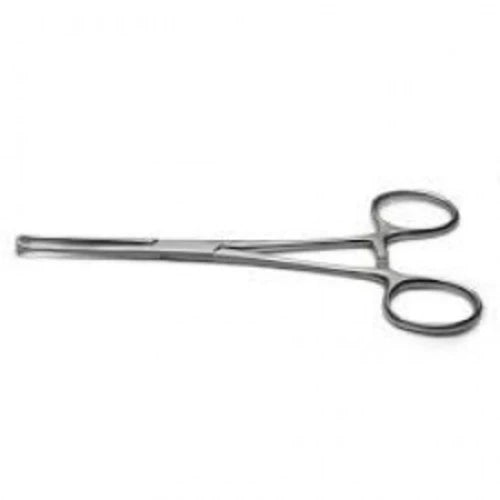
Allis Tissue Forceps Straight SS Delux Quality
Type: Instruments
Allis Tissue Forceps Surgical Instrument


Type: Surgical Scissors
Tungsten Carbide (TC) Wire Cutter
Type: General Instruments
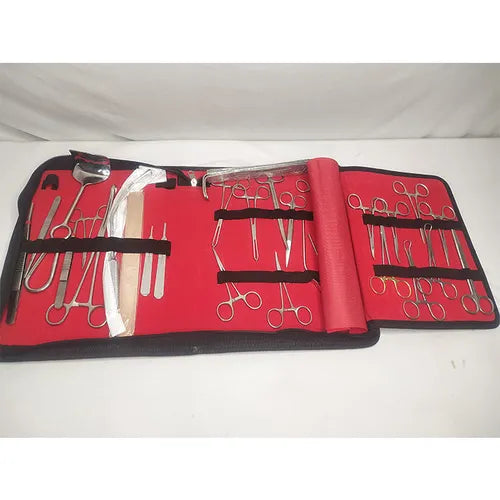
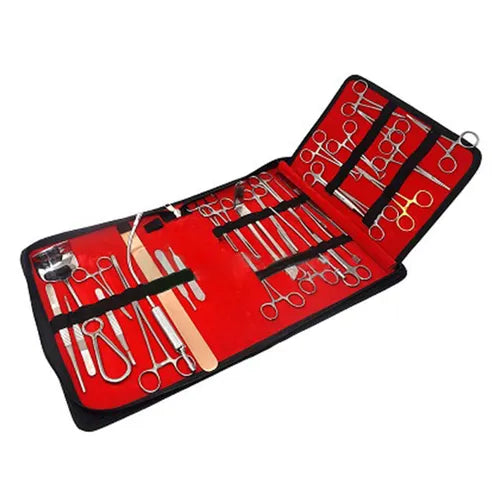
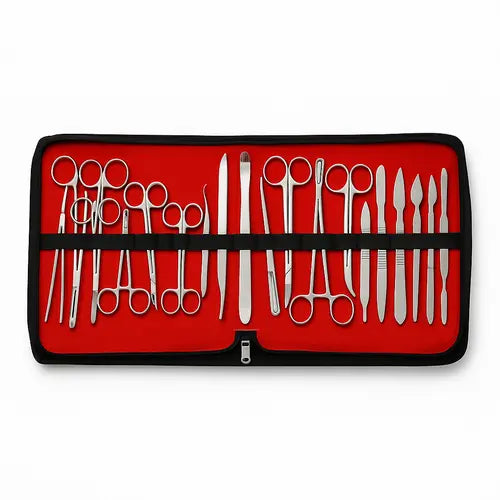
Minor Surgery Kit Set of 24 Surgical Instrument Set
Type: Instruments
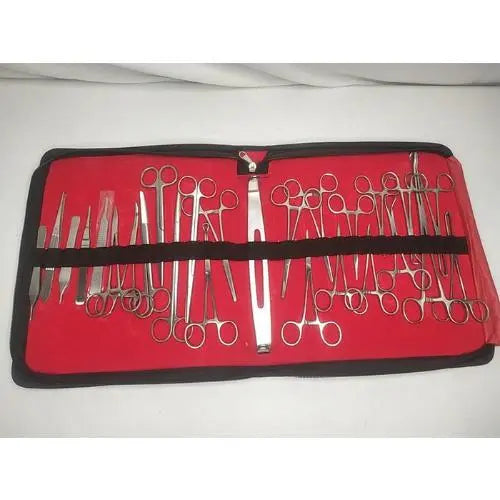
Appendectomy Instrument Kit
Collection:
Allis Surgical Instruments
Ever tried to pick up a wet, slippery bar of soap? It's tough to get a good grip without squishing it. Surgeons face a similar, high-stakes challenge every day in the operating room. They need to hold and move body tissue that is both delicate and incredibly difficult to handle, where a simple slip could cause a serious complication.
The problem is that standard gripping tools just won't work. Think about using household tweezers on a piece of raw chicken; you'd either lose your grip or shred the surface. In surgery, this translates to real danger. Crushing healthy tissue can slow a patient's recovery, while preventing tissue slippage is critical for precise, safe work. This dilemma created the need for a specialized surgical tool for grasping that could do what ordinary instruments can't.
To solve this, surgeons rely on instruments designed around a core principle: being "atraumatic." This simply means the tool can provide a secure grip without crushing or damaging the tissue it holds. An atraumatic tissue grasper is engineered not for brute force, but for a clever, gentle firmness, allowing a surgeon to safely control one of the most challenging materials on earth.
Meet the Allis: A Closer Look at the Tool for a Perfect Grip
Solving the surgical version of the "Slippery Soap Problem" required a tool with a completely different approach to gripping. If you look at the tip of an Allis clamp, you'll notice it doesn't have a flat surface like tweezers. Instead, it has a row of short, interlocking teeth, which are the key to its unique function.
You might think that teeth would be the last thing you'd want near delicate body tissue, but the design is surprisingly gentle. Instead of concentrating all the gripping force on one tiny point, the multiple teeth spread that pressure out over a wider area. Think of the difference between pushing on a wall with the tip of your finger versus your entire palm. The fingertip pokes and creates a single point of high pressure, while the palm provides firm, stable contact without causing damage.
This principle makes the Allis clamp atraumatic, a term surgeons use to describe a tool that can hold on tight without crushing or puncturing tissue. While a pair of household tweezers would pinch and likely tear the very thing you're trying to hold, the Allis distributes the force for a secure grip that preserves the integrity of the tissue. It grips without stabbing.
This brilliant design gives surgeons the confidence to grasp and move tougher tissues during an operation, knowing the instrument will not slip at a critical moment. Of course, a secure grip is only half the battle. A surgeon also needs their hands free, which is where the Allis's signature clicking lock comes into play.
That "Clicking" Sound: How a Simple Lock Gives Surgeons a Third Hand
That signature clicking noise from a surgical clamp is the sound of its most ingenious feature at work: the ratchet lock. Built right into the handles, this mechanism functions much like a common zip tie. As a surgeon squeezes the handles together, a set of interlocking teeth in the lock engage, clicking past one another. This ratcheted design allows the clamp to be closed to a precise degree and then stay there without any further pressure from the surgeon's hand.
Beyond simply holding on, this locking function gives a surgeon incredible control. Instead of relying on continuous, tiring hand strength to maintain a grip, they can apply the exact amount of pressure needed---one click at a time---and then lock it in place. This ensures the force on the tissue is constant and predictable, which is crucial for preventing accidental slips or applying too much pressure during a long and delicate procedure. The function of this ratcheted locking forceps is all about consistency.
Ultimately, this locking mechanism gives the surgeon what is essentially a third hand. Once an Allis forceps is locked onto a piece of tissue, it can hold it securely out of the way, freeing the surgeon's hands to perform other critical tasks like suturing or dissecting. This ability to retract and hold is one of the most vital Allis forceps uses. But a tool with teeth and a powerful lock still sounds aggressive. This raises an important question: how can it still be considered gentle?
Is the Allis Clamp 'Traumatic'? The Truth About a "Gentle" Grip
It's a fair question: how can a tool with interlocking teeth and a powerful lock possibly be gentle? The answer is found in the specific job the Allis is built for. In medicine, the ideal is to be atraumatic, a term that means "causing minimal injury or tissue damage." While it sounds counterintuitive, the Allis clamp is designed to achieve exactly that, but within a very specific context.
The secret is that the Allis isn't used on extremely delicate tissues like the brain or a lung. One of the main Allis tissue forceps uses is to grasp tougher, more resilient structures, such as dense connective tissue or the stomach wall. On these surfaces, a smooth clamp would simply slip, much like a bald tire on a wet road. The short teeth of the Allis act like tire treads, providing a secure grip that prevents the tissue from sliding away during a critical moment. This grip is firm, but because the force is distributed across many small points, it avoids causing a single, severe crushing injury.
So, is an Allis clamp traumatic? Technically, yes---any instrument that pierces the surface of a tissue causes some level of trauma. However, this minimal, controlled trauma is far preferable to the alternative. A slippery piece of tissue that escapes a surgeon's grasp could be accidentally cut or torn, leading to much greater damage. The Allis clamp is a perfect example of a surgical trade-off, where a carefully designed tool prevents a big problem by creating a very small, manageable one. Its purpose is to hold, not to crush.
Holding vs. Crushing: Why an Allis Isn't a Pair of Pliers
When you hear the word "clamp" in a surgical setting, it's easy to picture a tool designed to squeeze something shut with maximum force. While some instruments do exactly that, it's a common misconception that all clamps share the same aggressive purpose. In reality, surgical clamps are highly specialized, and the most important distinction is between those that hold and those that crush.
The Allis clamp falls firmly into the "holding" category. Its primary job is to grasp tissue and retract it---that is, to gently pull it aside so the surgeon has a clear view and a clean workspace. Think of it as a temporary, robotic hand that can hold onto a piece of tissue without needing constant attention, thanks to its locking handle. The goal isn't to stop the flow of blood or mash the tissue, but simply to keep it securely out of the way.
The functional difference is like that between kitchen tongs and workshop pliers. You use tongs to gently lift and move a piece of steak without squishing it. This is the role of an Allis. Other clamps, however, are built like pliers, designed to crush a specific structure, such as sealing off a blood vessel or gripping tough tissue that will be removed anyway. This fundamental difference between holding and occluding explains why the Allis, with its gentle-but-firm grip, is such an indispensable tool.
Allis vs. Babcock: Choosing the Right Tool for the Tissue
While the Allis clamp is a master at firmly holding tougher tissues without causing harm, not all tissues are created equal. What happens when a surgeon needs to grasp something incredibly delicate, like the wall of the intestine or a fallopian tube? Using the small teeth of an Allis, even though they are atraumatic, could still be too aggressive for such fragile structures.
For these situations, surgeons often turn to another gentle grasping tool: the Babcock forceps. Looking at them side-by-side, the difference is immediately clear. Unlike the Allis with its interlocking teeth, the Babcock has smooth, rounded, fenestrated (or windowed) tips. These jaws don't pinch; they are designed to encircle and cradle the tissue, spreading the pressure over a wider, smoother surface to prevent any possibility of puncture or damage.
The difference between Allis and Babcock forceps types can be easily understood with a food analogy. The choice is all about matching the tool to the task:
- Allis Grip: Best for firm, solid tissue (like securely holding an apple).
- Babcock Grip: Ideal for hollow, delicate tissue (like gently lifting a single piece of macaroni without cracking it).
This simple distinction highlights an essential principle of surgery: precision matters. The decision to use an Allis versus a Babcock isn't arbitrary; it's a calculated choice based on a deep understanding of anatomy and the specific demands of the procedure. It showcases why a surgeon's tray contains so many different forceps---each one is a specialized solution to a unique challenge.

What Are Allis Forceps Actually Used For?
So, where does a surgeon actually put an Allis clamp to work? Its main job is to grab hold of tough, dense tissues---things like the thick, fibrous membranes that cover muscles or the sturdy edges of skin during a procedure. Because of its interlocking teeth, it provides a secure grip on these surfaces, which might otherwise be too slippery or tough for other instruments to hold effectively without slipping.
Beyond just holding on, the Allis is crucial for an action called retraction. Imagine trying to repair something behind a heavy curtain; you'd use a hook to pull the fabric aside and hold it there. A surgeon does the same thing with an Allis clamp. They use it to grasp and gently pull tissue out of the way, creating a clear and stable view of the area they need to work on. This simple act of holding tissue back is fundamental to almost every surgery.
Because of this reliable grip and its role in retraction, the Allis clamp is considered a true "workhorse" in the operating room. While it isn't used on extremely delicate organs, its versatility makes it a go-to tool for a huge range of general surgical tasks. This dependable nature is why the Allis holds a specific and essential spot on nearly every surgeon's instrument tray.
A Place for Everything: The Allis Clamp on the Surgical Tray
Just as a mechanic arranges their wrenches and sockets for quick access, a surgical team organizes its instruments with meticulous care. You won't find a jumble of tools on the surgical instrument tray; instead, they are laid out in a specific order, usually grouped by function---cutting tools together, grasping tools in another section, and so on. This methodical layout allows the surgical technologist to anticipate the surgeon's needs and hand them the correct instrument without a moment's delay, improving both speed and safety.
Within this organized system, the Allis clamp is a foundational player. Most hospitals maintain a standard set of General Surgical Instruments for common procedures, and the Allis is a guaranteed member of this kit. Because the need to grasp and retract tough tissue is so universal in surgery, having multiple Allis clamps ready on the tray is non-negotiable. Its presence is as expected and essential as the scalpel itself, ensuring the team is prepared for one of surgery's most common tasks.
Ultimately, the Allis clamp rarely works alone; it's part of a highly specialized team. While a scalpel makes an incision, an Allis is passed to the surgeon to hold tissue back, creating a clear field of view. Another clamp might then be used to control bleeding, while forceps handle delicate suturing. Each instrument performs its task in sequence, and the success of the operation depends on this teamwork. To ensure patient safety, every single one of these tools must be perfectly ready for the job.
How to Keep a Life-Saving Tool Safe: Sterilizing Surgical Clamps
Ensuring an instrument is ready for surgery goes far beyond simply having it on the tray. Every tool, from a scalpel to an Allis clamp, must be completely free of microorganisms to prevent infection. This isn't just cleaning---it's sterilization. To achieve this, hospitals rely on a machine called an autoclave, which works much like a high-tech pressure cooker for medical instruments. The tools are sealed inside, where they are subjected to an environment that no germ can possibly survive.
The secret to how to sterilize surgical clamps effectively lies in a combination of intense steam and durable steel. Inside the autoclave, superheated steam under high pressure penetrates every tiny groove of an instrument, destroying bacteria, viruses, and any other living contaminants. This harsh process is precisely why medical instruments are made from surgical-grade stainless steel. This special material is chosen for its ability to withstand thousands of these intense sterilization cycles without rusting, warping, or degrading, ensuring it remains safe for use time and time again.
This rigorous sterilization protocol is an unbreakable rule in medicine. It stands as the most critical line of defense against surgical site infections, making the behind-the-scenes work in the sterile processing department just as vital as the surgeon's skill. The Allis clamp, therefore, isn't just a well-designed tool; it's part of a system where its durable material and the powerful sterilization process work in harmony to guarantee patient safety.
What You Now Understand About a Surgeon's Most Trusted Gripper
So, the next time you're watching a medical drama and hear a surgeon call for an "Allis," you'll be in on the secret. What was once just another mysterious name is now a tool you recognize---a clever clamp designed to solve one of surgery's trickiest challenges: the need for a secure grip on slippery tissue.
The interlocking, atraumatic teeth of the Allis forceps aren't for crushing, but for holding firmly and safely, transforming a risky maneuver into a controlled one. When you see this unique tool, you can now distinguish it from one meant for cutting or clamping a blood vessel, a key insight into the surgical world.
The Allis Tissue Forceps is more than just an instrument; it represents a core principle of modern medicine: thoughtful design that makes difficult procedures safer. It's a small piece of steel that embodies a big idea---that in surgery, how you hold something is just as important as what you do next.
Q&A
Question: What problem does the Allis clamp solve in surgery?
Short answer: It solves the “slippery tissue” problem by securely gripping tough, hard-to-hold tissues without crushing them. Standard tools like smooth tweezers either slip off or damage tissue. The Allis’s short, interlocking teeth distribute force across multiple points, providing a firm, controlled hold on dense structures so surgeons can manipulate or retract tissue safely.
Question: How can a toothed instrument like the Allis be considered “atraumatic”?
Short answer: Its teeth spread pressure over several small contact points, reducing any single high-pressure spot that would crush or tear tissue. Just as a palm pushes more gently than a fingertip, the Allis’s multiple teeth create a secure, non-puncturing grip on sturdier tissues (e.g., dense connective tissue or stomach wall). While any penetration is technically some trauma, this minimal, controlled effect prevents larger injuries from slips.
Question: What does the Allis’s ratchet lock do, and why is it important?
Short answer: The ratchet lock clicks into set positions—like a zip tie—so the clamp maintains a precise, constant pressure without the surgeon squeezing continuously. This consistency prevents accidental overpressure or slippage during long procedures and effectively gives the surgeon a “third hand” for retraction, holding tissue out of the way while other tasks proceed.
Question: How is the Allis different from other clamps, and when would you choose a Babcock instead?
Short answer: The Allis is a holding (not crushing) clamp with interlocking teeth for firm grip and retraction of tougher tissue—think kitchen tongs for a steak. For very delicate, hollow structures (like intestinal wall or a fallopian tube), surgeons choose a Babcock, whose smooth, rounded, fenestrated jaws cradle tissue and spread pressure widely—more like gently lifting a single piece of macaroni.
Question: How are Allis clamps sterilized, and why are they made of stainless steel?
Short answer: They’re sterilized in an autoclave that uses high-pressure, superheated steam to penetrate every groove and destroy all microorganisms. Surgical-grade stainless steel is used because it withstands repeated intense steam cycles without rusting, warping, or degrading—an essential part of preventing surgical site infections and ensuring instruments remain safe and reliable.