Skip to content

India’s Go to Platform for Medical Supplies Procurement

autoclave sterilization tape

Type: General

Autoclave Tape Steam Sterilization Indicator Tape 19mm x 50 Mtr

Regular price Rs. 279
Sale price Rs. 279 Regular price Rs. 600
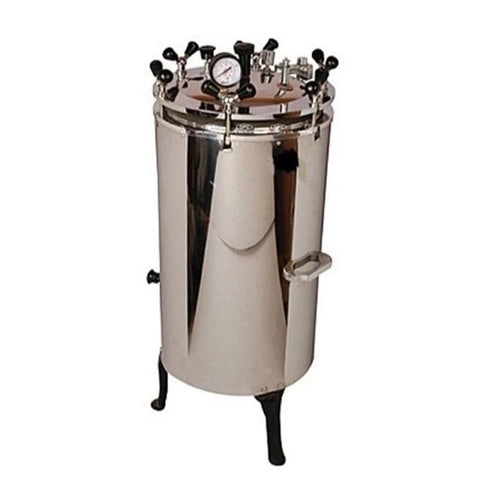
vertical autoclave machine

Type: Autoclave

Vertical Autoclave Machine Wing Nut Type 12 x 22 Inch 40L

Regular price Rs. 14,849
Sale price Rs. 14,849 Regular price Rs. 25,000
bowie_dick_tes

Type: General

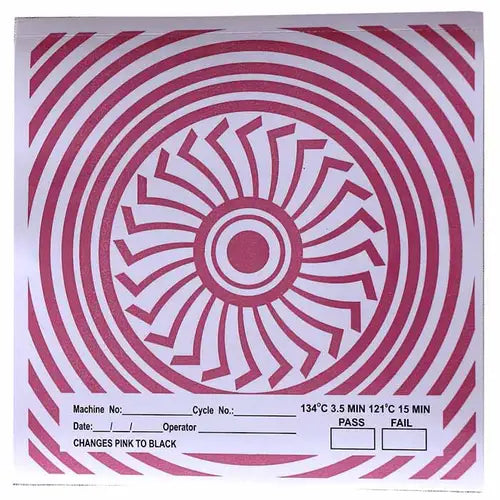
Bowie Dick Test Pack For Steam Air Removal Test in Autoclave (Pack Of 10)

Regular price Rs. 2,708
Sale price Rs. 2,708 Regular price Rs. 4,925
autoclave

Type: General

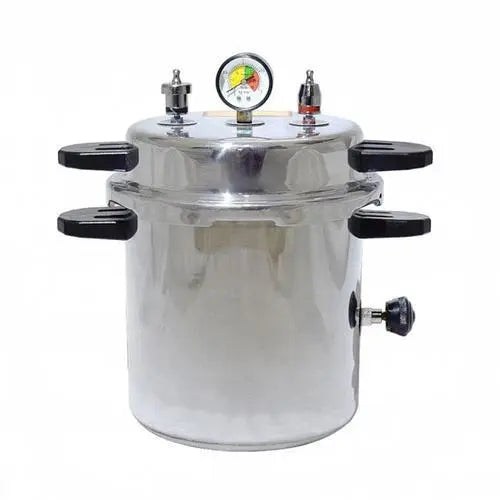
Autoclave Sterilizer, Mirror Finish, Electric, 10 Liter

Regular price Rs. 5,999
Sale price Rs. 5,999 Regular price Rs. 8,000
autoclave machine

Type: Autoclave

Medical Autoclave 21L Wing Nut Aluminium 12 x 12 Inch

Regular price Rs. 6,349
Sale price Rs. 6,349 Regular price Rs. 9,800

autoclave_tape_steam

Type: General

Autoclave Tape Steam Sterilization Indicator Tape (Pack of 5)

Regular price Rs. 1,844
Sale price Rs. 1,844 Regular price Rs. 3,352
autoclave

Type: General

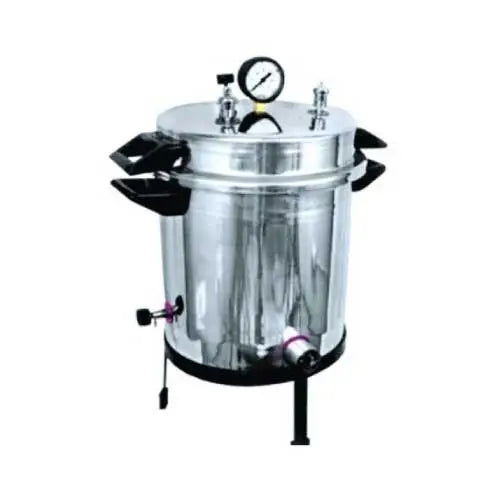
Autoclave Aluminium Pressure cooker type Electric

Regular price From Rs. 6,299
Sale price From Rs. 6,299 Regular price Rs. 12,000
 Cooker Type with Timer Powder Coated

Type: Dental Autoclave 10L Cooker

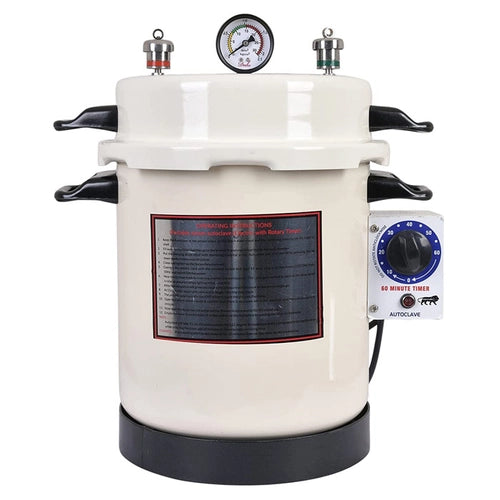
Dental Autoclave 10L Cooker Type with Timer Powder Coated 9 x 11 Inch

Regular price Rs. 6,999
Sale price Rs. 6,999 Regular price Rs. 8,500
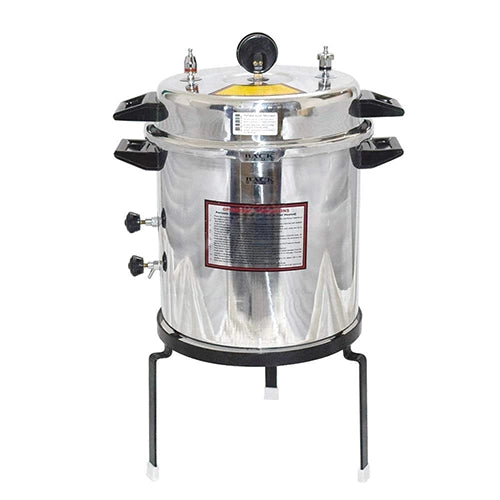
autoclave

Type: General

Autoclave 40 Litres Pressure Cooker Type, Mirror Finish

Regular price Rs. 13,999
Sale price Rs. 13,999 Regular price Rs. 22,000
vertical autoclave machine

Type: Autoclave

Vertical Autoclave Sterilizer Machine | Autoclave

Regular price Rs. 14,849
Sale price Rs. 14,849 Regular price Rs. 25,000
double wall vertical autoclave

Type:

Vertical Autoclave Double Wall Radial Locking

Regular price From Rs. 69,499
Sale price From Rs. 69,499 Regular price Rs. 95,000
vertical autoclave

Type: autoclave

Vertical Autoclave Double Wall Radial Locking

Regular price Rs. 122,200
Sale price Rs. 122,200 Regular price Rs. 85,000
Vertical Autoclave 80L Double Walled Heavy Duty SS with Digital Tempurature Timer Alram 16x27 Inch

Type: Autoclave

Vertical Autoclave 80L Double Walled Heavy Duty SS with Digital Tempurature Timer Alram 16x27 Inch

Regular price Rs. 72,499
Sale price Rs. 72,499 Regular price Rs. 80,000
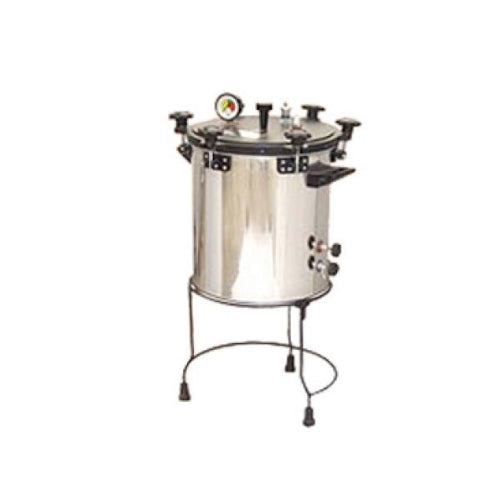
Non-Electric Autoclave sterilizer Wing Nut Type Seamless Aluminium

Type: General Accessories

Non-Electric Autoclave sterilizer Wing Nut Type Seamless Aluminium

Regular price Rs. 14,999
Sale price Rs. 14,999 Regular price Rs. 22,000
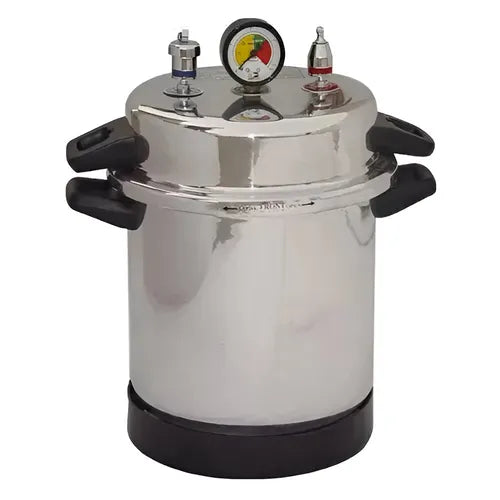
dental autoclave 10l cooker Type Aluminium

Type: Dental Autoclave 10L Cooker

Dental Autoclave 10L Cooker Type Aluminium 9 x 11 Inch

Regular price Rs. 5,799
Sale price Rs. 5,799 Regular price Rs. 7,000

Collection: Understanding the Autoclave Diagram Components

If you've ever used a pressure cooker, you're halfway to understanding an autoclave. Both use steam and pressure, but while one makes dinner, its super-powered cousin is on a critical mission: total sterilization. It's the gold standard in settings from hospitals to tattoo parlors for one simple reason.

The machine's power comes from trapping steam under intense pressure, creating conditions far hotter than boiling water. This allows it to destroy even the toughest microbes simple washing can't touch. Understanding each component demystifies this process, turning an intimidating steel box into a logical system.

Summary

This guide explains how autoclaves achieve reliable sterilization by using high-pressure saturated steam within a tightly sealed chamber. It highlights the core components---chamber, door, and gasket; steam generation (built-in or central) and the preheating jacket; air removal via gravity displacement or pre-vacuum systems; control panel with sensors and gauges; and safety devices like the safety valve and door interlock. Together, these systems ensure uniform steam penetration, stable temperature and pressure, and operator protection, turning a complex machine into a predictable, safe tool.

The Heart of the Machine: Chamber, Door, and Gasket

At the very center of an autoclave is the Chamber, a thick-walled compartment where you place items for sterilization. Think of it as the inner pot of an industrial-strength pressure cooker; this is the main stage where the entire process unfolds. All the heat, steam, and pressure are concentrated right here to ensure every surface is reached.

The chamber is sealed by a heavy, vault-like Door . The strong locking arms aren't just for show; they are built to withstand incredible force. As steam builds up, the Pressure inside can push on the door with hundreds of pounds of force, making a robust lock essential for safety.

The final piece of this perfect seal is the Gasket, a flexible rubber ring that lines the door. This simple part is one of the most critical components, as it prevents any high-pressure steam from escaping. A quick visual check of the door gasket for any cracks or wear is a fundamental safety step before starting a cycle.

The Power Plant: Where the Sterilizing Steam Comes From

The sterilizing power comes from steam, which is far more effective than the dry heat of an oven. Steam transfers its heat energy much more rapidly, allowing it to penetrate dense materials and neutralize any microbes hiding within.

Many autoclaves generate steam using a built-in Steam Generator ---essentially a powerful, internal kettle that boils purified water on demand. Others are connected to a Central Steam Source, getting steam from a large, separate boiler through a network of pipes, much like a hospital's central plumbing system.

This steam source is the machine's true engine. This is also helpful for troubleshooting; if an autoclave won't heat up, the issue often lies with its water supply or heating elements, not the chamber itself.

The "Heated Blanket": The Autoclave Jacket

As hot steam enters the cooler chamber, it can hit the metal walls and turn back into water. This process, called Condensation, is a problem. It creates wet, cold spots where germs can hide from sterilization and leaves everything inside soaked at the end of the cycle.

To prevent this, autoclaves use a Jacket ---a second wall that acts like a heated blanket wrapped around the main chamber. The jacket pre-heats the chamber walls before the main steam enters, eliminating the cold surfaces that cause condensation.

This feature ensures steam remains a powerful gas to sterilize evenly and helps items come out much drier. If you ever notice an autoclave in a "warm-up" phase, you're seeing the jacket prepare the chamber for a successful run. But before the steam can work, something else must be removed: air.

Clearing the Way for Steam: The Vacuum System

Steam can only sterilize what it can touch. The biggest obstacle standing in its way is ordinary air. Trapped inside a wrapped instrument pack or a hollow tube, air acts like an invisible shield, creating Cold Spots that block steam from reaching every surface. In these pockets, microbes can easily survive the cycle.

To solve this, autoclaves use one of two methods. The simpler approach is Gravity Displacement , where incoming steam, being heavier than air, pushes the lighter air down and out through a vent. A more advanced solution, found in Pre-vacuum autoclaves, uses a powerful Vacuum System . This system actively sucks nearly all the air out of the chamber before any steam enters, ensuring there's nowhere for germs to hide.

This difference between gravity displacement and pre-vacuum models is critical. While a gravity system works for simple, unwrapped tools, a pre-vacuum cycle is essential for wrapped instrument kits or porous materials like gowns. By pulling the air out first, the vacuum system guarantees that hot steam penetrates even the most difficult-to-reach places.

The Brains of the Operation: The Control Panel and Gauges

If the chamber is the heart of the autoclave, the Control Panel is its brain. This digital interface is where you select a sterilization cycle and press "start." Reading the panel is about monitoring two vital signs: temperature and pressure.

To monitor these conditions, the machine uses internal Sensors that act as its eyes and ears, constantly measuring the environment inside the chamber. These measurements are displayed on the panel's Gauges. If a temperature sensor isn't working correctly, the autoclave can't confirm that sterilization conditions have been met, a common point for troubleshooting.

During a successful cycle, you'll see the pressure and temperature climb on the gauges and then hold steady---often at 121°C (250°F) and 15 PSI. This steady state indicates sterilization is in progress.

Built-In Guardians: The Safety Valve and Door Lock

The autoclave has its own backup plan for pressure. If it were to ever build to dangerous levels, the Safety Valve acts like the rattling weight on a pressure cooker. It automatically opens to vent excess steam, providing a simple, mechanical fail-safe. Its function is to prevent catastrophic failure from over-pressurization, even if electronic controls malfunction.

Equally important is the Door Interlock. The intense pressure inside the chamber exerts an incredible amount of force on the door. To prevent an explosive release of scalding steam, this active lock makes it physically impossible to open the door until the internal pressure has safely returned to normal. This key design feature protects the operator.

Together, these components make the machine remarkably safe. Never try to force a locked autoclave door; it is locked to protect you.

From Mystery Machine to Trusted Tool

What once seemed like an intimidating machine is now a system with a clear purpose. An autoclave diagram reveals how the chamber, jacket, and safety valves work in harmony to achieve total sterilization. Each component has a logical role, from creating the high-pressure environment to ensuring operator safety. The next time you see a lab autoclave, you'll recognize not a mysterious box, but a powerful and reliable tool.

Frequently Asked Questions

Question: Why does an autoclave have a "warm-up" phase, and what does the jacket do?

Short answer: The jacket is a heated outer layer around the chamber that pre-warms the metal walls before the main sterilizing steam enters. This prevents condensation (steam turning back into water on cold surfaces), which would create cold, wet spots where microbes could survive. The "warm-up" phase is the jacket bringing the chamber to temperature so steam stays a powerful gas, promoting even sterilization and drier loads.

Question: What's the difference between gravity displacement and pre-vacuum cycles, and when should I use each?

Short answer: Gravity displacement relies on incoming steam pushing air out through a vent; it's suitable for simple, unwrapped tools. Pre-vacuum autoclaves actively remove air from the chamber before steam is introduced, ensuring there are no air pockets that block steam contact. Use pre-vacuum cycles for wrapped instrument sets and porous items (like gowns) so steam penetrates deeply and uniformly.

Question: What do the gauges and sensors tell me during a cycle?

Short answer: Sensors continually measure chamber temperature and pressure, and the control panel displays these readings on gauges. In a successful run, you'll see values rise and then hold steady---commonly around 121°C (250°F) and 15 PSI---indicating sterilization conditions are being maintained. If a temperature sensor malfunctions, the autoclave can't verify that conditions were met, which is a common cause of cycle failure or alarms.

Question: What safety features prevent accidents, and why shouldn't I force the door open?

Short answer: The safety valve automatically vents excess steam if pressure climbs too high, acting as a mechanical fail-safe against over-pressurization. The door interlock physically prevents the door from opening until internal pressure returns to a safe level. Never try to bypass or force the door---these protections are designed to prevent an explosive release of scalding steam and to keep operators safe.

Question: If the autoclave won't heat up, where should I start troubleshooting?

Short answer: Begin with the steam source. For units with a built-in steam generator, check the water supply and heating elements; for systems fed by a central steam source, verify steam delivery to the machine. Issues here are more common than problems with the chamber itself. Also review the control panel for sensor or fault indicators that might stop the cycle from proceeding.

Question: What makes an autoclave more effective than washing or dry heat?

Short answer: It uses high-pressure saturated steam that’s hotter than boiling water and transfers heat rapidly. This allows steam to penetrate dense or complex items and destroy resilient microbes that washing or dry heat can miss, making autoclaving the gold standard for reliable sterilization.

Question: What are “cold spots,” and how does the autoclave design eliminate them?

Short answer: Cold spots form where air or condensation block steam contact—such as trapped air inside packs or on cold chamber walls where steam condenses back into water. Autoclaves prevent this by preheating the chamber with a steam-filled jacket (to stop condensation) and removing air via gravity displacement or, more effectively for wrapped/porous loads, a pre-vacuum system.

Question: What should I check about the door and gasket before starting a cycle, and why?

Short answer: Visually inspect the door gasket for cracks or wear and ensure the door’s locking mechanism engages properly. The gasket creates the pressure-tight seal that keeps high-pressure steam contained, and the robust lock (with an interlock) prevents opening under pressure—both are critical for achieving proper conditions and for operator safety.

Question: How do built-in steam generators differ from central steam supplies, and why does that matter for troubleshooting?

Short answer: Some autoclaves boil purified water internally with a built-in steam generator; others receive steam from a facility’s central boiler. If the unit won’t heat, the issue often lies with the steam source—water supply or heating elements for built-in systems, or steam delivery for centrally supplied units—rather than the chamber itself.

Question: How do the safety valve and door interlock protect users if something goes wrong? Short answer: The safety valve is a mechanical fail-safe that automatically vents excess steam if pressure rises dangerously, even if electronic controls fail. The door interlock physically prevents the door from opening until internal pressure returns to normal. Never attempt to bypass or force these safeguards—they are designed to prevent an explosive release of scalding steam.