
Filter
1 product
Type: Nursing
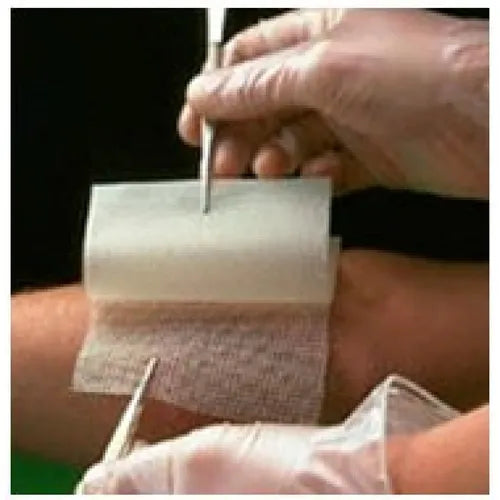
Smith and Nephew Bactrigras Chlorhexidine Gauze Dressing (Pack of 10)
Collection:
Bactigras: Chlorhexidine Medicated Gauze & Wound Dressings
The Clinical Definition: What is Bactigras Used For?
When managing complex skin trauma, Bactigras stands as a primary defense against secondary infections. But specifically, what is Bactigras used for? It is an antiseptic, paraffin-impregnated tulle gras dressing composed of a leno-weave gauze. The weave is saturated with white soft paraffin containing 0.5% Chlorhexidine Acetate—a potent antimicrobial agent.
Physicians often ask, what is Bactigauze used for? essentially, it serves as a "contact layer" that sits between the wound bed and the secondary absorbent dressing. Unlike standard dry gauze, Bactigras dressing is designed to be non-adherent. This means it does not stick to the healing tissue, allowing for painless removal and undisturbed epithelialization.
The paraffin coating in Bactigras gauze acts as a physical barrier that prevents the wound exudate (fluid) from drying out and "gluing" the bandage to the skin. This makes it the preferred choice for skin grafts and donor sites.
Bactigras Technical Specifications Table
| Feature | Clinical Specification |
|---|---|
| Active Ingredient | Chlorhexidine Acetate (0.5% w/w) |
| Base Material | Leno-weave Cotton Gauze |
| Coating | White Soft Paraffin BP |
| Sterility | Gamma Irradiated (Single Use) |
| Primary Function | Antiseptic contact layer for wound protection |
The Therapeutic Scope: Bactigras Dressing Uses
The spectrum of Bactigras dressing uses is broad, spanning from minor household injuries to surgical post-operative care. Its primary role is to reduce the risk of infection in wounds that are already at risk of bacterial contamination.
The Open Wound Debate: Is Bactigras Safe for Exposed Tissue?
One of the most frequently asked questions in wound clinics is: Is Bactigras good for open wounds? The clinical answer is a resounding yes , provided the wound is at risk of infection and is not excessively "sloughy" or necrotic. Bactigras dressing use on open wounds provides a sterile, antiseptic environment that is crucial during the inflammatory phase of healing.
Because Bactigras gauze is non-adherent, it is particularly "good" for open wounds that are expected to produce moderate amounts of exudate. In a standard open wound, the body sends white blood cells and plasma to the site. If you use standard dry gauze, this fluid dries and traps the mesh in the new skin cells (granulation tissue). When you pull that gauze off, you rip away the healing progress. Bactigras prevents this trauma, acting as a "medicated shield."
Bactigras uses in open wounds extend to preventing "secondary intention" scarring. By keeping the wound bed moist—but not macerated—the paraffin allows skin cells to migrate across the wound surface more efficiently than they would in a dry, scabbed environment.
Antiseptic Power: The Benefit of Chlorhexidine Acetate
Standard paraffin gauze (like Jelonet) provides moisture, but Bactigras provides active protection. So, what is the benefit of having chlorhexidine in Bactigras? Chlorhexidine is a broad-spectrum antiseptic that is effective against a wide range of Gram-positive and Gram-negative bacteria.
- ✔ Persistent Antimicrobial Action: Unlike alcohol which evaporates, the chlorhexidine in Bactigras bandage remains active on the dressing, providing a sustained kill-rate for bacteria attempting to colonize the wound.
- ✔ MRSA Protection: It is highly effective against common skin pathogens like *Staphylococcus aureus*, including some antibiotic-resistant strains.
- ✔ Low Toxicity: At a 0.5% concentration, it provides a "sweet spot" of being lethal to bacteria while remaining gentle on human fibroblasts (the cells that build new skin).
The Comparison: Bactigras vs. Standard Dressings
When choosing a bactigras bandage, it helps to see how it stacks up against traditional options in a clinical setting.
Standard Dry Gauze
Sticks to wounds, causes pain upon removal, and has zero antiseptic properties. Risk of infection is significantly higher in contaminated wounds.
Bactigras Dressing
Non-adherent paraffin base, 0.5% Chlorhexidine for active infection control, and allows for painless dressing changes even on raw tissue.
Duration of Care: How Long Can You Leave Bactigras On?
The effectiveness of a bactigras bandage is directly tied to its moisture balance and antiseptic saturation. A common patient query is: How long can you leave Bactigras on for? In a clinical setting, Bactigras gauze can typically be left in place for up to 72 hours (3 days) . However, the exact timing depends entirely on the "exudate levels" (wound drainage).
If the wound is a fresh burn or a heavy laceration with high fluid production, the secondary absorbent dressing may become saturated quickly. When the secondary dressing is full, the bactigras dressing must be changed to prevent "Maceration"—a condition where the surrounding healthy skin stays too wet and begins to break down. Conversely, for dry donor sites or minor abrasions, leaving the Bactigras on for the full 72 hours allows the chlorhexidine to maintain a consistent antimicrobial barrier without disturbing the delicate new skin forming underneath.
The Professional Guide: How to Use Bactigras Dressing
Correct bactigras dressing use requires a sterile technique to ensure the chlorhexidine remains uncontaminated and the paraffin provides a true non-stick barrier. Follow this three-step clinical protocol:
Cleanse & Assess
Thoroughly clean the wound using sterile saline or a specialized wound wash. Ensure the surrounding skin is dry. If the wound shows signs of heavy infection (foul odor or green discharge), consult a physician before applying Bactigras gauze.
Placement of the Tulle Gras
Open the sterile pouch using aseptic technique. Use sterile forceps to remove the bactigras bandage. If the gauze is larger than the wound, you may fold it or cut it with sterile scissors to fit the wound bed precisely. Place it directly onto the wound surface as the primary contact layer.
Secondary Coverage
Since Bactigras is porous, it requires a secondary dressing. Place a sterile absorbent pad (like Melolin or cotton gauze) over the top to soak up fluids. Secure the entire system with a conforming bandage or medical tape.
Compatibility: Can Bactigras Be Used for All Wounds?
While Bactigras uses are vast, it is not a "universal" dressing. Can Bactigras Chlorhexidine Gauze Dressing be used for all types of wounds? No. It should be avoided in wounds with high necrotic tissue (black, dead skin) or if the patient has a known allergy to chlorhexidine. It is also not recommended for use in the eyes, ears, or on internal membranes.
Clinical FAQ: Master the Use of Bactigras
The primary advantage is the active prevention of "Bacterial Colonization." While standard paraffin dressings only provide a moist environment, the Bactigras bandage contains 0.5% Chlorhexidine Acetate. This antiseptic is a powerful tool against Gram-positive and Gram-negative bacteria, including *Staphylococcus aureus* (the lead cause of wound infections). By having this agent impregnated directly into the gauze, the dressing creates a "Zone of Inhibition" around the wound. This means that even if bacteria are introduced to the outer bandage, the bactigras gauze prevents them from reaching the wound bed and causing sepsis or delayed healing.
Yes, Bactigras is exceptionally well-suited for open wounds, particularly those where the skin has been lost, such as abrasions or second-degree burns. Because it is a "tulle gras" (oil-based gauze), it acts as a non-adherent layer. Standard bandages often weave themselves into the regenerating tissue of an open wound, causing a "re-injury" every time the bandage is pulled off. Bactigras dressing use ensures that the healing granulation tissue remains undisturbed. It provides a moist, medicated interface that allows new skin cells to slide across the wound surface effortlessly, reducing the total healing time and minimizing the risk of thick, raised scars.
It is a common misconception, but Bactigras gauze is NOT waterproof. It is designed with a "leno-weave" pattern—a series of small holes that allow wound exudate (fluid) to pass through the medicated layer and be absorbed by a secondary pad. This breathability is essential for preventing wound maceration. If you require the wound to stay dry during showering, you must apply a secondary waterproof film dressing (like a transparent adhesive sheet) over the top of the bactigras bandage and its absorbent layer. Without a waterproof secondary layer, the bactigras will absorb external moisture, which could introduce new contaminants to the site.
Clinical guidelines suggest that a Bactigras dressing can be left in place for up to 72 hours (3 days). However, the "Optimal Change Frequency" depends on the wound’s state. If the wound is highly "exudative" (leaking significant fluid), the chlorhexidine may become diluted and the gauze may become saturated, requiring a change every 24 hours. For dry wounds or donor sites, 72 hours is the standard. You should change the bactigras dressing immediately if you notice the secondary dressing is soaked through or if the patient reports increased pain, which could indicate a shift in the wound’s microbial balance.
Why Choose MeddeyGo for Your Advanced Wound Care?
When it comes to medicated dressings like Bactigras, quality and sterility are non-negotiable. MeddeyGo is India’s premier destination for professional-grade clinical supplies.
Guaranteed Authenticity
We source our bactigras gauze directly from certified medical manufacturers, ensuring that the 0.5% Chlorhexidine concentration and paraffin quality meet global pharmacopeia standards.
Clinical-Grade Storage
Antiseptic dressings are sensitive to heat. Our facilities maintain temperature-controlled storage to ensure your Bactigras dressing arrives with its antimicrobial properties fully intact.
Rapid, Secure Shipping
Wounds can’t wait. We offer expedited shipping across India, ensuring your Bactigras bandage and secondary wound care essentials reach you exactly when you need them.
Expert Wound Care Starts Here
The Bactigras dressing use is a cornerstone in preventing surgical site infections and promoting trauma recovery. By combining a soothing paraffin base with the broad-spectrum power of Chlorhexidine, you give your skin the best possible environment for rapid, infection-free healing. Don't settle for standard gauze when your health is on the line.