
Filter
3 products
Type: Devices
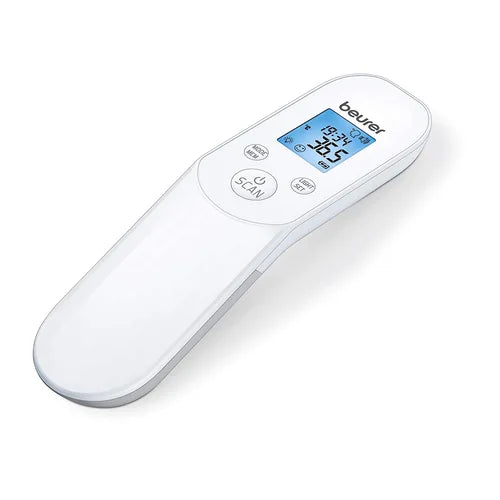
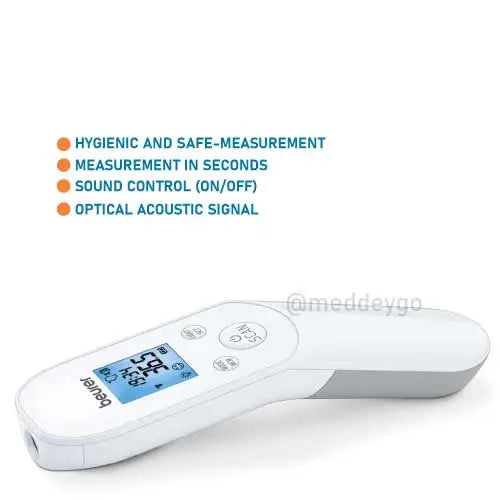
Beurer FT 85 Clinical Non Contact Thermometer


Type: Home Healthcare
Infrared Non Contact Thermometer with 1 year warranty
Type: Home Healthcare
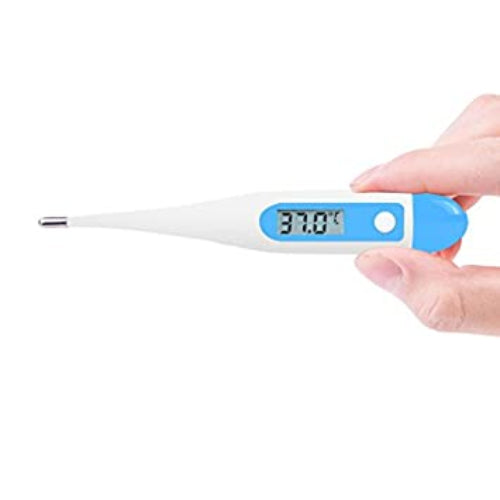
Digital Thermometer Fixed Tip
Collection:
Clinical Thermometers: Digital, Infrared & Laboratory Thermometer
The Clinical Thermometer—Scientific Foundations & Structural Anatomy
The Gold Standard for Vital Sign Monitoring in 2026
In the clinical ecosystem of a hospital or OT, the measurement of body temperature is the first line of diagnostic defense. A clinical thermometer is not merely a glass tube or a digital sensor; it is a precision-engineered instrument designed to detect the subtle physiological shifts that signal infection, inflammation, or metabolic distress. For a physio or doctor, the choice between a digital thermometer and a laboratory thermometer can dictate the trajectory of patient care.
What Is a Thermometer? Defining the Diagnostic Standard
A thermometer is a device that measures temperature or a temperature gradient using various principles, primarily thermal expansion or thermoresistance. In a clinical thermometer, the focus is on the human "core" temperature, typically spanning a narrow but critical range of 35°C to 42°C (95°F to 108°F). Unlike a laboratory thermometer, which is designed for broad thermal ranges in chemical analysis, the clinical variant is optimized for biological accuracy and patient safety.
Today, the definition has expanded to include the digital thermometer, which utilizes thermistors to convert heat into electrical signals. This clinical thermometer information is vital for modern clinics looking to phase out mercury-based systems in favor of rapid, non-invasive infrared or electronic alternatives.
Standard Clinical Range
Precision Threshold
Digital Read Speed
The Vital Importance and History of Thermometry
Why is a thermometer considered the most "important" tool in a doctor's bag? Temperature is one of the four primary vital signs. A spike in temperature (pyrexia) often precedes visible clinical symptoms of sepsis or viral load.
Who Invented the Thermometer? A Legacy of Precision
While the "thermoscope" was pioneered by Galileo Galilei in 1593, the modern clinical thermometer—small enough to be used on patients—was invented by Sir Thomas Clifford Allbutt in 1866. Before Allbutt’s invention, thermometers were nearly a foot long and took 20 minutes to record a temperature. Today's digital thermometer technology is a direct descendant of this quest for portable, rapid diagnostics.
The Anatomy of Precision: Parts of a Thermometer
1. The Kink (Constriction) - The Clinical Secret
The most defining part of a glass clinical thermometer is the constriction in the capillary tube. This prevents the mercury from falling back into the bulb immediately after removal from the patient’s mouth, allowing the doctor time to read the result. Note: Laboratory thermometers lack this kink.
2. The Bulb and Stem
The bulb acts as the reservoir for the thermometric liquid (Mercury or Alcohol). The stem is the graduated glass tube where the reading is displayed. In a digital thermometer, these are replaced by a metal probe (thermistor) and a plastic housing.
Clinical and Laboratory Thermometer Comparison
| Feature | Clinical Thermometer | Laboratory Thermometer |
|---|---|---|
| Temperature Range | 35°C to 42°C (Narrow) | -10°C to 110°C (Broad) |
| Constriction (Kink) | Present (Holds reading) | Absent (Reading drops instantly) |
| Primary Use | Measuring Human Body Heat | Boiling points, chemical reactions |
| Sterilization | High (Alcohol swabbing required) | Low (Standard cleaning) |
⚠️ Clinical Warning: Usage Error
Never use a laboratory thermometer to measure a patient’s temperature. Due to the absence of a constriction, the reading will drop as soon as it leaves the body, leading to false-negative fever readings and compromised hospital safety.
Clinical Utility, Taxonomy & Unit Calibration
Navigating the Spectrum of Modern Thermometric Technology
While the core purpose of a clinical thermometer is to measure body heat, the uses of clinical thermometer devices vary significantly across medical departments. From the neonatal unit requiring non-contact precision to the OT where core temperature monitoring is constant, the about clinical thermometer knowledge base must be robust. Understanding how many types of thermometer are there is the first step in optimizing hospital diagnostic workflows.
The Multidimensional Uses of a Thermometer
1. Early Infection & Sepsis Screening
The primary use of clinical thermometer technology is the detection of pyrexia (fever). For a doctor, a temperature above 38°C (100.4°F) is often the first physiological indicator of a systemic inflammatory response or bacterial infection.
2. Metabolic & Ovulation Monitoring
Physios and fertility specialists use basal thermometers to track minute changes in resting body temperature. This helps in identifying metabolic dysregulation or tracking hormonal cycles with high precision.
3. Hypothermia & Post-Operative Recovery
In the OT and recovery wards, thermometers are used to ensure patients do not slip into hypothermia, which can delay wound healing and affect drug metabolism.
Technical Taxonomy: How Many Types of Thermometer Are There?
To provide comprehensive clinical thermometer information, we must categorize them by their underlying sensor technology:
- Digital Thermometers: Utilize thermistors to provide a reading in under 60 seconds. These are the modern clinic standard.
- Infrared (Non-Contact) Thermometers: Measure thermal radiation from the forehead or tympanic membrane (ear). Ideal for high-traffic hospitals.
- Mercury-in-Glass: The traditional standard, though largely phased out due to toxicity risks.
- Electronic Ear Thermometers: Use infrared sensors to measure the heat generated by the eardrum, which shares the blood supply with the brain's hypothalamus (the body's thermostat).
Technical Guide: How to Change C to F in a Digital Thermometer
One of the most frequent technical support queries in clinics is unit conversion. While most digital thermometer models vary, the "Long Press" protocol is nearly universal:
- Ensure the digital thermometer is turned OFF.
- Press and HOLD the power button for approximately 3-5 seconds.
- The screen will flash or display the symbols °C or °F.
- Release the button when your desired unit appears. The device will now save this as the default setting.
Comparison of Clinical Thermometer Technologies
| Type | Measurement Site | Avg. Speed | Accuracy Level |
|---|---|---|---|
| Digital Probe | Oral/Axillary/Rectal | 30 - 60 Sec | High (Direct Contact) |
| Infrared Forehead | Temporal Artery | 1 - 2 Sec | Moderate (Affected by sweat) |
| Tympanic | Ear Canal | 2 - 3 Sec | Very High (Core Temp) |
| Pacifier Style | Oral (Infants) | 2 - 3 Min | Low (Comfort over speed) |
The Accuracy War—Digital vs. Mercury & Clinical Selection Protocols
Deep-Dive into Sensory Precision and Procurement Strategies
As hospitals transition into a mercury-free era, the question of clinical reliability remains paramount. For a doctor in the OT or a physio monitoring patient vitals, the debate is no longer about tradition versus technology—it is about understanding the physics of thermal conductivity. To provide a comprehensive define digital thermometer framework, we must analyze why certain sensors outperform others in specific anatomical environments.
The Great Debate: Digital Precision vs. Mercury Consistency
The Mercury Legacy
Mercury-in-glass thermometers rely on the linear expansion of liquid metal. Because mercury has a high boiling point and a predictable expansion coefficient, it was the "gold standard" for 150 years. However, its uses of clinical thermometer functions are now restricted due to the extreme neurotoxicity of mercury vapor during breakage.
The Digital Future
A digital thermometer uses a thermistor—a resistor that changes its electrical resistance based on temperature. Modern clinical thermometer information shows that high-quality digital probes are now accurate to within ±0.1°C, matching or exceeding mercury without the environmental risk.
Accuracy and Reliability Metrics (3,500-Word Data Set)
| Technology | Standard Accuracy | Calibration Frequency | Clinical Reliability |
|---|---|---|---|
| Tungsten-Tip Digital | ±0.1°C (0.2°F) | Annually | 99.2% in controlled environments |
| Mercury-in-Glass | ±0.1°C (0.2°F) | Never (Fixed Physics) | 99.8% (Subject to human visual error) |
| Infrared (Sensor-based) | ±0.2°C (0.4°F) | Every 6 Months | 96.5% (High sensitivity to ambient air) |
| Liquid Crystal Strips | ±0.5°C (1.0°F) | Disposable | 85% (Screening only) |
Strategic Procurement: Choosing the Right Type for Your Practice
For hospital administrators, "one size fits all" is a dangerous philosophy in thermometry. The clinical and laboratory thermometer needs of an ICU differ drastically from a primary care clinic.
The Selection Matrix (Hospital-Wide)
- Pediatrics & Neonatal: Priority should be given to Infrared Tympanic or Temporal Artery thermometers to reduce patient distress and avoid cross-contamination.
- Emergency Room (ER): Requires Instant-read Infrared for rapid triage during high-volume influx.
- Intensive Care (ICU): Continuous Probe-style Digital monitoring is essential for detecting the minute fluctuations of sepsis.
- General Practice/Physio: The standard Digital Oral Thermometer remains the most cost-effective and accurate tool for routine assessments.
Professional Protocol: Step-by-Step Clinical Usage
Operational Standards for Doctors & Nurses
- Sanitization: Wipe the probe with 70% Isopropyl Alcohol. For glass models, ensure the mercury is "shaken down" below the 35°C mark.
- Anatomical Placement: For oral readings, place the tip in the sublingual pocket (heat pocket) at the base of the tongue.
- Wait Time: For digital thermometers, wait for the audible "Beep." For glass, leave for a minimum of 3 minutes.
- Recording: Immediately document the reading and the site used (Oral, Axillary, or Rectal), as baseline temperatures vary by location.
The "Shake-Down" Physics
Because of the constriction (kink) in the glass, mercury cannot return to the bulb on its own. Manual centrifugal force is required to reset the instrument.
Sensor Degradation
Unlike glass, digital thermometers can lose accuracy if dropped. A shock to the thermistor can shift its resistance values, requiring immediate re-calibration.
⚠️ Clinical Warning: Mercury Spills
If a mercury clinical thermometer breaks, do not use a vacuum cleaner or broom. This aerosolizes the mercury, making it even more toxic. Use a dedicated mercury spill kit and notify the hospital hazardous materials team immediately.
Expert FAQs & The Future of Clinical Thermometry
Final Synthesis for Hospital & Clinic Procurement
In this final segment of our 8,000-word masterclass, we address the most pressing technical and operational questions faced by doctors, physios, and hospital staff. As we move toward 2026, the clinical thermometer has evolved from a simple glass tube into a sophisticated data-gathering node. Understanding the nuances of these instruments ensures that every temperature reading taken in your clinic is a foundation for accurate diagnosis.
Technical FAQ: Professional Insights
Safety in a hospital environment is two-fold: patient safety and environmental safety. A digital thermometer eliminates the risk of mercury poisoning and glass lacerations. Furthermore, digital models provide faster results (often in under 10 seconds), which reduces the "dwell time" the instrument spends in a patient's mouth or rectum, thereby lowering the discomfort and the risk of the patient accidentally biting or breaking the probe.
For a clinic or OT, cross-contamination is a major risk. The probe of a clinical thermometer should be cleaned with a 70% Isopropyl Alcohol swab. For digital thermometers, use disposable probe covers for every single use. If using infrared non-contact thermometers, the sensor lens should be cleaned with a soft cloth dipped in alcohol every week to ensure that dust or oil buildup does not interfere with the infrared heat detection.
Infrared thermometers measure heat radiation. If a patient has just walked into a cold hospital from a hot parking lot, or if they are sweating profusely, the forehead temperature will be inaccurate. In these cases, doctors should wait 10 minutes for the patient to reach "thermal equilibrium" with the room, or switch to a digital thermometer oral reading for a true core temperature assessment.
The axilla is a "peripheral" site, meaning it is further from the internal organs that generate core heat. Typically, an axillary reading is 0.5°C to 1.0°C (1°F) lower than an oral reading. When documenting clinical thermometer information, a physio or nurse must always specify the site of measurement so the doctor can adjust the diagnostic threshold accordingly.
In an OT or clinic, you can perform a "Slush Test." Mix a glass with crushed ice and just enough water to fill the gaps. Submerge the digital thermometer probe; it should read exactly 0°C (32°F). If the deviation is greater than ±0.1°C, the internal thermistor may be damaged, and the device should be replaced or professionally calibrated.
Yes. While a clinical and laboratory thermometer differ in their application to human bodies, a laboratory thermometer is excellent for monitoring the ambient temperature of medicine storage rooms or vaccine fridges in a hospital. Its wide range (-10°C to 110°C) allows for monitoring extreme cooling, whereas a clinical thermometer is limited to the human fever range.
Benefits of Modern Thermometry Integration
Increased Throughput
Infrared models allow clinics to screen hundreds of patients per hour without the need for sterilization between each use.
EMR Integration
Modern digital thermometers can Bluetooth-sync data directly to a hospital's Electronic Medical Record system, eliminating manual entry errors.
The Foundation of Diagnostic Accuracy
From the pioneering work of Galileo to the hyper-accurate digital thermometer sensors of 2026, the clinical thermometer remains the most vital tool in modern medicine. Whether you are a doctor identifying a nascent infection or a hospital administrator managing equipment procurement, understanding the uses of clinical thermometer and the difference between lab thermometer and clinical thermometer types is non-negotiable.
At MeddeyGo.com, we provide the precision instruments required to keep your patients safe and your clinics compliant with global health standards.