
Filter
5 products
Type: Devices
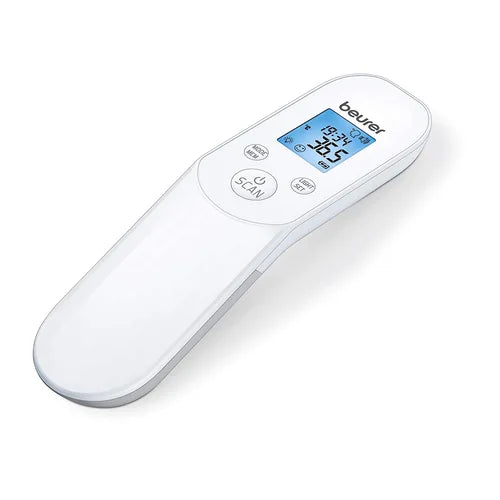
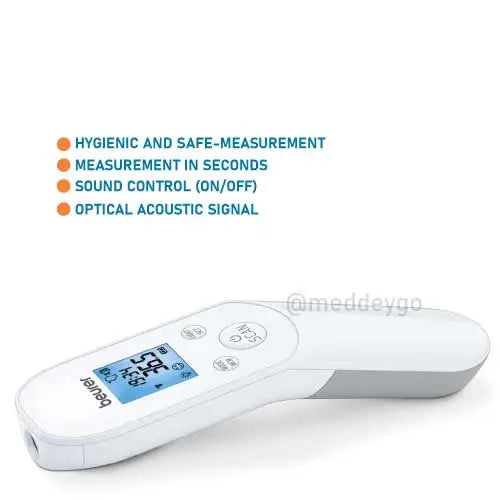
Beurer FT 85 Clinical Non Contact Thermometer


Type: Home Healthcare
Infrared Non Contact Thermometer
Type: Home Healthcare
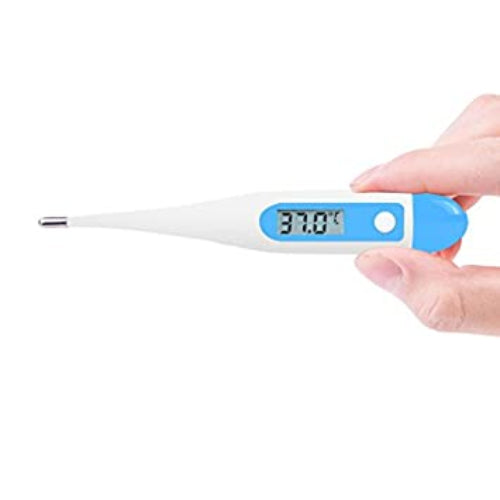
Digital Thermometer Fixed Tip

Type:
Accusure Non-Contact Infrared Thermometer with 1 Year Warranty


Type: General Instruments
Thermometer Jar 5 Inch Stainless Steel
Collection:
Digital Thermometer Guide: Fever, Normal Temperature, Price & Use
Introduction: Why a Digital Thermometer Is Essential for Home Temperature Checking
A digital thermometer is an electronic device used to measure body temperature and display the result numerically. It is one of the most practical tools for checking fever at home, in clinics, hospitals, schools and care facilities. Unlike older mercury thermometers, most modern digital clinical thermometers use an electronic sensor and do not contain mercury.
Users may search for the same product using terms such as temperature meter, electronic thermometer, fever thermometer, digital clinical thermometer, celsius thermometer, manual thermometer or brand-specific searches such as Omron thermometer and Omron digital thermometer. Product types differ significantly, so the best model depends on age, measurement site, speed, accuracy requirements and intended setting.
A high temperature in adults is generally considered around 38°C or higher, although body temperature varies naturally through the day and by measurement site. A single reading should always be interpreted with symptoms, age and medical context. Babies, young children, older adults and immunocompromised patients may require more cautious assessment.
This Meddeygo.com guide explains how digital thermometers work, oral and axillary temperature checking, normal temperature ranges, fever interpretation, thermometer types, price factors, cleaning, safety, comparison with manual thermometers and how to choose a reliable device online.
Home & Family Care
Useful for routine fever checks and monitoring temperature trends during illness.
Clinics & Hospitals
Digital clinical thermometers provide fast spot measurements in patient-care settings.
Child & Adult Care
Simple displays, fever alarms and memory functions can make repeated monitoring easier.
What Is a Digital Thermometer?
A digital thermometer uses an electronic temperature sensor, usually a thermistor or similar component, to detect temperature. The sensor changes its electrical characteristics as temperature changes, and the internal circuit converts that change into a numerical reading shown on a display.
Probe-style digital thermometers are commonly used in the mouth or armpit, depending on age and manufacturer guidance. Other digital formats include tympanic ear thermometers and non-contact infrared forehead thermometers. Each method has different technique requirements and should not be assumed to produce identical values.
Simple Definition
A digital thermometer is an electronic temperature-measuring device that converts sensor information into a numerical reading on a display.
Key Benefits of a Digital Thermometer
Easy-to-Read Display
Large digital numbers make results easier to interpret than reading a glass column.
Fever Alarm
Many models beep or display an alert when a high temperature is detected.
Memory Function
Previous readings may be stored to support temperature trend tracking.
Quick Measurement
Modern probe thermometers can provide readings within seconds to a few minutes, depending on model.
Low Battery Indication
A battery symbol can warn the user when replacement is required.
Auto Switch-Off
Many devices conserve battery by switching off after a period of inactivity.
How Does a Digital Thermometer Work?
In a probe thermometer, the sensor at the tip comes into contact with the body area being measured. As the sensor warms, its electrical resistance changes. A microprocessor estimates the temperature and displays the result in Celsius or Fahrenheit.
Infrared thermometers work differently. They detect infrared energy emitted by the skin or tympanic membrane and convert it into a temperature estimate. Because distance, positioning and environmental temperature can affect infrared readings, the manufacturer's technique is especially important.
How to Check Fever with a Digital Thermometer
Correct technique is essential because an inaccurate position can produce a reading that is lower or higher than the true body temperature. For a standard probe thermometer, first clean the probe, switch the device on and wait until it indicates that it is ready.
- Wash or sanitise hands before handling the thermometer.
- Check that the probe is clean and the device is working.
- Select Celsius or Fahrenheit if the device allows unit selection.
- Place the probe at the recommended measurement site.
- Keep the thermometer in position until it beeps or indicates a stable reading.
- Read and record the temperature if monitoring over time.
- Clean the probe according to manufacturer instructions after use.
- Store the thermometer in a clean, dry protective case.
Oral Temperature Measurement
For an oral reading, the probe is usually placed under the tongue toward the back of the mouth and the lips are closed around it. The patient should breathe normally through the nose and avoid talking or biting the probe.
Hot or cold drinks, smoking and eating can temporarily affect mouth temperature, so follow the device instructions about how long to wait before an oral measurement. Oral measurement may not be suitable for very young children or people who cannot safely hold the probe in place.
Axillary Temperature Measurement
Axillary measurement means placing the probe in the armpit. The skin should be dry, and the thermometer tip should make good contact with the skin rather than clothing. The arm is then held close to the body until measurement is complete.
Armpit readings can differ from oral or rectal measurements. Use the same measurement method when comparing trends whenever practical.
Normal Temperature in a Digital Thermometer
Normal body temperature is not one fixed number. It varies between people, through the day, with activity, age and measurement location. The often-quoted 37°C is a useful reference point, but healthy readings may be somewhat lower or higher.
For adults, a temperature of around 38°C or higher is generally considered a fever. Some people can feel feverish or unwell even with a reading below this threshold, so symptoms still matter.
| Reading / Situation | General Interpretation | Important Note |
|---|---|---|
| Around 36–37.5°C | Common normal range for many adults | Normal varies by person and measurement site. |
| 38°C or higher | Generally considered a high temperature / fever in adults | Consider symptoms and clinical context. |
| Very low temperature | May indicate exposure, illness or measurement error | Repeat correctly and seek advice if genuinely low with symptoms. |
| Repeated rising readings | May indicate worsening fever | Monitor symptoms and seek advice when appropriate. |
Is 99.4°F a Fever in a Digital Thermometer?
99.4°F is approximately 37.4°C. In most adults this is below the commonly used 38°C fever threshold, so it is not usually classified as a fever by itself. However, temperature depends on the measurement site and individual baseline.
If someone feels very unwell, has chills, breathing difficulty, rash, confusion, dehydration or another concerning symptom, a number below 38°C does not rule out illness. Recheck the temperature correctly and consider medical advice based on the overall situation.
Types of Digital Thermometers
Probe Digital Thermometer
A probe thermometer is the familiar pen-shaped electronic thermometer used orally, axillary or sometimes rectally according to product instructions. It is affordable, compact and widely suitable for home use.
Infrared Forehead Thermometer
A forehead infrared thermometer measures emitted heat from the skin without needing a probe under the tongue. It can be very quick and convenient for screening, but distance and positioning must follow the product instructions.
Ear Thermometer
Tympanic thermometers measure infrared heat in the ear canal. They can be fast but require correct ear positioning and are not suitable for every age group.
Flexible-Tip Thermometer
A flexible probe tip may be more comfortable than a rigid probe, particularly for children or repeated home measurements.
Basal Thermometer
Basal thermometers are designed to detect smaller temperature changes and are often used for fertility tracking rather than routine fever checking.
| Type | Main Advantage | Common Limitation |
|---|---|---|
| Probe Digital | Affordable and straightforward | Requires contact and correct site placement. |
| Infrared Forehead | Very fast and contact-minimising | Technique and environment can affect results. |
| Ear / Tympanic | Quick and convenient | Correct ear positioning is essential. |
| Flexible-Tip Probe | Comfortable for repeated use | Still requires contact cleaning. |
| Basal Thermometer | Higher reading resolution | Not primarily intended for fever screening. |
Digital Thermometer vs Manual Thermometer
The phrase manual thermometer may refer to a traditional glass thermometer. Older mercury thermometers relied on expansion of mercury in a glass column, while newer glass thermometers may use safer alternative liquids. Digital devices are usually easier to read and avoid the risks associated with mercury-containing glass.
| Point | Digital Thermometer | Traditional Glass Thermometer |
|---|---|---|
| Display | Electronic numbers | Liquid column scale |
| Speed | Generally faster | Often slower |
| Ease of Reading | High | Requires careful scale reading |
| Breakage Risk | Lower for standard plastic devices | Glass can break |
| Battery | Required | Not required |
| Extra Features | Memory, alarm, auto-off may be available | Usually none |
Digital Clinical Thermometer Features
A digital clinical thermometer may include several convenience functions. These features do not replace accuracy, but they can make home monitoring easier.
- Fever alarm or high-temperature indicator
- Last-reading memory
- Multiple user memory on advanced models
- Celsius and Fahrenheit selection
- Low-battery indicator
- Auto switch-off
- Water-resistant or washable probe on selected models
- Flexible tip on child-friendly models
- Backlit display on selected devices
Omron Digital Thermometer
Omron digital thermometer is a common brand-specific search because Omron supplies several home-health monitoring products. Exact features vary between model numbers. Some models focus on basic probe measurement, while others may include flexible tips or memory functions.
When comparing an Omron thermometer or any other brand, check the exact model, measurement site, stated accuracy, measurement time, battery type and cleaning instructions rather than choosing by brand name alone.
Room Thermometer vs Fever Thermometer
A room thermometer measures ambient air temperature. It is not designed to measure body temperature. A clinical fever thermometer is calibrated and shaped specifically for human body-temperature measurement.
This distinction is important because a household wall thermometer or refrigerator thermometer cannot substitute for a clinical temperature-measuring device.
How to Clean and Maintain a Digital Thermometer
Cleaning requirements depend on whether the thermometer is waterproof, water-resistant or only wipe-clean. For most probe thermometers, the sensor tip can be cleaned with an approved disinfecting wipe or according to manufacturer instructions. The entire device should not be immersed unless the product explicitly allows it.
- Clean the probe before and after use.
- Do not use abrasive cleaners on the sensor or display.
- Avoid immersing non-waterproof electronic parts.
- Allow the probe to dry before replacing the protective cap.
- Store away from extreme heat, moisture and direct sunlight.
- Replace batteries when the low-battery indicator appears.
- Do not use a cracked or damaged thermometer.
- For shared clinical devices, follow infection-control procedures between patients.
Cleaning Rule
Follow the exact model instructions. 'Water resistant' does not always mean the whole thermometer can be submerged.
Digital Thermometer Safety
A digital thermometer is generally safe when used at the intended measurement site. Problems can occur if a child bites a probe, a rectal thermometer is inserted too far, or a damaged device is used.
- Supervise children during temperature measurement.
- Do not force a probe into the mouth, ear or rectum.
- Use separate labelled thermometers for rectal and oral use when applicable.
- Do not share an uncleaned contact thermometer.
- Keep button batteries away from children.
- Stop using a thermometer with a damaged casing or probe.
- Seek medical advice for concerning symptoms rather than repeatedly checking temperature only.
When Fever Needs Medical Attention
The temperature number is only part of the assessment. Urgent evaluation may be needed for severe breathing difficulty, confusion, stiff neck, severe headache, seizures, a non-blanching rash, persistent vomiting, signs of dehydration or significant deterioration.
Infants require special caution. Fever thresholds and advice vary by age, and very young babies with a high temperature need prompt professional assessment. Patients receiving chemotherapy, immunosuppressive treatment or with serious underlying disease may also have lower thresholds for contacting their care team.
Thermometer Price
Thermometer price depends on technology, brand, measurement speed, display, memory, fever alarm, backlight, waterproofing and connectivity. Basic probe thermometers are usually less expensive than infrared forehead or ear devices.
| Price Factor | Why It Matters |
|---|---|
| Measurement Technology | Probe, infrared forehead and tympanic devices have different electronics. |
| Speed | Faster predictive measurement may increase convenience. |
| Display | Backlit or large displays may increase cost. |
| Memory | Stored readings help trend monitoring. |
| Fever Alarm | Adds an automatic alert function. |
| Brand / Warranty | Service support and brand quality affect value. |
How to Choose the Best Digital Thermometer
- Choose a clinical thermometer designed for body-temperature measurement.
- Check the intended age group and measurement sites.
- Prefer a clear, easy-to-read display.
- Review stated measurement accuracy.
- Check whether the model uses actual or predictive measurement.
- Consider memory and fever alarm if tracking illness.
- Check battery availability and replacement method.
- For children, consider a flexible tip or suitable infrared model.
- For clinic use, review cleaning and disinfection compatibility.
- Compare the exact model before comparing price.
Common Digital Thermometer Mistakes
| Mistake | Possible Effect | Better Practice |
|---|---|---|
| Measuring immediately after a hot drink | Oral reading may be altered | Wait as recommended before oral measurement. |
| Poor axillary contact | Reading may be low or inconsistent | Keep probe in firm skin contact. |
| Wrong infrared distance | Inaccurate forehead result | Follow the model's distance and positioning guide. |
| Comparing different sites directly | Values may differ naturally | Use the same site for trends when possible. |
| Not cleaning shared probe | Cross-contamination risk | Clean between users. |
| Treating one number as diagnosis | May miss important symptoms | Interpret temperature with overall condition. |
Buying a Digital Thermometer Online from Meddeygo.com
When buying a digital thermometer online, check whether the product is intended for body temperature, the approved measurement sites, unit options, battery type and warranty. If purchasing for a clinic, also review disinfection requirements and whether disposable probe covers are supported.
Meddeygo.com Medansh.in offers home-health, diagnostic and patient-monitoring products for individual and professional users. Compare the exact product specifications rather than relying only on the lowest thermometer price.
How to Keep a Useful Fever Record
When temperature is being monitored over several days, consistency is more useful than repeatedly checking at random intervals. Record the date, time, measurement site, temperature and important symptoms. If fever medicine was given, note the medicine and time as well. This gives a doctor a clearer picture than a list of temperatures without context.
Try to use the same thermometer and the same body site for trend comparison. Switching between oral, axillary, ear and forehead methods can create natural differences that look like sudden changes even when the patient's condition is stable.
Digital Thermometer for Children
For children, the thermometer should be appropriate for age and easy to position safely. Probe thermometers are often used in the armpit for younger children, while oral measurement may be practical in older children who can keep the probe correctly under the tongue. Ear and forehead thermometers can be convenient, but the instructions must be followed carefully.
Parents should focus on the child's overall condition as well as the number. Poor feeding, dehydration, persistent sleepiness, breathing difficulty, seizure, rash or an infant with fever may require prompt medical advice even when the exact number is not extremely high.
Battery, Display and Storage Considerations
A fading display, repeated error codes or a low-battery symbol can affect confidence in readings. Keep spare batteries of the correct type, especially if the thermometer is used for a child or a medically vulnerable person. Button batteries must be stored securely away from children because swallowing them is a medical emergency.
Store the device inside its protective case rather than loose in a bathroom cabinet. Extreme heat, moisture and direct sunlight can damage electronics. If the thermometer has been stored in a very cold or hot environment, allow it to reach normal room conditions before use if the manual advises this.
Digital Thermometer for Clinics and Professional Buyers
Clinics should consider not only measurement speed but also infection-control workflow. A thermometer used between patients should have a probe or surface that can be disinfected quickly without damaging the sensor. Models compatible with disposable probe covers can simplify repeated use in some settings.
Professional buyers should review accuracy specifications, service support, battery availability, storage requirements and whether the device is intended for repeated clinical use. A low-cost household product may not be the best choice for a high-volume OPD.
Why Temperature Readings Vary During the Day
Body temperature follows a daily rhythm and is often lower in the morning and somewhat higher later in the day. Activity, menstrual cycle, environmental heat, meals and some medicines can also influence temperature. This is why a small difference between morning and evening readings is not automatically a problem.
When monitoring an illness, look for the overall trend and symptoms rather than reacting to every decimal change. A rise from 36.8°C to 37.2°C is usually less important than a patient who becomes confused, breathless or dehydrated.
Digital Thermometer Accuracy in Everyday Use
When considering digital thermometer for consistent home fever monitoring, the first step is to match the product to the actual use rather than relying only on a popular keyword or appearance. Check the manufacturer's specification, intended user, fit or size information, and any safety limitations that apply. A product that works well in one situation may be unsuitable in another because body size, duration of use, clinical condition and user technique can change the result. For home use, keep the instructions available and review the product periodically for wear, damage or reduced performance. For professional purchasing, documentation, batch traceability and consistent supply are also important.
Choosing Between Oral and Axillary Measurement
A practical way to evaluate selecting the most practical measurement site is to separate comfort features from functional requirements. Comfort can improve adherence, but it should not replace correct sizing, material quality or appropriate clinical selection. Compare dimensions and performance details in measurable terms wherever possible. If the product is being used because of persistent pain, fever, swelling, incontinence, respiratory risk or another ongoing health problem, the underlying condition may need assessment even when the product provides short-term convenience. The goal is to use digital thermometer as part of sensible care rather than as a substitute for diagnosis or professional advice.
Forehead Thermometer Technique
Buyers often compare non-contact temperature checks mainly by price, but total value also includes durability, ease of use, replacement needs and the consequences of poor fit or poor performance. A slightly higher purchase price can be reasonable when it provides better material quality, clearer instructions or more reliable use. At the same time, expensive branding alone does not prove that a product is superior. Read the exact specification and choose the simplest option that safely meets the intended requirement. When several people will use the product, consider hygiene, cleaning and whether separate user-specific items are needed.
Thermometer Use for Older Adults
When considering digital thermometer for easy reading and repeated monitoring, the first step is to match the product to the actual use rather than relying only on a popular keyword or appearance. Check the manufacturer's specification, intended user, fit or size information, and any safety limitations that apply. A product that works well in one situation may be unsuitable in another because body size, duration of use, clinical condition and user technique can change the result. For home use, keep the instructions available and review the product periodically for wear, damage or reduced performance. For professional purchasing, documentation, batch traceability and consistent supply are also important.
Thermometer Use During Viral Illness
A practical way to evaluate recording trends rather than isolated numbers is to separate comfort features from functional requirements. Comfort can improve adherence, but it should not replace correct sizing, material quality or appropriate clinical selection. Compare dimensions and performance details in measurable terms wherever possible. If the product is being used because of persistent pain, fever, swelling, incontinence, respiratory risk or another ongoing health problem, the underlying condition may need assessment even when the product provides short-term convenience. The goal is to use digital thermometer as part of sensible care rather than as a substitute for diagnosis or professional advice.
Clinical Thermometer Procurement
Buyers often compare high-volume clinic use and disinfection mainly by price, but total value also includes durability, ease of use, replacement needs and the consequences of poor fit or poor performance. A slightly higher purchase price can be reasonable when it provides better material quality, clearer instructions or more reliable use. At the same time, expensive branding alone does not prove that a product is superior. Read the exact specification and choose the simplest option that safely meets the intended requirement. When several people will use the product, consider hygiene, cleaning and whether separate user-specific items are needed.
Understanding Error Messages
When considering digital thermometer for battery, sensor and positioning problems, the first step is to match the product to the actual use rather than relying only on a popular keyword or appearance. Check the manufacturer's specification, intended user, fit or size information, and any safety limitations that apply. A product that works well in one situation may be unsuitable in another because body size, duration of use, clinical condition and user technique can change the result. For home use, keep the instructions available and review the product periodically for wear, damage or reduced performance. For professional purchasing, documentation, batch traceability and consistent supply are also important.
Temperature Units: Celsius vs Fahrenheit
A practical way to evaluate avoiding unit confusion is to separate comfort features from functional requirements. Comfort can improve adherence, but it should not replace correct sizing, material quality or appropriate clinical selection. Compare dimensions and performance details in measurable terms wherever possible. If the product is being used because of persistent pain, fever, swelling, incontinence, respiratory risk or another ongoing health problem, the underlying condition may need assessment even when the product provides short-term convenience. The goal is to use digital thermometer as part of sensible care rather than as a substitute for diagnosis or professional advice.
Travel Thermometer Selection
Buyers often compare compact storage and battery reliability mainly by price, but total value also includes durability, ease of use, replacement needs and the consequences of poor fit or poor performance. A slightly higher purchase price can be reasonable when it provides better material quality, clearer instructions or more reliable use. At the same time, expensive branding alone does not prove that a product is superior. Read the exact specification and choose the simplest option that safely meets the intended requirement. When several people will use the product, consider hygiene, cleaning and whether separate user-specific items are needed.
Thermometer Replacement
When considering digital thermometer for recognising when a device is damaged or inconsistent, the first step is to match the product to the actual use rather than relying only on a popular keyword or appearance. Check the manufacturer's specification, intended user, fit or size information, and any safety limitations that apply. A product that works well in one situation may be unsuitable in another because body size, duration of use, clinical condition and user technique can change the result. For home use, keep the instructions available and review the product periodically for wear, damage or reduced performance. For professional purchasing, documentation, batch traceability and consistent supply are also important.
Hover Quick Guide
Neeche highlighted terms par cursor le jao:
Digital ThermometerElectronic sensor use karke body temperature ko numerical display par show karta hai. FeverAdults mein around 38°C ya usse zyada temperature generally fever maana jaata hai. Probe ThermometerMouth ya armpit measurement ke liye common pen-style digital thermometer. Infrared ThermometerForehead ya ear se infrared heat detect karke fast temperature estimate deta hai.
Frequently Asked Questions
What is a digital thermometer?
A digital thermometer is an electronic device that measures temperature using a sensor and shows the result on a numerical display.
How does a digital thermometer work?
A sensor changes its electrical properties with temperature, and an electronic circuit converts that change into a digital reading.
How do I check fever with a digital thermometer?
Place the probe at the approved measurement site, keep it correctly positioned until the reading is stable, then record the displayed temperature.
What is normal temperature in a digital thermometer?
Normal varies, but many healthy adults fall around the mid-36°C to low-37°C range. 38°C or more is generally considered fever in adults.
Is 99.4°F a fever?
99.4°F is about 37.4°C, which is usually below the adult fever threshold of around 38°C.
Which digital thermometer is best for home use?
A reliable clinical thermometer with clear instructions, suitable measurement site and easy cleaning is usually a good home choice.
Can a digital thermometer be used in the armpit?
Yes, many probe thermometers support axillary measurement. Follow the model instructions.
Can a digital thermometer be used orally?
Many probe models can be used orally in older children and adults who can safely hold the thermometer under the tongue.
What is a fever thermometer?
It is a clinical thermometer designed to measure human body temperature and help identify high temperature.
What is a Celsius thermometer?
It is a thermometer displaying temperature in degrees Celsius. Many digital models can switch between Celsius and Fahrenheit.
What is the difference between room thermometer and clinical thermometer?
A room thermometer measures ambient air; a clinical thermometer is designed for body temperature.
Is an Omron digital thermometer accurate?
Suitability depends on the exact validated model and correct technique. Check the specific model instructions and stated accuracy.
How should I clean my digital thermometer?
Clean the probe using the method specified by the manufacturer and avoid immersing electronics unless the device is rated for it.
Why does my thermometer show different readings?
Body temperature changes naturally, and measurement site, position, environment and timing can affect results.
Can I take temperature after exercise?
Exercise can temporarily raise body temperature. Allow time to rest before a routine measurement.
Do digital thermometers need calibration?
Many home thermometers are factory calibrated. If readings become inconsistent, follow manufacturer service or replacement advice.
How long does a digital thermometer take?
Measurement time varies from seconds to a few minutes depending on the model and measurement method.
What affects thermometer price?
Technology, speed, memory, alarm, display, waterproofing, brand and warranty affect price.
Can one thermometer be shared?
Yes, if the product is suitable for sharing and the contact surface is properly cleaned between users.
When should fever be treated as urgent?
Urgency depends on age, symptoms and medical history. Severe breathing difficulty, confusion, seizure, serious rash or marked deterioration require prompt medical attention.
Conclusion
A digital thermometer is a practical tool for checking body temperature at home or in healthcare settings. Correct measurement technique is essential for useful readings.
Adults commonly use 38°C or higher as a fever threshold, but symptoms, age and medical history remain important when deciding when to seek care.
Explore digital thermometers and home diagnostic products online at Meddeygo.com and compare the exact model, measurement method and features before purchase.