
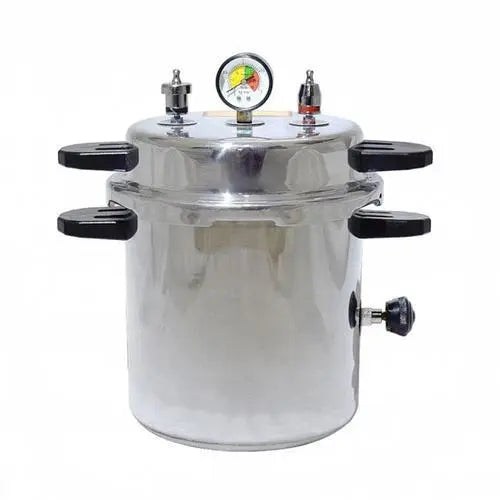
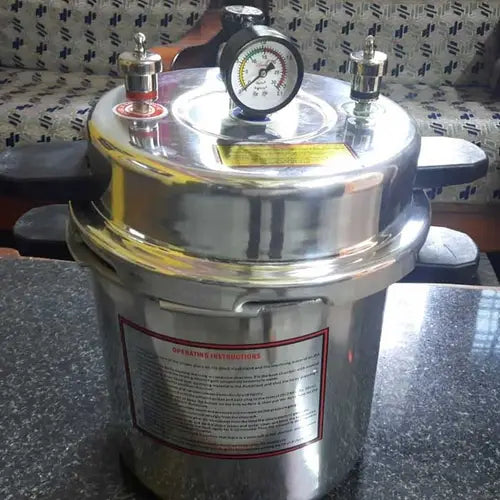
Type: General
Autoclave Sterilizer, Mirror Finish, Electric, 10 Liter
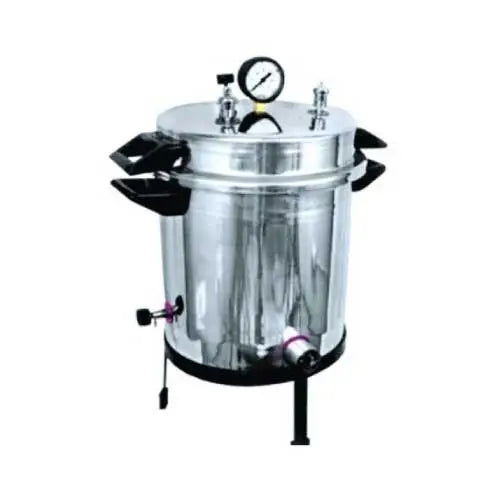
Type: General
Autoclave Aluminium Pressure cooker type Electric
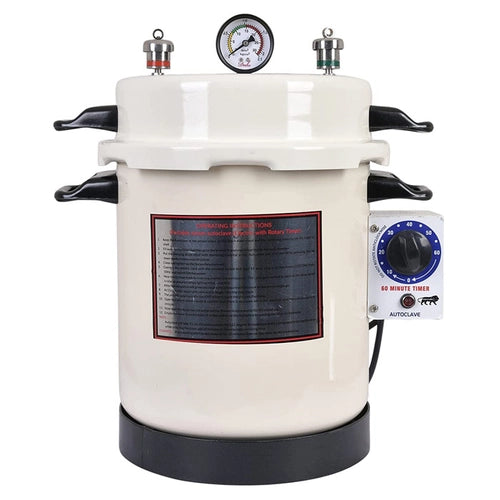
Type: Dental Autoclave 10L Cooker
Dental Autoclave 10L Cooker Type with Timer Powder Coated 9 x 11 Inch
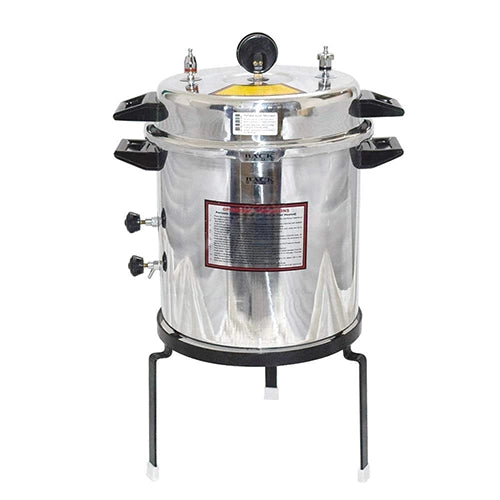
Type: General
Autoclave 40 Litres Pressure Cooker Type, Mirror Finish
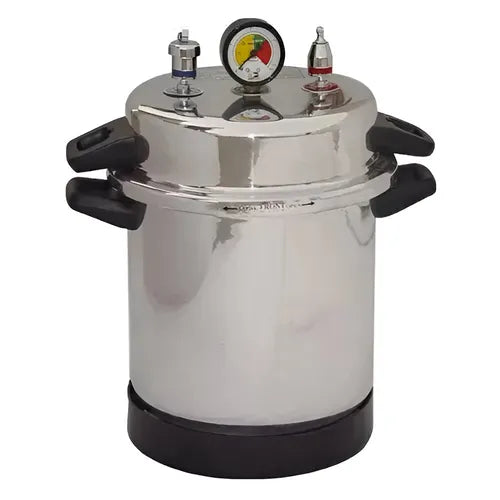
Type: Dental Autoclave 10L Cooker
Dental Autoclave 10L Cooker Type Aluminium 9 x 11 Inch
Collection:
Hot Air Oven vs Autoclave: Which Is Best for Dry Sterilization?
How do doctors ensure their surgical instruments are completely free of germs? They can't just run them through a dishwasher. To achieve true sterility---the total elimination of all microscopic life---they need something far more powerful. This crucial process of sterilization prevents infection and guarantees safety, but it's not a one-size-fits-all solution. In labs and hospitals, the choice often comes down to two very different champions of clean.
The main event is a battle of the elements: hot air oven vs. autoclave. A hot air oven uses intense, circulated dry heat to bake contaminants into oblivion, much like a highly precise convection oven. An autoclave, by contrast, works like a scientific pressure cooker, using pressurized steam to kill microbes. They both achieve sterility, but their methods are polar opposites, defining what they can and cannot safely clean.
Choosing the wrong sterilization method can be disastrous. Putting moisture-sensitive powders or rust-prone metal tools into a steam-filled autoclave could ruin them. On the other hand, placing a plastic petri dish into a 320°F (160°C) hot air oven would result in a melted, useless puddle. The material of the object dictates the method.
This guide explores the fundamental difference between dry heat sterilization and its steam-based counterpart, detailing which materials are safe for each process and why these methods are critical pillars of modern science and medicine. The choice between hot, dry air and hot, wet steam is one of the most important decisions made in a sterile environment every day.

What Exactly Is a Hot Air Oven? The Super-Precise Oven for Science
You probably have an oven in your kitchen for baking and roasting. Now, imagine a similar device built for a science lab or a hospital---one that's more powerful, more precise, and has a very different job. That's essentially what a hot air oven is: a highly controlled piece of lab equipment designed not to cook food, but to make tools and glassware perfectly sterile.
The main job of this specialized oven is to perform Dry Heat Sterilization. Instead of using steam or chemicals, it uses nothing but extremely hot, dry air to destroy every single microorganism---from bacteria to viruses and spores. This method is critical for sterilizing items that can't get wet, like metal surgical instruments, certain powders, or glassware that needs to be completely dry for experiments. It's the go-to choice when moisture would cause rust or interfere with a scientific process.
What makes it so different from your oven at home? The secret is absolute precision. While your kitchen oven might have hot and cold spots, a hot air oven uses an internal fan to constantly circulate air, ensuring the temperature is exactly the same in every corner. This is non-negotiable, because if one spot is even a few degrees too cool, germs could survive, and the entire sterilization fails. This obsession with uniform heat is the key to its reliability.

How a Hot Air Oven Guarantees No Germ Is Left Behind
How does this special oven guarantee that perfect, even heat? The secret lies in a feature you might recognize from modern kitchen ovens: a fan. This isn't just for show; it's the core of the hot air oven working principle . This process, known as forced convection, means the fan actively pushes hot air into every nook and cranny of the chamber. Without it, the air would just sit, creating cooler pockets where stubborn germs could easily hide and survive.
Achieving this uniform temperature distribution is the single most important goal. For sterilization to be successful, every single surface of an object---from the tip of a scalpel to the bottom of a glass beaker---must reach and hold an intense temperature (often above 320°F / 160°C). If one tiny spot remains cooler, a colony of bacteria could live on. In a hospital or lab, "almost sterile" is the same as completely contaminated, which is why the constant air circulation is non-negotiable.
Once that consistent heat is everywhere, the actual sterilization begins. The principle of dry heat sterilization is surprisingly simple: it essentially bakes microorganisms until they are destroyed. The intense, moisture-free heat slowly breaks down the essential proteins and components of any bacteria, virus, or spore through a process called oxidation. It's a slow but incredibly effective assault, ensuring that nothing living can possibly withstand the exposure.
This powerful combination of forced air and dry heat makes it one of the most reliable forced air circulation oven uses for sterilizing items that can't get wet. But what about materials like rubber, plastics, or liquids that would burn or evaporate in such high heat? For those, scientists and doctors turn to an entirely different method---one that uses high-pressure steam instead of dry air.
What is an Autoclave? Meet the Lab's "Pressure Cooker"
For all the things that would melt, burn, or evaporate in a dry heat oven, labs and hospitals turn to a different champion of sterilization: the autoclave. The easiest way to think of it is as a scientific-grade pressure cooker. Just like the one in your kitchen uses steam to cook food quickly, an autoclave uses intensely hot, high-pressure steam to destroy microorganisms. This method, called moist heat sterilization, is a powerful alternative when dry heat isn't an option.
The secret to its speed and effectiveness is the combination of steam and pressure. Inside the sealed chamber, the pressure allows water vapor to reach temperatures well above boiling point (typically around 250°F / 121°C). This superheated steam is far more efficient at transferring heat than dry air, allowing it to penetrate materials and kill germs in a fraction of the time. While a hot air oven might take two hours, a typical autoclave cycle can be as short as 15 minutes.
This clear division of labor is why the comparison of an autoclave and hot air oven is so important. An autoclave is perfect for sterilizing liquids, glassware, some plastics, and even biohazardous waste. However, that same steam would cause metal instruments to rust and would ruin any powders or oils that must remain dry. The choice between a dry heat sterilizer vs autoclave isn't about which is better, but which is the right tool for the job.
The Core Showdown: Why Dry Heat and Steam Are Not Interchangeable
You might wonder why a lab needs both a hot air oven and an autoclave. If both sterilize equipment, can't you just use one or the other? The answer lies in a fundamental difference you might recognize from your own kitchen: the difference between baking and boiling. A hot air oven slowly "bakes" contaminants with intense, dry heat, while an autoclave rapidly "boils" them with high-pressure steam. While both methods lead to a sterile result, the way they get there makes them suitable for entirely different tasks.
The key to this dry heat vs moist heat debate is how efficiently they transfer energy. Think about putting your hand into a 320°F (160°C) oven for a second---it's hot, but you can pull it out unharmed. Now, imagine putting your hand over the steam from a boiling kettle at only 212°F (100°C). You'd get a severe burn almost instantly. This is because the water vapor in steam is incredibly effective at transferring heat to a surface. As a result, an autoclave can sterilize items much faster and at a lower temperature than a hot air oven.
This core difference between autoclave and hot air oven creates two distinct approaches to sterilization:
| Factor | Dry Heat (Hot Air Oven) | Moist Heat (Autoclave) | | :--- | :--- | :--- | | Mechanism | Slowly oxidizes ("bakes") germs | Rapidly coagulates proteins ("boils" germs) | | Speed | Slower (typically 1-2 hours) | Faster (typically 15-30 minutes) | | Temperature | Much higher (around 320°F / 160°C) | Lower (around 250°F / 121°C) |
Ultimately, this isn't a competition but a partnership. The very thing that makes an autoclave so efficient---its hot, penetrating steam---is also its biggest limitation. That moisture would cause metal instruments to rust, turn powders into clumps, and ruin sensitive oils. For anything that must stay absolutely dry, the slow and steady power of a hot air oven is the only safe choice, making it the go-to sterilization method for powders and oils, certain glassware, and rust-prone metal tools.
When to Use a Hot Air Oven: For Materials That Fear Water and Rust
If steam sterilizes faster, why bother with a hot air oven at all? The answer comes down to one simple fact: not everything can handle getting wet. While the powerful steam of an autoclave is highly efficient, its moisture is destructive to many common materials. Think of it like washing a wool sweater in hot water---the heat and moisture combined would ruin it. The slow, gentle nature of dry heat sterilization is a huge advantage when dealing with items that are sensitive to water or rust. It ensures equipment is made completely sterile without being damaged in the process.
This is where the hot air oven shines, handling all the items that steam would destroy. The primary uses and applications of a hot air oven involve materials that must remain perfectly dry. These are its star players:
- Metal Instruments: Sharp tools like scalpels, forceps, and scissors can dull and rust when repeatedly exposed to steam. Dry heat keeps them sharp and corrosion-free.
- Glassware: While glass itself handles water, many lab procedures require absolutely dry beakers and flasks. A hot air oven sterilizes and dries them in one step, answering the question of how to sterilize laboratory glassware for sensitive tests.
- Powders, Oils, and Waxes: This is where dry heat is irreplaceable. Steam would turn powders into a clumpy mess and ruin oils or waxes. The hot air oven is the go-to sterilization method for powders and oils, such as those used in pharmaceuticals or cosmetics.
Imagine a scientist preparing an experiment with an oil-based solution. They need to sterilize both their glass beaker and the oil itself. Using an autoclave would leave water droplets in the beaker and ruin the oil completely, contaminating the experiment before it even starts. By using a hot air oven, they can guarantee every component is both sterile and perfectly dry. This highlights one of the key advantages of dry heat sterilization: it protects the integrity of the materials.
Of course, this specialty role means the hot air oven isn't the solution for everything. For a huge range of other items, the sheer speed and penetrating power of steam are far more practical.

When an Autoclave Is the Star Player: The Power of Speed and Steam
For sheer speed and power, most labs and hospitals turn to the workhorse of sterilization: the autoclave. An autoclave works much like a high-tech pressure cooker, using pressurized steam to kill every last germ with incredible efficiency. While a hot air oven relies on a long, slow bake that can take hours, an autoclave can often complete a sterilization cycle in 15 to 30 minutes. This makes it the go-to choice when time is critical.
The key difference in the autoclave vs hot air oven debate comes down to what you're cleaning. An autoclave's moist heat is safe for a huge range of common lab and medical items that would be destroyed by the intense, dry heat of a hot air oven. These standard uses of autoclave sterilization include:
- Liquids and Media: You can't sterilize a bottle of liquid in a hot air oven---it would simply evaporate. Autoclaves are essential for preparing sterile water or nutrient broths for laboratory work.
- Heat-Resistant Plastics and Rubber: Many essential items, from tubes to stoppers, are made from materials that would melt into a puddle at the high temperatures required for dry heat.
- Most Surgical Instruments: The rapid turnaround time of an autoclave makes it the default choice for sterilizing the bulk of stainless steel tools between procedures.
- Hospital Linens and Packs: The penetrating power of steam is perfect for sterilizing wrapped surgical kits and fabric items like gowns, which would scorch or burn in a hot air oven.
In a bustling hospital or a high-volume diagnostic lab, this efficiency is everything. Different lab equipment sterilization methods exist because there is no single perfect tool for every job. The autoclave handles the high volume of everyday items that can withstand moisture, leaving the hot air oven to perform its specialty role for the powders, oils, and rust-prone instruments that need to stay perfectly dry. This difference in speed all comes down to the specific temperatures and times required for each method to guarantee absolute sterility.
The Numbers Don't Lie: A Look at Sterilization Temperature and Time
Think of sterilization as following a very precise recipe---if you get the temperature or the cooking time wrong, the result is a failure. For a hot air oven, this recipe calls for a long, slow bake. A common dry heat sterilization temperature and time is holding the contents at a scorching 170°C (340°F) for at least a full hour. Some cycles run even longer, up to two hours at a slightly lower 160°C (320°F), to ensure every single microorganism is destroyed.
This slow-and-steady approach stands in stark contrast to the quick, intense cycle of an autoclave. In the hot air oven vs autoclave comparison, the autoclave is the sprinter. Using pressurized steam, its most common cycle runs at a lower temperature of 121°C (250°F) for just 15 to 20 minutes. Why the huge difference? It comes down to how efficiently heat is transferred. Moist heat from steam is far more effective at penetrating and killing germs than dry air, much like how steaming a vegetable cooks it faster than roasting it in an oven.
Ultimately, the required autoclave cycle time highlights the trade-off. An autoclave delivers speed and efficiency for items that can handle moisture, while the hot air oven takes on the specialty jobs that demand a completely dry environment, even if it means waiting much longer. This raises an important question: if it's just about getting things hot, why can't a lab just use a high-end kitchen oven? The answer lies in a degree of precision that home appliances simply can't match.
Could You Just Use a Kitchen Oven? Why Precision Is Everything
It's a fair question: if you can crank a high-end kitchen oven up to 340°F, why can't a lab just use one of those? The simple answer is that your home oven isn't telling you the whole truth about its temperature. When you set it to a specific degree, it doesn't just stay there. Instead, the heating elements cycle on and off, causing the temperature to constantly swing up and down. For baking a cake, this variation is fine. For sterilization, a dip below the target temperature for even a few minutes means germs could survive, rendering the entire process a failure.
Think about the last time you baked cookies or roasted vegetables. You probably know your oven has hot and cold spots---it's why you have to rotate the pan halfway through. In a hot air oven vs kitchen oven comparison, this is an unacceptable flaw. A laboratory needs uniform temperature distribution, meaning the temperature in the top-left corner is identical to the bottom-right. If a scalpel in one spot doesn't get hot enough, it isn't sterile, and the safety of the entire batch of equipment is compromised.
Beyond uneven heating, the difference comes down to trust and proof. A scientific oven undergoes a process called calibration , where technicians use sensitive thermometers to test and adjust it, guaranteeing the temperature on the screen is the real temperature inside. It also must pass validation , which is documented proof that the oven can hold that perfect temperature, in every single spot, for the entire required duration. You simply can't sterilize in a home oven because it offers no such guarantee; you're just trusting a dial that might be off by 25 degrees or more.
Ultimately, when it comes to medical or scientific work, "close enough" is never good enough. The risk of contamination is too high to rely on an appliance designed for casseroles, not scalpels. But how do these specialized ovens achieve such rock-solid stability and evenness? The secret lies in how they move the heat around.
The Fan vs. No Fan: Why "Forced Air" Ovens Dominate Sterilization
In its most basic form, an oven could simply heat the air and rely on a simple principle: hot air rises, and cooler air sinks. This passive process is called natural convection. Think of it like a room with a single radiator---the area nearby gets warm, but the far corners can stay chilly for a long time. This slow, uneven air movement creates layers of different temperatures inside an oven, which is a major problem. If a tray of instruments is sitting in a cooler layer, it simply won't get sterilized.
To solve this, professional ovens introduce a powerful fan. This creates what's known as forced convection, where hot air is actively and constantly blown throughout the entire chamber. It's the same basic idea behind the "fan-forced" setting on a modern kitchen oven, but engineered for perfect uniformity. This is the core of the hot air oven working principle: the fan aggressively mixes the air, breaking up hot and cold spots and ensuring that the temperature is identical everywhere, from the front of the shelf to the very back wall.
When comparing a natural vs forced convection oven for professional work, there is no contest. The fan isn't a luxury feature for faster preheating; it's a non-negotiable tool for safety and reliability. The constant airflow is the only way to guarantee that every surface of every item---from glass beakers to metal surgical tools---reaches and holds the precise temperature needed to kill every last microbe. This powerful, uniform heat gives the oven a range of forced air oven uses, including one hidden superpower that goes beyond simple sterilization.
A Hot Air Oven's Hidden Superpower: What Is "Depyrogenation"?
Killing bacteria with intense heat is one thing, but what about what they leave behind? After a microbe is destroyed, tiny fragments of its cell wall can remain. These ghostly remnants, called pyrogens, are harmless on a countertop but can cause a high fever if they get into the bloodstream. Simple sterilization doesn't always eliminate them, leaving behind a hidden risk in things like glass vials destined to hold injectable medicine.
This is where the hot air oven's true power comes into play. The process of destroying these fever-causing leftovers is called depyrogenation , and it requires much higher temperatures---often reaching a scorching 250°C (482°F) or more. This is one of the most critical uses of a hot air oven in medical fields, as only the intense, dry heat can reliably break down and obliterate pyrogens from glassware and metal instruments. This process of depyrogenation by dry heat ensures that a container is not just sterile, but also chemically clean and safe for direct contact with the human body.
Not every item requires this intense step, but for critical applications like pharmaceutical manufacturing, it's non-negotiable. Because the stakes are so high, labs must rigorously test and prove that the process successfully destroyed all pyrogens, ensuring the absolute safety of the final product. This extra layer of security prevents a patient from having a reaction to the container itself, even when the medicine inside is perfectly pure. But what happens when these careful processes, from basic sterilization to depyrogenation, go wrong?
The Real-World Risks: What Happens When Sterilization Fails?
Imagine you're cooking dinner. You wouldn't use the same cutting board for raw chicken and then to chop a salad without washing it first. That simple mistake, known as cross-contamination, can make someone sick. Now, scale that risk up to a hospital or a sensitive science lab, where the "germs" are invisible and the consequences are far more severe. When sterilization fails, it's not just a minor error---it's a critical breakdown in safety.
In a research setting, this failure can be devastating. A single surviving microbe from a poorly cleaned beaker can ruin months of work, wasting thousands of dollars and delaying important discoveries. This is the constant threat of lab contamination . The danger is even greater in a clinic. If a surgical tool isn't perfectly sterile, it can introduce dangerous bacteria directly into a patient's body, leading to a serious infection. This is why medical sterilization safety isn't just a guideline; it's a life-or-death necessity.
These failures highlight why simply owning a sterilizer isn't enough. Using the wrong method is a recipe for disaster. For instance, a key limitation, or one of the disadvantages of hot air sterilization, is that it cannot be used on heat-sensitive materials like plastics or rubber, which would melt. Choosing the wrong tool or using the right one improperly guarantees failure. This precision is why deciding on the correct method for the job is one of the most critical decisions in science and medicine.
The Final Verdict: How to Choose Between a Hot Air Oven and an Autoclave
In the discussion of a hot air oven vs. an autoclave, there is no single "better" machine---only the right tool for the job. The choice is a straightforward decision based on what an item is made of and what it can withstand.
This simple checklist can guide the decision:
- Can the item get wet? If not, the dry heat of a hot air oven is the only choice.
- Is it a liquid or will it melt below 160°C? If yes, the gentler, moist heat of an autoclave is the answer.
- Is it a powder, oil, or rust-prone metal? If yes, a hot air oven is the perfect solution.
Ultimately, these machines are more than just metal boxes. They are essential guardians in labs and hospitals, standing between a patient and infection or between a brilliant experiment and contamination. They perform invisible, critical work, using nothing but perfectly controlled heat to keep our world safe.
Q&A
Question: How should I decide between a hot air oven and an autoclave for a specific item?
Short answer: Match the method to the material and moisture tolerance. Use a hot air oven for anything that must stay dry—powders, oils, waxes, certain glassware that must be bone-dry, and rust‑prone or sharpened metal instruments. Choose an autoclave for items that can get wet—liquids and media, many heat‑resistant plastics and rubber, wrapped instrument packs, linens, and most stainless‑steel tools—when speed and penetration are priorities.
Question: If both methods sterilize, why is steam faster and cooler than dry heat?
Short answer: Steam transfers heat far more efficiently than dry air and penetrates materials quickly. That’s why autoclaves achieve sterility at about 121°C (250°F) in roughly 15–20 minutes, while dry heat typically needs higher temperatures and longer holds (for example, 170°C/340°F for ~1 hour or 160°C/320°F for ~2 hours). Think “boiling vs. baking”: moist heat coagulates microbial proteins rapidly; dry heat slowly oxidizes them.
Question: Why is forced-air circulation and precise control so critical for hot air ovens?
Short answer: Sterilization requires every surface in the load to reach and hold the set temperature uniformly. Hot air ovens use a fan (forced convection) to eliminate hot/cold spots and maintain even heat throughout the chamber. They’re also calibrated and validated so the displayed temperature matches reality across the chamber and over time. Household ovens lack this uniformity and proof of performance, so they can’t be relied on for sterilization.
Question: What unique advantage does dry heat offer that steam can’t?
Short answer: Depyrogenation. Beyond killing microbes, high-temperature dry heat (often around 250°C/482°F or higher) can destroy pyrogens—fever‑causing residues left after microbes are dead—especially on glassware and metal used for pharmaceuticals. Steam sterilization doesn’t provide this pyrogen-removal capability, making dry heat essential for certain medical and drug‑manufacturing applications.
Question: What are the risks of choosing the wrong sterilization method?
Short answer: Damage and failed sterility. Steam can corrode or dull metal tools and ruin powders, oils, and waxes; dry heat can melt or deform plastics and rubber and will evaporate liquids. Using the wrong method can also leave parts of a load insufficiently treated, leading to lab contamination or, in clinical settings, serious patient infections. Selecting the correct method is therefore a critical safety decision.