
Filter
3 products
Type: Devices
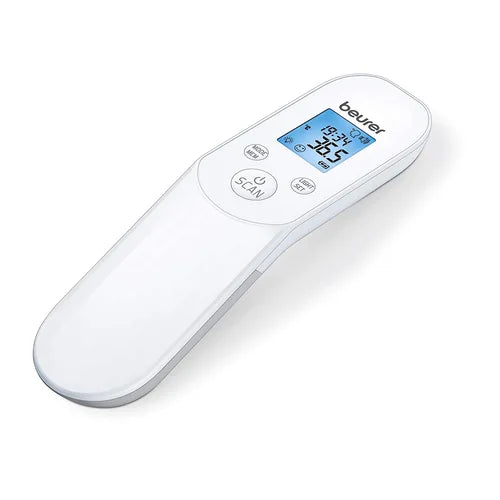
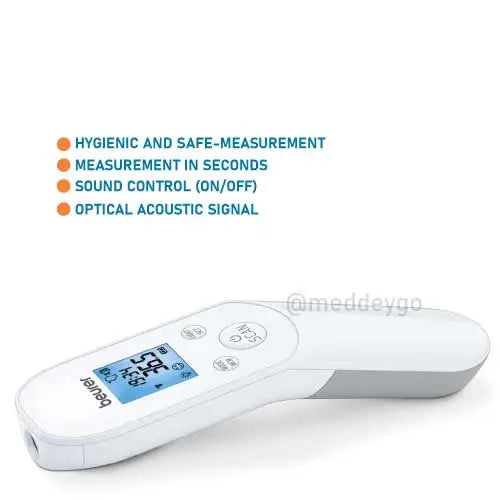
Beurer FT 85 Clinical Non Contact Thermometer


Type: Home Healthcare
Infrared Non Contact Thermometer
Type: Home Healthcare
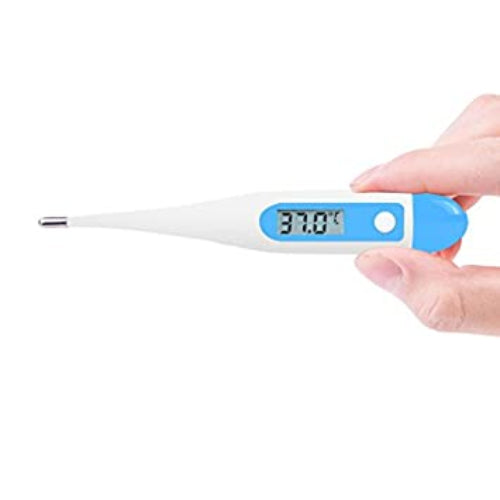
Digital Thermometer Fixed Tip
Collection:
Infrared Thermometer: 2026 Buying Guide, Medical Accuracy & Best Prices
The Infrared Thermometer: A Revolution in Non-Contact Diagnostics
In the modern medical landscape of 2026, speed and hygiene are the two most critical pillars of patient assessment. The infrared thermometer has emerged as the gold standard for temperature screening, offering a non-invasive, lightning-fast, and highly accurate alternative to traditional mercury or digital probe thermometers. Often referred to as laser thermometers or temperature guns, these devices have transitioned from specialized industrial tools to essential household and clinical assets.
The primary appeal of the infrared thermometer lies in its "non-contact" nature. By eliminating the need for physical touch, healthcare providers can drastically reduce the risk of cross-contamination between patients. This is particularly vital in high-traffic environments such as airport screenings, hospital entrances, and pediatric clinics where traditional oral or rectal temperature taking is either impractical or distressing for the patient.
The Physics of Heat: How Infrared Technology Works
To understand the infrared thermometer, one must first understand the concept of blackbody radiation. Every object in the universe with a temperature above absolute zero emits infrared energy. This energy is invisible to the human eye but exists on the electromagnetic spectrum just below red light. The intensity of this radiation is directly proportional to the temperature of the object.
An infrared thermometer works by using a specialized lens to focus the infrared light emitted by an object onto a detector called a thermopile. The thermopile converts this thermal energy into an electrical signal. The device’s internal processor then adjusts this signal based on the ambient temperature and the "emissivity" of the surface being measured, ultimately displaying a digital temperature reading on the screen in less than a second.
From Mercury to Photons: The Evolution of Thermometry
For centuries, thermometry relied on the physical expansion of liquids, most notably mercury. While accurate, these glass tubes were fragile, slow to react, and posed significant toxicological risks if broken. The shift to digital thermistors improved safety and read-times, but it still required direct contact with bodily fluids or mucous membranes, requiring rigorous sterilization protocols.
The leap to infrared technology represented a paradigm shift. Originally developed for industrial applications—such as measuring the temperature of molten steel or distant stars—the technology was eventually miniaturized and refined for human physiology. Today’s medical-grade infrared thermometer is calibrated specifically for the emissivity of human skin, ensuring that the readings are not just fast, but clinically reliable for detecting fevers and monitoring inflammatory responses.
Tech Insight 2026: Modern infrared sensors now utilize "Distance Correction Technology." If the user holds the infrared thermometer too far or too close to the forehead, the device provides an haptic alert or visual cue to ensure the sensor is at the optimal focal point for an accurate reading.
Medical vs. Industrial: Why Precision Matters
A common misconception in the marketplace is that all "temperature guns" are created equal. However, the internal calibration of a medical-grade infrared thermometer is vastly different from its industrial counterpart. Industrial thermometers are designed to measure extreme ranges—from frozen pipes to boiling engines—often with an allowable error margin of 1°C to 2°C. In a clinical setting, such a variance could mean the difference between missing a dangerous fever or misdiagnosing a healthy patient.
Medical-grade devices are engineered for a narrow but highly precise temperature band, typically between 32°C and 42.9°C (89.6°F to 109.2°F). Within this range, a high-quality infrared thermometer must maintain an accuracy of ±0.2°C. Furthermore, medical devices are subject to strict regulatory standards, such as FDA or CE certification, ensuring that the plastic housing is biocompatible and the internal algorithms specifically account for human skin emissivity.
The Emissivity Factor: Measuring Human Heat
Emissivity is a measure of how effectively a surface emits infrared energy. A perfect "blackbody" has an emissivity of 1.0, while a highly reflective mirror might have an emissivity near 0.1. Human skin is remarkably efficient at emitting thermal radiation, with a constant emissivity value of approximately 0.98.
A professional infrared thermometer is pre-set to this 0.98 value. If you were to use an industrial thermometer with an adjustable emissivity setting on a human forehead, any slight miscalculation in the setting would result in a false reading. Clinical sensors are designed to ignore the "reflectivity" of the surrounding environment, focusing solely on the thermal signature of the temporal artery or the tympanic membrane to provide a core-equivalent temperature.
The Thermopile: The Heart of the Sensor
At the core of every infrared thermometer is the thermopile sensor. This component consists of multiple thermocouples connected in series or parallel. When infrared light hits the "hot" junctions of the thermopile, it creates a tiny voltage (the Seebeck effect). The sophistication of 2026 sensors lies in their ability to filter out "noise" from ambient light and electronic interference.
High-end models now feature multi-sensor arrays. Instead of a single point of measurement, these devices take hundreds of samples across the forehead in a fraction of a second, using "highest-point detection" to find the most accurate thermal peak. This compensates for localized cooling caused by sweat or hair, which frequently causes "false lows" in cheaper, consumer-grade units.
Device Comparison: Accuracy and Range
| Feature | Medical IR Thermometer | Industrial IR Thermometer |
|---|---|---|
| Accuracy Margin | ±0.2°C (Clinical Grade) | ±1.5°C to ±2.0°C |
| Temp Range | 32°C – 43°C | -50°C – 500°C+ |
| Emissivity | Fixed (Optimized for Skin) | Adjustable or Fixed (General) |
| Regulatory Body | CDSCO / FDA / CE Medical | CE / RoHS (General) |
Forehead vs. Ear: Choosing the Right Measurement Site
In the world of non-contact thermometry, two primary anatomical sites dominate: the forehead (temporal artery) and the ear (tympanic membrane). While both utilize an infrared thermometer sensor, their clinical utility varies. Forehead thermometers are the ultimate tool for rapid screening. They measure the heat over the temporal artery, which is connected directly to the heart via the carotid artery, providing a reliable reflection of core body temperature without the need for any physical contact.
Tympanic or "ear" thermometers, on the other hand, require a specialized probe cover and gentle insertion into the ear canal. Because the tympanic membrane shares the same blood supply as the hypothalamus (the body’s temperature-regulating center), ear readings are often considered slightly more reflective of "true" core temperature in a controlled clinical environment. However, the presence of earwax or an incorrectly angled probe can easily lead to inaccurate data, making forehead-based infrared thermometer models the preferred choice for high-volume public health screenings and home use in 2026.
Pediatrics: The Gentle Approach to Fever Monitoring
For parents and pediatricians, the infrared thermometer is nothing short of a miracle. Traditional thermometry often involves a struggle that can increase a child's stress levels, which in turn can artificially raise their body temperature. The ability to take a precise reading while a baby is sleeping—without ever touching their skin—is a major advancement in pediatric care.
Modern devices now feature a "Silent Mode" and color-coded "Fever Guidance" backlights (Green for normal, Orange for elevated, and Red for high fever). These visual cues provide immediate clarity for sleep-deprived parents. Furthermore, since neonatal skin is incredibly sensitive, the non-contact nature of an infrared thermometer eliminates the risk of skin irritation or the spread of viral pathogens that can occur with shared contact-based probes.
Triage Efficiency: Managing High Patient Volume
In emergency departments and out-patient clinics, time is the most valuable commodity. During a triage process, a nurse can use an infrared thermometer to screen dozens of patients in the time it would take to clean and prep a single oral probe. This speed allows for the "Red Flagging" of febrile patients immediately upon entry, ensuring that potentially contagious individuals are isolated or prioritized for treatment.
In 2026, many clinical-grade IR thermometers are also being used to monitor "Site-Specific Inflammation." By measuring the temperature of a localized area—such as a post-surgical incision site or a swollen joint—clinicians can detect early signs of infection or gout flare-ups before they become visible to the naked eye. This "thermal mapping" is becoming an essential part of post-operative recovery monitoring.
Best Practice Tip: For the most accurate results with a forehead infrared thermometer, ensure the patient has been in a stable room temperature for at least 20 minutes. Avoid taking measurements immediately after the patient has been wearing a hat or exercising, as localized "trapped heat" can result in a false high reading.
Mastering the Technique: How to Achieve Clinical Precision
The most common reason for inconsistent readings with an infrared thermometer is not device failure, but user technique. To achieve a laboratory-grade result, one must treat the device with the same procedural discipline as a traditional thermometer. First and foremost is the "Steady Hand" rule. Even a slight tremor during the half-second measurement window can cause the sensor to average the temperature of the surrounding air rather than the skin.
The target area is equally critical. For temporal measurements, the sensor must be aimed at the center of the forehead, just above the eyebrows. If the patient has thick hair, bangs, or heavy perspiration, these must be cleared away. Sweat, in particular, acts as a cooling agent through evaporation; a sweaty forehead can easily show a temperature 1°C to 2°C lower than the actual core temperature. Simply dabbing the forehead dry and waiting 60 seconds is the professional protocol for an accurate infrared thermometer reading.
The Distance-to-Spot Ratio: Why Proximity Matters
Every infrared thermometer has a specific "optical resolution," often referred to as the Distance-to-Spot (D:S) ratio. For medical devices, this ratio is usually calibrated for a very short range, typically 1 to 5 centimeters (0.5 to 2 inches). If you stand too far back, the "spot" or area being measured becomes too large, potentially including the temperature of the patient’s hair, their clothes, or even the wall behind them.
Modern 2026 units often feature "LED Guidance Lights" or "Time-of-Flight" (ToF) sensors. These sensors act like a miniature radar, calculating the exact distance between the thermometer and the skin. If the device is not within the "Goldilocks Zone" (the perfect distance), it will refuse to trigger a reading. This fail-safe mechanism is what separates a professional-grade infrared thermometer from a budget consumer model, ensuring that every data point collected is medically actionable.
Overcoming Environmental Interference
Infrared sensors are highly sensitive to their surroundings. A frequent "Con" of using an infrared thermometer is its susceptibility to ambient conditions. For instance, taking a temperature reading directly under an air conditioning vent or in the path of a powerful heater will skew the results. The cold air from the AC will cool the skin's surface, while the heater will artificially warm it.
Acclimatization is the secret weapon of the seasoned clinician. Both the infrared thermometer and the patient should ideally be in the same room for at least 15 to 20 minutes before a measurement is taken. This allows the device’s internal reference sensor to calibrate against the room's ambient temperature. In 2026, "Dual-Reference" technology has been introduced, which uses one sensor for the patient and a second, shielded sensor to constantly monitor room conditions, automatically subtracting environmental "noise" from the final result.
Maintenance Note: To keep your infrared thermometer in peak condition, the sensor lens must be kept pristine. A single smudge or a speck of dust on the lens can block infrared photons, leading to "muffled" readings. Use a 70% isopropyl alcohol swab to gently clean the lens once a week in high-use environments.
The Digital Leap: Smart Features and Data Connectivity
As we progress through 2026, the infrared thermometer has evolved from a standalone readout device into a node within a larger digital health ecosystem. High-end professional models now feature Bluetooth and Wi-Fi connectivity, allowing temperature data to be synced instantly with Electronic Health Records (EHR) or mobile health apps. For hospital wards, this means a nurse can scan a patient’s forehead and the data is automatically logged into the central system, eliminating manual entry errors and saving hours of administrative time over a single shift.
Memory storage has also seen a significant upgrade. While older models could only store the last 10 to 20 readings, modern infrared thermometer units can hold up to 100 sets of data, complete with time and date stamps. This allows for "Trend Tracking," where a caregiver can review a patient's temperature fluctuations over 24 to 48 hours to see if a fever is breaking or if an intervention is working. Some advanced models even include "Multi-User Profiles," allowing a single device to track the health history of an entire family or a specific group of patients separately.
Decoding the Screen: Understanding Common Error Codes
One of the most frustrating experiences for a user is seeing an error message instead of a temperature. Understanding these codes is essential for maintaining a smooth clinical workflow. The most frequent message is "Lo" or "Hi." Contrary to popular belief, these usually do not refer to the battery, but rather to the temperature being measured. "Lo" typically appears if the infrared thermometer detects a temperature below its calibrated range (often below 32°C), which can happen if you are measuring a cold object or if there is excessive sweat on the forehead. "Hi" indicates a reading above the human clinical range (usually above 43°C).
Other technical codes like "Err" or "E-1" often point to ambient temperature interference. If the device has been moved from a cold car into a warm room, the internal sensors may be "thermal shocked." The solution is simple: allow the infrared thermometer to sit in the new environment for 20 minutes to achieve thermal equilibrium. If a battery icon flashes, it is a signal that the voltage has dropped below the level required to power the infrared laser and the processor accurately; continuing to use a device on low battery can result in significantly skewed data.
Powering Precision: Battery Care and Sustainability
The reliability of an infrared thermometer is only as good as its power source. Most handheld units utilize AAA alkaline batteries, but 2026 has seen a shift toward integrated lithium-ion rechargeable cells with USB-C charging ports. These rechargeable models are not only more environmentally friendly but also provide a more consistent voltage output, which is critical for the sensitivity of the thermopile sensor.
To maximize battery life, most devices feature an "Auto-Off" function that triggers after 10 to 30 seconds of inactivity. However, if the device is not going to be used for more than a month—such as during the off-season for flu—it is a best practice to remove alkaline batteries entirely. This prevents battery leakage and acid corrosion, which can permanently destroy the delicate internal circuitry of your infrared thermometer.
Quick Troubleshooting Guide
| Message / Issue | Probable Cause | Immediate Solution |
|---|---|---|
| Display says "Lo" | Ambient air or sweat interference | Dry forehead; ensure 1-3cm distance |
| Display says "Err" | Rapid change in room temperature | Let device sit in room for 20 mins |
| Inconsistent Readings | Dirty or smudged sensor lens | Clean lens with 70% alcohol swab |
| Device won't turn on | Depleted batteries or poor contact | Replace batteries; check polarities (+/-) |
The Economics of Efficiency: Why Hospitals Choose Infrared
From a procurement perspective, the infrared thermometer is an investment in operational efficiency. While the initial "sticker price" of a clinical-grade IR unit is higher than a box of digital probe thermometers, the Total Cost of Ownership (TCO) tells a different story. In a high-volume hospital, the cost of disposable probe covers for traditional thermometers adds up to thousands of rupees monthly. By switching to a non-contact infrared thermometer, these recurring costs are virtually eliminated.
Furthermore, the "Time-per-Patient" metric is significantly improved. A traditional digital thermometer requires 30 to 60 seconds to stabilize, followed by a cleaning cycle. An infrared thermometer provides a result in 0.5 seconds. For a facility screening 500 patients a day, this saves over four hours of cumulative nursing time per shift. In 2026, where healthcare staffing shortages are a global challenge, reclaiming these hours for actual patient care is a primary driver for bulk institutional adoption.
Bulk Procurement: Standards for Schools, Offices, and Hospitals
When sourcing infrared thermometer units in bulk, institutional buyers must look beyond the basic specs. For 2026 compliance, devices must meet ISO 80601-2-56 standards, which specifically govern the clinical accuracy of medical thermometers. For schools and offices, durability is the key factor; units should feature "Drop-Tested" industrial-grade ABS plastic housing to survive the rigors of daily use by non-medical personnel.
Fleet management is another consideration. Procurement officers now look for devices with "Unified Calibration." This ensures that 50 different infrared thermometer units distributed across a campus all provide consistent readings within a 0.1°C variance of each other. At MeddeyGo, we facilitate bulk orders with pre-calibrated batches, ensuring that your organization’s screening protocol remains scientifically sound across all entry points.
Brand Analysis: Who Leads the Market in 2026?
The 2026 market is defined by a few key players who have mastered the balance of sensor sensitivity and ruggedness. Brands like BPL Medical and Omron continue to be favorites in the Indian clinical space due to their extensive service networks and long-standing reputation for accuracy. Rossmax has carved out a niche with its "Telehealth-Ready" units that integrate perfectly with patient monitoring software.
When choosing a brand, the decision often comes down to the specific use case: BPL for high-traffic hospital triage, Rossmax for integrated clinics, and Omron for reliable, long-term home monitoring.
2026 Brand Performance Snapshot
| Brand | Core Strength | Best For |
|---|---|---|
| BPL Medical | High-speed sensor recovery | Hospital Triage & Airports |
| Omron | Consistent 0.2°C precision | Clinical Consultation Rooms |
| Rossmax | Bluetooth/EHR Integration | Smart Clinics & Telehealth |
| Dr. Trust | User-friendly OLED/Voice cues | Home Use & Adult Care |