
Filter
5 products
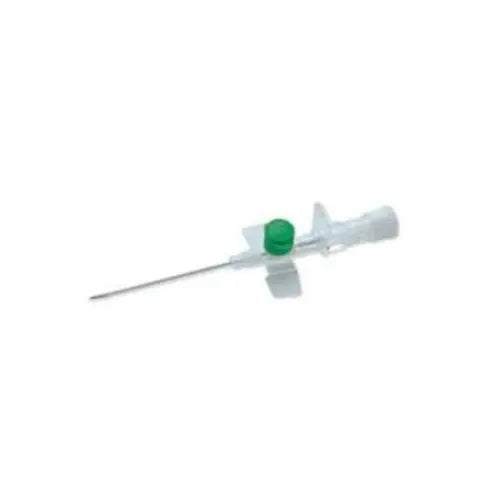
Type: Nursing
BD Venflon I.V. Cannula (Pack Of 20)
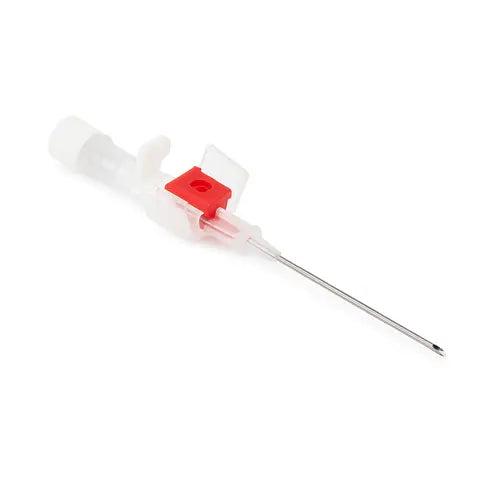
Type: Nursing
BD Arterial Cannula for Peripheral Arteries
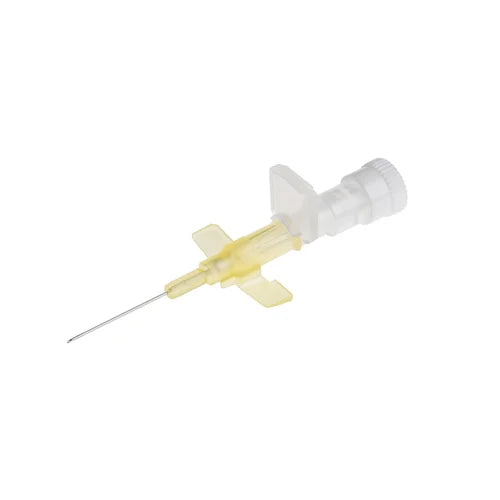
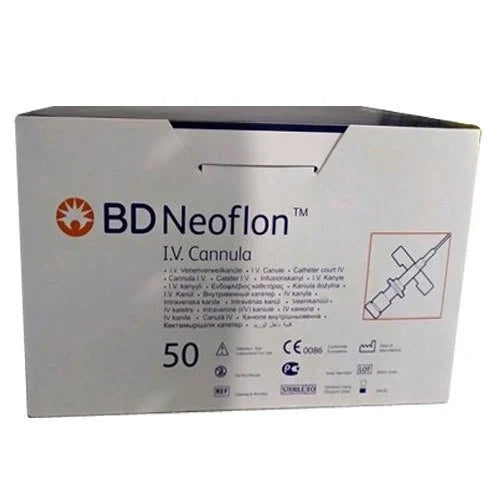
Type: Nursing
BD Neoflon I.V. Cannula (Pack Of 15)


Type: MeddeyGo
IV Training Arm for Venipuncture Practice & Medical Training


Type:
Pediatric IV Cannulation Training Arm for Vein Practice
Collection:
IV Cannula: All Sizes (14G - 24G), Parts & Types for Clinical Use
What Is an IV Cannula and Why Is It Used?
An IV Cannula (often referred to as a "peripheral venous catheter") is a thin, flexible tube inserted into a peripheral vein, usually in the hand or arm. Unlike a simple needle, which is rigid and removed immediately after an injection, the cannula's "Catheter" component remains inside the vein, allowing for continuous or intermittent access to the bloodstream. The primary objective is to bypass the gastrointestinal tract, ensuring that medications reach a therapeutic concentration in the plasma almost instantaneously.
The clinical rationale for using an IV cannula is multi-faceted. In emergency medicine, it is the lifeline for rapid fluid resuscitation in patients suffering from hypovolemic shock or severe dehydration. In surgical settings, it is the conduit for general anesthesia and intraoperative hemodynamic stabilization. Beyond acute interventions, the IV cannula is used for blood sampling, parenteral nutrition, and the administration of chemotherapy. By maintaining a patent venous access point, healthcare providers avoid the need for "repeated pricks," which reduces patient distress and preserves the integrity of the peripheral vasculature.
Modern IV cannulas are designed with "Safety Features" to prevent needle-stick injuries, a critical concern for medical staff safety. The use of FEP (Fluorinated Ethylene Propylene) or Polyurethane in the catheter material ensures that the device is kink-resistant and reduces the risk of thrombophlebitis. Understanding the "Why" behind cannulation involves recognizing it as the foundation of modern inpatient therapy—without it, the precise control of drug delivery that defines 21st-century medicine would be impossible.
What Are the Main IV Cannula Parts and Their Functions?
To master the art of cannulation, one must understand the anatomy of the tool. The cannula parts are divided into the components that remain in the patient and those that are discarded after insertion. The Stainless Steel Needle (Stylet) is the sharp "introducer" that punctures the skin and vein wall. Once blood "flashback" is seen, the needle is withdrawn, and the Catheter (the plastic sleeve) is advanced into the vessel. This catheter is usually radio-opaque, allowing it to be visualized under X-ray if it ever dislodges or migrates.
The Needle Grip and Bush provide the clinician with ergonomic control during the "venipuncture" phase. High-quality cannulas, such as those sourced from [MeddeyGo.com](https://meddeygo.com), feature a "Triple-Facet" beveled needle, which minimizes tissue trauma and reduces the force required for insertion. Another vital part is the Hydrophobic Filter located in the flashback chamber; it allows air to escape as blood fills the chamber but prevents blood from leaking out the back, maintaining an aseptic environment.
Understanding these cannula parts is essential for troubleshooting. For instance, if no "flashback" is observed, the needle may not be in the lumen of the vein, or the vein may have collapsed. If the injection port cap is loose, the risk of air embolism increases. By treating each part as a critical safety component, nurses and doctors can ensure that the IV access remains stable, secure, and functional for its intended 72-hour clinical lifespan.
Pro Tip: The Flashback Indicator
Always check the Flashback Chamber the moment you feel a "pop" as the needle enters the vein. A rapid fill indicates high pressure (arterial or healthy venous), while a slow fill may indicate a small vein or low blood pressure.
Gauge Dynamics, Color-Coding, and The Physics of Infusion
Mastering Flow Rates and Clinical Selection Logic
In the clinical environment, the choice of an IV cannula size is not arbitrary—it is a decision rooted in fluid physics and patient safety. A mismatch between the cannula gauge and the clinical requirement can lead to catastrophic outcomes, ranging from localized phlebitis to the inability to resuscitate a patient in shock. This section provides an exhaustive breakdown of the International Color-Coding System, the mathematical principles governing flow rates, and a 3,000-word analysis of how to choose the right device for specific medical needs.
How IV Cannula Size Works: Sizes, Colors & Flow Rates Explained
The sizing of an IV cannula is expressed in "Gauge" (G), a unit of measurement where the number is inversely proportional to the diameter of the catheter. This means a 14G cannula is significantly larger than a 24G cannula. To ensure rapid identification in emergency scenarios, the healthcare industry uses a universal color-coding system. This allows a nurse or paramedic to identify the flow capacity of a device at a glance, even in low-light or high-stress environments.
The Physics: Poiseuille’s Law
The flow rate through a cannula is governed by Poiseuille’s Law, which states that flow ($Q$) is proportional to the fourth power of the radius ($r^4$) and inversely proportional to the length ($L$). Mathematically: $$Q \propto \frac{r^4}{L}$$ This implies that doubling the internal diameter of the cannula parts increases the flow rate by sixteen times. Consequently, a large-bore cannula is essential for rapid volume replacement, whereas a long, thin cannula is better for slow, controlled medication delivery.
The Universal Gauge Spectrum
With a flow rate of approximately 240-300 ml/min, the Orange 14G is the "Heavyweight" of IV cannulas. It is reserved exclusively for major trauma, massive hemorrhage, and rapid blood transfusions. Inserting a 14G requires a large, stable vein (usually the antecubital fossa) and is technically demanding. Its large bore allows for the administration of thick fluids and rapid volume expanders that would "clog" or flow too slowly in smaller gauges.
The 18G Green cannula is the standard for most surgical patients. Delivering around 90-110 ml/min, it is the smallest gauge recommended for blood transfusions and the administration of contrast media for CT scans. It provides a perfect balance—large enough for rapid fluid boluses but small enough to be inserted into most adult peripheral veins without excessive trauma.
The Pink 20G is the most common size found in general medical wards. With a flow rate of 60 ml/min, it is ideal for routine IV fluids, antibiotic administration, and maintenance hydration. It is suitable for patients with "normal" veins and is the preferred choice when blood products are not immediately anticipated but venous access is required for medication.
Delivering only 13-20 ml/min, the Yellow 24G is designed for fragile veins. Its primary cannula uses are in pediatrics (neonates) and adult patients with "rolling" or brittle veins. While it cannot handle rapid fluid resuscitation, it is essential for the slow, precise infusion of medications where venous preservation is the top priority.
| Gauge (Color) | External Diameter | Flow Rate (Saline) | Primary Clinical Use |
|---|---|---|---|
| 14G (Orange) | 2.1 mm | 240 ml/min | Massive Trauma / Rapid Transfusion |
| 16G (Grey) | 1.8 mm | 180 ml/min | Major Surgery / High Volume Fluid |
| 18G (Green) | 1.3 mm | 90 ml/min | Blood Transfusion / CT Contrast |
| 20G (Pink) | 1.1 mm | 60 ml/min | Routine IV Fluids / Medication |
| 22G (Blue) | 0.9 mm | 36 ml/min | Geriatric / Small Veins |
| 24G (Yellow) | 0.7 mm | 20 ml/min | Neonatal / Pediatrics |
How to Choose the Right IV Cannula for Different Medical Needs?
Selecting the appropriate IV cannula is a clinical skill that balances the "Need for Speed" (flow rate) against the "Need for Comfort" (vein size). A proactive clinician evaluates three primary factors: the patient's age/vascular condition, the type of fluid to be infused, and the duration of the therapy. Sourcing high-quality devices from [MeddeyGo.com](https://meddeygo.com) ensures that regardless of the gauge chosen, the needle sharpness and catheter flexibility remain consistent.
1. Fluid Viscosity and Flow Requirements
If the patient requires blood products, a minimum of an 18G (Green) or 20G (Pink) is necessary. Smaller gauges (22G-24G) can cause "Hemolysis"—the physical rupturing of red blood cells—as they are forced through the narrow catheter lumen. Conversely, for simple electrolyte replacement or slow antibiotic drips, a smaller, more comfortable 22G (Blue) is often the better choice to prevent mechanical irritation of the vein wall (Phlebitis).
2. Anatomical Site and Vein Quality
In emergencies, the antecubital vein (the "elbow pit") is the preferred site for large-bore (14G-16G) cannulas because the vein is large and straight. However, for long-term ward patients, cannulas are ideally placed in the veins of the forearm or the back of the hand. In these locations, smaller gauges are used to accommodate the thinner vessel walls. A 20G (Pink) is the gold standard here; it is small enough to allow blood to flow *around* the catheter, which helps dilute irritating medications and prevents vessel thrombosis.
3. Special Populations (The 24G Strategy)
In pediatric care, the 24G (Yellow) is the default. Pediatric veins are small, prone to collapse, and lack the structural support of adult vessels. Using a larger gauge not only increases the risk of "blowing" the vein (extravasation) but also causes significant pain and psychological trauma to the child. In the adult, where skin is thin and veins are "paper-like," the 22G (Blue) is often used with a shallower angle of insertion to prevent puncturing through both sides of the vessel.
The "Smallest Effective Gauge" Rule
Unless the patient is in a life-threatening emergency, always choose the smallest gauge that will achieve the desired flow. This minimizes mechanical phlebitis, reduces patient discomfort, and preserves the vein for future use.
Clinical Environments and Economic Variables
From Tertiary Care to Home Infusion & Market Dynamics
The utility of an IV cannula transcends the simple act of venipuncture; it is the primary interface between a patient’s circulatory system and the medical intervention. However, the requirements for this interface change drastically depending on the setting. Whether it is the high-velocity environment of a multi-specialty hospital, the focused care of a clinic, or the comfort-driven needs of home care, the choice of IV cannula must be adapted to the infrastructure and available expertise. This section analyzes these diverse IV cannula uses and dissects the variables affecting the IV cannula price in India.
IV Cannula Uses in Hospitals, Clinics & Home Care
In Hospitals, the IV cannula is used for the most complex medical maneuvers. In the ICU and Operation Theatre (OT), multiple cannulas are often inserted simultaneously—one for hemodynamic monitoring and others for the administration of incompatible drugs or blood products. The hospital setting demands "Safety Engineered" cannulas with active or passive needle-shielding mechanisms to protect staff from needle-stick injuries during high-speed procedures. Furthermore, because hospitals deal with severe sepsis and multi-organ failure, the use of large-bore cannula parts (16G-18G) is standard for rapid fluid shifts.
In Clinics and Day-Care Centers, the focus shifts toward short-term diagnostic or therapeutic interventions. IV cannula uses here typically involve the administration of IV iron infusions, short-course antibiotics, or radiopaque contrast media for imaging. Since patients are mobile and usually discharged on the same day, clinicians prioritize smaller gauges like 22G (Blue) or 24G (Yellow) to ensure quick venous recovery and minimal post-insertion bruising. The aesthetic of the procedure and the speed of insertion are key metrics in these outpatient settings.
Home Care Considerations
In the Home Care segment, the IV cannula must be robust and comfortable enough to withstand daily activities without dislodging. Home-care nurses often choose cannula parts made of advanced Polyurethane, which softens at body temperature, significantly reducing the risk of mechanical phlebitis over a 72-hour period. Since emergency support is not immediately available at home, securing the cannula with high-quality transparent dressings is non-negotiable to prevent accidental pull-outs.
IV Cannula Price in India – What Affects the Cost?
The IV cannula price in India is influenced by a complex interplay of manufacturing technology, regulatory compliance, and volume procurement. At the entry-level, basic cannulas without safety valves or needle-protection mechanisms are the most cost-effective, often used in resource-limited settings. However, as hospital standards evolve toward "Zero Needle-Stick Injury" policies, the demand for premium safety cannulas has surged. These advanced devices feature specialized internal springs or clips that automatically cover the needle upon withdrawal, adding to the manufacturing cost but significantly reducing long-term hospital liability.
Key Cost Drivers
- Material Quality: FEP (Teflon) vs. PUR (Polyurethane). Polyurethane cannulas are more expensive but offer superior dwell times and patient comfort.
- Design Complexity: Features like "Side Ports" for bolus injections or "Integrated Extension Sets" for needle-less access increase the price per unit.
- Sterilization & Packaging: USP-grade medical packaging and EtO (Ethylene Oxide) sterilization ensure safety but impact the final IV cannula price.
For hospital administrators looking at the IV cannula price in India on [MeddeyGo.com](https://meddeygo.com), it is essential to consider the "Total Cost of Care." A cheaper, low-quality cannula may lead to higher rates of "phlebitis" or "infiltration," necessitating frequent re-insertions, which ultimately increases the cost of nursing time and additional supplies. By procuring high-grade, standardized cannulas, facilities can reduce complications and improve "Patient Throughput," making the slightly higher initial investment economically sound.
Error Prevention, 2026 Safety Standards & Clinical FAQ
Mitigating Risks and Mastering Advanced Venipuncture
Common Mistakes to Avoid While Using an IV Cannula
Even for experienced practitioners, peripheral venous cannulation carries risks of mechanical and infectious complications. One of the most frequent mistakes is "Re-inserting the Needle into the Catheter." If the needle is partially withdrawn and then pushed back into the plastic cannula, it can shear off the tip of the catheter, leading to a Plastic Embolism—a life-threatening event where a piece of plastic travels to the heart or lungs. Once a needle is even slightly withdrawn, it must never be re-introduced into the catheter sleeve.
Another common error is the "Inadequate Angle of Entry." Entering too steeply (greater than 30 degrees) often results in "transfixing" the vein—puncturing through both the front and back walls, leading to immediate hematoma formation. Conversely, an angle that is too shallow may result in the needle merely skimming the top of the vein without entering the lumen. Practitioners should aim for a 15–25 degree angle, flattening the device as soon as the "flashback" is observed in the chamber.
Interactive Guide: How to Use
Apply the tourniquet 5-10cm above the site. Tip: Ask the patient to clench their fist or use a warm pack to engorge the vein for easier 18G/20G insertion.
Tension the skin downwards to stabilize the vein. Insert the needle bevel-up. Tip: Wait for the "Secondary Flashback" (blood in the catheter capillary) before advancing the plastic sleeve.
Once the needle is removed, secure the wings. Tip: Always flush with 5ml of sterile saline immediately to check for "patency" and ensure no swelling occurs at the site.
Quick Comparison: Standard vs. Safety Cannulas
| Feature | Standard IV Cannula | Safety Engineered Cannula |
|---|---|---|
| Needle Protection | Manual recapping required (High Risk) | Automatic active/passive shielding |
| Blood Control | Requires manual occlusion of vein | Integrated valve prevents blood spill |
| Cost Point | Economical (Available at [MeddeyGo.com](https://meddeygo.com)) | Premium / Higher initial investment |
| Clinical Preference | Routine wards / Low-risk areas | ER, ICU, OT, and High-Traffic units |
Clinical FAQ: Advanced Troubleshooting
According to 2026 CDC and Infusion Therapy Standards, a cannula should ideally be replaced every 72 to 96 hours. However, "clinically indicated replacement" is becoming the norm—if the site shows no signs of redness, pain, or swelling, it may stay longer. Constant monitoring is key; at the first sign of phlebitis, the cannula must be removed and a new site selected.
This usually indicates Infiltration. While the needle entered the vein (causing the flashback), the plastic catheter may have subsequently pushed through the back wall of the vein or dislodged during stabilization. This causes fluids to enter the surrounding tissue instead of the bloodstream. Stop the infusion immediately and elevate the limb.
Technically possible, but clinically discouraged. The narrow lumen of a 24G creates high shear stress on Red Blood Cells (RBCs), leading to Hemolysis (rupture of the cells). In an absolute emergency with no other access, you can use it, but the blood must be infused very slowly, or diluted, to prevent cell damage. Switch to an 18G or 20G as soon as the patient is stabilized.
Adult patients often have low venous pressure. If you don't see immediate flashback, wait 2-3 seconds. Also, ensure the tourniquet isn't too tight, as this can actually occlude arterial flow, preventing the veins from filling. Sourcing high-transparency cannula parts from [MeddeyGo.com](https://meddeygo.com) allows for better visibility of even the smallest blood droplets.
Mechanical phlebitis is irritation caused by the catheter rubbing against the internal vein wall. It is prevented by (A) choosing the smallest gauge possible for the vein and (B) ensuring the cannula is perfectly immobilized with a high-quality securement device. A cannula that "wiggles" in the vein will cause inflammation within hours.
Largely, yes. In the Indian market, the IV cannula price varies based on the presence of high-tech features like "Blood Control Valves" and "Needle Guards." While standard cannulas are cheaper, safety cannulas significantly reduce the "Hidden Costs" of needle-stick injuries, which can cost hospitals thousands in testing and prophylaxis for HIV/Hepatitis. Buying in bulk from [MeddeyGo.com](https://meddeygo.com) helps mitigate these costs.
Conclusion: Precision in Every Puncture
The IV Cannula is the most critical tool in a healthcare professional's arsenal. Mastery of its parts, sizes, and safety protocols is the difference between seamless therapy and procedural trauma. By standardizing your clinical practice with high-quality, color-coded cannulas and avoiding common pitfalls, you ensure the highest standard of patient care in 2026.