

Type: Tapes & Bandages
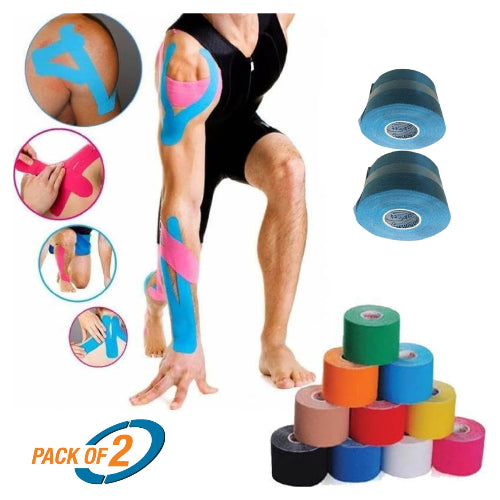
Generic Kinesio Athletic Sports Kinesiology Tape - 5m x 5cm
Type: Tapes & Bandages
Generic Kinesio Athletic Sports Kinesiology Tape - 5m x 5cm - Pain Relief in Sports (Pack of 2)
Type: Tapes & Bands
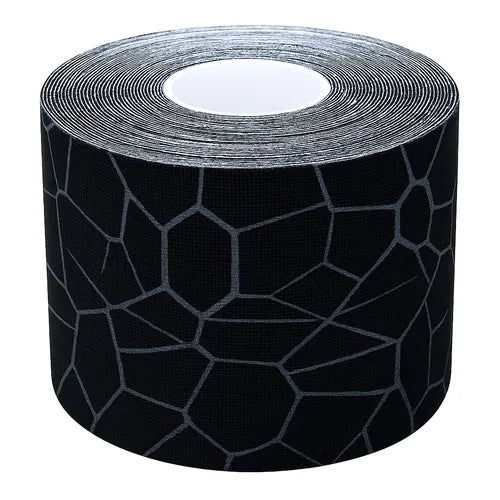
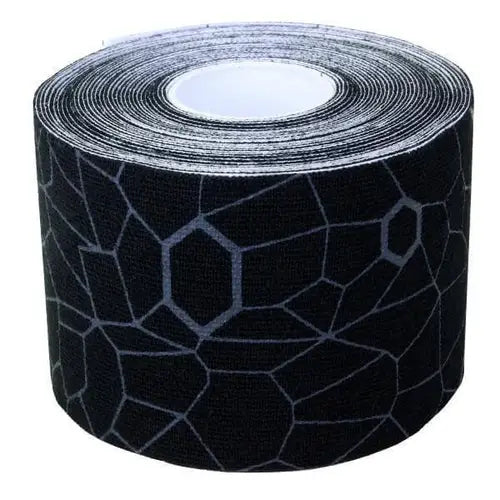
Theraband USA Kinesiology Tape Black Grey Print

Type: Tapes & Bands
EPOS Original Korean Kinesio Tape Blue 5cm X 5m Single Roll
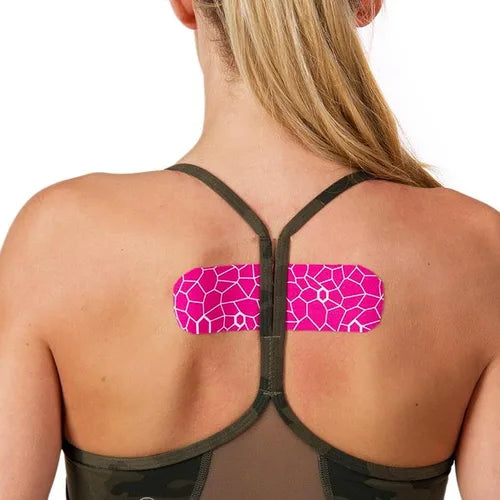
Type: Tapes & Bands
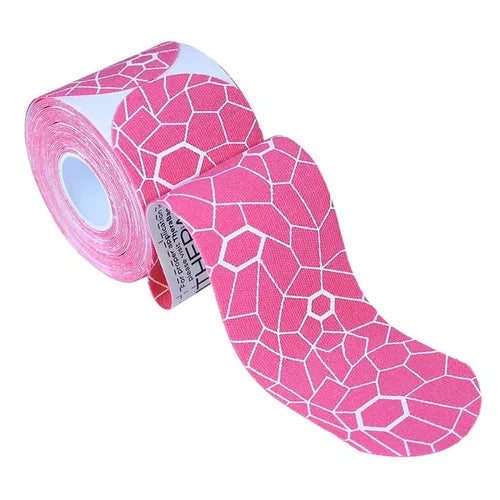
Theraband Kinesiology Tape (Pink White) Pre Cut
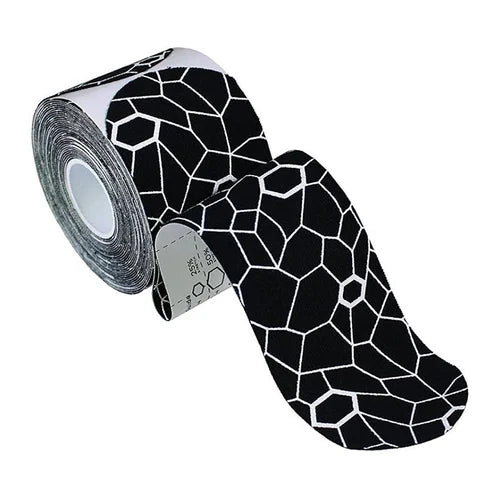
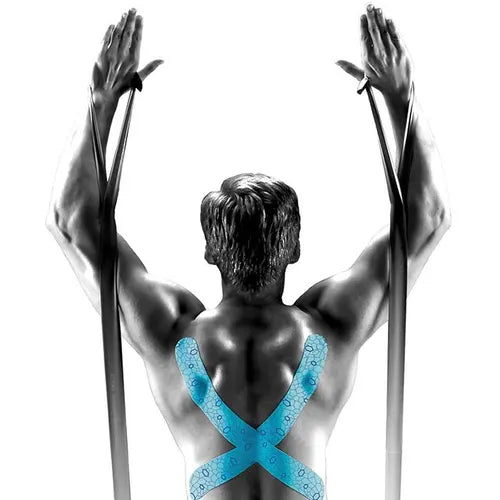
Type: Tapes & Bands
Theraband Kinesiology Tape (Black White) Pre Cut
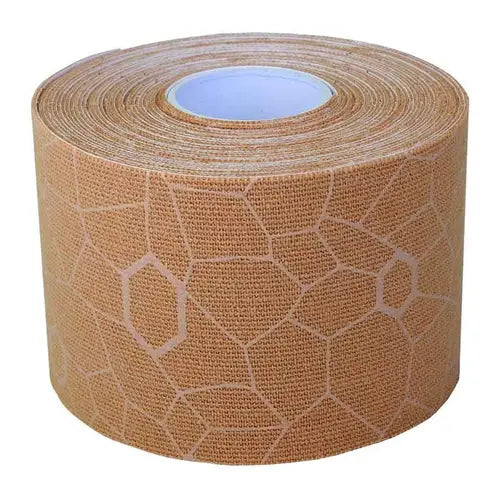

Type: Tapes & Bands
Theraband Kinesiology Tape (Beige Clear) Pre Cut
Type: Tapes & Bands
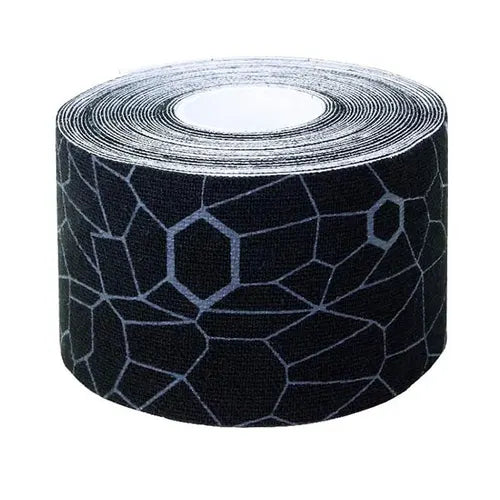
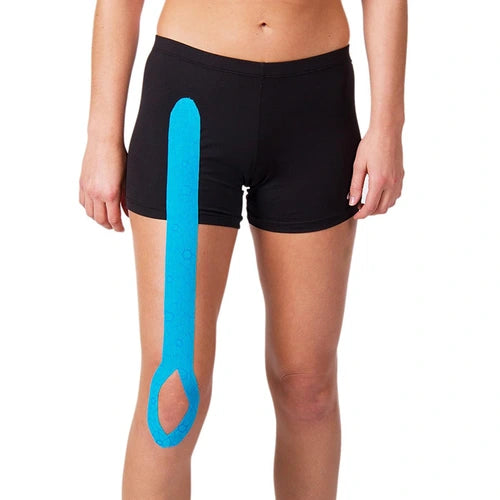
Theraband Kinesiology Tape (Black Grey) Pre Cut
Type: Accessories
Tape Removal Spray
Collection:
Kinesio Taping: Benefits & Applications for Athletes
Benefits of Kinesio Taping for Athletes
You've seen it. That brightly colored tape crisscrossing the shoulders of Olympic volleyball players or framing the knees of marathon runners. It's called kinesio tape, and from the local gym to the world stage, it has become one of the most visible tools in sports and rehabilitation. But what is it actually doing? Is it a high-tech performance enhancer, a medical treatment, or just a colorful trend?
That tape on your favorite athlete isn't holding them together---it's sending messages. Unlike stiff white athletic tape that acts like a rigid brace, kinesiology tape is flexible and designed to interact with your body. The proposed kinesio tape benefits don't come from locking a joint in place, but rather from changing how your body senses movement and pain.
This article explores the two main theories behind how it works, looking at how it might gently lift the skin to relieve pressure and provide sensory input that helps your brain better connect with your body. We'll demystify its role as a tool rather than a cure, providing an honest, balanced view on its use for everything from runner's knee to lower back pain. By the end, you'll have a clear understanding of its potential, its limitations, and whether it might be a helpful tool for you.
What Exactly is Kinesio Tape? Hint: It's Not Your Old-School Athletic Tape
You've probably seen that stiff, white athletic tape used to lock down an ankle or wrist before a game. Elastic therapeutic tape, often called kinesio tape, is fundamentally different. It's a thin, breathable strip of cotton with a medical-grade adhesive on one side. The real magic, however, lies in its elasticity. It's engineered to have roughly the same thickness and stretch as human skin, allowing it to move with your body instead of restricting it.
Think of traditional athletic tape as a rigid brace, designed to prevent a joint from moving in a certain way. It's all about immobilization. Kinesio tape works on the opposite principle. It's a flexible tool meant to support and guide your muscles and joints without limiting your range of motion. It provides dynamic support, reminding your body how to move correctly rather than forcing it into place. This is why you'll see it on a swimmer's shoulder or a runner's knee---areas that need to move freely.
Because it's designed to be worn for several days at a time, the tape is latex-free and the adhesive is activated by the heat from your skin. So if this tape isn't a brace, what is it actually doing to provide relief and support? The answer lies in how it interacts with the skin and the sensory system just beneath it.
The Two Main Theories: How a Simple Piece of Tape Can Affect Your Body
So, how does elastic therapeutic tape really work? While the science is still developing, the effectiveness of kinesio taping therapy is thought to stem from two key principles.
- The first is a concept called decompression. When the tape is applied to stretched skin, its natural elasticity causes it to gently recoil. This recoil subtly lifts the skin from the tissues beneath it. Imagine pulling your t-shirt slightly away from a fresh sunburn---that tiny bit of space can provide immediate relief. Proponents believe this lifting action creates a small gap that may reduce pressure on pain receptors and improve the flow of fluids in the affected area.
- Beyond just creating space, the tape also has a neurological effect. The constant, light sensation of the tape on your skin sends a continuous stream of information back to your brain. This sensory input is believed to improve your body's awareness of its position and movement, a sense known as proprioception. Think of proprioception as your body's internal GPS, telling your brain where your arm or leg is without you having to look. By highlighting a specific area, proprioceptive taping techniques can act as a gentle reminder for your body to use better posture or activate a tired muscle, helping you move with more stability and control.
These are the leading ideas explaining how the tape functions, and many users report feeling a noticeable difference. However, the tape doesn't heal an injury on its own, but rather creates an environment that can help reduce discomfort and guide your body toward more efficient movement patterns while it heals. This is why the way the tape is applied is just as important as the tape itself.
Turning Down the Volume on Pain
But how does lifting the skin actually help with a nagging ache? When the tape gently pulls the skin upward, it's thought to create a tiny bit more room in the space between your skin and the muscle beneath. This subtle decompression can help take the pressure off sensitive nerve endings---the very receptors that send pain signals rocketing to your brain. It's a bit like slightly loosening a too-tight pair of shoes to relieve a sore foot; that small amount of space can make a big difference in comfort.
Beyond simply relieving pressure, the tape works by changing the conversation your body is having with your brain. Think about what you do instinctively when you bump your elbow---you rub it. The sensation of rubbing helps override and dull the sharp ache. Kinesio tape, a common type of physiotherapy tape, operates on a similar principle. The constant, gentle feeling of the tape on your skin provides a new, non-painful signal that competes with the pain signals. This sensory distraction can effectively "turn down the volume" on your discomfort.
For a practical example, consider one of the most frequent kinesio tape uses: lower back pain. A physical therapist providing a guide to taping for back pain wouldn't create a stiff, immobilizing brace. Instead, they might apply strips of tape along the lower back muscles. As you sit, stand, and bend, the tape provides gentle sensory feedback. This acts as a constant, subtle reminder to engage your core muscles and maintain better posture, helping you avoid the positions that cause strain and pain in the first place.
Rather than acting like a painkiller that blocks a chemical process, the tape works by changing your sensory input. It's a tool designed to make movement more comfortable and mindful while your body heals, not to magically erase the underlying cause of the pain. This same sensory feedback, however, can do more than just manage discomfort. It can also be used to help muscles feel more stable and supported during activity.
Feel More Stable: Using Kinesio Tape for Dynamic Muscle Support
When you hear the word "support," you probably picture a stiff, restrictive brace that locks a joint in place. While that has its purpose, kinesio tape offers a completely different kind of help called dynamic support. Instead of acting like a rigid splint, the tape is designed to be a flexible guide that moves with you, reminding your body how to stabilize itself more effectively. It's less about forcing a position and more about coaching your muscles to do their job correctly.
This approach capitalizes on your body's internal GPS, that sense of proprioception we talked about. The gentle pull of the tape on your skin provides continuous feedback to your brain about how a joint or muscle is positioned. This heightened awareness can prompt the surrounding muscles to activate at the right time, creating stability from within. It's one of the key benefits of sports taping for muscles with this method; it encourages your body to become its own support system.
Consider someone dealing with a shoulder that feels a bit wobbly or unstable when they reach overhead. One of the common kinesio taping methods involves applying tape for shoulder instability in a pattern that supports the joint without restricting its range of motion. As the person moves their arm, the tape provides a gentle tug, which serves as a constant, subtle reminder for the rotator cuff and shoulder blade muscles to stay engaged and keep the joint secure. It doesn't physically hold the shoulder in place---it cues the muscles to do the holding.
Ultimately, the goal of dynamic support isn't to do the work for your muscles, but to help them learn to work better together. By providing this sensory guidance, the tape can help you build confidence in your movement, whether you're recovering from an injury or just need a little extra security during a workout. This same principle of guiding movement is incredibly versatile, and we can see it clearly in one of its most popular applications for another common complaint: runner's knee.
A Practical Guide: How to Apply KT Tape for Runner's Knee Pain
The principle of dynamic support is clearly seen in one of its most popular applications: runner's knee. That dull ache around or behind your kneecap is a perfect example of a problem where sensory feedback can make a real difference. One of the simplest and most common kinesio tape instructions for this issue involves creating a "Y-strip" to gently guide the kneecap.
Before you even cut a piece of tape, preparation is everything. To ensure the tape stays on for several days, you need to get three things right:
- Clean and Dry: The application area must be free of oils, lotions, and sweat. Clean it with rubbing alcohol for the best results.
- Round the Corners: After cutting your tape strip, snip the sharp corners into curves. Rounded edges are far less likely to catch on clothing and peel off.
- Don't Touch the Glue: The adhesive is activated by body heat and pressure, but the oils from your fingers can ruin its sticking power. Tear the paper backing down the middle to expose the adhesive without touching it.
- For this common application, you'll sit with your knee bent at about a 90-degree angle.
- Take a single strip of tape and cut it lengthwise, stopping about two inches from the end to create a "Y" shape.
- Anchor the solid base of the Y just below your kneecap.
- Then, with very little to no stretch, gently lay one tail around the left side of your kneecap and the other tail around the right side, forming a gentle hug around it.
- Rub the tape firmly to activate the adhesive.

The goal here is not to forcefully pull your kneecap into a new position. Instead, the tape provides gentle, constant sensory feedback that helps your brain better control the muscles that guide your kneecap's movement. A similar principle of heightening awareness is used when taping a hamstring with kinesio tape---it reminds the muscle to function properly without restricting it.
This specific Y-strip is just one of hundreds of potential applications. It demonstrates how to apply KT tape for knee pain in a way that encourages better movement, but other patterns exist for different goals. For instance, the tape can also be used to influence fluid dynamics, which is particularly interesting for bruises and swelling.
Taming a Bruise: Can Kinesio Tape Help with Swelling and Bruising?
While the Y-strip for knee pain is all about guiding movement, kinesio tape has another fascinating use: managing swelling and bruises. It comes back to that same skin-lifting principle, but with a different goal. The theory is that by gently decompressing the tissue, the tape creates more space for your lymphatic system---your body's natural drainage network---to clear out the fluid that causes swelling and the old blood cells that create a colorful bruise.
For this purpose, therapists use a special "fan cut."
- Instead of a solid strip, the tape is sliced into several thin "fingers" connected to a single base, resembling a small web.
- The solid base is anchored on healthy skin near the swollen area, and the thin strips are then laid over the bruise with no stretch at all.
These strips are thought to create gentle, low-pressure channels, encouraging fluid to move away from the congested spot and toward the anchored base, where the lymphatic system can better process it.
You'll often see this technique used on a dramatic-looking bruise from a sports impact or to help manage puffiness after a minor procedure. Some people even use similar lymphatic drainage taping patterns, like kinesio taping for bruising on the abdomen, to help with bloating. The goal isn't to provide joint support, but simply to help the body's cleanup crew work more efficiently. Seeing how the tape can be used for such different goals naturally raises the next question: how long should you actually leave it on to get these benefits?
The Rules of Wear: How Long to Keep Tape On and When to Take It Off
Unlike a standard bandage you change daily, kinesio tape is designed for the long haul. A single application is meant to stay on for about three to five days. The medical-grade adhesive is strong enough to last through daily activities, yet gentle enough on the skin for continuous wear. This extended duration allows the tape to provide constant sensory feedback to your muscles and tissues. After a few days, the adhesive begins to lose its grip and the elasticity of the tape can decrease, making it less effective.
One of the most common questions is whether you can get the tape wet. The answer is yes---the tape's cotton fabric and adhesive are water-resistant, so you can shower, swim, or work out with it on. After getting it wet, the key is to gently pat it dry with a towel. Avoid rubbing it vigorously or using a hairdryer, as the heat can make the adhesive extra sticky and harder to remove later.
While the tape is durable, it doesn't last forever. It's time to remove it if you notice any of the following:
- It has been on for five days.
- The edges are peeling up significantly.
- You feel any itching, burning, redness, or skin irritation.
That last point is the most important---if the tape is causing any discomfort, take it off immediately. Knowing when to remove the tape is key, but applying it correctly in the first place is just as important to avoid these issues and get the best results.
Common Taping Mistakes That Can Make It Ineffective (Or Worse)
- It's tempting to think that when it comes to tape, tighter is better. However, one of the most common taping application mistakes is overstretching the tape as you apply it. Kinesio tape isn't meant to be a restrictive brace; its goal is to gently lift the skin and provide sensory input. For most applications, the only tension needed is what's called "paper-off tension"---simply the small amount of stretch that happens when you peel the tape from its backing paper. Pulling it taut like a rubber band can cause skin irritation and completely negates the lifting effect, making it much less effective.
- Another simple but crucial step that's often overlooked is skin preparation. The tape's adhesive is designed to last for three to five days, even through showers and sweat, but only if it gets a clean start. Applying tape over skin that has lotion, oil, or even residual sweat on it is a recipe for failure. The tape will have trouble bonding, and you'll likely find its edges peeling up within hours instead of days. For best results, always make sure the area is completely clean and dry before starting.
- Perhaps the biggest mistake of all, however, is using tape to self-diagnose or treat a serious, unknown injury. While many people learn to use kinesio tape instructions to help manage diagnosed conditions like runner's knee or mild shoulder strain, it should never be the first response to a sharp, sudden, or severe pain. For instance, taping what you think is Achilles tendonitis without a proper diagnosis is risky; you could be masking the symptoms of a more serious partial tear that requires medical attention.
Ultimately, the effectiveness of kinesio tape depends heavily on knowing both how and when to use it. Proper application avoids discomfort and ensures you get the intended benefit, while knowing its limitations keeps you safe.
Is Kinesio Tape Right for You? A 3-Step Guide to Making an Informed Choice
You've learned that kinesio tape isn't a restrictive brace or a magic cure, but a unique tool designed to send sensory signals to your body---gently reminding it how to move, reducing pain perception, and encouraging better function. So, where do you go from here? Putting this knowledge into practice safely is the next step. Instead of randomly applying tape and hoping for the best, you can use a clear framework to guide your choice.
Your 3-Step Action Plan:
- Assess Your Goal: First, be honest about your situation. Are you trying to manage a familiar, minor ache from a workout, or are you dealing with sharp, new, or chronic pain? The tape is best for the former. Serious or undiagnosed injuries always require a professional evaluation first.
- Consult a Pro: For the most reliable results, talk to a physical therapist. They can provide a proper diagnosis and offer expert kinesio taping therapy . Because application is a skill, many professionals get a kinesio taping certification to master the techniques. They are your best kinesio taping guide.
- Test and Listen: If you decide to try it yourself for a low-risk issue like minor muscle fatigue, start simple. Apply the tape, see how it feels for a day or two, and pay close attention. Does it help? Does it irritate your skin? Your body's response is the most important feedback you can get.
Ultimately, kinesio tape is less about physically forcing a change and more about starting a conversation with your body. By understanding what it can and can't do, you've gained a powerful new perspective on managing minor aches and improving your body awareness. You now have the knowledge not just to try taping, but to do so wisely.