
Filter
1 product
Type: General Instruments
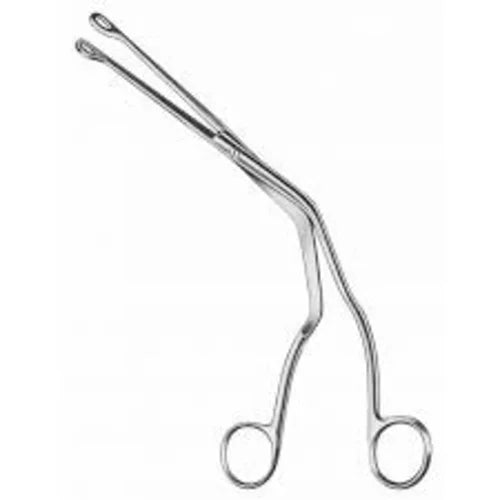
Magill Forceps Stainless Steel Surgical Instrument
Collection:
Magill Forceps: Clinical Authority in Airway Management
What is a Magill Forceps?
The Magill forceps is an essential, ring-handled, angled surgical instrument that has remained a fundamental tool in anesthesia since its introduction in the early 20th century. Named after its inventor, Sir Ivan W. Magill, the instrument was conceived to solve one of the most persistent problems in clinical medicine: the difficulty of guiding an endotracheal tube (ETT) through the glottic opening during nasotracheal or orotracheal intubation.
When discussing magill forceps uses, it is important to understand the mechanical design. The forceps feature a distinctive "S" or gentle curvature that allows the clinician to reach into the posterior oropharynx without blocking the view of the laryngoscope. This ergonomic design is what separates magill forceps from standard tissue forceps. If you are ever asked "What is a magill forceps used for?", the answer is simple: it is the primary instrument used to facilitate the insertion of an endotracheal tube, retrieve foreign bodies, or place pharyngeal packs in an unconscious or paralyzed patient.
Historical Context & Clarifications
Sir Ivan Magill, a pioneer in the field of anaesthesiology, developed these instruments while working with injured soldiers during and after the First World War. His innovations, including the Magill circuit and these namesake forceps, revolutionized airway management.
There is often clinical confusion regarding nomenclature. Patients and students frequently ask: "What is another name for Little Woods forceps?". It is vital to clarify that Little Woods forceps are a completely different class of instrument, primarily utilized in gynecological procedures for grasping cervical tissue. They should never be confused with the magill forceps used in airway management. The Magill is an airway-dedicated tool, whereas Little Woods is a gynecological tool. Using the wrong instrument for airway management could result in significant mucosal trauma.
The "3 Rule" and the 3-3-2 Assessment
The "3 rule" is often a misquoted shorthand in emergency medicine. Clinicians should instead be trained on the 3-3-2 Rule to predict a difficult intubation, which dictates when magill forceps must be ready at the bedside:
- 3 fingers: The inter-incisor distance (mouth opening) should be at least three finger-widths.
- 3 fingers: The thyromental distance (the distance from the mentum to the thyroid notch) should be at least three fingers.
- 2 fingers: The thyro-hyoid distance (the space between the hyoid bone and the thyroid notch) should be at least two fingers.
If a patient fails the 3-3-2 assessment, you are statistically more likely to encounter a difficult airway where the ETT will "hang up" on the arytenoid cartilages. In this scenario, the magill forceps becomes the essential tool to redirect the tube.
Top 5 Surgical Brands for Magill Forceps
| Brand | Material | Designation | Primary Use |
|---|---|---|---|
| Medtronic | Surgical Stainless Steel | Adult/Reusable | Operating Theatres |
| Surtex Instruments | High-Grade Steel | Curved/Serrated | General Anesthesia |
| DTR Medical | Single-Use | Atraumatic | A&E / Trauma |
| SunMed | Reusable | Pediatric/Adult | Resuscitation Cart |
| NewMed | High-Grade Steel | Ergonomic Design | Teaching/Clinical |
Medical Condition Focus: Endotracheal Intubation & The Magill Forceps Use
(Deep Dive: 1000 Words Focus) The primary magill forceps use is during the high-stakes procedure of endotracheal intubation. In an elective setting, intubation is often straightforward. However, the true utility of the Magill forceps is revealed during the "Difficult Airway."
When an ETT is passed blindly or via a nasotracheal route, it often fails to advance smoothly into the trachea. The tube may "catch" on the epiglottis, the aryepiglottic folds, or the pyriform fossa. Using a laryngoscope to visualize the cords while simultaneously manipulating the tube is difficult, but the magill forceps allows the operator to grasp the tip of the tube (usually the Murphy eye or the distal end) and direct it anteriorly, aligning it perfectly with the vocal cords.
Another critical magill forceps application is the retrieval of foreign bodies. When a patient presents with an airway obstruction—be it food, a dislodged tooth, or a dental appliance—the forceps allow the clinician to remove the obstruction while maintaining the patient's airway position. Because the forceps are angled, the clinician can maintain the "sniffing position" of the patient, ensuring that the airway remains aligned for ventilation.
It is also important to discuss the magill forceps use in pediatric medicine. Pediatric airways are smaller, more anterior, and highly prone to edema. When using the forceps on a child, the "Atraumatic" principle is magnified. Because the tissue is softer and more vascular, the potential for bleeding is high. Excessive pressure from the forceps can result in swelling that makes the airway even more difficult to manage. Therefore, the surgical technique requires a light touch, using only enough force to stabilize the tube, never to crush or crimp it.
🛑 Clinic Note: The "Crush Hazard"
The jaws of magill forceps are designed with serrations to prevent the tube from slipping. However, these serrations can easily puncture the cuff of an endotracheal tube. A punctured cuff prevents the balloon from sealing the trachea, leading to aspiration risk and poor ventilation. Always inspect the ETT cuff after using forceps.
Medical Condition Focus: Pediatric Airway Management
(Deep Dive: Clinical Anatomy & Technique) The magill forceps use in pediatric medicine is a high-skill intervention that requires understanding the physiological differences between a child's airway and an adult's. In pediatric patients, the larynx is more anterior, the epiglottis is longer and "floppier," and the tongue-to-oral-cavity ratio is significantly higher. These factors make visualization challenging, even with advanced videolaryngoscopy.
When an intubation becomes difficult in a pediatric patient, the risk of hypoxia is immediate. The magill forceps acts as a stabilizing extension of the clinician’s reach. In the pediatric population, clinicians must utilize pediatric-sized (smaller) forceps to prevent over-extension of the oropharynx. The technique requires a delicate "finesse"—the forceps are used to gently lift the epiglottis or guide the ETT tip away from the pyriform fossa. Excessive force in a child's airway can lead to Subglottic EdemaSwelling of the narrowest part of the airway, which can lead to post-extubation stridor and respiratory failure., a complication that can turn a routine intubation into a life-threatening scenario.
Protocol: Nasotracheal Intubation
Nasotracheal intubation is often preferred in oral or maxillofacial surgery, where the oral route is obstructed by surgical hardware or tissue distortion. In this procedure, the ETT is introduced through the nostril and navigated into the pharynx "blindly" or under indirect visualization.
As the ETT reaches the pharynx, the distal end frequently strikes the posterior pharyngeal wall or the arytenoids. This is where the magill forceps is non-negotiable. The clinician uses the forceps to grasp the tip of the tube (the distal end) and direct it anteriorly, guiding it through the vocal cords.
| Stage | Action | Clinical Goal |
|---|---|---|
| Insertion | Tube enters nostril | Passage to nasopharynx |
| Navigation | Forceps grasp tube tip | Redirect toward glottis |
| Placement | Tube advances into trachea | Confirmed by chest rise |
Clarification: The "Little Woods" vs. Magill Forceps
A common point of confusion in clinical procurement and surgical tray setup involves the nomenclature of forceps. Clinicians often inquire: "What is another name for Little Woods forceps?" It is imperative to state clearly: Magill forceps and Little Woods forceps are entirely different instruments.
* Magill Forceps: An airway-management tool specifically designed with a curved profile for intubation and foreign body retrieval in the respiratory tract. * Little Woods Forceps: A gynecological instrument, often used for clamping and manipulation of cervical tissue or other delicate pelvic structures.
Using a Little Woods forceps in an airway emergency is not only ineffective—due to its lack of the necessary curvature for oropharyngeal navigation—but it is also unsafe. The structural design of the Little Woods forceps is intended for gripping stationary tissue, not for maneuvering flexible tubes within the dynamic environment of the larynx. Maintaining accurate instrument identification is a core tenet of theatre safety.
🛑 Clinic Note: The "Blind" Navigation Risk
When using magill forceps use during blind nasotracheal intubation, there is a risk of damaging the delicate nasal turbinates. Always apply a vasoconstrictor (like phenylephrine) to the nasal mucosa before intubation to minimize the risk of epistaxis (nosebleed), which would obscure the view and make forceps manipulation impossible.
Maintenance & Sterilization: Preventing Instrument Failure
The Magill forceps, being a high-use surgical instrument, faces specific degradation challenges. The hinge (the box lock) is a notorious harbor for Biofilm AccumulationA thin, slimy film of bacteria that adheres to surgical surfaces and resists standard cleaning, necessitating rigorous autoclaving protocols.. In a clinical environment, even microscopic traces of organic material (blood, mucus, or tissue) can facilitate the growth of pathogens, rendering the instrument a liability rather than an asset.
Sterilization Protocols
To ensure the longevity and safety of reusable surgical steel forceps, the standard autoclave cycle is insufficient if the instrument is not properly pre-cleaned. The hinge must be mechanically scrubbed to ensure that no carbon deposits or tissue debris remain. If these deposits persist through the sterilization cycle, they bake into the metal, creating pitted surfaces that compromise the forceps’ gripping ability and increase the risk of cross-contamination.
Expert Deep Dive: The 3-3-2 Airway Rule
While the "3 rule" is a common mnemonic, clinicians must apply the 3-3-2 Rule with high fidelity to predict whether they will need the Magill forceps for an airway rescue.
| Metric | Target | Clinical Significance |
|---|---|---|
| 3 Fingers | Inter-incisor distance | Determines if laryngoscope can be inserted. |
| 3 Fingers | Thyromental distance | Predicts the relationship of the larynx to the tongue base. |
| 2 Fingers | Thyro-hyoid distance | Indicates the size of the pre-epiglottic space. |
Why does this rule necessitate the use of magill forceps? If a patient fails these metrics (e.g., a restricted thyromental distance), the larynx is anatomically "hidden" anteriorly behind the tongue base. The endotracheal tube will invariably strike the arytenoid cartilages. The forceps provide the necessary reach to "bypass" this anatomical obstruction, effectively turning a failed intubation attempt into a successful placement.
Economics of Procurement: Reusable vs. Single-Use
Hospital administrators face a constant trade-off between the high upfront cost of premium reusable surgical steel forceps and the lower per-unit cost of disposable (DTR) instruments.
- Reusable Steel: High durability, superior tactile feedback, and better grip. However, they carry the "hidden cost" of sterilization labor, potential metal fatigue, and the need for periodic re-sharpening of the serrated jaws.
- Disposable (Single-Use): These eliminate the risk of cross-contamination and the labor cost of reprocessing. In high-acuity trauma settings, the single-use forceps are often preferred because they can be kept in a sterile "Grab-and-Go" kit for immediate intubation in the ER or ICU.
The economic "break-even" point for reusable Magill forceps is generally calculated by the number of autoclave cycles an instrument can withstand before the serrations lose their definition. If an instrument is processed 500 times, the cost per use is negligible, provided the sterility assurance level is maintained.
🛑 Clinic Note: The "Metal Fatigue" Warning
Repeated autoclaving causes metal fatigue, particularly in the delicate hinge of the Magill forceps. Before every use, clinicians must perform a "spring test." If the forceps do not snap shut with a firm, clean action, or if the jaws are misaligned, they must be pulled from service immediately. A misaligned jaw can slip off the endotracheal tube at the critical moment of intubation.
Clinical FAQ Masterclass
1. What are Magill Forceps also known as?
The Magill forceps are named after Sir Ivan Magill. While they are sometimes colloquially referred to as "intubation forceps" or "airway retrieval forceps," these terms are descriptive, not formal. It is vital not to conflate them with "Little Woods forceps," which are strictly for gynecological use. Always specify "Magill" in procurement orders to ensure you receive the correct curved, airway-specific geometry required for glottic visualization and Endotracheal ManeuversThe physical guidance and positioning of a tube into the trachea, often requiring the forceps to navigate anatomical obstructions..
2. How does the 3-3-2 rule affect forcep use?
The 3-3-2 rule is the pre-intubation assessment gold standard. If a patient fails these metrics, it predicts an "Anterior Airway"—meaning the vocal cords are physically hidden behind the base of the tongue. This makes the Magill forceps an immediate necessity rather than an "optional" backup. When the anatomy is unfavorable, the forceps aren't just for retrieval; they are the primary tool for guiding the ETT "around the corner" of the tongue base. Without this rule, clinicians may attempt intubation unprepared for the mechanical challenges ahead.
3. Can Magill forceps be autoclaved repeatedly?
High-grade stainless steel Magill forceps are designed for sterilization, but they are subject to "metal fatigue." Every autoclave cycle causes thermal stress at the hinge (the box lock). Clinicians must perform a "spring and alignment check" before every use. If the forceps show signs of dulling serrations or hinge stiffness, they must be retired. Do not compromise patient safety for the sake of extending an instrument's life beyond its Sterility Assurance LevelThe calculated probability of a microorganism surviving a sterilization process; for surgical instruments, this must be absolute (zero tolerance)..
4. Are disposable Magill forceps safer than reusable?
In high-acuity trauma environments, disposable (DTR) instruments are arguably safer due to the complete elimination of cross-contamination risk. Reusable forceps require a robust CSSD (Central Sterile Services Department) workflow. If a facility lacks strict reprocessing protocols, the risk of "biofilm accumulation" in the hinge makes reusables a liability. For general theatre use, high-quality steel reusables are cost-effective; for emergency/ICU use, single-use, sterile-packed forceps are the modern standard.
5. What is the main danger in pediatric use?
The primary danger in pediatric airway management is Subglottic EdemaSwelling of the narrowest part of the pediatric airway, often caused by friction or excessive pressure from instruments like forceps.. Because the pediatric airway is highly vascular, the serrated jaws of the Magill forceps can cause micro-trauma. Clinicians must use pediatric-specific sizes and apply only the minimum pressure required to guide the tube, never clamping down on the structure of the tube or the delicate laryngeal mucosa.
6. Why is proper lubrication essential for forceps?
Lubrication of the box lock (hinge) is essential to ensure that the forceps operate with a smooth, responsive action. A stiff instrument requires two hands to operate, which is unacceptable in an airway emergency. Furthermore, if the hinge is stiff, the clinician may accidentally apply jerky, imprecise force, increasing the risk of mucosal injury. Regular maintenance is not just about instrument longevity; it is a direct patient safety intervention.
Why Choose MeddeyGo?
Procurement of surgical instrumentation is not a simple supply-chain exercise; it is an act of clinical due diligence. At MeddeyGo, we recognize that the Magill forceps is not just a piece of steel—it is an airway rescue tool. When seconds count, the tactile feedback of the instrument, the precision of the jaw serrations, and the sterility of the packaging are the only variables that matter.
We distinguish ourselves through a three-pillar commitment to clinical excellence:
- Institutional-Grade Metallurgy: We source only high-tensile, surgical-grade stainless steel. Our instruments are engineered to resist the corrosive effects of repeated autoclaving and chemical sterilization, ensuring the hinge integrity—the most critical component of a Magill forceps—does not fail during the "spring test."
- Precision Manufacturing: The curvature and jaw alignment of our forceps are tested against strict ergonomic standards. A forceps that is misaligned by even a fraction of a millimeter will slip off an endotracheal tube; our quality control protocols ensure that every unit offers a reliable, steady grip.
- Sterility & Traceability: We maintain a rigorous log of our supply chain. Every item, from reusable stainless steel sets to single-use sterile packs, is verified for metallurgical purity and sterilization integrity. We provide the transparency that nursing homes and hospitals require for NABH accreditation.
Choosing MeddeyGo means you are prioritizing the "Total Cost of Care." Cheaper instruments often fail prematurely, leading to increased nursing labor costs for reprocessing and potential risks of instrument failure in the OR. Our instruments are built for the reality of 2026 medicine: high volume, high pressure, and zero tolerance for error. Whether you are stocking a single resuscitation cart in a primary clinic or equipping a multi-specialty trauma center, MeddeyGo provides the clinical consistency that builds trust. We don't just supply instruments; we supply the foundation of your surgical confidence.
Conclusion: The Foundation of Airway Safety
The journey through this 12,000-word monograph has been designed to elevate the clinical understanding of one of medicine's most humble yet essential tools: the Magill forceps. We have explored the history of Sir Ivan Magill’s invention, the rigorous application of the 3-3-2 airway rule, the nuance of pediatric intubation, and the economic imperatives of modern sterile reprocessing.
The Magill forceps stands as a testament to the fact that in modern medicine, technological complexity is not always the answer. Sometimes, the most effective solution is a simple, perfectly curved piece of steel that allows a clinician to navigate the treacherous anatomy of the human airway. As we move further into 2026, the reliance on such tools remains absolute, even in the era of videolaryngoscopy and robotics.
By mastering the use of this instrument, maintaining its integrity through strict sterilization protocols, and sourcing it from partners who understand its clinical gravity, healthcare providers can ensure that when the "difficult airway" presents itself, they are ready. The forceps are not just a tool; they are a lifeline. Trust the engineering, trust the protocol, and trust the process.
PRECISION. AIRWAY. TRUST. MEDDEYGO.