
Filter
1 product
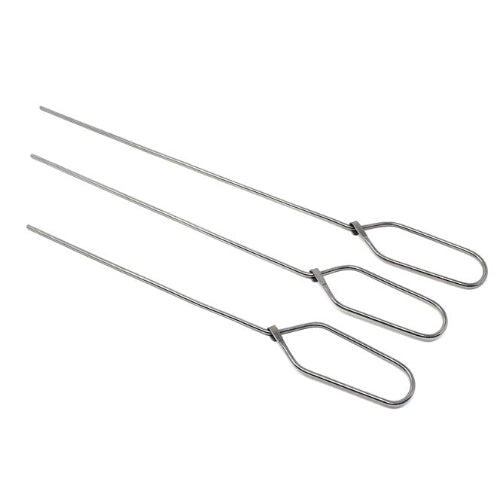
Type: General Instruments
Metal Catheter 12, 14, 16 Inch (Set of 3)
Collection:
Malecot Catheter: Sizes, Parts, Uses, and Complete Clinical Guide
Introduction: Why the Malecot Catheter Still Matters
The Malecot catheter remains one of the most important self-retaining drainage catheters in procedural medicine because it solves a very practical problem: how to keep a drainage catheter in place while still allowing effective evacuation of fluid from a body cavity or organ system. Unlike a simple straight catheter that may slip more easily, the Malecot design uses a characteristic winged retention tip that helps the catheter stay seated after placement. This is why the device continues to be used in urology, nephrostomy drainage, abscess management, and selected other interventional drainage settings.
In many teaching environments, the Malecot catheter is first introduced as a drainage tool for nephrostomy and upper urinary tract access. That is accurate, but it is not the whole story. Clinical literature and product references show that Malecot catheters have been used for drainage of urine, bile, pus, nephrostomy output, abscess cavities, and even gastrostomy-related contexts in certain workflows. This gives the catheter a broader identity than many beginners initially assume. :contentReference[oaicite:1]{index=1}
Another reason the topic is frequently searched is terminology confusion. Buyers and learners often know the name but want to understand the details: what are the common malecot catheter sizes, what are the main malecot catheter parts, why does the tip have wings, and what makes a Malecot different from a Foley, pigtail catheter, or straight drainage tube? Those are practical questions, especially for hospitals, students, procurement teams, and clinicians who need to choose the right product for the right procedure.
This article explains what a Malecot catheter is, how its retention mechanism works, what its major parts are, what size ranges are commonly available, how it is used in nephrostomy drainage and other applications, what material choices mean, how current product lines are structured, and how hospitals should think about selection in a more professional and systematic way.
Urology & Nephrostomy Care
Commonly relevant in percutaneous urinary drainage and post-surgical urinary diversion workflows.
Interventional & Drainage Procedures
Useful where self-retaining drainage and reliable cavity access are important.
Hospital Procurement
Important for comparing French sizes, material choices, retention design, and set components.
What Is a Malecot Catheter?
A Malecot catheter is a self-retaining drainage catheter designed with a winged distal tip that expands into a characteristic flower-like or umbrella-like retention shape once positioned. This special tip is the most recognizable feature of the device. It helps the catheter remain in place within the cavity being drained, reducing the chance of accidental displacement and allowing more secure drainage support. Current manufacturer pages describe Malecot catheters as self-retaining tubes used for nephrostomy drainage and drainage following open renal or bladder surgeries, while clinical literature describes the Malecot as a self-retaining drainage tube used for multiple body-fluid drainage purposes. :contentReference[oaicite:2]{index=2}
In simple terms, the Malecot catheter is not just a hollow tube. It is a specially shaped drainage catheter designed for both drainage and retention. The retention function is what makes it different from many straight catheters. Once properly positioned, the winged end helps anchor the catheter so it does not slide out as easily.
The device is most strongly associated with nephrostomy drainage, but that should not hide its broader drainage history. Published literature notes its use in urine drainage, pus drainage, bile drainage, abscess drainage, and gastrostomy-related settings, which shows how useful its retention design has been across specialties. :contentReference[oaicite:3]{index=3}
Simple Definition
A Malecot catheter is a self-retaining drainage catheter with a winged tip that helps keep it in place while fluid drains out.
How the Malecot Catheter Works
The Malecot catheter works through a combination of lumen-based drainage and mechanical self-retention. The catheter body provides the drainage channel, while the distal Malecot wingsThese are the expandable flanges at the distal end of the catheter. They help anchor the catheter inside the cavity and also contribute to drainage openings around the retained tip. act as the retention mechanism. Once the catheter is placed appropriately, the wings expand or maintain their characteristic shape so the catheter sits more securely than a simple straight tube.
This matters for drainage reliability. In nephrostomy and abscess drainage, accidental catheter movement can compromise the whole purpose of the device. Retention reduces this risk. Current Boston Scientific and Cook Medical pages emphasize the Malecot multi-wing or winged retention design as a key feature, directly linking the tip structure to catheter positioning security and improved retention. :contentReference[oaicite:4]{index=4}
The drainage function itself occurs through the catheter lumen and drainage openings around the distal portion. In practical terms, the Malecot is designed to sit in the drainage target area and allow fluid to exit continuously through the catheter rather than pooling inside the body.
Self-Retaining Tip
The winged Malecot end helps the catheter stay in position after placement.
Drainage Lumen
The catheter body allows urine, pus, bile, or other fluid to drain outward.
Reduced Dislodgement Risk
The retention design supports catheter stability compared with simpler drainage tubes.
Procedure Utility
Its design makes it useful in nephrostomy and other cavity-drainage applications.
Malecot Catheter Parts
Understanding Malecot catheter parts is essential because the device is often discussed by name without learners fully appreciating how it is built. Although part terminology can vary slightly by manufacturer, the practical parts are consistent.
The main parts usually include:
- Distal winged Malecot tip for retention
- Drainage lumen through the catheter body
- Drainage openings / eyelets near the retention end
- Catheter shaft of defined length and French size
- Proximal connector end for attachment to drainage tubing or bag systems
- Stylet compatibility in some product sets to support placement or removal handling
Current product set pages reinforce this structure. Some complete Malecot nephrostomy sets list not only the catheter but also accessories such as a stylet, puncture needle, guidewire, fascial dilators, connector tube, fixing disc, and stopcock. This means that the catheter itself is one component within a larger procedural set in many real-world uses. :contentReference[oaicite:5]{index=5}
For day-to-day understanding, however, the two most important catheter-specific parts are the winged retention head and the drainage shaft. Those are what define the Malecot as a device.
| Part | Main Role | Why It Matters |
|---|---|---|
| Malecot Wings | Self-retention | Helps keep the catheter positioned inside the drainage site |
| Drainage Lumen | Fluid passage | Allows urine or other fluid to drain out continuously |
| Drainage Eyelets | Entry points for fluid into catheter | Supports effective drainage near the retained tip |
| Catheter Shaft | Body of the device | Defines length, flexibility, and size category |
| Connector End | External attachment point | Allows linkage to drainage systems or accessories |
| Stylet Compatibility | Placement/removal assistance in some systems | Improves procedural handling in certain product families |
Malecot Catheter Sizes
The topic Malecot catheter sizes is one of the most practical buyer and learner questions. Current product pages show that Malecot catheters are available in multiple French sizes depending on the brand and intended use. For example, one current manufacturer page lists sizes 8, 10, 12, 14, 16, 18, 20, and 22 Fr, while another current product listing shows even larger ranges such as 10 to 28 Fr. Boston Scientific currently lists 20F and 24F in one Malecot nephrostomy product family, while some retailer pages show 14 and 16 Fr variants. :contentReference[oaicite:6]{index=6}
This tells us two important things. First, Malecot catheters are not one-size devices. Second, the exact available size range depends on the product family and manufacturer. Some are built specifically for nephrostomy sets. Others are broader drainage products. That is why buyers should always compare actual size tables rather than assuming one universal Malecot size standard.
Size choice matters because catheter diameter affects drainage capability, placement suitability, and the clinical purpose of the device. Larger French sizes may be preferred where more robust drainage is needed, while smaller sizes may be used where anatomy, access, or patient category requires it.
Size Rule
Malecot catheters are available in multiple French sizes. The correct size depends on the procedure, access route, and drainage requirement.
Common Lengths and Size-Length Pairing
In addition to French size, Malecot catheter length also varies. Current product references show lengths such as 20 cm, 25 cm, 30 cm, and 35 cm in some families, while other sets specify around 30 cm standard length for nephrostomy drainage products. :contentReference[oaicite:7]{index=7}
This is clinically relevant because size alone does not determine suitability. A catheter may be the right diameter but still the wrong length for the intended anatomical path or drainage setup. That is why procurement teams and clinical staff should think in terms of size + length + intended procedure together.
In nephrostomy-related products, size and length are often standardized enough to fit common procedural needs, but specialty cases and brand variations still exist.
French Size Matters
The Fr size defines catheter diameter and influences drainage capacity and procedural fit.
Length Matters Too
Catheter length affects reach, placement practicality, and compatibility with drainage targets.
Brand Variation Exists
Different product families show different size and length combinations.
Choose by Procedure
The correct Malecot is chosen by clinical purpose, not just by one familiar number.
Main Uses of a Malecot Catheter
The Malecot catheter is best known for nephrostomy drainage, but its clinical use is broader. Published literature notes use in drainage of different body fluids such as urine, bile, and pus. Case literature also references use in abscess drainage and gastrostomy contexts. Manufacturer pages specifically mention drainage following open renal or bladder surgeries, external urinary drainage from the renal pelvis, and upper urinary tract access. :contentReference[oaicite:8]{index=8}
The major uses can be grouped into a few broad categories:
- Nephrostomy drainage and upper urinary tract access
- Post-renal or post-bladder surgery drainage
- Abscess cavity drainage in selected cases
- Bile or pus drainage in relevant procedural settings
- Gastrostomy-related use in certain historical or specialty contexts
This range of uses explains why the Malecot is not merely a nephrostomy brand name. It is a retention-style drainage catheter family with multiple recognized applications.
Use Summary
The Malecot catheter is most famous in nephrostomy drainage, but it is also recognized for other drainage roles involving urine, pus, bile, and cavity drainage.
Malecot Catheter in Nephrostomy Drainage
Nephrostomy drainage is the application most strongly associated with the Malecot catheter today. Current manufacturer pages describe Malecot catheters as being inserted percutaneously into the renal pelvis to perform external drainage of urine and gain access to the upper urinary tract. Other product pages describe them as Malecot nephrostomy drainage catheters designed for secure drainage following renal or bladder procedures. :contentReference[oaicite:9]{index=9}
In this setting, the retention wings are especially valuable. They help stabilize the catheter after placement so urinary drainage can continue more reliably. This is one reason the Malecot remains a recognized nephrostomy option even in the presence of pigtail systems. In fact, a recent comparative study reported lower displacement and reintervention rates with Malecot catheters than pigtail catheters in ultrasound-guided percutaneous nephrostomy, although exact device choice always depends on procedural context and clinical judgment. :contentReference[oaicite:10]{index=10}
This highlights an important real-world point: Malecot versus pigtail is not merely about preference. It is about how each retention system behaves in drainage, secure positioning, and the nature of the material being drained.
| Use Area | Why Malecot Fits | Main Strength |
|---|---|---|
| Nephrostomy Drainage | Provides external urinary drainage from renal pelvis | Winged retention improves stability |
| Open Renal / Bladder Surgery | Supports postoperative drainage | Secure retained drainage path |
| Abscess Drainage | Can maintain cavity drainage in selected settings | Self-retaining structure |
| Pus / Bile Drainage | Historically and clinically described for body fluid drainage | Versatile drainage role |
Malecot Catheter vs Foley Catheter
One common learning difficulty is distinguishing a Malecot catheter from a Foley catheter. Both are self-retaining devices, but they retain in different ways and are used differently. A Foley catheter uses a balloon that is inflated after placement. A Malecot catheter uses winged flanges at the tip for retention. This creates very different use patterns.
A Foley is mainly recognized as a bladder drainage catheter inserted through the urethra or used suprapubically in specific settings. A Malecot is more strongly associated with nephrostomy and cavity drainage roles, though it may also appear in other drainage contexts. In short, both are self-retaining, but the Malecot’s retention is structural rather than balloon-based.
This is why one should never assume that because two devices both “stay in place,” they are suitable for the same job.
Malecot
Uses winged tip retention and is strongly associated with nephrostomy and cavity drainage.
Foley
Uses a balloon for retention and is mainly associated with bladder drainage.
Different Roles
Both are retaining devices, but they are not procedure substitutes for each other.
Retention Style Matters
The mechanical design determines where and how each catheter is used.
Malecot Catheter vs Pigtail Catheter
Another important comparison is Malecot versus pigtail catheter. Both may be seen in drainage and nephrostomy contexts, but they achieve retention differently. A pigtail catheter curls into a coiled distal tip, while the Malecot uses wings. This affects stability, drainage behavior, and how the catheter sits in the cavity.
Recent comparative literature suggests Malecot catheters may perform better in certain pus-laden or drainage-demanding nephrostomy settings, likely related in part to larger diameters and retention behavior. That does not mean the Malecot is always superior. It means the choice should be driven by the nature of the case and the procedural requirement. :contentReference[oaicite:11]{index=11}
This is exactly why hospitals should stock the right categories and clinicians should understand the logic of each.
Material Choices: Latex vs Silicone Malecot Catheters
Current product references show both latex Malecot drains and all-silicone Malecot catheters. This is an important difference because material affects flexibility, softness, patient compatibility, and product selection logic. BD currently describes Malecots as latex drains typically used for nephrostomy drainage, while Cook Medical describes an all-silicone Malecot catheter used for drainage following open renal or bladder surgeries and notes the all-silicone construction as an alternative to latex. :contentReference[oaicite:12]{index=12}
The practical meaning is simple: hospitals and clinicians may choose material based on patient needs, institutional preference, and product availability. Silicone options are often discussed where softness and latex avoidance matter, while latex versions remain established in the market.
Procurement teams should therefore compare not only size and length, but also material construction.
Material Reminder
Malecot catheters are available in different materials. Silicone and latex versions should not be treated as identical product choices.
Malecot Catheter Sets and Accessories
In many real-world procedural environments, the Malecot catheter is not purchased as a naked catheter alone. It is often part of a Malecot nephrostomy set or drainage set. Current set pages list components such as puncture needle, guidewire, fascial dilators, catheter fixing disc, connector tubing, stopcock, scalpel, and stylet. Other product pages mention that two stylets may be included — one for placement and one for post-procedure removal support. :contentReference[oaicite:13]{index=13}
This matters because a procurement decision may not be only about catheter choice. It may be about whether the department needs:
- A catheter alone
- A catheter with stylet
- A full nephrostomy drainage set
- Guidewire compatibility
- Drainage bag connection accessories
In practice, complete sets may improve procedural convenience, standardization, and readiness in departments that perform these procedures regularly.
Complications and Practical Handling Considerations
Like all drainage devices, the Malecot catheter has practical handling considerations. Because its wings are designed to retain the catheter, removal may not always be as effortless as removing a straight tube. Clinical literature has reported cases of entrapped Malecot catheters and discusses interventional methods for management when standard traction is unsuccessful. This does not make the catheter unsuitable. It simply reminds clinicians that retention strength is a real characteristic, not just a marketing benefit. :contentReference[oaicite:14]{index=14}
Other concerns in catheter drainage work generally include blockage, dislodgement, infection-related issues, and procedural complications depending on the insertion context. This is why handling, placement, and follow-up belong in trained clinical care.
The safest educational lesson is this: the Malecot catheter is valuable because it stays put, but that same retention design means it should be used and managed with respect for its procedural role.
Procedure Context
The Malecot catheter is a procedure-use drainage device. Its retention design gives benefits, but it also means insertion and removal belong within trained clinical care.
How Hospitals and Clinics Should Choose a Malecot Catheter
Good Malecot catheter selection begins with the clinical purpose. Is the catheter being used for nephrostomy drainage? For postoperative renal or bladder drainage? For abscess drainage? Is a full set needed, or only the catheter itself? Once the purpose is clear, the next questions involve size, length, material, retention-head type, guidewire compatibility, and whether sterile single-use packaging meets the department’s workflow needs.
Practical procurement questions include:
- What French size range does the department need most often?
- What lengths are required for the procedures being performed?
- Is a silicone or latex version preferred?
- Is the catheter purchased alone or as part of a full drainage set?
- Does the product include or support stylet-based handling?
- Is the package sterile and single-use?
- Does the retention-wing design match the department’s standard procedural preference?
This type of structured buying process is better than selecting by name alone. Malecot is a device family, and the details matter.
For Urology Teams
Important for nephrostomy and upper urinary tract drainage where secure retention matters.
For Interventional Teams
Need to compare catheter-alone and full-set options according to procedural workflow.
For Procurement
Should compare size range, length, material, set components, and sterility status carefully.
For Students
Need to understand that the Malecot is defined by winged retention, not just by being “a drain.”
Frequently Asked Questions
What is a Malecot catheter?
A Malecot catheter is a self-retaining drainage catheter with a winged distal tip used for nephrostomy and other drainage applications.
What are the main Malecot catheter parts?
The main parts include the winged retention tip, drainage lumen, drainage eyelets, catheter shaft, and the proximal connector end.
What are common Malecot catheter sizes?
Current product families commonly show sizes such as 8–22 Fr, 10–28 Fr, or selected fixed sizes like 14, 16, 20, and 24 Fr depending on the manufacturer.
What is the Malecot catheter mainly used for?
It is most strongly associated with nephrostomy drainage, but it is also described for drainage of urine, pus, bile, abscesses, and selected other cavity-drainage uses.
How is a Malecot different from a Foley catheter?
A Foley retains by balloon inflation, while a Malecot retains by its winged distal tip.
How is a Malecot different from a pigtail catheter?
A pigtail retains by a coiled distal end, while a Malecot uses expandable wings for retention.
Are Malecot catheters available in silicone and latex?
Yes. Current product references show both latex and all-silicone Malecot catheter options in the market.
Why do some Malecot sets include a stylet and guidewire accessories?
Because many Malecot catheters are used in procedural settings where placement, access, and post-placement handling benefit from set-based components.
Conclusion
The Malecot catheter remains an important drainage device because it combines two critical features in one design: reliable drainage and self-retention. Whether the clinical use involves nephrostomy, postoperative urinary drainage, abscess drainage, or other cavity-drainage situations, the characteristic winged tip gives the device a clear functional identity. For hospitals, urology teams, interventional units, and procurement professionals, the best Malecot catheter choice depends on understanding the full picture — parts, sizes, length, material, set components, and procedural purpose. When these details are understood properly, the Malecot becomes much easier to choose and use correctly.