
Filter
1 product
Type: Nursing
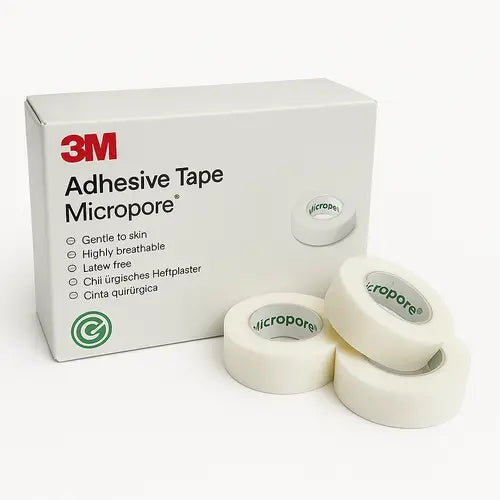
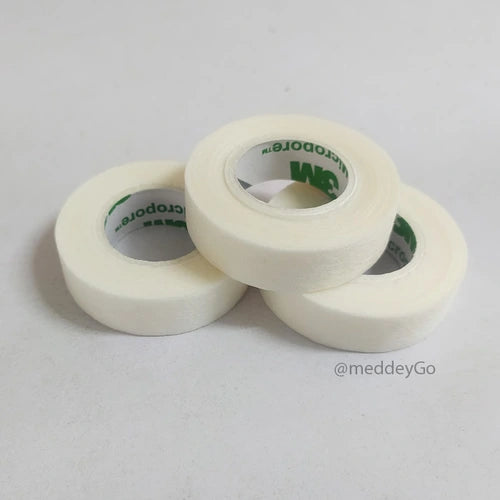
3M Micropore Surgical Tape Box
Collection:
Micropore Tape | Ideal for Dressing Securement
Gentle Dressing Fixation Starts With the Right Micropore Tape
Micropore tape is a lightweight medical adhesive tape used to secure dressings, gauze pads, tubes, and selected clinical coverings. It is widely used in hospitals, clinics, dressing rooms, home-care kits, pharmacies, and nursing setups because it is easy to tear, simple to apply, and comfortable for many routine dressing needs.
Many users also search for surgical tape, micro tape, 3M Micropore tape, paper tape medical, 3M surgical tape, surgical paper tape, micropore bandage, and 3M medical tape. These terms are often used for breathable paper-based medical tape that supports dressing fixation without heavy bulk.
In daily practice, micropore tape is preferred when the dressing needs gentle securement. It is useful around flat or mildly curved areas where strong rigid tape may feel uncomfortable. Also, it is often chosen for patients who need repeated dressing changes, provided the skin condition is suitable.
At the same time, no adhesive tape is perfect for every patient. Fragile skin, allergy, sweating, moisture, open wounds, and repeated removal can create irritation. Therefore, correct selection, careful application, gentle removal, and skin observation are important. This guide explains uses, types, price factors, buying points, and safe handling in a clear SEO-friendly format.
What Is Micropore Tape?
Micropore tape is a breathable surgical paper tape used for medical dressing fixation and light securement. It usually has a paper-like structure with adhesive on one side. Because it is soft and flexible, it can conform to the skin better than many rigid tapes.
It is commonly used to hold gauze, wound dressing pads, small medical tubes, and post-procedure dressings in place. Also, it may be used in first-aid boxes, clinics, and hospitals for routine dressing support. However, the tape should not be applied directly over deep wounds, infected wounds, or wet wounds unless a proper dressing is placed first and a healthcare professional advises it.
Many people call it micro tape because the name is short and easy to remember. However, the correct common product term is micropore tape. In professional use, it is often grouped under surgical tape or surgical paper tape.
Simple Meaning
Micropore tape is a breathable paper-based medical tape used to secure dressings, gauze, and selected lightweight medical coverings on the skin.
Why Surgical Tape Is Important in Dressing Care
Surgical tape plays an important role in wound dressing and clinical securement. A dressing may protect the wound, but the tape helps keep that dressing in the correct position. Without proper fixation, gauze or dressing pads may shift, loosen, or fall off.
Micropore tape is commonly chosen when gentle fixation is needed. It can be useful after blood sample collection, small dressing applications, post-injection covering, minor wound dressing, or securing lightweight gauze. Since it is easy to tear by hand, it is convenient for busy clinical areas.
However, surgical tape should be selected according to the skin condition and dressing requirement. For example, a wet area may need stronger tape. A fragile skin area may need gentler adhesive. A joint area may need more flexible securement. Therefore, one tape type cannot meet every need.
- It helps keep dressings in place.
- It supports lightweight gauze fixation.
- It is useful for routine clinical and home-care dressing support.
- It can be torn by hand in many cases.
- It may feel more comfortable than heavy adhesive tape.
- It should be removed gently to protect the skin.
3M Micropore Tape and 3M Surgical Tape
3M Micropore tape is one of the most recognized names in the surgical tape category. Many healthcare buyers search for 3M Micropore tape because they want a known medical tape option for routine dressing fixation. It is commonly associated with breathable paper tape and general medical securement.
3M surgical tape and 3M medical tape are broader search terms. They may include different types of medical tapes from 3M, not only Micropore. Therefore, buyers should check the exact product name, tape material, size, roll length, adhesive type, and intended use before ordering.
For clinics and hospitals, brand trust is important. Still, buyers should inspect every pack before use. Check roll condition, packaging, expiry where applicable, adhesive quality, and storage condition. If the roll is dirty, wet, damaged, or poorly stored, it should not be used for patient care.
Breathable Design
Paper-based tape allows better air passage than many heavy plastic tapes.
Gentle Fixation
Useful for lightweight dressing support when skin condition is suitable.
Easy Tearing
Many paper tapes can be torn by hand for quick dressing-room use.
Clinical Convenience
Suitable for hospitals, clinics, first-aid kits, nursing care, and dressing rooms.
Paper Tape Medical Use
Paper tape medical use is common in routine patient care. It may be used for securing gauze, light dressings, small bandage pads, and selected medical tubing. Since it is soft and breathable, it is often preferred for areas where comfort matters.
In dressing practice, the tape should be applied over a clean and dry skin area. The dressing should cover the wound first. Then, micropore tape can hold the dressing edges in place. This helps reduce direct adhesive contact with the wound.
Paper tape is not suitable for every situation. If the area is very moist, oily, hairy, sweaty, or under high movement, the tape may loosen. Also, if the dressing needs waterproof protection, a different dressing product may be required.
| Use Area | How Micropore Tape Helps | Important Note |
|---|---|---|
| Gauze Fixation | Helps hold gauze in place | Do not apply directly inside the wound |
| Light Dressing | Secures dressing edges gently | Use on clean and dry surrounding skin |
| Post-Injection Cover | Helps secure cotton or small pad | Remove gently to avoid skin pulling |
| Clinic Dressing Room | Supports quick dressing fixation | Check skin reaction during repeated use |
| Home First-Aid | Useful for basic dressing support | Seek care for deep, infected, or bleeding wounds |
Surgical Paper Tape vs Other Medical Tapes
Surgical paper tape is different from cloth tape, transparent tape, foam tape, and elastic adhesive tape. Paper tape is usually lighter and gentler. Cloth tape is often stronger. Transparent tape may protect better against moisture. Elastic tape may support movement and compression.
Because each tape has a different role, buyers should select according to the clinical need. If the skin is fragile, gentle tape may be better. If the dressing is heavy, stronger tape may be needed. If the area is exposed to moisture, paper tape may not hold long enough.
| Tape Type | Best Use Logic | Buyer Checkpoint |
|---|---|---|
| Micropore Tape | Light dressing and gentle securement | Check breathability and skin comfort |
| Surgical Paper Tape | Routine dressing-room use | Check adhesive strength and roll size |
| Cloth Surgical Tape | Stronger fixation needs | Check skin tolerance and removal comfort |
| Transparent Surgical Tape | Securement where visibility matters | Check moisture resistance and flexibility |
| Elastic Adhesive Tape | Support and compression use | Check tension and circulation safety |
Micropore Bandage: Correct Understanding
Micropore bandage is a common buyer phrase. In many cases, users mean micropore tape. However, tape and bandage are not exactly the same. A bandage usually covers, wraps, or supports an area. Micropore tape mainly secures a dressing or covering in place.
For example, if a wound needs protection, a sterile dressing pad may be placed first. Then, micropore tape may be used around the edges to secure it. The tape should not be used as the only wound covering if the wound needs absorbent or sterile dressing.
This difference matters because wrong use can reduce dressing quality. Therefore, product pages should explain that micropore tape is a fixation product, while the dressing pad or bandage provides wound coverage.
Use Clarification
Micropore tape helps fix a dressing in place. It should not replace a proper wound dressing when absorbent or sterile coverage is needed.
Micropore Tape Price and Surgical Tape Price
Micropore tape price depends on brand, roll width, roll length, pack quantity, adhesive quality, seller, and product type. A small roll may cost less, while a larger roll or multi-roll box may cost more. Also, prices may vary between pharmacies, medical stores, online sellers, and wholesale suppliers.
Surgical tape price also changes by material. Paper tape, cloth tape, transparent tape, and elastic tape have different price ranges. Therefore, buyers should compare tape type before comparing price. A low-price tape may not be useful if it does not stick well or irritates the skin.
For clinics and hospitals, price should be compared with daily usage. A busy dressing room may need bulk rolls. A home first-aid kit may need only one small roll. So, the right pack size depends on usage frequency.
| Price Factor | Why It Matters |
|---|---|
| Brand | Known brands may offer better consistency and product confidence. |
| Roll Width | Wider rolls usually cost more than narrow rolls. |
| Roll Length | Longer rolls may give better value for clinics. |
| Pack Quantity | Bulk packs may reduce per-roll cost for hospitals. |
| Adhesive Quality | Good adhesive supports secure fixation and easier handling. |
| Seller Reliability | Trusted sellers reduce risk of old, damaged, or poorly stored stock. |
Medical Tape Price: Why Lowest Price Is Not Always Best
Medical tape price should be compared with performance, not only with cost. A very cheap tape may peel early, leave residue, irritate skin, or fail during dressing movement. As a result, the dressing may need frequent replacement.
For clinical buyers, poor tape quality can increase work time. Nurses may need to resecure dressings repeatedly. Patients may also feel discomfort if adhesive is too harsh. Therefore, comfort, skin safety, and secure hold are important buying points.
- Check tape material before comparing price.
- Compare roll width and length.
- Check adhesive strength and skin comfort.
- Buy suitable pack size for expected use.
- Check storage and packaging condition.
- Choose trusted suppliers for clinical use.
- Avoid damaged, dirty, or poorly stored rolls.
How to Apply Micropore Tape Correctly
Correct application helps the tape stay in place and reduces skin stress. First, clean and dry the surrounding skin. Then, place the dressing over the required area. After that, cut or tear the required length of micropore tape and apply it gently over the dressing edges.
Do not stretch the tape tightly. Paper tape is not meant to create strong compression. If it is pulled too much, it may irritate the skin or create pressure marks. Also, avoid applying tape over wet, oily, or hairy skin because adhesion may become poor.
- Clean and dry the skin before application.
- Place the dressing first, then secure it with tape.
- Use the right tape length for secure fixation.
- Apply gently without pulling too tightly.
- Smooth the tape lightly after placement.
- Avoid wrinkles, folds, and pressure lines.
- Replace the tape if it becomes wet, loose, or dirty.
Application Tip
Apply micropore tape gently. Do not stretch it tightly because paper tape is mainly for fixation, not compression.
How to Remove Surgical Tape Safely
Safe removal is important because medical adhesives can pull the skin. First, loosen one edge slowly. Then, peel the tape back over itself while supporting the skin with the other hand. This reduces pulling force and protects fragile skin.
Do not rip the tape off quickly. Fast removal may cause redness, pain, skin stripping, or irritation. If the tape sticks strongly, use a skin-safe removal method as advised by a healthcare professional.
| Removal Step | Correct Practice | Why It Matters |
|---|---|---|
| Loosen Edge | Start slowly from one corner | Prevents sudden skin pulling |
| Support Skin | Hold the skin while removing tape | Reduces skin stress |
| Peel Low and Slow | Peel back over the tape itself | Helps reduce adhesive injury |
| Avoid Fast Pulling | Do not remove sharply | Protects fragile skin |
| Check Skin | Look for redness, rash, or peeling | Helps identify irritation early |
Skin Safety and Medical Adhesive Care
Micropore tape is gentle for many users, but skin reaction can still happen. Some patients may develop redness, itching, burning, rash, or adhesive marks. This risk is higher in adult patients, infants, people with fragile skin, and patients who need repeated dressing changes.
Skin should be checked during every dressing change. If irritation appears, stop using the tape and choose another securement method after medical advice. Also, avoid applying tape on open blisters, active infection, burns, or damaged skin unless the healthcare professional gives clear instructions.
Skin Safety Note
Remove micropore tape if redness, burning, itching, rash, blistering, skin peeling, or discomfort appears. Fragile skin needs extra care.
When Micropore Tape Should Not Be Used Alone
Micropore tape should not be used alone on wounds that need absorbent dressing, sterile coverage, or medical treatment. It is a fixation tape, not a full wound-care dressing. If the wound is deep, bleeding, infected, painful, swollen, or not healing, a healthcare professional should check it.
Also, do not use micropore tape to close large cuts, replace sutures, or cover serious injuries without medical advice. If a wound edges are separated or bleeding continues, proper medical care is needed.
- Do not use tape alone on deep wounds.
- Do not apply directly over infected skin.
- Do not use on burns without medical advice.
- Do not use to close large cuts.
- Do not ignore swelling, pus, fever, or increasing pain.
- Do not apply on skin that reacts badly to adhesive.
Choosing the Right Micropore Tape Size
Micropore tape is available in different widths and roll lengths. Narrow tape may be useful for small dressings, face areas, pediatric dressing edges, or delicate sites. Wider tape may be useful for larger gauze pads or broad dressing fixation.
The best size depends on the dressing size and body area. If the tape is too narrow, it may not hold well. If it is too wide, it may be uncomfortable or wasteful. Therefore, clinics often keep multiple widths available.
| Tape Size | Common Use Logic | Buyer Checkpoint |
|---|---|---|
| Narrow Roll | Small dressings and delicate areas | Check hand-tear ease and gentle adhesion |
| Medium Roll | Routine clinic and home dressing use | Useful for most first-aid kits |
| Wide Roll | Larger dressing fixation | Check comfort on curved body areas |
| Box Pack | Clinic, hospital, and pharmacy stock | Check pack quantity and storage |
| Single Roll | Home first-aid and personal care | Check expiry, seal, and roll condition |
Buying Checklist for 3M Medical Tape and Micropore Tape
Before buying 3M medical tape or any micropore tape, check the product name, roll size, material, pack quantity, seller, and storage condition. If you need a known brand, confirm that the listing clearly mentions 3M Micropore tape or 3M surgical tape, depending on your requirement.
For medical facilities, stock control matters. Keep rolls clean and dry. Store them away from heat and moisture. Also, avoid using rolls that are dusty, damaged, wet, or have weak adhesive.
- Check whether the product is micropore tape or another surgical tape.
- Confirm brand and product name.
- Compare roll width and length.
- Check pack quantity and total value.
- Buy from a reliable medical supplier.
- Check packaging and storage condition.
- Select tape according to skin condition and dressing need.
Common Mistakes While Buying Surgical Paper Tape
Many buyers choose surgical paper tape only by low price. However, the lowest price may not provide the best value. Weak adhesive, rough texture, poor storage, or poor tear quality can affect daily use.
Another mistake is using paper tape where stronger fixation is required. If the dressing is heavy or placed on a high-movement area, micropore tape may loosen. In that case, another tape type may be better after clinical judgment.
| Mistake | Problem | Better Practice |
|---|---|---|
| Buying only by low price | May lead to weak adhesion or poor comfort | Compare quality, size, and supplier reliability |
| Wrong tape type | Paper tape may not hold heavy dressings | Choose tape according to dressing need |
| Applying on wet skin | Tape may peel early | Apply on clean and dry skin |
| Removing too fast | May cause skin irritation or peeling | Remove slowly while supporting the skin |
| Ignoring skin reaction | Rash or redness may worsen | Stop use and seek professional advice if irritation appears |
Storage and Handling
Micropore tape should be stored in a clean, dry place. Heat, moisture, dust, and oil can affect adhesive performance. For clinics and hospitals, rolls should be kept in closed drawers or clean storage boxes.
If the tape becomes dirty, wet, or contaminated, it should not be used for patient dressing. Also, do not keep the roll open in dusty procedure areas. Clean storage supports better adhesion and safer dressing practice.
- Store tape in a clean and dry area.
- Keep away from direct heat and moisture.
- Do not use dirty or wet rolls.
- Keep rolls covered when not in use.
- Use clean hands or gloves when handling tape in clinical settings.
- Discard tape that looks contaminated or damaged.
FAQs
What is micropore tape?
Micropore tape is a breathable paper-based medical tape used to secure dressings, gauze, and lightweight medical coverings on the skin.
Is micropore tape the same as surgical tape?
Micropore tape is a type of surgical tape. Surgical tape is a broader category that includes paper, cloth, transparent, and other medical tapes.
What is micro tape?
Micro tape is a common short search term used by buyers for micropore tape. The correct product term is usually micropore tape.
What is 3M Micropore tape used for?
3M Micropore tape is used for lightweight dressing fixation, gauze securement, and selected medical securement where gentle paper tape is suitable.
What does paper tape medical mean?
Paper tape medical refers to paper-based surgical tape used in medical dressing care, gauze fixation, and light securement.
What is 3M surgical tape?
3M surgical tape is a broad buyer term for surgical tapes from 3M. It may include Micropore and other medical tape types.
What affects surgical tape price?
Surgical tape price depends on material, brand, roll width, roll length, adhesive quality, pack quantity, and seller reliability.
What affects micropore tape price?
Micropore tape price depends on brand, width, roll length, pack quantity, adhesive quality, and whether it is bought as a single roll or bulk pack.
What is surgical paper tape?
Surgical paper tape is a paper-based adhesive tape used to secure dressings and medical coverings in routine clinical and home-care settings.
What affects medical tape price?
Medical tape price depends on tape type, material, skin comfort, adhesive strength, brand, roll size, and pack quantity.
Is micropore bandage the same as micropore tape?
Micropore bandage is a common buyer phrase, but micropore tape is mainly a fixation tape used to secure a dressing or gauze.
Can micropore tape irritate skin?
Yes, any medical adhesive can irritate sensitive or fragile skin. Remove the tape if redness, itching, burning, rash, or peeling appears.
Conclusion
Micropore tape is a useful medical tape for lightweight dressing fixation, gauze securement, and routine clinical support. Whether buyers search for surgical tape, micro tape, 3M Micropore tape, paper tape medical, 3M surgical tape, surgical tape price, micropore tape price, surgical paper tape, medical tape price, micropore bandage, or 3M medical tape, the right choice should depend on skin condition, dressing need, tape material, roll size, adhesive comfort, storage quality, and supplier reliability. Most importantly, micropore tape should be applied gently, removed slowly, and avoided on irritated, infected, damaged, or fragile skin without professional advice.