
Filter
3 products

Type: Anesthesia
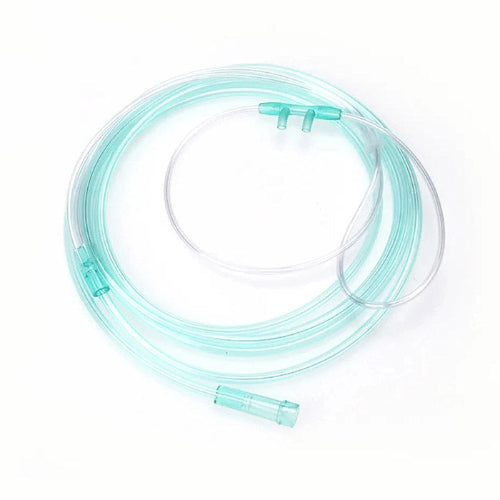
VentiFlex Oxygen Nasal Cannula Adult (Pack of 20)
Type: Anesthesia
VentiFlex Oxygen Nasal Cannula Pediatric (Pack of 20)


Type: General
Oxygen Compressor 5L Yuwell 8F-5A Concentrator
Collection:
Nasal Cannula for Oxygen Concentrator | Oxygen Nasal Cannula
In the hierarchy of respiratory support, the nasal cannula remains the most fundamental yet misunderstood interface. Designed for hospitals, OT, and high-acuity home care, it is the primary choice for delivering low-flow supplemental oxygen. At Meddeygo.com, we understand that for a nurse or physio, the choice of a cannula impacts patient compliance, mucosal integrity, and therapeutic outcome.
1. The Nasal Cannula: Definition & Clinical Utility
A nasal cannula is a lightweight, dual-pronged device that delivers supplemental oxygen or increased airflow to a patient in need of respiratory help. It is specifically designed to work seamlessly with an oxygen concentrator or wall-mounted flow meters in a hospital setting.
What are the different types of nasal cannulas?
Clinically, we categorize cannulas based on their flow capabilities and physical design:
- Low-Flow Nasal Cannula (LFNC): The standard for most patients. It delivers oxygen at 1–6 L/min. It is a "variable performance" device, meaning the actual $FiO_2$ (Fraction of Inspired Oxygen) delivered to the alveoli depends on the patient’s inspiratory flow rate.
- High-Flow Nasal Cannula (HFNC): Used in ICUs and ERs, these specialized systems can deliver up to 60 L/min of heated and humidified oxygen, often used as an alternative to NIV (Non-Invasive Ventilation).
- Soft-Prong/Curved Cannulas: Engineered for long-term home care to reduce nasal vestibulitis and improve patient comfort.
- CO2 Sampling Cannulas: Dual-purpose lines that deliver oxygen while simultaneously monitoring End-Tidal CO2 ($EtCO_2$), essential for sedated patients in OT.
2. Flow Rates: The Science of $FiO_2$
For a dr or nurse, understanding the $FiO_2$ math is critical. A common rule of thumb for standard oxygen nasal cannulas is that every 1 Liter per minute (L/min) increase in flow adds approximately 4% to the $FiO_2$, starting from the room air base of 21%.
| Flow Rate (L/min) | Approximate $FiO_2$ (%) | Clinical Context |
|---|---|---|
| 1 L/min | 24% | Minimal support / COPD maintenance |
| 2 L/min | 28% | Standard Post-Op recovery |
| 4 L/min | 36% | Moderate respiratory distress |
| 6 L/min | 44% | Maximum low-flow limit |
Clinical Thresholds: The "6-Liter Rule" and Flow Dynamics
A frequent question among nurses and junior dr staff is: "Why can a nasal cannula only go to 6 liters?" Understanding this limit is vital for patient safety and comfort.
The Physiology of the 6L Limit
Standard oxygen nasal cannulas are limited to 6 L/min for two primary reasons:
- Mucosal Trauma: Oxygen is a dry gas. At flows >6 L/min, the turbulence in the nasal passage causes extreme drying of the mucous membranes, leading to nasal irritation, crusting, and potential epistaxis (nosebleeds).
- Anatomical Reservoir: The nasopharynx acts as a reservoir. Once the flow exceeds 6 L/min, the reservoir is "saturated," and the patient begins to inhale a larger proportion of room air around the prongs, meaning the $FiO_2$ plateaus. Increasing flow beyond this point offers diminishing returns while increasing patient discomfort.
Which is Better: Oxygen Mask or Nasal Cannula?
There is no single "better" device; the choice depends on the flow rate requirements and the patient's clinical stability.
Nasal Cannula (Low-Flow)
Best For: Stable patients needing 1–6 L/min.
Advantage: Allows for eating, drinking, and speaking. Higher patient compliance and lower risk of claustrophobia.
Oxygen Mask (Simple/NRBM)
Best For: Acute distress needing >6 L/min.
Advantage: Can deliver higher $FiO_2$ (up to 90% with a Non-Rebreather Mask). Essential for mouth-breathers or patients with nasal obstructions.
Moisturizers & Oxygen Safety: A Critical Warning
Oxygen therapy often causes dryness, but for a physio or home care nurse, advising on the right moisturizer is a matter of life and death.
🚫 NEVER USE Petroleum Jelly (Vaseline)
Petroleum-based products are oil-based. In an oxygen-enriched environment, oil acts as a fuel. If a spark occurs (static or flame), petroleum jelly can ignite rapidly, causing severe facial burns. Furthermore, inhaling oil vapors over time can lead to Lipoid Pneumonia.
✅ ALWAYS USE Water-Based Lubricants
To alleviate nasal dryness, only use water-soluble gels or saline-based sprays (e.g., Ayr Gel or specialized nasal moisturizers). These are non-flammable and safe for use with oxygen nasal cannulas.
Hygiene Standards: Cleaning and Infection Control
For a nurse or caregiver, maintaining the sterility of the oxygen delivery system is paramount. Since a nasal cannula sits directly in the nasal vestibule, it can quickly become a vector for bacteria if not managed properly.
Replacement Protocols
- Regular Use: For chronic patients using an oxygen concentrator at home, the cannula should be replaced every 2 to 4 weeks. Over time, the plastic (PVC) becomes stiff, which reduces comfort and increases the risk of skin breakdown.
- Post-Illness: Always replace the cannula immediately after the patient recovers from a respiratory infection (cold, flu, or pneumonia) to prevent re-infection.
- Hospital Protocol: In a hospital or OT setting, cannulas are strictly single-patient use and should be discarded upon discharge or as per the facility's infection control policy.
Troubleshooting: What to do when Oxygen Flow Stops
If a patient complains they aren't receiving oxygen, or the dr notices a drop in $SpO_2$, follow this clinical checklist:
| Issue | Checkpoint |
|---|---|
| No Airflow ("The Hiss Test") | Place the prongs in a cup of water; if no bubbles appear, check for kinks in the 7ft/25ft tubing or a disconnected Christmas tree adapter. |
| Dry Nose / Discomfort | Verify if a humidifier bottle is attached to the concentrator (recommended for flows >3 L/min). |
| Pressure Sores | Check the skin behind the ears. Use foam "ear protectors" or adjust the slide bolo to reduce tension. |
Enhancing Compliance: Patient Comfort Tips
Long-term oxygen therapy can be taxing. For a physio working on pulmonary rehab, patient compliance is higher when discomfort is minimized.
- Proper Orientation: Ensure curved prongs are pointing downward into the nostrils, following the natural curve of the nasal passage.
- Soft-Touch Tubing: If the patient has sensitive skin, opt for "soft" or "silk" cannulas available at Meddeygo.com, which use premium medical-grade silicone to prevent friction.
- Avoid Oily Creams: As established, stay away from petroleum. Use water-based gels to keep the nares hydrated.
Clinical Grade Respiratory Supplies
Find anti-kink, soft-prong oxygen nasal cannulas designed for maximum patient comfort.
Engineering for Airway: Technical Specifications & Sizing
For hospitals and OT procurement, the technical build of an oxygen nasal cannula is as important as the flow rate. A high-quality cannula must balance flexibility with kink resistance to ensure uninterrupted oxygen delivery.
1. Tubing Dynamics: Length & Resilience
Standard cannulas typically come in two primary lengths depending on the use case:
- 7-Foot (2.1m) Tubing: The clinical standard for hospital beds and clinics. It provides enough slack for patient movement without causing a tripping hazard.
- 25 to 50-Foot Tubing: Often used in home care settings with a stationary oxygen concentrator, allowing the patient to move between rooms. Note: For long lengths, "anti-kink" or "crush-resistant" star-lumen tubing is mandatory to prevent flow occlusion.
2. Precision Sizing: Adult, Pediatric, & Neonatal
A nurse or dr must ensure the prongs occupy no more than 50% of the nares' diameter. If the prongs are too large, they block exhalation and increase the work of breathing.
| Size | Prong Spacing | Ideal Patient |
|---|---|---|
| Neonatal | Very Narrow | Pre-term infants / Newborns |
| Pediatric | Narrow | Children up to 12 years |
| Adult | Standard Wide | Standard for most adults |
The "Normal" Flow Rate: What is Clinically Appropriate?
The normal oxygen flow rate for a nasal cannula usually ranges from 1 to 4 L/min.
- Low Flow (1-2 L/min): Ideal for COPD patients where over-oxygenation can lead to hypercapnic respiratory failure.
- Moderate Flow (3-4 L/min): Standard for post-operative recovery or mild hypoxemia.
- High Flow (5-6 L/min): Reserved for acute situations. If a patient requires 6 L/min for more than a few hours, a dr should evaluate the transition to a Simple Face Mask or a High-Flow Nasal Oxygen (HFNO) system.
Nasal Cannula & Oxygen Concentrators: The Home Care Setup
For patients managed in a home ICU setup, the nasal cannula for oxygen concentrator is the bridge to recovery. However, home environments present unique challenges regarding tubing length and gas quality that a nurse or physio must manage.
Humidification: When is it Necessary?
Oxygen produced by a concentrator is bone-dry. To prevent the "burning" sensation often reported by patients, humidification is essential.
- Flows < 3 L/min: Humidification is generally optional unless the patient complains of extreme dryness or has a history of nosebleeds.
- Flows ≥ 4 L/min: A humidifier bottle filled with distilled water is mandatory. This adds moisture to the gas before it enters the oxygen nasal cannula, protecting the delicate nasal mucosa.
Moisturizer Safety: Protecting the Patient's Airway
As discussed, the choice of moisturizer is a critical safety checkpoint. For a dr or nurse, educating the family on this is a top priority.
Professional Handling: Storage & Contamination Prevention
In a hospital OT or clinic, how you store your cannulas affects their lifespan and sterility.
- Avoid Direct Sunlight: UV rays degrade medical-grade PVC, making the nasal cannula brittle and prone to cracking.
- Dust Protection: When the patient is not using the cannula (e.g., during a nebulization break), the prongs should be placed in a clean, breathable paper bag rather than sitting on the bedsheets.
- No "Dangling" Connectors: Ensure the Christmas tree connectors are kept off the floor to prevent the introduction of floor-borne pathogens into the oxygen circuit.
Nasal Cannula Therapy: Professional FAQ
To assist hospitals, physios, and nurses in optimizing respiratory care, we have compiled the most critical questions regarding nasal oxygen delivery.
A: Yes. One of the primary advantages of a nasal cannula over a mask is that it allows for comfortable sleep. However, ensure the tubing is secured and an anti-kink line is used to prevent oxygen desaturation if the patient rolls over.
A: If a patient breathes primarily through their mouth, the effective $FiO_2$ from a nasal cannula may drop. In such clinical cases, a dr may recommend switching to a simple oxygen mask to ensure therapeutic levels are maintained.
A: Perform the "Water Test." Place the prongs in a clean cup of water; steady bubbling confirms flow. For a more professional check, a nurse can use a handheld oxygen flow meter.
Conclusion: The First Line of Respiratory Defense
The oxygen nasal cannula remains the most patient-friendly and efficient method for low-flow oxygen therapy. Its role in hospitals, clinics, and home care is irreplaceable due to its balance of comfort and clinical efficacy. By adhering to proper flow limits, maintaining mucosal hydration with water-based lubricants, and ensuring regular replacement, healthcare providers can significantly improve patient outcomes.
At Meddeygo.com, we provide high-grade, soft-prong cannulas that meet the rigorous standards of modern OT and ICU environments.
Equip Your Facility with Premium Care
Bulk pricing available for hospitals and clinics on all respiratory interfaces.