
Type: General Instruments
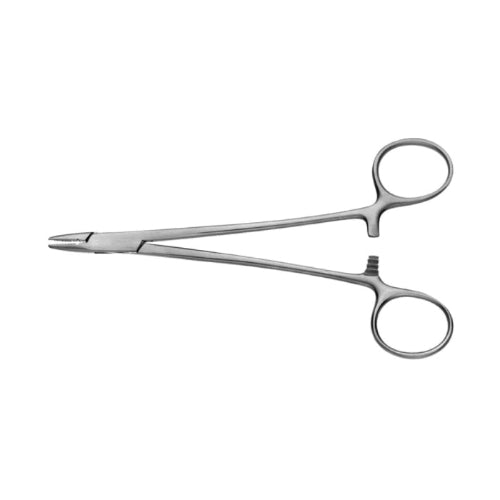
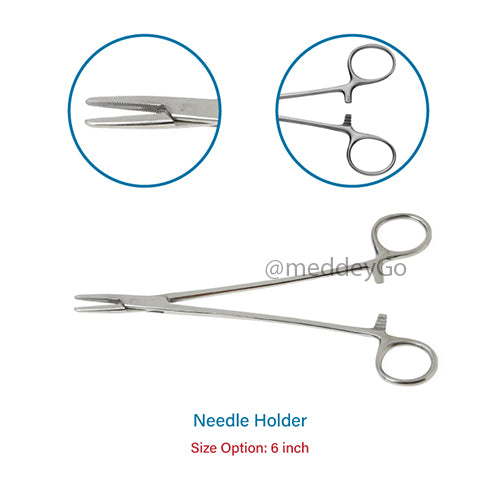
Needle Holder Surgical Instrument
Type: Instruments
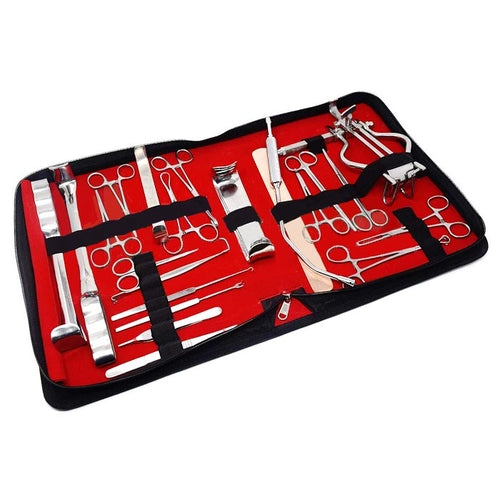
Laparotomy Pediatric Instruments Kit
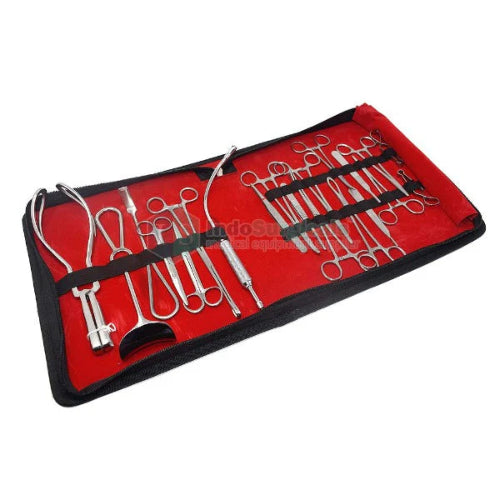
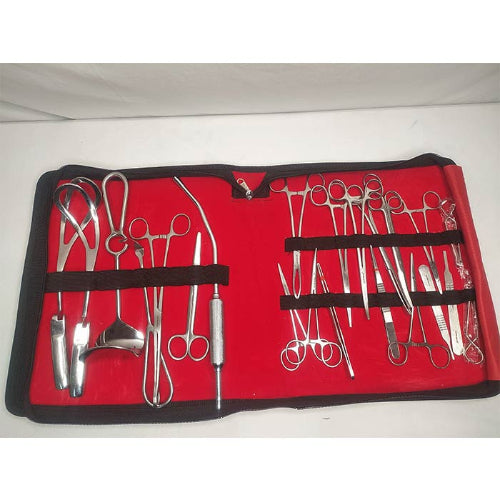
Type: Instruments
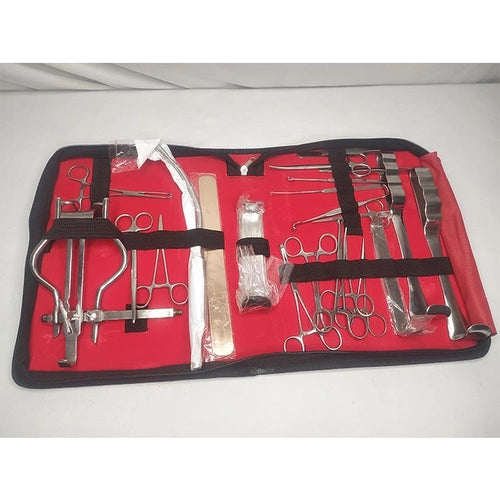
Cesarean Section Set Deluxe Quality
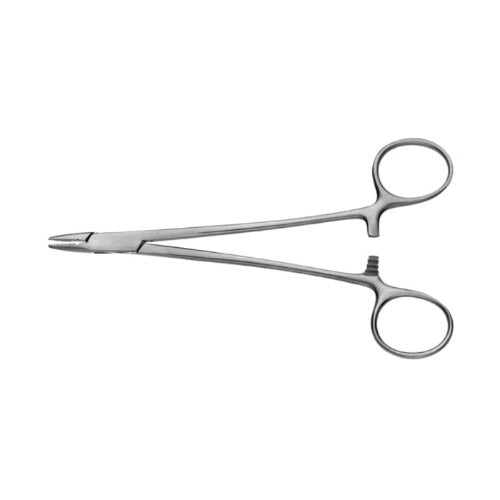
Type: General Instruments
Mayo-Hegar Needle Holding Forceps SS
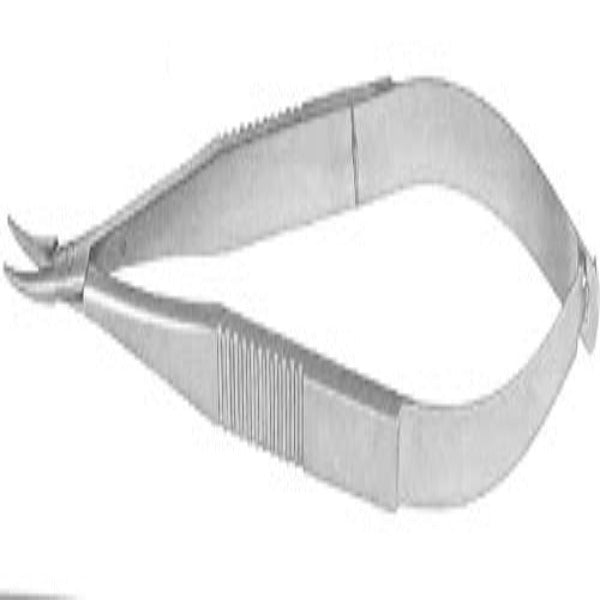
Type: MeddeyGo
Castroviejo Needle holder Curved without lock
Collection:
Understanding the Use of Castroviejo Needle Holders
Imagine trying to sew two pieces of silk together using a needle the size of an eyelash and thread thinner than a human hair. At this microscopic scale, a subtle twitch of your finger feels like an earthquake to the delicate materials you are trying to repair. To successfully perform these feats, surgeons need more than just a steady hand; they need a device that transforms a rough human grip into a precision machine.
Most standard medical tools resemble scissors, requiring a clunky squeezing motion to operate. While a standard surgical needle holder works well for heavy lifting, its "scissor-grip" relies on the larger, clumsier muscles of the forearm. Try writing your signature while holding a pen like a pair of kitchen shears, and you will quickly understand why these instruments struggle when extreme finesse is required. According to basic ergonomic principles, the highest level of manual dexterity comes from the fingertips, not the wrist.
This specific need for fingertip control led to the invention of Castroviejo needle holders. Unlike their bulky cousins, these instruments are designed to be held almost exactly like a high-end fountain pen. This shift from a scissor-grip to a "pen-grip" allows doctors to manipulate tiny needles with the same delicate ease used by a watchmaker placing a gear. It is a masterpiece of functional design that solves the physical limitations of the human hand.
Modern medicine relies on this specialized tool to perform microsurgical suturing techniques in eye surgery, dental work, and nerve repair. By removing the mechanical strain of gripping and unlocking, the Castroviejo allows the surgeon to focus entirely on the perfection of the stitch. This tool offers a rare glimpse into how mechanical engineering quietly underpins the miracles of modern healing.
Castroviejo needle holders are pen-grip, spring-loaded microsurgical drivers that convert fingertip motions into ultra-stable control, overcoming the tremor-prone scissor-grip of standard holders. Originating from Dr. Ramón Castroviejo’s quest for precision in corneal surgery, they pair fine mechanics (leaf springs, optional ratchets) with durable tungsten carbide inserts for secure, long-lasting needle purchase. Surgeons choose locking vs non-locking models and straight vs curved tips to balance security, speed, and line-of-sight while handling ultra-fine 8-0 to 11-0 sutures without crush damage. Proper ultrasonic cleaning, lubrication, and thorough drying preserve performance, and quality is judged by spring feel, tip condition, lock action, and ergonomic fit.

Dr. Ramón Castroviejo: The Legacy of the Godfather of Microsurgery
In the early 1930s, performing a corneal transplant---replacing the clear front window of the eye---was a gamble that few surgeons dared to take. The human eye is unforgivingly delicate, yet the instruments available at the time were bulky, resembling heavy tailoring shears more than precision devices. Dr. Ramón Castroviejo, a Spanish-American ophthalmologist, recognized that the high failure rate in these surgeries wasn't due to a lack of medical skill, but a lack of engineering finesse. He faced a mechanical paradox: he needed to stitch tissue thinner than a sheet of paper, but his tools were designed for the brute force of general surgery.
Standard clamps of that era utilized a "scissor-grip," forcing the doctor to loop their thumb and ring finger through metal rings. While this design works well for cutting bandages, it relies heavily on wrist movement, which naturally limits fine motor control and increases the risk of hand tremors. Castroviejo realized that to achieve microscopic accuracy, he had to change the fundamental way a surgeon held their tool. He looked to the world of art and writing for inspiration, noting that the most precise human movements---like sketching or signing a check---are done not with the whole hand, but with the fingertips holding a pen.
To bridge this gap, he invented the Castroviejo needle holder, replacing the clumsy rings with a flat, spring-loaded handle. This design allowed surgeons to gently squeeze the instrument between the thumb and forefinger, engaging a locking mechanism without the jarring "snap" of traditional clamps. This innovation transformed high-stakes medicine, enabling procedures on nerves and blood vessels that were previously thought impossible. The design works by fundamentally utilizing the physics of the pen-grip to ensure stability.
The Physics of the Pen-Grip: Why Shape Matters for Stability
Try a simple experiment to see the genius of this design: pick up a pair of heavy kitchen scissors and attempt to write your signature on a scrap of paper. You will likely find the motion clumsy and the letters jagged because the "scissor-grip" forces you to generate movement from your wrist and forearm. This engagement of large muscle groups is excellent for cutting a steak or cutting a bandage, but it acts like a sledgehammer when you need a scalpel. Dr. Castroviejo's flat-handled design shifts control from the wrist to the fingertips, allowing the surgeon to anchor their hand against the patient's face for stability while manipulating the needle with microscopic adjustments of the thumb and index finger.
Anatomy dictates that the wrist is built for power, while fingertips are wired for precision, a distinction that defines the tool's effectiveness. By adopting the "precision grip"---identical to how you hold a fountain pen---the instrument reduces the natural tremors that plague unsupported hands. This shift in mechanics offers distinct advantages over traditional surgical clamps:
| Scissor-Grip Limitations: | Pen-Grip Advantages: | | --- | --- | | Relies on wrist rotation (gross motor skills), amplifies hand tremors, and requires a large range of motion to open or close jaws. | Utilizes fingertip rolling (fine motor skills), anchors the hand to dampen shaking, and allows for 360-degree rotation without twisting the arm. |
Beyond how it is held, the instrument utilizes a subtle leaf-spring mechanism that automatically pushes the jaws open when unlocked. Unlike standard pliers that require the user to manually pull the handles apart, the Castroviejo holder does the work for the surgeon, reducing hand fatigue during hours-long procedures. However, even the most ergonomically perfect handle is useless if the tips wear out after a few uses, highlighting the critical role of the metal itself.
Stainless Steel vs. Tungsten Carbide: Choosing the Right Metallurgy
Most surgical needles are made of hardened steel designed to pierce tough tissue without bending, but this strength creates a unique challenge for the tools meant to hold them. If a surgeon attempts to grip one of these needles using a standard stainless steel instrument, a microscopic battle of physics occurs where the harder object wins. The needle, being tougher than the holder, will eventually gouge the instrument's jaw, creating a smooth spot where the needle can spin uncontrollably during a delicate stitch. Consequently, those investigating what is the best material for a needle holder will find that standard steel often falls short for frequent, high-precision work.
Engineers solved this durability crisis by borrowing a material more common in heavy mining drills than medicine: Tungsten Carbide. Instead of making the entire tool out of this incredibly expensive and brittle metal, they braze small, textured plates---called inserts---onto the tips of the jaws. These inserts are nearly as hard as diamonds and act like high-performance tire treads, biting into the steel needle to prevent any rotation. When comparing tungsten carbide vs stainless steel tips, the former offers a grip that lasts up to five times longer, ensuring the surgeon maintains absolute control over a needle barely visible to the naked eye.

You can spot these premium instruments instantly because manufacturers adhere to a universal color-coding system. If you see a Castroviejo holder with gold-plated handles, it is not a sign of luxury or aesthetic flair, but a technical label indicating the presence of those durable Tungsten Carbide inserts. This visual shorthand allows hospital staff to identify the high-performance tools from across the room. The final piece of the engineering puzzle involves the mechanism that keeps the jaws clamped tight without continuous finger pressure.
To Lock or Not to Lock? Navigating the Ratchet Mechanism
Imagine squeezing a pair of tweezers tightly for an hour straight. Your thumb would cramp, your hand would eventually shake, and your precision would vanish. To prevent this physical exhaustion, known as constant-pressure fatigue, many Castroviejo models feature a clever ratchet mechanism located near the handles. Just like a parking brake on a car keeps the vehicle stationary without your foot on the pedal, this series of small interlocking teeth clamps the jaws shut around the needle. The surgeon squeezes the handles until they "click" together, allowing them to relax their hand muscles while the tool maintains a vice-like grip on the needle.
Not every procedure requires this safety net. Surgeons choose between locking vs non-locking surgical instruments based on the specific rhythm of the operation. A locking instrument provides absolute security for complex stitching where dropping the tiny needle could be disastrous. Conversely, a non-locking model acts purely as a spring-loaded extension of the fingers, allowing for rapid, fluid movements. In these cases, the mechanism is stripped away because stopping to "unclick" the tool between every stitch would be too slow and disruptive.
Deciding between the two ultimately comes down to balancing safety against speed:
| Locking (Ratchet): | Non-Locking (Spring): | | --- | --- | | Prevents hand cramps and secures the needle during pauses, but the "snapping" action can cause slight vibrations. | Offers the smoothest, fastest action for quick repetition, but requires continuous finger pressure to maintain the hold. |
Once the surgeon has selected the right grip and locking preference, they must make one final decision regarding the tool's geometry to ensure they can actually reach the tissue.
Straight vs. Curved Tips: Visualizing the Surgical Angle
Even the most secure grip and advanced locking mechanism are useless if the surgeon cannot actually see the target. When working under a microscope, the operator's own hands often become their biggest obstacle, effectively blocking the view of the tiny work area. To solve this visual puzzle, manufacturers design these tools with distinct profiles that act like periscopes for the fingers. The choice between curved versus straight tip advantages isn't merely aesthetic; it fundamentally dictates the angle of approach and the surgeon's ability to maintain a clear line of sight.
Consider the difficulty of painting a fine detail in a tight corner; a straight brush might force your hand to obscure the very line you are trying to draw. In surgery, microsurgical needle driver tip configurations function similarly to solve this obstruction issue. A straight tip is intuitive and robust, making it the ideal choice for surface-level work where nothing impedes the view. However, a curved tip allows the surgeon to reach into deep pockets---like the back of the mouth or the side of the eyeball---while keeping their hand off to the side. This subtle bend ensures the vital "line of sight" remains broken only by the needle itself, not the knuckles holding it.
Selecting the right shape is essentially a geometry problem solved in real-time. If the workspace is open and flat, the direct force of a straight tip offers the most tactile feedback and control. For deep, shadowed recesses, the curved tip is indispensable, acting as an offset extension that preserves visibility. Once the surgeon has successfully navigated past these physical obstacles and positioned the tool, the challenge shifts from access to extreme delicacy, requiring a mastery of threads so thin they are nearly invisible to the naked eye.

Handling the Invisible: Working with 8-0 to 11-0 Sutures
The precision required for these instruments is best understood by examining what they are designed to hold. In the medical world, thread thickness is measured on a scale where the larger the number, the thinner the material. While a standard heavy-duty stitch might look like thick fishing line, suturing with 8-0 monofilament requires handling a strand so fine it floats on air currents. The Castroviejo needle holder is engineered specifically because standard tools would simply snap these delicate threads or crush the microscopic needles attached to them.
To visualize just how small the working area is, consider how these medical sizes compare to objects you might find around your house:
- 2-0 Suture: Comparable to thick fishing line or heavy denim thread.
- 5-0 Suture: Roughly the thickness of a strand of human hair.
- 8-0 to 11-0 Suture: Significantly thinner than a human hair, comparable to a spider's web; often invisible to the naked eye without bright lighting.
This extreme fragility creates a mechanical paradox: the tool must grip a steel needle firmly enough to push it through tissue, but gently enough not to flatten it. This is where "crush force" becomes critical. If a surgeon were to use a standard clamp on these micro-needles, the force of the jaw would flatten the round needle into a pancake, ruining it instantly. Micro needle driver models utilize a finely tuned spring mechanism that limits how much pressure the human hand can apply. It acts like a torque wrench for your fingers, ensuring that even if the surgeon squeezes tight during a stressful moment, the tool only delivers the exact amount of force needed to hold the needle, preserving the integrity of the equipment.
With the mechanics of grip and vision established, the final challenge becomes longevity. A tool this precise is intolerant of debris, making the next step---maintenance---just as critical as the surgery itself.
Cleaning and Sterilization: Preserving the Life of Micro-Tools
Maintaining a tool this sensitive requires treating it more like a high-end mechanical watch than a kitchen knife. While standard surgical steel is tough, the intricate spring mechanisms and fine jaws involved in ophthalmic surgical instrument maintenance face a unique enemy: invisible debris. If microscopic material is left to dry within the hinge, it acts like glue, stiffening the smooth "click-pen" action that surgeons rely on. Because the tips are so fine, even a vigorous scrubbing with a stiff brush---the standard way to wash larger medical tools---can misalign the jaws, rendering the instrument useless.
Instead of physical scrubbing, hospitals rely on a high-tech "sound bath" known as ultrasonic cleaning to protect these investments. This device uses high-frequency sound waves to create millions of microscopic bubbles in a cleaning solution. When these bubbles collapse against the metal, they create tiny vacuum effects that pull dirt out of the deepest crevices without ever touching the delicate metal.
- Rinse Immediately: Wash off visible debris with distilled water right after use to prevent distinct chemical reactions.
- Ultrasonic Bath: Submerge the tool with the lock open so sound waves reach the hinge and spring.
- Lubricate: Apply a medical-grade lubricant to the moving parts to ensure the spring stays responsive.
Water, ironically, is the final threat to these steel instruments. If left wet, the surface can develop "pitting corrosion," which essentially creates microscopic potholes in the smooth metal. These pits become hiding spots for bacteria and weaken the tool's structure. Cleaning delicate microsurgical tools requires a strict drying regimen, often using compressed air to blast moisture out of the joints, ensuring the metal remains pristine and ready for the next delicate operation.
Your Roadmap to Mastering Precision Tools
Surgical instruments are more than merely sterile steel; they are feats of engineering. The Castroviejo needle holder changes the definition of precision. It isn't just about gripping a needle; it is about how a tool can bypass the limitations of the human hand, turning a tremor into a steady, controlled motion. The difference between a clumsy attempt and a perfect result often lies not in the intent, but in the mechanics of the hold.
Whether you are exploring this for delicate hobby work like model building and fly-tying, or simply appreciating the craft of medical technology, knowing what makes a quality tool matters. You can now distinguish between a cheap imitation and a precision instrument. Use the following criteria when inspecting or adding Castroviejo needle holders to your own toolkit:
- Check the Spring: It should offer smooth resistance---not too stiff to squeeze, but strong enough to snap back.
- Inspect the Tips: Look for tungsten carbide inserts (often marked by gold handles) which grip without wearing down.
- Test the Lock: The mechanism should click silently and release with a gentle squeeze, never sticking or jarring your hand.
- Prioritize Fit: Ensure the length matches your hand size; the tool should rest naturally in the webbing of your thumb like a pen.
This specific design highlights a universal truth in mechanics: the best tools are the ones you forget you are holding. By shifting the strain from the wrist to the fingertips, the Castroviejo proves that ergonomic design is just as vital as the material used to build it. Prioritizing quality and fit over simple utility grants control.
A deeper respect for the invisible support behind every miracle procedure reveals that the Castroviejo is more than just hardware; it is the bridge between a surgeon's mind and the patient's healing. Next time you pick up a pen or a pair of tweezers, remember that the right design doesn't just make the work easier---it makes the impossible achievable.
Q&A
Question: What is a Castroviejo needle holder, and how does it differ from a standard scissor-style holder?
Short answer: It’s a pen-grip, spring-loaded microsurgical needle driver that converts fingertip motions into exceptionally stable control. Unlike scissor-grip holders that rely on wrist and forearm muscles (amplifying tremor and requiring large movements), the Castroviejo is held like a fountain pen. This “precision grip” lets the surgeon anchor the hand for stability and make tiny, controlled adjustments with the thumb and index finger. A leaf-spring opens the jaws automatically to reduce fatigue, and optional ratchets can hold a needle without continuous squeeze. This design is purpose-built for ultra-fine suturing (8-0 to 11-0), where limiting crush force and maximizing stability are essential.
Question: When should I choose a locking vs. non-locking Castroviejo?
Short answer: Pick based on the balance you need between security and speed.
- Locking (ratchet): Best when dropping the needle is unacceptable or you need to rest your grip mid-stitch. It prevents hand cramps by holding the needle for you, though the “click” can introduce a slight vibration.
- Non-locking (spring-only): Ideal for rapid, fluid, repetitive moves. It offers the smoothest action and quickest pace but requires continuous, gentle pressure to maintain purchase.
Question: Why do some Castroviejo holders have gold handles, and what’s the advantage of tungsten carbide inserts over stainless steel?
Short answer: Gold handles are a quick visual code for tungsten carbide (TC) tip inserts. TC is far harder than standard stainless steel, so its textured “tread” grips the steel needle without getting gouged—preventing needle spin and preserving control. Compared with plain steel jaws, TC inserts maintain a reliable bite and can last up to five times longer, delivering consistent performance for high-precision work.
Question: How do I decide between straight and curved tips?
Short answer: Choose the geometry that preserves your line of sight while delivering the needed access.
- Straight tips: Intuitive, robust, and best for open, flat work where nothing blocks your view—excellent tactile feedback with a direct approach.
- Curved tips: Act like a visual “offset,” letting you reach into deep or obstructed spaces (e.g., posterior oral cavity, peripheral eye) while keeping your hand out of the optical path so you can still see the target clearly.
Question: How do these tools handle ultra-fine sutures without crushing needles, and how should I maintain them?
Short answer: For 8-0 to 11-0 sutures, the holder’s finely tuned spring limits applied force—like a torque wrench for your fingers—so you can grip a micro-needle firmly enough to drive it, yet gently enough to avoid flattening it. To preserve this precision:
- Rinse immediately with distilled water to remove debris before it dries.
- Use an ultrasonic bath with the lock open so the waves reach the hinge and spring.
- Lubricate moving parts with medical-grade lubricant to keep the spring responsive.
- Dry thoroughly (often with compressed air) to prevent pitting corrosion. To judge condition and quality, check that the spring feels smooth, the tips are aligned with intact TC inserts, the lock (if present) clicks and releases without jarring, and the instrument fits your hand comfortably in a pen grip.