


Type: Devices
Beurer Pulse Oximeter PO-30
Type: Home Healthcare
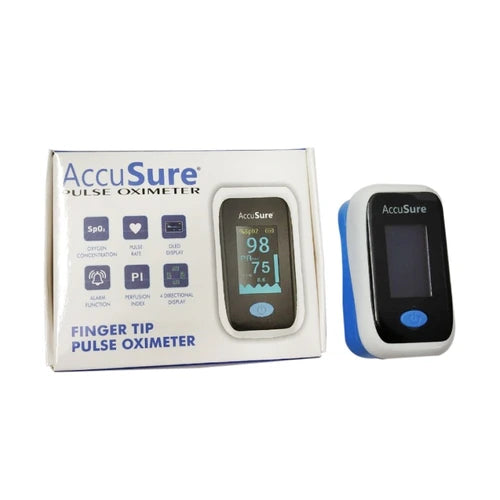
Accusure Fingertip Pulse Oximeter with 1 Year Warranty

Type: Diagnostic Equipment
Neonatal Pulse Oximeter P Ultra
Collection:
Infant and Newborn Pulse Oximeters
It's 3 a.m. and your baby is sleeping soundly, but you aren't. If you've ever crept into the nursery just to watch their tiny chest rise and fall, you've felt the powerful worry that has led many parents to wonder about at-home monitors. You've probably seen them online or in stores, but the core question remains: are these devices a helpful tool or just another source of anxiety? This guide will help you understand what they do so you can make a confident choice.
This guide explains what infant pulse oximeters measure and how they work, and clarifies the critical difference between FDA-cleared, medical-grade devices prescribed for specific conditions and consumer wellness monitors marketed for reassurance. For healthy, full-term babies, the AAP does not recommend home monitors; they do not prevent SIDS and can heighten anxiety through false alarms. Parents should look at the baby first during any alarm, understand normal oxygen ranges and the limits of consumer devices, and watch for signs of labored breathing during illness. The most effective safety strategy is consistent safe-sleep practices (the ABCs) and partnering with your pediatrician; medical-grade monitors are used only when prescribed.
So, what is a pulse oximeter? A pulse oximeter is a small, painless device that clips gently onto a baby's foot or hand to measure two of their most important vital signs: their heart rate and the oxygen level in their blood. Think of it as a quick, digital check-up that provides a snapshot of how well your baby's body is working, without needing a single poke or prod.
This small device works by shining a special, harmless red light through their skin. It's completely painless and no different from shining a small flashlight on your hand in a dark room. Based on how that light passes through the tiny blood vessels, the monitor can calculate the amount of oxygen being carried by the blood cells. Understanding how to use a pediatric pulse oximeter correctly is key to getting a good reading.
The main number it produces is called oxygen saturation, which is a measure of your baby oxygen saturation level. The easiest way to think about it is like a fuel gauge for the oxygen in your baby's body. A full tank is ideal, and this little number tells you exactly how full that tank is at any given moment, offering a clearer picture of their well-being.

The Critical Difference: Medical-Grade Monitors vs. Consumer "Wellness" Gadgets
When you're researching baby products, it's easy to assume all monitors that track oxygen are created equal. You might see a "smart sock" like the Owlet Smart Sock or Masimo Storky marketed for peace of mind, right alongside talk of "medical-grade" devices used in hospitals. While they seem to do similar things, they belong in two completely different categories. Understanding this distinction is the single most important step in making a confident decision for your family.
At its core, the difference comes down to purpose and oversight. On one side, you have true medical-grade baby pulse oximeters . These are precision instruments that are prescribed by doctors for infants with specific health conditions, like chronic lung disease or some heart defects. On the other side are consumer wellness monitors, which are sold directly to parents to track general wellness trends, much like a fitness tracker for adults.
So, what's the real dividing line? It often comes down to a specific designation: FDA-cleared . When a device is cleared by the U.S. Food and Drug Administration (FDA) as a medical device, it means it has been rigorously reviewed for safety and, crucially, for accuracy for its intended medical purpose---like helping a doctor diagnose or manage a health problem. Consumer wellness gadgets, while they may use similar technology, are generally not cleared to diagnose, treat, or prevent any disease. Their goal isn't to provide medical data, but to offer parents information for "peace of mind."
Here's a side-by-side comparison:
| Medical-Grade Pulse Oximeters | Consumer Wellness Monitors | | -------------------------------------- | -------------------------------------- | | FDA-cleared as a medical device | Generally not cleared for medical use | | Prescribed by a doctor for a reason | Sold directly to consumers | | Used to help diagnose/manage conditions | Not intended for diagnosis | | Held to high standards of accuracy | Accuracy for medical decisions can vary|
Ultimately, the right choice depends on your "why." A consumer monitor can offer a sense of reassurance by letting you see general trends. However, it is not a substitute for a medical device. If your baby has a health concern that requires accurate, reliable oxygen monitoring, only a medical-grade device prescribed by your pediatrician is appropriate for that task. This raises a common question: when would a doctor actually recommend one?
When Would a Doctor Actually Prescribe an Oximeter for a Baby?
It's a question many parents ask, especially after leaving the constant monitoring of the hospital behind. The simple answer is that doctors reserve prescriptions for a neonatal pulse oximeter for infants with specific, known medical conditions. For a healthy, full-term baby, at-home monitoring isn't a standard part of newborn care. Instead, a pediatrician-recommended oximeter is a tool used to help manage an existing health challenge under a doctor's supervision.
One of the most common reasons for a prescription is prematurity . Babies born significantly early often have underdeveloped lungs and an immature brainstem, the part of the brain that controls breathing. This can lead to periods where their breathing pauses or their oxygen levels dip. Similarly, some infants develop chronic lung disease after a difficult start, requiring supplemental oxygen and closer observation at home to ensure they are breathing effectively.
Another significant reason involves certain congenital heart conditions. These are heart defects a baby is born with that can affect how efficiently oxygen-rich blood is pumped throughout the body. For these infants, a home pulse oximeter acts as a crucial data point for parents and doctors, helping them track how the baby's heart is handling the workload of daily life outside the hospital.
In all these cases, the monitor is just one piece of a comprehensive medical plan. A prescription doesn't just mean getting a device; it means receiving training from your medical team on how to use it, what the numbers mean for your baby, and exactly when to call for help. This medical context is what separates a prescribed device from a wellness gadget. But what if your baby is healthy, and you're the one seeking reassurance?
"For Peace of Mind": What Do Pediatricians Say About Monitors for Healthy Babies?
The promise of "peace of mind" is a powerful one, especially when you're a new parent. Companies marketing consumer-grade baby oxygen monitors for home use tap directly into this deep-seated need, suggesting their devices offer a safety net against the unknown. It's a compelling idea: if you can see your baby's numbers, you can stop worrying. But is a baby pulse oximeter necessary for a healthy infant, and does it actually deliver on that promise of reassurance?
What do the experts think? When it comes to this topic, the leading group of pediatricians in the country, the American Academy of Pediatrics (AAP), has a clear and consistent position. Based on the available evidence, the AAP does not recommend at-home cardiorespiratory monitors (including consumer pulse oximeters) for healthy infants. This formal recommendation is a cornerstone of safe sleep guidance and addresses the core concerns parents have.
A major reason for this stance relates to one of the biggest parental fears: Sudden Infant Death Syndrome (SIDS). There is currently no scientific evidence to suggest that the use of these home monitors reduces the risk of SIDS. While the idea of an alarm sounding a warning is appealing, the causes of SIDS are still not fully understood and are thought to be far more complex than a simple, monitorable breathing event. Therefore, the topic of SIDS prevention and monitors is one where pediatricians urge caution, emphasizing proven strategies like safe sleep practices instead.
Beyond the lack of proven benefit, pediatricians also have a significant concern about the unintended consequences of constant monitoring: increased parental anxiety. These wellness devices are not medical-grade and can be prone to errors caused by a baby simply wiggling their foot or the sensor slipping. This can trigger a frightening alarm, sending parents into a panic for what turns out to be a false alarm. Instead of providing peace of mind, the devices can sometimes create a cycle of stress and worry.
The Hidden Cost of Monitoring: How False Alarms Can Increase Anxiety
While these monitors are marketed for "peace of mind," any parent who has been woken by a piercing alarm knows the reality can be the exact opposite. That heart-stopping moment, when you're launched from a deep sleep and stumbling toward the crib, is often the beginning of a stressful cycle. Many of these alerts are false alarms, and understanding why they happen is the first step in managing the anxiety they can cause. Experiencing frequent false alarms on a baby oxygen monitor is a common and jarring part of using a wearable baby vitals tracker.
The single biggest culprit behind these false alarms is simple: movement. A pulse oximeter works by shining a tiny red light through the skin to get a reading from the blood vessels. For this to be accurate, the sensor needs a relatively still target. But babies are wiggly. They kick their legs, clench their fists, and adjust in their sleep. Any of these normal movements can shift the sensor just enough to interrupt the reading and trigger a loud, frightening alarm, even when your baby is perfectly fine.
Another common issue is placement and circulation. If the sensor sock or wrap is too loose, it can easily slip and lose contact. Even something as simple as your baby having cold feet can cause a problem. When feet or hands are cold, the blood vessels in the skin naturally narrow, making it much harder for the device's light to get a good reading. The monitor might interpret this poor signal as a drop in oxygen levels, leading to yet another startling alert.
This cycle of alarm, panic, and relief can take a serious emotional toll. The constant worry about whether the next alarm is real creates a state of hyper-vigilance, making it impossible for parents to get the restorative sleep they need. This heightened baby vitals monitor anxiety can even lead to unnecessary, stressful trips to the emergency room, only to be told that the baby is healthy and the monitor was likely in error. Instead of reducing worry, the device can accidentally become the primary source of it.
This is why the most critical piece of advice from pediatricians and seasoned parents is the same: in the event of an alarm, look at your baby, not the monitor. Is their chest rising and falling? Is their skin a normal, pinkish color? Are they resting peacefully? Your own eyes are your best and most immediate tool. If the baby looks fine, the alarm was almost certainly a technical glitch. But to feel truly confident in that assessment, it helps to understand what the numbers on the screen represent when everything is calm and working correctly.
What Are Normal Oxygen Levels for a Baby? Decoding the Numbers
After wading through the stress of false alarms, you're likely wondering: what numbers actually matter? When a pulse oximeter gives a reading, it's measuring the percentage of oxygen in your baby's blood. For most healthy, full-term babies, a normal baby oxygen saturation level is very similar to an adult's. Think of it like a fuel gauge for the body---you want to see that the tank is comfortably full.
The readings can be understood like a traffic light. This simple newborn oxygen level chart can help you interpret what you see on the screen, but it is not a substitute for medical advice.
- Green Light (95% to 100%): This is the ideal range. A reading in this zone means your baby's blood is well-saturated with oxygen.
- Yellow Light (90% to 94%): This range can be a gray area. A temporary dip might happen if your baby has a stuffy nose from a cold. It warrants closer observation, but not necessarily panic. If the number stays in this range or you are concerned, it's a good reason to call your pediatrician for advice.
- Red Light (Below 90%): A reading that is consistently below 90% is a reason to seek prompt medical advice. A sustained low oxygen level, a condition medically known as hypoxemia in infants, requires evaluation by a healthcare professional.
Crucially, a single number on a screen rarely tells the whole story. A baby who is wiggling and kicking might cause a brief, inaccurate dip into the "yellow" zone, while a calm, sleeping baby with the same reading is a different situation. This is why your own eyes are so important. Is your baby breathing comfortably? Do they have a healthy, pink skin tone? For babies with specific health conditions, like prematurity or a heart issue, your doctor may give you a completely different set of numbers to watch for.
Knowing these general ranges is one piece of the puzzle. But putting that knowledge into action when an alarm is blaring at 3 a.m. is another challenge entirely.
A Step-by-Step Guide: What to Do If a Monitor Alarm Goes Off
An alarm blaring in a silent house is every parent's nightmare. Your heart pounds, and your first instinct is to panic. But in this moment, the most important thing you can do is take a breath and follow a calm, deliberate plan. Before you even look at the numbers on the baby vitals monitor, your absolute first step is to look at your baby.
Most of the time, you will be dealing with one of the many false alarms on a baby oxygen monitor. To figure out what's happening, follow this simple three-step process:
- Look at Your Baby First. Are they sleeping peacefully? Is their skin its normal, pinkish color? Are they breathing easily, with their chest rising and falling rhythmically? If your baby looks completely fine, the problem is almost certainly the technology, not their health.
- Check the Sensor. A wiggling foot or a kick is the most common reason for an alarm. See if the sensor on the sock or wrap has slipped out of place. This is a key part of how to use a pediatric pulse oximeter correctly---a good fit is essential for an accurate reading. Gently readjust it so it's snug but not tight, and make sure the little red light is positioned properly on their foot or hand.
- Wait and Watch. After repositioning the sensor, give the monitor about 30 seconds to a minute to get a new, stable reading. If the baby is well and the sensor is secure, the numbers should return to the normal range.
Your eyes are a far more reliable tool than any consumer device. If an alarm goes off and you look over to see that your baby is struggling to breathe, looks pale or bluish around the lips, or seems unusually limp or unresponsive, do not waste time with the monitor. Call 911 or your local emergency services immediately. Trust what you see. The monitor's job is to prompt you to check on your baby, and your job is to assess the real-life situation.
This process can help you manage the anxiety of false alarms, but what about when your baby is actually sick? A stuffy nose from their first cold can make any parent worry about their breathing, raising new questions about whether a monitor might be helpful.
Your Baby Has a Cold: Is a Pulse Oximeter a Good Idea?
Your baby's first cold is a parental rite of passage, often filled with stuffy noses, raspy sounds, and a lot of worry. It's natural to wonder if you should be monitoring baby with a cold using a pulse oximeter for reassurance. However, for a simple illness, focusing on a single oxygen number can be misleading. A baby's oxygen level can be perfectly normal while they are still struggling.
Instead of looking at a screen, pediatricians want you to look at your baby. They focus on something called the "work of breathing"---how much effort your baby is putting into every single breath. Think of it this way: their oxygen level might be 98%, but if they are using every muscle in their little chest to keep it there, they are working too hard and need help. Your eyes can spot this effort far better than any device.
Learning to recognize the signs of labored breathing is one of the most valuable skills you can have as a parent. Rather than getting fixated on a baby oxygen saturation number, watch for these clear physical signs of respiratory distress in infants. If you see any of the following, it's time to call your doctor:
- Nostril Flaring: Their nostrils spread wide with each inhale.
- Grunting: A short, low-pitched sound with every exhale.
- Retractions: The skin visibly sucks in around the neck, collarbone, or ribs as they breathe.
- Fast Breathing: Their breathing is consistently much faster than usual when they are calm, sometimes with their head bobbing.
These visual cues give you a much clearer picture of your baby's well-being than an oxygen number alone. An oximeter can't tell you if your baby is tired and struggling, but you can. Trust your instincts and your eyes. While understanding these signs is key for managing sickness, many parents consider these monitors for a different, deeper fear.
The SIDS Question: Can Any Monitor Actually Prevent SIDS?
The question that keeps so many new parents awake at night is whether a baby pulse oximeter or smart monitor can help with SIDS prevention. The answer, according to every major medical authority, is a clear and unequivocal no. To date, no home monitor has ever been scientifically proven to reduce the risk of Sudden Infant Death Syndrome (SIDS) in healthy infants. This is the single most important fact to understand when considering one of these devices.
The reason for this comes down to a crucial distinction: monitoring is not the same as prevention. Think of it like this: a security camera can record a problem as it happens, but it can't stop it from happening in the first place. Similarly, a monitor can only alert you that your baby's oxygen level or heart rate has already entered a dangerous zone. It does not---and cannot---prevent the underlying event that caused that drop.
Because of this lack of evidence, the American Academy of Pediatrics (AAP) makes its position very clear. The organization does not advise using at-home cardiorespiratory monitors as a strategy for SIDS prevention in healthy babies. Their guidance emphasizes that relying on these devices can create a false sense of security, potentially distracting parents from the steps that are actually proven to keep babies safe.
So if technology isn't the answer, what is? The most powerful tool you have for protecting your child isn't a device, but a routine. Decades of research have shown that the single most effective way to reduce SIDS risk is to practice safe sleep every time your baby sleeps.
The Real "Peace of Mind": Proven Ways to Keep Your Baby Safe While Sleeping
Shifting your focus from technology to technique is the most empowering step you can take for your baby's well-being. While a monitor can't prevent a dangerous situation, creating a safe environment can. Decades of research have given parents a powerful, evidence-based toolkit for SIDS prevention and promoting infant safety. The best part? It's simple, free, and easy to remember.
Pediatricians have made this easy to recall with the ABCs of Safe Sleep. Committing these safe sleep practices to memory and using them for every single sleep---naps and nighttime---is the most effective way to reduce sleep-related risks.
- A is for ALONE. Your baby should have their own separate sleep space, free of pillows, loose blankets, crib bumpers, and soft toys.
- B is for BACK. Always place your baby on their back to sleep. Once they can roll over on their own, you don't need to reposition them, but their sleep should always start on their back.
- C is for CRIB. Your baby should sleep in a safety-approved crib, bassinet, or pack-and-play with a firm, flat mattress covered by only a fitted sheet.
This "bare is best" approach is crucial for newborn care. While plush blankets and cute stuffed animals seem comforting, they are serious suffocation and entrapment hazards in a crib. The safest sleep surface is a firm one. Additionally, keeping the room at a comfortable temperature and ensuring it's a smoke-free environment are also key components of creating a safe space for your baby.
Ultimately, your own senses are the best monitor you have. Regularly checking on your baby, listening to their breathing, and noticing their comfort level provide real-time, reliable information. For healthy infants, these fundamental practices are far more protective than any form of routine pulse oximetry testing for newborn babies at home. By making the ABCs an unbreakable habit, you are actively creating the peace of mind you're searching for.

Your Final Checklist: Deciding If a Monitor Is Right for Your Family
If you're reading this, you're likely feeling the weight of a heavy question, surrounded by the noise of smart-gadget advertising. Now, you can cut through that noise. You're no longer just wondering about these devices; you understand the crucial difference between a medical tool and a wellness product, and you know what the numbers on the screen actually mean. You've transformed anxiety into a foundation of knowledge.
The central question isn't "which monitor is best," but rather, "is a baby pulse oximeter necessary for my child?" To help you make confident newborn care decisions, use this checklist before talking to your pediatrician.
-
- Decision Checklist:Is my baby healthy and full-term? (If yes, the American Academy of Pediatrics says no monitor is needed for SIDS prevention.)
- Has our doctor prescribed a medical-grade monitor for a specific health condition?
- Am I prepared for the potential anxiety that false alarms from a wiggling baby can cause?
- Am I confident in our family's knowledge and practice of Safe Sleep guidelines?
Ultimately, the best baby oxygen monitor for peace of mind isn't a device, but a routine. For most families, focusing your energy on creating a safe sleep environment is a far more effective and less stressful path to ensuring your baby's well-being. This knowledge empowers you to have a productive, collaborative conversation with your pediatrician about what is truly right for your baby.
You now see these devices not as a magic shield, but as one possible tool among many---and one that is often unnecessary. Technology can be helpful, but it is no substitute for the most powerful and reliable monitor in the world: a loving, attentive parent. Trust your informed instincts, follow safe sleep rules, and remember that you are your baby's greatest advocate. You've got this.
Q&A
Question: Are at-home pulse oximeter monitors recommended for healthy, full-term babies?
Short answer: No. The American Academy of Pediatrics (AAP) does not recommend at-home cardiorespiratory monitors (including consumer pulse oximeters) for healthy infants. They have not been shown to prevent SIDS and can increase parental anxiety due to frequent false alarms from movement or poor sensor contact. For healthy babies, the safest and most effective approach is consistent safe-sleep practices (the ABCs: Alone, on their Back, in a safety-approved Crib) and partnering with your pediatrician.
Question: What’s the difference between medical-grade pulse oximeters and consumer “wellness” monitors?
Short answer: Purpose and oversight. Medical-grade oximeters are FDA-cleared devices prescribed by a doctor to help diagnose or manage specific conditions and are held to high accuracy standards for medical use. Consumer wellness monitors are sold directly to parents for general trends and “peace of mind”; they are not cleared to diagnose, treat, or prevent disease, and their accuracy for medical decisions can vary. They are not substitutes for prescribed, medical-grade equipment.
Question: When would a pediatrician prescribe a pulse oximeter for a baby?
Short answer: Only for specific, known medical needs—not for routine use in healthy infants. Common reasons include prematurity (with immature breathing control), chronic lung disease, and certain congenital heart conditions. A prescription comes with training on correct use, individualized target numbers, and clear guidance on when to call for help, as part of a broader medical plan.
Question: What oxygen saturation numbers are normal for babies, and how should I interpret them?
Short answer: For most healthy, full-term infants:
- Green (95%–100%): Ideal range.
- Yellow (90%–94%): Watch closely; brief dips can occur (e.g., with a stuffy nose). If persistent or worrisome, call your pediatrician.
- Red (below 90%): Seek prompt medical advice. A single number doesn’t tell the whole story—movement can cause false dips. Always look at your baby first: comfortable breathing and pink color are reassuring. For babies with specific conditions, your doctor may set different targets. During a cold, focus on “work of breathing” (nostril flaring, grunting, retractions, fast breathing/head-bobbing) rather than a single oxygen number.
Question: What should I do if a monitor alarm goes off in the middle of the night?
Short answer: Follow three steps:
- Look at your baby first. If they’re pink and breathing comfortably, it’s likely a false alarm.
- Check the sensor. Reposition so it’s snug (not tight) and the light is correctly placed; warm cold hands/feet if needed.
- Wait 30–60 seconds for a stable reading. If your baby looks pale or bluish, is struggling to breathe, or seems unusually limp or unresponsive, don’t troubleshoot—call 911 or local emergency services immediately. Your eyes are more reliable than any consumer device.