
Filter
2 products

Type: Anesthesia
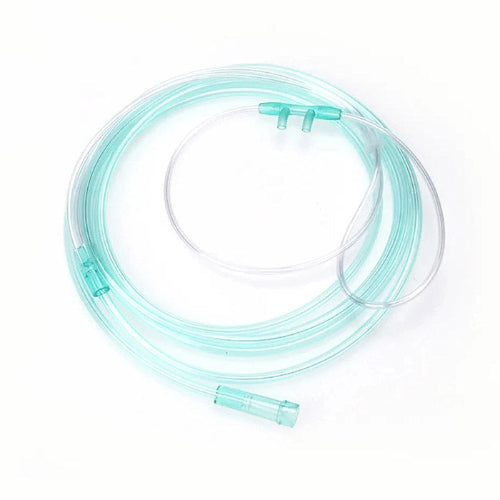
VentiFlex Oxygen Nasal Cannula Adult (Pack of 20)
Type: Anesthesia
VentiFlex Oxygen Nasal Cannula Pediatric (Pack of 20)
Collection:
Oxygen Nasal Cannula | Polymed Twin Bore Nasal Oxygen Cannula - MeddeyGo
What is a Nasal Cannula?
An oxygen nasal cannula is a lightweight, medical-grade device engineered to deliver supplemental oxygen or increased airflow to a patient in need of respiratory help. Often referred to simply as a **nasal cannula** or **o2 cannula**, it consists of a flexible, thin tube that hooks over the ears and sits behind the head, with two soft prongs inserted into the nostrils.
In clinical settings, this is frequently called the **oxygen pipe in nose** by patients, but its function is highly sophisticated. The oxygen cannula connects directly to an oxygen source—such as a portable concentrator, liquid oxygen tank, or wall-mounted flowmeter—to provide a controlled concentration of **nasal oxygen**.
What is a nasal oxygen cannula used for?
The primary purpose of the o2 nasal cannula is to treat hypoxia (low blood oxygen levels). It is the first line of defense for chronic respiratory conditions like COPD, asthma, and pneumonia. Because the interface is non-occlusive (it doesn't cover the mouth), patients can continue to eat, speak, and take oral medications without interrupting their oxygen therapy.
Spotlight: Polymed Nasocath Twin Bore Cannula
When discussing high-tier interfaces, the Polymed Nasocath Twin Bore Cannula is often cited for its superior comfort and delivery efficiency.
| Specification | Detail for Polymed Nasocath |
|---|---|
| Design Type | Twin Bore (Dual channel) for consistent flow. |
| Tube Length | Standard lengths usually range from 2.0m to 2.1m (approx. 7 feet). |
| Sizes Available | Adult, Pediatric, and Neonatal configurations. |
| Material | Soft, non-toxic, medical-grade PVC (Kink-resistant). |
What are the benefits of using Polymed Nasocath Twin Bore Cannula?
Quick Tips & Safety Warnings
- ⚠ WARNING: Never use oil-based moisturizers (like Vaseline) with your oxygen nasal cannula. Oxygen under pressure can react with oil, creating a significant fire hazard. Only use water-based lubricants.
- ✔ TIP: To prevent "ear sores," you can use small foam protectors or a piece of cotton padding where the nasal cannula tubing rests on top of the ears.
How much oxygen can a nasal cannula provide?
The delivery capacity of an oxygen nasal cannula depends entirely on whether it is a low-flow or high-flow system. For a standard nasal cannula used in most home and general ward settings, the oxygen concentration provided (FiO2) typically ranges from 24% to 44%.
A key clinical rule is that for every 1 liter per minute (LPM) of flow added to the oxygen cannula, the oxygen concentration increases by approximately 4%.
Is 4 liters of oxygen high-flow?
No. In the context of respiratory therapy, 4 liters per minute is still considered Low-Flow. While it is on the higher end of the low-flow spectrum, it does not require the specialized heated humidification systems that define "High-Flow" (HFNC) therapy. However, 4 liters of flow through an oxygen nasal cannula can still be drying to the nasal mucosa if used for extended periods without a bubble humidifier.
Can the Polymed Nasocath Twin Bore Cannula be used at home?
Absolutely. The Polymed Nasocath Twin Bore Cannula is an ideal choice for home-based nasal oxygen therapy. Its "Twin Bore" technology is particularly beneficial for home users who may be active or sleep restlessly, as it ensures that oxygen cannula delivery remains constant even if the tube is slightly kinked.
Maintenance for Home o2 Nasal Cannula Use:
- • Weekly Replacement: The nasal cannula (the part in your nose) should be replaced at least once a week to prevent bacterial buildup.
- • Monthly Tubing Change: The long supply tube (the **oxygen pipe in nose** extension) should be changed every 30 to 60 days.
- • Moisturizer Safety: Users often ask: What moisturizer can you use with oxygen? You must ONLY use water-based lubricants or specialized saline gels.
Comparison: Nasal Cannula vs. Oxygen Mask
| Feature | Oxygen Nasal Cannula | Simple Oxygen Mask |
|---|---|---|
| Flow Range | 1 - 6 LPM (Low Flow) | 5 - 10 LPM |
| Oxygen Concentration | 24% - 44% | 35% - 50% |
| Patient Comfort | High; Can eat and talk. | Low; Muffled speech, no eating. |
| Ideal Use | Long-term / Stable patients. | Emergency / Acute hypoxia. |
Is the Polymed Twin Bore Cannula suitable for children?
Yes, the Polymed Nasocath range includes specific pediatric and neonatal sizes. These are designed with much smaller, softer prongs to accommodate the delicate nasal passages of children. Using an adult-sized oxygen nasal cannula on a child is not only uncomfortable but can cause mucosal damage and inaccurate oxygen delivery.
What sizes are available for the Polymed Twin Bore Nasal Oxygen Cannula?
Precision sizing is paramount for the efficacy of an oxygen nasal cannula. A prong that is too large can cause pressure necrosis, while one that is too small leads to significant "leakage" of **nasal oxygen**. The Polymed Nasocath series provides a comprehensive range to ensure a perfect anatomical fit.
| Patient Category | Prong Design | Clinical Target |
|---|---|---|
| Adult | Standard curved/flared prongs. | General respiratory support for adults. |
| Pediatric | Soft, narrow-diameter prongs. | Children with developed nasal structures. |
| Infant / Neonatal | Ultra-soft, micro-bore prongs. | Premature infants or newborns in NICU settings. |
The Polymed Twin Bore Nasal Oxygen Cannula sizes are color-coded in clinical packaging to prevent administration errors. For home users, the "Adult Standard" is the most common, but "Adult Small" is available for those with narrower nasal vestibules.
How long is the tube of the Polymed Nasocath Twin Bore Nasal Oxygen Cannula?
Standard oxygen nasal cannula sets typically come with a 2.1-meter (7-foot) tube. This length is optimized for bedside use or for patients using a portable oxygen concentrator carried on a shoulder strap.
Mobility Tips for Long Tubing:
- • Avoid Kinks: Use swivel connectors when joining extension tubes to prevent the o2 cannula from tangling.
- • Color Awareness: Brightly colored tubing (like green) is often preferred for home use to make the **oxygen pipe in nose** extension more visible on the floor, reducing trip risks.
What moisturizer can you use with oxygen?
Prolonged use of an o2 nasal cannula, especially at flows above 3 LPM, strips moisture from the nasal mucosa. This leads to cracking, bleeding, and discomfort.
The Role of Bubble Humidifiers:
If the nasal oxygen flow is set to 4 Liters or higher, a bubble humidifier bottle should be attached to the oxygen source. This passes the oxygen through sterile water before it reaches the oxygen cannula, significantly reducing "nasal sting" and the risk of nosebleeds.
Quick Tips: Correct Nasal Cannula Placement
- Prong Direction: Ensure the curved prongs of the oxygen nasal cannula point downward and backward into the nostrils, following the natural curve of the nasal floor.
- The Loop: Place the tubing over the ears like a pair of glasses, then tighten the slider under the chin—not behind the head—for maximum stability.
Advanced FAQ: Oxygen Nasal Cannula Clinical Management
The fundamental difference lies in how much of the patient's inspiratory demand is met by the device. A standard oxygen nasal cannula (Low-Flow) delivers oxygen at 1-6 LPM. However, a resting adult breathes at a peak inspiratory flow of about 20-30 LPM. This means the patient "dilutes" the 100% oxygen from the o2 cannula with room air. Consequently, the exact FiO2 (concentration) is variable. Conversely, a High-Flow nasal oxygen system (HFNC) can deliver up to 60 LPM, which exceeds the patient's inspiratory flow. This allows for a precise, guaranteed FiO2 and provides a small amount of "positive end-expiratory pressure" (PEEP), which helps keep the lung's air sacs (alveoli) open. Furthermore, HFNC must be heated and humidified, whereas a low-flow oxygen cannula is typically delivered dry or with simple bubble humidification.
Yes, this is a condition known as Oxygen Toxicity or hyperoxia. Oxygen is a drug and must be "dosed" correctly. For patients with Chronic Obstructive Pulmonary Disease (COPD), their brain becomes accustomed to high CO2 levels and relies on low oxygen levels to trigger the "drive to breathe." If you provide excessive nasal oxygen via an oxygen nasal cannula, you can inadvertently suppress their respiratory drive, leading to CO2 retention (hypercapnia), confusion, and even respiratory arrest. Furthermore, high concentrations of oxygen for extended periods can cause "absorption atelectasis," where the nitrogen in the lungs is washed out, causing the lungs to collapse. Always maintain the flow rate exactly as prescribed by your healthcare provider.
Hygiene is critical to prevent respiratory infections. The prongs of the oxygen nasal cannula that sit inside your nose should be wiped daily with a clean, damp cloth or an alcohol swab. However, the most important rule for an oxygen cannula is replacement. You should replace the entire nasal cannula set every 7 to 14 days. If you have recently been ill with a cold or flu, replace it immediately. For the long oxygen pipe in nose extension tubing, replacement every 3-6 months is standard unless it becomes discolored or stiff. If using a humidifier bottle, the water must be changed daily using only distilled water to prevent mineral buildup and bacterial growth in the tubing.
Standard single-bore cannulas are prone to "silent occlusion." This happens when a patient rolls over in bed, kinking the tube and stopping oxygen flow without an immediate alarm from the concentrator. The Polymed Twin Bore Nasal Oxygen Cannula utilizes two separate internal channels. Because of this geometry, it is nearly impossible to collapse both bores simultaneously with standard body weight. This ensures that even if the oxygen nasal cannula is twisted or compressed, a therapeutic amount of nasal oxygen continues to reach the patient. This "safety redundancy" is why the Polymed series is preferred for overnight use and for patients with limited mobility who cannot easily check their own tubing for kinks.
If your oxygen nasal cannula is not delivering enough oxygen, or if your condition has worsened, you may experience "Air Hunger." Key symptoms include a rapid heart rate, sudden confusion, restlessness, and a bluish tint to the lips or fingernails (cyanosis). In the home setting, the most objective way to check this is with a pulse oximeter. If your oxygen saturation (SpO2) drops below your prescribed target (usually 88-92% for COPD or >94% for others), despite using the o2 cannula, you must contact your doctor immediately. Do not simply turn up the flow rate without medical authorization.
It depends on the stage of recovery. During acute respiratory distress in COVID-19, a mask (like a Non-Rebreather) or High-Flow nasal oxygen is often required to provide high concentrations. However, for long-term recovery and "long-COVID" respiratory support, the oxygen nasal cannula is far superior. It allows the patient to engage in "pulmonary rehabilitation," which involves eating, speaking, and light movement—all of which are essential for rebuilding lung capacity. The oxygen nasal cannula is less claustrophobic and promotes better patient compliance during the weeks or months required for lung healing.
Why Choose MeddeyGo for Your Oxygen Supplies?
MeddeyGo is the premier provider for specialized respiratory interfaces. When you purchase an oxygen nasal cannula from us, you aren't just buying a tube; you are investing in clinical-grade safety.
- ✓ Certified Polymed Distributor: We stock genuine Polymed Nasocath Twin Bore systems, ensuring you receive the exact technical specs discussed in this guide.
- ✓ Bulk Savings for Chronic Care: Since an o2 cannula must be changed weekly, we offer subscription packs that reduce your long-term costs.
- ✓ Expert Support: Not sure if you need Adult or Pediatric? Our clinical team is available to help you choose the right nasal oxygen interface.
Conclusion: Breathing Easier with Precision
The oxygen nasal cannula remains the most vital interface in modern respiratory medicine. Its balance of comfort, mobility, and effective **nasal oxygen** delivery makes it the "Gold Standard" for supplemental therapy. By understanding the importance of flow rates, the safety of water-based moisturizers, and the mechanical advantages of the Polymed Twin Bore design, patients can significantly improve their quality of life.
🚨 EMERGENCY PROTOCOL
"If you experience sudden shortness of breath, chest pain, or your lips turn blue while using your oxygen nasal cannula, call emergency services immediately. Do not attempt to fix the equipment first—seek medical help, then check for kinks in the **oxygen pipe in nose** extension."