


Type: Modalities
Handheld Laser Therapy Device for Physiotherapy

Type: Consulting Room
Examination Table Wooden Physiotherapy


Type: Occupational
Wrist Roller For Occupational and Physiotherapy


Type: Occupational
Suspension Frame Physiotherapy (MS Pipe)


Type: Modalities
Short Wave Diathermy SWD Machine for Physiotherapy

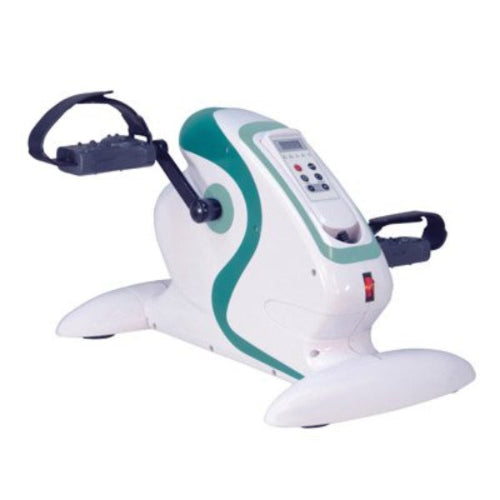
Type: Occupational
Physio Motorized Pedo Cycle


Type: Modalities
Physio Studio Machine 6 in 1 Physiotherapy Combo Clinic Unit


Type: Modalities
Medansh Physio Studio 6 in 1 Delux with 1 year warranty
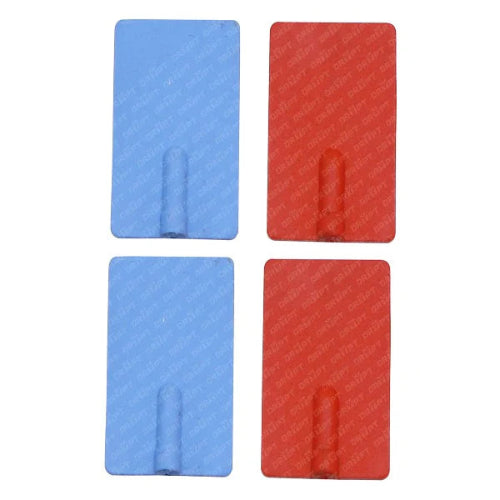
Type: Accessories
IFT Pads for Physiotherapy Machine (IFT Pads, Pack of 4)


Type: Occupational
Electric Gait Training Equipment with Dual Motor

Type: Consulting Room
Wooden Examination Table for Clinic | Physio Use
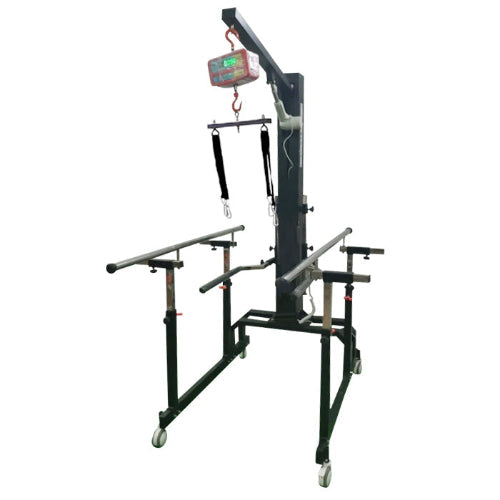
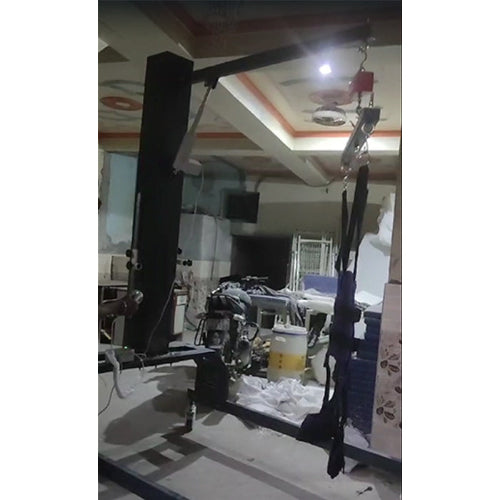
Type: Occupational
Medansh Electric Gait Trainer with Dual Motor System | Robotic Body Weight Support for Physiotherapy Rehab

Type: Occupational
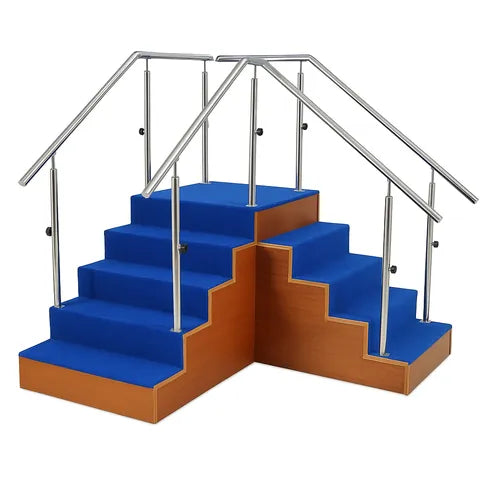
Corner Stair Case for Rehab Physiotherapy & Stroke Care
Collection:
How to Choose Right Physio Pain Relief Machine

Ever notice how one corner of the physiotherapy clinic looks a lot like your local gym? Seeing those familiar items can be a relief, but while the equipment might look the same, the goal is completely different. In rehabilitation, these common tools aren't used for breaking a sweat or building bulk; they're selected for something far more precise: safely rebuilding your body's foundation after an injury. The key isn't what you use, but how you use it.
Take, for instance, recovering from the nagging pain of "tech neck" or a stiff shoulder. A therapist will likely hand you the lightest resistance band, not a heavy weight. The goal here is controlled resistance ---gently re-teaching specific, small muscles how to fire correctly without overloading the sensitive joint. In the same way, sitting on a large exercise ball isn't just for fun; its subtle instability automatically engages your deep abdominal and back muscles. This is the foundation of core stability, building a natural corset of strength to support your spine and reduce strain during everyday movements.
This focus on slow, deliberate movement transforms simple strength training gear into powerful rehab tools . It's helpful to recognize the role these common exercise machines play in a professional physiotherapy exercise equipment list.
- Resistance Bands
- Exercise Balls
- Foam Rollers
- Light Dumbbells/Kettlebells
Understanding how to use this basic equipment correctly is the first, most empowering step toward taking an active role in your own healing journey.

Summary
Choosing physiotherapy equipment is about precise, goal-driven use rather than the tool itself: start with simple gear for controlled resistance and core stability, then progress as you heal. TENS/IFC manage pain, ultrasound and low-level laser support tissue recovery, EMS re-educates weak muscles, and traction/CPM offer gentle, controlled mechanical assistance when indicated. Some items are safe for guided home use (e.g., TENS, bands, rollers), while clinic-only technologies require professional dosing and supervision. Above all, a skilled therapist and a personalized plan that moves from passive modalities to active strengthening matter more than having the newest machines.
What Are "Pain-Blocking" Machines and Will They Hurt?
Walking into a physiotherapy clinic, it's common to see machines with wires and sticky pads. While they might look intimidating, these devices are some of the safest and most effective tools for managing pain. They fall under a category of treatment called electrotherapy for pain relief, which uses gentle electrical currents to help you feel better. These tools are just one type of the many "modalities" in physical therapy your therapist might use, each chosen specifically to target your unique condition and help you get back to your life.
The most common of these is the TENS machine. TENS stands for Transcutaneous Electrical Nerve Stimulation---a long name for a simple idea. It works by sending a mild, tingling electrical signal through pads on your skin to the nerves underneath. This sensation acts like a "busy signal" for your nervous system. By focusing on the pleasant tingling, your brain pays less attention to the pain signals coming from your injured area, providing temporary but significant relief. This answers the question of what is a TENS machine used for: its primary job is to block pain. It's important not to confuse this with an EMS (Electrical Muscle Stimulation) unit, which is used to make muscles contract and is more for strength training than pain relief.
For pain that's located deeper in a joint or muscle, your therapist might use a similar device called an IFC, or Interferential Current machine. Think of IFC as a more targeted version of TENS. It uses two separate currents that cross over each other, allowing the therapeutic signal to penetrate deeper into your body than a standard TENS unit can. This makes it particularly effective for issues like low back pain or deep joint soreness. Whether you receive TENS or IFC, the sensation is very similar: a comfortable, non-painful buzzing or tingling.
Most importantly, does it hurt? Absolutely not. Unlike the jolt of an electric shock, the feeling from TENS or IFC is completely controlled and is always adjusted to your comfort level. Your therapist will start with a very low setting and slowly increase it until you feel a pleasant tingling. It should never be painful. These machines are designed to provide relief, not create more discomfort. They are a passive way to calm your nervous system, allowing you to move with less pain. Beyond electricity, physiotherapists also harness other forms of energy, like sound and light, to promote healing.

How Do Machines Use Sound and Light to Heal You?
Beyond the electrical pulses we just discussed, physiotherapists also use sound and light energy to help you heal. One of the most common tools for this is therapeutic ultrasound. This isn't the same type of ultrasound used to create a picture of a baby; instead, it uses targeted sound waves to promote healing deep within your muscles, tendons, and ligaments, making it an excellent tool for sprains, tendonitis, and muscle strains.
So, how do ultrasound therapy machines work? They use high-frequency sound waves---far too high for you to hear---to create a gentle vibration and heat deep within the injured tissue. You can think of it as a micro-massage that warms up the area from the inside out. This warmth increases blood circulation, which is crucial for recovery because it delivers more oxygen and nutrients to the damaged cells. During the treatment, your therapist will apply a cool gel to your skin and glide a smooth, metal wand over the area. Most people feel very little, perhaps a slight warmth, but never pain.
Just as sound can be used for healing, so can light. Another advanced tool you might see is for Low-Level Laser Therapy (LLLT), often called "cold laser." This treatment uses specific wavelengths of light to give your cells an energy boost. Imagine your injured cells are like tiny phones with low batteries; the laser acts like a charger, giving them the energy they need to repair themselves faster. This process of using light to influence cells is a simple concept known as photobiomodulation, which essentially helps speed up your body's own natural healing abilities.
The word "laser" might sound intense, but this isn't the kind you see in movies. It's called a "cold laser" precisely because it doesn't generate heat, and you won't feel a thing during the treatment---no tingling, no warmth, nothing at all. Your therapist will simply hold the device over the injured area for a few minutes. Both therapeutic ultrasound and LLLT are powerful examples of how physiotherapists can work with your body, using sound and light to create the ideal environment for a quicker, more efficient recovery.
What's the Difference Between a TENS and an EMS Machine?

While exploring physiotherapy, you'll often hear about electrotherapy devices that look quite similar but have very different jobs. You already know that a TENS unit is for pain relief---sending a gentle tingling sensation to block pain signals from reaching your brain. But you might also see a nearly identical machine called an EMS unit. EMS, which stands for Electrical Muscle Stimulation, isn't designed to block pain; its purpose is to make your muscles contract. It's less about feeling better and more about getting your muscles working correctly again.
So, why would you want a machine to contract your muscles for you? This is crucial for something called muscle re-education. After a surgery or significant injury, muscles can sometimes "forget" how to fire properly. For example, following a knee operation, the large quadriceps muscle on your thigh might become weak and unresponsive. An EMS machine can be used to send a signal that causes the quad to tighten, helping re-establish that brain-to-muscle connection and reminding it how to work. Unlike the steady tingle of a TENS unit, you'll feel and see your muscle twitching and contracting during an EMS treatment.
Here's a quick breakdown of these two common pieces of recovery equipment:
| TENS (Nerve Stimulation) | EMS (Muscle Stimulation) | | :--- | :--- | | Goal: Pain Relief | Goal: Muscle Contraction & Strengthening | | How it Feels: A gentle, steady tingle | How it Feels: Rhythmic muscle twitching or tightening | | Used For: Easing acute or chronic pain | Used For: Re-activating weak or inactive muscles |
While electrical stimulation focuses on activating your body from within, other machines are designed to help by applying gentle forces from the outside. One of the most common examples of this is a traction table. But why would a therapist need a machine to help you stretch?
Why Would a Therapist Stretch You on a Machine? The Truth About Traction
The idea of being stretched by a machine can sound intense, but when it comes to a specific type of traction equipment, the goal is precision and gentleness, not force. Unlike a general stretch you might do yourself, mechanical traction is a highly controlled physical therapy tool designed to help with very specific types of back and neck pain. Think of it less like pulling and more like creating space. The primary purpose is to gently separate the bones of your spine (vertebrae), which can take pressure off pinched nerves and bulging discs that are causing you pain.
Instead of a quick or sudden movement, a traction table provides a slow, steady, and carefully measured pull. During treatment, you are comfortably secured by a harness, and the machine applies a gentle force that you'll feel as a light, relieving stretch. This process is often called spinal decompression. It's this creation of "breathing room" inside the spine that makes it such an effective piece of equipment for lower back pain rehabilitation, especially for conditions like sciatica, where a nerve is being compressed. The entire session is monitored by your therapist to ensure it remains comfortable.
Because of its ability to target the source of compression, traction is one of the go-to therapeutic instruments for patients dealing with herniated discs or degenerative disc disease. It is not a solution for every kind of back problem, but for those caused by a lack of space, it can offer significant relief. While traction uses gentle force to create space in a joint, some machines use controlled force to create movement in a joint, especially after surgery. This is where you might encounter something called a CPM machine.
What is a CPM Machine and Why is it Moving My Leg For Me?
Waking up after knee or shoulder surgery to find your limb strapped into a machine that's slowly moving it for you can be a strange experience. This device, one of the most common rehab tools used immediately after an operation, is called a Continuous Passive Motion (CPM) machine. The name tells you exactly what it does: it provides steady, "continuous" movement to your joint in a way that is "passive"---meaning your own muscles don't have to do any of the work. It's a crucial first step in post-surgery recovery, designed to get your joint moving when you can't, or shouldn't, move it on your own.
The primary benefits of a continuous passive motion machine are all about fighting the two biggest enemies of early healing: stiffness and swelling. After surgery, a joint that stays completely still can become stiff and "frozen," which makes regaining your full range of motion much harder later on. By gently and repeatedly bending your joint, the CPM machine keeps it mobile, helps flush out swelling, and can prevent restrictive scar tissue from forming. Think of it as a way to keep things lubricated and moving without putting any strain on your new repair.
Using one of these mobility aids isn't an exercise; you simply relax and let the machine handle the effort. The sensation is a slow, rhythmic, and gentle bend that should never feel painful. Your therapist will set the speed and how far the machine moves your joint based on your comfort and surgical limits. Because its job is to help in the very first days or weeks of recovery, a CPM machine is a temporary helper that bridges the gap between your operation and when you are strong enough to begin moving on your own.
Can I Use This Equipment at Home? A Guide to Safe Home Use
After seeing all the specialized equipment in a clinic, it's natural to wonder if you can speed up your recovery by buying some of these tools for yourself. The answer is a definite "sometimes," but it comes with a critical warning. The line between helpful and harmful often depends on the complexity of the device and, most importantly, the guidance you receive. While simple tools can be fantastic assets, the more advanced machines require a trained professional's hand for a reason.
The key difference isn't just cost; it's precision. A resistance band is a straightforward tool, but a therapeutic laser or a spinal traction table requires precise settings for dose, location, and duration. Using them incorrectly won't just be ineffective---it could worsen your injury or create a new one. Think of it like medication: a simple pain reliever is available over the counter, but powerful drugs require a doctor's prescription to ensure they are safe and appropriate for your specific condition.
Physical therapy tools for home use generally fall into two categories:
- Safe for Guided Home Use: These are often simpler and more affordable. Once a therapist teaches you the correct technique for your specific injury, they can be a great way to continue your progress between appointments.
- TENS units for pain control
- Resistance bands and tubes
- Foam rollers and massage balls
- Simple hand physiotherapy equipment (e.g., therapy putty, grip strengtheners)
- Clinic-Use Only: This equipment requires advanced training and is not safe for unsupervised home use.
- Therapeutic Ultrasound and Laser Therapy
- Spinal Traction Tables
- Shockwave Therapy Machines
- Complex electrical stimulation (like IFC or Russian Stim)
Ultimately, the single most important rule for using any recovery equipment at home is this: always get a diagnosis and a specific program from a professional first. A TENS unit for low back pain is placed differently than one for shoulder pain. The right band exercise for a recovering knee is very different from one for a hip. The equipment itself has no magic; its power comes from the expert knowledge of how, when, and why to use it. The best tool is always the one your therapist has personally recommended and shown you how to use safely.
Beyond the Machines: Finding a Clinic That's Right for You
While it's tempting to look for a clinic based on who has the newest and shiniest physiotherapy equipment, the most powerful tool in your recovery will always be the therapist themselves. A skilled professional with a deep understanding of your condition can achieve more with their hands and a simple resistance band than an inexperienced one can with a room full of advanced technology. The equipment is a valuable part of the toolkit, but it's the therapist's expertise that guides how and when it's used for your benefit.
Finding a physiotherapy clinic that aligns with your needs comes down to understanding their treatment philosophy. Not all clinics operate the same way; some may lean heavily on machine-based treatments, while others prioritize manual therapy and active exercise. To get a clear picture before you commit, don't be afraid to call a potential clinic and ask a few direct questions:
- "What is your general treatment philosophy? Is it more hands-on, exercise-based, or machine-based?"
- "How do you decide which equipment or modalities to use for a condition like mine?"
- "How much of my session will be one-on-one with the therapist versus working independently?"
The answers to these questions are incredibly revealing. A great clinic will be able to explain their approach clearly, emphasizing a personalized plan. Ultimately, you are looking for a partner in your recovery. The best clinics use technology to enhance their hands-on care---to warm up tissue before a mobilization, manage pain to allow for better exercise, or provide feedback on your movement. The machines should support your journey with the therapist, not become a substitute for their expert attention and guidance.
Your Role in Recovery: More Powerful Than Any Machine
That room of wires, screens, and unusual-looking beds no longer needs to feel like an intimidating science lab. Where you once might have seen confusing gadgets, you can now recognize specific rehab tools, each with a clear purpose---to reduce your pain, accelerate your healing, and help you move with confidence. You've pulled back the curtain and can now walk into a clinic with understanding instead of uncertainty.
Think of your recovery as a journey with two distinct phases. The first often involves equipment that works on you, like ultrasound or electrical stimulation, designed to calm things down and create the right environment for healing. But the most crucial phase begins when you start using the active physical therapy tools---the bands, balls, and boards that help you build lasting strength. The goal is always to progress from the first phase to the second, moving from passive support to active participation.
With this knowledge, you are now an active partner in your treatment. Your most powerful next step is to use your voice. Ask your therapist, "What is the goal of this machine?" and "How does this help me get back to doing what I love?" The ultimate aim of using this recovery equipment isn't to rely on it forever. The true victory is when your body becomes its own best piece of wellness equipment, getting you strong enough that you graduate from the machines entirely.
Q&A
Question: What matters most when choosing physiotherapy equipment—the tool or how it’s used?
Short answer: How you use it matters far more than the tool itself. Rehab focuses on precise, goal-driven movements: start with simple gear (like the lightest resistance band) for controlled resistance that re-trains small stabilizing muscles without irritating joints. Tools like exercise balls add gentle instability to wake up deep core muscles and build a supportive “corset” for your spine. As you heal, you progress the challenge under a therapist’s guidance.
Question: Do “pain‑blocking” machines like TENS or IFC hurt?
Short answer: No. TENS and IFC deliver a comfortable, adjustable tingling sensation—never a shock—and are always set to your comfort. TENS works by sending a pleasant “busy signal” that helps your brain pay less attention to pain. IFC uses crossing currents to reach deeper tissues (helpful for issues like low back or deep joint pain), but it feels similar: a gentle buzzing or tingling.
Question: What’s the difference between a TENS and an EMS machine?
Short answer: TENS is for pain relief; EMS is for making muscles contract. TENS sends a steady, comfortable tingle that helps block pain signals. EMS produces visible, rhythmic muscle contractions to “re‑educate” weak or inhibited muscles after injury or surgery—like helping your quadriceps re‑activate after a knee operation.
Question: How do ultrasound and low‑level laser help healing, and what will I feel?
Short answer: Therapeutic ultrasound uses high‑frequency sound waves to create gentle deep warming—like a micro‑massage—that boosts circulation in muscles, tendons, and ligaments; you’ll feel little to mild warmth as a gel‑coated wand glides on your skin. Low‑Level Laser Therapy (“cold laser”) uses specific light wavelengths to energize cells (photobiomodulation) and support tissue recovery; it doesn’t heat the tissue, and you typically feel nothing during treatment.
Question: Which equipment is safe to use at home, and what should stay in the clinic?
Short answer: Safer for guided home use: TENS units, resistance bands/tubes, foam rollers/massage balls, and simple hand tools (therapy putty, grip strengtheners)—but only after a therapist shows you exactly how to use them for your condition. Clinic‑only: therapeutic ultrasound and laser, spinal traction tables, shockwave machines, and complex electrical stimulation (e.g., IFC, Russian stim). The difference is precision: these require professional dosing, placement, and timing. Always start with a diagnosis and a personalized plan—the “where, when, and how” matter more than owning the device.