
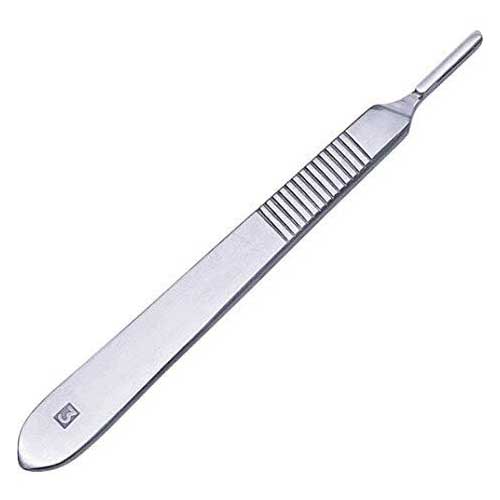
Type: Surgical
B P Scalpel Handle Surgical Instrument (Pack of 4)
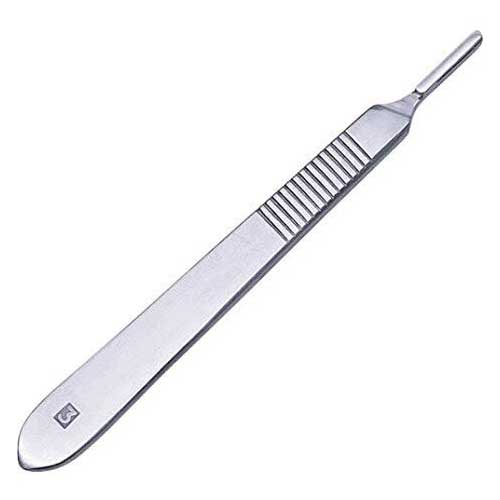
Type: Day to Day Care
B P Handle Surgical Premium Quality (Pack of 4)
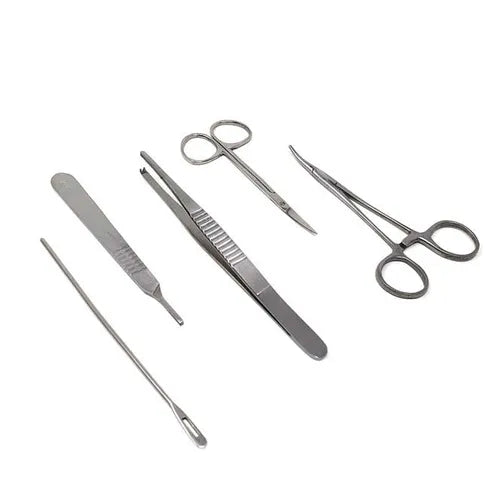
Type: Instrument
Debridement Instrument kit
Collection:
Surgical Scalpel Blades and Tools
You've seen it on TV a hundred times: a surgeon says 'Scalpel,' and a single, gleaming knife is placed in their hand. What if that one word could mean one of a dozen different tools? The scalpel isn't one knife; it's a whole system, and the reality is far more fascinating than Hollywood lets on. In nearly every modern operating room, the scalpel is a two-part instrument: a reusable handle and a disposable blade.
- This design isn't just for convenience; it's centered on the relentless pursuit of the perfect cut. Think of it like a high-end craft knife where you swap out the blade. In practice, surgeons know that even the finest steel---whether it's high-carbon or stainless---dulls significantly after just one use on tissue. The system of disposable blades guarantees that every single incision is made with a factory-perfect edge. A sharper blade causes less trauma to surrounding tissue, which research shows can lead to cleaner healing.
- Beyond sharpness, the system delivers an uncompromising promise of sterility. While the robust metal handle is designed for repeated cleaning and sterilization, the blade is a different story. After use, a blade's edge harbors microscopic nicks and organic material that are nearly impossible to sterilize with 100% certainty. A fresh, factory-sealed blade, however, is guaranteed to be pristine. This simple separation of parts eliminates a critical source of potential infection before the first cut is ever made.
- Finally, this modular approach unlocks incredible versatility. That single handle can become an entire toolbox just by changing the blade attached to it. Does the surgeon need to make a long, straight incision? There's a large, curved blade for that. Do they need to make a tiny, precise puncture? A different, sharply pointed blade clicks into place. This adaptability allows a surgeon to switch from a powerful cutting tool to a delicate instrument in seconds, ensuring they always have the right tool for the exact task at hand.
The 'Chef's Knife' of the OR: What Is a #10 Blade Really Used For?
If you were to picture a single, all-purpose scalpel blade, you'd likely be thinking of the #10. More than any other, this is the quintessential blade that surgeons rely on for a huge variety of tasks. It's the versatile, dependable workhorse of the operating room, fitting a role similar to the classic chef's knife in a kitchen---perfect for the big, important first steps of a job. Its distinct shape is the key to its widespread use.
Unlike a pointed craft knife, the #10 blade has a large, curved cutting edge. Surgeons refer to this prominent curve as the "belly" of the blade. This design isn't accidental; it's engineered for making long, smooth incisions without the tip catching or digging into tissue. Think about how you'd use a large kitchen knife to slice through a roast: you use the long, curved part of the blade in a single, fluid motion. The #10 blade allows a surgeon to do the same thing, creating clean lines with steady, even pressure.
In surgery, the #10 blade's primary role is making the initial incision through skin and the layers of tissue just beneath it. When a surgeon needs to create a long, straight opening to access the area they'll be working on, the #10 is almost always the tool of choice. Its size and shape provide the perfect balance of sharpness and stability needed to cut through tougher tissues efficiently.
But a surgeon's work is rarely just about making one big cut. While the #10 blade is the master of the long incision, it's far too large for delicate work around fine nerves or blood vessels. For those jobs, a surgeon needs to switch from their "chef's knife" to something more like a paring knife. This is where smaller, more specialized surgical blade types come into play.

The 'Paring Knife' for Details: When Do Surgeons Use a #15 Blade?
After a surgeon uses a #10 blade to make the main incision, the "heavy lifting" is often complete. The focus then shifts from making a large opening to working within it. For this next phase, where precision is more important than power, surgeons reach for a different tool entirely: the #15 blade. If the #10 is the chef's knife of the operating room, the #15 is the small, indispensable paring knife, designed for control and detail.
At first glance, the #15 blade looks like a miniature version of the #10. It has the same classic curved belly, but on a much smaller scale. This design is intentional and highly functional. The small size allows a surgeon to see exactly what they are cutting around the tip of the blade---a critical advantage when working in tight spaces. Its short, curved cutting edge is perfect for making short, precise incisions or for carefully shaping tissue, allowing the surgeon to follow intricate curves that a larger blade would simply be too clumsy to navigate.
In practice, #15 blades are the go-to choice for delicate tasks, especially in areas with many important, tiny structures. Think of procedures on the face, where a surgeon might need to make a small cut along a natural crease, or hand surgery, where countless nerves and tendons are packed into a small area. This careful, meticulous work of separating delicate tissues is a process called fine dissection. The #15 blade gives surgeons the control they need to perform this dissection safely, separating what needs to be removed while protecting everything around it.
Ultimately, the comparison between the #10 and #15 blades comes down to a simple trade-off between scale and precision. The #10 provides the reach and stability for a long, confident cut, while the #15 provides the delicate control needed for intricate work. But both blades share a curved edge. What happens when a surgeon doesn't need to slice at all, but instead needs to make a perfectly straight puncture or a short, sharp line? For that, they need a blade shaped not like a knife, but like a pointed spear.
The 'Craft Knife' Point: What Is a Number 11 Blade Used For?
While curved blades like the #10 and #15 are masters of the slicing incision, they aren't the right tool for every job. Sometimes, a surgeon's goal isn't to cut a long line but to make a precise, controlled puncture. For this, they turn to a blade that looks less like a kitchen knife and more like something from a hobbyist's toolbox: the #11 blade. This blade answers the need for a tool shaped not for slicing, but for piercing.
The #11 blade is instantly recognizable by its sharp, triangular shape that ends in an aggressive point, much like a classic craft knife. Its entire design is focused on channeling force directly to that needle-sharp tip. This makes it the ideal instrument for initiating an incision with pinpoint accuracy or for making short, decisive straight cuts where a curved blade might wander. Unlike the broad belly of the #10 blade, the #11 has a long, flat cutting edge, giving the surgeon a straight line of action.
This unique shape makes the #11 blade the specialist for what are known as "stab incisions." The term sounds dramatic, but in surgery, it describes a very controlled and precise push to create a small opening. One of the most common uses of a number 11 blade is for an incision and drainage procedure---making a small hole in an abscess to allow fluid to escape. It's also used to create entry points for larger surgical tools or tubes, establishing a clean, perfect opening right where it needs to be.
With the #11, the surgeon's toolbox now has its piercing tool, perfectly complementing the slicing abilities of the curved blades. It provides the sharp, straight-line precision needed for punctures and small entryways. But surgery isn't always performed on open, flat surfaces. What happens when a surgeon needs to make a cut in a tight, hard-to-reach area, like behind a tooth or deep within a joint? For that, they need one of the most peculiar blades of all, one shaped like a tiny, sharp hook.
The Curious Hook: What Makes the #12 Blade So Different?
To solve the problem of cutting in a confined space, surgeons reach for one of the most distinctive tools in their kit: the #12 blade. If the #10 is a chef's knife and the #11 is a craft knife, the #12 is best described as a tiny, razor-sharp hook. Its small, crescent-moon shape is immediately different from the blades we've seen so far. This unique design isn't for making long, sweeping cuts or precise punctures; it's engineered for a completely different kind of motion.
What truly sets the #12 blade apart is that its cutting surface is on the inside of the curve. Think about that for a moment. All the other curved blades cut with their outer edge, like a standard knife. The #12 blade, however, allows a surgeon to hook it around or under a target and cut with a pulling motion. This design is incredibly clever, as it naturally protects the surrounding tissue. The sharp edge is only engaged with the specific structure it has hooked, preventing accidental nicks to adjacent areas.
This unique hook-and-pull action makes the #12 blade invaluable for tasks where precision and safety in tight quarters are paramount. One of its most common uses, which many people have experienced, is for removing stitches (sutures). The small hook can easily slip under a single loop of suture material, lift it away from the skin, and snip it cleanly without touching the patient's newly healed incision. It's also a go-to blade in dental surgery for working around teeth and in other procedures that require cutting in hard-to-reach crevices.
With its crescent shape and internal edge, the #12 blade solidifies its role as the specialist for tight corners, perfectly complementing the straight-line slicers and piercers. We've now seen how blade shape dictates function---from broad curves for skin to sharp points for punctures and hooks for protected spaces. But this raises a practical question: with all these different blade types, how do they attach to the scalpel handle?
Cracking the Code: How Do Surgeons Know Which Blade Fits Which Handle?
With such a diverse toolbox of blades, from broad curves to tiny hooks, a critical question arises: are all scalpel blades interchangeable? The answer is a definitive no. Just as you can't use a massive socket on a small wrench, a surgeon can't fit a large, heavy-duty blade onto a handle designed for delicate work. To ensure safety and control, surgical tools follow a brilliantly simple system of standardized sizes that prevents a mismatch before it can ever happen. It's a code that, once you see it, makes perfect sense.
The system revolves around two primary handle sizes. The most common is the #3 scalpel handle , which is the slender, pen-like standard for most procedures. Its counterpart is the #4 scalpel handle, a visibly larger and more robust version built to support bigger blades for more powerful cuts. To match these handles, blades are grouped into "families" based on the size of their fitting. The smaller blades we've already met---like the #10, #11, and #15---all belong to the smaller family. Larger blades, designed for cutting through thicker tissue, belong to a separate, bigger family.
So, how does a surgical team know which goes with which? The "code" is elegantly built right into the numbering. This simple guide to the surgical blade numbering system is the key:
- Handle #3 (and its long, slender variant, the #7): Fits blades numbered from #10 to #19.
- Handle #4: Fits the larger blades numbered from #20 to #29.
This straightforward rule ensures that a surgeon always has a balanced and appropriate tool in hand. You wouldn't want to use a massive #22 blade (a larger version of the #10) on a delicate #3 handle; it would feel unwieldy and unsafe. Likewise, a tiny #15 blade would be lost on a large #4 handle, making fine control impossible. The system guarantees that the size of the blade is always matched by the size and strength of the handle, a fundamental principle for both precision and safety in the operating room. But the perfect fit is only half the story. The blade itself has to perform flawlessly, which brings us to the very metal it's made from.

Sharper Than a Razor?: Carbon Steel vs. Stainless Steel Blades
A perfectly fitted blade is useless if the material itself can't hold an edge or stand up to the rigors of surgery. When you look closely at the materials used for surgical blades, you'll find they aren't all created equal. The choice comes down to a critical trade-off between two primary materials: carbon steel and stainless steel. Each offers a distinct advantage, and the surgeon's choice depends entirely on the demands of the procedure.
- For procedures demanding the absolute pinnacle of sharpness, many surgeons turn to carbon steel. This material can be honed to an edge that is, on a microscopic level, finer and sharper than almost any other metal. Think of it as the high-performance race car of the surgical world---built for one thing: unmatched cutting precision. This makes it ideal for delicate specialties like plastic surgery or ophthalmology, where the cleanest possible cut is paramount. However, this incredible sharpness comes at a cost. Carbon steel is more brittle and susceptible to corrosion, meaning it requires careful handling and is less forgiving.
- On the other hand, the vast majority of surgical blades used today are made from stainless steel. As the name implies, its greatest strength is its resistance to rust and corrosion. This durability is essential in a sterile environment where tools are exposed to saline, blood, and sterilization processes. While stainless steel blades are exceptionally sharp by any standard, they typically can't achieve the ultimate razor-fine edge of their carbon steel counterparts. They are the reliable, all-purpose workhorses of the operating room---strong, dependable, and more than sharp enough for most surgical tasks.
Ultimately, the choice between carbon and stainless steel isn't about which is "better," but which is the right tool for the job. Does the procedure require the legendary sharpness of carbon steel for an ultra-fine incision, or the rugged reliability of stainless steel for a longer, more demanding operation? Regardless of the material, every one of these blades is designed for a single use to guarantee sterility and peak performance. This single-use principle makes the process of changing a blade a routine, yet critical, skill in the operating room.
How to Change a Scalpel Blade Safely (Even if You're Not a Surgeon)
Given that surgical blades are designed for a single use to ensure perfect sharpness and sterility, changing them is a routine part of any procedure. But this everyday task is governed by one of the most rigid, non-negotiable rules in medicine. Whether you're a senior surgeon or a first-year student, the process for changing a scalpel blade safely begins with this absolute principle: you never use your fingers to touch the blade. Not to attach it, and certainly not to remove it.
- So, how is it done? The key is to use another tool as an extension of your hand. Medical professionals use a needle holder or a hemostat---a small, locking clamp that looks like a pair of surgical scissors with gripping jaws instead of blades. By firmly grasping the blade on its dull, top edge (the "spine"), the user can manipulate it with precision while keeping their fingers at a safe distance. Think of it like using a pair of pliers to handle a sharp piece of broken glass; it provides a secure grip without putting yourself in harm's way.

- The removal process itself is a simple, controlled motion. With the hemostat gripping the blade's spine near the handle, the user gently lifts the base of the blade and pushes it forward, sliding it out of the handle's fitted groove. It's designed to be a smooth disengagement, not a forceful tug. This same intuitive technique works consistently across the various scalpel blade sizes, ensuring a universal standard of safety.
- Attaching a new blade is simply the reverse, and it is also done entirely with the tool. The new blade, still in its sterile packaging, is gripped by the hemostat. The user then aligns the slot in the blade with the guide on the handle and slides it back until it clicks securely into place. Mastering this hands-free technique is a fundamental skill taught on day one in medical schools and biology labs, as it builds a lifelong habit of safety.
- This meticulous, tool-based procedure is all about minimizing risk and maintaining control over an object designed to be unforgivingly sharp. But once that used blade is safely off the handle, its journey isn't over. It can't just be tossed into a regular trash can. So, what happens to it next? The answer lies inside a familiar, bright red box.
The Red Box: What Happens to a Used Scalpel Blade?
That bright red box you've likely seen in a doctor's office is a sharps container, and it's where the journey of a used scalpel blade ends. In the medical world, any item with a point or edge that can puncture the skin---from needles to scalpel blades---is classified as "sharps" waste. Because these tools have come into contact with blood and tissue, they can't simply be thrown away. They are treated as biohazardous material, requiring a special disposal protocol to protect everyone.
Tossing a scalpel blade into a regular trash can would be incredibly dangerous. Its razor-sharp edge could easily slice through a plastic bag, posing a serious threat to nurses, cleaning staff, and sanitation workers. The danger is twofold: the immediate physical injury from the cut and the risk of transmitting infections from any biological material remaining on the blade. The proper disposal of used blades is therefore a critical step in the chain of hospital safety.
This is why sharps containers are more than just bins; they are miniature fortresses. Built from thick, puncture-proof plastic, they are designed to contain these hazards completely. Most feature a one-way lid that allows items to be dropped in easily but prevents them from being accidentally shaken out or retrieved. This ensures that once a blade is discarded, it stays discarded, locked away until its final disposal.
Once a sharps container is full, it is sealed and sent for specialized processing. Unlike the reusable handles, which undergo sophisticated sterilization, the contents of these boxes are destined for destruction. Often, this involves high-temperature incineration, a process that safely eliminates both the physical object and any harmful pathogens. This meticulous end-of-life protocol for disposable scalpel blades guarantees that a tool designed to heal never becomes an accidental source of harm.
Beyond the Standard Scalpel: A Quick Peek at Specialty Cutters
- While the classic steel scalpel is the undisputed icon of the operating room, some procedures demand tools that are even more specialized. When surgeons work on a microscopic scale or need to control bleeding with every cut, a simple blade isn't always the best option. This has led to the development of remarkable alternatives that go far beyond a sharp piece of steel, transforming the very definition of a surgical "cut."
- For surgeries that require extreme precision in tight spaces, like in the eye or inner ear, even the smallest standard blade is too large. This is where Beaver blades come in. These are micro-blades, often just a few millimeters long, designed for incredibly delicate work. If a standard #15 blade is like a fine-tipped paring knife, a Beaver blade is more like the needle-sharp point of a drafting compass. Their miniature size and specialized shapes allow surgeons to make tiny, controlled incisions in tissues that are too fragile for conventional tools.
- But what if the biggest challenge isn't the size of the incision, but controlling bleeding? Enter electrosurgery, a technique that doesn't use a sharp edge at all. Instead, it uses a high-frequency electric current to heat a small metal tip. This hot probe essentially vaporizes the tissue in its path, creating a cut. The incredible advantage here is that the intense heat also cauterizes, or seals, the blood vessels as it cuts. This provides the surgeon with a clear, bloodless field of view, which is critical in many operations. It's the reason you might hear a faint sizzle or notice a distinct smell in depictions of surgery---it's the sign of heat being used to both cut and control bleeding simultaneously.
- Pushing technology even further are cutting-edge tools like the plasma scalpel. This instrument uses a focused jet of electrically charged argon gas---a plasma---to cut tissue. Because it operates at lower temperatures than electrosurgery tools, it causes less damage to the surrounding healthy tissue, which can lead to faster healing for the patient. From miniature blades to superheated gas, these alternatives to traditional steel scalpels show that the modern surgeon's toolbox is filled with an amazing variety of instruments, each one perfectly designed for the task at hand.
From 'A Knife' to a 'Toolbox': The Scalpel Reconsidered
The word "scalpel" may evoke the image of a single knife, but the reality is a sophisticated system of surgical blades and tools where every component is chosen with deliberate purpose. The two-part design is a clever solution for maintaining perfect sterility and sharpness for every patient, while the variety of blade shapes and sizes reveals a true surgeon's toolbox.
This toolbox follows a clear logic. The workhorse #10 blade acts as the "chef's knife" for long incisions, the sharply pointed #11 serves as the "craft knife" for precise punctures, and the small, nimble #15 is the "paring knife" for the most delicate work. What appear to be random numbers are actually a logical language of form and function, ensuring the right tool is always used for the right job.
Ultimately, the scalpel is more than just a sharp edge. The standardized numbering system, the distinction between handle sizes, and the choice of materials all point to a marvel of engineering. It is a testament to how human ingenuity created a system of precision, safety, and versatility capable of performing near-miracles in medicine.
Q&A
Question: Why are scalpel blades single-use if the handles are reusable, and what happens to them after use?
Short answer: Blades are single-use to guarantee a factory-sharp edge and uncompromised sterility; after removal, they go into puncture-proof sharps containers for specialized disposal. Even the best steel (carbon or stainless) dulls noticeably after a single pass through tissue, and used edges develop microscopic nicks that can trap organic material, making 100% reliable sterilization unrealistic. By swapping in a fresh, factory-sealed blade for each patient, surgeons ensure cleaner cuts and reduce infection risk. Once removed, blades are immediately discarded into rigid, one-way-lid sharps containers; when full, these are sealed and sent for processing—often high-temperature incineration—to safely eliminate both the object and any biological hazard.
Question: How do #10, #11, #12, and #15 blades differ, and when would a surgeon pick each one?
Short answer: Each shape is purpose-built: #10 for long skin incisions, #15 for fine, close-up work, #11 for precise punctures and short straight cuts, and #12 for hook-and-pull cuts in tight spaces.
- #10: Broad curved “belly” for smooth, long incisions through skin and tougher superficial tissues—think the main opening of a procedure.
- #15: A mini curved belly for short, precise incisions and fine dissection in crowded anatomy (face, hand), where visibility and control are critical.
- #11: Triangular, needle-like point for “stab incisions,” pinpoint entry sites, and clean, short straight cuts (e.g., incision and drainage).
- #12: Crescent hook with the cutting edge on the inside curve, ideal for hooking and cutting via a pull—commonly used for suture removal and work in confined crevices (e.g., dental applications).
Question: How do surgeons know which blade fits which handle?
Short answer: Blade numbers encode compatibility: #3 (and the slender #7) handles fit blades #10–#19; the larger #4 handle fits blades #20–#29. The system prevents mismatches so the blade’s size and the handle’s heft stay balanced for precision and safety. A tiny #15 on a #4 would be clumsy, and a large #22 on a #3 would feel unwieldy—standardization avoids both.
Question: Carbon steel vs. stainless steel blades—what’s the trade-off?
Short answer: Carbon steel can take an ultra-fine edge for maximum sharpness but is more brittle and corrosion-prone; stainless steel is more durable and corrosion-resistant, with excellent (if slightly less extreme) sharpness for most cases. Surgeons choose based on the job: ultra-clean, delicate cuts (e.g., in plastic surgery or ophthalmology) may favor carbon steel; most operations rely on the rugged reliability and sterility-friendly durability of stainless steel.
Question: What’s the correct way to change a scalpel blade without touching it?
Short answer: Always use a tool, never fingers: grip the blade’s dull spine with a needle holder or hemostat, slide it off the handle’s groove with a controlled lift-and-push, then attach the new sterile blade the same way in reverse. This hands-free method minimizes injury and contamination and is a day-one safety habit taught in labs and operating rooms.