
Filter
2 products


Type: Modalities
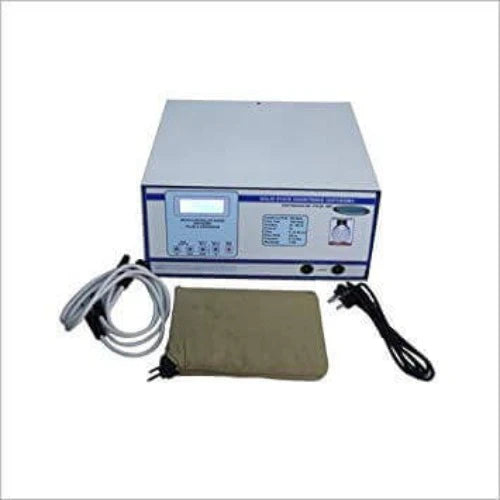
Short Wave Diathermy SWD Machine for Physiotherapy

Type: Modalities
Medansh Solid State Short Wave Diathermy with 1 year warranty
Collection:
Short Wave Diathermy (SWD) Machines for Physiotherapy
What is Short Wave Diathermy (SWD)?
Short Wave Diathermy (SWD) is a high-frequency electrotherapy modality that uses electromagnetic energy to produce deep thermal effects within the body's tissues. Unlike superficial heating pads or infrared lamps, an SWD physiotherapy machine can penetrate up to 2 inches (5 cm) beneath the skin, making it the gold standard for treating deep-seated musculoskeletal conditions.
The Gold Standard Frequency: 27.12 MHz
Modern Short Wave Diathermy machines operate at a standard radio frequency of 27.12 MHz with a wavelength of 11 meters. This specific frequency is reserved globally for medical use, ensuring that the machine does not interfere with wireless communication or radio broadcasts.
The Science of Deep Heat: How SWD Functions
For a physiotherapist, understanding the mechanism of "Conversion" is key. The machine does not actually get hot; instead, it emits high-frequency electromagnetic waves. When these waves pass through biological tissues, they cause molecular oscillation—specifically the vibration of ions and rotation of water molecules.
This internal friction converts electromagnetic energy into deep heat. Because fat has higher resistance and muscles have higher water content, the heating pattern can be precisely controlled by a skilled dr or therapist using different application methods.
Key Physiological Benefits:
- Vasodilation: Increases blood flow to deliver oxygen and nutrients.
- Metabolic Boost: Accelerates the natural tissue repair process.
- Muscle Relaxation: Reduces spindle activity to break the pain-spasm cycle.
- Collagen Extensibility: Improves joint range of motion in chronic stiffness.
- Analgesic Effect: Directly targets nerve endings to soothe chronic pain.
1. Operational Modes: Continuous vs. Pulsed SWD
A versatile short wave diathermy machine offers two primary modes. Choosing between them depends on whether the physiotherapist aims for thermal (heat) or athermal (healing) effects.
Provides a constant stream of electromagnetic energy. This leads to significant deep tissue heating. It is the preferred choice for chronic conditions like Osteoarthritis or chronic back pain where joint stiffness is a primary concern.
Energy is delivered in "bursts" with intervals in between. This allows the heat to dissipate, focusing on the athermal effects. PSWD is highly effective for acute injuries, edema reduction, and speeding up wound healing without the risks associated with high heat.
2. Applicator Technology: How the Energy Reaches the Patient
The way a dr or therapist positions the electrodes determines which tissues receive the most energy. There are two main methods used in modern SWD physiotherapy:
The Inductive (Drum) Method
The patient is placed in an alternating magnetic field. A "Drum" electrode (Monode or Diplode) is positioned over the treatment area.
Clinical Advantage: This method creates "Eddy Currents" that preferentially heat low-impedance tissues like muscle and blood. It is much safer for patients with higher subcutaneous fat layers as it minimizes the risk of fat burns.
The Capacitive (Pad) Method
The patient's tissues become part of the electrical circuit between two capacitor plates or pads.
Clinical Advantage: This provides more uniform heating to high-impedance tissues like ligaments, tendons, and joints. It is often used for localized joint treatments like the knee or ankle.
| Feature | Inductive (Drum) | Capacitive (Pads) |
|---|---|---|
| Primary Heating | Muscle & Blood Flow | Skin, Fat & Bone |
| Best For | Large Muscle Groups | Small/Superficial Joints |
3. Clinical Applications: When to Prescribe SWD?
The primary strength of an SWD physiotherapy machine is its ability to treat large areas and deep tissues simultaneously. It is highly effective for conditions where superficial heat is insufficient.
Chronic Osteoarthritis (Knee/Hip), Rheumatoid Arthritis (in non-acute stages), and Ankylosing Spondylitis.
Chronic back pain, Frozen Shoulder (Adhesive Capsulitis), Myofascial Trigger Points, and Fibrositis.
Sinusitis (Pulsed mode), Pelvic Inflammatory Disease (PID), and chronic Prostatitis.
4. Safety & Contraindications: The "Never" List
Because Short Wave Diathermy uses powerful electromagnetic fields, safety screening is the most critical step for any nurse or dr. Failure to screen can lead to severe internal burns or device interference.
Absolute Contraindications (Strict Avoidance):
- Metal Implants: Orthopedic pins, plates, or screws can "concentrate" the field and burn surrounding bone/tissue.
- Cardiac Pacemakers: The RF energy can disrupt or reset electronic implants.
- Pregnancy: High-frequency waves can affect fetal development; never apply over the abdomen or lower back.
- Malignancy: Deep heat can increase local blood flow, potentially accelerating the spread of cancer cells.
- Impaired Sensation: If the patient cannot feel heat, the risk of accidental burns is critically high.
5. Avoiding "Fat Burns": The Spacing Rule
A unique challenge with Short Wave Diathermy machines (especially in capacitive mode) is that fat has a higher electrical resistance than muscle. This can cause heat to "pool" in the fat layer.
Professional Tip: Always use at least 1-2 inches of dry terry-towel spacing between the electrode and the skin. This ensures the electromagnetic field is uniform before it enters the body, preventing localized "hot spots" on the skin surface.
6. Treatment Protocols: Dosing & Duration
For a physiotherapist, the "Intensity" of an SWD physiotherapy machine is not just a number on a dial; it is based on the patient's thermal perception. Dosing is traditionally classified into four grades:
| Dose Grade | Patient Sensation | Clinical Indication |
|---|---|---|
| Grade I (Sub-threshold) | No heat felt | Acute inflammation, recent injuries. |
| Grade II (Low) | Barely perceptible warmth | Sub-acute conditions, resolving edema. |
| Grade III (Medium) | Pleasant, comfortable warmth | Chronic pain, muscle relaxation. |
| Grade IV (High) | Vigorous but tolerable heat | Chronic joint stiffness (Osteoarthritis). |
Session Frequency: For chronic cases, 20 minutes per session, 3 to 5 times a week, is standard. In acute cases using pulsed mode, sessions may be shorter (10-15 minutes) but more frequent.
7. The Tuning Ritual: Using the Neon Lamp
A short wave diathermy machine must be "tuned" to the patient's body to ensure maximum energy transfer. In 2026, while many machines have auto-tuning, manual checks are still the gold standard for safety.
- The Neon Lamp Test: Hold a neon glass bulb near the electrodes while the machine is active. The bulb will glow brightly when the patient circuit is in resonance with the machine’s internal oscillator.
- Clinical Importance: If the machine is out of tune, the energy will stay in the machine's internal components rather than reaching the patient, potentially causing the machine to overheat or fail.
8. Pre-Treatment Checklist for Therapists
Before pressing "Start," a nurse or dr must ensure the following:
- Remove Jewelry: All rings, watches, and piercings must be removed (even if not in the direct field).
- Skin Assessment: Ensure the skin is dry; sweat can lead to superficial scalding.
- Furniture: The patient should be on a wooden plinth or chair. Avoid metal-framed beds as they can distort the electromagnetic field.
9. The MeddeyGo Advantage: Reliability in High-Frequency Therapy
Purchasing a Short Wave Diathermy machine is a long-term investment for any physiotherapy clinic or hospital. At Meddeygo.com, we understand that "downtime" means lost patient sessions. We bridge the gap between advanced engineering and clinical support.
10. Maintenance: Protecting Your SWD Investment
Because these machines generate significant electromagnetic energy, regular maintenance is required to ensure both patient safety and machine longevity.
- Cable Integrity: The high-frequency cables (especially for pads) must never be coiled or allowed to cross each other during operation. This causes "inductance loops" that can melt the cable insulation.
- Dust Management: The internal cooling fans must be kept clean. If the generator overheats, the machine will automatically cut power or display an "Output Low" error.
- Socket Safety: Always use a 15A power socket with proper grounding. SWD machines pull significant current during continuous high-intensity modes.
11. Buyer's Guide: Solid-State vs. Valve/Spark-Gap
In 2026, the technology behind short wave diathermy has split into two categories. For a dr looking for precision, the choice is clear:
| Feature | Solid-State (Modern) | Valve/Spark-Gap (Legacy) |
|---|---|---|
| Output Stability | Extremely High (Crystal Controlled) | Can drift during session |
| Warm-up Time | Instant | Requires 2-5 minutes |
| Safety Features | Auto-Tuning & Patient Safety Switch | Manual Tuning only |
Common Queries: Safety, Radiation & Expectations
1. Is the electromagnetic field from an SWD machine like "Radiation"?
No. Short Wave Diathermy uses non-ionizing radio frequency (RF) energy. It does not have the DNA-damaging properties of X-rays or Gamma radiation. It is simply a method of moving ions to create friction-based heat.
2. Can I use SWD if I have a copper-T or IUD?
Strictly no. A dr or physiotherapist must ensure no metal is present in the treatment field. A copper-containing IUD can heat up rapidly, causing internal burns or uterine damage. Always screen female patients before abdominal or lower back applications.
3. Why does the therapist put so many towels between me and the machine?
This is for "Spacing." It ensures that the high-frequency waves are evenly distributed before they reach your skin. Without proper spacing, the energy can "arc" or concentrate on the skin surface, leading to a superficial burn before the deep tissues are even warm.
Summary: The Power of Deep Thermal Therapy
In the world of physical medicine, few modalities offer the depth and efficacy of Short Wave Diathermy. By mastering the balance between continuous and pulsed modes, and adhering to rigorous safety protocols, clinicians can provide life-changing relief for chronic pain and joint stiffness.
Whether you are equipping a new physiotherapy clinic or upgrading to a solid-state SWD machine, prioritizing quality and calibration is the key to patient safety and clinical success.
Need Expert Guidance on SWD Procurement?
Contact our biomedical team for bulk pricing and technical specifications for your hospital or clinic.