Filter
26 products
Type: Stethoscope
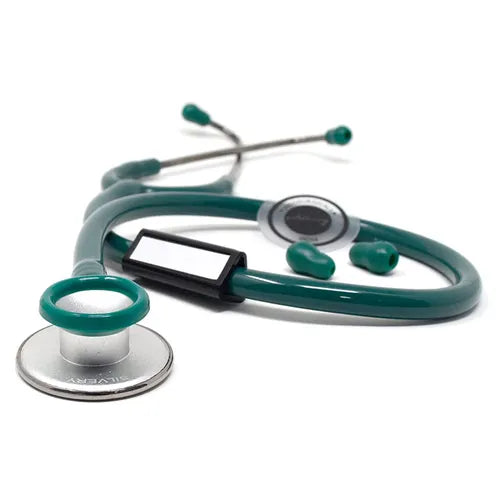
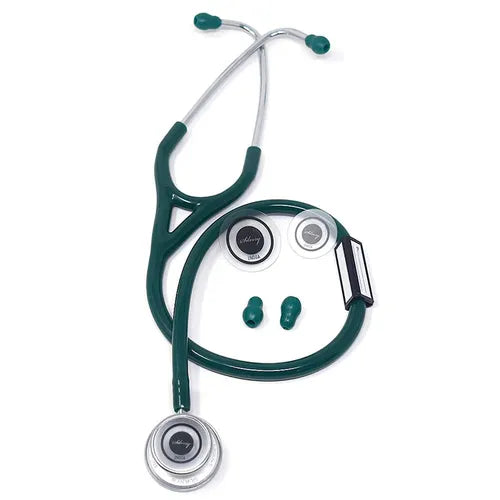
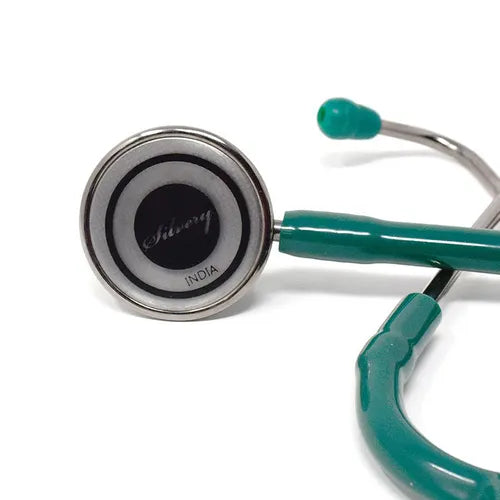
Silvery Aluminium Chrome Stethoscope (Green)
Type: Stethoscope
Stethoscope Deluxe
Type: Stethoscope
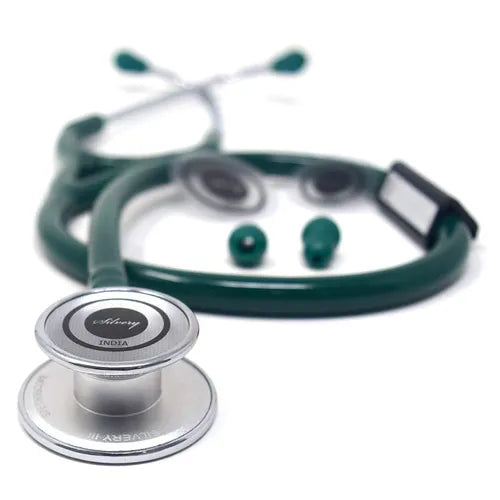
Silvery III SS Stethoscope (Blue)
Type: Stethoscope
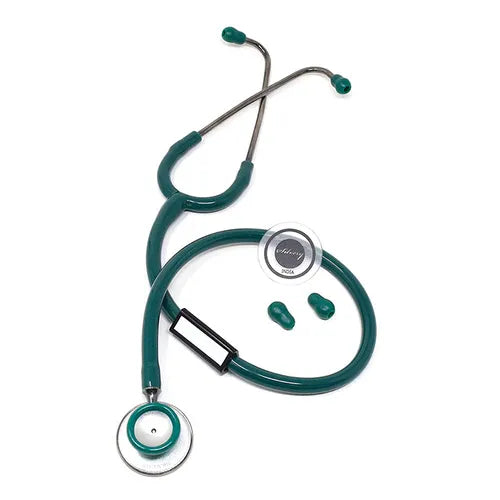
Silvery III Aluminium Chrome SS Stethoscope (Green)
Type: Stethoscope
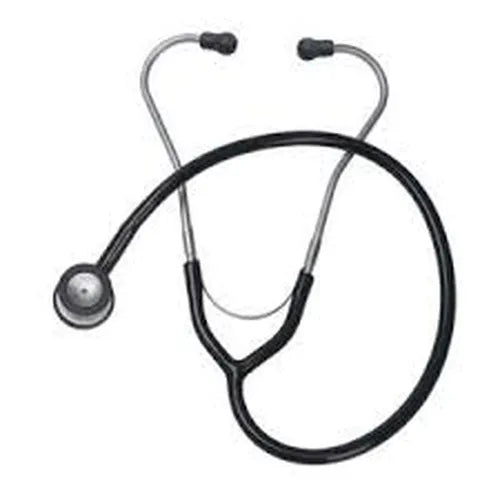
Silvery III Aluminium Chrome Stethoscope (Black)
Type: Stethoscopes
Pediatric Delux Stethoscope
Type: Stethoscope
Silvery III SS Stethoscope (Red)
Type: Stethoscope
Silvery II-SS Stethoscope (Green)
Type: Stethoscope
Silvery II-SS Stethoscope (Blue)
Type: Stethoscope
Silvery II-SS Stethoscope (Black)
Type: Stethoscopes
Silvery III SS Stethoscope (Green)
Type: Stethoscope
Silvery III Aluminium Chrome SS Stethoscope (Grey)
Type: Stethoscope
Silvery Aluminium Chrome Stethoscope (Red)
Type: Stethoscopes
Dulcet SS Pediatric Neonatal Stethoscope
Type: Stethoscope
Silvery III Aluminium Chrome SS Stethoscope (Blue)
Collection:
Parts of a Stethoscope and Their Functions | Guide & Diagram
What Is a Stethoscope? An Iconic Diagnostic Powerhouse
A stethoscope is far more than just a symbol draped around a doctor's neck; it is a sophisticated acoustic medical device used for auscultation, or listening to the internal sounds of an animal or human body. In 2026, despite the rise of handheld ultrasound and digital AI diagnostics, the acoustic stethoscope remains the first line of defense in clinical settings.
It is primarily used to listen to the lungs (pulmonary), heart (cardiac), and intestines (gastrointestinal). It is also used in combination with a sphygmomanometer to listen to blood flow in the arteries during blood pressure measurement. The beauty of the stethoscope lies in its ability to amplify subtle internal vibrations and transmit them to the professional’s ears without distortion.
Stethoscope Quick Facts
| Feature | Detail |
|---|---|
| Inventor | René Laennec (1816) |
| Key Mechanism | Acoustic Pressure Waves |
| Top Brands | 3M Littmann, MDF Instruments, Spirit |
| Primary Material | Stainless Steel, Aluminum, PVC Tubing |
Parts of a Stethoscope and Their Functions: A Deep Dive
To the untrained eye, a stethoscope looks like a simple tube. However, its engineering is a marvel of physics. Every millimetre of the device is designed to prevent sound loss. Below, we break down the five primary components that allow for accurate clinical auscultation.
A. The Chestpiece (The Head)
The chestpiece is the part of the stethoscope that makes contact with the patient. Most high-quality models feature a "Dual-Head" design, which allows the practitioner to switch between two different frequency ranges.
- The Diaphragm (Large Side): This is the flat, circular side. It is designed to capture high-frequency sounds. When you are listening to the crisp "lub-dub" of a heart or the rushing of air in the lungs, you are using the diaphragm. Many 2026 Littmann models use a "Tunable" diaphragm, where changing the pressure on the chestpiece allows you to hear both high and low frequencies without flipping the head.
- The Bell (Small Side): The cup-shaped side is designed for low-frequency sounds. It is essential for detecting abnormal heart murmurs (like S3 or S4 gallops) and certain vascular bruits. Because the bell is hollow, it creates a physical resonance chamber that amplifies deep, soft sounds.
B. The Tubing (The Conduit)
The tubing is the flexible PVC or latex-free conduit that carries sound from the chestpiece to the binaurals. In a professional stethoscope, the tubing is usually thick to block out ambient room noise.
In 2026, "Dual-Lumen" tubing is the standard for cardiology. This means there are two separate sound channels inside a single tube—one for each ear—which prevents the "rubbing noise" common in older, single-tube models. The length of the tubing is a trade-off: longer tubes provide better reach, but shorter tubes (like those on a Littmann Cardiology IV) provide slightly better acoustic sensitivity.
The Headset: Binaurals and Earpieces
The upper half of the stethoscope is known as the headset. Its job is to deliver the captured sound directly into the ear canal while creating an airtight seal.
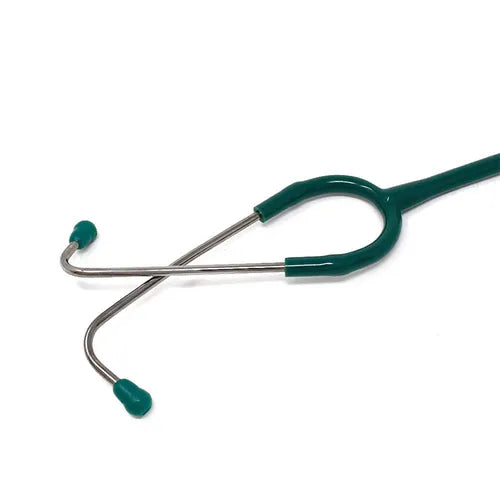
- Binaurals: These are the metal tubes that connect the flexible tubing to the earpieces. They are typically made of high-quality aluminum or stainless steel. A key feature to look for in 2026 is an adjustable headset tension, allowing you to widen or squeeze the binaurals for a comfortable fit.
- Earpieces: The earpieces fit inside your ears. Modern stethoscopes use Soft-Sealing Eartips. These are made of silicone or soft rubber and conform to the shape of your ear canal. This creates a vacuum-like seal that is vital; even a tiny air leak can reduce the volume of heart sounds by 50%.
Summary Overview
Understanding the parts of a stethoscope is the first step toward clinical excellence. The chestpiece captures vibrations, the tubing protects them from outside noise, and the headset delivers them clearly to your ears. Whether you are using a Littmann stethoscope or an MDF instrument, the synergy of these parts determines whether you hear a life-saving detail or miss it entirely.
What Is a Stethoscope Used For? Key Clinical Applications
While understanding the parts of a stethoscope and their functions is academic, the true value of the tool lies in its application. In 2026, auscultation remains a primary skill for doctors, nurses, and EMTs. Let’s explore how the different components of the stethoscope are utilized across the four major diagnostic pillars.
A. Cardiac Auscultation: The Rhythm of Life
Cardiac auscultation is the process of listening to the heart's valves opening and closing. When a healthcare professional places the chestpiece on the chest, they are primarily looking for two sounds: S1 (the "lub") and S2 (the "dub").
- Detecting Heart Murmurs: Abnormal sounds between S1 and S2 can indicate a murmur. Using the bell of the stethoscope, a doctor can detect low-pitched diastolic murmurs that might be missed by a digital monitor.
- Identifying Arrhythmias: By focusing on the rhythm, professionals can identify skipped beats or atrial fibrillation. The diaphragm is typically used at the apex of the heart to hear these high-frequency closures clearly.
B. Pulmonary Auscultation: Decoding Breath Sounds
The lungs produce a variety of sounds that tell the story of a patient's respiratory health. For this, the diaphragm is the hero. It is pressed firmly against the back or chest to capture the movement of air through the bronchi and alveoli.
- Wheezing: A high-pitched whistling sound often heard in asthma or COPD patients.
- Crackles (Rales): Short, popping sounds that indicate fluid in the lungs (common in pneumonia or heart failure).
- Stridor: A harsh, vibrating noise caused by an obstruction in the windpipe.
Comparison: Diaphragm vs. Bell vs. Tunable Technology
Not all stethoscopes function the same way. In 2026, Littmann stethoscopes have popularized the "Tunable Diaphragm," which has changed the traditional "flip-the-head" workflow.
| Feature | Traditional Dual-Head | 3M Littmann Tunable | Electronic/Digital |
|---|---|---|---|
| Mechanism | Physical flip of the stem | Pressure-sensitive diaphragm | Sensor & Digital Amp |
| Acoustic Range | Fixed Low/High | Dynamic Range | Frequency Filtering |
| Best Use Case | Nursing & General Med | Cardiology & Critical Care | Telemedicine & Education |
Abdominal Auscultation and Blood Pressure Measurement
The versatility of the stethoscope extends to the gastrointestinal system. By listening to the four quadrants of the abdomen, a healthcare professional can assess "Bowel Sounds."
- Bowel Obstruction: Very high-pitched, tinkling sounds (hyperactive) followed by silence can indicate a blockage.
- Gastrointestinal Disorders: Absence of sound for over two minutes suggests an ileus or infection.
Manual Blood Pressure Measurement
Despite the ubiquity of automatic BP machines, manual measurement using a stethoscope and cuff (sphygmomanometer) is still considered the gold standard for accuracy.
When the cuff is deflated, the healthcare professional listens for Korotkoff sounds. The first tapping sound indicates the Systolic pressure, and the point where the sound disappears indicates the Diastolic pressure. This relies entirely on the earpieces creating a perfect seal and the tubing delivering an undistorted pulse sound.
Pro Tip: The Angle of the Eartips
One of the most common mistakes students make is wearing the stethoscope backward. The binaurals are angled forward (toward your nose). This aligns the earpieces with your ear canals for maximum sound isolation. If you wear them pointing backward, you will hear almost nothing!
Why the Stethoscope Still Matters in 2026
In an era of AI and robotic surgery, why does a 200-year-old tool still matter? Because it provides **immediate, non-invasive data**. A stethoscope doesn't require a battery (unless it's electronic), it doesn't need to boot up, and it allows for a physical connection between the patient and the healer.
By mastering the parts of a stethoscope and their functions, you are essentially extending your own senses. You are not just looking at a patient; you are "looking" inside them with your ears.
Choosing Quality Means Better Care
Don't compromise on your diagnostic clarity. Whether you're a student or a veteran doctor, find the perfect Littmann or MDF stethoscope tailored to your specialty.
The Stethoscope Diagram: Engineering for Acoustic Excellence
To truly appreciate why a **Littmann Cardiology IV** costs more than a basic clinical model, one must look at the stethoscope diagram of internal components. Sound is a pressure wave, and in a high-end instrument, every curve is mathematically calculated to prevent "attenuation" (the loss of sound energy).
[Image of stethoscope diagram]Anatomical Breakdown from the Diagram:
- Acoustic Valve Stem: This is the rotating metal piece that connects the tubing to the chestpiece. It features a "Green Dot" indicator in many models to show which side (bell or diaphragm) is currently active.
- The Internal Spring: Hidden inside the binaurals is a high-tension spring. This ensures the earpieces stay firmly in your ear canal without causing pain.
- Non-Chill Rim: A small but vital part. It is the rubberized ring around the diaphragm that prevents the patient from jumping when cold metal touches their skin, ensuring a relaxed state for an accurate heart rate.
Brand Wars: Littmann vs. MDF vs. Spirit
In 2026, three brands dominate the Indian medical market. Choosing the right one depends on your specialty and budget. Here is how they stack up in our stethoscope parts and functions evaluation:
3M Littmann (The Standard)
Pros: Patented tunable technology, lightweight, and highest resale value. The "Cardiology" series is the gold standard for heart sounds.
Cons: Premium pricing; tubing can become stiff over several years if not cleaned properly.
MDF Instruments (The Innovator)
Pros: Lifetime Warranty on parts of a stethoscope, including tubing. Their "Acoustica" series offers incredible value for students.
Cons: Generally heavier than Littmann models; binaurals can feel tight for some users.
The Digital Shift: Acoustic vs. Electronic Stethoscopes
The year 2026 has seen a massive surge in Electronic (Digital) Stethoscopes, such as the Eko Core. These devices don't just transmit sound; they transform it.
- Amplification: Digital models can amplify sounds up to 40x. This is a game-changer for practitioners with hearing loss or for use in noisy Emergency Rooms.
- Active Noise Cancellation: Just like high-end headphones, digital analyzer machines (which stethoscopes have effectively become) can filter out the sound of an ambulance siren or hospital hum, leaving only the heart sounds.
- Visual AI: Some modern stethoscopes connect to a smartphone app to show a "Phonocardiogram"—a visual wave of the heartbeat—helping to catch murmurs that the human ear might miss.
Specialized Uses: Matching the Tool to the Patient
A one-size-fits-all approach doesn't work in medicine. The parts of a stethoscope are scaled down or modified for different fields:
- Pediatric Stethoscopes: Features a smaller 1-inch diaphragm to fit between the ribs of children, ensuring the chestpiece makes full contact with the skin.
- Neonatal Stethoscopes: The smallest possible binaurals and chestpieces for newborn babies in the NICU.
- Veterinary Stethoscopes: Often feature extra-long tubing (up to 32 inches) to allow the vet to listen to large animals like horses or cattle while maintaining a safe distance.
The "MeddeyGo" Expert Verdict
If you are a medical student in India, start with a Littmann Classic III or MDF Acoustica. They provide the perfect balance of weight and acoustic clarity. For cardiologists, the Littmann Cardiology IV remains the undisputed king of cardiac auscultation.
Don't Settle for "Cheap" Imitations
Fake stethoscopes are common in local markets. At MeddeyGo, we guarantee 100% authenticity and official brand warranties on every piece.
The Science of Maintenance: Protecting Your Diagnostic Investment
A high-quality biochemistry machine or analyzer machine requires calibration; similarly, a stethoscope requires meticulous maintenance to remain an accurate analyzer machine for body sounds. In 2026, healthcare-associated infections (HAIs) are a top priority, making the cleaning of your parts of a stethoscope a clinical necessity, not just a cosmetic one.
2026 Sterilization Protocol
- The 70% Rule: Use 70% Isopropyl Alcohol wipes to clean the chestpiece and tubing after every patient contact. Avoid hand sanitizers with heavy fragrances, as the oils can degrade PVC tubing over time.
- Eartip Hygiene: Unscrew the earpieces once a week. Use a cotton swab dipped in alcohol to remove earwax buildup. Blocked eartips are the #1 reason doctors think their stethoscope is "broken."
- Diaphragm Care: Remove the non-chill rim and the diaphragm monthly. Clean the internal housing of the chestpiece to remove lint and dust that can muffle sound waves.
Troubleshooting: Why Can’t I Hear Anything?
If your stethoscope function seems diminished, run through this diagnostic checklist before considering a replacement. Most issues are related to simple physical blockages in the stethoscope diagram components.
| Symptoms | Probable Cause | The Fix |
|---|---|---|
| Muffled Sound | Loose diaphragm or lint in the stem. | Tighten the rim; blow compressed air through the stem. |
| Sound in only one ear | Binaural misalignment or blocked tube. | Adjust binaural tension; check for kinks in the tubing. |
| Ambient Noise Leak | Cracked tubing or ill-fitting eartips. | Replace the parts of a stethoscope (tubing/tips). |
Physics 101: How Sound Actually Travels
To understand the functions of a stethoscope, one must understand the physics of "Acoustic Pressure." When the heart beats, it creates a mechanical vibration.
1. The diaphragm acts as a resonator, vibrating in sync with the body.
2. These vibrations create pressure waves in the air column inside the tubing.
3. The binaurals ensure these waves reach the earpieces without dissipating into the environment.
This is why "Dual-Lumen" tubing is so effective; it keeps the sound waves for the left and right ear completely separate, providing a "stereo" effect that helps a doctor localize where a lung crackle is coming from.
The "Stiff Tube" Syndrome: Prevention and Cure
A common complaint among Littmann stethoscope users is that the tubing becomes stiff or "plastic-like" after 3-5 years. This is caused by prolonged contact with skin oils (lipids) which leach the plasticizers out of the PVC.
- Prevention: Wear your stethoscope over a shirt collar rather than directly on your neck.
- Cleaning: Avoid using "strong" detergents. Stick to simple alcohol wipes.
- Storage: Never leave your stethoscope on a car dashboard. Extreme heat accelerates the hardening of the tubing.
Technical Summary
Your stethoscope is a precision instrument. By maintaining the earpieces, protecting the tubing, and regularly inspecting the chestpiece, you ensure that your cardiac auscultation remains world-class. A well-maintained 10-year-old Littmann will always outperform a brand-new, poorly-cared-for budget model.
Need Replacement Parts?
From diaphragms to eartips, MeddeyGo stocks genuine 3M Littmann and MDF spare parts to keep your kit in top shape.
The 2026 Buying Guide: Which Stethoscope Fits Your Career?
Selecting a stethoscope is a rite of passage for every healthcare professional. However, the parts of a stethoscope and their functions vary significantly between a student-grade model and a consultant-level cardiology instrument. In 2026, the market in India is divided into three distinct tiers:
Tier 1: Medical Students & Interns
Recommended: Littmann Classic III or MDF Acoustica.
Why: You need a versatile chestpiece that can handle both adult and pediatric patients. These models are durable enough to survive the rigors of clinical rotations and provide enough acoustic clarity to learn the difference between S1 and S2 heart sounds.
Tier 2: General Practitioners & Nurses
Recommended: Littmann Classic III or Spirit Deluxe Dual Head.
Why: Reliability is key. You need tubing that doesn't kink in your lab coat pocket and earpieces that remain comfortable during a 12-hour shift. The "Tunable" technology is highly valued here for quick transitions between heart and lung exams.
Tier 3: Cardiologists & Intensivists
Recommended: Littmann Cardiology IV or Littmann Core Digital.
Why: These professionals require maximum acoustic sensitivity. The dual-lumen tubing and large, deep bell are essential for catching high-pitched murmurs and subtle clicks that could indicate valve failure.
Digital Revolution: The Rise of the Smart Stethoscope
In 2026, the term "stethoscope" is increasingly being replaced by "Acoustic Analyzer." Digital models like the 3M Littmann CORE have moved beyond simple air-conduction sound.
- Active Noise Cancellation: These stethoscopes use internal microphones to sample ambient noise and subtract it from the signal, much like high-end consumer headphones. This allows for cardiac auscultation in the middle of a noisy ICU or a busy emergency bay.
- Waveform Visualization: By connecting to a smartphone via Bluetooth, the stethoscope displays a real-time phonocardiogram. This is a critical educational tool for showing students exactly what a "split S2" looks like visually while they hear it.
- Telemedicine Integration: Digital stethoscopes allow doctors to record heart sounds and send them to a specialist thousands of miles away, effectively turning the analyzer machine into a global diagnostic node.
Fetal Stethoscopes: The Pinard Horn
While most discussions on stethoscope parts and functions focus on the tubular design, the **Pinard Horn** is a specialized fetal stethoscope used in obstetrics for over a century.
Unlike a standard stethoscope, it has no tubing or earpieces. It is a trumpet-shaped device made of wood or metal. The practitioner places the wide end on the mother's abdomen and their ear directly on the flat end.
- Fun Fact: The Pinard Horn is still used in many parts of the world because it does not require a power source and allows for a very direct, "unfiltered" hearing of the fetal heartbeat, which some midwives prefer over a digital Doppler.
Personalization: ID Tags and "Stethoscope Bling"
Because stethoscopes often look identical in a hospital ward, the binaurals are frequently fitted with **ID Tags**. In 2026, personalization isn't just about style; it's about preventing the loss of an expensive tool.
- Engraving: MeddeyGo offers laser engraving on the chestpiece or binaurals, which is the most permanent way to secure your device.
- Protective Covers: Some practitioners use fabric covers for the tubing. While these prevent skin oils from hardening the PVC, they must be washed frequently to avoid becoming a vector for bacteria.
2026 Procurement Checklist
Before checking out, ensure your chosen model has these three "Green Flags":
- Authenticity Serial Number: Genuine Littmann stethoscopes have a unique code on the chestpiece that can be verified on their website.
- Latex-Free Tubing: Essential for both practitioner and patient safety.
- Spare Parts Kit: Most premium stethoscopes should include at least one extra pair of earpieces and a replacement diaphragm.
Invest in Your Clinical Future
From the classroom to the cardiac ward, MeddeyGo provides the equipment you need to excel. Order your 2026-edition Littmann today.
Mastery of Technique: Positioning the Patient for Clarity
Even the most expensive analyzer machine in the world cannot provide a clear result if the input is poor. In 2026, clinical mastery involves knowing how to move the patient to bring the heart or lungs closer to the chestpiece.
- Left Lateral Decubitus: To hear a mitral valve murmur or an S3 gallop, have the patient lie on their left side. This brings the apex of the heart closer to the chest wall, amplifying the sound through the diaphragm.
- Leaning Forward: For aortic regurgitation, ask the patient to sit up, lean forward, and exhale completely. This clears the air in the lungs, allowing the bell of the stethoscope to capture high-pitched diastolic murmurs more effectively.
- Deep Inspiration: When listening to the lungs, always ask the patient to breathe through an open mouth. Breathing through the nose creates turbulent "sniffing" sounds that can be mistaken for crackles in the tubing.
Stethoscope Myths vs. Facts: What Really Matters?
There is a lot of misinformation regarding parts of a stethoscope and their functions. Let’s clear the air for 2026:
Conclusion: Your Ears are Your Most Valuable Diagnostic Tool
We have traveled through the history, anatomy, physics, and clinical application of this iconic tool. From the binaurals that fit your ears to the diaphragm that touches the patient's heart, every part must work in harmony.
In 2026, the stethoscope remains a testament to the fact that medicine is both a science and an art. Whether you choose a classic acoustic model or a high-tech digital analyzer machine, your ability to interpret those subtle sounds is what defines your clinical expertise.
Why India Trusts MeddeyGo for Stethoscopes
We don't just sell equipment; we empower healers. Every stethoscope in our collection is 100% genuine, sourced directly from manufacturers like 3M Littmann and MDF, and backed by our expert technical support.