
Skip to content

India’s Go to Platform for Medical Supplies Procurement

dulcet ss pediatric neonatal stethoscope

Type: Stethoscopes

Dulcet SS Pediatric Neonatal Stethoscope

Regular price Rs. 1,932
Sale price Rs. 1,932 Regular price Rs. 2,024
Dulcet II Brass Chrome Pediatric Neonatal Stethoscope

Type: Stethoscopes

Dulcet II Brass Chrome Pediatric Neonatal Stethoscope

Regular price Rs. 827
Sale price Rs. 827 Regular price Rs. 919
silvery III aluminium chrome ss stethoscope red

Type: Stethoscope

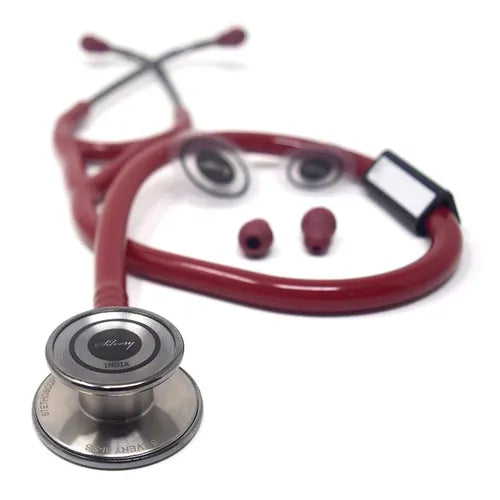
Silvery III Aluminium Chrome SS Stethoscope (Red)

Regular price Rs. 1,517
Sale price Rs. 1,517 Regular price Rs. 3,219
silvery III ss stethoscope (Grey)

Type: Stethoscope

Silvery III SS Stethoscope (Grey)

Regular price Rs. 1,999
Sale price Rs. 1,999 Regular price Rs. 3,999
silvery II-SS stethoscope (Red)

Type: Stethoscopes

Silvery II-SS Stethoscope (Red)

Regular price Rs. 2,023
Sale price Rs. 2,023 Regular price Rs. 2,023
Silvery II-SS Stethoscope (Grey)

Type: Stethoscope

Silvery II-SS Stethoscope (Grey)

Regular price Rs. 1,287
Sale price Rs. 1,287 Regular price Rs. 2,023
Silvery II-SS Stethoscope (Black)

Type: Stethoscope

Silvery II-SS Stethoscope (Black)

Regular price Rs. 1,287
Sale price Rs. 1,287 Regular price Rs. 2,023
silvery aluminium chrome stethoscope (Blue)

Type: Stethoscopes

Silvery Aluminium Chrome Stethoscope (Blue)

Regular price Rs. 1,103
Sale price Rs. 1,103 Regular price Rs. 2,023
silvery aluminium chrome stethoscope (Grey)

Type: Stethoscope

Silvery Aluminium Chrome Stethoscope (Grey)

Regular price Rs. 1,103
Sale price Rs. 1,103 Regular price Rs. 1,103
medivision stethoscope PULSATION

Type: Stethoscopes

Medivision Stethoscope PULSATION

Regular price Rs. 966
Sale price Rs. 966 Regular price Rs. 1,656
silvery II-ss stethoscope (blue)

Type: Stethoscope

Silvery II-SS Stethoscope (Blue)

Regular price Rs. 1,287
Sale price Rs. 1,287 Regular price Rs. 2,023

Collection: Stethoscopes: Types, Parts, and Best Brands in India

What is a Stethoscope and

Who Invented It?

A stethoscope is perhaps the most iconic symbol of the medical profession. To a patient, it represents the presence of a healer; to a clinician, it is an indispensable acoustic medical device for auscultation, or listening to the internal sounds of an animal or human body. While it is most commonly used to listen to heart and lung sounds, its stethoscope uses extend to monitoring blood flow in arteries and veins, as well as bowel sounds in the digestive tract.

The story of what is stethoscope begins in 1816 at the Necker-Enfants Malades Hospital in Paris. It was invented by René Laennec. Before this invention, doctors practiced "immediate auscultation" by placing their ear directly on the patient's chest. Laennec, faced with a young female patient and feeling that direct contact was inappropriate, rolled up a piece of paper into a tube to listen to her heart. To his surprise, the sounds were clearer and more amplified. This wooden tube was the first stethoscope stethoscope, eventually evolving into the binaural (two-ear) models we see today.

What Are the Main Parts of a Stethoscope?

To choose the best quality stethoscope, one must understand the complex engineering behind its components. Each element plays a vital role in sound transmission and noise isolation. Here is the detailed stethoscope parts name and their specific functions:

1. Eartips and Ear Tubes

The eartips are the parts that go into the physician's ears. The best stethoscope brands use soft-sealing silicone eartips that create an airtight seal, which is critical for excluding ambient noise. These are attached to ear tubes (binaurals), usually made of high-quality aluminum or stainless steel, angled at a specific degree to fit the anatomy of the ear canal.

2. The Tubing

The tubing is the flexible "pipe" that carries sound from the chestpiece to the ears. Most top 10 stethoscope brands use "dual-lumen" tubing, which means there are two internal channels within one tube to eliminate the rubbing noise associated with traditional two-tube designs. In the context of about stethoscope durability, the tubing must be resistant to skin oils and alcohol to prevent cracking.

3. The Stem and Chestpiece

The chestpiece is the heavy metal part placed on the patient. It usually consists of a stem (which allows the user to switch between the diaphragm and bell) and the acoustic sensors. High-grade best stethoscope for doctors often features a chestpiece machined from solid stainless steel or titanium for superior acoustic conduction.

4. Diaphragm and Bell

This is where the magic of stethoscope parts and functions happens. The diaphragm is the large, flat side used for high-frequency sounds (heartbeats, breath sounds). The bell is the smaller, cup-shaped side used for low-frequency sounds (murmurs, bruits). Some modern best stethoscope models feature "tunable" diaphragms that respond to pressure changes, eliminating the need for a separate bell.

How Does a Stethoscope Work?

The stethoscope purpose is to capture sound waves from the body and deliver them to the ears without loss of fidelity. When the heart beats, it creates pressure waves. The diaphragm of the stethoscope vibrates in response to these waves. These vibrations travel through the air-filled tubing. Because the surface area of the diaphragm is much larger than the ear canal, the sound is concentrated and amplified.

In types of stethoscope like the electronic or digital versions, these physical vibrations are converted into electrical signals, amplified by a circuit, and can even be filtered to remove background noise. This allows for the best stethoscope brands in india to cater to professionals working in loud environments like Emergency Rooms or Ambulances.

Health Conditions Monitored with a Stethoscope

While often compared to diagnostic tools like TENS or ultrasound, the stethoscope stethoscope is the first line of defense in identifying:

  • Arrhythmias: Irregular heart rhythms.
  • Pneumonia: Fluid sounds in the lungs (crackles).
  • Heart Valve Defects: Murmurs and clicks.
  • Hypertension: Combined with a BP cuff.
  • Asthma: High-pitched wheezing.
  • Bowel Obstruction: Absence of gut sounds.

Acoustic vs. Electronic: A Comparison

Feature Acoustic Stethoscope Electronic/Digital
Amplification Natural/Limited Up to 40x-100x
Power Source None Battery/Rechargeable
Weight Lightweight Moderate to Heavy
Cost in India Affordable Premium/High

What Are the Different Types of Stethoscopes?

The world of auscultation has evolved far beyond the single wooden tube of the 19th century. Today, types of stethoscope are categorized based on their acoustic sensitivity and the specific patient population they serve. The most common is the Acoustic Stethoscope, which operates on the physical transmission of sound waves through air-filled tubing. Within this category, we find "Single-Head" and "Dual-Head" models. Single-head models are often used by cardiologists for high-fidelity sound, while dual-head models offer a diaphragm for high frequencies and a bell for low frequencies.

For critical care, the Cardiology Stethoscope is the gold standard. It features thicker tubing to insulate against external noise and a precision-engineered chestpiece for detecting subtle murmurs. Conversely, Pediatric and Infant Stethoscopes utilize much smaller chestpieces to ensure a proper seal on smaller chest walls, preventing the acoustic loss that would occur with an adult-sized diaphragm.

Modern innovation has also introduced Electronic or Digital Stethoscopes. These devices amplify sounds up to 100x and often include visual displays of phonocardiograms. There are also Fetal Stethoscopes (Pinard horns) specifically designed for listening to the heartbeats of a fetus in the womb. Understanding these about stethoscope variations is crucial for choosing a tool that aligns with a clinician's specialty.

Which Type is Best for Medical Students?

For a medical student, the best stethoscope is one that balances acoustic clarity with durability and price. During the first few years of clinical rotations, students are training their ears to distinguish between "normal" and "pathological" sounds. Therefore, a high-quality acoustic stethoscope with a dual-head chestpiece is generally recommended.

A Cardiology-grade stethoscope is often considered the best stethoscope for doctors in training because its superior acoustics make it easier to learn difficult sounds like S3 or S4 heart sounds. While more expensive, it is a long-term investment that lasts throughout medical school and residency. However, a standard "Classic" clinician model is also a popular choice due to its lighter weight and versatility across pediatric and adult wards.

Students should avoid "Sprague Rappaport" styles that feature two separate tubes, as these can create friction noise that confuses a beginner's ear. Instead, look for best stethoscope brands in india that offer "Next-Generation" tubing, which is resistant to stains and skin oils, ensuring the instrument survives the rigors of hospital life.

What Are the Common Components of a Stethoscope?

While we touched on stethoscope parts name in Part 1, a more detailed look at the stethoscope parts and functions reveals why some brands outperform others. The Binaural Assembly consists of the headset and the tension-adjustable springs. A student should be able to adjust the tension so the eartips fit snugly but comfortably in the ear canal.

The Acoustic Valve Stem is another critical component in dual-head models. It must be perfectly machined to allow a crisp transition between the bell and the diaphragm without air leaks. An air leak of even a fraction of a millimeter can render the best stethoscope useless.

Finally, the Non-Chill Rim is a small but vital part. It is the plastic or silicone ring that holds the diaphragm in place. Its primary stethoscope purpose is to provide a warm interface for the patient, preventing the "gasp" reaction when cold metal touches their skin—a small detail that greatly improves patient-doctor rapport during a physical examination.

Quick Facts: The Student Choice

Recommended Weight 150g - 180g (for neck comfort)
Ideal Tubing Length 27 inches (safe distance from patient)
Chestpiece Material Stainless Steel (best for sound)

Stethoscope Uses Across Specialties

The stethoscope uses vary wildly depending on the department. In Pulmonology, the focus is on breath sounds—identifying rales, rhonchi, or wheezing which indicate various lung pathologies. In Cardiology, the clinician listens for the rhythm and strength of heartbeats, identifying "murmurs" caused by turbulent blood flow through valves.

In Gastroenterology, the stethoscope is used to listen to bowel sounds; an "absent" bowel sound can be a surgical emergency. Even in Obstetrics, a stethoscope is used to confirm the position of the baby by finding the point of maximum intensity of the fetal heart. For these diverse needs, top 10 stethoscope brands often create "multi-model" kits that allow for interchangeable diaphragms, making it a truly universal tool in any medical arsenal.

The Physics of Sound: Why Quality Matters

Sound is a mechanical wave that requires a medium to travel. In a stethoscope, that medium is the air inside the tubing. High-quality best quality stethoscope brands focus on "internal smooth-bore" tubing. If the inside of the tube is rough, the sound waves bounce around, causing "turbulence" and losing energy before they reach the ear.

Furthermore, the chestpiece density is vital. A heavy, solid stainless steel chestpiece has high "acoustic inertia," meaning it doesn't vibrate along with the sound; it forces all the energy of the body's vibration into the air column inside the tube. This is why lighter, plastic stethoscope companies' models often sound "hollow" or "tinny." When a doctor chooses the best stethoscope for doctors, they are essentially choosing the most efficient sound-transmission machine available.

 What is the Cost of a Stethoscope in     India?

In the Indian medical market of 2026, the cost of a stethoscope is as varied as the medical specialties themselves. Pricing is generally dictated by three factors: acoustic sensitivity, material durability, and brand prestige. For entry-level users, such as nursing students or home-care providers, a basic stethoscope can be found for as low as ₹600 to ₹1,500. These models, often produced by local stethoscope companies like Microtone or Dr. Morepen, offer standard dual-head functionality suitable for blood pressure monitoring and basic lung auscultation.

Moving into the mid-range tier, which is the "sweet spot" for most medical students and General Physicians (GPs), prices range from ₹3,000 to ₹9,000. Here, you find the best stethoscope brands in india like MDF Instruments and the 3M Littmann Classic series. These instruments feature stainless steel chestpieces and advanced tubing that resists skin oils, justifying the higher price through significantly better sound clarity and a lifespan that can exceed a decade.

At the premium end, specifically for Cardiologists and Pulmonologists, the investment increases to ₹18,000 to ₹35,000. This category includes specialized cardiology stethoscopes and the cutting-edge digital stethoscope. The high stethoscope stethoscope price in this bracket is a reflection of patented technology, such as active noise cancellation and 40x sound amplification, essential for diagnosing complex heart murmurs in the noisy environments of Indian government hospitals or busy private clinics.

Which Are the Best Stethoscope Brands in India?

Selecting the best stethoscope brands requires a look at both global leaders and local innovators who understand the specific needs of the Indian clinician.

  • 3M Littmann (The Gold Standard): Unquestionably the most recognized name. Models like the Classic III and Cardiology IV are the benchmarks for best quality stethoscope performance. They are prized for their "tunable diaphragms" and exceptional warranties (up to 7 years in India).
  • Medansh (The Value Leader): A rising star on platforms like MeddeyGo.com, Medansh provides professional-grade acoustics at a fraction of the cost of international brands. Their "Elegance" and "Ebony" series are becoming favorites for those seeking the best stethoscope for doctors without the "import tax" markup.
  • MDF Instruments (The Lifetime Partner): Known for their "Free Parts For Life" program, MDF is a top-tier choice for students. Their stethoscopes are handcrafted and offer unique aesthetics, such as rose gold or titanium finishes, alongside clinical-grade performance.
  • Rossmax & Microtone (The Reliable Workhorses): These stethoscope companies dominate the institutional market. If you see a stethoscope in a standard clinic or a rural health center, it is likely one of these. They provide high durability and "true bell" technology that is perfect for heavy daily use.

2026 Brand Hierarchy & Pricing Guide

Brand Popular Model Est. Price (INR) Best For
3M Littmann Classic III ₹8,500 - ₹11,000 GPs & Hospital Doctors
Medansh Elegance Dual Head ₹1,700 - ₹2,500 Students & Residents
MDF Instruments MD One ₹4,000 - ₹6,000 Style & Long-term Warranty
Rossmax EB600 Cardiology ₹1,300 - ₹2,200 Institutional & Clinic Use

How to Choose the Right Stethoscope for Your Needs?

Choosing a stethoscope is a personal decision that should be based on your clinical environment rather than just the best stethoscope brands list. To make the right choice, consider the "Rule of Three": Acoustics, Anatomy, and Application.

1. Acoustics: If you work in a quiet private office, a high-quality acoustic model like the Littmann Classic is perfect. However, if you are an Emergency Room doctor or an EMT in a noisy Indian city, you should prioritize an electronic model with ambient noise reduction. The stethoscope purpose is to hear the patient, not the siren outside.

2. Anatomy (The Fit): A stethoscope is only as good as its seal. Ensure the ear tubes are adjustable. Many best stethoscope for doctors models allow you to pull the ear tubes apart to decrease tension or cross them to increase it. If the eartips don't fit your ear canal perfectly, you will lose up to 50% of the low-frequency sounds.

3. Application (The Specialty): Are you a veterinarian? You need longer tubing. A pediatrician? You need a non-chill, small-diameter diaphragm. A medical student? You need a versatile dual-head model. By identifying your primary stethoscope uses, you can avoid overspending on features you don't need, or worse, underspending on a tool that fails to catch a critical diagnosis.

How to Maintain and Store a Stethoscope Properly?

A best quality stethoscope is a precision instrument, but it is often treated with neglect—thrown into bags or left dangling on car dashboards. Proper stethoscope maintenance is the difference between an instrument that lasts 2 years and one that lasts 20.

The most common "killer" of stethoscopes in India is skin oil and heat. The PVC or rubber tubing becomes brittle and cracks when exposed to the oils on the human neck for prolonged periods. To prevent this, always wear your stethoscope over a collar or use a "Stethoscope Clip" on your belt. Cleaning should be done with 70% isopropyl alcohol wipes. Never submerge the chestpiece in liquid, as this can damage the delicate diaphragm and the internal acoustic valves.

Storage is equally important. Avoid coiling the tubing too tightly, as this creates "memory kinks" that can obstruct sound. The best quality stethoscope brands recommend storing the device in a dedicated hard-shell case when not in use. This protects the chestpiece from scratches and prevents the tubing from being crushed under heavy medical textbooks.

Where to Buy the Best Stethoscopes Online in India?

In the age of digital healthcare, Meddeygo.com has emerged as the premier destination for medical professionals to procure their diagnostic tools. Buying a stethoscope stethoscope online can be risky due to the prevalence of "first copies" or fakes, particularly of the Littmann brand.

At Meddeygo.com, we eliminate this risk through authorized direct sourcing. When you purchase a top 10 stethoscope brand through our portal, you receive a GST-compliant invoice, an original manufacturer warranty, and the assurance that the stethoscope parts and functions are 100% genuine. We provide detailed about stethoscope specifications for every model, ensuring that students and doctors can compare the frequency response and tubing material before making an investment.

Frequently Asked Questions :

Q1: How do I distinguish between a genuine Littmann and a counterfeit in India?

In the Indian market, stethoscope stethoscope fraud is common. To verify a 3M Littmann: 1. Check the hologram on the box; it should shift colors. 2. Inspect the eartips; genuine ones are "snap-tight" and incredibly soft. 3. Look at the tubing; real Littmann tubing is matte and does not feel "sticky." 4. Most importantly, buy from an authorized dealer like [MeddeyGo.com](https://meddeygo.com). A suspiciously low cost of a stethoscope is the first red flag of a fake.

Q2: Can I use an adult stethoscope on a pediatric patient in an emergency?

While you can hear basic heartbeats, it is not ideal. The stethoscope purpose relies on a perfect seal. An adult diaphragm is too large for a child's chest, allowing air to leak in from the sides, which drowns out high-frequency murmurs. In an emergency, use the bell side of your adult stethoscope, as the smaller diameter of the bell may provide a better seal on a small ribcage than the flat diaphragm.

Q3: What is the lifespan of a high-quality stethoscope?

The best quality stethoscope should last between 7 to 15 years if maintained properly. The chestpiece (metal) is essentially indestructible. The "weak link" is the tubing. Over years of contact with skin oils, the PVC becomes stiff. If you notice your tubing is no longer flexible or has developed micro-cracks, it is time for a replacement, as these cracks cause significant acoustic loss.

Q4: Are electronic stethoscopes better for students?

Actually, most mentors suggest starting with an acoustic stethoscope. Learning the "natural" sounds of the body builds a better clinical foundation. Electronic stethoscopes are fantastic for clinicians with hearing loss or those working in high-noise environments (like flight medics), but for a student, "learning to hear" without electronic filters is an essential skill for the types of stethoscope mastery.

Q5: How often should I clean my stethoscope?

Clinically, you should wipe the diaphragm with a 70% isopropyl alcohol wipe after every single patient to prevent cross-contamination. For deep cleaning, remove the eartips and diaphragm once a month to clear out any lint or debris that has worked its way into the stethoscope parts and functions mechanism. This ensures the acoustic path remains clear.

2026 Procurement Checklist

Before you finalize your purchase on MeddeyGo or any professional portal, ensure the device ticks these five boxes:

  1. Chestpiece Material: Is it Stainless Steel or Titanium? (Avoid aluminum for professional use).
  2. Tubing Construction: Is it "Dual-Lumen"? (Reduces friction noise).
  3. Eartip Seal: Does it come with multiple sizes of soft-sealing eartips?
  4. Warranty: Does the brand offer at least a 3-year warranty in India?
  5. Weight Check: Is the weight comfortable for 12-hour shifts around your neck?

Conclusion

A stethoscope is more than just a tool; it is a gateway to the patient’s internal health. Whether you are a first-year medical student looking for your best stethoscope or a seasoned cardiologist seeking the best quality stethoscope for intricate valve diagnosis, the principles remain the same: quality acoustics, ergonomic fit, and dedicated maintenance.

In the Indian context, the rise of digital platforms like MeddeyGo.com has democratized access to the top 10 stethoscope brands, ensuring that even a student in a remote town can own the same best stethoscope for doctors used in the premier hospitals of Delhi or Mumbai. By understanding the stethoscope parts and functions and respecting the instrument's care requirements, you ensure that your "clinical ears" remain sharp for decades to come.