


Type: MeddeyGo
2 Fold Metal Folding Stretcher with wheels


Type: Patient Transfer
Stretcher Trolley with Oxygen Cylinder Holder, Stand & Locking Castors


Type: MeddeyGo
Neil Robertson Stretcher for Rescue Purpose and Carrying Patients


Type: Patient Transfer
Four Fold Stretcher MS with Safety Belts & High-Visibility Orange Fabric


Type: MeddeyGo
Vacuum Strecher Fracture Protection Air Cushion Body Fixed Airbag for Patient Transport


Type: Trolley
Stretcher Trolley Stainless Steel


Type: Patient Transfer
Stretcher Cum Wheelchair


Type: Physiotherapy
Spine Decompression Machine for Back Pain Relief


Type: Patient Transfer
Stair Chair Foldable Assist Lift Chair for Patient Transfer & Evacuation
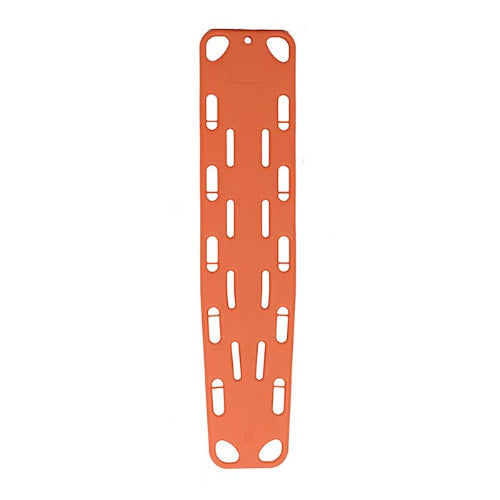
Type: Patient Transfer
Spine Board Premium Quality
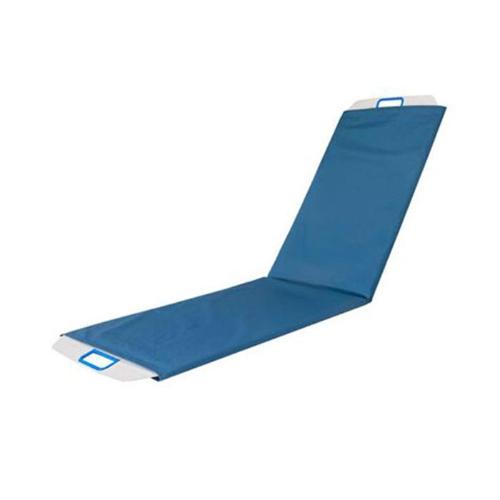
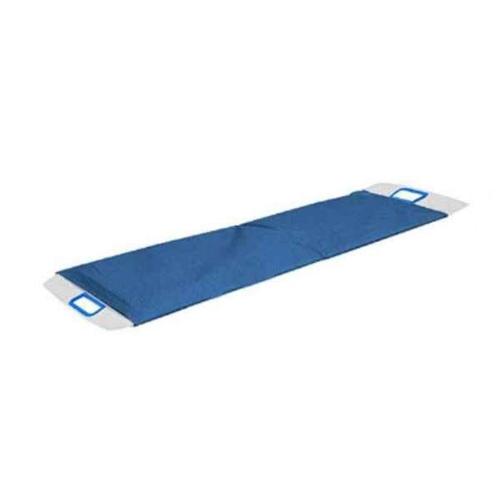
Type: MeddeyGo
Patient Transfer Stretcher


Type: Ambulance
Multi Functional Rescue Stretcher
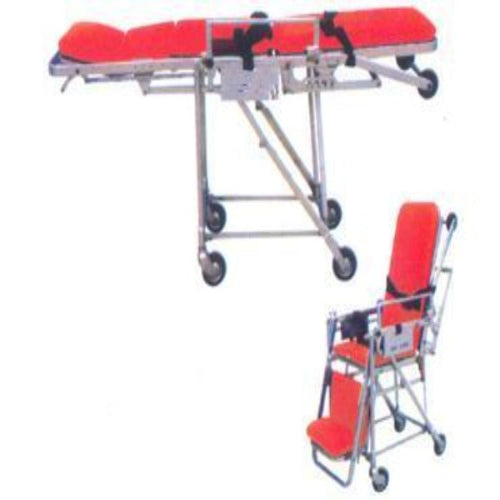
Type: Patient Transfer
Model Wheel Chair Stretcher with Varied Position


Type: Patient Transfer
Two Fold Stretcher Premium Quality with Aluminum Alloy Frame
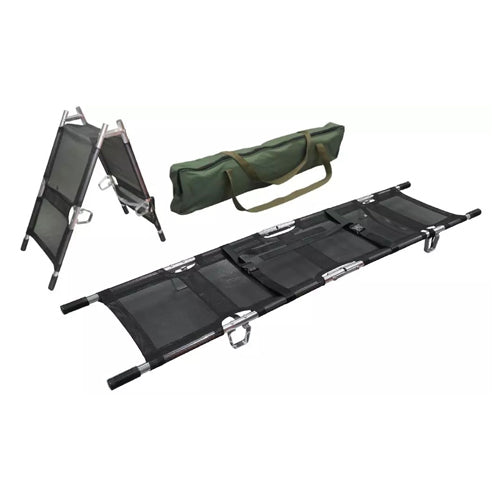
Type: Patient Transfer
Model Stretcher Four Fold Premium Quality
Collection:
Stretcher Types: Choosing the Right One
You've seen it a hundred times on TV shows and at sporting events: someone gets hurt, and the medical team rushes in with a stretcher. But have you ever noticed that the device used on a football field looks very different from the one used to pull a hiker out of the mountains? It turns out, not all stretchers are created equal, and the differences are surprisingly clever.
First, let's clear up some common confusion. While most people use the words interchangeably, there is a practical distinction in the stretcher vs gurney debate. "Stretcher" is the broad, catch-all term for any device used to carry a person. In the world of emergency services, however, the wheeled version you see gliding into an ambulance is typically called a "cot" or "gurney."
This distinction is key because that rolling cot, while perfect for hallways and pavement, is not a one-size-fits-all solution. Have you ever wondered how responders would get that same device down a narrow, winding staircase or across a muddy, uneven field? They can't.
This is where the true ingenuity in patient transport shines. Each environmental challenge---from a cramped bathroom to a remote trail---has led to different types of patient transport devices. Far from being a simple bed, each stretcher is a specific tool designed to answer the fundamental question of what a stretcher is used for: moving people safely when they are at their most vulnerable.
Summary
- This guide explains why no single stretcher fits every rescue and how responders match equipment to the environment and medical needs.
- It contrasts the wheeled ambulance cot with specialized tools—stair chairs, scoop stretchers, spine boards, basket stretchers, and portable folding litters—and shows how they work in sequence from extrication to transport.
- It also highlights key specs (weight limits, dimensions) and modern comfort/safety features, and clarifies the difference between consumer “spine stretchers” and medical immobilization devices.
- The takeaway: choosing the right device protects both patients and crews.
What Makes an Ambulance Stretcher a High-Tech 'Cot'?
While you might think of it as just a bed on wheels, the modern ambulance stretcher is a sophisticated piece of medical equipment that paramedics often call a "cot." Far from a simple frame, it's an active tool designed to protect both the patient and the crew. Its features are a direct response to the physical challenges of emergency medicine, turning a difficult job into a safer, more controlled process.
- Perhaps its most critical innovation is the powered stretcher lift system. Instead of relying on pure muscle, paramedics can raise or lower the entire cot with the push of a button. A battery-powered hydraulic or electric motor does the heavy work of lifting the patient to the height of the ambulance floor. This single feature has dramatically reduced the rate of career-ending back injuries that were once a common risk for emergency responders.
- This impressive strength comes from the collapsible X-frame undercarriage you see beneath the mattress. The crisscrossing metal supports provide incredible stability while allowing the cot to be lowered close to the ground. Thanks to this robust design, a typical ambulance cot has specifications that allow it to lift well over 700 pounds (about 317 kg), ensuring it can safely handle nearly any patient in any situation.
- But the technology isn't just about raw power; it's also about patient care. The head and leg sections of the cot can be adjusted independently, much like a hospital bed. This allows paramedics to position a patient for comfort or for medical necessity, such as raising their head to help them breathe more easily. Yet, for all its advancements, this rolling cot can't go everywhere. So, what happens when a patient is in a narrow hallway, on a steep hillside, or needs to be carried down several flights of stairs?
Why One Stretcher Isn't Enough: Matching the Tool to the Challenge
A wheeled ambulance cot is brilliant on a paved road or in a hospital corridor, but it's completely impractical for the first, most critical step: getting a patient out of the place where they were injured. This initial removal, sometimes called extrication, presents a set of problems that a rolling bed simply can't solve. The powerful, wheeled cot is often the destination, but it's rarely the right tool to start the journey.
Think about the variety of environments where emergencies happen. An office building's narrow staircase, the uneven ground of a hiking trail, or even a small residential bathroom all present unique obstacles that wheels can't navigate. Furthermore, a person with a suspected spinal injury can't be simply lifted or bent. These environmental and medical constraints are the reason so many different types of stretchers are available; each design is a clever solution to a specific challenge.
For rescuers, the first step is always to assess the situation and choose the right equipment for that unique problem. Is the patient trapped upstairs in an apartment building with no elevator? Bringing in a 700-pound cot on wheels is impossible. Instead, they'll turn to a device that's part dolly, part chair, and perfectly suited for the task.
How Do Rescuers Navigate Narrow Stairs? The Genius of the Stair Chair
That impossible staircase problem is solved with a device that looks more like a high-tech dolly than a stretcher: the Stair Chair. Instead of requiring a patient to lie flat, this device allows them to be moved in a safe, seated position. This simple change in orientation makes all the difference, allowing rescuers to navigate tight corners and narrow landings that would be impassable with a traditional stretcher. It's the ideal tool for conscious patients in apartment buildings, offices, or homes where space is at a premium.
But carrying a person's full weight down several flights of stairs is still incredibly taxing and risky. This is where the stair chair's most clever feature comes in. Many of these types of patient transport devices are equipped with durable rubber evacuation tracks on the back. Once the chair is tilted, these tracks grip the edge of each step, creating friction. This allows a single rescuer to guide the chair smoothly down the stairs, with the tracks bearing most of the weight and ensuring a controlled, safe descent rather than a struggle.
By combining the maneuverability of a wheelchair with the security of a tracked system, the stair chair makes difficult building evacuations routine. Of course, this brilliant solution only works if the patient can safely sit up. What happens when someone must be kept perfectly flat, but rolling them onto a stretcher could cause more harm? For that, rescuers need something that works less like a chair and more like a human spatula.

The 'Human Spatula': How a Scoop Stretcher Lifts Without Rolling
That "human spatula" idea is the secret behind the remarkable scoop stretcher. Unlike any other carrier, this device unlatches and separates lengthwise into two long, curved blades. Responders gently slide one half under the patient from the left and the other from the right, navigating around their body. Once in place, the two halves are clipped back together at the head and feet, securely cradling the person without ever having to roll or manually lift them from the ground.
The primary reason for this delicate maneuver is to protect the spine. In trauma situations, like a bad fall or car accident, the top priority is preventing further injury. Traditionally, moving someone often meant "log-rolling" them onto a board---a coordinated but inherently risky process. The main scoop stretcher advantage is that it eliminates this roll. By lifting the patient with almost zero twisting or bending, it provides a new level of safe patient handling and mobility when a spinal injury is suspected.
Think of the scoop stretcher not as the final destination, but as the crucial first step from the ground to safety. Its job is to get a person from an awkward or dangerous position onto a stable transport surface with minimal disturbance. Once secured, they are typically lifted onto a device that offers even more rigid support for the journey ahead: the spine board.
More Than Just a Board: The Critical Role of the Spine Board
That rigid support comes from one of the most recognizable pieces of emergency equipment: the spine board , also known as a backboard. While a scoop stretcher is designed to lift a person with minimal movement, a spine board is designed for absolute immobilization. Using a system of straps and head blocks, responders secure the person to the board to ensure their head, neck, and back move as a single, solid unit. This is critical for preventing a potential spinal injury from becoming catastrophically worse during a rescue.
This unbending rigidity is also crucial for what responders call extrication---the complex process of safely removing someone from a dangerous and confined space. Imagine a victim in a car crash. The spine board's slick, flat surface acts as a shield and a slide, allowing emergency crews to maneuver the person out of a crumpled vehicle without twisting or bending their body. It transforms a potentially chaotic extraction into a controlled and stable procedure for patient safety.
You've likely seen patients on television shows strapped to these boards, but a common misconception is that this is how they travel to the hospital. In reality, a hard plastic or wood board is extremely uncomfortable and only used for the shortest time necessary. It's a temporary bridge from danger to safety. Once the patient is extricated and secured, the entire spine board is placed onto the much softer, wheeled ambulance cot (or gurney) for transport.
The scoop stretcher lifts from the ground, and the spine board gets you out of the wreckage. But what happens when the challenge isn't a flat surface or a tight space, but rough, untamed terrain? For that, responders need a different kind of shell entirely.
Built for the Backcountry: What is a Basket Stretcher Used For?
When a rescue moves off the pavement and into the wilderness, responders need more than a flat board; they need a protective shell. This is the job of the basket stretcher, a rugged container often called a "Stokes basket" or "basket litter for rescue operations." Shaped like a human-sized toboggan, its high, sturdy sides shield the patient from rocks, branches, and other environmental hazards. Whether carried by a team or carefully slid across snow or mud, the basket's primary role is to create a secure cocoon, keeping the person safe during a long and arduous journey over rough terrain.
The true power of this rescue stretcher is revealed when ground transport isn't an option. Its rigid frame and multiple attachment points are specifically designed for hoisting. In a technical mountain or canyon rescue, a helicopter can lower a cable and lift the entire basket, with the patient and often an attendant safely secured inside. This allows rescue teams to extract someone from a location that would be otherwise impossible to access on foot, turning a days-long ordeal into a mission of minutes.
This heavy-duty design makes the basket stretcher the undisputed champion of complex wilderness and high-angle rescues. But not every situation requires such a formidable piece of equipment. Sometimes, the emergency is in a place where a helicopter can't land and a team just needs a simple, portable way to carry someone to safety. For that, they turn to a much simpler design.

When Simplicity is Key: The Power of the Portable Folding Stretcher
While a basket stretcher is a heavy-duty tool for extreme terrain, sometimes the challenge isn't the environment, but the sheer number of people who need help. For this, responders turn to the most fundamental design: the portable stretcher. This is likely the one you picture from old movies or first aid drills---two long poles with a durable fabric sheet stretched between them. Also called a folding emergency litter, its genius is its simplicity. It can be folded down to the size of a ski bag, making it incredibly easy to store and carry.
This compact design is crucial for handling a mass casualty incident (MCI), like a highway pile-up or an emergency at a large public event. An ambulance may only have one or two main wheeled stretchers, but responders might need to move dozens of people quickly to a triage area. A single vehicle can carry twenty or more of these folding stretchers, allowing first responders to rapidly transport a large number of patients out of immediate danger. They are the essential tool for bringing order to chaos.
Because they are so lightweight and easy to deploy, you'll also find portable stretchers on standby at sporting events, concerts, and schools. They provide a quick, effective way to carry an injured person out of a crowd or off a field without complex equipment. Though they look basic, these simple frames are surprisingly robust, engineered to safely support the weight of an adult. But just how much can different types of stretchers actually hold?
How Much Weight Can a Stretcher Hold? A Guide to Weight Limits
That's a critical question, as a stretcher's entire purpose is to provide unwavering support. The amount of weight a stretcher---or gurney, as it's often called---can hold is a core part of its design. As you might expect, the simple folding stretchers have the lowest capacity, typically rated for around 350 to 450 pounds. The standard wheeled ambulance cot you see every day is far more robust, engineered to safely handle between 500 and 700 pounds, which accommodates the vast majority of patients.
Of course, patient needs vary widely. For moving individuals who exceed standard limits, paramedics use specialized equipment known as a bariatric stretcher. These are wider, reinforced, and often feature powerful battery-operated motors to help lift both the patient and the heavier frame into the ambulance. Bariatric stretchers are incredible feats of engineering, with some models designed to safely transport patients weighing over 1,000 pounds.
To make it simple, here's a quick look at typical weight capacities:
- Portable/Folding Stretcher: 350--450 lbs (158--204 kg)
- Standard Ambulance Cot: 500--700 lbs (227--317 kg)
- Bariatric Stretcher: 1,000--1,600 lbs (453--725 kg)
While weight capacity is a major factor, the physical size of the stretcher is just as important for navigating tight hallways and doorways.
Does Size Matter? Understanding Standard Stretcher Dimensions
Beyond just holding weight, a stretcher has to fit through the real world. A standard ambulance cot is intentionally designed with this in mind, typically measuring about 24 inches wide and between 75 to 80 inches long---just over two feet wide and nearly seven feet long. This specific size is a careful compromise, making it large enough to secure most patients comfortably while remaining narrow enough to maneuver through the doorways, hallways, and tight corners that paramedics encounter every day.
This need for access has had a fascinating impact on the world around us. Architects and city planners often consider whether a stretcher can fit inside an apartment building elevator or down a long hospital corridor. To ensure first responders can reach a patient anywhere, many modern building codes are written with the standard stretcher size in mind. This foresight prevents a rescue from being stopped by something as simple as a hallway that's a few inches too narrow.
In fact, you may see requirements for a "stretcher lift size" in the blueprints for hospitals, nursing homes, and even tall residential buildings. This is a specific regulation mandating that at least one elevator must be deep enough to accommodate a standard stretcher and the emergency personnel needed to assist the patient. It's a perfect example of how the design of one critical tool can shape the construction of the entire environment we live and work in.
Beyond Transport: Safety & Comfort Features of Modern Cots
An ambulance ride can involve bumps, potholes, and sudden stops. To protect a patient during this journey, high-end cots now include shock-absorbing frames. Much like the suspension system in a car, this technology smooths out the ride, reducing jarring movements that could otherwise worsen an injury or cause significant pain. This innovation turns a simple transport device into a stable platform, ensuring the patient is as safe as possible on the way to the hospital.
Patient comfort and safety extend beyond just the ride. Since a person might be on a stretcher for a long time, the mattress itself is often a sophisticated piece of medical equipment. Instead of a simple pad, these surfaces use pressure-relief foam or air systems to prevent sores and improve circulation. When combined with other features, the focus on patient well-being becomes clear.
Key Innovations in Patient Comfort:
- Shock-absorbing frames to smooth out bumpy rides.
- Multi-density foam or air mattresses to prevent pressure sores.
- Fully adjustable sections to find the most comfortable and safe position.
Ultimately, a modern ambulance cot is less of a stretcher and more of a mobile treatment station. Integrated mounts for IV poles, oxygen tanks, and monitors turn it into a self-contained care platform, which is a major difference between ambulance stretchers and simpler hospital stretchers. This ensures that life-saving treatment can continue uninterrupted from the scene to the emergency room. But what happens when the injury involves the spine? For that, an entirely different approach is needed.

What is a "Spine Stretcher" and Is It a Medical Device?
If you search for a "spine stretcher" online, you'll find curved plastic devices designed to help relieve everyday back tension. These are wellness tools, and people often ask questions like, "How long should you lay on a back stretcher?" to get the most benefit for minor aches. However, these consumer products are the complete opposite of what's needed in an emergency.
For a suspected spinal injury, the absolute priority is preventing movement, not creating it. Paramedics use a device called a spine board (or backboard) for this exact purpose. Its rigid, flat stretcher design has one job: to immobilize the head, neck, and spine, keeping everything perfectly aligned. The patient is carefully secured to this board, which acts as a protective shell during transport from the scene of an accident.
This is a critical distinction: understanding how to use a spine stretcher at home for tension is one thing, but using it on someone with an acute injury could be catastrophic. The rigid spine board is just one specialized tool in a paramedic's arsenal. But how does this board work with the ambulance cot, or the basket stretcher used on a mountainside? Getting a patient to the hospital often requires a sequence of different devices working in harmony.
From Sidelines to Summits: How a Stretcher System Works Together
Before, a stretcher might have just seemed like a bed on wheels. Now, you can see it as the key player in a dynamic system. You've moved beyond recognizing a single tool to understanding the logic of an entire rescue, where each piece of equipment is part of a life-saving relay race from the point of injury to the hospital door.
- Imagine that rescue: a hiker stranded on a remote trail. The process begins not with the familiar ambulance cot, but with a rugged basket stretcher, built to protect them from rocks and brush. Once at the trailhead, the next stage begins. This is where safe patient handling and mobility becomes critical.
- The team might use a scoop stretcher to lift the patient with minimal movement before securing them onto a wheeled stretcher trolley . This careful sequence, using different pieces of emergency medical services equipment, ensures the patient is stable and the crew is protected at every step of the handover. Each tool solves one problem before passing the responsibility to the next.
The next time you see a stretcher, you won't just see an object. You'll see a thoughtful solution to a specific challenge. You now have the lens to appreciate the clever engineering designed to move a person through one of their most vulnerable moments, seeing not just the tool, but the entire journey it enables.
Frequently Asked Questions
Question: What's the difference between a stretcher, a gurney, and a cot?
Short answer: "Stretcher" is the broad term for any device used to carry a person. In emergency services, the wheeled version you see in ambulances is typically called a "cot" or "gurney." That rolling cot excels on flat, accessible surfaces (hallways, pavement) and can lift heavy loads with powered assistance, but it isn't suitable for tight spaces, stairs, or rough terrain---situations that require other specialized devices.
Question: Why do responders use so many different types of stretchers?
Short answer: Environments and medical needs vary, so one tool can't cover every scenario. Extrication from cramped rooms, narrow stairs, vehicles, or wilderness terrain demands purpose-built devices: stair chairs for tight stairwells, scoop stretchers to lift without rolling, spine boards for rigid immobilization and controlled vehicle extrication, basket stretchers for rugged ground and helicopter hoisting, and portable folding stretchers to move many patients quickly during mass-casualty incidents. Crews assess the scene first, then match the tool to the challenge.
Question: How does a stair chair make stair evacuations safer, and when isn't it appropriate?
Short answer: A stair chair moves a patient in a seated position, making tight corners and narrow landings manageable. Many models have rubber evacuation tracks that grip stair edges so a single rescuer can guide a controlled descent while the tracks bear most of the weight. It's ideal for conscious patients in space-limited buildings, but it's not appropriate when a patient must remain flat (e.g., suspected spinal injury) or cannot safely sit upright.
Question: What's the difference between a scoop stretcher and a spine board, and how are they used together?
Short answer: A scoop stretcher splits into two longitudinal halves that slide under a patient from either side, then lock together---allowing lifting with minimal rolling or twisting. It's designed to protect the spine during the initial lift. A spine board provides rigid immobilization with straps and head blocks so the head, neck, and back move as one unit---critical for safe extrication (like from a crashed vehicle). Often, rescuers scoop the patient, then secure them to a spine board, and finally place the immobilized patient (board and all) onto the softer, wheeled cot for transport.
Question: How much weight can common stretchers hold, and what size are standard ambulance cots?
Short answer: Typical capacities are: portable/folding stretchers 350--450 lbs (158--204 kg), standard ambulance cots 500--700 lbs (227--317 kg), and bariatric stretchers 1,000--1,600 lbs (453--725 kg). Standard ambulance cots are about 24 inches wide and 75--80 inches long---sized to fit through typical doorways and corridors. These dimensions are influential enough that many building codes require at least one "stretcher-size" elevator to ensure emergency access.