

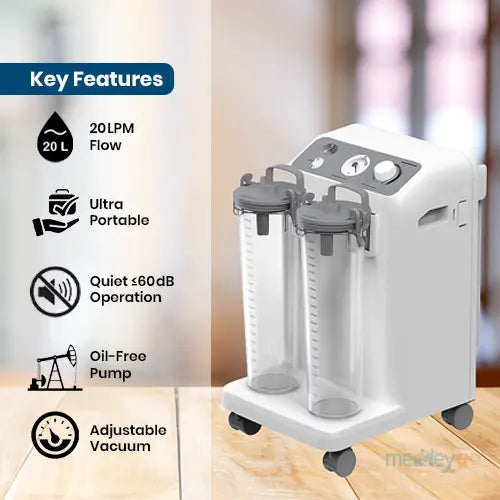
Type: General
Yuwell 20 LPM Electric Suction Apparatus with Polycarbonate Jars


Type: Suction Machine
Yuwell Portable Suction Machine 7E-A for Medical Use


Type: Suction Machine
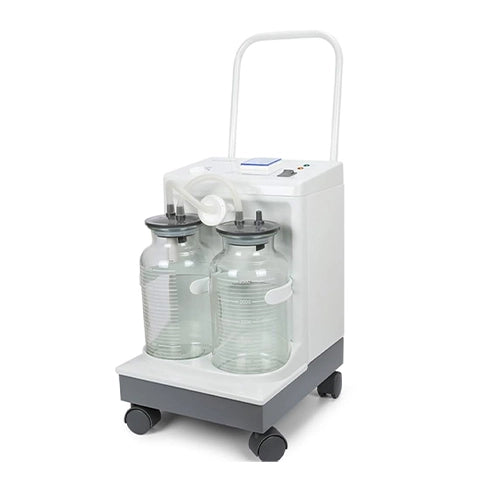
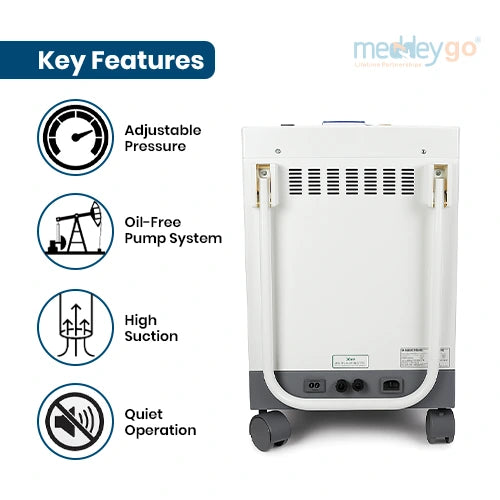
Double Jar Suction Machine Electric for phlegm suction Machine
Type: Suction Machine
Double Bottle Suction Machine Electric for phlegm suction Machine


Type: General
Yuwell Suction 1HP Machine 40LPM Double Bottle


Type: General
Yuwell Suction Apparatus 2 bottles 40LPM, 1 HP


Type: General Accessories
Yuwell Hand Operated Suction Pump for Medical Use


Type: General Accessories
Pedal Suction Apparatus for Patients


Type: General Accessories
Portable Phlegm Suction Machine AC DC Battery 7E-G1

Type: MeddeyGo
Portable Suction Machine AC DC

Type: General Accessories
Pedal Suction Apparatus from Yuwell


Type: General Accessories
New Aspiret Suction Unit
Collection:
Medical Suction Devices

Medical suction devices are used to clear airways of obstructions, such as mucus, blood, or vomit, to ensure patient safety during surgical procedures or emergency situations. They function by creating negative pressure to draw out fluids and debris, maintaining a clear field for healthcare providers.
How Medical Suction Devices Work
At the heart of every suction device is a vacuum pump, which generates the negative pressure necessary to extract unwanted fluids. This negative pressure is finely controlled to prevent tissue damage while ensuring efficient removal of obstructions. The physics behind this process involves creating a differential pressure that allows the fluid to move from a high-pressure area (the patient) to a low-pressure area (the suction device).
Application in Surgical Environments
In surgical settings, suction devices are critical for maintaining a clear operative field. Surgeons rely on these devices to remove blood and bodily fluids quickly, which not only enhances visibility but also reduces the risk of infection. The precise control of suction pressure is crucial during delicate procedures to avoid damage to surrounding tissues.
Emergency Use and Rapid Response
In emergency situations, time is of the essence, and suction devices provide a rapid response solution. They are essential in clearing airways of patients who are choking or have sustained injuries that cause fluid accumulation. The portability and ease of use of these devices make them an invaluable tool for first responders and emergency medical technicians.
Types of Medical Suction Devices
There are several types of suction devices, each serving different clinical needs:

Portable Suction Devices
Portable suction devices are compact and battery-operated, providing mobility and ease of use in various settings, including ambulances, emergency kits, and home care environments. They are ideal for situations where immediate response is crucial.
Design and Functionality
Portable devices are designed with lightweight materials to ensure they can be easily transported. Their battery-powered operation allows them to function independently of external power sources, making them ideal for use in remote areas or during transport to medical facilities. The design typically includes user-friendly interfaces for quick setup and operation.
Use in Home Healthcare
With the rise of home healthcare, portable suction devices have become increasingly popular. They empower patients with chronic conditions to manage their care in the comfort of their homes, reducing hospital visits and improving quality of life. For caregivers, these devices offer a practical solution for providing consistent care.
Advantages in Emergency Situations
In emergency scenarios, the portability and ease of deployment of these devices can be lifesaving. Their ability to function in various environments, from roadside accidents to in-flight medical emergencies, underscores their versatility. The quick deployment ensures that airway obstructions can be addressed promptly, improving patient outcomes.
Hospital Suction Systems
These are integrated systems found in hospitals, often connected to a central vacuum system. They are designed for continuous and reliable operation, making them suitable for operating rooms and intensive care units.
Integration with Hospital Infrastructure
Hospital suction systems are typically integrated into the facility's infrastructure, providing a reliable and continuous source of suction. This integration allows for seamless operation across different departments, ensuring that the necessary resources are always available when needed. The central vacuum systems are often equipped with redundant components to prevent downtime.
Continuous Operation for Critical Care
In critical care settings, the need for continuous suction cannot be overstated. These systems are designed to handle high volumes of fluid extraction over extended periods, which is essential in intensive care units where patients may require prolonged respiratory support. The reliability of these systems is crucial in maintaining patient safety.
Customization for Specialized Procedures
Hospital suction systems can be customized to meet the specific needs of different medical procedures. This customization includes adjustable suction pressures and specialized attachments designed for particular surgical or medical applications. Such flexibility ensures that the system can be tailored to optimize performance for any given situation.
Manual Suction Devices
Manual devices are typically used in resource-limited settings or for quick, short-term use. They require physical effort to operate but are invaluable in situations where power sources are unavailable.
Operation Without Electricity
Manual suction devices are designed to operate without the need for electricity, making them indispensable in areas where power supply is unreliable. Their simplicity and effectiveness make them a staple in many developing regions, where they provide a cost-effective solution for basic medical needs.
Ideal for Field and Remote Locations
In field settings, such as military operations or disaster relief efforts, manual suction devices offer a practical solution. Their portability and ease of use make them suitable for deployment in challenging environments, where traditional powered devices may not be feasible. They ensure that basic airway management can be performed anywhere, at any time.
Training and Usage in Resource-Limited Areas
Training on the use of manual suction devices is straightforward, which is beneficial in resource-limited areas where medical personnel may have varying levels of expertise. Their simple design facilitates quick understanding and adoption, ensuring that even minimally trained staff can use them effectively in emergencies.
Key Components of Suction Equipment
Understanding the components of suction equipment is essential for effective use and maintenance:
Vacuum Pump
The core component that creates negative pressure to extract fluids. The pump's efficiency and reliability are crucial to the device's overall performance. Innovations in pump technology have led to quieter, more energy-efficient models that maintain high suction performance without causing patient discomfort.
Collection Canister
A container that collects the extracted fluids for safe disposal. These canisters are designed to prevent spillage and contamination, often featuring anti-overflow mechanisms and secure sealing systems. The capacity and material of the canister are chosen based on the intended use and setting, ensuring compatibility with hospital waste management protocols.
Tubing
Connects the suction tip to the collection canister, ensuring smooth fluid transfer. The tubing must be flexible yet durable, capable of withstanding repeated use and sterilization processes. Its design often includes features to minimize clogging and ensure consistent suction flow.
Suction Tip/Catheter
The part inserted into the patient's body to remove fluids. The design of the suction tip is critical for effective fluid removal and patient comfort. Tips are available in various sizes and shapes to accommodate different anatomical needs and are often made from materials that minimize tissue irritation.
Patients Who Benefit from Suctioning

Certain patients are more likely to require suctioning, including:
Surgical Patients
To maintain a clear surgical field. During surgical procedures, maintaining visibility is paramount. Suctioning helps manage bleeding and other fluid build-up, ensuring that surgeons can perform with precision and accuracy. The timely removal of fluids also reduces the risk of infection and complications.
Patients with Respiratory Conditions
Such as COPD or pneumonia, who need assistance in clearing their airways. For these patients, mucus accumulation can significantly impair breathing. Regular suctioning can help maintain airway patency, improve ventilation, and enhance overall respiratory function. It is often a critical component of their ongoing care plan.
Unconscious Patients
To prevent aspiration and ensure airway patency. In unconscious patients, the risk of airway obstruction due to saliva, blood, or vomit is high. Suctioning is a key intervention to prevent aspiration, which can lead to serious complications like pneumonia or asphyxiation. Consistent monitoring and timely suctioning are vital for patient safety.
Market Dynamics of Medical Suction Devices
The market for medical suction devices is expanding, driven by technological advancements and increasing healthcare needs.
Technological Advancements
Recent innovations in suction technology have led to more efficient, quieter, and safer devices. Features such as adjustable suction levels, battery operation, and compact designs cater to diverse medical environments.
Enhanced Performance and User Experience
Technological advancements have focused on improving device performance while enhancing user experience. Innovations such as intuitive control interfaces and ergonomic designs make these devices easier to use for medical staff, reducing the likelihood of errors and improving patient outcomes.
Integration with Digital Health Platforms
The integration of suction devices with digital health platforms is a growing trend. This connectivity allows for real-time monitoring of device performance and patient data, enabling more informed decision-making and better coordination of care. Such integration is particularly beneficial in telemedicine and remote patient monitoring scenarios.
Sustainability and Energy Efficiency
As healthcare moves towards more sustainable practices, energy-efficient suction devices are gaining traction. These devices not only reduce operational costs but also align with the environmental goals of healthcare facilities. Innovations in materials and design contribute to a lower carbon footprint while maintaining high performance.
Regulatory Standards
Compliance with healthcare regulations ensures that suction devices meet safety and performance standards. Understanding these requirements is crucial for distributors and healthcare facilities to ensure they procure and distribute compliant equipment.
Global Regulatory Compliance
Navigating the complex landscape of global regulatory compliance is essential for manufacturers and distributors. Each region may have its own set of standards and requirements, making it important for stakeholders to stay informed about changes and updates. Compliance ensures that devices are safe, reliable, and effective for patient use.
Quality Assurance and Certification
Quality assurance processes and certification are critical in maintaining the credibility of suction devices. Rigorous testing and validation are conducted to ensure devices meet the highest standards of safety and performance. Certifications from recognized bodies provide assurance to healthcare providers and patients alike.
Addressing Post-Market Surveillance
Post-market surveillance plays a crucial role in ensuring ongoing compliance and safety. Manufacturers are responsible for monitoring the performance of their devices in the field, addressing any issues promptly, and implementing improvements as needed. This continuous feedback loop is vital for maintaining trust and reliability.
Market Opportunities
With the growing demand for portable and home healthcare solutions, there is a significant opportunity for distributors to explore new markets. By understanding regional healthcare needs, distributors can effectively position their products and expand their market share.
Expanding into Emerging Markets
Emerging markets present a lucrative opportunity for expansion. As healthcare infrastructure improves in these regions, the demand for medical suction devices is expected to rise. Distributors can capitalize on this growth by tailoring their offerings to meet the specific needs of these markets.
Collaboration with Healthcare Providers
Collaborating with healthcare providers can lead to better product development and increased adoption. Engaging with medical professionals provides valuable insights into the practical challenges faced in various clinical settings, allowing manufacturers to refine their products to better meet those needs.
Innovation-Driven Market Growth
Innovation is a key driver of market growth. Companies that invest in research and development to create cutting-edge products are well-positioned to capture a larger share of the market. By focusing on developing unique features and improving device functionality, businesses can differentiate themselves and attract new customers.
Strategic Considerations for Stakeholders
For hospital administrators, ensuring the availability of reliable suction devices is a priority. This involves strategic procurement planning, evaluating device quality, and considering cost-effectiveness. A robust procurement strategy can enhance patient care and operational efficiency.
Procurement Strategy and Planning
Developing a comprehensive procurement strategy is essential for hospital administrators. This includes assessing current and future needs, evaluating potential suppliers, and ensuring that devices meet quality and safety standards. A well-planned procurement strategy helps optimize resource allocation and ensures the availability of necessary equipment.
Differentiation in a Competitive Market
Medical equipment distributors must stay informed about market trends and technological innovations to differentiate their offerings. Building strong relationships with manufacturers and understanding regulatory landscapes can provide a competitive edge. By offering unique products and exceptional service, distributors can stand out in a crowded market.
Guiding Clients Through Technological Integration
Healthcare technology consultants play a pivotal role in guiding clients through the complexities of integrating advanced medical equipment. Providing insights into the latest trends and technologies ensures clients make informed decisions that align with their strategic goals. Consultants can help clients navigate the challenges of implementation, ensuring seamless integration into existing systems.
Conclusion
Medical suction devices are vital components of patient care, playing a crucial role in various medical scenarios. For healthcare stakeholders, understanding the types, uses, and market dynamics of these devices is essential for making informed decisions and optimizing care delivery. As the healthcare landscape continues to evolve, staying abreast of technological advancements and market opportunities will be key to success.
By leveraging the insights provided in this article, hospital administrators, distributors, and technology consultants can enhance their strategies, ensuring they meet the demands of modern healthcare environments effectively. The ongoing development and deployment of innovative suction devices will continue to improve patient outcomes and support the delivery of high-quality care across the globe.
Q&A
Question: How do medical suction devices remove fluids while protecting patient tissues?
Short answer: They use a vacuum pump to create controlled negative pressure, establishing a pressure differential that draws fluids from the patient (higher pressure) into the device (lower pressure). Precise control of suction levels prevents tissue damage, and design features—such as appropriately sized, patient-friendly suction tips and smooth-flow tubing—help minimize irritation. In surgical settings, rapid fluid removal improves visibility and reduces infection risk, while sealed, anti-overflow collection canisters limit contamination.
Question: When should I choose a portable, hospital (central), or manual suction device?
Short answer:
- Portable: Select for mobility and fast response outside fixed facilities—ambulances, home care, transport, or remote sites. Battery operation and lightweight designs enable immediate use where power is unavailable or unreliable.
- Hospital (central): Use where continuous, high-reliability suction is required—operating rooms and ICUs. These systems integrate with hospital infrastructure, offer customization (e.g., adjustable pressures and specialized attachments), and often include redundancy for uptime.
- Manual: Opt for resource-limited, field, or disaster settings with no electricity. They are simple, cost-effective, and easy to train on for short-term airway management.
Question: What key components should buyers and users prioritize for performance and safety?
Short answer:
- Vacuum pump: Look for efficiency, reliability, and low noise to maintain strong suction without discomfort.
- Collection canister: Ensure secure sealing, anti-overflow mechanisms, and capacities compatible with the clinical setting and waste protocols.
- Tubing: Favor flexible, durable tubing that resists clogging and tolerates repeated use/sterilization for consistent flow.
- Suction tip/catheter: Choose sizes and shapes matched to anatomy and procedure to optimize fluid removal and patient comfort.
Question: Which patients benefit most from suctioning, and why is it critical in emergencies and surgery?
Short answer: Surgical patients need suctioning to maintain a clear operative field, enhancing precision and reducing infection risk. Patients with respiratory conditions (e.g., COPD, pneumonia) benefit from mucus removal that preserves airway patency and improves ventilation. Unconscious patients require suctioning to prevent aspiration from saliva, blood, or vomit. In emergencies, the speed, portability, and ease of use of suction devices can be lifesaving by promptly clearing obstructed airways.
Question: What trends are shaping the suction device market, and what should stakeholders do about them?
Short answer: Advancements are delivering adjustable suction, quieter and more efficient pumps, battery-powered portability, ergonomic interfaces, and compact designs. Devices are increasingly integrating with digital health platforms for real-time performance and patient data monitoring, while sustainability drives energy-efficient designs. Stakeholders should ensure regulatory compliance, quality assurance, certification, and active post-market surveillance. Administrators can strengthen outcomes through strategic procurement and cost-effectiveness reviews; distributors can differentiate via tech-forward, compliant offerings and collaborations with clinicians; and consultants can guide seamless integration with existing systems and workflows.