
Type: Instruments
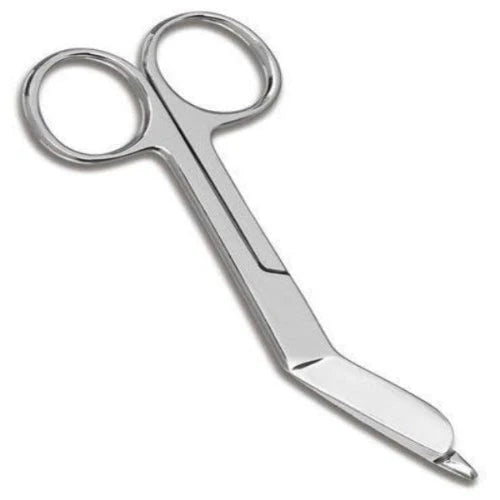
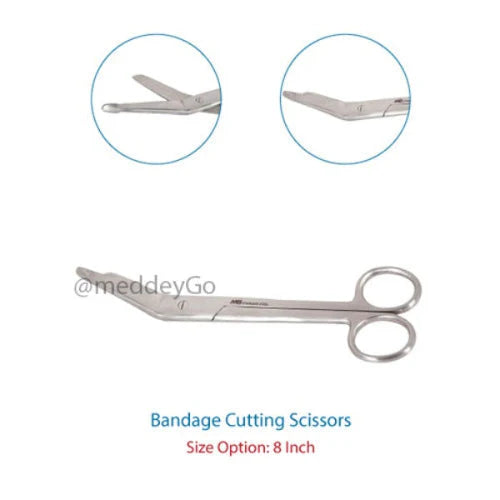
Bandage and Plaster Cutting Scissor 7.5 Inch
Type: Surgical
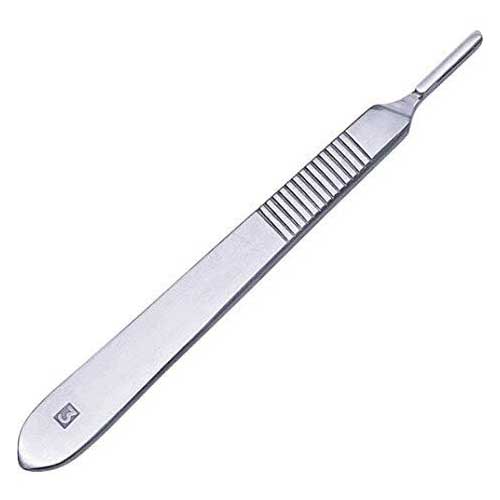
B P Scalpel Handle Surgical Instrument (Pack of 4)
Type: Day to Day Care
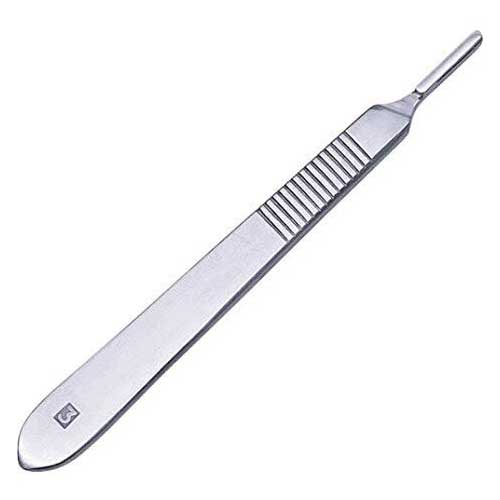
B P Handle Surgical Premium Quality (Pack of 4)
Type: Instrument
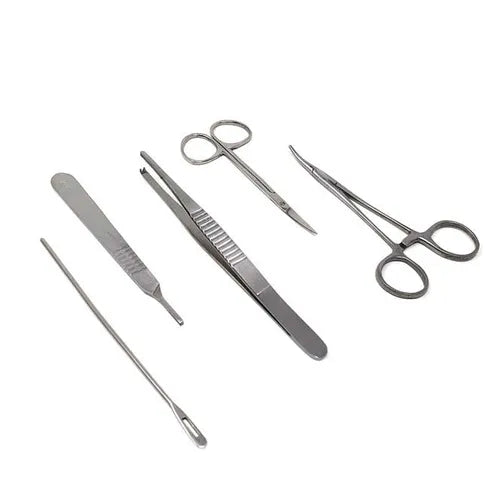
Debridement Instrument kit
Type: Instruments
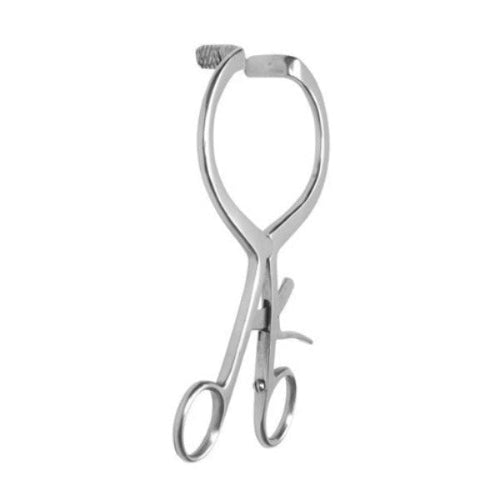
Doyen Mouth Gag Surgical Instrument
Collection:
Safety Practices When Using Surgical Blades
Safety Practices When Using Surgical Blades
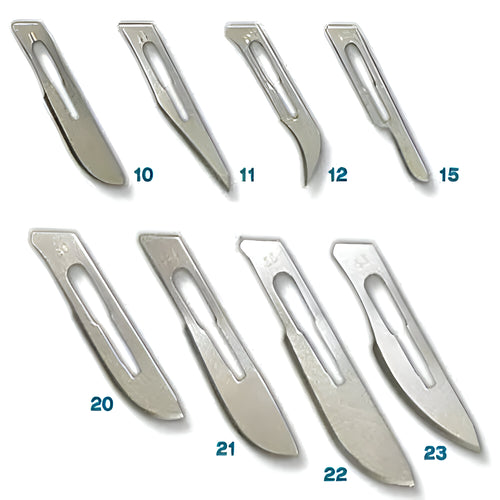
On TV, a surgeon calls out, "Nurse, 10 blade!" That simple command unlocks a world of precision, beginning with a system designed from the ground up for safety and effectiveness. A surgical scalpel is almost never a single, solid instrument. Instead, it's a two-part tool: a reusable metal handle for grip and control, and a separate, single-use blade that is discarded after every procedure. This fundamental design is the cornerstone of modern surgical safety.
The numbering system---like the #10, #15, or #11---specifies the blade's precise shape and function. For instance, the #10 blade has a long, curved cutting edge for large incisions, while a pointed #11 blade is designed for making precise punctures. Ultimately, this system ensures every patient receives a perfectly sterile, factory-sharp edge, with no microscopic dullness or contamination from a previous use.
The Scalpel System: It's Not One Tool, It's Two
Most people picture a surgeon's scalpel as a single, sleek steel instrument. The reality is more like a high-end craft knife or a classic safety razor. It's a system of two distinct parts: a reusable metal handle and a single-use, disposable blade. While the durable handle can be sterilized and reused for years, a surgical blade is used only once and then safely discarded. This guarantees two non-negotiable standards for patient safety: absolute sterility and uncompromising sharpness.
A factory-new blade has a flawless, microscopically-honed edge that is far sharper than a resharpened tool could ever be. This extreme sharpness is a safety feature. A duller edge requires more pressure, increasing the risk of slipping or causing unnecessary tissue damage. In contrast, a supremely sharp blade glides through tissue with minimal force, allowing for cleaner incisions, greater control, and better healing. By separating the handle from the blade, these essential tools provide the best of both worlds---durability and disposable perfection.

What Are Bard-Parker Handles and Why Are They the Industry Standard?
The credit for this two-part system goes to inventors Morgan Parker and C.R. Bard. Their "Bard-Parker" design became so widespread that the name is now synonymous with the tool itself---much like how we call tissues "Kleenex." Their innovation was not just the two-part system, but also the standardized way the parts fit together, creating a universal language for surgeons.
This system includes several handle types, but two dominate the field: the #3 and the #4. The #3 handle is smaller and more slender, designed for fine detail work. It holds the smaller series of surgical blades (like the #10, #11, and #15) used for precise, delicate incisions where control is everything.
For tasks requiring more leverage or longer cuts, surgeons turn to the #4 handle. This handle is larger and more robust, built to accommodate bigger blades (such as the #20, #21, and #22). It supports blades designed for deep or extensive incisions through tougher tissue, providing a sturdier grip for more demanding work.
Crucially, this system is not mix-and-match. A small #15 blade will not fit on a large #4 handle, and vice-versa. This standardized fitment is a critical safety feature, ensuring a blade is always paired with a handle of the appropriate size and strength for its intended job.
The "No-Touch" Rule: How to Safely Attach a Blade to a Handle
Given the extreme sharpness of a surgical blade, it is handled with a strict "no-touch" technique. A surgeon or technician never uses their fingers to load or unload a blade. This cardinal rule protects the user from a dangerous cut and ensures the sterile blade remains uncontaminated.
To accomplish this, healthcare professionals use a specific tool, most often a hemostat or a needle holder. These locking medical forceps grip the blade securely, acting as a safe extension of the hand. The user grips the blade with the hemostat along its upper, non-cutting edge. They then align the slot in the blade with the grooved fitting on the scalpel handle and slide it along the fitting until it clicks firmly into place. That audible "click" confirms the blade is secure.
This procedure is a primary defense against sharps injuries---accidental cuts and punctures from medical instruments. For healthcare workers, a sharps injury carries the risk of transmitting blood-borne diseases. Mastering the no-touch technique is therefore a fundamental skill in maintaining a safe operating environment.
A Blade for Every Job: Why One Shape Isn't Enough
Just as a woodworker has different chisels and saws, a surgeon relies on a variety of blade shapes to perform different tasks. A single shape simply isn't versatile enough for the range of challenges encountered in the human body. Surgical blades fall into logical groups based on their function. Some have a long, curved edge for making sweeping cuts. Others are small and delicate for detailed work. A third common group features sharp, pointed tips for making small, precise punctures.
This system gives surgeons the flexibility to switch from one task to another with confidence. The most common and versatile of all these tools is the one often heard in medical dramas: the #10 blade.
The Workhorse: What Is a #10 Blade Really Used For?
The #10 blade is the most common and versatile blade used in surgery. Visually, it has a large, noticeably curved cutting edge designed for making long, straight incisions through skin and soft tissue. It's the surgical equivalent of a classic chef's knife---a powerful, reliable tool for the biggest part of the job.
The secret to its effectiveness lies in its long, rounded cutting surface, often called the "belly" of the blade. This extended curve allows a surgeon to maintain contact with the tissue throughout the entire cut, creating a smooth, continuous incision in a single, fluid motion. This minimizes tissue damage and ensures a clean opening.
Because it excels at large-scale cuts, the #10 blade is considered the workhorse for opening a surgical site. However, its size is also its limitation. It is too large for delicate work where precision is more important than power.

The Precision Artist: When Do Surgeons Reach for a #15 Blade?
For intricate tasks, surgeons use the #15 blade. While it has the same curved shape as the #10, it is significantly smaller and more delicate. If the #10 is a chef's knife, the #15 is a fine-tipped paring knife---an instrument of precision.
Its small size allows a surgeon to create short, precise incisions and easily follow complex curves. This makes it the go-to blade for delicate procedures, such as removing a small mole, making an incision on the face, or working near a sensitive structure. The choice between a #10 and a #15 blade comes down to a trade-off between sweeping efficiency and meticulous control.
The Puncturing Specialist: The Unique Job of a #11 Blade
To make a precise puncture instead of a long slice, a surgeon needs the #11 blade. With its long, straight cutting edge and extremely sharp, pointed tip, it looks more like a classic X-Acto knife. This triangular, spear-like shape is optimized for making a "stabbing" incision---creating a small, exact opening.
This is ideal for draining a skin abscess or making a starting port for a minimally invasive procedure. The sharp point allows for controlled entry with minimal force. The #11 blade is a specialist tool; a surgeon wouldn't use it to make a long abdominal incision. Its role is to create a precise entry point or handle specific tasks in tight spaces.
The Curved Specialist: What Is a #12 Blade Used For?
The #12 blade is one of the most distinctive surgical tools, shaped like a tiny sickle with a cutting edge along the inner curve. Unlike other blades designed to glide forward, the #12 is engineered to be pulled. This unique geometry allows surgeons to make incisions in hard-to-reach areas where a straight blade would be unsafe.
Think of trying to cut a single thread on the inside of a garment; you would hook the thread and pull it to cut. That's the principle behind the #12 blade. It can reach around corners or work in confined spaces like the mouth. A common use is removing stitches: the hook slips under a suture, lifts it from the skin, and severs it cleanly without poking the patient.
Carbon Steel vs. Stainless Steel: The Surprising Trade-Off at the Cutting Edge
Surgical blades typically come in two materials: carbon steel and stainless steel. The choice involves a trade-off between the absolute sharpest edge and long-term reliability.
Carbon steel blades are famous for being honed to a microscopically fine edge, making them arguably the sharpest option available. The downside is that carbon steel is prone to corrosion and can rust when exposed to moisture or bodily fluids.
This is where stainless steel comes in. While still incredibly sharp, its greatest advantage is superior corrosion resistance. It won't rust or degrade during a long or complex surgery. This reliability has made stainless steel surgical blades the most common choice in operating rooms, offering an exceptional balance of precision and toughness.
What Is a "Safety Scalpel"? A Simple Innovation to Prevent Major Injuries
One of the biggest risks in a hospital is a "sharps injury" to doctors and nurses. To solve this, engineers developed the safety scalpel, designed to ensure the blade is covered when not in active use.
Safety scalpels typically work in one of two ways. The most common designs feature retractable blades, which work like a utility knife---a slider extends the blade for use and retracts it back into the handle for safety. Another popular style uses a protective shield that locks over the blade like a built-in scabbard. In both cases, the blade is only exposed for the brief moment it's needed, significantly reducing injuries in fast-paced medical settings.
The "Neutral Zone": How Surgical Teams Safely Pass Scalpels
Even with a safety scalpel, handing a sharp instrument from one person to another creates risk. To eliminate this danger, operating rooms implement a hands-free technique that relies on a designated "neutral zone." This is a specific area, often a small tray or magnetic mat, where sharp tools are placed for pickup rather than passed directly hand-to-hand.
The procedure is a carefully choreographed exchange. When a surgeon is finished with a scalpel, they place it in the neutral zone and announce, "Sharp down." Only after the surgeon's hand is clear does the scrub nurse reach in to retrieve it. This deliberate, two-step process ensures their hands are never close to the blade at the same time, preventing fumbles that can lead to injury.
The Final Step: How to Safely Dispose of Used Scalpels and Blades
Once used, a surgical blade is incredibly sharp and contaminated. It cannot be tossed in a normal trash can, where it could easily cause serious sharps injuries . Instead, all used blades must go directly into a specially designed sharps container.
These rigid, red plastic boxes are puncture-proof and feature a small opening for one-way disposal. Using a tool like a scalpel blade remover device or a hemostat, the user detaches the blade from its handle and drops it straight into the container. These containers are then sealed and sent into a specific biohazard waste stream for incineration or sterilization, completely destroying any infectious agents.
Can You Reuse a Surgical Scalpel? The Critical Myth of Resharpening
While the scalpel handle is reusable, the blade is strictly a single-use tool. This comes down to two factors that cannot be compromised: perfect sterility and perfect sharpness.
After a single use, a blade's incredibly fine cutting edge is fundamentally damaged on a microscopic level. It becomes bent, chipped, and dulled. A surgeon using this blade would need more pressure, reducing precision and causing more trauma to the patient. Resharpening can never restore the blade to its original, factory-perfect state.
Furthermore, a used blade cannot be guaranteed as sterile. Microscopic particles of tissue and bacteria can resist even the most aggressive cleaning. A factory-sealed, new blade is the only way to ensure the instrument is both flawlessly sharp and absolutely sterile.
A System of Safety and Precision
The surgical scalpel is more than just a sharp edge; it is an icon of careful planning and meticulous procedure. It represents a complete system where every component and every action is designed for control and safety.
From the standardized fit of a Bard-Parker handle to the no-touch technique for attaching a blade, each step mitigates risk. The choice of blade---whether a workhorse #10 or a specialist #12---reflects a deliberate decision to match the right tool to the task. Even the material, a trade-off between carbon steel's sharpness and stainless steel's durability, is a calculated choice.
Finally, safety protocols like the neutral zone and proper sharps disposal protect the medical team, completing a 360-degree approach to safety. This entire ecosystem of tools, rules, and procedures turns a moment of high stakes into an act of controlled, predictable precision.
Frequently Asked Questions
Question: Why is a surgical scalpel a two-part system instead of a single, solid tool?
Short answer: The two-part design—reusable metal handle plus single-use blade—guarantees sterility and peak sharpness for every procedure. A factory-new blade has a flawless, microscopically honed edge that glides through tissue with minimal force, improving control and healing while reducing tissue trauma. Reusing or resharpening a blade compromises both sterility and edge integrity; even after one use, the edge is microscopically damaged and contamination can persist. Separating the durable, sterilizable handle from a disposable blade delivers both long-term reliability and one-time “disposable perfection.”
Question: What’s the difference between Bard-Parker #3 and #4 handles, and why can’t blades be mixed and matched?
Short answer: The #3 handle is smaller and slimmer for fine work and takes smaller blades like the #10, #11, and #15. The #4 handle is larger and sturdier for deeper or longer cuts and pairs with bigger blades such as the #20, #21, and #22. The system’s standardized fitment is a safety feature: a small blade won’t fit a large handle (and vice versa), ensuring the blade is always matched to the appropriate handle size and strength for its intended task.
Question: How do you safely attach or remove a blade without touching it? Short answer: Use the “no-touch” technique with a hemostat or needle holder. Grip the blade along its upper, non-cutting edge, align the blade slot with the handle’s grooved fitting, and slide it until it clicks into place—an audible cue it’s secure. This hands-free loading (and unloading) minimizes sharps injuries and avoids contaminating the sterile blade. When removing a used blade, use a scalpel blade remover device or a hemostat and drop the blade directly into a sharps container.
Question: Which blade should I choose for different surgical tasks (#10, #15, #11, #12)?
Short answer:
- #10: The workhorse for long, smooth skin and soft-tissue incisions; its broad curved “belly” maintains continuous contact for clean, efficient cuts.
- #15: A smaller, more delicate version for short, precise incisions and intricate curves—ideal for facial work, small lesions, or areas needing meticulous control.
- #11: A pointed, triangular blade for precise punctures and “stabbing” entries—useful for draining abscesses or creating ports for minimally invasive procedures.
- #12: A hook-shaped blade designed to cut on the pull, reaching around corners or in confined spaces (e.g., the mouth) and commonly used for suture removal.
Question: What safety practices reduce sharps injuries during and after scalpel use?
Short answer:
- Safety scalpels: Retractable blades or locking shields keep the edge covered when not in active use.
- Neutral zone: A hands-free passing method—place the scalpel in a designated area (e.g., a tray or magnetic mat), announce “Sharp down,” and only then does another team member pick it up.
- Disposal: Remove used blades with a tool and discard immediately into a rigid, puncture-proof sharps container. These are sealed and processed in a biohazard waste stream (incineration or sterilization) to eliminate infectious risk.