
Type: Gloves
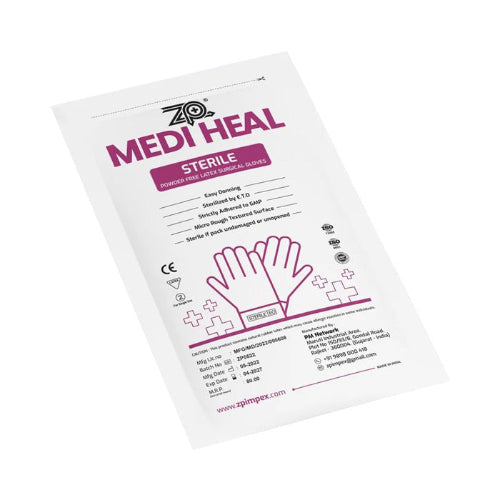
Powder Free Surgical Gloves Sterile


Type: Gloves
Sterile Long Cuff Disposable Gloves 18 Inch (Pack of 25)
Type: Gloves
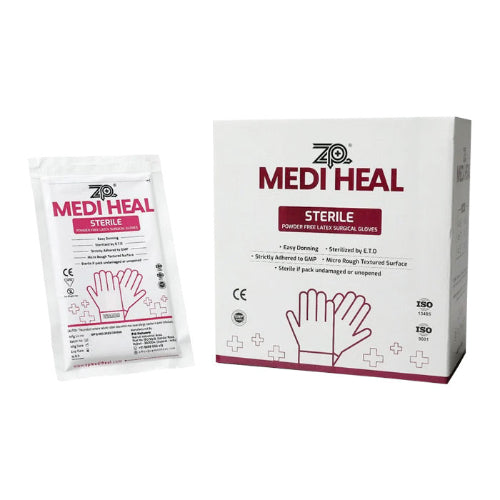
Powder Free Surgical Gloves Sterile (Pack of 25)
Type: Gloves
Powder Free Surgical Gloves Sterile (Pack of 10)
Type: Gloves
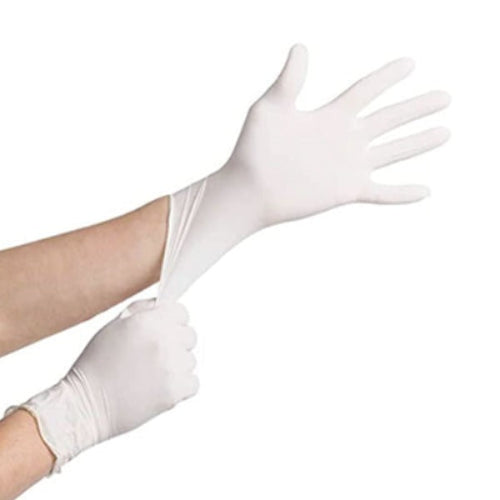
Latex Examination Gloves Powdered (Box of 100)


Type: Gloves
Premium Sterile Long Cuff Disposable Gloves 16 Inch Gynaecological Powder Free Gloves (Pack of 25)
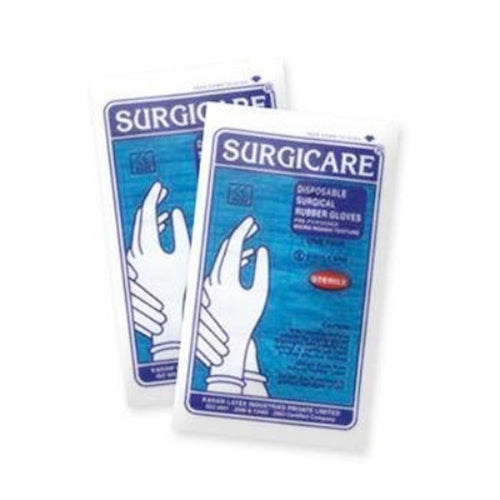

Type: Gloves
Sterile Latex Surgical Gloves (Pack of 10)
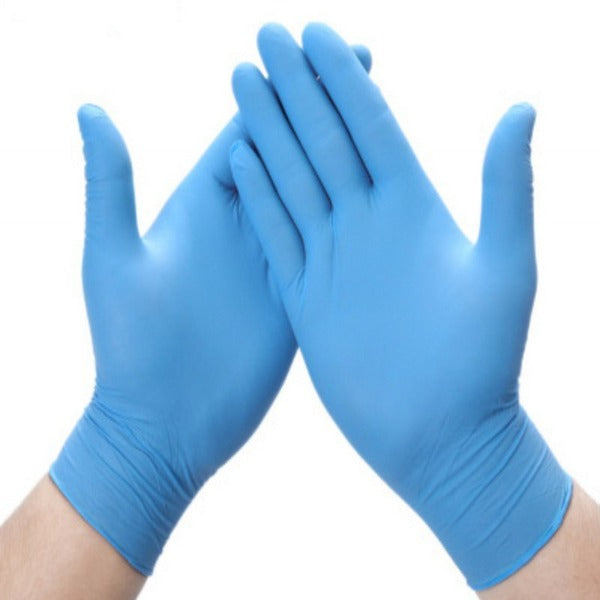
Type: Gloves
Medvision Nitrile Examination Gloves
Collection:
Surgical Gloves: Types and Their Uses
You've probably snapped on a pair of rubber gloves to wash dishes or work in the garden. They do a great job of protecting your hands from grime and chemicals. But when a surgeon snaps on their gloves, they are doing something fundamentally different. Those pristine medical gloves aren't just protecting the surgeon; they're protecting you. What makes a simple glove worthy of an operating room?
The answer lies in a complete shift in purpose. A household glove is a shield to keep things off the wearer. In contrast, a surgical glove is a sterile barrier designed to prevent anything from the wearer's hands from reaching the patient. In practice, this means creating an absolutely pure environment, as any microscopic organism could pose a risk during a procedure. This makes the glove one of the most critical pieces of protective equipment in medicine.
Transforming a simple sheet of rubber into a life-saving tool requires incredible precision. Unlike a loose-fitting dishwashing glove, surgical gloves are engineered for a perfect fit, allowing surgeons to feel the most delicate tissues and tie the finest sutures. Each one is the result of advanced material science, balancing strength against sensitivity and accounting for challenges like latex allergies.
The crucial difference between "sterile" surgical gloves and the "clean" exam gloves from a check-up lies in their purpose and production. Understanding the materials, quality testing, and history of surgical gloves reveals why this simple item is a cornerstone of modern patient safety.
Summary
Surgical gloves are sterile barriers that protect patients first, with the core distinction being sterile surgical gloves versus non-sterile exam gloves and when each is appropriate. A glove becomes “surgical” through terminal sterilization, protective packaging, and aseptic donning within a sterile field. Material advances (nitrile over latex for allergy safety and puncture resistance), precise sizing, powder-free coatings, color-contrast and double-gloving strategies, and strict AQL standards all enhance safety and tactile performance. Alternatives like vinyl and CPE suit low-risk tasks, while specialties (chemotherapy-rated, textured fingertips, accelerator-free nitrile) address specific hazards and sensitivities.
The Two-Way Street of Safety: What a Medical Glove's Real Job Is
Most of us think of disposable gloves as a simple way to keep our hands clean. In medicine, however, that's only half the story. A medical glove is really a two-way shield. While it certainly protects a doctor or nurse from blood or other bodily fluids, its most critical job is often to protect the patient. It creates a complete, impenetrable barrier, ensuring nothing harmful passes from the caregiver's hands into a patient's body.
But wait, don't surgeons scrub their hands meticulously before a procedure? They absolutely do. The reality is that our skin is naturally home to countless microscopic organisms, or microbes. While harmless on the surface, even a single one of these can cause a serious infection if it enters an open wound. A high-quality glove provides a layer of protection that even the most thorough hand-washing can't guarantee, acting as the final defense.
This principle of a barrier is central to understanding what are surgical gloves used for , but it also applies to simpler tasks, like a routine check-up. The key is that not all situations demand the same level of purity. This leads us to the single most important distinction among medical hand protectors: the difference between a glove that is simply clean and one that is truly sterile.
The Single Most Important Distinction: Sterile vs. Non-Sterile Gloves
Think about two types of dinner plates. The first is a plate from a clean, closed kitchen cabinet---it's perfectly fine for your meal. The second is a plate used for a scientific experiment, which has been sterilized and sealed in a bag to guarantee it's free of any microscopic life. This is precisely what is the difference between exam and sterile gloves. One is clean, while the other is pure.
Exam gloves , the kind you see in a dispenser box at a walk-in clinic, are the "clean cabinet" plates. They are medically clean and perfect for low-risk tasks like a routine check-up, where your skin acts as a natural barrier. However, for any invasive procedure where the body's internal, protected spaces are entered---from minor stitches to major surgery---the standard must be absolute purity. This is where sterile gloves are non-negotiable.
You can spot the difference just by how they are presented:
- Exam Gloves (Non-Sterile): Packaged together in a simple dispenser box. They are safe for general use but are not free from all microbes.
- Sterile Gloves (Surgical): Come in individually sealed, peel-apart pouches. Each pair is untouched until the moment it's needed in a controlled environment.
Ultimately, choosing the right glove is a critical safety decision. Using a sterile glove when it's not needed is wasteful, but using an exam glove during an invasive procedure would be dangerous. This absolute commitment to purity is what truly makes a glove "surgical."
What Truly Makes a Glove 'Surgical'? A Look Inside the Sterile Package
To answer that, we have to look at what happens after a disposable glove is sealed in its pouch. At this point, it's not yet a surgical glove. It undergoes a terminal sterilization process, an intense, industrial-grade procedure using methods like focused radiation to eliminate every single microorganism---bacteria, viruses, and even tough-to-kill spores. This process guarantees that the glove inside is not just clean, but medically pure.
That special paper and plastic pouch is more than just a wrapper; it's a fortress. It maintains the glove's purity until the exact moment of use and is the first step in creating a sterile field , an invisible, protected zone around the patient. Medical staff are trained in an aseptic technique---a careful set of rules for opening the package and putting on the gloves without contaminating them. This ensures that the first thing the pristine glove touches is the patient, not the doctor's hand or a non-sterile surface.
From the moment it's sealed to the moment it's used, a sterile surgical glove is part of a complete system designed for absolute safety. The rigorous sterilization and specialized packaging are what elevate it from a simple piece of rubber to a critical medical instrument. But this system only works if the material itself is up to the task.
The Great Material Debate: Why Most Hospitals Now Prefer Nitrile Over Latex
For decades, if you saw a surgical glove, it was almost certainly made of latex. Derived from natural rubber, latex offers an incredible combination of stretchiness and touch sensitivity, allowing it to fit like a second skin. This remarkable feel gives surgeons the dexterity they need for delicate and precise tasks. For a long time, it was the undisputed gold standard for fit and comfort.
However, a serious problem began to emerge. A significant number of healthcare workers and patients discovered they had allergies to the proteins found in natural latex. These reactions weren't just a minor inconvenience; they could range from irritating skin rashes to life-threatening emergencies. The very tool meant to protect people was becoming a source of danger, prompting an urgent search for a safer, hypoallergenic alternative.
Today, that's why the familiar blue nitrile glove has become so common in hospitals and clinics. While latex is still used in some specialized situations, nitrile provides a powerful combination of safety, strength, and tactile sensitivity. It delivers peace of mind for everyone in the room, ensuring the protective barrier is strong, reliable, and safe for all.

Are There Other Choices? A Quick Guide to Vinyl and Cast Polyethylene (CPE) Gloves
While nitrile and latex dominate the medical world, you've likely encountered other disposable gloves used for tasks like cleaning or food preparation. The most common of these are vinyl gloves. As a lower-cost synthetic option, vinyl is a practical choice for non-hazardous, short-term jobs where precision isn't needed. However, it's significantly less elastic than nitrile or latex, leading to a much looser fit and a feeling of wearing a slightly baggy plastic covering rather than a second skin.
This lack of a snug fit is precisely why vinyl isn't used for surgery or delicate exams. The material doesn't provide the same level of touch sensitivity, making it difficult for a medical professional to feel what they're doing. More importantly, vinyl is more susceptible to tearing and developing tiny, invisible punctures, making it a less reliable barrier against germs when stakes are high. It serves its purpose well for tasks like house painting, but not for protecting an open wound.
Finally, you have the ultra-thin, crinkly plastic gloves often found at a salad bar or sandwich counter. These are Cast Polyethylene (CPE) gloves. Designed purely for quick sanitation tasks, they are the most affordable but least durable option available. They offer a basic, temporary barrier for handling food but are a world away from the high-performance, precision-engineered gloves required in an operating room, where fit is everything.
The Lock-and-Key Fit: Why Glove Sizing Is a Critical Safety Feature
Imagine trying to tie a shoelace while wearing bulky winter mittens. That's the challenge a surgeon faces with a poorly fitting glove. Any excess material that bunches or folds dulls their sense of touch, a critical ability known as tactile sensitivity. When performing delicate tasks like tying a tiny stitch or navigating around a nerve, being able to feel exactly what you're doing is non-negotiable. A baggy glove compromises this precision and makes every movement a little less certain.
Fit isn't just about dexterity, either; it's a crucial safety feature. A glove that's too large can easily snag on an instrument, increasing the chance of a tear. On the other hand, a glove that's too tight is stretched thin across the knuckles and palm, making it far more vulnerable to developing tiny, invisible holes. Either failure breaks the sterile barrier, putting both the patient and the surgical team at risk.
This is why surgical gloves aren't sold in the simple small, medium, or large sizes you'd find at the drugstore. Instead, they rely on a precise, numbered sizing system, often available in half-size increments like 6.5, 7, or 7.5. This allows a surgeon to select a glove that fits like a true second skin, providing maximum protection without sacrificing the control and feedback needed to perform their job safely and effectively.
The Case of the Disappearing Powder: Why Modern Gloves Are Powder-Free
If you've ever used older disposable gloves, you might recall a fine, dusty white film on the inside. For decades, that cornstarch powder was standard, serving as a donning aid to help doctors and nurses slide their hands into sticky latex gloves more easily. It was a simple solution to a practical problem, but it came with a serious, unseen cost.
Researchers eventually discovered that this innocent-looking powder had a dangerous side effect. For one, latex allergen proteins could hitch a ride on the powder particles, becoming airborne every time a glove was snapped on. This dramatically increased the risk of allergic reactions for both medical staff and patients. More alarmingly, if any powder entered a patient's body during surgery, it was treated as a foreign invader. This particulate contamination could lead to inflammation, scarring, and slower healing.
Recognizing these risks, the U.S. Food and Drug Administration (FDA) took a decisive step, banning all powdered surgical and exam gloves in 2017. Today's powder-free gloves are a testament to medical innovation. Instead of powder, they feature a special bonded inner coating, often a polymer, that provides a smooth, slick surface for easy donning without any of the dangerous side effects. This change ensures the sterile barrier is as clean and safe as possible, right down to the microscopic level.
Why So Blue? The Clever Safety Reason Behind Glove Colors
It's a question you might have pondered in a doctor's office: why are so many modern medical gloves blue? Unlike the classic off-white of older latex gloves, this color isn't a style choice---it's a brilliant, low-tech safety alarm designed to protect both the patient and the medical team.
The most critical reason is to make tiny tears immediately obvious. To avoid an undetected glove perforation, many surgeons "double-glove," wearing a light-colored glove underneath a darker blue one. If the outer glove gets a microscopic puncture during a procedure, the contrasting color underneath instantly bleeds through, creating an unmissable warning sign that the sterile barrier has been breached. This simple visual cue is far more reliable than trying to spot a hole in a transparent or skin-toned glove.
Furthermore, blue and green serve another important function: they reduce eye strain. These cool colors provide an excellent visual contrast to the red of blood and internal tissues, which helps surgeons see more clearly and reduces glare under bright operating room lights. With every detail focused on safety, from the material to the color, the next challenge becomes clear: how do surgeons get these sterile tools onto their hands in the first place?
The Sterile Dance: How Surgeons Put On Gloves Without Touching Them
After scrubbing their hands and arms, a surgeon's skin is exceptionally clean, but it isn't sterile. The gloves, however, are. This creates a critical challenge: how do you get sterile gloves onto clean hands without contaminating them? The solution is a precise procedure known as the aseptic technique, a sort of "no-touch" dance that medical professionals practice until it's second nature.
The first glove is the trickiest. The glove is cleverly packaged with a folded-over cuff, exposing only its inner surface. The rule here is "skin-to-skin." The surgeon pinches this inner cuff with their clean, bare fingers and slides their hand in, being careful that no part of their skin touches the glove's pristine outer surface. The cuff remains folded for now.
With one hand now safely inside a sterile glove, the rules change to "glove-to-glove." To put on the second glove, the surgeon slides their already-gloved fingers under the cuff of the remaining glove. This way, the sterile glove only makes contact with the other glove's sterile exterior. The second hand then slips in easily, completely protected from any contact with the outside.
Finally, with both hands gloved, the surgeon can unfold the cuffs over the sleeves of their gown. This last step creates a seamless, fully protected sterile field from the fingertips up the arm. This entire process demonstrates why knowing how to properly don sterile gloves is a fundamental skill.

The Safe Escape: How to Remove Contaminated Gloves Without Touching the Mess
Just as there's a right way to put on sterile gloves, there's an equally crucial method for taking them off. After a procedure, the outside of these disposable gloves is considered contaminated. The challenge is to remove them without letting your bare skin touch a single spot on that outer surface, which would defeat the entire purpose of wearing them in the first place.
This is accomplished using a clever procedure often called the "glove-in-glove" technique. First, the wearer pinches the outside of one glove at the wrist and peels it downward, turning it completely inside out. The contaminated side is now safely on the inside. This balled-up glove is then held in the still-gloved hand. To remove the second glove, the wearer slips their now-bare fingers under the cuff of the remaining glove, touching only the clean inner surface, and peels it off. This motion turns the second glove inside out, too, neatly trapping the first glove inside it.
The result is a tidy, self-contained bundle with all the hazardous material sealed away. This simple but brilliant aseptic technique isn't just for surgeons; it's a vital skill for anyone using protective gloves, from first-aiders to caregivers at home.
Seeing Double: Why Surgeons Often Wear Two Pairs of Gloves
While a single sterile glove provides a powerful barrier, it's not invincible. During a procedure, a glove can develop microscopic tears or pinpricks from sharp instruments, needles, or even bone fragments. These tiny breaches are often too small to see or feel, yet they can still allow germs to pass through. By wearing a second pair, surgeons dramatically reduce the odds that one of these invisible perforations will compromise the sterile environment.
Beyond just adding another layer of latex or nitrile, this technique often incorporates a clever visual alert called an indicator system. In this setup, the inner glove is a bright, contrasting color---like blue or green---while the outer glove is a standard light beige or white. If the outer glove gets a hole, fluids seep between the two layers and create a dark, obvious spot against the light-colored surface. This instantly turns an invisible danger into an unmissable signal, prompting the surgical team to change gloves immediately.
Ultimately, this practice is about eliminating uncertainty and protecting everyone in the room. Double-gloving is now a standard of care in many types of surgeries, especially long or complex ones where the risk of a glove breach is higher. It provides critical backup protection for the patient against infection and for the surgical team against exposure to blood-borne pathogens.
What Is an AQL Rating? Decoding a Glove's "Quality Score"
Knowing that even a microscopic hole can be a big problem, how do manufacturers ensure their gloves are fit for the operating room? They can't possibly test every single glove. Instead, they rely on a powerful quality control system called the Acceptable Quality Level, or AQL. Think of AQL as a strict "pass/fail" grade for an entire production batch of thousands of gloves, based on a small, random sample.
To determine this score, inspectors perform a standardized "pinhole test," typically by filling a number of gloves from the batch with water and checking for any leaks. This is where it gets a little counterintuitive: the lower the AQL number, the higher the quality standard. An AQL of 1.5 means that for the entire batch to pass inspection, no more than 1.5% of the gloves in the sample can have a pinhole defect. A lower number signifies a tougher standard and a more reliable glove.
The difference this makes is enormous when comparing different types of gloves. Surgical gloves are required to meet a very strict AQL of 1.5 or better. By contrast, the exam gloves your family doctor uses have a less stringent AQL of 2.5, and industrial-grade gloves can have an AQL of 4.0 or higher.
Can You Be Allergic to "Allergy-Safe" Nitrile Gloves?
With nitrile gloves being the trusted, allergy-safe alternative to latex, it can be confusing to hear that some people still experience a reaction. If nitrile is supposed to be the solution, what's going on? The surprising truth is that a true allergy to the nitrile material itself is incredibly rare. When a reaction does occur, the culprit is almost always something else entirely.
The issue typically stems from a group of chemicals called accelerators. These substances are added during the manufacturing process to help transform the liquid nitrile into the strong, elastic material we recognize as a glove. For a very small percentage of people, lingering traces of these accelerators can cause a delayed skin reaction, usually a red, itchy rash where the glove made contact. This type of sensitivity is very different and far less severe than the immediate, and sometimes dangerous, allergic reaction associated with latex.
Recognizing this, manufacturers have created an even safer option for the most sensitive users: accelerator-free nitrile gloves. These products are made using a different curing process that avoids the specific chemicals known to cause irritation. This commitment to refining the science behind the glove ensures that there is a safe, effective barrier for virtually every surgeon and patient.
Beyond the OR: A Glimpse into Specialty Protective Gloves
While all medical gloves protect against germs, some healthcare situations involve a different kind of risk: powerful chemicals. For professionals handling certain cancer treatments, standard gloves aren't enough. This is where chemotherapy-rated gloves come in. These are not simply thicker; they have passed rigorous tests proving they can create a safe barrier against specific, potent drugs that could otherwise be absorbed through the skin.
Beyond chemical resistance, physical performance is just as critical. Have you ever noticed that some procedure gloves have a slightly rough feel at the tips? This isn't a flaw; it's a deliberate feature. The addition of textured fingertips provides a better grip on small or slippery instruments, much like the tread on a car tire helps it hold the road. In a medical setting where precision is paramount, this enhanced control can make a significant difference in both safety and effectiveness.
These specialized designs highlight a fundamental truth: medical protective gloves are far more than simple coverings. From their chemical resistance ratings to performance features like texture, each glove is an engineered tool designed for a specific challenge. This level of thoughtful design is essential for modern medicine, ensuring the right protection and function is always at hand.
The Glove as a System of Safety
What once seemed like a simple disposable item is now clearly a sophisticated system of protection. A surgical glove is more than just a barrier; it represents a commitment to absolute purity, from its material science and AQL rating to the sterile packaging and aseptic donning techniques. The distinction between a "clean" exam glove and a "sterile" surgical one is a fundamental principle of patient safety. Understanding the roles of nitrile, sizing, color, and powder-free design highlights the immense detail invested in this critical medical tool. The next time you see a medical professional don a pair of gloves, you can appreciate the layers of science and procedure at work, ensuring a safe environment for both caregiver and patient.
Q&A
Question: What's the key difference between sterile surgical gloves and non-sterile exam gloves, and when should each be used?
Short answer: Non-sterile exam gloves are medically clean and suitable for low-risk, non-invasive tasks where intact skin acts as a barrier; sterile surgical gloves are terminally sterilized and individually packaged to be completely free of microbes, and are required for any invasive procedure to protect internal tissues. You can spot the difference by packaging: exam gloves come in bulk dispenser boxes, while sterile pairs arrive sealed in peel-apart pouches. Using sterile gloves when not needed is wasteful, but using non-sterile gloves for invasive care is dangerous.
Question: What actually makes a glove "surgical"?
Short answer: A surgical glove isn't just clean---it's part of a sterilized system. After packaging, it undergoes terminal sterilization (e.g., focused radiation) to eliminate all microorganisms, then remains sealed until use. Clinicians open it and don it using aseptic technique to preserve purity and extend the sterile field from glove to gown. The combination of rigorous sterilization, protective packaging, and no‑touch donning elevates it from a simple barrier to a critical medical instrument.
Question: Why have most hospitals moved from latex to nitrile gloves?
Short answer: Latex offers excellent stretch and tactile feel but can trigger allergic reactions ranging from rashes to life-threatening events. Nitrile, a synthetic alternative, is hypoallergenic (no latex proteins) and provides superior puncture resistance while maintaining good sensitivity. As a result, nitrile has become the default in many settings, with latex reserved only for specific use cases where its unique feel is indispensable.
Question: What does a glove's AQL rating mean?
Short answer: AQL (Acceptable Quality Level) is a batch-level quality score based on standardized pinhole testing of a sample---lower numbers indicate stricter standards and fewer defects. Surgical gloves must meet about 1.5 AQL or better, exam gloves typically 2.5, and industrial gloves may be 4.0 or higher. Since even microscopic holes matter, AQL is a critical indicator of barrier reliability.
Question: Why are modern medical gloves powder-free---and often blue?
Short answer: Powder was once used to aid donning, but it carried latex allergens into the air and, if introduced into wounds, caused harmful particulate contamination. The FDA banned powdered medical gloves in 2017; today's gloves use bonded inner coatings for easy donning without powder. Blue (and green) colors improve visibility of tiny tears---especially when double-gloving with contrasting inner/outer layers---and reduce eye strain by contrasting with red tissues under bright OR lights.
Additional Q&A
Question: How do clinicians put on sterile gloves without contaminating them?
Short answer: They use a no-touch aseptic sequence built into the packaging: after opening the sealed pouch in a sterile field, the first glove is grasped only by its folded inner cuff (“skin-to-skin”) and slipped on without touching the sterile exterior. With one hand now gloved, the second glove is donned by sliding the gloved fingers under its cuff and contacting only sterile glove surfaces (“glove-to-glove”). Finally, cuffs are unfolded over the gown sleeves, extending the sterile field from fingertips up the arm.
Question: What’s the correct way to remove contaminated gloves safely?
Short answer: Use the “glove-in-glove” technique. Pinch the outside of one glove at the wrist, peel it off turning it inside out, and hold the balled glove in the still-gloved hand. Then slide bare fingers under the remaining glove’s cuff (touching only the clean inner surface) and peel it off inside out, trapping the first glove inside. The result is a sealed bundle that keeps contaminants off your skin.
Question: Why is precise, numbered sizing so important for surgical gloves?
Short answer: Fit drives both safety and performance. A too-loose glove bunches and snags, dulling tactile sensitivity and raising tear risk; a too-tight glove is overstretched, making microscopic holes more likely. Surgical gloves come in fine, often half-size increments (e.g., 6.5, 7, 7.5) to achieve a true second-skin fit—maximizing dexterity while preserving the sterile barrier.
Question: When are vinyl or CPE gloves appropriate, and why aren’t they used for invasive care?
Short answer: Vinyl and cast polyethylene (CPE) gloves suit brief, low-risk tasks (cleaning, food handling) where high precision and robust barrier integrity aren’t required. Vinyl is less elastic, fits loosely, and is more prone to tears and microperforations; CPE is ultrathin and least durable. Neither provides the snug fit, tactile sensitivity, or reliability demanded for exams requiring fine feel—let alone surgery.
Question: If nitrile is “allergy-safe,” why do some people still react to it?
Short answer: True allergy to nitrile itself is rare. Most reactions are sensitivities to manufacturing “accelerators” used to cure the rubber, causing delayed-onset, localized rashes (unlike immediate latex-protein allergies). For sensitive users, accelerator-free nitrile gloves avoid these chemicals while preserving the strong, puncture-resistant barrier that made nitrile the preferred latex alternative.