
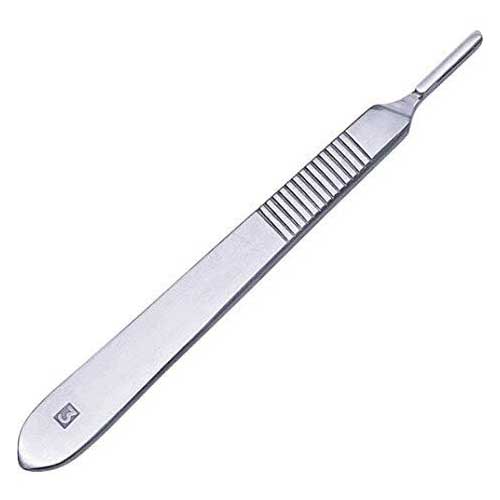
Type: Surgical
B P Scalpel Handle Surgical Instrument (Pack of 4)
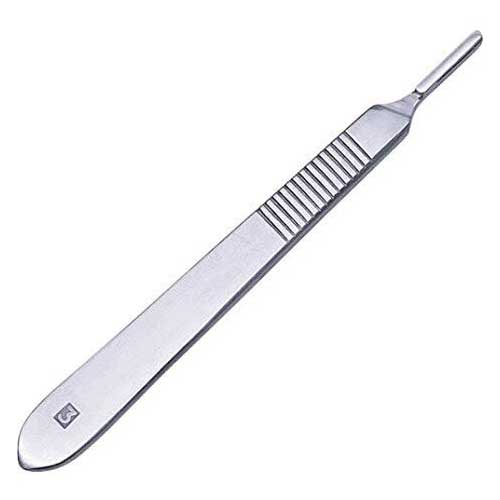
Type: Day to Day Care
B P Handle Surgical Premium Quality (Pack of 4)
Collection:
Surgical Scalpel and Blade Supplies
Surgical Scalpel and Blade Supplies
On TV, the surgeon's command is always sharp and dramatic: "10-blade!" But the medical scalpel they're handed isn't just a simple knife. The reality behind these essential surgical tools is a fascinating system of precision and safety that pop culture completely misses, one designed for absolute perfection with every use.
Understanding these surgical supplies means finally knowing what's really happening in that surgeon's hand, moving beyond the drama to the true science of the cut.
Summary
A surgical scalpel is a two-part system—reusable handle plus single-use, numbered blade—engineered for sterility, safety, and precise control. Handles offer durable, textured ergonomics and standardized fittings for blade families (#3 small, #4 large), with the #10 for broad incisions, #11 for punctures, and #15 for delicate, curved work. Blades come in carbon steel (maximum sharpness) or stainless steel (durability), and strict, no-touch protocols with remover devices and sharps containers ensure safe attachment, removal, and disposal. Surgeons choose between reusable and fully disposable scalpels by context, and despite appearances, surgical blades differ fundamentally from craft knives in purpose and fragility.
The Scalpel Isn't a Knife, It's a System
A surgeon's scalpel is not a single, solid knife. It's a system composed of two distinct parts: a reusable scalpel handle , which the surgeon holds, and a separate, single-use scalpel blade that does the cutting. This simple-sounding separation is one of the most important safety and efficiency innovations in modern surgery.
This two-piece design is brilliant for a critical reason: guaranteed sterility. While a handle can be rigorously cleaned and sterilized between procedures, nothing is safer than a brand-new blade, sealed in its own packet and untouched until the moment of use. This eliminates any microscopic risk of cross-contamination, ensuring every patient gets a perfectly sharp and sterile blade. It's a foundational principle of infection control in the operating room.
Beyond absolute cleanliness, this system offers incredible versatility. A single scalpel handle can become dozens of different tools just by swapping out the blade. Just as a mechanic has different socket heads for one wrench, a surgeon has an arsenal of different blade shapes and sizes for one handle. This allows them to switch from making a long, straight incision to performing delicate, precise work without ever changing their core instrument.
This handle-and-blade combination is the key to both safety and surgical precision, providing a reliable foundation of control that surgeons depend on. That foundation starts with the design of the handle itself.

The Foundation of Control: What Makes a Scalpel Handle a Precision Tool
A surgeon's control begins with the handle in their hand, and these tools are designed for much more than just holding a blade. Scalpel handles are almost always crafted from high-grade stainless steel. This material is strong, won't rust, and can be subjected to the intense heat and pressure of sterilization thousands of times without degrading. This ensures the handle is a durable, perfectly clean foundation for every procedure.
Most handles also feature a textured or grooved grip section. This is a critical design feature for providing a secure, non-slip surface for a surgeon wearing smooth latex or nitrile gloves. This textured grip ensures they can maintain absolute control and make fine, deliberate movements without any risk of the instrument shifting in their hand.
At the very tip of the handle is the fitting, a raised, flattened section with a precisely milled slot designed to lock a blade firmly into place. The blade slides on and clicks into position, creating a secure bond that prevents any wobbling or flexing during use. This simple but brilliant locking mechanism is what allows a surgeon to apply pressure with complete confidence, knowing the handle and blade are acting as one solid tool.
A Guide to Surgical Blade Numbers: Why Surgeons Don't Just Ask for a "Sharp One"
When a surgeon calls out, "Hand me a 10-blade," they are using a precise code. Asking for just a "scalpel" would be like a painter asking for just a "brush"---it's not nearly specific enough. Every surgical blade has a number that instantly tells the team its exact shape, size, and purpose. This numbering system is the universal language for selecting the right tool for the job.
While the locking mechanism on a handle is standardized, it's not entirely one-size-fits-all. Blades and handles are sorted into two main "families," distinguished by the size of their fitting. This ensures that a fine, delicate blade can only be fitted onto a correspondingly slender handle, providing the right balance and control.
This system creates two distinct groups of tools, each tailored for different tasks. The smaller #3 handle family is for more detailed work, while the larger #4 handle family is for broader cutting.
- Small Blades (for #3 Handles): Blades like the #10, #11, and #15 are used for everything from skin incisions to precision cutting.
- Large Blades (for #4 Handles): Blades like the #20, #22, and #24 are bigger and more robust, ideal for deeper or more extensive procedures.
A surgeon calling for a specific number is communicating a need for a very particular tool to perform a very particular step in a procedure. Among all these numbers, one stands out as the most common and iconic: the #10 blade.
The Workhorse: What Is a Number 10 Blade Used For?
If there's a superstar in the world of surgical blades, it's the #10. It's the most versatile and widely used tool in the kit, easily recognized by its large, curved cutting edge, often called the "belly." Think of it like a classic chef's knife---a sturdy, all-purpose shape that provides excellent control for the most common tasks. This reliable design makes the #10 blade the undisputed workhorse for a huge range of procedures.
Its primary job is making the initial incision. The long, curved edge allows a surgeon to make large cuts through skin and tissue in a single, fluid motion. This shape distributes pressure evenly along the blade, creating an exceptionally clean cut with minimal damage to the surrounding area. It's the ideal tool for efficiently and safely opening up the surgical site.
Because it's so effective for making those crucial first cuts, the #10 is often the first instrument a surgeon uses. A reliable supply of High-Quality Surgical Blades & Scalpels, especially the #10, is fundamental to any operating room. But not all cuts are long ones. For a tiny, precise puncture, a surgeon needs a blade with a completely different shape.

The Puncturing Point: Common Uses for a Number 11 Blade
When a surgeon needs to make a precise puncture instead of a long slice, they reach for a completely different tool: the #11 blade. With its long, triangular shape and extremely sharp, pointed tip, it looks much more like a classic craft knife. This design isn't for sweeping cuts; it's engineered for stabbing incisions where pinpoint accuracy is everything.
This unique shape makes it perfect for tasks that require a small, exact opening. One of the most common uses for a number 11 blade is to lance an abscess---to puncture it cleanly so it can be drained. Surgeons also rely on it to make initial openings for inserting larger instruments in minimally invasive surgery or to position chest tubes and surgical drains. It's the ideal instrument for creating a controlled entry point.
While the #10 blade is the master of the long incision, the #11 is a specialist among precision surgical tools, valued for its pointed accuracy. It creates openings rather than pathways. But for jobs that require delicate, curved cuts in tight spaces, surgeons turn to an even smaller, more intricate blade.
The Delicate Sculptor: When Surgeons Need the Tiny #15 Blade
For jobs that fall somewhere between a long incision and a sharp puncture, surgeons rely on another specialist: the #15 blade. It's the tool of choice when the work requires finesse and control over a very small area. Think of it less as a knife and more as a sculptor's favorite chisel, designed for creating short, precise, and often curved lines.
Visually, the #15 looks like a miniature version of the large #10 blade, sharing its curved belly on a much smaller scale. This design makes it the best scalpel for precision cutting in tight or delicate spaces. While a #10 blade might be used for the initial long opening, the #15 is what a surgeon would use to carefully dissect around a tiny nerve or blood vessel, making it one of the most versatile surgical instruments for detailed work.
You'll often find the #15 blade being used for procedures like removing a small skin lesion, performing delicate plastic surgery, or making an opening in a major blood vessel. Where the #10 is for power and distance and the #11 is for pinpoint punctures, the #15 excels at artistry and control.
The Material Trade-Off: Carbon Steel vs. Stainless Steel Scalpel Blades
Beyond the specific shape, the actual metal a blade is made from presents surgeons with a fundamental choice. The decision between carbon steel vs stainless steel scalpel blades comes down to a crucial trade-off between ultimate sharpness and rugged durability, with both options qualifying as top-tier medical instruments.
Carbon steel is legendary for one thing: an incredibly fine edge. It can be honed to a level of sharpness that is difficult to surpass, allowing for an exceptionally clean initial incision with minimal force. For procedures where that first cut must be absolutely perfect, many surgeons prefer the distinct feel of a carbon steel blade. The trade-off is that this material is more brittle and susceptible to corrosion.
On the other side is stainless steel. Its primary advantage is its outstanding resistance to rust and corrosion, making it a very durable and reliable workhorse. While these are still High-Quality Surgical Blades that are extremely sharp, some surgeons find they don't have the same effortless initial "bite" as their carbon steel counterparts. The choice often comes down to personal preference and the specific demands of the surgery.
The trade-off is simple but significant:
- Carbon Steel: Prized for its superior sharpness, offering the cleanest possible initial cut. However, it is more brittle and can corrode.
- Stainless Steel: Valued for its durability and resistance to rust. It may not feel quite as exquisitely sharp as a carbon steel blade on the first touch.
Whether a surgeon selects carbon or stainless steel, the goal is the same: to use a precise and reliable tool for the best possible patient outcome.
How to Attach a Blade to a Scalpel Handle Safely
The process of joining the blade and handle is a moment of intense focus, governed by one unbreakable rule: never touch the sharp part of the blade with your fingers. To handle the blade, a surgeon or technician uses a tool---typically forceps, which are like sturdy, locking surgical tweezers. This tool allows them to grip the blade firmly along its dull, upper spine, keeping their hands completely out of harm's way while maintaining a sterile field.
With the blade held securely in the forceps, the next step is alignment. The handle has a narrow, raised groove, and the blade has a corresponding slot. The user simply lines them up and slides the blade along the groove until it can go no further.
The final, crucial part of the process is both heard and felt: a distinct "click." This sound confirms that the Scalpel Blade & Handle are securely locked together, creating a single, solid instrument. Without that click, the blade is not safe to use.
The Most Dangerous Moment: How to Safely Remove a Scalpel Blade
While a scalpel is designed for precision during surgery, one of its most hazardous moments occurs after the procedure is finished. Statistically, removing the used blade from its handle is a major source of accidental cuts for medical staff. Understanding how to safely remove a scalpel blade is therefore a critical component of overall surgical safety.
For decades, the standard removal technique mirrored the attachment process, but in reverse. Using forceps to grip the blade firmly at its base, the user would carefully lift the heel of the blade to unhook it. Then, while maintaining a secure grip, they would slide it forward and off the handle's groove, immediately placing it into a designated sharps container.
To make this process virtually foolproof, dedicated blade remover devices were invented. These are often small, single-use boxes with a narrow slot on top. Instead of manually unhooking the blade, the user simply inserts the scalpel tip into the slot until it stops. With a quick, decisive pull, the handle comes out clean, leaving the blade safely captured inside the container. This one-handed, no-touch method almost completely eliminates the risk of injury.
This clever design not only makes removal safer but also solves the first step of disposal. The remover box itself is a puncture-proof sharps container. Once full, the entire sealed unit is disposed of according to strict sharps container disposal requirements.

Not Just for the Trash Can: Proper Disposal of Used Surgical Blades
The proper disposal of used surgical blades is about much more than just preventing cuts; it's a critical step in controlling infection. Once a blade has been used, it becomes biomedical waste because it has been exposed to blood and tissue, which can carry infectious agents. Tossing it into a regular trash can would introduce a serious health hazard into the public waste system.
This is why all medical facilities use dedicated "sharps containers." These are typically rigid, brightly colored plastic boxes with a small, one-way opening. The containers are specifically designed to be puncture-proof, and their lids make it easy to drop sharp items in but impossible for them to fall back out. This design is the foundation of meeting sharps container disposal requirements.
A loose blade in a trash bag could easily slice through the plastic and injure a janitor, sanitation worker, or anyone else handling the waste downstream. By locking every used blade away securely at the source, these containers protect countless people from accidental injury and potential infection.
Reusable vs. Disposable: Which Scalpel Do Surgeons Use?
The choice between reusable vs. disposable scalpel handles often comes down to a classic debate: familiar comfort versus ultimate convenience. The traditional system, with its sturdy, reusable metal handle, is still the gold standard for many surgeons who perform delicate and lengthy procedures.
Many surgeons prefer a reusable handle for the same reason a chef loves their favorite knife: it offers a familiar weight and balance that feels like an extension of their hand. These high-quality surgical supplies are designed for perfect ergonomics, and over time, a surgeon develops a precise feel for the tool. This system also produces less plastic waste, as only the small blade is discarded after each use.
However, the world of surgical supplies also includes fully disposable scalpels, where the blade comes permanently attached to a lightweight plastic handle. Their main advantage is absolute safety and speed. Since the blade is never attached or removed, the single most common moment for an accidental cut is completely eliminated. They are perfect for fast-paced environments like an emergency room or for procedures outside a main operating theater.
Neither option is universally "better." The decision depends on the surgeon's preference, the specific medical task, and the environment.
Beyond the Operating Room: Is a Scalpel the Same as a Craft Knife?
At first glance, a surgical scalpel looks remarkably similar to a hobbyist's craft knife. While both are precision cutting tools, they are designed for fundamentally different worlds and materials. The key difference lies in what each blade is made to cut.
Surgical blades are engineered for one purpose: to slice through soft human tissue with minimal trauma. To do this, they are ground to an incredibly fine, exquisitely sharp edge. This sharpness, however, comes at the cost of durability. These blades are delicate and are only intended for a single, sterile use before being discarded.
A craft knife, on the other hand, is built for resilience. Its blade is thicker and more robust, designed to withstand the pressure of cutting through tougher materials like paper, cardboard, or plastic. Using a delicate surgical blade on these materials would likely cause its fine edge to chip or snap, making it both ineffective and unsafe.
While a surgical blade offers unmatched sharpness, a dedicated craft knife is almost always the safer and more appropriate choice for hobbies. It provides the durability needed for common materials and avoids the risks associated with using sterile, single-use surgical tools.
Beyond the Drama: The Precision Behind the Command
The simple command for a "10-blade" represents far more than a request for a knife. It signifies a choice within a sophisticated system of precision instruments. The scalpel is not one tool, but a combination of a reusable handle and a purpose-built, disposable blade, selected with incredible care for a specific task. From the grip of the handle and the shape of the blade to the type of steel used, every detail is a deliberate choice. What appears simple is built on layers of thoughtful design, specialization, and an unwavering commitment to safety and sterility.
Q&A
Question: What does a surgeon mean by “10-blade,” and how does the blade numbering system work?
Short answer: “10-blade” identifies a specific blade shape and size selected for a particular task—here, broad skin incisions. Surgical scalpels are a two-part system: a reusable handle plus a single-use, numbered blade. The numbers denote blade geometry and purpose, and blades/handles come in two fitting “families” to ensure proper pairing: the smaller #3 handle family (for finer blades) and the larger #4 handle family (for broader blades). This standardization lets teams communicate quickly and choose the exact tool needed.
Question: When should a surgeon use a #10, #11, or #15 blade?
Short answer:
- #10: The workhorse for long, smooth skin incisions—its large curved “belly” makes clean, controlled cuts over distance.
- #11: A pointed, triangular blade for precise punctures and stab incisions—used to lance abscesses or create small entry points for drains and instruments.
- #15: A miniature curved blade for delicate, short, often curved cuts—ideal for fine dissection around small structures, small lesion removals, and delicate plastic or vascular work.
Question: How do carbon steel and stainless steel scalpel blades differ?
Short answer: Carbon steel delivers the keenest initial edge and the cleanest first bite but is more brittle and prone to corrosion. Stainless steel is highly resistant to rust and more durable, though some users feel it has slightly less effortless initial sharpness. The choice depends on surgeon preference and the procedure’s demands.
Question: How are scalpel blades attached and removed safely?
Short answer: For attachment, the blade is handled only with forceps along its dull spine, aligned with the handle’s groove, slid on, and locked with an audible/ tactile “click.” For removal, the traditional method reverses this with forceps, but safer practice uses a single-use blade remover box: insert the scalpel tip, pull the handle out, and the blade stays captured—providing a one-handed, no-touch, injury-minimizing process.
Question: How should used scalpel blades be disposed of, and why not in regular trash?
Short answer: Used blades are biomedical waste that can carry infectious material and can easily injure handlers if discarded improperly. They must go into puncture-resistant sharps containers with one-way openings; many remover boxes double as sealed sharps containers. This containment prevents needlestick injuries and meets strict sharps disposal requirements.