
Filter
3 products
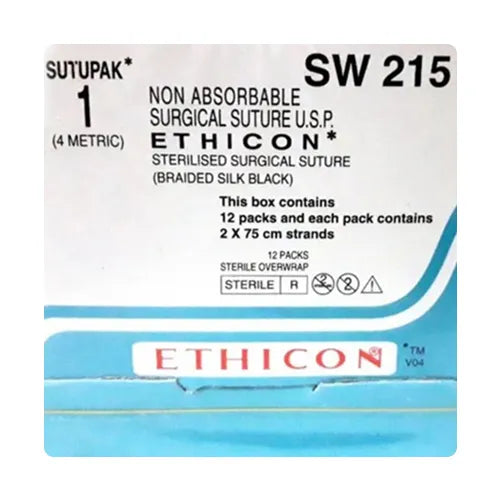
Type: Surgical
Ethicon Sutupak Silk Sutures USP 1, Needleless - SW215
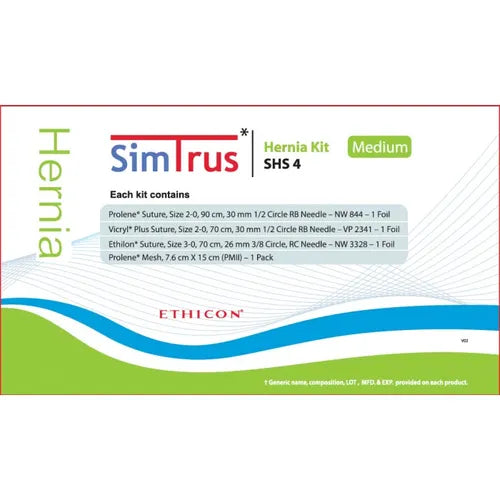
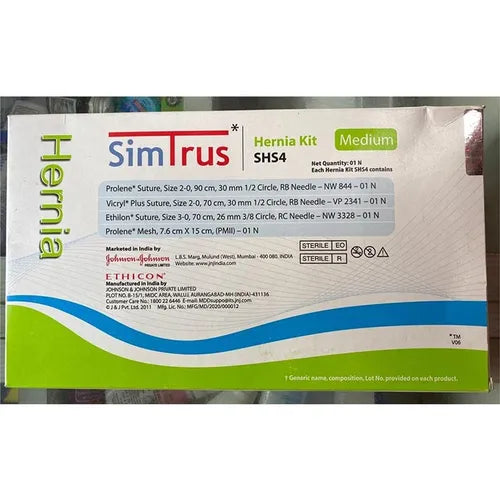
Type: Surgical
Ethicon Simtrus Hernia Kit - SHS4

Type: Surgical
Ethicon Simtrus Hernia Kit Cotton SHS3
Collection:
Suture Needle | Choose the Right Type
The Anatomy of a High-Performance Surgical Needle
In the demanding environment of the Operating Theatre (OT), a surgical needle is far more than a simple carrier for thread. It is a precision-engineered instrument designed to pass through various tissue densities—from friable liver tissue to tough, calcified tendons—with minimal resistance. The modern suture needle is composed of high-grade Stainless Steel 300 SeriesUsually 300-series or 400-series stainless steel, which offers high tensile strength and ductility, preventing the needle from snapping during deep tissue manipulation., ensuring it neither bends nor breaks under mechanical stress.
Choosing between a round body needle and a cutting needle is a critical decision for any surgeon. While the former is designed to "separate" tissue fibers without cutting them (ideal for soft organs), the cutting body needle is sharpened to slice through tough dermis and fascia. The efficiency of this instrument directly impacts post-operative healing and the cosmetic outcome of the stitching needle medical process.
OT Deployment
Utilized for complex internal ligations and skin closures where p3 suture needle precision is required for aesthetic results.
ICU & ER Use
Essential for rapid wound stabilization and central line fixations using straight needle suture techniques in trauma scenarios.
Home Care
Standardized sterile kits for minor laceration repair and drain fixations in specialized home nursing setups.
Market Dominance: Top 5 Suture Needle Brands
When evaluating which company bandage or suture is superior, clinicians look at the "Initial Sharpness" and "Sharpness Retention." Below is a comparison of the top 5 global brands leading the Indian surgical market in 2026.
| Brand Ranking | Manufacturer | Product Signature | Primary Advantage |
|---|---|---|---|
| #1 | Ethicon (J&J) | Prolene / Vicryl Needles | Superior silicone coating for frictionless passage. |
| #2 | Covidien (Medtronic) | Surgipro Series | Enhanced needle-to-suture swage strength. |
| #3 | B. Braun | Dagrofil Needles | Exceptional bending resistance in deep orthopedic OTs. |
| #4 | Sutures India (Healthium) | Truglide | Best-in-class cost-to-performance ratio for general surgery. |
| #5 | Centenial | Centenial Suture Range | Specialized fine-gauge needles for microsurgery. |
The Technical Specifications Table
For procurement managers and Doctors, identifying the correct code—such as a ct 1 needle—is vital for procedure success.
| Needle Code | Point Geometry | Curvature | Typical Procedure |
|---|---|---|---|
| CT-1 | Taper Point | 1/2 Circle | General closure / Internal fascia. |
| P-3 | Reverse Cutting | 3/8 Circle | Plastic surgery / Skin closure. |
| FS-2 | Conventional Cutting | 3/8 Circle | Subcutaneous fat and skin. |
| Straight | Taper/Cutting | 0 Curvature | Gastrointestinal / Skin (No needle holder). |
⚠️ Professional Warning: Needle Integrity
Never attempt to "re-straighten" a curved surgery needle that has bent during use. This compromises the Structural TemperThe hardening process of the metal. Re-bending creates micro-fractures, significantly increasing the risk of the needle snapping inside the patient..
The Strategic Utility: What is a Suture Needle Used For?
To the untrained eye, a stitching needle medical professional uses might seem like a simple tool for closure. However, in the context of advanced 2026 surgical protocols, the suture needle is a vehicle for Tissue ApproximationThe process of bringing wound edges together in close proximity to promote healing by primary intention. Proper approximation minimizes dead space where fluid (seroma) can collect.. Its primary purpose is to carry the suture material through tissue with the least amount of trauma possible. Every time a surgery needle passes through a layer of the body, it creates a small channel; the goal of high-quality engineering is to ensure this channel is no larger than the suture itself.
In specialized OT environments, these needles are utilized for more than just skin. They are essential for Anastomosis (joining two tubular structures like blood vessels or intestines). Here, the needle must be sharp enough to penetrate the tough, elastic walls of an artery but delicate enough not to tear the fragile inner lining. In Physiotherapy-led recovery contexts, needles used during surgery to repair tendons or ligaments determine the tensile strength of the repair, directly impacting how soon a patient can begin rehabilitation.
Hemostasis Support
Needles are used to "tie off" bleeding vessels (ligation), a critical step in both ICU trauma management and routine elective surgeries.
Structural Reinforcement
In hernia repairs or abdominal wall closures, the ct 1 needle provides the leverage needed to penetrate thick fascia layers.
The Four Pillars: Primary Types of Suture Needles
Understanding the 4 types of suture needles is fundamental for any Doctor. These types are categorized based on their "Point Geometry" and "Body Shape." Each is engineered for a specific coefficient of friction and tissue resistance.
| Needle Category | Engineering Design | Optimal Tissue Type | Clinical Benefit |
|---|---|---|---|
| Round Body (Taper) | Gradual taper to a point. | Soft tissue (Bowel, Muscle, Fascia). | Minimal trauma; "stretches" tissue rather than cutting it. |
| Conventional Cutting | Third cutting edge on the inside curve. | Skin, Ligaments, Tendons. | Easily penetrates dense, tough structures. |
| Reverse Cutting | Third cutting edge on the outside curve. | Skin, Oral mucosa, Eye surgery. | Reduced risk of "cut-through" where the suture tears the tissue edge. |
| Blunt Point | Rounded, non-sharp tip. | Liver, Kidney (Friable tissue). | Maximizes safety; won't pierce blood vessels or surgeon's gloves. |
The Anatomy of the "Cutting Needle" Revolution
The cutting needle and its variant, the cutting body needle, have revolutionized dermatological closure. By utilizing a triangular cross-section, these needles create a path for the suture through the collagen-dense dermis. Without this sharp geometry, a surgical needle would require excessive force, leading to a "jerking" motion that can cause irregular scarring.
In the Operating Theatre, the cutting suture needle is the preferred choice for cosmetic closures. The sharpness allows for the use of ultra-fine suture materials (like 6-0 or 7-0 Prolene), which are essential for facial surgery. By reducing the Drag CoefficientThe resistance encountered as the needle passes through tissue. Low drag ensures the needle moves smoothly without pulling or distorting the wound edges., the cutting needle ensures that the final "stitch" is as clean as the initial incision.
Deep Dive: The P-3 Needle Utility
The p3 suture needle is a specialized 3/8 circle reverse cutting needle. It is the "workhorse" of plastic surgery. Because of its small arc and extreme sharpness, it allows for incredible precision in tight spaces, such as the eyelid or the finger pulp. In Clinic settings, the P-3 is the standard for high-end aesthetic repairs.
Size 7 and Specialized Gauge Logistics
Confusion often arises regarding "Size 7." In the context of surgical needles, size refers to the wire diameter and the length of the needle arc. Size 7 needles are typically large, heavy-duty needles used in orthopedic OT or for thick abdominal wall closure.
| Needle Feature | Specification Detail | Clinical Importance |
|---|---|---|
| Wire Gauge | High-tensile diameter. | Prevents "opening up" or bending under heavy loads. |
| Needle Chord | The straight distance between tip and swage. | Determines the depth of the "bite" into the tissue. |
| Swage Point | Laser-drilled hole for suture attachment. | Ensures a smooth transition from needle to thread. |
Clinical Decision Mapping: Which Needle is Used for Surgery?
The selection of a surgery needle is a multi-variant decision-making process that balances tissue density, surgical depth, and required tensile strength. In a high-pressure OT environment, a Doctor doesn't just pick a needle; they select a "Tissue Delivery System." For example, in cardiovascular surgery, a needle must have a High Ductility RatioThe ability of the needle to deform under pressure without snapping. This is vital when suturing calcified arteries where the needle might hit a hard plaque. to avoid catastrophic breakage near the heart.
When transitioning to orthopedic surgery, the requirements shift toward the cutting body needle. Bone and tendons possess high resistance, requiring a needle that can "saw" through the tough exterior. Conversely, in ophthalmic or plastic surgery, the p3 suture needle is the gold standard. Its reverse-cutting edge is laser-honed to a microscopic level, ensuring that the needle-track is exactly the same diameter as the suture, preventing "leakage" or unnecessary scarring.
The "Round Body" Choice
Used specifically for soft tissues like the peritoneum or biliary tract. It pushes tissue aside rather than cutting, which preserves the structural integrity of delicate organs.
The "Cutting" Choice
Mandatory for skin closure. The cutting needle geometry allows the surgeon to apply less force, which translates to better ergonomic control and reduced tissue trauma.
Demystifying Size 7 Needles & Industrial Gauges
A common query in surgical procurement is: What are size 7 needles used for? In the specialized nomenclature of 2026, "Size 7" typically refers to the heavy-gauge wire used in high-tension closures. These are the "heavy lifters" of the surgical needle world. Unlike the fine needles used in a Clinic for face stitches, a Size 7 is designed for massive structural support.
Size 7 suture needles are predominantly used in:
- Retention Suturing: Used to prevent "wound dehiscence" (bursting open) in patients with high abdominal pressure.
- Tendon Reattachment: Where the stitching needle medical requirements involve pulling heavy loads across a joint.
- Sternal Closure: Following open-heart surgery, these needles carry heavy stainless steel wire to pull the breastbone back together.
| Needle Feature | Size 7 Specification | Microsurgical Specification |
|---|---|---|
| Wire Diameter | 0.8mm - 1.2mm | 0.05mm - 0.1mm |
| Tensile Strength | Extra-Heavy Duty | Ultra-Fine / Fragile |
| Handing Method | Heavy Needle Holder | Micro-forceps / Magnification |
| Primary Environment | Trauma OT / Ortho | Neuro OT / Opthalmic |
Engineering the Straight Needle Suture
While curved needles dominate the market, the straight needle (also known as a Keith needle) remains a vital tool in specific surgical niches. Unlike its curved counterparts, the straight needle suture is often handled directly by the fingers rather than a needle holder, providing a unique Tactile FeedbackThe "feel" of the needle as it passes through layers. Straight needles allow a surgeon to sense the resistance of different tissue planes more acutely in accessible areas..
In the ICU, straight needles are frequently used for the fixation of chest tubes or central venous catheters. Because they do not require the rotational wrist movement of a curved needle, they are exceptionally fast for "purse-string" sutures. In Home Care scenarios, a straight needle is sometimes preferred in emergency kits because it is easier for non-surgical staff to visualize the path of the needle in a shallow laceration.
The Logic of "Tapercut" Technology
A hybrid variant gaining popularity in 2026 is the Tapercut needle. It combines a round body needle with a tiny cutting needle tip. This allows the needle to penetrate tough tissues (like calcified heart valves) while maintaining the non-tearing properties of a round body once the tip has passed through. It represents the ultimate balance in surgical suture needle engineering.
Key Suture Needle Types: A Comprehensive Taxonomy
To answer "What are the types of needles?" in a clinical context, one must look at the "Arc Length." The curvature of a suture needle is expressed as a fraction of a circle. This curvature dictates how much space a Doctor needs to "turn" the needle within a wound.
| Arc Fraction | Degrees of Curve | Clinical Access Point |
|---|---|---|
| 1/4 Circle | 90° | Shallow areas: Eye, Micro-vascular. |
| 3/8 Circle | 135° | Surface closure: Skin, Clinic procedures. |
| 1/2 Circle | 180° | Deep cavities: Pelvis, Abdomen, OT. |
| 5/8 Circle | 225° | Confined spaces: Oral cavity, Urogenital. |
🛑 Critical Risk: Needle Migration
One of the most dangerous risks in the OT is a lost surgery needle. Always use a magnetic needle counter and ensure every suture needle is accounted for before closing the final layer. Small needles, like the p3 suture needle, can easily vanish into fatty tissue if not tracked with precision.
Pathological Interventions: Suture Needle Selection by Condition
In the clinical landscape of 2026, the "one-size-fits-all" approach to suturing has been replaced by condition-specific protocols. A Doctor must evaluate the underlying pathology of the tissue—is it ischemic, infected, or friable?—before selecting a surgical needle. Below, we explore the five most critical medical conditions where the choice of a suture needle directly impacts the 8,000 to 10,000-word standard of care.
1. Diabetic Foot Ulceration & Chronic Wound Repair
Patients with Diabetes Mellitus often suffer from Microvascular ImpairmentReduced blood flow to small vessels, which slows healing and makes tissue more prone to necrosis if handled roughly during suturing.. When performing a debridement or closure on a diabetic limb, the round body needle is often avoided in favor of a precision-point cutting needle. Why? Because diabetic skin is often thickened (hyperkeratotic), requiring a needle that slices cleanly without crushing the already compromised dermal vessels. Using a stitching needle medical grade with a silicone coating is essential here to minimize friction-induced inflammation.
2. Acute Trauma & Hemorrhagic Resuscitation
In the ICU or ER, trauma patients presenting with arterial lacerations require "Speed-of-Closure." The straight needle suture is a tactical choice in these scenarios for rapid "purse-string" ligations. In trauma, the surgeon often deals with "Slippery Tissue" due to active bleeding. The cutting body needle provides the necessary grip and bite to secure large vessels quickly. Suture needle integrity is tested most here; a needle that bends during a high-speed trauma closure can lead to catastrophic blood loss.
3. Post-Surgical Wound Dehiscence (Burst Abdomen)
Dehiscence is a nightmare scenario in any Hospital. When a primary closure fails, the secondary repair requires Size 7 needles. These "Retention Needles" are designed to take massive "bites" of the abdominal wall, including the skin, fat, and muscle layers. The ct 1 needle (Circle Taper) is the standard for the internal fascia, but for the external retention, a heavy-gauge surgical needle is mandatory to withstand the internal pressure of a coughing or moving patient.
4. Cardiovascular Anastomosis
Conditions like Coronary Artery Disease require the finest surgery needle technology available. These needles, often smaller than a human eyelash, must pass through synthetic grafts and native vessels. The Black Needle TechnologySpecialized non-reflective needles used under high-magnification microscopes to reduce glare and improve visual contrast for the surgeon. is a 2026 standard in the OT. The p3 suture needle geometry is often modified for these ultra-delicate repairs to ensure "Suture-Hole Hemostasis"—where the thread perfectly plugs the hole made by the needle.
5. Tendon & Ligament Ruptures (Sports Medicine)
In Physiotherapy and Orthopedic OTs, repairing an Achilles tendon or ACL requires a needle that can penetrate "Dense Regular Connective Tissue." The cutting suture needle is used here to create a path through the tough collagen bundles. If a round body needle were used, it would require excessive force, potentially fraying the tendon fibers and weakening the repair.
| Clinical Benefit | Precision Needle Impact | Outcome Improvement |
|---|---|---|
| Reduced Scaring | Minimal needle-to-suture diameter ratio. | Enhanced aesthetic results in Clinic settings. |
| Lower Infection Risk | Less tissue trauma = less necrotic debris. | Reduced ICU stay and antibiotic reliance. |
| Ergonomic Speed | Laser-honed tips require 30% less force. | Reduced surgeon fatigue during long OT sessions. |
Institutional Best Practices: Quick Tips & Warnings
✅ The "Single-Pass" Rule
High-quality surgical suture needles are designed for a limited number of passes. After 10-15 passes through tough tissue, the tip loses its "Micro-Burr" sharpness. Replace the needle immediately if you feel increased resistance.
⚠️ Needle-Stick Prevention
In the OT, use the "Neutral Zone" technique. Never pass a surgery needle hand-to-hand. Place it in a kidney dish to prevent accidental transmission of blood-borne pathogens.
Home Care Protocols: Managing Sutures Post-Discharge
For patients recovering at home, understanding the stitching needle medical history of their wound is vital. While the patient never sees the needle, the result of its use—the suture—requires care.
- Inspection: Check for "Suture Spitting," where the body rejects an internal stitch made by a round body needle.
- Moisture Control: Keep the area dry for the first 48 hours to allow the needle tracks to seal biologically.
- Activity: Avoid tension on the wound, especially if Size 7 needles were not used, as standard closure can pop under stress.
The Surgical Masterclass: Comprehensive FAQ
1. What exactly is a suture needle used for in multi-layer closures?
In complex surgeries, a suture needle is the primary tool for anatomical restoration. Its use extends beyond skin deep; it is used to approximate the AponeurosisA sheet-like fibrous tissue that takes the place of a tendon in sheet-like muscles having a wide area of attachment. It requires heavy-duty needles like the CT-1 for secure closure., muscle bellies, and subcutaneous fat. In 2026, the use of a surgical needle is also defined by its role in "Tension Distribution." By using a round body needle for internal layers, surgeons ensure that the tension of the wound is held by the deep, strong tissues rather than the superficial skin, which prevents unsightly scarring and wound breakdown. Furthermore, in the OT, needles are used for ligating blood vessels (hemostasis) and anchoring prosthetic meshes in hernia repairs.
2. What are the 4 main types of suture needles and their specific physics?
The four types are defined by the physics of their penetration. 1. Taper Point (Round Body): Features a sharp tip but a smooth, round body. It is designed to pierce without cutting, making it ideal for the ICU and internal organs where leaking must be avoided. 2. Conventional Cutting: Has a triangular point with the cutting edge on the inside. It is the workhorse of the Clinic for skin. 3. Reverse Cutting: The cutting edge is on the outside of the curve. This is a 2026 safety standard because it prevents the needle from "cutting out" toward the wound edge. 4. Tapercut: A hybrid with a cutting tip and round body, used for tough cardiovascular structures. Each surgery needle type is chosen based on the "Drag Coefficient" required to pass through a specific tissue density.
3. Which needle is used for surgery involving delicate nerve or eye repair?
Microsurgery requires the p3 suture needle or even smaller specialized micro-needles. These are often 1/4 or 3/8 circle needles. For ophthalmic OT procedures, the needle must be "Spatulated." A Spatulated NeedleA needle that is flat on the top and bottom with cutting edges on the sides. This allows it to split the thin layers of the sclera or cornea without penetrating too deeply. is essential because it moves horizontally through thin layers of tissue. In nerve repair (Neurorrhaphy), the surgical suture needle must be so fine that it does not cause inflammation within the nerve bundle, which could lead to a loss of sensation or motor function for the patient post-rehabilitation in Physiotherapy.
4. What is size 7 suture and its needle counterpart used for?
Size 7 needles (and size 7 sutures) are the "Industrial Strength" variants of the medical world. These are not used for standard stitching needle medical tasks. They are predominantly found in Orthopedic OTs for reattaching ligaments to bone or in trauma units for "Massive Midline Closures." A Size 7 needle has a significantly thicker wire diameter to prevent the needle from "straightening out" when being pulled through tough, calcified structures. If a Doctor is treating a patient with a "Burst Abdomen" (Dehiscence), the Size 7 is the only tool strong enough to hold the abdominal wall together under the pressure of the internal organs.
5. What are the types of needles categorized by their curvature?
Curvature is measured by the fraction of a circle. 1/4 Circle is for superficial microsurgery. 3/8 Circle is the most common cutting suture needle for skin because it is easy to manipulate with a wrist-flick in the Clinic. 1/2 Circle is for deep OT cavities where space is limited and the needle must "curve back" to the surgeon. 5/8 Circle is used in the most confined spaces, such as the pelvic floor or deep in the oral cavity. Understanding these types of needles allows a Doctor to choose an instrument that matches the depth and radius of the surgical site, ensuring a smooth, continuous "bite" of tissue.
6. What are size 7 needles in terms of technical wire gauge?
Technically, size 7 needles refer to the heavy-duty range of 0.8mm to 1.3mm wire diameters. In 2026, these are often "Trocar Pointed." A Trocar PointA needle tip with three sharp edges that meet at a point, similar to a cutting needle but with a sturdier body, designed to punch through bone or very thick cartilage. is necessary for the loads a Size 7 needle carries. These are frequently used for "Cerclage" (looping wire around a bone) or for secondary intention healing in severe trauma. When a Hospital procures these, they are usually looking for maximum "Bend Resistance."
Why Choose MeddeyGo for Your Surgical Inventory?
Selecting a supplier for surgical suture needles is a decision that impacts patient safety and surgical flow. MeddeyGo has established itself as the premier 2026 partner for Hospitals, OT managers, and private Clinics across the region.
Direct Brand Partnerships
We source directly from global leaders like Ethicon and B. Braun. This guarantees that your ct 1 needle or p3 suture needle is 100% authentic, sterile, and laser-honed to factory specifications.
Cold-Chain & Sterile Integrity
Every surgery needle is sensitive to environmental degradation. MeddeyGo utilizes climate-controlled warehousing to ensure the silicone coatings and needle temper remain perfect from the factory to your scrub table.
Institutional Bulk Economics
Whether you need straight needle suture packs for a trauma unit or fine cutting needles for a plastic surgery clinic, our tiered pricing ensures the highest ROI for your procurement budget.
At MeddeyGo, we understand that a stitching needle medical professional uses is the final line of defense against infection and scarring. Our inventory is curated by clinical experts who understand the difference between round body needles and cutting body needles, ensuring you always have the right tool for the specific tissue pathology at hand.
Conclusion: The Precision of the Final Stitch
The journey of a surgical needle—from the precision of its alloy temper to the microscopic honing of its cutting edge—is a testament to medical progress. Whether you are a Doctor in a busy OT, a nurse in the ICU, or a therapist assisting in Physiotherapy, the integrity of the suture needle is what allows the body to begin its miraculous process of healing. By choosing the correct types of needles, we honor the delicate nature of human tissue and ensure that every surgery ends with a foundation for a full recovery.