
Filter
5 products
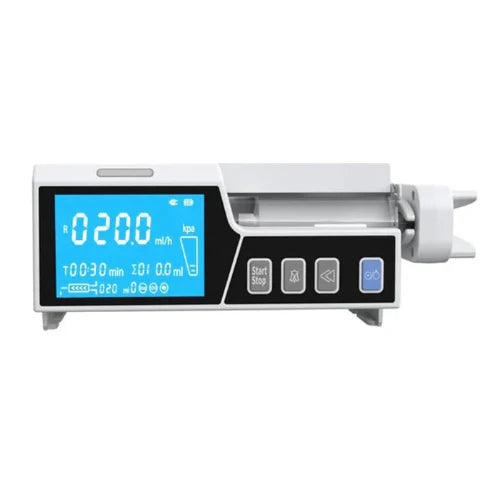
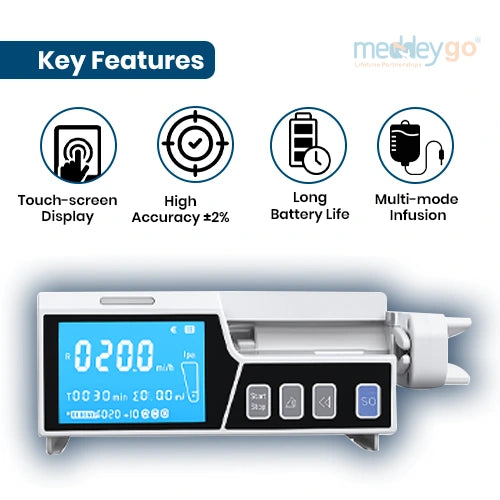
Type: syringe pump
Syringe Pump SP08
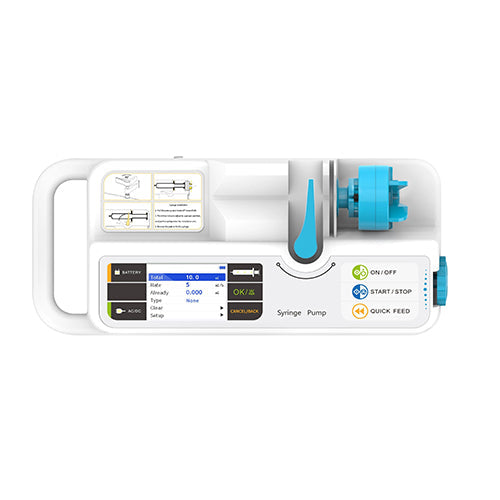

Type: Syringe Pump
Syringe Pump for Hospital Use


Type: General Accessories
Infusion Pump Flight 750
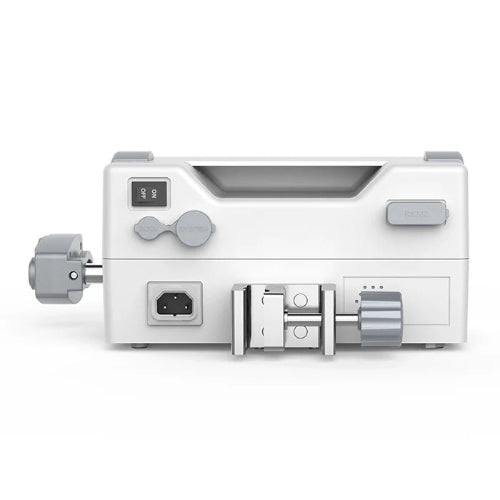
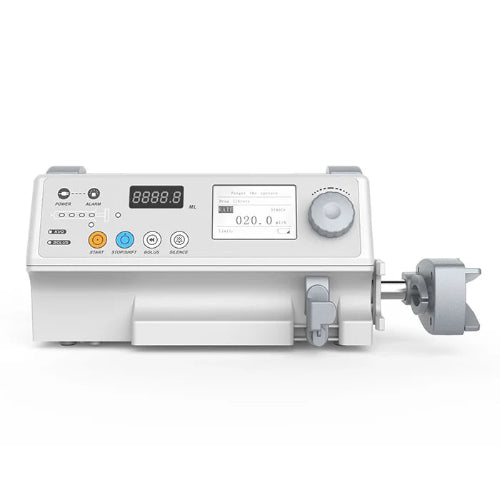
Type: syringe pump
Byond Syringe Pump
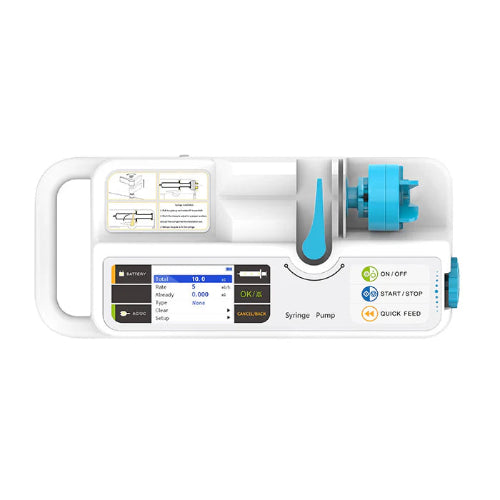
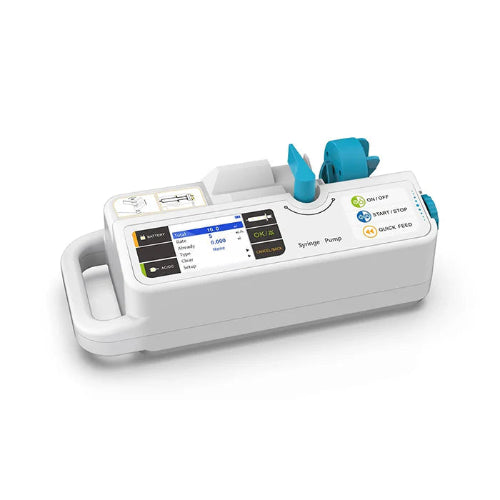
Type: syringe pump
Contec Syringe Pump
Collection:
Syringe Infusion Pumps for Critical Care
In high-stakes clinical environments like the ICU, NICU, and Operation Theatre, precision isn't just a requirement—it’s a life-saving necessity. A syringe infusion pump is a specialized medical device engineered for the controlled delivery of fluids, high-potency medications, or nutrients. At Meddeygo.com, we provide healthcare professionals with advanced infusion machines that ensure micro-level accuracy for critical patient care.
What is a Syringe Infusion Pump?
A syringe infusion pump (also known as a syringe driver) is a small infusion device used to gradually administer small amounts of fluid (with or without medication) to a patient or for use in chemical and biomedical research. Unlike a standard iv infusion pump that uses a soft bag, this device utilizes a physical syringe to maintain a hyper-accurate flow rate.
How Does a Syringe Pump Work?
The mechanism is driven by a precision stepping motor paired with a screw rod. Here is the clinical breakdown:
- Motor-Driven Piston: The motor accurately pushes or pulls the syringe plunger to regulate the fluid at a programmed microliter or milliliter rate.
- Computerized Control: The infusion device allows doctors and nurses to program the specific diameter of the syringe and the desired flow rate to eliminate human error.
- Sensor Integration: Built-in infusion pump parts include pressure sensors that detect occlusions (blockages) in the line instantly.
Syringe Pump vs. Infusion Pump — The Key Differences
Many clinicians ask: What is the difference between a syringe pump and a standard infusion pump? While both are infusion machines, their application differs based on volume and precision:
| Feature | Syringe Infusion Pump | Standard IV Infusion Pump |
|---|---|---|
| Volume Type | Small volumes (1ml to 60ml) | Large volumes (500ml to 1000ml+) |
| Precision | Hyper-precise (Micro-infusion) | Standard volumetric precision |
| Primary Use | NICU, Anesthesia, Chemotherapy | Hydration, Saline, Antibiotics |
Types of Syringe Infusion Pumps
Choosing the right infusion machine depends on the complexity of the treatment and the patient's environment. In India, healthcare facilities utilize several variations of syringe pumps to meet specific clinical demands:
The clinical standard for straightforward therapy. These deliver a single medication at a time and are the most common syringe infusion pump found in general wards.
Equipped with two syringes that can work simultaneously or in alternating patterns. Essential for complex protocols where two drugs must be synchronized.
Used for delivering specific volumes at high pressure, common in oncology and diagnostic imaging (contrast delivery).
Designed for home care or ambulatory use. These allow patients to maintain continuous iv infusion pump therapy while remaining mobile.
Primary Clinical Uses of Syringe Pumps
The versatility of a syringe infusion pump makes it an essential asset across multiple departments. At Meddeygo.com, we see these devices primarily utilized in the following areas:
- 1. Critical Care (ICU & OT): For administering precise dosages of vasopressors, anesthesia, and sedation where even a 0.1ml deviation can impact patient stability.
- 2. Oncology & Chemotherapy: Delivering highly toxic chemotherapeutic agents at a strictly controlled rate to ensure efficacy while minimizing systemic toxicity.
- 3. Neonatal & Pediatric Care: Infants require "Micro-Infusions." A syringe pump is the only safe way to deliver tiny volumes (e.g., 0.5ml/hr) to premature babies.
- 4. Pain Management (PCA): Patient-Controlled Analgesia allows patients to self-administer pain relief within safe, pre-programmed limits set by the physician.
Specialized Infusion — Epidural & Research Use
Beyond general IV use, the epidural infusion pump is a specialized infusion device used for continuous regional anesthesia. Furthermore, in research laboratories, these pumps are vital for "Electrospinning" or microfluidic experiments where constant, low-velocity flow is mandatory for data accuracy.
"In modern high-dependency units, syringe pumps are often paired with high-quality patient monitors to ensure that the hemodynamic response to the infusion is tracked in real-time."
Technical Anatomy — Key Infusion Pump Parts
To maintain the precision required for neonatal and ICU care, every syringe infusion pump consists of high-grade mechanical and electronic components. Understanding these infusion pump parts is essential for troubleshooting and routine maintenance:
- The Drive Mechanism: A high-precision stepping motor and lead screw that converts rotational motion into linear motion to push the syringe plunger.
- Syringe Clamp & Sizer: Adjustable arms that secure the syringe in place. Modern pumps automatically detect the syringe size (10ml, 20ml, 50ml) via these sensors.
- Control Panel & Display: The interface where nurses program the flow rate (ml/hr), bolus dose, and volume limits.
- Internal Battery: A lithium-ion backup that ensures the infusion machine continues to operate during patient transport or power failure.
Market Analysis — Syringe Pump Price in India
The infusion machine price in India is influenced by brand reputation, accuracy ratings, and integrated safety alarms. At Meddeygo.com, we offer competitive pricing for both individual clinics and bulk hospital procurement.
| Device Category | Features | Estimated Price (INR) |
|---|---|---|
| Standard Single-Channel | Basic flow control, battery backup. | ₹7,500 – ₹14,000 |
| Advanced ICU Syringe Pump | Drug library, high accuracy, stackable. | ₹16,000 – ₹25,000 |
| Dual-Channel / Multi-Pump | Simultaneous drug delivery. | ₹28,000 – ₹45,000+ |
Critical Safety Features & Alarm Systems
Safety is the most important factor in syringe pump prices. A professional-grade infusion device must include the following alarms to prevent adverse drug events:
- Occlusion Alarm (Blockage)
- Near Empty / Syringe Empty
- Battery Low Warning
- Disengagement Alarm
- Internal Malfunction Error
- Air-in-Line Detection
Step-by-Step Clinical Setup Protocol
For a syringe infusion pump to deliver medication with 100% accuracy, the physical setup must be flawless. Healthcare professionals should follow this standardized protocol:
- Syringe Preparation: Fill the syringe with the prescribed medication, ensuring no air bubbles are present. Connect the infusion pump set (extension tubing) and prime it manually.
- Loading the Device: Open the pump's syringe clamp and place the syringe into the slot. Ensure the plunger flange is securely caught by the pump's driving mechanism.
- Programming: Select the correct syringe brand and size on the display. Enter the flow rate (e.g., 5.0 ml/hr) and the Volume To Be Delivered (VTBD).
- Confirmation: Double-check the settings against the physician's order before pressing 'Start'.
Maintenance, Cleaning, and Calibration
An infusion device is a precision instrument that requires regular care to prevent mechanical drift. To ensure the longevity of your infusion machine, adhere to these maintenance standards:
- • Daily Cleaning: Wipe the exterior with a damp cloth and mild disinfectant. Avoid getting liquids into the infusion pump parts like the motor housing or electrical ports.
- • Monthly Calibration: Use a calibration kit to verify that the programmed flow rate matches the actual volume dispensed.
- • Battery Health: Discharge and recharge the battery fully once a month to prevent "memory effect" and ensure maximum backup time during emergencies.
Sourcing Syringe Infusion Pumps Online in India
Modern hospitals and clinics are shifting toward sourcing Syringe Infusion Pumps Online in India to ensure transparency in syringe pump prices and access to the latest technology. At Meddeygo.com, we bridge the gap between global manufacturers and local clinics, offering:
Devices tested for clinical-grade performance.
No hidden costs; competitive infusion pump price across India.
Clinical Troubleshooting — Solving Common Pump Errors
In a fast-paced hospital environment, understanding infusion machine alarms is critical for patient safety. Below are the most common technical issues and their clinical resolutions:
Cause: Blockage in the infusion pump set, a kinked IV line, or a clotted cannula.
Action: Check the entire length of the tubing for kinks. Ensure the IV site is patent (not swollen or blocked).
Cause: The syringe is not seated correctly in the clamp or is an unsupported brand.
Action: Re-seat the syringe flange and ensure the clamp is making full contact. Verify the brand in the pump's settings.
Cause: Device has been unplugged for an extended period.
Action: Connect to an AC power source immediately. Ensure the charging indicator light is active.
Integrated Observation — Pumps & Patient Monitors
In high-dependency units, a syringe infusion pump rarely works in isolation. For comprehensive patient safety, these pumps often function alongside a Contec patient monitor or similar multi-para systems.
When administering potent medications (like Inotropes or Anesthesia), the patient monitor provides real-time feedback on heart rate and blood pressure, allowing the clinician to titrate the infusion device flow rate based on the patient's immediate hemodynamic response.
Buyer’s Checklist — Selecting the Right Device
When reviewing syringe pump prices and specifications, prioritize these technical benchmarks:
Why Buy Syringe Infusion Pumps from Meddeygo.com?
Equipping a clinic or hospital requires more than just finding a low syringe pump price; it requires a partner who understands clinical stakes. At Meddeygo.com, we prioritize:
Every infusion machine is pre-tested for flow accuracy and alarm sensitivity.
Fast, secure shipping to Tier 1, 2, and 3 cities across India.
Our team assists you in selecting the right infusion pump parts and accessories.
Frequently Asked Questions (FAQ)
A: Prices typically range from ₹12,000 to ₹35,000. Basic single-channel models start at approximately ₹12,500, while dual-channel or high-precision ICU pumps can exceed ₹30,000 depending on features like drug libraries and touchscreens.
A: Most modern syringe infusion pumps are "Open System," meaning they support all major Indian and international syringe brands (like Dispovan, BD, or Romsons). However, you must always select the correct brand on the pump's menu to ensure the diameter matches for accurate delivery.
A: For clinical settings, we recommend a calibration check every 6 to 12 months or whenever the device is dropped. This ensures the flow rate remains within the standard ±2% accuracy range.
A: Yes. Portable, battery-operated infusion devices are excellent for home-based palliative care or chronic pain management, provided the caregiver has received professional training on setup and alarm management.
A: KVO stands for "Keep Vein Open." Once the main infusion is complete, the pump automatically drops to a very low rate (e.g., 0.5 ml/hr) to prevent the patient's blood from clotting in the IV cannula.
A: Most professional syringe pumps offer a battery backup of 4 to 8 hours, depending on the flow rate.
Ready to Upgrade Your Facility?
Explore our curated selection of high-precision syringe pumps and infusion machines designed for Indian healthcare standards.