
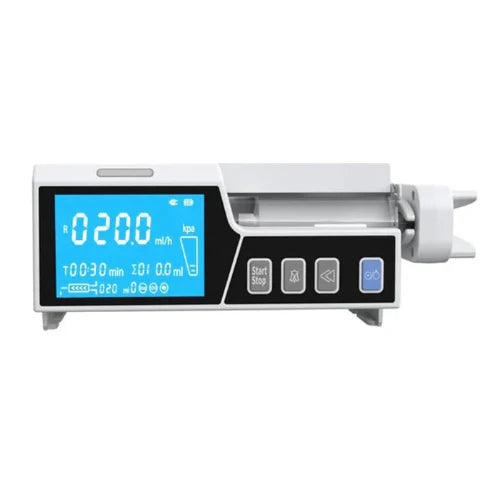
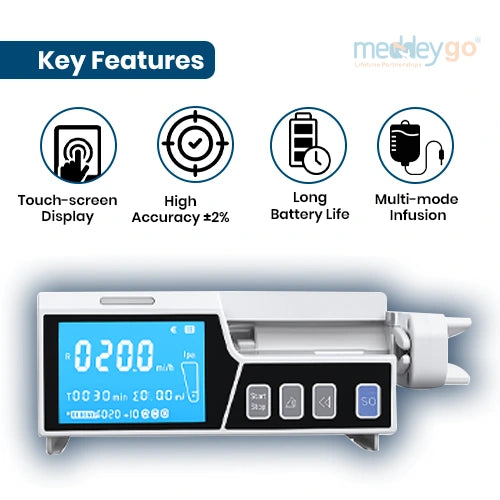
Type: syringe pump
Syringe Pump SP08 with 3.8-Inch Display for Hospital Infusion
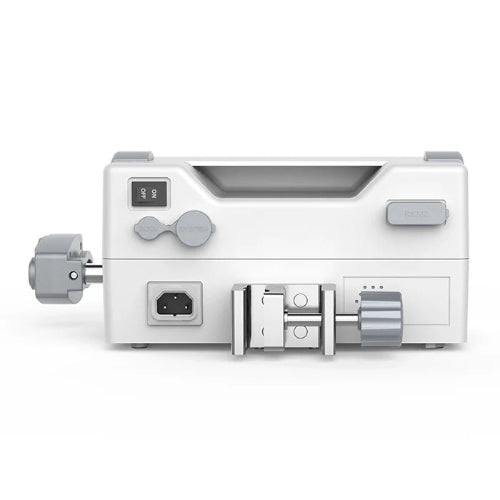
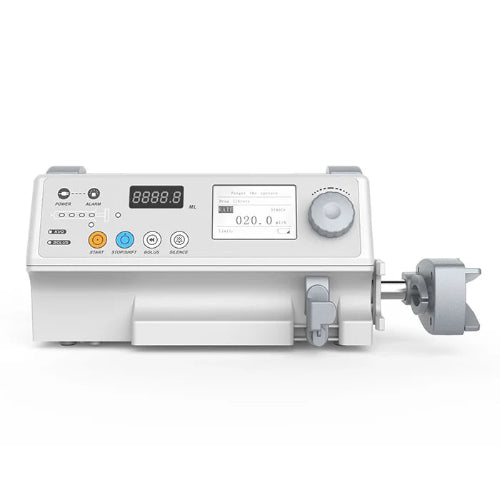
Type: syringe pump
Byond Syringe Pump
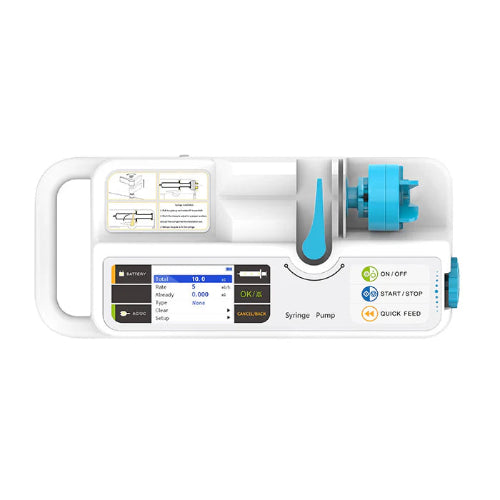
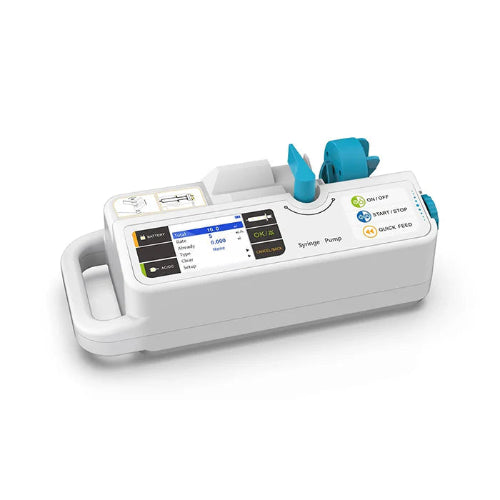
Type: syringe pump
Contec Syringe Pump
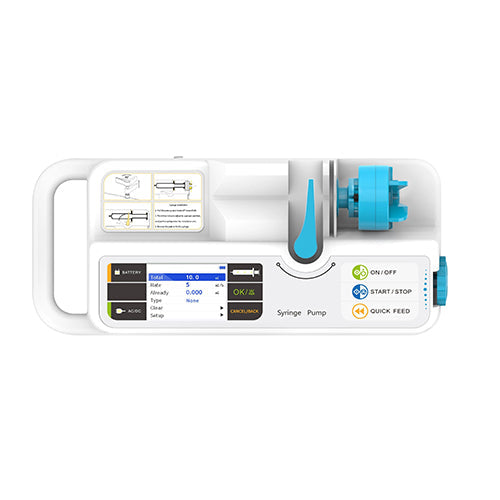

Type: Syringe Pump
Syringe Pump for Hospital Use
Collection:
How to Choose the Right Syringe Pump
If you've ever been in a hospital room or watched a medical drama on TV, you have seen them: the small, boxy machines mounted on a pole, with a syringe locked in place. They beep, they whir, and they play a critical role in modern medicine. But what exactly is that machine, and what is it doing? That device is a syringe pump, and it's a master of precision.
You might wonder, "Can't a nurse just push the plunger slowly?" In practice, delivering medicine at a perfectly steady, slow rate---sometimes just a few drops per hour---is nearly impossible for a human to do accurately. That is why engineers developed the syringe pump, a medical device for controlled fluid administration that acts like a robotic hand, delivering fluids with incredible precision.
Often, the most intimidating thing about this equipment is simply not knowing its purpose. This guide demystifies the device, turning the mysterious beeping box into an understandable, and even fascinating, tool. We will show you why this machine is often safer and more effective than a human hand for this critical job.
Why Can't a Nurse Just Push the Plunger? The Need for Superhuman Precision
It's a fair question: If a nurse can give a shot, why can't they just push the medicine in slowly? The answer comes down to a level of precision and endurance that is physically impossible for a human to maintain. Imagine trying to make a faucet release one single drop of water every 30 seconds, perfectly, for an entire day. You might get it right for a few minutes, but your hand would eventually cramp, your mind would wander, and the timing would drift. For some medications, this kind of superhuman consistency isn't just a preference---it's a matter of safety.
Many of today's most effective drugs, like those used for chemotherapy or to manage critical heart conditions, are incredibly powerful. Delivering them too quickly is like trying to water a delicate orchid with a firehose; the sheer force can overwhelm the body, leading to dangerous side effects or complications. These medicines need to be introduced into the bloodstream at an extremely slow and steady pace, allowing the body to absorb them safely and effectively. This is a core part of preventing medication administration errors with potent therapies.
Furthermore, a nurse's attention is constantly divided. They are monitoring vital signs, responding to other patients, and managing a dozen critical tasks at once. They can't dedicate hours to sitting by a bedside, pushing a plunger a millimeter at a time without distraction. The advantages of automated drug delivery become clear here. A syringe pump has one job and one job only: to deliver the exact right amount of medicine at the exact right speed, every single second, for as long as it takes.
Ultimately, a syringe pump isn't a replacement for a nurse; it's a specialized tool that allows them to provide safer care. It takes on the robotic, repetitive task of perfect delivery, freeing up the medical team to focus on the complex, human side of patient care. The pump acts as a tireless, precise guardian, ensuring that intravenous therapy is administered with a consistency that the human hand simply cannot promise.
How Does a Syringe Pump Work? The Simple 'Robot Hand' Inside the Box
So what's the secret inside the box that allows for such incredible precision? You might imagine a complex web of gears and sensors, but the core principle is surprisingly simple and elegant. Think of the pump as a dedicated robotic hand whose only job is to push the syringe's plunger forward with unwavering steadiness. It accomplishes this task with a brilliantly straightforward mechanism.
Inside the pump, a small, quiet electric motor is connected to a long, threaded rod, much like a common screw. A component called a "pusher block" is designed to do two things: securely grip the flat end of the syringe's plunger and rest on the threads of this rod. When a nurse starts the infusion, the motor begins to turn the screw very slowly.
This is where the precision comes from. Because the pusher block is held in a track, it cannot spin around with the screw. Its only option is to travel forward along the threads as the rod turns. Think about unscrewing the lid of a jar: it takes several full rotations to move the lid just an inch. The pump's mechanism uses this same principle, but on a microscopic scale. A tiny turn of the motor translates into an almost invisible forward push, ensuring the fluid delivery is perfectly smooth and constant, not a series of tiny spurts.
This simple motor-and-screw system is the heart of how these precision fluid delivery systems operate. It turns a critical medical need into a reliable mechanical process, removing the potential for human error. But just having a motor isn't enough; it needs clear instructions on exactly how fast to turn. The speed at which the pump pushes the plunger is one of its most important settings, and it's known as the infusion rate.

What Does 'Infusion Rate' Mean? Setting the Speed for Medicine
That motor inside the pump doesn't just turn on its own; it needs a speed setting to tell it how fast to push the plunger. Think of it like setting the cruise control in your car, but for medicine. This precise speed is called the infusion rate, and it's the most important instruction a healthcare professional gives the pump. It dictates the steady, continuous flow of fluid to the patient, ensuring they get the right amount of medicine over a specific period.
On the pump's screen, you'll almost always see this rate displayed in units like mL/hr. This might look technical, but it's a simple recipe that stands for "milliliters per hour." A milliliter (mL) is a very small measure of volume---about 20 drops of water or a fifth of a teaspoon. So, a rate of "5 mL/hr" simply tells the pump, "Deliver five milliliters of this fluid, spread out evenly over the next hour."
The power of a syringe pump lies in its incredible range.
- For powerful heart medications or providing tiny amounts of nutrition to a premature baby, a nurse might set a very slow rate, such as 1 mL/hr. That's like delivering less than a quarter of a teaspoon of liquid over sixty minutes---a feat impossible to do accurately by hand.
- Conversely, a task like quickly delivering hydration fluid might use a faster rate, like 125 mL/hr, which is about half a coffee cup over the same hour.
By carefully selecting this infusion rate, doctors and nurses can customize treatment perfectly to a patient's size and medical needs. This steady, continuous delivery is ideal for many situations, from managing pain to administering chemotherapy. But what happens when a patient needs a quick, extra dose on top of that steady flow? That's where another key feature of modern pumps comes into play.
Syringe Pump vs. Infusion Pump: What's the Real Difference?
While a syringe pump is technically one type of infusion pump, when healthcare professionals talk about them, they're usually referring to two different tools for two very different jobs. Think of it like the difference between a delicate artist's brush and a wide paint roller---both apply paint, but you wouldn't use them for the same task. Both devices deliver fluids at a precise rate, but the key distinction lies in the volume and concentration of the fluid they handle.
The biggest difference comes down to the amount of liquid being delivered. A syringe pump is a specialist in precision, designed to deliver very small, often highly concentrated amounts of fluid from a syringe. It's the go-to device for potent medications where even a tiny variation matters, such as powerful pain relievers or heart medications. In contrast, a large-volume infusion pump (often what's meant by the general term "infusion pump") is built for quantity. It handles the bigger jobs, delivering larger amounts of fluid---like saline for hydration or standard antibiotics---from a large IV bag that hangs on a pole.
This difference in purpose is reflected in how they work. A syringe pump uses a motor to precisely push the plunger of a syringe. A large-volume pump, however, doesn't use a syringe at all. Instead, the flexible IV tubing from the fluid bag is threaded through the pump's casing. Inside, a mechanism with rollers or "fingers" gently squeezes the tube in a rhythmic, wave-like motion, pushing the fluid along at the exact rate set by the nurse.
So, the next time you're in a clinical setting, you can likely tell the difference at a glance. Is a small syringe locked horizontally into the device? That's a syringe pump for a precise, small-volume job. Is a tube from a hanging IV bag running vertically through a larger box? That's a large-volume infusion pump for a bigger task.
-
- Syringe Pump:Best for: Small, potent volumes (e.g., strong pain medication).
- Mechanism: Pushes a syringe plunger.
- Large-Volume Infusion Pump:Best for: Large volumes (e.g., hydration fluids from an IV bag).
- Mechanism: Squeezes the IV tubing.
Regardless of the type, every modern pump is more than just a delivery device; it's also a vigilant safety monitor. But what happens when one of those beeps and flashing lights goes off? That's the pump doing its other critical job: acting as a watchdog.
The "Watchdog" Alarms: Why a Beeping Pump Is a Good Thing
That insistent beeping from a hospital machine can be startling, but when it comes from a syringe pump, it's rarely a sign of trouble. Instead, think of the pump as a vigilant watchdog. It doesn't just deliver medicine; it constantly monitors the process to ensure everything is going exactly as planned. An alarm is simply the pump's way of communicating, "Hey, a nurse should take a look at this," ensuring the patient is always safe. It's a signal that the system is working perfectly, not that it has failed.
- One of the most common reasons a pump will sound an alarm is for a blockage, which the device calls an occlusion. Imagine watering your garden when someone accidentally steps on the hose---the water stops flowing. The same thing can happen with the thin tubing that delivers medicine. The patient might have bent their arm, kinking the line, or there could be a clog. The pump's highly sensitive sensors detect this resistance immediately, stop pushing the fluid to prevent any pressure from building up, and sound an alert for the nurse to fix the problem.
- Another frequent alert is much simpler: the syringe is nearly empty. Just like the low-fuel light in your car, this alarm isn't an emergency. It's a routine heads-up, letting the nursing staff know that it's time to prepare a new syringe of medication. This proactive warning ensures that the delivery of important medicine is never unexpectedly interrupted, providing a seamless transition from one syringe to the next.
Ultimately, these alarms are crucial safety features that turn a simple delivery device into a smart partner in patient care. By immediately flagging potential issues like a blockage or a nearly empty syringe, the pump helps prevent medication errors and ensures the patient receives their treatment safely and effectively. While the beeps might grab your attention, they should also provide reassurance. It's the sound of technology doing its job to protect a patient.
Beyond the Hospital Bed: Surprising Uses for Syringe Pumps
While syringe pumps are lifesavers in hospitals, their incredible precision makes them valuable tools far beyond the patient's bedside. The same ability to deliver a tiny, perfectly controlled stream of fluid is just as critical in a science lab as it is in an intensive care unit. This versatility has made them essential instruments for researchers and engineers who are building the future.
In laboratories, scientists often work on reactions that require adding chemicals with perfect timing and volume. Imagine trying to follow a complex recipe that calls for adding one single drop of a potent ingredient every ten minutes for an entire day. A syringe pump automates this task flawlessly, enabling chemists to create new materials, test potential medicines, and run experiments that would be impossible to perform by hand. This ensures their results are consistent and reliable every single time.
This need for micro-dosing also appears in high-tech manufacturing. Some advanced 3D printers, for instance, use syringe pumps to extrude specialized gels or even living cells to build intricate biological structures for research. From developing new drugs to printing new materials, the fundamental principle remains the same: delivering the right amount of fluid, at the right speed, in the right place. It's a powerful reminder that a great idea designed for one purpose can find a home in many unexpected places.
A Quick Look at the Parts: What Are You Actually Seeing?
At first glance, one of these medical syringe pumps can look intimidating---a complex box of buttons and plastic. But if you ignore the electronics for a moment, the device is built around a few very simple, physical parts designed to do one job: hold a syringe and push its plunger. The most familiar features are the Screen and Keypad, which work just like they do on any other electronic device. A nurse uses the keypad to enter instructions, and the screen displays information like the delivery speed and time remaining.
The real work happens with two key components.
- First is the Syringe Clamp , a secure grip or bracket that holds the barrel of the syringe firmly in place so it can't wiggle or slip. Think of it as a steady brace.
- Next, and most important, is the Pusher Block. This is the part that actually grips the flat top of the syringe's plunger. It's a motorized "hand" that rests on a long, threaded screw inside the pump.
Putting it all together, the process is beautifully simple. When a nurse programs a delivery rate, the pump's internal motor turns that screw, which moves the Pusher Block forward at a precise, controlled speed. The Pusher Block pushes the plunger, and the medicine is delivered smoothly. These basic syringe pump features---a screen, a clamp, and a pusher---transform a simple syringe into a powerful tool for modern medicine.

Continuous vs. Bolus: Two Ways to Deliver Relief
- Does a pump always deliver medicine at a slow, steady speed? Not at all. Syringe pumps are incredibly versatile and can be programmed in two main ways. The most common method is a continuous infusion. Think of this like a drip irrigation system for a delicate plant; the pump provides a constant, slow, and uninterrupted flow of fluid. This is perfect for medications that need to be kept at a steady level in the body, such as certain heart medications, anesthetics during surgery, or nutritional fluids.
- But what if a patient needs a sudden, extra dose of medicine? This is where the second method, a bolus dose, comes in. A bolus is a single, pre-measured amount of fluid delivered quickly, all at once. Instead of a slow drip, imagine giving that plant a quick, targeted pour from a watering can. This method is used when an immediate effect is needed, like giving a rapid dose of pain relief before a procedure.
- The real power of a modern syringe pump is its ability to combine these two methods for maximum comfort and safety. A common example is for pain management after surgery, a system often called patient-controlled analgesia (PCA). The pump might be set up to provide a low, continuous infusion of pain medication for background relief. At the same time, the patient is given a button they can press. When they feel a wave of pain, pressing the button tells the pump to deliver a safe, pre-programmed bolus dose for extra relief.
This combination of a steady background dose and on-demand bolus doses gives healthcare providers amazing flexibility. They can tailor treatment to a person's unique needs, ensuring consistent comfort while also providing a safe way for patients to manage sudden pain. This adaptability is a key reason syringe pumps are so valuable.
How Is the "Right" Pump Actually Chosen? Matching the Tool to the Task
Choosing a syringe pump is a bit like a mechanic selecting a tool. You wouldn't use a massive sledgehammer to hang a small picture frame, nor would a tiny tack hammer be any use for breaking up concrete. Both are hammers, but they are designed for completely different jobs. Similarly, there is no single "best" syringe pump; instead, healthcare and science professionals choose the right tool for the specific task at hand. This selection is a careful, professional decision, not a consumer choice based on which model looks the most advanced.
- A key factor in this decision is the environment where the pump will be used. The needs of a busy intensive care unit are worlds apart from those of a quiet research lab. A medical syringe pump used at a patient's bedside must have a bright, easy-to-read screen, intuitive controls for nurses, and a host of sophisticated safety alarms to alert staff to any issue, like a blockage in the line. In contrast, laboratory syringe pumps might prioritize ruggedness and the ability to be programmed by a computer for complex, repetitive experiments, with less need for the loud alarms essential for patient safety.
- Beyond the setting, the specific medicine or fluid being delivered plays a huge role. For powerful drugs where a tiny bit too much or too little could be dangerous---like potent heart medications or chemotherapy agents---a pump with extremely high accuracy is non-negotiable. For other tasks, such as providing simple hydration or nutrition, a slightly less precise but more durable model might be perfectly suitable. This is also true for home infusion therapy equipment, which must be reliable and simple enough for a patient or family member to manage safely outside of a hospital.
Ultimately, choosing a pump involves balancing these factors: the required precision, the necessary safety features, the environment, and even the cost. A higher syringe pump price doesn't automatically mean a better device; it often just means it's specialized for a more critical or complex application. This thoughtful matching process ensures that whether the goal is providing life-saving medicine, enabling scientific discovery, or giving a patient comfort at home, the right device is always on the job.

From Mystery to Understanding: The Syringe Pump Demystified
That once-intimidating box on the pole is no longer a mystery. Where you may have seen a complex, beeping machine, you can now picture the simple, brilliant mechanism inside: a motor and a screw working together to achieve a level of steady, slow-motion accuracy that no human hand could ever match. You've gone from seeing the device to understanding its purpose.
With this new knowledge, you are equipped to turn potential anxiety into informed confidence. Whether you see a pump on TV or encounter one in a hospital, you won't have to wonder what it is or why it's there. This fundamental grasp of how a syringe pump works is your first step in understanding modern medical devices, replacing the unknown with clarity.
You've traded uncertainty for empowerment. The next time you see a syringe pump, you won't see a confusing machine. You'll see a silent guardian, a precision instrument, and a trusted partner in care---and you'll know exactly what it's doing.
Q&A
Question: Why can't a nurse just push the syringe plunger slowly by hand?
Short answer: Many medications must be delivered with superhuman steadiness---sometimes a few drops per hour---for safety and effectiveness. Human hands naturally fatigue and vary, and nurses' attention is divided among many tasks. A syringe pump takes over the precise, repetitive job of pushing at an exact, constant rate, reducing the risk of dosing errors with potent drugs and freeing clinicians to focus on patient care.
Question: How does a syringe pump actually work, and what is the "infusion rate"?
Short answer: Inside the pump, a quiet motor slowly turns a threaded rod (like a screw). A pusher block that grips the syringe plunger rides along the threads. Because the block can't rotate, each tiny turn becomes a smooth, forward push---no spurts, just a steady flow. The speed of that push is the infusion rate, typically shown in mL/hr (milliliters per hour). For example, 1 mL/hr provides an extremely slow, precise delivery; 5 mL/hr spreads five milliliters evenly over an hour; 125 mL/hr delivers roughly half a cup in the same time.
Question: What's the difference between a syringe pump and a large-volume infusion pump?
Short answer: Both are infusion pumps, but they serve different jobs. A syringe pump excels at small, highly controlled volumes from a syringe---ideal for potent medications where tiny variations matter. A large-volume infusion pump moves bigger amounts (like saline or antibiotics) from an IV bag by gently squeezing the tubing with rollers or "fingers." Quick visual cue: a syringe locked horizontally indicates a syringe pump; tubing from a hanging IV bag threaded through a larger box indicates a large-volume pump.
Question: Why do syringe pumps beep, and what do common alarms mean?
Short answer: The beeps are safety features at work. Pumps constantly monitor delivery and alarm to prompt a quick check. A common alert is an occlusion (a blockage or kink in the line, like someone stepping on a hose). The pump senses resistance, stops pushing to prevent pressure buildup, and calls for attention. Another frequent alarm signals a near-empty syringe---more like a low-fuel warning than an emergency---so staff can switch syringes without interrupting therapy.
Question: How do professionals choose the "right" syringe pump for a task?
Short answer: They match the tool to the job. Key factors include:
- Environment: Hospital pumps need bright screens, intuitive controls, and robust safety alarms; lab pumps may prioritize ruggedness and computer programmability.
- Therapy needs: Potent, high-risk drugs demand very high accuracy; simpler fluids may allow a durable, less precise model.
- Setting of use: Home infusion equipment must be reliable and simple for non-clinicians to operate.
- Budget vs. specialization: A higher price often reflects specialized capabilities, not blanket superiority. The goal is the right balance of precision, safety features, usability, and cost for the specific application.