
Filter
4 products
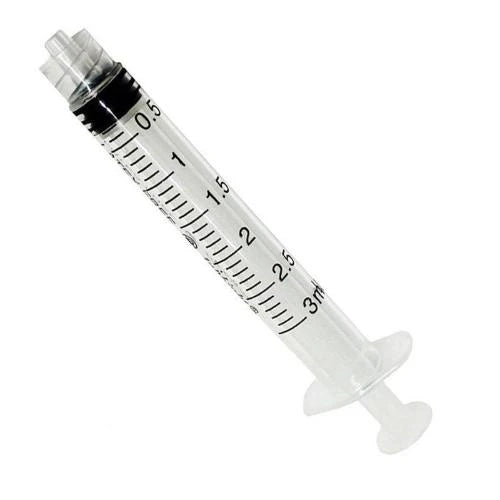
Type: Nursing
BD Syringe 3ml Luer Lock (Pack of 100)
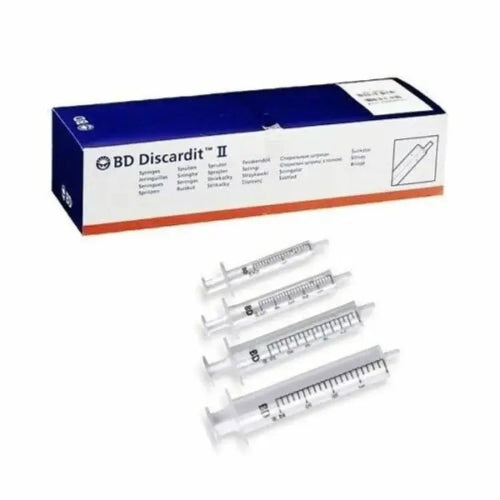
Type: Nursing
BD Discardit II Syringe 20ml (Pack of 80)
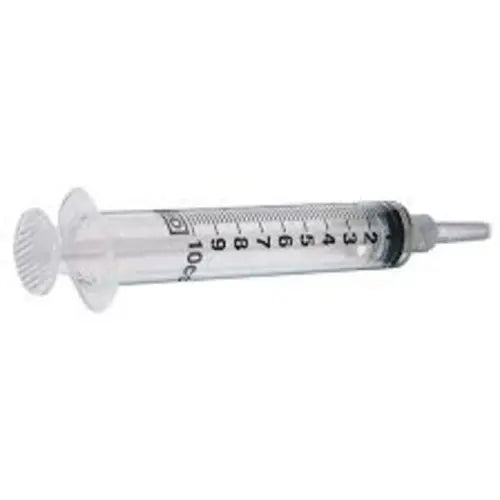
Type: Nursing
BD Luer-Lock Syringe 10ml (Pack of 100)
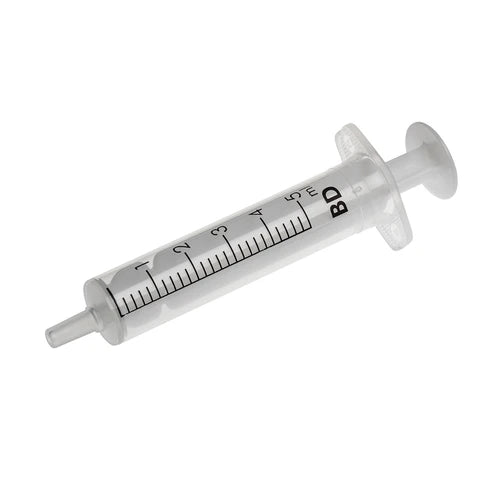
Type: Nursing
BD Discardit II Syringe 5ml (Pack of 100)
Collection:
Syringe | Essential Tool for Low-Volume Meds
Introduction: Why the 1 mL Syringe Matters
The 1ml syringe is one of the most important small-volume measuring tools used in healthcare. It is simple in appearance, but it plays a major role in clinical accuracy. Whenever a very small amount of liquid has to be measured carefully, the size and graduation of the syringe matter. This is why healthcare professionals often prefer a 1 mL syringe for low-volume medications rather than using a larger syringe where tiny volume marks are harder to read.
People search for terms like 1 ml syringe with needle, 15 ml syringe, and long needle syringe because they want to understand the difference between syringe volume and needle style. These are not the same thing. The syringe size tells you how much liquid the barrel can hold, while the needle length and needle gauge relate to how the medication is delivered in professional use. A 1 mL syringe is about volume precision, not automatically about one fixed needle type.
The most common confusion happens when buyers try to compare milliliters with household units such as teaspoons. Medication-safety literature strongly supports using mL-only measurementmL-only measurement means medication and liquid volumes are expressed in milliliters, which reduces confusion compared with household spoon-based terms like teaspoon or tablespoon. because it reduces dosing errors and helps make instructions clearer. That is why understanding what 1 mL equals, how much is 0.5 mL, and how to read a 1 mL syringe is so important in healthcare communication.
This article explains what a 1 mL syringe is, what 1 mL means, how it compares with common household volume terms, how to read the markings, how a 1 mL syringe differs from a 15 mL syringe, and how clinicians use small-volume syringes safely. The article also addresses common questions like whether 0.5 mL is half of 1 mL and whether 1 mL equals 1 teaspoon.
Hospitals & Clinics
Used where small liquid volumes must be measured accurately and clearly.
Pharmacy & Nursing Use
Helpful for low-volume medication preparation and more precise reading.
Home Care Education
Important for understanding volume safely, especially when comparing mL with spoon-based ideas.
What Is a 1 mL Syringe?
A 1 mL syringe is a syringe designed to hold up to one milliliter of liquid. It is smaller than many general-purpose syringes and is preferred when the goal is to measure smaller amounts more precisely. The smaller barrel allows clearer graduation marks and finer reading control than a large-volume syringe would provide for the same tiny amount of fluid.
In practical healthcare settings, a 1 mL syringe may be used for certain low-volume medications, specialized dosing tasks, neonatal or pediatric volume measurement, or any situation where small increments matter. The exact medical use depends on the prescription, route, and clinician judgment, but the underlying reason for choosing this size remains the same: it helps improve precision when dealing with small quantities.
Some buyers think that a 1 mL syringe is automatically a special “injection” syringe for one fixed task. In reality, the size refers to the barrel capacity, not to a single universal purpose. A 1 ml syringe with needle simply means the small-capacity syringe is supplied with a needle. The actual needle length, gauge, and route of administration depend on the intended medical use and should be chosen by trained professionals where appropriate.
Simple Definition
A 1 mL syringe is a small-volume syringe made to measure up to one milliliter of liquid with better precision than a larger syringe.
What Does 1 mL Equal To?
The question “What does 1 mL equal to?” is extremely common because many people are more familiar with household spoon language than with metric medication units. In measurement terms, 1 mL means one milliliter, which is a standard metric unit of liquid volume. It is a very small amount.
In medication safety, the most important point is not just what 1 mL equals, but how it should be communicated. Research and safety guidance have consistently supported using milliliters instead of teaspoons because spoon-based language increases the chance of confusion and dosing mistakes. This is why many professional and patient-safety sources push for mL-only instructions in oral liquid medication and measurement discussions.
When people compare 1 mL with kitchen measures, the comparison can be misleading because household spoons are not precise medical tools. The safest habit is to think of 1 mL as its own exact metric value rather than trying to mentally convert it into “a little bit of a spoon.”
How Much Is 1 mL on a Syringe?
On a 1ml syringe, 1 mL is the full marked capacity of the barrel. The markings on the barrel are arranged so the user can measure exact smaller portions up to the 1 mL limit. Because the syringe is made specifically for small amounts, the graduation marks are easier to read than on larger syringes.
In most cases, the very top measured line at the barrel’s maximum fill point represents 1 mL. The exact numbering style can vary slightly between brands, but the principle remains the same: the closer the plunger stopper aligns with the full-scale line, the closer the measured liquid is to 1 mL.
This is one of the main reasons smaller syringes are preferred for small doses. Reading 1 mL on a 15 mL syringe is possible, but it is far less practical and less precise than reading the same volume on a 1 mL syringe.
Small Volume Precision
A 1 mL syringe gives clearer marks for tiny amounts than a large syringe does.
Better Readability
The smaller barrel supports easier visual reading of low volumes.
Clinical Accuracy
Useful where medication or fluid measurement needs better small-scale control.
Safer Communication
Helps keep measurement in mL rather than household spoon estimates.
How Can We Measure 1 mL?
The safest way to measure 1 mL is by using a proper measuring device marked in milliliters. In clinical and medication-related settings, that often means a 1 mL syringe, an oral syringe, or another calibrated device depending on the liquid and purpose. This matters because research shows that mL-based devices reduce confusion compared with teaspoon-based instructions.
A 1 mL syringe is especially useful when exact reading of a tiny amount is needed. The user reads the measurement by aligning the top ring of the plunger stopper with the correct graduation line. In oral liquid measurement, similarly, a syringe marked in mL is safer and clearer than using a spoon from the kitchen.
The most important safety rule is this: use a calibrated mL device for mL measurement. Household spoons are not intended for exact medication volume and should not be treated as reliable substitutes when accuracy matters.
Measurement Tip
If the instruction is written in mL, the best practice is to measure with a device marked in mL — not with a household spoon.
How to Read a 1 mL Syringe Safely in Clinical Use
The question “How to inject 1 mL syringe?” often appears in searches, but the safer and more useful explanation is how healthcare professionals read and prepare a 1 mL syringe correctly. Injection technique itself should depend on the medicine, route, prescription, and clinician training. What can be explained safely is the measurement logic.
First, the syringe is checked for size and graduation clarity. Second, the liquid is drawn to the required mL mark while watching the plunger carefully. Third, the measurement is read at eye level using the correct plunger reference point. Fourth, the clinician confirms the route, drug, and dose according to the medical order before administration.
This distinction matters because measuring a volume and administering a medicine are not the same thing. A 1 mL syringe can be read as a measuring device, but actual injection practice should only happen under proper training and the right medical direction.
Safety Note
A syringe is a precise medical device. Reading the barrel markings is a measurement skill, but actual injection technique depends on the medicine, the route, and trained professional guidance.
Is 0.5 mL Half of 1 mL?
Yes, 0.5 mL is exactly half of 1 mL. This is one of the easiest but most important small-volume comparisons. In healthcare settings, understanding halves, quarters, and tenths of a milliliter can matter because many liquid medications or preparations are measured in fractional volumes.
On a 1 mL syringe, 0.5 mL usually appears as the midpoint between zero and the 1 mL maximum mark. Because the syringe is designed for small amounts, that midpoint is easier to find than it would be on a larger syringe. This is another reason why the correct barrel size helps reduce measurement error.
Is 1 mL 1 Teaspoon?
No, 1 mL is not 1 teaspoon. This is one of the most important misunderstandings to correct. Medication-safety research strongly supports using milliliters and discourages reliance on teaspoon terminology because it can increase confusion and lead to incorrect dosing.
A teaspoon is a household measure and should not be assumed to equal 1 mL. In fact, the reason many experts prefer mL-only instructions is specifically to avoid spoon-based errors. When volume needs to be exact, it should always be measured with an mL-marked device rather than translated into spoon language.
Important Correction
1 mL is not 1 teaspoon. mL is a medical measurement unit, and spoon language should not replace calibrated measuring tools when accuracy matters.
1 mL Syringe vs 15 mL Syringe
A 1 mL syringe and a 15 mL syringe serve very different volume purposes. The 1 mL syringe is for very small, carefully measured amounts. The 15 mL syringe is much larger and better suited to larger liquid quantities. Both are useful, but they are not interchangeable when precision at low volume is important.
If someone tries to measure 1 mL using a 15 mL syringe, the line will usually be harder to read accurately because the syringe was not optimized for that tiny amount. Conversely, a 1 mL syringe obviously cannot handle a 15 mL task because its capacity is far too small. This is why syringe selection should match the intended volume.
| Syringe Type | Main Capacity | Best For | Limitation |
|---|---|---|---|
| 1 mL Syringe | Up to 1 mL | Small-volume precision | Cannot handle larger volume tasks |
| 15 mL Syringe | Up to 15 mL | Larger liquid handling | Less ideal for tiny-volume precision |
What About a 1 mL Syringe with Needle and Long Needle Syringe?
The terms 1 ml syringe with needle and long needle syringe often appear in product searches, but they describe different parts of a medical setup. The syringe size refers to volume capacity, while the needle length refers to how long the attached or supplied needle is. A 1 mL syringe can be paired with different needle types depending on the medical purpose.
In professional settings, needle selection depends on the medicine, route of administration, patient type, and procedure. That is why a buyer should not assume that all 1 mL syringes use the same needle style. Some come with fixed needles, some with detachable needles, and some are sold without needles depending on intended use.
The most important buying principle is to avoid mixing up barrel capacity and needle design. A long needle syringe is not a volume category. It is simply a syringe supplied with a comparatively longer needle for a particular professional application.
How Healthcare Professionals and Clinics Choose Syringe Size
In hospitals, clinics, and home-care under prescription-based practice, syringe selection is usually based on the required volume, dosing accuracy, route, and workflow convenience. Clinicians do not choose a syringe only because it is available; they choose it because it matches the task.
A 1 mL syringe is preferred when the main priority is clear reading of a very small amount. Larger syringes may be chosen when the volume is larger and tiny graduation precision is less important. This is one reason training and stock planning matter. If the right syringe size is not available, measuring accuracy may suffer.
For procurement teams, good selection means keeping a range of syringe capacities in stock. Small-volume syringes, mid-volume syringes, and larger syringes each have their own practical place in the care environment.
Volume First
Professionals choose syringe size according to how much liquid must be measured.
Accuracy Matters
Small doses are safer to read on a small syringe than on a large one.
Workflow Planning
Hospitals keep multiple syringe sizes because one size does not fit all tasks.
Needle Is Separate
Needle selection depends on the route and procedure, not barrel size alone.
Buying Guide for 1 mL Syringe Products
If a clinic, nursing setup, or procurement team is selecting a 1 mL syringe, the main questions should include graduation clarity, plunger smoothness, sterility, packaging, compatibility with the intended needle system, and consistency of supply. For home-care buyers, understanding the exact prescribed use matters more than buying by keyword alone.
A good 1 mL syringe product should usually offer:
- Clear and easy-to-read graduation marks.
- Reliable plunger movement without jerking or leakage.
- Appropriate sterile packaging.
- Correct compatibility with the intended route and setup.
- Consistent quality across units and batches.
Buyers should also be careful not to purchase by syringe keyword alone. “1 ml syringe with needle” may sound simple, but the actual needle type still matters in professional use.
Frequently Asked Questions
What does 1 mL equal to?
1 mL equals one milliliter, which is a small metric unit of liquid volume. In medication safety, it is best understood and communicated as mL rather than as a household spoon estimate.
How much is 1 mL on a syringe?
On a 1 mL syringe, 1 mL is the full barrel capacity marked at the top end of the scale. The graduation lines below it help measure smaller fractions accurately.
How can we measure 1 mL?
The safest way is with a calibrated mL-marked device such as a 1 mL syringe or oral syringe, depending on the purpose. Household spoons are not reliable measurement tools for exact mL volume.
How should a 1 mL syringe be used safely?
In safe professional use, the syringe should be read carefully at eye level, matched to the prescribed volume, and handled according to the intended medical route by trained personnel. Measurement and administration are not the same step.
Is 0.5 mL half of 1 mL?
Yes, 0.5 mL is exactly half of 1 mL. On a 1 mL syringe, it usually appears at the midpoint of the scale.
Is 1 mL 1 teaspoon?
No. 1 mL is not 1 teaspoon. mL and teaspoon are different measurement systems, and medication safety guidance supports using mL-only instructions to reduce dosing errors.
What is the difference between a 1 mL syringe and a 15 mL syringe?
A 1 mL syringe is better for precise small-volume measurement, while a 15 mL syringe is designed for much larger volumes and is less ideal for tiny-dose accuracy.
Does a 1 mL syringe always come with the same kind of needle?
No. The syringe volume and needle type are separate factors. A 1 mL syringe may be paired with different needle types depending on the medical task and product configuration.
Conclusion: Why the 1 mL Syringe Is a Precision Tool
The 1ml syringe is not just a small syringe. It is a precision tool designed to make very small liquid volumes easier to read, measure, and manage. Whether the discussion is about what 1 mL equals, how much 0.5 mL means, whether 1 mL equals a teaspoon, or how a 1 mL syringe differs from a 15 mL syringe, the main lesson stays the same: small-volume accuracy matters. When healthcare professionals, hospitals, clinics, and home-care users choose the right syringe size and use mL-based measurement correctly, they support safer and clearer care.