
Filter
3 products
Type: Devices
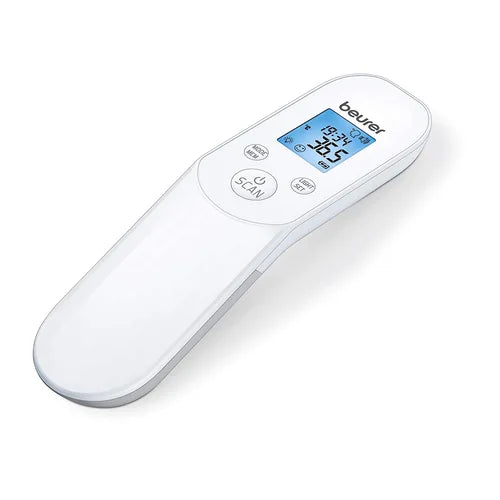
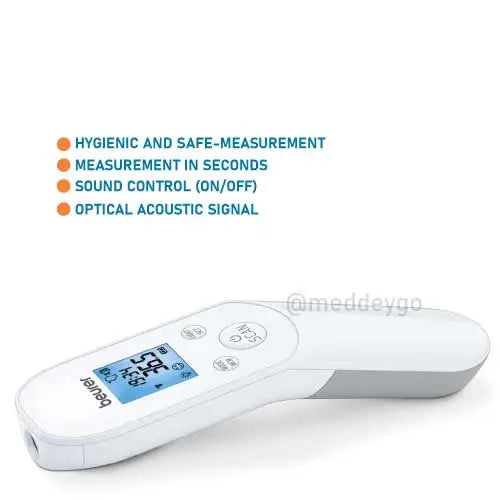
Beurer FT 85 Clinical Non Contact Thermometer


Type: Home Healthcare
Infrared Non Contact Thermometer
Type: Home Healthcare
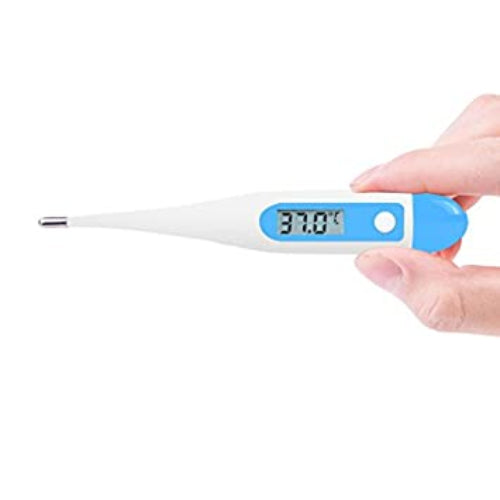
Digital Thermometer Fixed Tip
Collection:
Types of Thermometer: Digital, Infrared & Clinical Recovery | MeddeyGo
The Global Census: How Many Types of Thermometer Actually Exist?
When we navigate the complex world of thermal diagnostics, answering how many types of thermometer are available requires a multi-disciplinary perspective. In the standard home medicine cabinet, you will likely find 3 types of thermometer . In a secondary school science lab, students are taught about two types of thermometer : the Clinical and the Laboratory versions. However, in the high-stakes environment of modern hospitals and research facilities, the list expands exponentially to include sophisticated different kinds of thermometer designed for specific anatomical or industrial applications.
At its core, every thermometer name represents a unique method of capturing kinetic energy. Whether it is a traditional "Hicks" mercury-free glass model or a state-of-the-art "Omron" infrared sensor, the goal is the same: absolute accuracy. If you are curious about how many types of thermometer a well-prepared household should maintain, clinical consensus points toward owning a dual-mode digital device capable of both contact and non-contact readings.
Classification: 7 Types of Thermometer in Physics
In academic physics, thermometers are categorized by their "Thermometric Property." This includes 1. Liquid-in-glass, 2. Constant-volume gas, 3. Constant-pressure gas, 4. Platinum resistance, 5. Thermocouples, 6. Pyrometers, and 7. Magnetic thermometers. While these different types of thermometer are rarely seen in a home setting, they form the calibration backbone for every medical device sold today.
The Essential List: 10 Professional Uses of Thermometer
The uses of thermometer extend far beyond the simple detection of a common cold. In a globalized world, temperature data is the silent guardian of our food, health, and technology.
As we move into 2026, the 5 types of thermometer most commonly used in heavy industry and food logistics ensure that global supply chains remain operational. Precision in different types of thermometer is what prevents industrial overheating and ensures consumer safety at every level of the economy.
The Industry Leaders: Hicks, Omron & MEDTECH Analysis
Choosing a thermometer name you can trust is a vital healthcare decision. Let's analyze the leaders in the Indian market.
Hicks Thermometer: A Legacy of Trust
Hicks has been the gold standard for decades. Their digital models are optimized for rugged durability. Key Advantage: They provide a highly reliable "beep" notification that ensures the device has stayed in contact long enough for a clinical reading.
Omron Thermometer: Japanese Engineering
Omron is world-renowned for electronic precision. Their ear and forehead sensors are used in high-traffic hospitals. Key Advantage: Their unique "Gentle Temp" technology ensures that the probe tip is pre-warmed for maximum patient comfort.
MEDTECH Thermometer: Rapid Detection
Medtech has redefined the Infrared Thermometer for the modern era. Key Advantage: Their dual-mode sensors allow you to toggle between "Body" and "Object" modes, making them perfect for checking everything from a toddler's fever to the temperature of bathwater.
Clinical Categorization: Exploring the 4 Types of Thermometer
In the medical community, we simplify the vast world of sensors into 4 types of thermometer that are statistically relevant for human health monitoring. Each thermometer name corresponds to a specific anatomical site and a unique level of clinical "Core Temperature" accuracy. Understanding different types of thermometer is not just academic; it is the difference between catching a viral spike and missing a critical symptom.
1. Digital Probe Thermometers
This is the most common different kinds of thermometer found globally. Using thermistors—resistors whose resistance varies significantly with temperature—these devices provide a digital readout. They are versatile, used for oral, axillary (underarm), and rectal readings.
2. Digital Ear (Tympanic) Thermometers
These utilize infrared technology to measure the heat waves coming off the eardrum. Because the eardrum shares a blood supply with the brain's temperature control center (the hypothalamus), it is often considered a high-accuracy different types of thermometer for rapid screening.
3. Forehead (Temporal) Thermometers
The infrared "no-touch" Infrared Thermometer measures the temporal artery on the forehead. While highly convenient for sleeping children, its accuracy can be affected by sweat or ambient room temperature.
4. Liquid-in-Glass (Mercury-Free) Thermometers
Modern versions use Galinstan (a mix of gallium, indium, and tin) instead of toxic mercury. These represent the classic two types of thermometer class 6 students study, prized for their simplicity and lack of batteries.
The Science of Heat: Physics and Academic Classifications
For many, the first introduction to thermometry happens in a classroom. When asked what are the two types of thermometer class 6 curricula usually mention, the answer is the Clinical Thermometer (for human use) and the Laboratory Thermometer (for scientific experiments). The clinical version has a "kink" to prevent mercury from falling, while the laboratory version provides a continuous range from -10°C to 110°C.
Beyond the Classroom: 7 Types of Thermometer in Physics
If we look deeper into thermodynamics, we discover what are the 7 types of thermometer in physics that define modern measurement:
- Liquid-in-Glass: Expansion of liquids (Alcohol or Galinstan).
- Constant-Volume Gas: Pressure changes of a gas at fixed volume.
- Constant-Pressure Gas: Volume changes at fixed pressure.
- Platinum Resistance: Measuring electrical resistance in metal.
- Thermocouples: Voltage generated between two different metals.
- Pyrometers: Non-contact measurement of thermal radiation.
- Vapour Pressure: Measuring the pressure of a saturated vapour.
When students ask how many types of thermometer exist, the answer grows as they progress from the simplicity of 3 types of thermometer (home use) to the complexity of 10 uses of thermometer in industrial cryogenics and space exploration.
The Accuracy Hierarchy: Which Thermometer Wins?
One of the most frequent clinical questions is: What type of thermometer is most accurate? Accuracy is a combination of the sensor's quality and the site of measurement. To help you choose from different kinds of thermometer, we have prepared a comprehensive comparison.
| Thermometer Name | Measurement Site | Accuracy Level | Primary Advantage |
|---|---|---|---|
| Digital Probe (Rectal) | Rectal | Gold Standard | Most accurate reflection of core body temperature. |
| Digital Probe (Oral) | Mouth (Sublingual) | High | Reliable if the mouth is kept closed; great for adults. |
| Tympanic (Ear) | Ear Canal | Moderate-High | Extremely fast (1-2 seconds); comfortable for children. |
| Infrared (Temporal) | Forehead | Moderate | Non-invasive; perfect for mass screening/sleeping babies. |
| Axillary (Probe) | Underarm | Lowest | Safest and easiest, but usually 0.5-1.0°F lower than core. |
The Truth About Accuracy: Ranking Measurement Sites
When determining what type of thermometer is most accurate , medical professionals look for the "Core Temperature"—the temperature of the internal organs. While many different types of thermometer exist, their accuracy is heavily influenced by where they are placed. For a neonate under 3 months, the margin of error must be near zero, making the Rectal Digital Thermometer the undisputed gold standard.
For older children and adults, the hierarchy shifts. Forehead (Temporal Artery) thermometers are considered the second most accurate because they measure blood flow directly from the heart's supply. Oral and ear readings are highly reliable but can be compromised by external factors like earwax or having recently consumed a hot beverage. The Axillary (Underarm) method, while safe, is consistently the least accurate thermometer name in the lineup, often reading up to 1°F lower than actual core heat.
The Expert Protocol: How to Measure Body Temperature
Using different kinds of thermometer requires specific techniques to ensure the digital sensors calibrate correctly with human tissue.
1 Oral (Mouth) Temperature — Ages 4+
Benefits: Highly reliable for cooperative patients. How to Use: Place the tip of the Digital Thermometer under the tongue, towards the back in the "heat pocket." Instruct the patient to keep lips sealed firmly. Warning: Wait at least 30 minutes after eating or drinking hot/cold liquids.
2 Rectal (Bottom) Temperature — Birth to Age 3
Benefits: Absolute core accuracy. How to Use: Lubricate the silver tip with petroleum jelly. Gently insert the Digital Thermometer no more than 1/2 inch for infants or 1 inch for toddlers. Hold in place until the beep. Warning: Never force the thermometer if you feel resistance.
3 Forehead (Temporal) — All Ages
Benefits: Non-contact and hygienic. How to Use: Hold the Infrared Thermometer about 1 inch (2.5cm) from the center of the forehead. Press the trigger and hold until it beeps. Warning: Ensure the forehead is free of sweat, hair, or hats, as these act as insulators and skew the reading.
Medical Thresholds: When is a Fever Dangerous?
Fever Definitions by Measurement Type
A fever is not a single number; it varies based on which of the 4 types of thermometer you are using:
- 🌡️ Rectal, Ear, or Forehead: 100.4°F (38°C) or higher.
- 🌡️ Oral (Mouth): 100°F (37.8°C) or higher.
- 🌡️ Underarm (Axillary): 99°F (37.2°C) or higher.
Note: For babies younger than 3 months, any rectal temperature of 100.4°F or higher requires an immediate call to your healthcare provider.
Thermometer Intelligence: Clinical FAQs
In the medical field, we categorize devices based on their sensor technology and intended application. The 4 types of thermometer are: Digital Probe Thermometers (versatile for oral, rectal, or underarm), Infrared (Non-Contact) Thermometers (ideal for surface scanning and forehead readings), Tympanic (Ear) Thermometers (fast and brain-temp relevant), and Temporal Artery Thermometers (scanning across the forehead). Each thermometer name corresponds to a different scientific principle—for example, a probe uses a thermistor to measure resistance changes, while an Infrared Thermometer measures the intensity of light waves emitted by the body. Selecting the right one depends on the age of the patient and the required speed of the diagnosis.
Physics classifies temperature-measuring devices based on the specific "thermometric property" of the material inside them. What are the 7 types of thermometer in physics? They include: Liquid-in-glass , Constant-volume gas , Constant-pressure gas , Platinum resistance , Thermocouples , Pyrometers , and Vapour-pressure thermometers . We don't use the gas or resistance versions at home because they are massive, highly sensitive, and require complex laboratory environments to function. However, these different types of thermometer are essential for "Primary Calibration," meaning they are used to ensure that the small digital thermometer you buy at MeddeyGo is 100% accurate before it leaves the factory.
For students entering the world of science, the curriculum focuses on two types of thermometer class 6 standards: the Clinical Thermometer and the Laboratory Thermometer . The key difference is the "kink" or constriction. A Clinical thermometer name refers to the device used to measure human body temperature; it has a small kink above the bulb that prevents the liquid from falling back instantly, allowing you to read it even after taking it out of the mouth. A Laboratory Thermometer has no kink and is designed to measure chemical reactions. This fundamental understanding is why we have different kinds of thermometer for different purposes—if you used a lab model on a human, the reading would drop the second it hit the air, giving a false result.
When accuracy is the absolute priority—specifically for infants under 3 months or patients with high fevers—the Digital Rectal Probe is the most accurate. This is because it measures the internal core temperature, which is the most stable and least affected by environmental factors like cold air, sweat, or food. While an Infrared Thermometer is extremely accurate for mass screening, its results can be skewed by external variables. If you are comparing different types of thermometer, remember that the "accuracy" is often a combination of the device's sensor quality (brands like Omron or Hicks) and the measurement site's proximity to the heart and hypothalamus.
The uses of thermometer are incredibly diverse. 10 uses of thermometer include: 1. Diagnosing medical infections, 2. Monitoring ovulation/fertility, 3. Ensuring safe food preparation, 4. Scientific laboratory research, 5. HVAC and home insulation testing, 6. Industrial machinery maintenance, 7. Automotive engine diagnostics, 8. Vaccine and pharmaceutical storage, 9. Meteorology and weather forecasting, and 10. Newborn baby bathwater safety. Every time you use an Infrared Thermometer to check a room's temperature or a Hicks model for a fever, you are utilizing technology that keeps global health and safety systems running efficiently.
Choosing from different kinds of thermometer for fever depends on the patient's age. For newborns (0-3 months), stick to a digital probe for rectal use. For toddlers (1-3 years), a tympanic ear thermometer name or forehead scan is best to avoid distress. For adults, an oral digital probe or a high-quality Omron Thermometer provides the best balance of speed and precision. Always look for different types of thermometer that offer a fever alert (a beep or color change) to help you interpret the results instantly without needing to look up medical charts.
Why Choose MeddeyGo for Your Health Essentials?
When accuracy can change a life, where you buy your medical equipment matters. MeddeyGo is India's most trusted partner for clinical-grade diagnostics.
Verified Sourcing
We work directly with industry giants like Hicks , Omron , and Medtech to ensure every thermometer name we sell is 100% authentic and factory-calibrated for precision.
Diverse Inventory
From the 7 types of thermometer in physics (calibration standards) to the 3 types of thermometer every home needs, we stock the widest range of diagnostic tools in India.
Health Education
We don't just sell; we educate. Our guides help you understand the 10 uses of thermometer and how to get the most accurate reading for your family's safety.