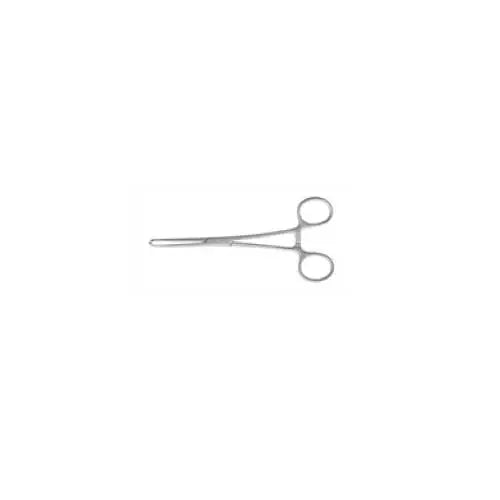
Allis Tissue Forceps Surgical Instrument
Allis Tissue Forceps Surgical Instrument
In stock
- Free shipping over ₹500
- 7 Day Returns
Couldn't load pickup availability
Share this product
Allis Tissue Forceps
Overview
The
Key Features and Benefits
1. Purpose-Built Design
The
2. Durable Construction
Manufactured from premium-grade, rust-resistant stainless steel,
3. Ergonomic Handles
The forceps come equipped with finger-ring handles that are designed for comfort and enhanced control. This ergonomic design minimizes hand fatigue and enhances the surgeon's dexterity, allowing for more precise tissue handling during intricate procedures.
4. Versatility
One of the significant advantages of
- General Surgery: Essential for grasping and manipulating tissue during abdominal and thoracic procedures.
- Gynecology: Widely used in surgeries involving uterine and ovarian tissues, where a secure grip is necessary.
- Orthopedics: Effective for handling tendons and ligaments, ensuring optimal outcomes in reconstructive surgeries.
5. Reusable and Latex-Free
The
Technical Specifications
- Product Name:
Allis Tissue Forceps - Length: 6 inches
- Tip Configuration: 5x6 Teeth
- Instrument Type: Tissue Grasping Forceps
- Curvature: Straight
- Handle Type: Finger Rings
- Material: Stainless Steel
- Reusable: Yes
- Sterile: No
- Latex-Free: Yes
- Grade: Premium or OR-Grade
Technical Specifications
| Specification | Details |
|---|---|
| Product Name | Allis Tissue Forceps |
| Length | 6 inches |
| Tip Configuration | 5x6 Teeth |
| Instrument Type | Tissue Grasping Forceps |
| Curvature | Straight |
| Handle | Finger Rings |
| Material | Metal |
| Reusable | Yes |
| Sterile | No |
| Latex-Free | Yes |
| Grade | Premium or OR-Grade |
Care and Maintenance
Proper care and maintenance of
Cleaning and Sterilization
- Pre-Cleaning: Rinse the instruments immediately after use to prevent blood and tissue from drying on the surface.
- Cleaning: Use a soft-bristle brush and mild soap or enzymatic cleaner to clean the forceps thoroughly.
- Sterilization: Follow the manufacturer's guidelines for sterilization. Typically, autoclaving is the preferred method, ensuring all microbial life is eradicated before use.
Signs of Wear
Regularly inspect the
- Deformation: Ensure that the tips close properly and that there is no visible bending or warping.
- Worn Teeth: Check for any signs of excessive wear on the serrated edges, which can compromise their grip.
- Rust or Corrosion: Any sign of rust requires immediate removal from use and further evaluation.
Conclusion
The
FAQ about Allis Tissue Forceps
1. What are Allis Tissue Forceps used for?
2. Are Allis Forceps reusable?
Yes,
3. How do I sterilize Allis Tissue Forceps ?
The recommended method for sterilizing
4. Can Allis Forceps be used in delicate surgeries?
While
5. What materials are Allis Forceps made from?
6. How can I tell if my Allis Forceps need to be replaced?
Inspect the forceps regularly for signs of wear and tear, such as bent tips, excessive wear on the serrated edges, rust, or any other deformation. If any of these signs are present, it may be time to replace the instruments.
7. Do Allis Forceps come in different sizes?
Yes, while the most common size is 6 inches,
8. What surgical specialties use Allis Forceps?
9. Are there any alternatives to Allis Tissue Forceps ?
While
10. How do I ensure the longevity of my Allis Tissue Forceps ?
To maximize the longevity of