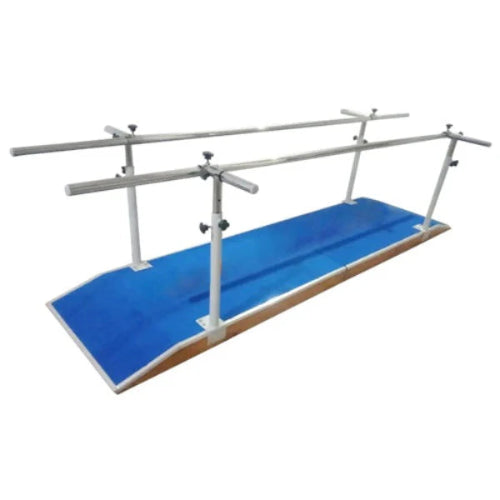
Parallel Bars: Key Product Highlights
3
3 Length Options 6, 8 and 10 Feet
ADJ
Adjustable Handrails Height and Width Control
STEEL
Metal Frame Sturdy Support Structure
GAIT
Walking Practice Therapist-Guided Training
Parallel Bars for Physiotherapy and Gait Training
These parallel bars for physiotherapy provide hand support during walking and balance exercises. They help patients practise standing, weight shifting and stepping under the guidance of a physiotherapist. The system is suitable for rehabilitation centres, physiotherapy clinics and hospital therapy units.
The gait training parallel bars have two handrails and a strong metal frame. The rails can be adjusted to support different training needs. Also, the open design lets therapists stay close to the patient and guide their movements.
This system is available in 6 ft, 8 ft and 10 ft lengths. Therefore, clinics can select a model based on their room space and training needs. However, every patient should be assessed before using the equipment.
Key Features
-
Strong Metal Frame: Provides a support structure for supervised gait and balance exercises.
-
Adjustable Handrail Height: Allows therapists to set the rails according to the user's needs.
-
Adjustable Rail Width: Helps staff prepare a suitable walking space between the handrails.
-
Three Length Options: Choose from 6 ft, 8 ft and 10 ft models for different therapy spaces.
-
Smooth Handrails: Provide hand support while patients practise standing and walking.
-
Stable Base Design: The listed platform is designed to support controlled rehabilitation activities.
-
Open Training Area: Allows physiotherapists to observe steps, posture and balance.
-
Manual Operation: Supports walking practice without an electric motor or treadmill.
Technical Specifications
| Specification |
Details |
| Product Type |
Physiotherapy Parallel Bars |
| Application |
Gait Training and Balance Exercises |
| Available Lengths |
6 ft, 8 ft and 10 ft |
| Frame Material |
Metal / Steel Structure |
| Handrails |
Two Parallel Support Rails |
| Height Adjustment |
Adjustable |
| Width Adjustment |
Adjustable |
| Training Type |
Manual, Therapist-Supervised |
Additional Specifications — 10 ft Model
| Specification |
Listed Value |
| Total Length |
304 cm (approximately 10 ft) |
| Height Adjustment Range |
55–80 cm |
| Width Adjustment Range |
35–55 cm |
| Base Width |
91.5 cm |
| Support Tubing Diameter |
38 mm |
| Handrail End Diameter |
1.5 inch |
| Steel Tubing Diameter |
50 mm |
The detailed measurements above are published for the 10 ft model. Check the height, width, base size and construction details for 6 ft and 8 ft variants before ordering.
For Physiotherapists and Rehabilitation Teams
Parallel bars help therapists guide patients through basic standing and walking tasks. First, a patient may practise holding the rails while standing. Next, the therapist may introduce weight shifting and controlled steps.
The two handrails provide support from both sides. Also, the adjustable design helps staff prepare the walking area for suitable users. The therapist can observe posture, balance, step length and weight transfer during the session.
This system may be used during selected neurological, orthopedic and post-surgery rehab programs. However, the patient's condition, weight-bearing limits and fall risk must be reviewed before training. The bars do not replace trained assistance or a body-weight support system.
Benefits of Parallel Bars for Gait Training
-
Supported Standing: Offers hand support during selected standing exercises.
-
Step Practice: Helps patients practise walking movements under supervision.
-
Balance Training: Supports planned weight-shifting and posture activities.
-
Adjustable Setup: Allows staff to prepare suitable handrail positions.
-
Close Observation: The open design helps therapists guide movement.
-
Size Choice: Three available lengths help buyers plan their therapy space.
Applications in Rehabilitation Care
Physiotherapy Clinics
For guided walking, standing and balance exercises.
Neuro Rehabilitation
For selected patients working on balance and gait skills.
Orthopedic Rehab
For approved walking practice after injury or surgery.
Hospital Rehab Units
Supports supervised mobility training with staff assistance.
Balance Training
Provides hand support during therapist-led balance tasks.
Supervised Gait Practice
For patients who need guided step and posture practice.
What Should You Check Before Buying?
-
Length: Choose 6 ft, 8 ft or 10 ft based on your therapy area.
-
Height Adjustment: Confirm that the rail range suits your patients.
-
Width Adjustment: Check the available space between the handrails.
-
Room Layout: Keep enough space for the therapist to assist safely.
-
Frame and Base: Confirm the actual materials, stability and rated load.
-
Installation: Ask whether assembly or floor fixing is required.
-
Warranty and Service: Check supplied parts, service terms and delivery details.
Basic Setup and Safe Gait Training
- First, check the base, handrails and all adjustment locks.
- Next, adjust the height and width as advised by the therapist.
- Keep the walking area dry, level and free from obstacles.
- Help the patient take a suitable starting position between the rails.
- Begin standing or walking practice according to the rehab plan.
- Monitor grip, balance, posture, fatigue and discomfort during training.
- Finally, help the patient leave the bars safely and inspect the unit after use.
Who Should Consider This Equipment?
These parallel bars may suit physiotherapy clinics, rehab centres, hospital therapy departments and medical training facilities. They can support programmes that include standing practice, balance work and guided walking exercises.
The right model depends on the available space, patient needs and treatment plan. For home use, a physiotherapist should confirm the setup, supervision and space requirements before purchase.
Setting Up a Physiotherapy or Rehabilitation Centre?
Need parallel bars for a new clinic or rehab department? MeddeyGo can help with product details, available lengths and purchase enquiries. Share your preferred size, required quantity and delivery location with our team.
Call MeddeyGo: 8586012345
Contact us for size, availability and order assistance.
Frequently Asked Questions
What are parallel bars used for in physiotherapy?
They provide hand support during standing, balance and walking exercises. A physiotherapist guides the training.
Which sizes are available?
The product comes in 6 ft, 8 ft and 10 ft lengths. Choose a suitable size for your therapy space.
Are the height and width adjustable?
Yes. The product includes adjustable handrails. The 10 ft listing gives a height range of 55–80 cm and a width range of 35–55 cm.
Can parallel bars help with stroke rehabilitation?
They may be part of a supervised walking and balance plan after stroke. However, use depends on the patient's abilities and clinical assessment.
Are these bars suitable for children?
Suitability depends on the child's size, handrail range and support needs. A pediatric physiotherapist should assess the equipment first.
Can the bars prevent falls?
They provide hand support but cannot prevent every fall. Patients need suitable supervision and a safe training setup.
What should clinics check before ordering?
Confirm the length, adjustment range, base size, rated load and installation needs. Also, check the final delivery package.
How are parallel bars different from a gait trainer?
Parallel bars give support through two handrails. A gait trainer may include a frame or harness for other support needs. The therapist should choose the right device.
Important Rehabilitation Safety Information
Use this equipment under trained supervision. Check the frame, base and rail locks before each session. Keep the training area clear and ensure that the patient has suitable support. Do not assume that the bars can hold the patient's full body weight without a confirmed load rating. Stop training if the patient feels dizzy, weak or unwell. Follow the manufacturer's setup and care instructions.