


Type: para monitor
5 Para Monitor Veterinary

Type: Devices
5 Para Monitor 12.1 Inch TFT without stand

Type: Devices
5 Para Monitor 15 Inch TFT, Adult and Pediatric Accessories


Type: para monitor
5 Para Veterinary ECG Monitor for Animal ICU Use

Type: 5 para
5 Para Bed Side Monitor Aqua 12 with 2 Years Warranty


Type: para monitor
5 Para Bed Side 12.1 Inch Touchscreen


Type: Devices
5 Para Patient Monitor 12.1 Inch TFT | ICU Vital Monitor
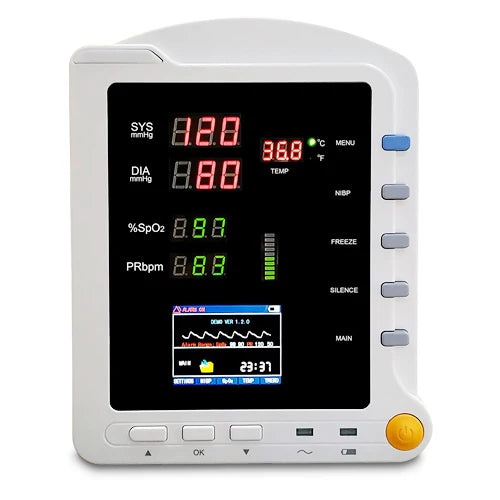
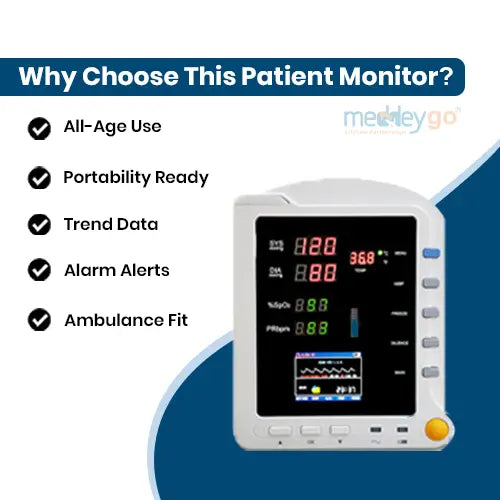
Type: 3 para monitor
Contec CMS 5100 SpO2 NIBP Patient Monitor


Type: ECG Machine
CMS6000 5 Para ICU CCU Vital Signs ECG,NIBP,SPO2,PR,TEMP 8Inch TFT color LCD


Type: Diagnostic Equipment
5 Para Bed Side Monitor 15 Inch Display X-5 M

Type: para monitor
5 Para Bed Side 12.1 Inch with 2 Years Warranty

Type: 5 para
5 Para Bed Side Monitor with 2 Years Warranty

Type: Diagnostic Equipment
5 Para Bed Side Monitor 12 Inch Display ECO
Collection:
Benefits of Using 5-Parameter Patient Monitors

A 5-parameter patient monitor is a sophisticated medical device designed to track and display five critical vital signs: heart rate, blood pressure, temperature, respiratory rate, and oxygen saturation. These parameters provide a comprehensive overview of a patient's health status, enabling healthcare professionals to make informed decisions quickly. Models such as the 5 parameter patient monitor 12 1 tm-9009t or 5 parameter patient monitor 8 aqua are notable for their accuracy and reliability in various medical settings.
Comprehensive Overview of Vital Signs
The five parameters tracked by these monitors---heart rate, blood pressure, temperature, respiratory rate, and oxygen saturation---offer a holistic view of a patient's vital health indicators. Each of these metrics provides essential insights into different physiological systems. For instance, heart rate and blood pressure data can indicate cardiovascular health, while oxygen saturation and respiratory rate can reveal respiratory efficiency. This comprehensive monitoring allows clinicians to detect subtle changes in a patient's condition, facilitating early interventions.
Importance of Each Parameter
Each parameter plays a unique role in patient monitoring. Heart rate monitoring can identify arrhythmias and other cardiac issues. Blood pressure readings help in managing hypertension or hypotension. Body temperature is crucial for detecting infections or systemic inflammation. Respiratory rate can indicate respiratory distress or failure, while oxygen saturation levels ensure adequate oxygenation. Understanding the importance of each parameter helps healthcare providers prioritize interventions and tailor treatment plans effectively.
Technological Advancements in Design
Modern 5-parameter monitors are equipped with advanced technologies that enhance their functionality. Innovations such as touch screens, wireless connectivity, and high-resolution displays make these devices user-friendly. Additionally, improvements in sensor technology increase the accuracy and reliability of readings. These advancements not only enhance the usability of the monitors but also ensure that healthcare providers have access to precise, timely information, which is critical for patient care.
Key Features of 5-Parameter Monitors
Real-time Monitoring
Real-time monitoring is a cornerstone feature of 5-parameter monitors. These devices continuously track vital signs, providing immediate data that clinicians can rely on for quick decision-making. This capability is particularly crucial in critical care settings, where seconds can make a difference in patient outcomes. Continuous monitoring also helps in detecting trends over time, which can be pivotal in diagnosing conditions or adjusting treatment plans.
User-Friendly Interface
The user-friendly interface of these monitors minimizes the training required for healthcare staff, ensuring they can operate the device efficiently. This ease of use is essential in busy medical environments where time is of the essence. Intuitive design elements like touchscreen displays, simple navigation menus, and clear visual alerts enhance the overall user experience, reducing the potential for operational errors.
Portability
Portability is a significant advantage of many 5-parameter monitors. Compact and lightweight designs allow these devices to be easily transported within healthcare facilities. This mobility is particularly beneficial in emergency rooms and during patient transport, where maintaining continuous monitoring is essential. Portable monitors ensure that patient care is not compromised when moving between different care settings.
Data Storage and Connectivity
Advanced data storage capabilities enable these monitors to archive patient data for future reference. This feature facilitates comprehensive patient records that support longitudinal studies and ongoing care management. Connectivity options, such as integration with electronic medical records (EMR) systems, allow seamless data transfer. This integration ensures that patient information is accessible to all relevant healthcare providers, enhancing coordinated care and improving patient outcomes.
Advantages of Using 5-Parameter Patient Monitors

Enhanced Patient Safety
By continuously monitoring critical vital signs, 5-parameter monitors help in early detection of potential health issues, allowing for swift medical responses. This proactive approach significantly enhances patient safety by preventing complications before they escalate. Early warnings from the monitor can alert healthcare providers to changes in a patient's condition, prompting timely interventions that can be lifesaving.
Improved Clinical Decision-Making
Having access to real-time, accurate data aids clinicians in making informed decisions, optimizing treatment plans, and improving patient outcomes. The comprehensive data provided by these monitors ensures that healthcare providers can respond promptly to any changes in a patient's condition. Additionally, the ability to analyze trends over time allows for better prognostic evaluations and treatment adjustments, leading to more personalized and effective care.
Cost-Effectiveness
While advanced, 5-parameter monitors are often more cost-effective than their multi-parameter counterparts. Their ability to deliver essential monitoring capabilities without unnecessary complexity makes them an economical choice for many healthcare facilities. This cost-effectiveness aligns with budgetary constraints, allowing facilities to allocate resources efficiently without compromising on the quality of patient care.
Versatility in Use
These monitors are versatile, suited for various healthcare settings, from intensive care units to outpatient facilities. Their adaptability and reliability make them a staple in patient care technology. Whether used in high-acuity settings or for routine monitoring, the consistent performance of 5-parameter monitors ensures that healthcare providers have the tools necessary to maintain high standards of patient care across diverse environments.
Applications in Healthcare Settings
The utility of 5-parameter monitors spans across different medical environments, providing critical support in various scenarios:
Hospital Intensive Care Units (ICUs)
In ICUs, where patient conditions are often critical, the reliability and precision of 5-parameter monitors are invaluable. They ensure continuous monitoring, allowing medical staff to focus on other critical tasks with the assurance that the monitor will alert them to any significant changes. This constant vigilance is essential for managing complex cases and ensuring that any deterioration in a patient's condition is promptly addressed.
Emergency Departments
In emergency settings, time is of the essence. The quick and accurate readings provided by 5-parameter monitors enable emergency personnel to make rapid assessments and initiate appropriate interventions without delay. These monitors are crucial in triaging patients, determining the severity of their conditions, and ensuring that they receive the necessary level of care as quickly as possible.
Outpatient and Ambulatory Care
For outpatient care and during patient transport, the portability of these monitors ensures that patient vitals are consistently tracked, maintaining continuity of care beyond the traditional hospital setting. This consistency is vital for patients with chronic conditions or those undergoing procedures that require close monitoring. Portable monitors bridge the gap between hospital and home care, ensuring that patients receive continuous monitoring wherever they are.
The Future of Patient Monitoring Technology

As technology advances, the capabilities of patient monitoring devices continue to expand. The integration of artificial intelligence and machine learning into monitoring systems promises even more precise predictive analytics, potentially revolutionizing patient care by forecasting complications before they arise.
Innovations in Sensor Technology
Advancements in sensor technology are enhancing the accuracy and sensitivity of patient monitors. New sensors can detect subtle physiological changes, providing more detailed and reliable data. These innovations are crucial for early intervention, as they allow healthcare providers to detect potential issues before they become critical, improving patient outcomes and reducing the risk of complications.
Integration with Artificial Intelligence
The integration of artificial intelligence (AI) into patient monitoring systems is a game-changer. AI algorithms can analyze vast amounts of data quickly, identifying patterns and predicting potential health issues with high accuracy. This predictive capability allows for proactive patient management, as clinicians can intervene before conditions worsen. AI-driven insights also support personalized medicine, tailoring treatments to individual patient needs.
Multi-Parameter Monitors and Beyond
While 5-parameter monitors remain a mainstay, the industry is seeing a shift towards multi-parameter monitors that offer even more comprehensive monitoring options. These advancements will likely include features such as advanced ECG monitoring, capnography, and integrated decision-support systems. As these technologies evolve, they promise to provide even greater insights into patient health, enabling more effective and efficient care delivery.
Strategic Considerations for Stakeholders
For hospital administrators, medical equipment distributors, and healthcare technology consultants, understanding the strategic implications of adopting 5-parameter monitors is crucial.
Procurement and Implementation
Hospital administrators must balance quality and cost, ensuring that procurement strategies are aligned with the institution's financial and clinical objectives. Streamlining the purchasing process to include reliable, cost-effective equipment like the 5-parameter monitor can optimize patient care delivery. Careful consideration of vendor reputation, product support, and long-term cost implications is essential for making informed purchasing decisions.
Market Positioning and Distribution
For distributors, the key lies in understanding market demands and strategically positioning these monitors to capture new opportunities. By highlighting their benefits and applications, distributors can differentiate their offerings in a competitive landscape. Effective marketing strategies, such as educational campaigns and targeted outreach, can enhance product visibility and drive sales in key markets.
Technology Integration and Client Advisory
Healthcare technology consultants should focus on helping clients integrate these monitors into their existing systems, ensuring seamless transitions and enhanced operational efficiency. Staying abreast of industry trends will enable them to provide cutting-edge advice and recommendations. Consultants can also assist in training staff on new technologies, ensuring that healthcare providers maximize the benefits of their investment.
Conclusion
The 5-parameter patient monitor is an essential tool in modern healthcare, offering a blend of reliability, cost-effectiveness, and versatility. Its role in enhancing patient safety, improving clinical decision-making, and supporting diverse medical applications underscores its importance in the healthcare ecosystem.
As healthcare technology continues to evolve, stakeholders must remain informed about advancements and trends to make strategic decisions that enhance patient care and operational efficiency. By embracing the benefits of 5-parameter patient monitors, healthcare providers can ensure they are well-equipped to meet the challenges of today's dynamic healthcare environment.
Q&A
Question: What is a 5-parameter patient monitor, and which vital signs does it track?
Short answer: It’s a medical device that continuously measures five core vitals—heart rate, blood pressure, temperature, respiratory rate, and oxygen saturation—to provide a quick, comprehensive snapshot of patient status. Models like the 5 parameter patient monitor 12 1 tm-9009t and 5 parameter patient monitor 8 aqua are highlighted for accuracy and reliability across diverse care settings.
Question: Why do these five parameters offer a comprehensive view of patient health?
Short answer: Each parameter reflects a major physiological system: heart rate and blood pressure indicate cardiovascular status; respiratory rate and oxygen saturation reflect respiratory efficiency; temperature flags infection or systemic inflammation. Viewed together and in real time, they help clinicians spot subtle changes early, prioritize interventions, and tailor treatment plans effectively.
Question: How do real-time monitoring and trend analysis improve safety and decision-making?
Short answer: Continuous, real-time data enables rapid responses—critical when seconds matter in emergency and intensive care. Clear visual alerts notify staff of deterioration, while trend data over time supports diagnosis, prognostication, and timely treatment adjustments, leading to safer, more personalized care.
Question: In which care settings are 5-parameter monitors most useful, and how does portability help?
Short answer: They are staples in ICUs for constant vigilance, in emergency departments for fast triage and intervention, and in outpatient or ambulatory contexts for continuity during transport or routine monitoring. Portable, lightweight designs ensure uninterrupted vitals tracking as patients move between departments or care environments.
Question: What features and strategic considerations should stakeholders prioritize when adopting these monitors?
Short answer: Look for user-friendly interfaces (touchscreens, intuitive menus, clear alerts), strong sensor accuracy, and data capabilities (robust storage and EMR connectivity) to streamline workflows. Administrators should balance quality and cost, vet vendor support, and account for long-term expenses. Distributors can win by highlighting versatility and cost-effectiveness, while consultants add value by guiding system integration and staff training. Choose 5-parameter units when essential monitoring and budget efficiency are the priority; consider more advanced multi-parameter options (e.g., with advanced ECG, capnography, decision support) as needs evolve. AI and sensor advances will further enhance predictive insights and early intervention over time.