

Type: Devices
5 Para Monitor 15 Inch TFT, Adult and Pediatric Accessories

Type: 5 para
5 Para Monitor 12.1 Inch TFT without stand with 2 Years Warranty


Type: para monitor
5 Para Veterinary ECG Monitor for Animal ICU Use


Type: para monitor
5 Para Bed Side 12.1 Inch Touchscreen
Type: Devices
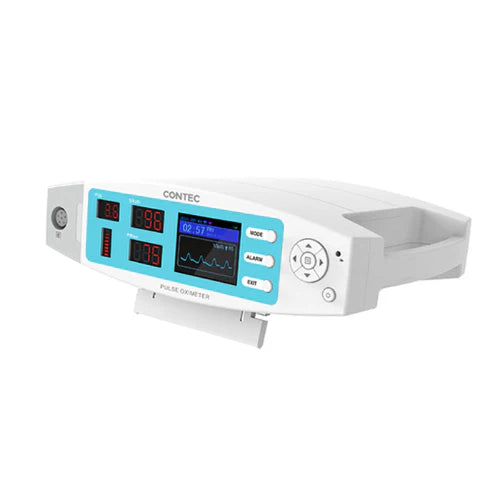
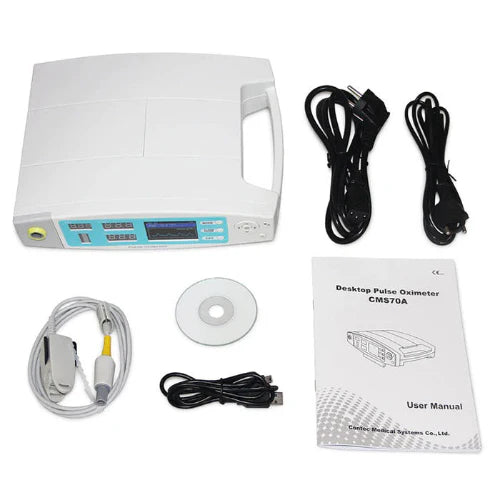
Contec CMS70A Portable Tabletop Pulse Oximeter


Type: ECG Machine
CMS6000 5 Para ICU CCU Vital Signs ECG,NIBP,SPO2,PR,TEMP 8Inch TFT color LCD
Collection:
Benefits of Heart Rate Monitoring Devices
Ever glanced at your wrist and seen that little number with a heart icon next to it? 65, 80, 120... these numbers from your smartwatch or fitness tracker are telling a story about what your body is doing right now. But for many of us, it's a story we don't quite know how to read, leaving us to wonder, "Is that number good or bad?"
At its core, that number is your heart rate---simply the number of times your heart beats in one minute. Think of it as your body's own speedometer. It revs up when you climb a flight of stairs or feel a surge of excitement and slows down when you're relaxing on the couch. This real-time feedback is one of the most direct and useful signals your body can send.
Understanding this signal is a powerful skill for managing your personal health and fitness, and the good news is you don't need a medical degree to grasp the basics. While complex diagnostics are for doctors, learning what a "normal" range looks like for you is something anyone can do. It's the first step in using modern health wearables to your advantage, not just as a fancy step counter.
This guide demystifies the numbers behind heart rate and cardiac monitoring devices, breaking down what these measurements mean for your fitness, your stress levels, and your overall well-being. It will help you turn confusing data into clear, actionable insights for your daily life.

What Is a 'Good' Resting Heart Rate, and How Can You Measure Yours?
Of all the numbers your heart produces, your Resting Heart Rate (RHR) might be the most telling. It's the number of times your heart beats per minute (bpm) when you are completely at rest---calm, comfortable, and not having just exercised. Think of it as your heart's "idle speed." This single number provides a powerful snapshot of your overall cardiovascular efficiency and fitness.
So, what is a normal resting heart rate? For most adults, doctors consider a range of 60 to 100 bpm to be normal. However, "normal" isn't always the same as "optimal." A heart that's in great shape doesn't have to work as hard to pump blood through your body. Because of this, a lower RHR---often between 50 and 70 bpm---is frequently a sign of better cardiovascular fitness.
Finding this important number is easier than you think. While many activity monitors and smartwatches track it automatically, you can get an accurate reading with just a clock and your own two fingers. For the most reliable result, measure it first thing in the morning.
How to Find Your RHR in 60 Seconds
- Relax First. After waking up, stay in bed for a few minutes before you have coffee, check your phone, or start your day.
- Find Your Pulse. Gently place two fingers (not your thumb) on the inside of your wrist or on the side of your windpipe on your neck.
- Count and Calculate. Count the number of beats you feel for 30 seconds. Double that number to get your resting heart rate in beats per minute.
Heart Rate vs. Heart Rhythm: Why the Pattern of Your Beat Matters as Much as the Speed
Knowing your heart's speed is a great first step, but it only tells half the story. Your heart also has a rhythm ---the pattern of its beats. Think of your heart rate as the tempo of a song, while the rhythm is the drummer's ability to keep a steady, consistent beat. A healthy heart can speed up or slow down, but it should do so with a regular, predictable pattern: thump-thump, thump-thump.
Sometimes, however, that steady pattern is disrupted. When the heart's electrical signals get jumbled, the beat can become chaotic, skipped, or erratic, even if the average rate seems normal. This irregularity is called an arrhythmia. While occasional "skipped beats" can be harmless, a persistent irregular rhythm, like the common condition known as atrial fibrillation, needs medical attention because it can increase the risk of other health issues.
This distinction is precisely why modern Heart Rate and Cardiac Monitoring Devices are evolving. They are no longer just simple counters. Many are now equipped with sophisticated sensors designed to check the rhythm of your heart, creating new possibilities for how to monitor heart arrhythmia at home. But just how reliable is the device on your wrist? Let's look at what your smartwatch can (and can't) really tell you about your heart.
What Your Smartwatch Can (and Can't) Really Tell You About Your Heart
Ever wonder about the flashing green lights on the back of your smartwatch? That's the secret to how it tracks your heart rate. This technology, essentially a light-based sensor, shines light into the blood vessels in your wrist. As blood pulses through, the amount of light that reflects back changes, and the watch uses these tiny fluctuations to count your heartbeats. Its biggest advantage is convenience, allowing it to effortlessly track your heart rate trends 24/7, from deep sleep to a busy workday.
These all-day insights make health wearables powerful tools for seeing the bigger picture of your wellness. By monitoring your heart rate over weeks or months, you can start to connect the dots between your lifestyle and your body's response. You might notice your resting heart rate creeps up after a few nights of poor sleep or see a clear spike after your morning coffee. This contextual data is incredibly valuable for understanding how daily habits---like stress, exercise, and diet---personally affect you.
However, wrist-based trackers have limitations, especially when you're moving a lot. During intense exercise like running or weightlifting, the constant motion of your arm can interfere with the sensor, sometimes leading to inaccurate readings. Think of it like trying to take a clear photo on a bumpy road. While brands using advanced Garmin Technology and others are constantly improving this, the data can still be less reliable during high-intensity moments compared to when you are at rest.
This brings us to a crucial point: your watch is a wellness device, not a medical one. So, can a smartwatch detect atrial fibrillation ? While some models can take a spot-check ECG that might flag an irregularity, they are not a substitute for a doctor's diagnosis. The difference between an Apple Watch ECG vs KardiaMobile or a clinical-grade monitor is significant in purpose and accuracy. Your watch provides helpful clues, but a diagnosis must always come from a healthcare professional. For athletes seeking pinpoint accuracy during workouts, other options are often better.
Chest Strap vs. Wrist Monitor: Which Is the Best Heart Rate Monitor for Exercise?
When accuracy is non-negotiable, especially during intense workouts, many athletes and fitness enthusiasts turn to a chest strap vs. a wrist heart rate monitor. The reason for its superior performance lies in how it works. Instead of using light to estimate blood flow, a chest strap sits directly over your heart and measures the actual electrical signals of your heartbeats, much like a clinical ECG. This direct measurement is far less susceptible to errors from arm movement, making it the gold standard for real-time, precise data during sprints, HIIT sessions, and heavy lifting.
The choice between them really depends on your personal fitness goals and activities. For many people, the convenience of a wrist-based tracker is more than enough. For others, the precision of a chest strap is essential for performance training.
| Use a Chest Strap If... | A Wrist Monitor is Great If... | | ------------------------------------------------------- | ------------------------------------------------------------------- | | You're a serious runner or cyclist. | You want 24/7 tracking and convenience. | | You need maximum accuracy for training zones. | Your main activities are walking, jogging, or steady-state cardio. | | You do HIIT, cross-training, or other high-motion sports. | You're focused on overall activity, sleep, and general wellness trends. |
The best heart rate monitor for exercise is the one that aligns with your needs. When we compiled our list of The 6 Best Heart Rate Monitors of 2026: Tested, we saw excellent options in both categories. But getting the number is just the first step; the next is using that data effectively.
Decoding Your Workout: How to Use Heart Rate Zones for Better Fitness Results
Now that you have a number flashing on your wrist or chest strap, the real magic begins. That beat-per-minute reading is the key to making your workouts more effective. Instead of guessing your effort level, you can use that data for a smarter, goal-oriented approach called zone training. This strategy helps ensure you're working hard enough to see results, but not so hard that you risk burnout or injury.
The first step in tracking heart rate zones for fitness is to find your personal starting point: your estimated maximum heart rate (MHR). While lab tests are most precise, a widely used and simple formula is 220 minus your age. So, for a 45-year-old, the estimated MHR would be 175 beats per minute (bpm). This number acts as the 100% ceiling for your training efforts.
From there, your workout intensity is broken down into percentages of your MHR, each with a different benefit. For general fitness, two zones are particularly important. The "fat burn" zone (roughly 60-70% of your MHR) is a lower-intensity effort, like a brisk walk where you can still hold a conversation. In contrast, the "cardio" zone (70-80% of your MHR) is for building endurance, where you're breathing harder and talking becomes difficult.
By using one of the best heart rate monitors for exercise, you can see which zone you're in instantly. This allows you to adjust your pace to stay in the zone that matches your goal for the day, whether it's burning fat or strengthening your heart. These fitness trackers are excellent tools for monitoring your heart's rate , but some can now look at something even more detailed: your heart's rhythm.

The Power of an ECG on Your Wrist: What Do Those Squiggly Lines Mean?
Your heart's speed is just one part of the story; its pattern is equally important. While most fitness trackers are excellent at counting beats per minute, some of today's most popular wearables can now look deeper. They do this using a feature called an electrocardiogram, or ECG (sometimes seen as EKG). If your heart rate is the speed of your car's engine, an ECG is like a mechanic listening to make sure that engine is running smoothly, without any skips or sputters. This provides a much more detailed check-up on your heart's electrical rhythm.
Using this feature on a device like an Apple Watch or KardiaMobile is surprisingly simple---you typically just rest your finger on a sensor for about 30 seconds. The real power here is the ability to capture a recording at the exact moment you feel something unusual, like a brief flutter, a racing sensation, or a skipped beat. This creates a valuable snapshot of your heart's activity that you can save and show to your doctor, providing them with crucial information that was previously almost impossible to catch.
To manage expectations, it helps to know what these devices are---and what they aren't. Your watch performs what's called a "single-lead" ECG, which is like taking one picture of your heart's electrical system from the front. It's incredibly useful for detecting certain rhythm issues. By contrast, the "12-lead" ECG you get at a hospital is like a full photoshoot, taking twelve pictures from all angles at once. This gives doctors a complete, comprehensive view that a single-lead ECG can't provide.
Think of your personal ECG, then, not as a tool for self-diagnosis, but as a powerful data-gathering assistant. It empowers you to have a more informed conversation with a medical professional. Of course, these devices don't just work on command; many also monitor your rhythm in the background, which brings up a common question: what should you do when you get an alert out of the blue?
"Irregular Rhythm Notification": Should You Worry About That Watch Alert?
That sudden notification on your screen---"Irregular Rhythm Detected"---can certainly make your own heart skip a beat. Before you panic, it's important to understand what this alert really means. Think of it less as a diagnosis and more as a "check engine" light for your body. The wearable ECG device's accuracy is designed to flag patterns that fall outside the norm, prompting you to pay closer attention. It doesn't mean something is definitely wrong; it means your watch has gathered data that's worth sharing with a professional who can give you the full picture.
Often, these alerts are looking for signs of Atrial Fibrillation, commonly known as AFib. A healthy heart beats with a strong, steady rhythm, like a consistent drumbeat. In AFib, the heart's upper chambers stop beating in that organized way and instead start to quiver chaotically. This disorganized signal can cause a rapid, irregular pulse. While a single, isolated event might not be a concern, knowing can a smartwatch detect atrial fibrillation is key---it's one of the primary conditions these consumer devices are cleared by health authorities to screen for.
So, what are the calm, correct steps to take if you get an alert? First, find a quiet place to sit down and try to relax for a few minutes. Then, follow your device's instructions to take another ECG reading. If the alert appears again, save the recording and schedule a non-emergency appointment to see your doctor. This is the most effective way for how to monitor heart arrhythmia at home: using your device as a data-gathering partner and letting a medical expert make the diagnosis. While these alerts focus on major rhythm changes, your device is also tracking subtler patterns every second, like Heart Rate Variability.
Beyond the Beat: What Is Heart Rate Variability (HRV) and Why Does It Matter?
While your heart rate tells you how fast your heart is beating, there's a more subtle metric that reveals how ready you are for the day: Heart Rate Variability (HRV). It might sound counterintuitive, but a healthy, relaxed heart doesn't beat like a perfect metronome. Instead, the time between each beat varies slightly. These tiny, millisecond fluctuations are your HRV, and they provide a window into your body's control system---the part of your nervous system that manages both stress and recovery.
A higher HRV is generally a sign that your body is well-rested and resilient. It means your internal control system is balanced, able to smoothly shift from a "fight-or-flight" state to a "rest-and-digest" mode. Conversely, a consistently low HRV can indicate that your body is under strain from a tough workout, lack of sleep, illness, or mental stress. Spotting these trends is one of the key benefits of continuous cardiac monitoring, as it gives you a deeper look into your overall wellness than just a single heart rate reading ever could.
This makes Heart Rate Variability (HRV) a powerful tool. Devices from brands using advanced sensors, such as some with Garmin Technology, track your HRV overnight to give you a "readiness" score in the morning. If your HRV trend is high, it's a green light for a challenging workout. If it's trending low, you might benefit from a recovery day or focusing on stress-reducing activities. While these trackers are fantastic for wellness, sometimes a doctor needs an even more precise, 24/7 look at your heart's activity.
When the Doctor Needs a 24/7 Look: Holter Monitors and Other Medical Devices
Your smartwatch is great for tracking daily trends, but what happens when you have a heart flutter or dizzy spell that's gone by the time you can even think about checking your wrist? For these fleeting but important symptoms, doctors need a more powerful tool. They often turn to a special medical heart rate monitor to get a continuous, detailed picture of your heart's activity as you go about your normal life, not just when you're sitting in an exam room.
The most common of these is the Holter monitor. Think of it as a movie camera for your heart's electrical rhythm, recording everything nonstop for 24 to 48 hours. This wearable device, which includes a small recording unit and several electrodes attached to your chest, captures every single beat---whether you're sleeping, walking, or stressed in traffic. This complete record helps doctors find irregular patterns that might otherwise be missed by a single EKG in the office.
For symptoms that happen less frequently, a doctor might suggest a cardiac event recorder , which is explained simply as a monitor for rarer occurrences. Instead of recording everything, it's designed to capture specific moments. Some require you to press a button when you feel a symptom, while others automatically record if they detect an unusual rhythm. This is why wearing a heart monitor for 2 weeks or even longer is practical with this device; it's like a detective that only takes notes when something important happens.
Both devices serve the same purpose: to give your doctor the clues needed to solve a puzzle. Wearing one is a common and straightforward diagnostic step, not a cause for alarm. While these professional tools are the gold standard for diagnosis, the rise of Holter monitor alternatives for consumers in the form of advanced smartwatches is changing how we track our heart health daily. This brings us to a crucial point: how do you decide what's right for you?
How to Choose the Right Heart Monitor for You (or a Loved One)
With a flood of gadgets on the market, finding the single best heart rate monitor can feel impossible. The secret is that there isn't one "best" device---there's only the device that's best for your specific needs. Instead of getting lost in tech specs, the clearest path forward is to start with a simple question: "What do I want this device to do for me?"
Your answer will immediately narrow the options. Are you looking for motivation to be more active, data to improve your running time, or a way to keep an eye on a potential health issue? Each goal points toward a different type of technology, ensuring you get the features you need without paying for ones you don't. This approach is also a helpful guide to choosing a personal EKG device or a simpler tracker.
To make it easy, match your primary goal to a device type.
- For general health & motivation: A fitness tracker or smartwatch is perfect. It provides all-day heart rate tracking, step counts, and sleep analysis to help you build healthy habits.
- For serious athletic training: A chest strap monitor is the gold standard. It offers the highest accuracy for real-time heart rate, which is crucial for training in specific intensity zones.
- For monitoring a potential rhythm issue: A device with a consumer EKG feature (like certain smartwatches or KardiaMobile) allows you to capture a medical-grade rhythm strip when you feel a symptom, which you can then share with your doctor.
These devices turn physical feelings into useful data. But data is only half the story. Knowing what these numbers mean and how to discuss them with a healthcare professional is where the real power lies.
From Data to Dialogue: How to Talk to Your Doctor About Your Heart Monitor Readings
Your new device is collecting fascinating data, but walking into a doctor's appointment with a phone full of charts can be overwhelming. The key to a productive conversation isn't more data; it's better data. Doctors are trained to spot patterns and connect them to symptoms. By learning to summarize your readings, you transform from someone with numbers into a proactive partner in your own health, making it easier for a physician to understand how to interpret home heart monitor readings in your personal context.
Instead of showing a month's worth of graphs, focus on providing a concise, organized summary. While a smartwatch alert is not a diagnosis, your data provides crucial clues, especially when discussing notifications that may suggest an issue like atrial fibrillation.
Here's what to share with your doctor:
- A summary trend: "My resting heart rate has been averaging 85 bpm for the last month, which is higher than usual for me."
- Specific alerts: "I received three 'irregular rhythm' notifications last week while I was resting."
- Correlated symptoms: "When I get these alerts, I also feel a bit dizzy."
- Saved recordings: If your device captured an ECG, have the PDF ready to show them.
A great way to start is with a simple line: "I've been monitoring my heart rate and noticed a few things I'd like to discuss." This opens the door for a collaborative dialogue. Remember, your device is a powerful tool for gathering clues, but it's your doctor who makes the medical diagnosis. Your role is to present the evidence clearly, helping them see the full picture.
Your Heart, Your Health: Turning Knowledge Into Action
Before, the number on your health wearable was just a mystery. Now, you can decode the story it's telling. You've moved beyond simply seeing a number to understanding the crucial difference between your heart's speed (rate) and its pattern (rhythm). You can confidently distinguish between fitness trackers and the detailed ECG your doctor uses, knowing each tool has a specific and valuable purpose.
The true benefits of heart rate monitoring devices come from this awareness, not from self-diagnosis. Think of your device as a personal logbook, giving you data to connect how you feel with what your body is doing. This information empowers you to have smarter, more productive conversations with medical professionals, transforming uncertainty into proactive understanding.
Your heart is telling a story every second of the day. Now, you know how to listen. The journey begins with one simple action: tomorrow morning, before you get out of bed, find your resting heart rate. Just notice it. This small step is the start of a more informed and empowered relationship with your health, one beat at a time.
Q&A
Question: What counts as a “good” resting heart rate, and how should I measure mine?
Short answer: For most adults, a normal resting heart rate (RHR) is 60–100 bpm, but a lower rate—often 50–70 bpm—can indicate better cardiovascular fitness. Measure it first thing in the morning when you’re truly at rest. Use two fingers (not your thumb) on your wrist or the side of your neck, count beats for 30 seconds, and double the number. Many wearables log RHR automatically, but a calm, morning spot-check is the most reliable.
Question: Should I use a chest strap or a wrist-based monitor for exercise?
Short answer: It depends on your goal. Wrist monitors use light to estimate blood flow; they’re convenient for 24/7 trends and steady activities but can be less accurate during high-motion workouts. Chest straps read your heart’s electrical signals (like an ECG) and are the gold standard for precise, real-time data—ideal for sprints, HIIT, cycling, and training in exact zones. Choose a wrist tracker for everyday wellness and steady cardio; choose a chest strap when accuracy during intense exercise is non-negotiable.
Question: My watch says “Irregular Rhythm Detected.” Should I worry, and what should I do next?
Short answer: Treat it like a “check engine” light—not a diagnosis, but a prompt to pay attention. These alerts often screen for signs of atrial fibrillation (AFib). Sit quietly, relax, and follow your device’s instructions to take another ECG reading. If it happens again, save the recording and schedule a non-emergency appointment with your doctor. Your clinician may confirm with a 12‑lead ECG or, if needed, order a Holter monitor or event recorder to capture your heart’s rhythm over time.
Question: What is Heart Rate Variability (HRV), and how can it guide my day?
Short answer: HRV measures the tiny variations in time between heartbeats. Higher HRV generally signals good recovery and resilience; consistently low HRV can reflect strain from hard training, poor sleep, illness, or stress. Many wearables track HRV (often overnight) to provide a “readiness” cue: higher HRV can green-light tougher workouts, while lower HRV suggests prioritizing recovery or stress reduction. It’s one of the key advantages of continuous cardiac monitoring beyond simple heart rate.
Question: How do I choose the right heart monitor for my needs (or a loved one’s)?
Short answer: Start with “What do I want this device to do for me?” Then match the goal to the tech:
- For general health and motivation: a fitness tracker or smartwatch (all-day heart rate, steps, sleep).
- For serious athletic training: a chest strap (most accurate real-time HR for zones).
- For monitoring a potential rhythm issue: a device with consumer ECG (e.g., certain smartwatches or KardiaMobile) to capture a medical‑grade rhythm strip you can share with your doctor.