Filter
11 products
Type: General Instruments
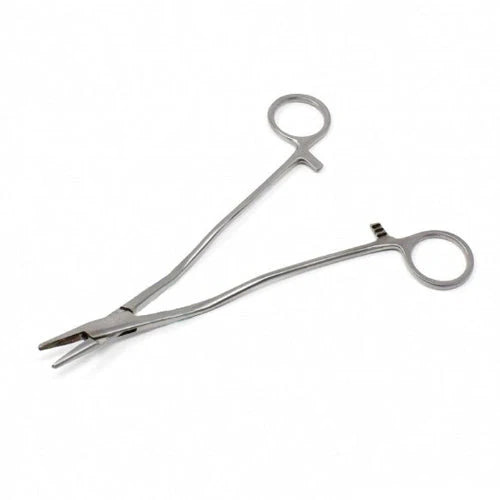
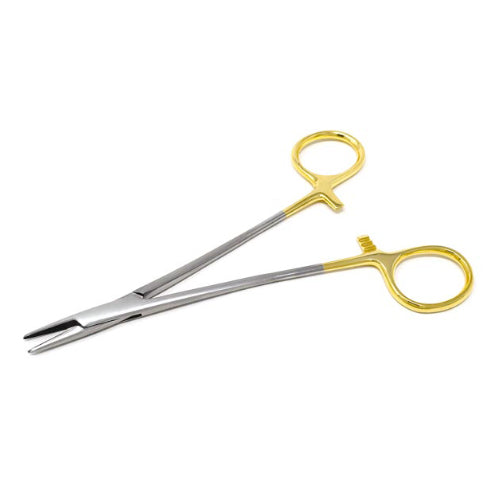
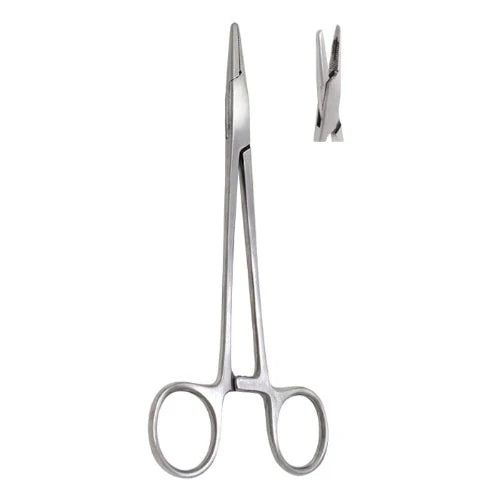
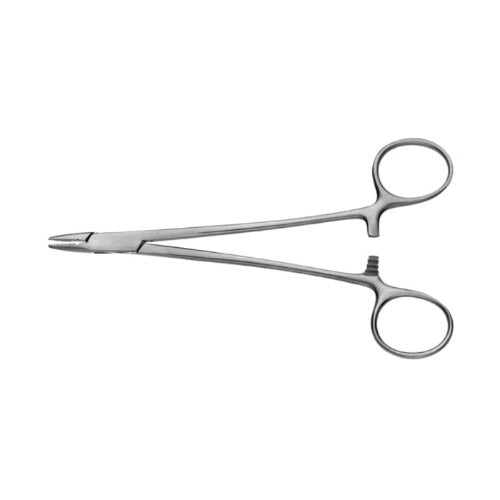
Olsen Hegar Needle Holder Scissor
Type: General Instruments
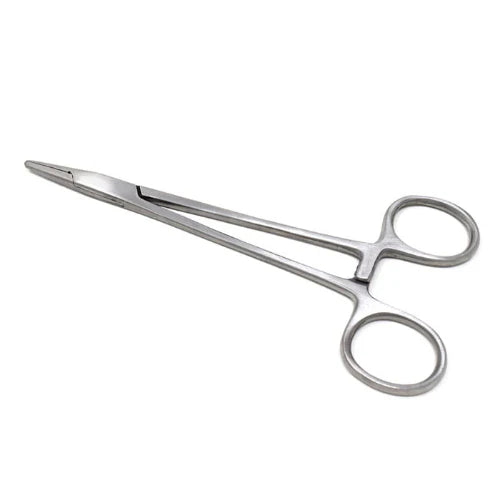
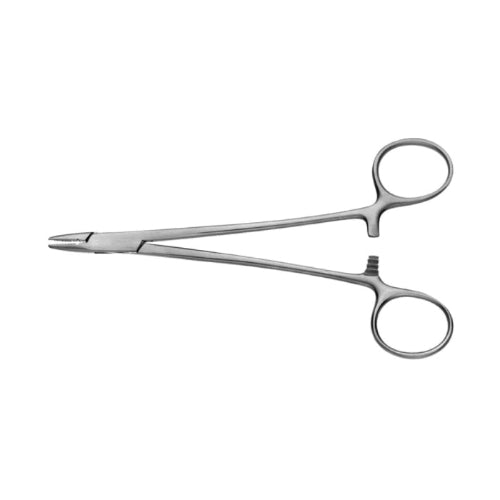
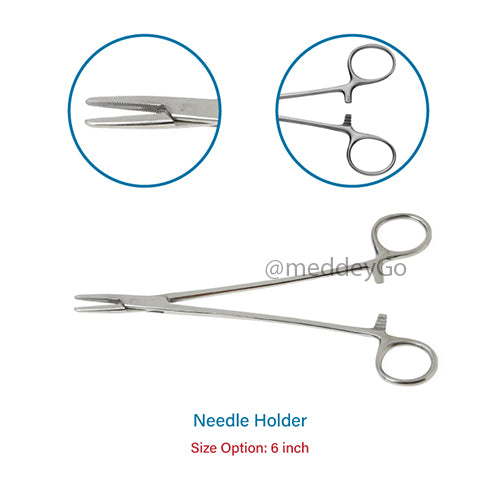
Needle Holder Surgical Instrument
Type: Instruments
Bozeman Needle Holder
Type: Surgical Scissors
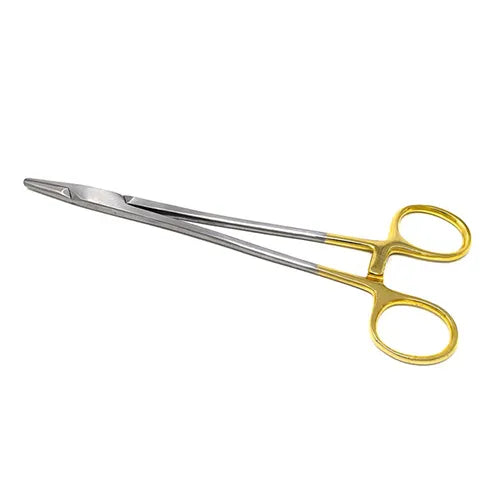
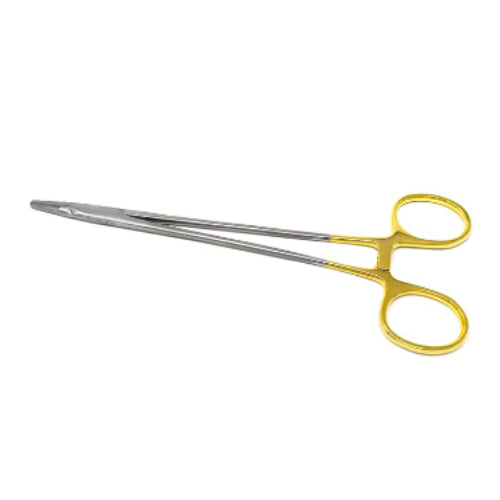
Tungsten Carbide (TC) Mayo Hegar Needle Holder
Type: Surgical Scissors
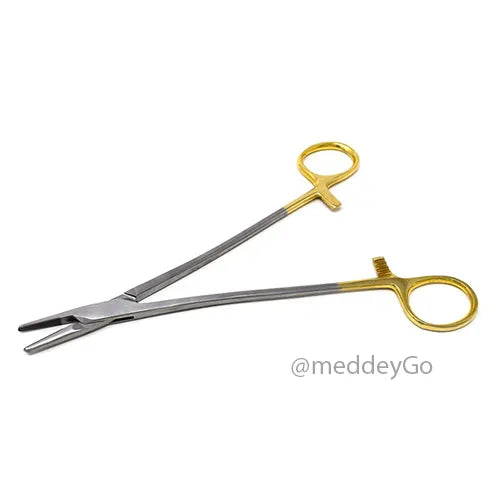
Tungsten Carbide (TC) Ryder Needle Holder
Type: Surgical Scissors
Tungsten Carbide (TC) DeBakey Needle Holder
Type: Instruments
Crile-Wood Needle Holder
Type: General Instruments
Mayo-Hegar Needle Holding Forceps SS
Type: Instruments
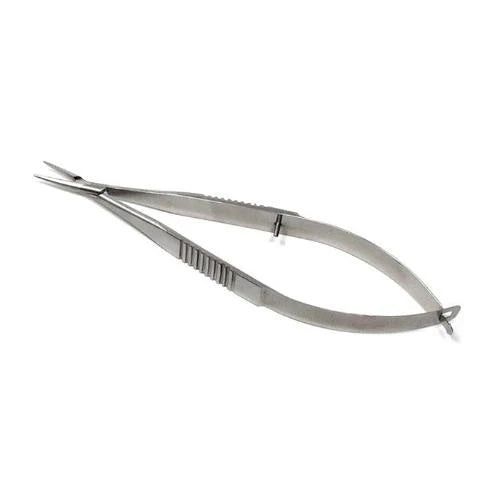
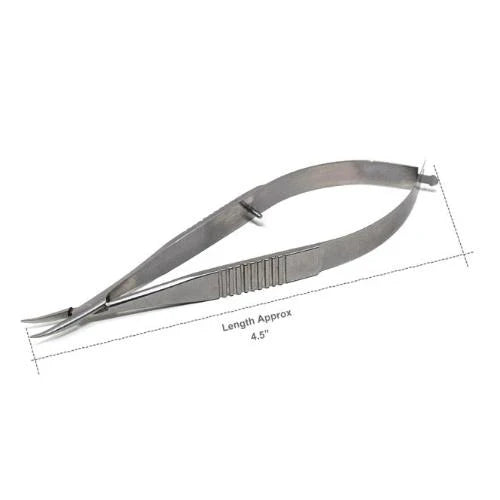
Castroviejo Needle Holder without Lock (Striaght)
Type: Instruments
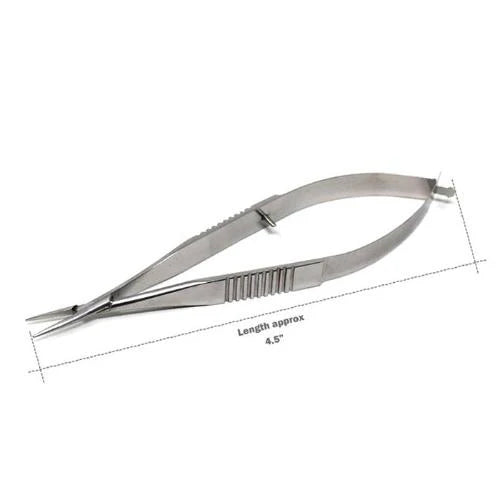
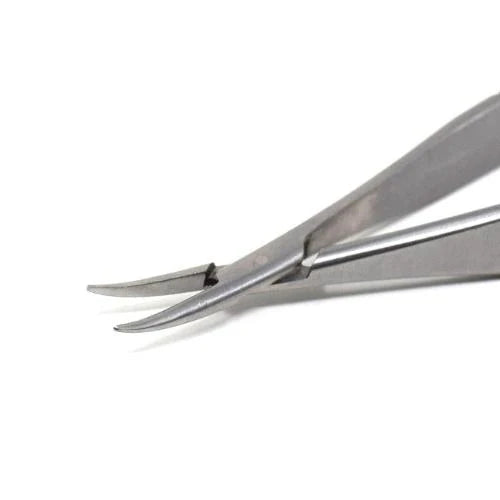
Castroviejo Needle Holder without Lock (Curved)
Type: MeddeyGo
Castroviejo Needle holder Curved without lock
Collection:
Needle Holder Forceps: Mayo-Hegar & Castroviejo Surgical Drivers
In the high-stakes environment of a hospital OT or a local clinic, the needle holder forceps (also known as a needle driver ) is the bridge between a surgeon’s skill and a patient’s recovery. Unlike standard forceps, these are engineered specifically to grasp curved needles with extreme stability, allowing for the precise rotation required to pass through dense or delicate tissues.
Clinical Utility: What is a Needle Holder Forceps Used For?
A needle holder forceps is a specialized surgical instrument used to hold and manipulate a suturing needle during wound closure. Its primary function is to provide a secure, non-slip grip on the needle body. This prevents the needle from rotating or "rocking" as it encounters tissue resistance. For a doctor, this tool is vital for ensuring that sutures are placed at the correct depth and angle, minimizing tissue trauma and ensuring the structural integrity of the closure.
Beyond simple suturing, they are used in vascular anastomosis, orthopedic repair, and microsurgery. The design typically incorporates a ratchet locking mechanism, allowing the surgeon to maintain a firm grip on the needle without needing to apply constant manual pressure, thereby reducing hand fatigue during long procedures.
Architectural Classification: The Two Main Needle Holder Types
While dozens of variations exist, needle holders are primarily classified into two categories based on their handle design and intended application:
1. Ring-Handled Needle Holders: These resemble standard scissors or hemostats. They feature a finger-ring handle and a ratchet lock near the rings. This is the most common type used in general surgery and OT settings for macro-suturing.
2. Spring-Handled (Castroviejo) Needle Holders: These feature a pencil-like grip with a spring mechanism. They are designed for microsurgery, ophthalmic, and plastic surgery where fine, tremor-free movements are required under a microscope.
Needle Holder Specialty Comparison
| Needle Holder Type | Best For / Typical Use | Jaw Design |
|---|---|---|
| Cooley | Cardiovascular & Thoracic | Straight, smooth or serrated for delicate vessels |
| Derf | Ophthalmic, Cosmetic, Dental | Short, serrated jaws for small needles |
| Mayo-Hegar | Orthopedic, Deep Tissue Closure | Textured heavy jaws for robust needles |
Anatomical Breakdown: The Five Basic Components
Every professional needle holder forceps consists of five critical parts that define its performance:
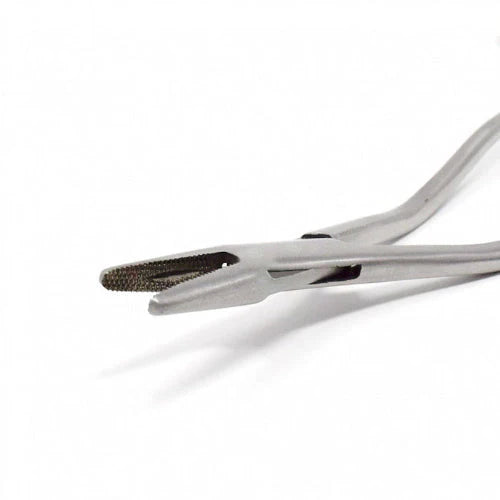
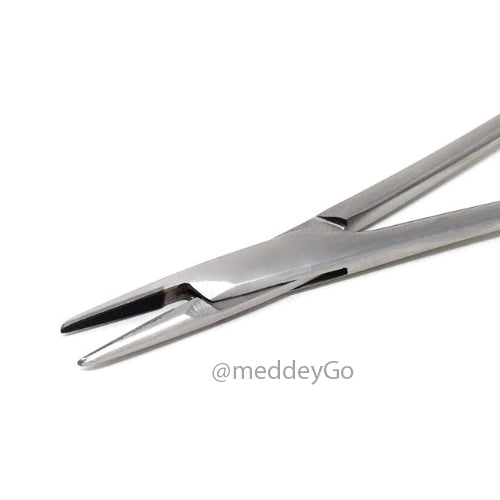
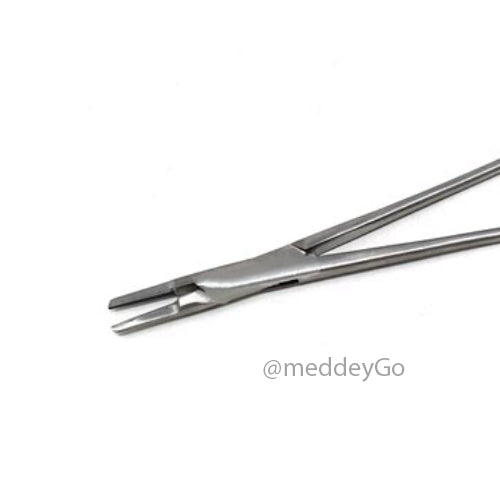
- 1. The Jaws: The working end that grips the needle. These often feature Tungsten Carbide inserts for superior grip and longevity.
- 2. The Joint: The hinge point (usually a box-lock) that provides stability and prevents the jaws from shifting out of alignment.
- 3. The Shank: The length of the instrument between the joint and the handle, determining the "reach" of the tool.
- 4. The Ratchet: A multi-step locking mechanism that secures the needle at varying degrees of tension.
- 5. The Handles/Rings: The interface for the surgeon's fingers, designed for ergonomic comfort and control.
Specialized Variants & Global Manufacturing Standards
Differentiating Needle Drivers from Tissue Forceps in Clinical Practice
Precision Alignment: What is a Straight Needle Holder Used For?
A straight needle holder is the primary choice for general tissue approximation where the surgical field is easily accessible and the needle path is direct. While curved variants offer better visualization in deep cavities, the straight design provides the most balanced torque for orthopedic and dermatological procedures.
In a clinic or hospital setting, straight needle holders are used for:
- Surface Suturing: Ideal for skin closures where a 90-degree needle entry is standard.
- Instrument Ties: The straight shanks allow for smooth suture loops when performing "instrument knots" without the snagging risk of a curved tip.
- Deep Fascial Closure: Larger straight models provide the leverage needed for thick, heavy-gauge needles used in abdominal wall repair.
The Industrial Giants: Who Produces the World’s Surgical Instruments?
The landscape of surgical manufacturing is dominated by precision engineering hubs. In 2026, the global market for high-grade needle holder forceps is led by a few key players:
B. Braun Melsungen AG
Founded in 1839, this German giant is often cited as the premier producer of surgical instruments, including the world-standard Aesculap line. They set the benchmark for Tungsten Carbide (TC) needle holder durability.
Medtronic & BD
While focusing on medtech devices, their surgical instrument divisions remain massive suppliers for hospital OTs globally, focusing on infection-prevention workflows.
Note: Another common name for a needle holder in these professional catalogs is a Needle Driver or Needle Forceps.
The Multi-Tool of the OT: What are Forceps' 4 Primary Uses?
While a needle holder is a type of forceps, the general term "forceps" covers a broader range of clinical tasks. For a doctor or physio assisting in minor surgery, these are the four essential applications:
- Tissue Manipulation: Grasping skin or internal organs to hold them steady during dissection or suturing (e.g., Adson or DeBakey forceps).
- Hemostasis: Clamping bleeding vessels to stop blood flow during an operation (e.g., Mosquito or Kelly Artery Forceps).
- Handling Sterile Materials: Picking up gauze, cotton, or sponges to maintain a clean surgical field without contaminating the area.
- Foreign Body Removal: Extracting debris, glass, or splinters from wounds in an emergency clinic environment.
Needle Holder vs. Straight Forceps
| Feature | Needle Holder Forceps | Straight Tissue Forceps |
|---|---|---|
| Primary Function | Driving suturing needles | Grasping and holding tissue |
| Jaw Texture | Cross-hatched or TC Inserts | Serrated or "Toothed" (1x2) |
| Locking Mechanism | Ratchet lock (Mandatory) | Spring tension (Usually non-locking) |
| Mechanical Focus | High torque, prevents needle slip | Tactile feedback, minimizes tissue crush |
⚠️ Clinical Warning: Misuse of Instruments
Never use a standard Straight Forceps (Hemostat) to drive a needle. Hemostats lack the cross-hatched reinforcement required for needles; the needle may "pop" or spin, potentially causing needle stick injuries or broken instrument tips.
The Suture Ecosystem—Needles, Gauges, and Suture Materials
Mastering the Interaction Between Needle Drivers and Wound Closure Materials
A needle holder forceps does not work in isolation. Its efficiency is dictated by the surgical needle it holds and the suture material it pulls through the tissue. Understanding the interplay between needle geometry and suture gauge is critical for any doctor or physio involved in surgical assisting or post-op care.
Needle Geometry: The Three Primary Types of Surgical Needles
Surgical needles are classified by their "point" geometry, which determines how they penetrate tissue. Selecting the wrong needle can lead to "tissue tear-out" or needle bending.
- 1. Taper Point Needles: Featuring a round body that tapers to a sharp point, these pierce and stretch tissue rather than cutting it. They are ideal for delicate soft tissues like the peritoneum, intestines, and fascia.
-
2. Cutting Needles: These have a triangular cross-section with three cutting edges. They are used for tough tissues like skin and tendons.
Pro-Tip: "Reverse Cutting" needles are preferred as they are stronger and reduce the risk of the needle cutting through the edge of the tissue. - 3. Taper-Cut Needles: A hybrid design combining a cutting tip with a round taper body. These are used in cardiovascular surgery to penetrate tough vascular grafts while minimizing the hole size to prevent leaking.
The Material Science: Five Essential Types of Sutures
In a modern hospital OT, sutures are categorized primarily by their absorption rate and structural composition:
| Suture Type | Common Material | Absorption | Clinical Use Case |
|---|---|---|---|
| Absorbable Monofilament | Monocryl / PDS | Yes (60-180 days) | Subcuticular skin closure, GI tract |
| Absorbable Braided | Vicryl / Polyglactin | Yes (56-70 days) | Muscle layers, general soft tissue |
| Non-Absorbable Mono | Nylon / Prolene | No | Skin (external), Cardiac, Eyelids |
| Non-Absorbable Braided | Silk / Polyester | No | Drain fixation, high-tension ligament repair |
| Natural Collagen | Catgut (Plain/Chromic) | Yes (Rapid) | Mucosa, rapid-healing oral tissues |
Heavy-Duty Repair: What is Size 7 Suture Used For?
The USP (United States Pharmacopeia) sizing system can be confusing: as numbers get larger (1, 2, 3), the diameter increases, but as "0"s are added (2-0, 3-0), the diameter decreases. Size 7 suture is on the extreme large end of the spectrum.
In clinical practice, a Size 7 suture (or similar heavy gauges like #5 or #6) is used for:
- Orthopedic Cerclage: Binding large bone fragments together (e.g., patella or sternum closure).
- Tendon Repair: Heavy-duty reattachment of thick tendons like the Achilles or Quadriceps.
- Tension Sutures: Large abdominal "retention" sutures in hospital trauma cases where secondary wound dehiscence is a high risk.
Requirement: These heavy sutures require "Heavy Pattern" Mayo-Hegar needle holder forceps with reinforced shanks to drive the massive needles through bone or thick tendon.
Expert Protocol: Tips for Needle Handling
Loading the needle at the tip of the needle holder jaws (at a 90-degree angle) ensures maximum visibility and prevents the needle from "diving" or bending during entry.
Always grasp the needle 1/3 of the distance from the swaged (thread) end to the point. This provides the perfect balance of control and "throw" length for the surgeon.
Forceps Diversification & Mechanical Engineering
The Structural DNA of Professional Surgical Instruments
To a surgeon, the choice of forceps is as specific as a golfer’s choice of club. While the needle holder forceps is the master of closure, other members of the forceps family handle the delicate task of tissue management. Understanding these differences is the final step in mastering OT instrumentation.
The Forceps Family: Classification by Clinical Function
Forceps are generally divided into three functional categories, each found in every standard hospital surgical tray:
1. Hemostatic Forceps (Artery Forceps)
Used to clamp blood vessels to control hemorrhage. Examples include the Mosquito Forceps (for fine vessels) and Kelly Forceps (for larger vessels). Unlike needle holders, these have long, serrated jaws meant to crush and hold, not to drive needles.
2. Tissue & Thumb Forceps
Commonly known as "Pickups," these do not have a locking mechanism. They rely on spring tension. Adson Tissue Forceps (toothed) are used for skin, while DeBakey Forceps (atraumatic) are used for delicate bowel or vascular surgery.
3. Grasping & Holding Forceps
Designed for larger structures. Allis Forceps feature small teeth to grip slippery tissue, while Babcock Forceps are used to hold tubular structures like the appendix or fallopian tubes without causing damage.
The Critical Difference: Needle Holder vs. Straight Forceps
A common error in a junior clinic is confusing a heavy hemostat for a needle holder. Here is why they are structurally different:
- Jaw Geometry: Needle holders have shorter, stouter jaws to prevent "torsional twisting" under the pressure of a needle. Straight forceps have longer jaws that will flex and lose their grip if used on a needle.
- Serration Pattern: Needle holders use a cross-hatched pattern (like a file) to grip the needle from all angles. Straight forceps usually have transverse (horizontal) serrations meant for tissue grip only.
- The "Joint" Strength: The box-lock joint of a needle holder is reinforced to handle the mechanical stress of "driving" through bone or thick fascia.
The Build Quality: Five Basic Components of a Needle Holder
When procurement managers for hospitals evaluate an instrument, they look at these five specific mechanical zones:
The gold-standard inserts that provide a "never-slip" grip and can be replaced if worn.
The high-precision hinge that ensures the jaws meet perfectly every time.
Engineered to be rigid enough to drive needles but flexible enough to provide "feel."
Must click smoothly. If it's too loose, the needle drops; too tight, and the surgeon's hand cramps.
The ergonomic interface. Gold-plated rings usually signify Tungsten Carbide inserts.
Instrument Selection Cheat-Sheet
| Requirement | Recommended Tool | Key Feature |
|---|---|---|
| Driving 4-0 Silk | Hegar-Baumgartner | Fine TC Jaws |
| Deep Pelvic Suturing | Stratte Needle Holder | Double-Curved Tip |
| Microsurgery | Castroviejo | Spring-Action Handle |
FAQ
A needle holder forceps is most commonly referred to by surgeons as a Needle Driver. In some specialized catalogs, you may also see it listed as Needle Forceps. The terminology varies based on the surgical specialty and regional medical education. For example, in cardiovascular surgery, they are almost exclusively called "Drivers" to emphasize the forceful mechanical rotation required to pass needles through calcified vessels. Regardless of the name, the instrument is defined by its locking ratchet and cross-hatched jaws, which distinguish it from grasping forceps.
The global leader in surgical instrument manufacturing is B. Braun Melsungen AG, specifically through their Aesculap division. Based in Tuttlingen, Germany—the world’s "Silicon Valley" of surgical instruments—Aesculap produces over 95% of the standard patterns used in modern OTs. Other major producers include Medtronic, Johnson & Johnson (Ethicon), and BD (Becton, Dickinson and Company). For hospitals in India, brands like Romsons and specialized German-stainless importers provide high-quality alternatives that meet ISO 13485 standards.
The primary difference lies in mechanical torque and jaw design. A standard straight forceps (like a Hemostat) is designed to clamp soft tissue or vessels; its jaws are long and flexible, with horizontal serrations. If you use a hemostat to drive a needle, the needle will likely "twist" or "pop" because the jaws cannot provide 360-degree friction. A needle holder has short, reinforced jaws with a cross-hatched or diamond-dusted pattern (often Tungsten Carbide) that bites into the metal of the needle, ensuring zero slippage during high-pressure suturing.
In the surgical world, gold handles signify Tungsten Carbide (TC) inserts. Tungsten Carbide is an incredibly hard metal that is welded into the jaws of the stainless steel instrument. TC jaws last up to 5 times longer than standard stainless steel and provide a much firmer grip on the needle. When a doctor or OT technician sees gold rings, they know the instrument is a premium "TC Model" designed for heavy use and longevity in a high-volume hospital environment.
The Standard of Surgical Excellence
From the simplest skin closure in a clinic to complex cardiac bypasses in an OT, the needle holder forceps is the surgeon's most trusted ally. By selecting the correct pattern—whether a heavy Mayo-Hegar or a delicate Castroviejo —clinicians ensure faster healing, reduced tissue trauma, and superior aesthetic outcomes.
At MeddeyGo.com, we bridge the gap between world-class manufacturing and Indian healthcare providers. Equip your surgical suite with precision today.