
Filter
11 products


Type: Anesthesia
VentiFlex Sodalime for Ventilator CO2 Color Change
Type: anesthesia
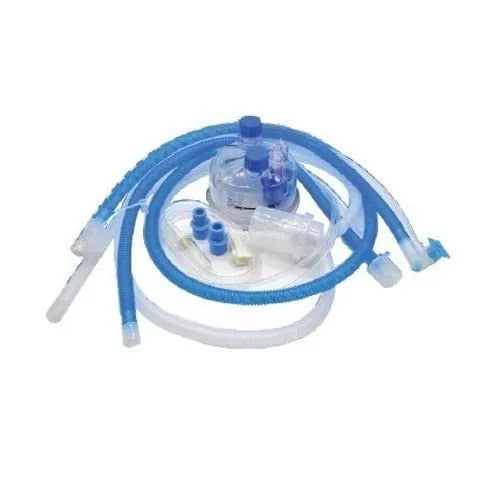
Single Heated Wire Ventilator Circuit With Chamber (Pack of 2)
Type: MeddeyGo
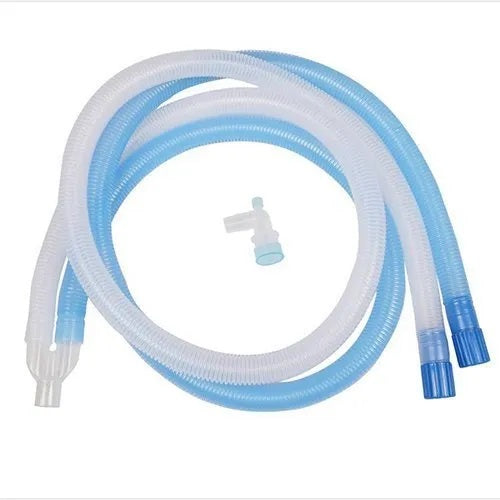
Ventilator Disposable Double Water trap Circuit
Type: Anesthesia
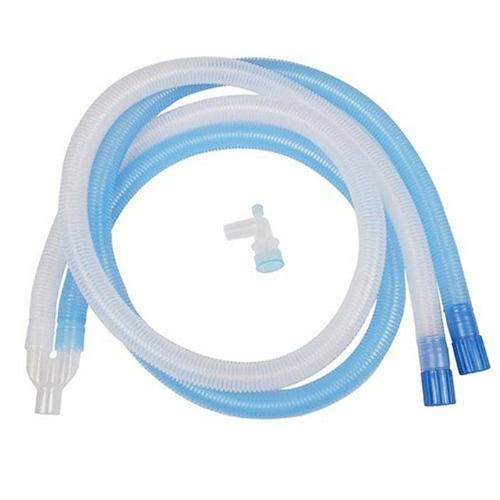
VentiFlex Ventilator Circuit Plain Dual Limb Adult


Type: General
Ventilator Circuit Plain Delux

Type: Anesthesia Products
Ventilator Disposable Double Water trap Circuit (Pack of 3)

Type: Anesthesia
Ventilator Tubing with Double Water Trap Breathing Circuit

Type: Anesthesia Products
Ventilator Disposable Single Water trap Circuit (Pack of 3)


Type: Anesthesia
Resmed Astral™ 150 Ventilator


Type: Anesthesia
Noccarc Multi Mode ICU Ventilator


Type: Anesthesia
AIRLOG 3 Portable Ventilator for Emergency Transport
Collection:
Ventilator Support: Essential for Patient Safety
Introduction: Why Ventilator Machines Matter in Modern Healthcare
In the modern healthcare environment, ventilator machines are among the most important devices used for respiratory support. They are central to critical care, emergency response, operating room safety, transport medicine, and long-term respiratory management. When a patient cannot breathe adequately on their own, a ventilator can provide the support needed to maintain oxygen delivery, remove carbon dioxide, and stabilize respiratory function during illness, injury, surgery, or chronic disease management.
For hospital administrators, procurement managers, biomedical teams, ICU clinicians, and medical equipment distributors, understanding ventilator technology is more than a technical exercise. It directly affects purchasing decisions, operational readiness, patient safety planning, and long-term service strategy. A ventilator is not simply another medical device in the equipment list. It is a life-support system that must combine reliability, adaptability, monitoring accuracy, and practical usability.
In recent years, the ventilator category has expanded significantly. Facilities and buyers today may compare ICU ventilators, portable ventilators, home ventilators, neonatal ventilators, and more specialized systems such as high-frequency ventilators. At the same time, newer technologies have improved monitoring, interface design, connectivity, remote oversight, and clinical customization. These developments have reshaped how ventilator machines are used across hospitals, transport settings, and even home-based care environments.
This guide explains what ventilators do, where they are used, the major types available in the market, the core features that matter most, the benefits they offer to both patients and providers, the factors that influence pricing and procurement, and the technological trends shaping the future of respiratory support. It is written in a practical and professional style so that healthcare stakeholders can make more informed decisions about ventilator selection, deployment, and long-term strategic value.
Critical Care
Supports patients with severe respiratory compromise through controlled and monitored ventilation.
Emergency & Transport
Portable systems provide rapid respiratory support during transfer and urgent intervention scenarios.
Home Respiratory Support
Selected ventilators enable long-term care outside the hospital for patients needing structured respiratory assistance.
What Is a Ventilator Machine?
A ventilator machine, often referred to as a respirator machine in common language, is a medical device that helps move breathable air in and out of the lungs. Its purpose is to support or replace spontaneous breathing when a patient is unable to breathe effectively on their own or when additional respiratory assistance is required.
At its most basic level, a ventilator supports gas exchange. It helps deliver oxygen into the lungs, supports the removal of carbon dioxide, and maintains appropriate airway pressures to keep the respiratory system functioning. This support becomes essential in situations such as respiratory failure, severe lung disease, anesthesia-related breathing suppression, trauma, neurological weakness, and certain chronic respiratory conditions.
Modern ventilators do much more than push air into the lungs. They regulate pressure, volume, and timing in ways that attempt to support the natural breathing process as safely as possible. Clinicians can adjust different settings based on the patient’s age, lung condition, disease severity, and treatment goals. This ability to tailor respiratory support is one of the reasons ventilators are so valuable in modern medicine.
Ventilator use is most visible in intensive care units, but the device is also critical in operating rooms, emergency departments, ambulances, transport units, step-down care areas, and home respiratory care programs. In all of these settings, the ventilator serves the same broader purpose: maintaining or supporting breathing when the patient cannot do so sufficiently without help.
Core Understanding
A ventilator does not cure the underlying disease by itself. Instead, it provides respiratory support so the patient can maintain oxygenation and ventilation while treatment and recovery continue.
How Ventilator Machines Work
The core function of a ventilator is to support breathing through controlled airflow. It does this by delivering air, often mixed with oxygen, into the patient’s lungs at selected pressures, volumes, and rates. Depending on the clinical situation, the ventilator may fully control breathing or work in combination with the patient’s own breathing efforts.
Clinicians adjust key parameters such as tidal volume, respiratory rate, inspiratory time, oxygen concentration, and airway pressure to fit the patient’s condition. These settings help ensure that the patient receives adequate respiratory support while minimizing unnecessary strain or poor synchrony with the machine.
Modern ventilators also include monitoring systems that continuously track important respiratory indicators. If values move outside expected ranges, alarms alert the care team so that rapid assessment and adjustment can occur. This real-time monitoring is a major reason why advanced ventilators play such a critical role in high-dependency care.
In practical clinical use, the ventilator must do more than deliver air. It must adapt to changing patient needs, support safe treatment progression, and provide caregivers with enough information to respond quickly when conditions change.
The Evolution of Ventilator Technology
Ventilator technology has evolved dramatically over time. Early breathing-support systems were simple and often required manual operation. Healthcare workers had to use hand-operated devices such as bellows to provide breathing support. Although these methods were important at the time, they relied heavily on constant human effort and offered limited control.
The development of mechanical ventilators marked a major milestone in respiratory care. These systems made it possible to deliver more consistent and dependable support. Over time, improvements in engineering and clinical understanding led to ventilators that could better regulate pressure, volume, and timing.
In recent decades, microprocessor technology has transformed ventilators into highly sophisticated devices. Modern machines now include digital controls, real-time waveforms, advanced sensors, multiple ventilation modes, connectivity systems, and remote monitoring features. This evolution has significantly improved patient management, made therapy more customizable, and expanded ventilator use across a much wider range of care settings.
Clinically, this evolution matters because it has improved precision, safety, adaptability, and usability. Better monitoring allows earlier issue detection. Better interfaces reduce operational confusion. Better modes allow more personalized respiratory support. In short, technological progress has made ventilators not only more advanced, but more clinically useful.
Why Evolution Matters
The move from manual support systems to microprocessor-driven ventilators has improved reliability, monitoring, customization, and patient safety across critical and long-term respiratory care.
Where Ventilator Machines Are Used
Ventilator machines are used across multiple healthcare environments, and each setting has different operational demands. Understanding these use environments helps buyers and care teams choose the right ventilator type and feature set.
In the intensive care unit, ventilators are used for critically ill patients who require precise respiratory support. These may include patients with acute respiratory distress, severe infections, trauma, or complex medical instability. ICU care often demands highly adaptable ventilators with multiple modes, strong monitoring, and dependable alarm systems.
In the operating room, ventilators help maintain respiratory function during surgery, especially when anesthesia suppresses natural breathing. In this environment, dependable respiratory support is central to patient safety throughout the procedure.
In emergency departments and urgent-care scenarios, ventilators provide rapid support for patients in respiratory distress or failure. Portable systems may also be used during transport between departments or facilities.
During patient transport, mobile and battery-operated ventilators are especially important. Transport scenarios require compact systems that are reliable, quick to deploy, and suitable for movement across changing care settings.
In home care, selected ventilator systems are used for long-term respiratory support outside the hospital. These devices are typically designed for easier operation, better caregiver usability, and in many cases remote oversight features. Home use has become increasingly important for selected chronic respiratory patients who need structured support while living outside inpatient settings.
ICU
Advanced respiratory support for unstable and high-acuity patients.
Operating Room
Maintains ventilation during procedures when breathing is medically controlled.
Emergency & Transport
Provides urgent support and continuity of care during movement between settings.
Home Care
Supports selected long-term respiratory patients outside institutional environments.
Main Types of Ventilator Machines
The ventilator market includes multiple categories designed for different patient groups, care settings, and levels of respiratory complexity. Choosing the correct type depends on clinical need, patient profile, and operational environment.
ICU Ventilators
ICU ventilators are advanced systems intended for critically ill patients requiring highly controlled respiratory management. These machines are built for precision, adaptability, and complex monitoring. They typically offer multiple ventilation modes and detailed control over tidal volume, respiratory rate, inspiratory time, oxygen delivery, and pressure parameters.
ICU ventilators are especially important in cases such as acute respiratory distress syndrome, severe pneumonia, chronic obstructive pulmonary disease exacerbations, and other unstable respiratory conditions. Because these patients may change quickly, ICU ventilators must provide flexible settings and dependable safety systems.
Portable Ventilators
Portable ventilators, sometimes referred to as mini ventilator machines in broader market language, are designed for mobility and flexibility. They are compact, lighter than larger ICU units, and often battery-operated. These devices are useful in emergency care, ambulances, patient transport, and selected home-care applications.
Their value lies in quick deployment and continuity of respiratory support across different settings. Portability does not mean low importance. In many urgent scenarios, a portable ventilator is the difference between uninterrupted respiratory care and serious risk during transfer.
Home Ventilators
Home ventilators are intended for patients who need long-term respiratory support outside the hospital. These systems usually emphasize ease of use, intuitive controls, and practical caregiver interaction. In some cases, remote monitoring features support clinical oversight even when the patient is not in a facility.
Home ventilators help selected patients maintain treatment in a more familiar environment and may reduce the need for repeated hospitalization. For families and caregivers, usability and reliability are especially important in this category.
Neonatal and Pediatric Ventilators
Neonatal ventilators and pediatric ventilators are designed for infants and children who require especially precise respiratory support. These systems are intended to accommodate smaller lungs, gentler airflow needs, and highly controlled support strategies.
Neonatal care prioritizes delicate respiratory management because developing lungs are highly sensitive. Pediatric systems must support a broader age and size range while maintaining appropriate precision and safety.
High-Frequency Ventilators
High-frequency ventilators represent a more specialized category. They deliver very rapid, small-volume breaths and are used in selected severe respiratory situations where conventional strategies may not be ideal. Their role is especially relevant in complex lung conditions where minimizing additional lung stress is a major goal.
| Ventilator Type | Main Use | Key Strength | Typical Care Setting |
|---|---|---|---|
| ICU Ventilator | Complex respiratory management | Advanced control and monitoring | ICU / Critical Care |
| Portable Ventilator | Mobility and urgent support | Compact and transport-friendly | Emergency / Ambulance / Transfer |
| Home Ventilator | Long-term out-of-hospital support | User-friendly operation | Home Care |
| Neonatal / Pediatric Ventilator | Infant and child respiratory support | Gentle and precise ventilation | NICU / PICU / Pediatric Care |
| High-Frequency Ventilator | Selected severe lung conditions | Specialized respiratory strategy | Advanced Critical Care |
Key Features That Matter in Ventilator Machines
The effectiveness of a ventilator depends heavily on its feature set. Stakeholders evaluating ventilator machines should focus not only on the basic device category, but also on the functional capabilities that influence safety, adaptability, usability, and long-term value.
Advanced Monitoring and Alarms
Modern ventilators include sophisticated monitoring systems that track respiratory parameters in real time. These may include airway pressure, tidal volume, oxygen-related measures, and other key indicators. Alarm systems alert clinicians when values move outside preset thresholds, enabling faster response and better patient protection.
Reliable alarms are not optional features. They are core safety elements that help teams detect problems early and intervene before complications escalate.
Customizable Settings
Ventilators must be adaptable because patients do not all need the same respiratory strategy. Good systems allow clinicians to adjust oxygen concentration, inspiratory flow, pressure support, respiratory rate, and other therapy settings. This flexibility helps tailor support to the individual patient rather than forcing a one-size-fits-all approach.
User-Friendly Interface
A ventilator may be technically advanced, but it also needs to be practical to use. Clear displays, intuitive menus, well-organized controls, and readable visual indicators all make a major difference. In real clinical environments, easier usability can improve response speed, reduce operational confusion, and support safer care.
Connectivity and EHR Integration
Many modern ventilators now include connectivity features that allow real-time data transfer to electronic health record systems. This integration helps streamline documentation and gives clinicians a more complete view of the patient’s respiratory status in the context of broader clinical information.
Remote Monitoring
Remote monitoring has become increasingly valuable, especially in home care and transport settings. It allows clinicians to oversee performance and patient status from a distance, helping improve continuity of care. For caregivers and families, remote oversight can also provide greater reassurance.
Monitoring
Real-time data helps clinicians assess respiratory status continuously.
Alarms
Rapid alerts support earlier intervention when issues arise.
Customization
Supports individualized respiratory strategies for different patient needs.
Connectivity
Improves workflow, continuity, and documentation quality.
Evaluation Priority
When comparing ventilator machines, prioritize safety systems, adaptability, ease of use, and clinical connectivity rather than looking only at headline features or price.
Benefits of Ventilator Machines for Patients and Providers
Ventilator machines offer benefits that extend beyond direct respiratory assistance. Their use affects patient outcomes, provider workflow, healthcare efficiency, and long-term care capability.
Improved Patient Stabilization
Ventilators are central to stabilizing patients with respiratory failure or serious breathing difficulty. By providing controlled and consistent support, they help maintain oxygenation and ventilation when the body cannot do so effectively enough on its own. This support may reduce the risk of further deterioration and create a better platform for treatment.
Better Clinical Workflow
For healthcare teams, ventilators support more organized respiratory management. Reliable machines with intuitive operation allow staff to focus on other critical aspects of care. In busy environments, this operational benefit is highly important.
Support for Cost-Effectiveness Over Time
Although the initial ventilator cost may be significant, well-selected ventilator systems can contribute to more efficient care delivery over time. Better support and timely respiratory management may reduce complications, optimize resource use, and improve treatment continuity.
Expanded Home-Care Accessibility
Advances in ventilator technology have increased the feasibility of home respiratory care for selected long-term patients. This supports continuity of treatment outside institutional settings and may improve quality of life for patients who do not need constant hospital-based management.
Psychological and Emotional Reassurance
In home and long-term care settings, the availability of structured respiratory support can bring meaningful peace of mind to both patients and families. Knowing that a dependable support system is available can reduce anxiety and improve confidence in care routines.
Broader Benefit
The value of a ventilator machine is not limited to oxygen delivery alone. It also contributes to workflow efficiency, continuity of care, long-term support planning, and greater confidence for care teams and families.
Ventilator Pricing and Market Dynamics
Understanding ventilator price requires looking at multiple market factors. Prices vary significantly depending on device type, features, monitoring sophistication, intended care setting, and manufacturer position. Basic and portable systems may sit in a different pricing segment than advanced ICU ventilator machines with broader functionality.
In India and other markets, pricing is influenced by technology level, brand reputation, import or manufacturing conditions, support services, and regulatory requirements. Buyers often compare not just the machine itself, but the broader value package that includes usability, support, maintenance, and suitability for the target care environment.
Manufacturers often use tiered pricing strategies to address different customer segments. This helps make a range of ventilator types available for varied budgets and clinical needs. Financing options and institutional planning models may also affect procurement decisions, especially in large-scale facility purchases.
For distributors and procurement teams, market strategy involves more than stocking one ventilator category. Offering a broader portfolio that includes ICU, portable, and home respiratory solutions can improve market reach and relevance.
| Factor | How It Influences Pricing | Why It Matters |
|---|---|---|
| Ventilator Type | ICU and specialized systems usually cost more than basic portable units | Different devices serve different levels of clinical complexity |
| Feature Set | Advanced modes, monitoring, and connectivity increase price | Higher functionality may improve long-term value |
| Manufacturer | Brand positioning affects cost | Support quality and reputation often influence procurement trust |
| Regulatory Compliance | Testing, certification, and standards can affect pricing | Compliance is essential for safety and market access |
| Service & Support | Stronger after-sales networks may raise price | Important for uptime and long-term reliability |
Procurement Reminder
The cheapest ventilator is not always the best choice. Procurement decisions should balance budget, clinical need, service reliability, and long-term operational value.
Regulatory and Compliance Considerations
Regulatory compliance is a critical part of the ventilator market. Because ventilators are life-support devices, safety, testing, certification, labeling, and quality controls are essential. Manufacturers and distributors must stay informed about relevant standards and evolving regulatory expectations in the markets where they operate.
Compliance affects not only safety and legal acceptability, but also market credibility. Hospitals and institutional buyers generally prefer products that demonstrate strong compliance positioning because this supports confidence in product reliability and lifecycle value.
Stakeholders who engage proactively with standards, certifications, and product documentation are often better positioned for both market entry and sustained trust in competitive healthcare environments.
Emerging Technologies and the Future of Ventilator Machines
The ventilator landscape continues to evolve through ongoing technological innovation. Features related to artificial intelligence, machine learning, remote monitoring, and telemedicine integration are shaping how respiratory support may be delivered and supervised in the future.
Better data handling and predictive insights may help clinicians identify issues earlier and adapt therapy more effectively. Improved connectivity also supports more integrated care workflows by linking respiratory information with broader digital health systems.
For manufacturers and distributors, staying aligned with these innovations is important for maintaining relevance. For hospitals and administrators, understanding which technologies provide practical clinical value versus simple marketing appeal is equally important.
The future of ventilator machines is likely to be defined by a combination of smarter monitoring, stronger interoperability, more practical user design, and broader support for care continuity across hospital and home settings.
How Stakeholders Should Evaluate Ventilator Machines
For hospital administrators, a ventilator decision should consider more than the initial purchase cost. Device versatility, service support, reliability, training needs, integration capability, and intended care setting should all be reviewed carefully.
For distributors, competitive strength often comes from offering a broader portfolio, understanding customer needs across settings, and staying current with regulatory and technological changes. A strong product mix that includes ICU, transport, and home-care solutions may improve market position.
For healthcare technology consultants and clinical teams, the priority should be matching device capability to patient acuity, facility workflows, and long-term support needs. A technically impressive ventilator is only useful if it fits the real operational and clinical environment in which it will be used.
Administrators
Focus on cost, service support, reliability, and institutional fit.
Distributors
Need portfolio breadth, compliance awareness, and market relevance.
Clinical Teams
Prioritize patient acuity, usability, and real-world respiratory support needs.
Consultants
Evaluate technology value in relation to workflow and deployment context.
Comprehensive FAQ
What core function does a ventilator machine perform?
A ventilator assists or replaces spontaneous breathing by moving air in and out of the lungs. It helps deliver oxygen, supports carbon dioxide removal, and maintains appropriate airway pressures so that respiratory function can be sustained when the patient cannot breathe effectively enough without assistance.
What are the main types of ventilator machines?
The major categories include ICU ventilators, portable ventilators, home ventilators, neonatal or pediatric ventilators, and high-frequency ventilators. Each type is intended for different patient groups, care settings, and respiratory complexity levels.
Which features are most important when evaluating a ventilator?
Key features include real-time monitoring, dependable alarm systems, customizable respiratory settings, intuitive user interfaces, connectivity with digital systems, and remote monitoring support where relevant. These features affect safety, usability, and clinical flexibility.
How do ventilators benefit healthcare operations as well as patients?
For patients, ventilators provide essential respiratory support and can help stabilize breathing during serious illness or treatment. For providers, they support more organized respiratory management, improve workflow efficiency, and strengthen care continuity across ICU, transport, and home settings.
Why do ventilator prices vary so much?
Ventilator price depends on type, feature complexity, monitoring capability, manufacturer positioning, regulatory requirements, and service support. ICU and highly specialized units usually cost more than simpler portable or basic support systems.
Why is remote monitoring becoming more important in ventilator systems?
Remote monitoring supports oversight from a distance, which is especially useful in home care and transport settings. It can improve continuity of care, support earlier intervention, and provide reassurance to caregivers and families.
How have ventilators changed over time?
Ventilators evolved from manual devices to mechanical systems and then to modern microprocessor-driven machines with advanced monitoring, digital controls, alarm systems, and data connectivity. This evolution has improved precision, safety, and usability.
What should stakeholders consider before procuring ventilator machines?
Stakeholders should consider patient profile, care setting, device type, feature requirements, service support, usability, compliance status, long-term value, and integration with workflow and digital systems before making a procurement decision.
Conclusion
Ventilator machines are indispensable across modern healthcare because they provide structured respiratory support in some of the most critical moments of patient care. From ICU management and surgical support to transport use and home respiratory assistance, ventilators serve diverse clinical roles that demand reliability, adaptability, and strong safety systems. Understanding the different ventilator types, the features that matter most, the benefits they bring to patients and providers, and the pricing and regulatory factors that influence procurement can help stakeholders make better decisions. In the end, the best ventilator is not simply the most advanced or the least expensive. It is the one that matches the patient need, the care environment, and the operational priorities of the healthcare system using it.