Skip to content

India’s Go to Platform for Medical Supplies Procurement

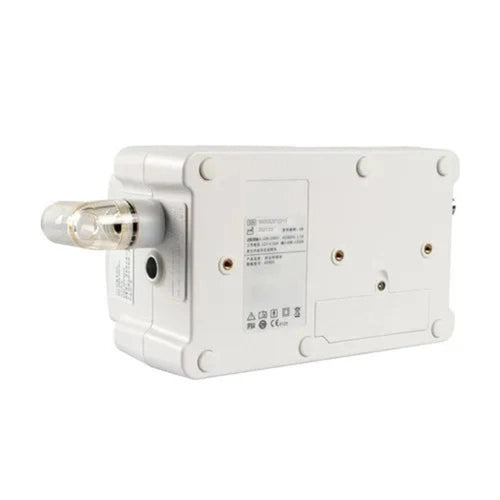
VentiFlex Sodalime for Ventilator CO2 Color Change

Type: Anesthesia

VentiFlex Sodalime for Ventilator CO2 Color Change

Regular price Rs. 999
Sale price Rs. 999 Regular price Rs. 2,000
Ventilator Circuit Plain Delux

Type: General

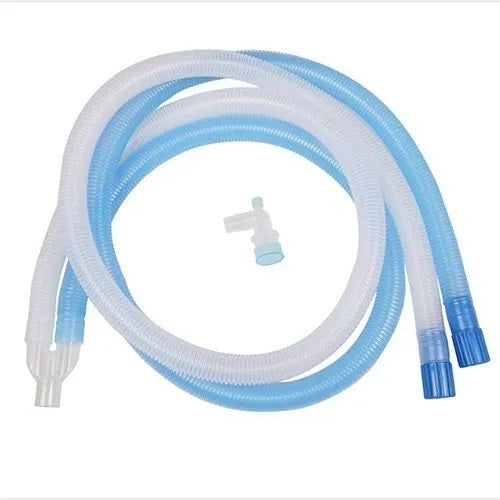
Ventilator Circuit Plain Delux

Regular price From Rs. 857
Sale price From Rs. 857 Regular price Rs. 1,468
Ventilator Disposable Double Water trap Circuit (Pack of 3)

Type: Anesthesia Products

Ventilator Disposable Double Water trap Circuit (Pack of 3)

Regular price Rs. 825
Sale price Rs. 825 Regular price Rs. 1,650
VentiFlex Ventilator Circuit Plain Dual Limb Adult

Type: Anesthesia

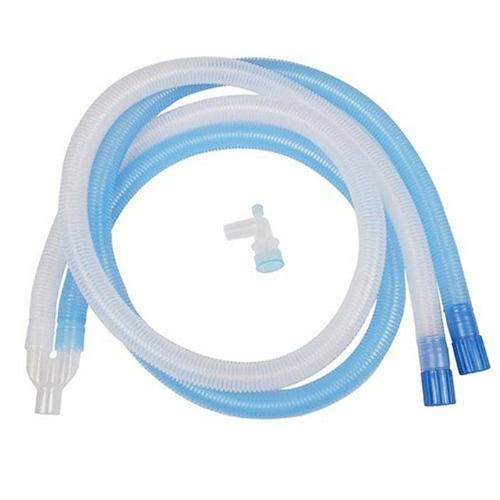
VentiFlex Ventilator Circuit Plain Dual Limb Adult

Regular price Rs. 239
Sale price Rs. 239 Regular price Rs. 368
Ventilator Disposable Double Water trap Circuit

Type: MeddeyGo

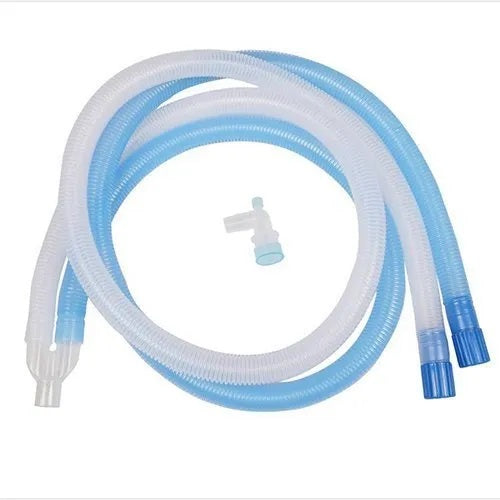
Ventilator Disposable Double Water trap Circuit

Regular price From Rs. 250
Sale price From Rs. 250 Regular price Rs. 399
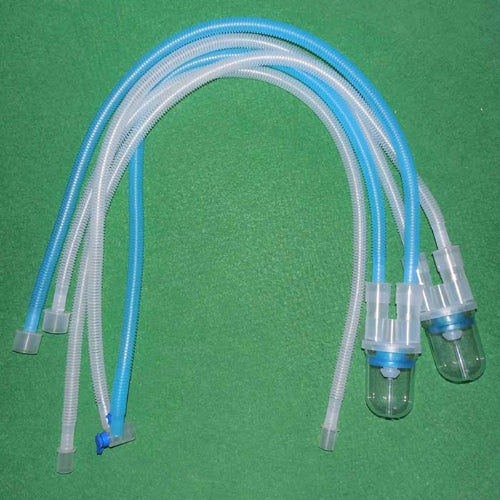
VentiFlex Ventilator Circuit Plain with Double Water Trap

Type: Anesthesia

VentiFlex Ventilator Circuit Plain with Double Water Trap

Regular price Rs. 350
Sale price Rs. 350 Regular price Rs. 500
Ventilator Disposable Single Water trap Circuit (Pack of 3)

Type: Anesthesia Products

Ventilator Disposable Single Water trap Circuit (Pack of 3)

Regular price From Rs. 972
Sale price From Rs. 972 Regular price Rs. 1,840
noccarc multi mode icu ventilator

Type: Anesthesia

Noccarc Multi Mode ICU Ventilator

Regular price Rs. 533,139
Sale price Rs. 533,139 Regular price Rs. 598,000
Resmed Astral™ 150 Ventilator

Type: Anesthesia

Resmed Astral™ 150 Ventilator

Regular price Rs. 412,000
Sale price Rs. 412,000 Regular price Rs. 590,000
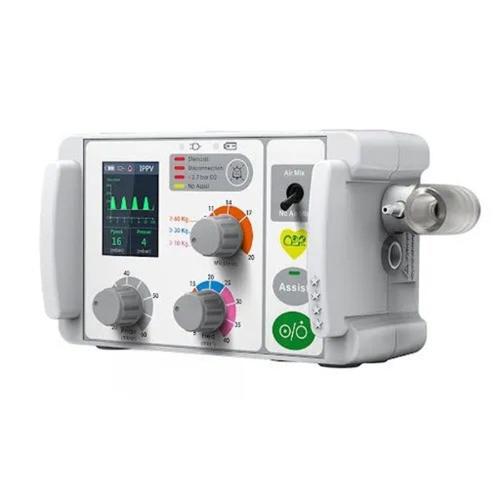
ventilator

Type: Anesthesia

AIRLOG 3 Portable ventilator

Regular price Rs. 132,239
Sale price Rs. 132,239 Regular price Rs. 207,000

Collection: Ventilator Machines: ICU, Portable & Non-Invasive (NIV)

1. The Life Saver: Understanding the Medical Ventilator

In the world of critical care, a ventilator machine (often called a respirator machine) is the most vital piece of equipment. Its primary job is simple yet profound: to breathe for a patient who cannot breathe on their own. Whether it's due to a severe lung infection, surgery, or a chronic condition, a medical ventilator ensures that the body’s vital organs receive the oxygen they need to survive.

How Does a Ventilator Work?

Modern ventilators use positive pressure ventilation. Unlike human lungs, which create a vacuum to pull air in, these machines gently push oxygen-rich air into the lungs. This process not only provides oxygen but also helps remove carbon dioxide, preventing its toxic buildup in the bloodstream.

Invasive vs. Non-Invasive Ventilation:

  • Invasive Ventilation: Requires an endotracheal tube (through the mouth) or a tracheostomy tube (through the neck). This is used for critical ventilator patients in the ICU.
  • Non-Invasive Ventilation (NIV): Delivered via a tight-fitting mask. This is common for home ventilators and patients with conditions like COPD or mild respiratory failure.

Why 2026 Tech Matters?

By 2026, the technology inside a ventilator machine has evolved to include AI-driven algorithms. These machines can now "sense" a patient’s tiny effort to breathe and synchronize the air delivery perfectly, reducing what doctors call "patient-ventilator asynchrony." For hospitals and clinics, this means faster recovery times and shorter ICU stays.


2. ICU vs. Home Ventilators: Choosing the Right Care Setting

For a healthcare provider or a family member, the choice between an ICU ventilator and a home ventilator is driven by "Patient Acuity"—essentially, how sick the patient is and how much monitoring they require.

Feature ICU / Critical Care Ventilator Home / Portable Ventilator
Complexity High (Advanced modes like SIMV, PRVC, APRV). Simplified (Focus on CPAP, S/T, and basic A/C).
Monitoring Real-time waveforms, lung mechanics, and CO2. Basic numeric data and critical alarms.
Power & Gas Requires wall-mount oxygen and medical air. Internal turbines and long-life batteries (up to 10 hrs).
Mobility Stationary / Trolley mounted. Extremely Portable (usually < 5 kg).

The Revolution of Portable & Transport Ventilators

In 2026, the portable ventilator has become a staple for every ambulance, clinic, and OT. Unlike the bulky "Iron Lungs" of the past, today’s transport ventilators are rugged, shockproof, and capable of operating without a heavy oxygen tank thanks to high-speed internal turbines.

  • Emergency Transport: Essential for moving a ventilator patient from a small clinic to a super-specialty hospital ICU without interrupting life support.
  • Home Autonomy: Devices like the ResMed Stellar or Philips Trilogy allow patients with chronic respiratory failure to live at home, significantly reducing hospital costs and the risk of hospital-acquired infections (VAP).
  • Disaster Response: Lightweight designs make them the first choice for "field hospitals" or remote medical camps in India.

Did You Know?

Advanced 2026 models like the Hamilton T1 now include "Smart Modes" that automatically adjust pressure to the lowest possible setting based on a patient's lung effort. This "lung-protective" strategy prevents barotrauma and helps in faster "weaning" (getting the patient off the machine).

When is a Home Ventilator Prescribed?

A home ventilator is often the final step in a patient's recovery journey. It is typically prescribed for:

  1. Chronic Lung Disease: Advanced COPD where standard BiPAP is no longer sufficient.
  2. Neuromuscular Disorders: Conditions like ALS (Motor Neuron Disease) or Muscular Dystrophy where the breathing muscles weaken.
  3. Post-ICU Weaning: When a patient is stable enough to leave the hospital but still requires mechanical assistance during sleep.

3. Ventilator Machine Pricing & Brand Comparison (2026)

Investing in a medical ventilator is a significant decision for any hospital, clinic, or OT. In 2026, ventilator machine prices in India vary based on the clinical application—ranging from basic home-care units to high-end, AI-enabled ICU workstations.

2026 Market Price Breakdown

Ventilator Category Typical Price Range (INR) Ideal For
Non-Invasive (NIV) / Home Ventilators ₹1,10,000 – ₹3,50,000 Home care, COPD, Sleep Apnea, Stable chronic patients.
Portable / Transport Ventilators ₹2,80,000 – ₹14,00,000 Ambulances, OTs, Emergency Rooms, Inter-hospital transfer.
Standard ICU Ventilators ₹4,50,000 – ₹12,00,000 General ICUs, Clinics, Sub-acute care.
High-End / Premium ICU Workstations ₹15,00,000 – ₹25,00,000+ Tertiary Care Hospitals, Neonatal ICUs, Critical ARDS cases.

The Leaders: Top 2026 Ventilator Brands to Watch

When evaluating the ventilator price, the brand’s reputation for sensor accuracy and after-sales service is crucial. Here are the top performers in the Indian market:

1. ResMed (Home Care Specialist)

Famous for the Stellar 150 and Astral series. They dominate the home ventilator market with lightweight, user-friendly designs starting around ₹2.1 Lakh.

2. Philips (Versatile Performance)

The Trilogy Evo is a top choice for both hospital and home use. Expect ventilator machine prices for Philips to range between ₹6.5 Lakh and ₹9 Lakh.

3. BPL Medical (The Indian Standard)

Reliable and cost-effective. The Elisa 600 and Prisma series are widely used in clinics and OTs, offering ICU performance at competitive rates (₹4.5L - ₹15L).

4. Hamilton (Premium ICU)

The gold standard for "Intelligent Ventilation." The Hamilton T1 transport ventilator is a high-performance machine often priced at ₹14 Lakh+ for its advanced closed-loop technology.

MeddeyGo Procurement Tip:

While a low ventilator price is attractive, always factor in the Total Cost of Ownership (TCO). Check the availability of sensors, patient circuits, and the response time of the service team. At MeddeyGo, we only partner with brands that offer robust pan-India service support to ensure your respirator machine never has downtime.

What Drives the Price of a Ventilator?

Not all medical ventilators are created equal. The price is usually dictated by three main factors:

  • Turbine vs. Compressor: Turbine-based machines (like the Mindray SV300) don't require external medical air, making them more expensive but highly versatile for clinics.
  • Monitoring Capabilities: High-end ICU ventilators display real-time lung graphics (loops and waveforms) which are essential for treating severe ventilator patients.
  • Battery Life: For transport ventilators, a 10-hour battery vs. a 2-hour battery can add significantly to the cost.

4. Deciphering the Modes: SIMV, AC, and CPAP/BiPAP

For doctors and ICU staff, the "Mode" of a medical ventilator determines how the machine interacts with the patient. Choosing the wrong mode can lead to lung injury, while the right mode speeds up recovery.

Assist/Control (A/C)

The machine does all the work. It delivers a set number of breaths at a set volume or pressure. Ideal for heavily sedated ventilator patients in the early stages of critical illness.

SIMV (Synchronized Intermittent Mandatory Ventilation)

A "weaning" mode. The machine provides mandatory breaths but allows the patient to take their own breaths in between. It "synchronizes" with the patient to prevent fighting the machine.

CPAP / PSV (Pressure Support)

The patient triggers every breath, and the respirator machine simply provides a "boost" of pressure to make breathing easier. Used just before removing the ventilator entirely.

Maintenance & Hygiene: Preventing Ventilator-Associated Pneumonia (VAP)

A ventilator machine can save a life, but if not maintained, it can introduce dangerous bacteria into the lungs. In hospitals and home care, following a strict hygiene protocol is non-negotiable.

The 2026 Sterilization Checklist:

  • Patient Circuits: Use high-quality, disposable HME (Heat and Moisture Exchanger) filters and change them every 24 hours or if they become soiled.
  • Humidifier Care: Use ONLY distilled water in the humidifier chamber. Tap water contains minerals and microbes that can damage the machine's internal sensors.
  • Expiratory Valve: This is a critical component that often gets clogged with moisture. Ensure it is cleaned and sterilized (autoclaved) as per the manufacturer's guidelines after every patient use.
  • Oxygen Sensors: Calibrate the oxygen sensors weekly. A faulty sensor can lead to "Oxygen Toxicity" or hypoxia, both of which are lethal for a ventilator patient.

Visualizing Life: Waveforms and Loops

High-end ICU ventilators (like those from Hamilton or Draeger) do more than pump air; they provide a visual "map" of the lungs.

  • Pressure-Volume Loops: Help doctors identify "Lung Compliance"—how stiff or flexible the lungs are. This is vital for managing ARDS (Acute Respiratory Distress Syndrome).
  • Flow Waveforms: Show if the patient is "air-trapping" (COPD patients often struggle to exhale fully), allowing the clinician to adjust the ventilator price-justified advanced settings.

"Modern ventilation is no longer just about volume; it's about lung protection. Every breath delivered must be precisely calculated to avoid over-stretching the delicate alveoli."


5. The Ultimate 10-Point Ventilator Procurement Checklist

Before finalizing your ventilator machine price and signing a purchase order, ensure the device meets these 2026 clinical standards:

Mode Versatility: Does it support AC, SIMV, PSV, and CPAP/BiPAP?
Oxygen Control: Is there an adjustable FiO2 (21% to 100%) mixing system?
Battery Backup: Does it offer at least 4–6 hours of internal backup for transport?
Humidification: Is an active heated humidification system included?
Alarm Precision: Does it have high/low pressure, apnea, and power-fail alarms?
User Interface: Is the touchscreen intuitive enough for emergency use?
Consumables: Are filters and circuits easily available in the local market?
Service Support: Does the vendor provide 24/7 on-call biomedical support?
Compliance: Is the machine CDSCO/CE/FDA approved for medical ventilator use?
Finance: Are there MeddeyGo EMI options to manage the capital expenditure?

Frequently Asked Questions (FAQ)

1. Can a ventilator machine be used for a patient at home?

Yes. Home ventilators are designed for stable patients with chronic respiratory failure. However, they must be managed by a trained caregiver or nurse and monitored regularly by a doctor.

2. Why is there such a large difference in ventilator prices?

The price depends on "intelligence." A high-end ICU ventilator has advanced sensors for lung mechanics and AI modes, while a portable ventilator focuses on battery life and ruggedness for transport.

3. What happens to a ventilator patient during a power cut?

Medical-grade ventilators have internal batteries. However, for home ventilators, we always recommend an external Online UPS or a dedicated generator backup to ensure 100% uptime.

The MeddeyGo Advantage: Beyond the Machine

Procuring a respirator machine is a decade-long commitment. At MeddeyGo, we provide a 360-degree support system for hospitals, clinics, and OTs across India.

  • Expert Consultation: Our clinical specialists help you match the right machine to your patient load.
  • Transparent Pricing: Get the most competitive ventilator machine price without hidden costs.
  • Installation & Demo: We provide on-site training for your medical staff to ensure safe operation.
  • Pan-India Service: Our network of biomedical engineers ensures your life-support equipment stays operational 24/7.

Conclusion: Elevating Critical Care

A ventilator machine is more than just a piece of equipment; it is a second chance at life for your patients. Whether you are upgrading your ICU or setting up a home ventilator unit, your choice today defines the clinical outcomes of tomorrow.

© 2026 MeddeyGo.com | India's Trusted Medical Equipment Partner.