


Type: Posture Corrector
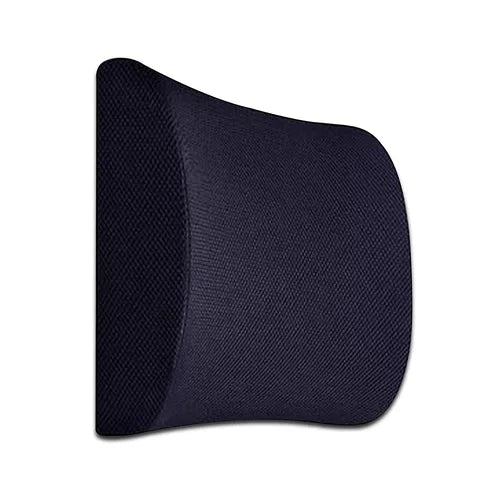
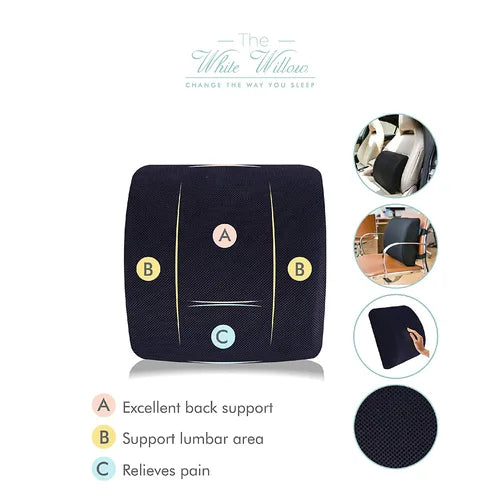
Lumbar Full Back Support Memory Foam Backrest Cushion - Back Support & Pain Relief
Type: Posture Corrector
Lumbar Support Memory Foam Backrest Cushion
Type: Posture Care
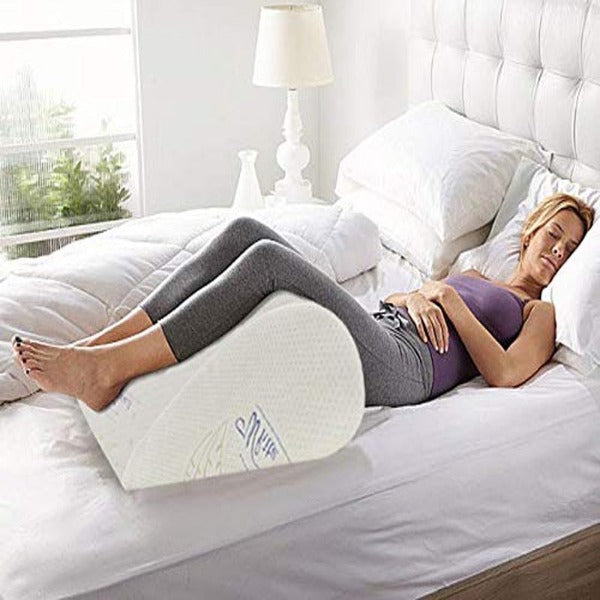
Bed Wedge Pillow Memory Foam for Sitting Reading TV Watching

Type: Posture Care
Round Shaped Soft Memory Foam Bolster Pillow - Back & Neck Support
Type: Personal Care
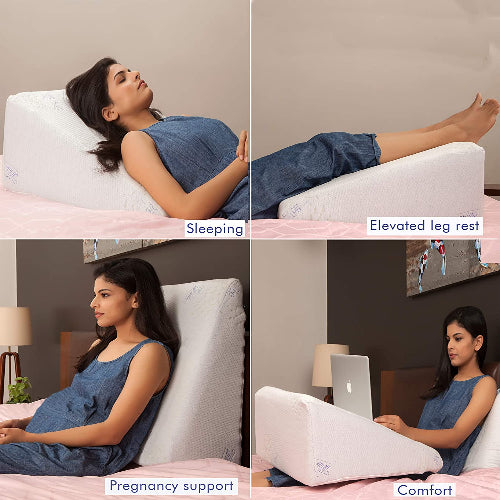
Bed Wedge Pillow Memory Foam for Back Pain Snoring Acid Reflux Relief
Collection:
Backrest
If you end your workday with a nagging ache in your lower back, you’re not alone. We often blame long hours or stress, but the real culprit is usually something we use all day yet barely notice: the backrest of our chair. These common symptoms of poor sitting posture feel unavoidable, but they are almost always a solvable problem. The solution begins not with an expensive new chair, but with understanding what your backrest is supposed to be doing in the first place.
Think of your spine not as a straight pole, but as a gentle "S" shape. Without support, gravity and fatigue cause us to slump, collapsing that healthy "S" into a strained "C" shape. This is where a good backrest comes in. Its single most important job is to act like a supportive hand for your lower back, gently preserving its natural inward curve and preventing that slouch. This simple principle is the foundation of proper spinal alignment.
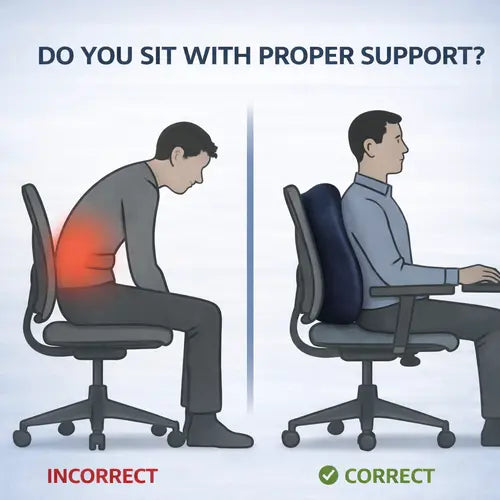
The challenge is that most seats—from office chairs to car seats and couches—aren't designed to fit your specific shape. You can likely feel it right now: a gap between your lower back and the chair. This empty space forces your muscles to work overtime just to hold you up, leading to the strain and pain that build throughout the day. As the image here shows, the difference between a supported spine and an unsupported one is the difference between comfort and chronic pain.
Feeling helpless about sitting all day is a common frustration, but you have more control than you think. This guide provides a clear roadmap for choosing the right backrest and optimizing any chair you use. You will learn how to identify what good support feels like, simple tricks to fix your current setup, and what key features to look for in your next chair. You don’t have to accept back pain as a part of your day.
Why Your Spine Hates Flat Chairs: The “S-Curve” vs. the “C-Slump”
Ever wonder why sitting on a park bench or a simple dining chair feels fine for five minutes but becomes a real pain after an hour? The answer isn't just about cushioning; it's a fundamental mismatch between the chair's shape and your body's. A flat, rigid backrest forces your spine into a position it was never meant to hold.
If you were to look at a healthy spine from the side, you wouldn’t see a straight rod. Instead, you'd see a gentle, natural “S-curve.” It curves inward at your lower back, then gently outward at your upper back and shoulders. This elegant shape is a brilliant piece of natural engineering, designed to distribute your weight, absorb shock, and keep you balanced with minimal muscle effort. Maintaining it is the key to sitting comfortably for longer periods.
Without support, however, gravity inevitably wins. When you sit in a chair that doesn't support your lower back’s inward curve, your pelvis tilts backward, and your strong “S” shape collapses into a lazy “C-slump.” You know the posture well: your shoulders round forward, your head juts out, and you feel yourself hunching over. These are the classic symptoms of poor sitting posture, and that slump is what causes strain in your upper back and neck, making you search for ways of relieving thoracic spine pain.
This “C” shape may feel relaxed for a moment, but it’s actively working against you. When your spine is out of alignment, your back muscles, which should be relatively relaxed, are forced to work overtime just to hold your upper body upright. This constant strain is what leads to muscle fatigue, stiffness, and that familiar, nagging ache at the end of the day. A good backrest’s primary job is simple but crucial: to prevent the C-slump by giving your spine the support it needs to maintain its natural S-curve.
What Is "Lumbar Support" and How Should It Actually Feel?
The most critical part of maintaining that healthy S-curve begins with your lower back. If you run your hand down your spine, you’ll feel it naturally curve inward just above your hips. This area is called the lumbar region, and it’s the part of your back most vulnerable to slumping in a chair. “Lumbar support,” then, is simply any feature on a backrest designed to fill that specific inward curve, preventing your pelvis from tilting backward and your spine from collapsing into that dreaded "C" shape.
To find out if your current chair is doing its job, try this simple test. Sit all the way back, with your shoulders against the backrest and your feet flat on the floor. Now, try to slide your flat hand into the space between your lower back and the chair. If you can easily slide your hand—or even your whole arm—into that gap, you’re missing support right where you need it most. This simple gap is often the primary reason people look for ways on how to improve lower back support on a chair.
The goal of lumbar support isn't to be a soft cushion, but to provide a firm, stable surface that fills that gap. Think of it like a supportive hand gently pressing into your lower back, encouraging your spine to hold its natural alignment. This is the key to finding what is the best support for sitting all day. If your chair lacks this feature, the benefits of an ergonomic lumbar pillow come from its ability to do this exact job—it manually fills the space and props up your spine.
But how do you know if the support is correct and not just a random bulge? Good lumbar support should feel just right, not aggressive. When you lean back, it should meet these three criteria:
- You feel gentle, even pressure. It should feel like the chair is meeting your natural curve, not like a hard object is digging into your back.
- There’s no gap. Your lower back should be in full, comfortable contact with the support.
- You aren’t pushed forward. Proper support holds you in a neutral posture; it doesn't shove your hips toward the edge of the seat.
Ultimately, effective lumbar support is less about cushion and more about shape. It’s the key to preventing the C-slump and finally letting your back muscles relax instead of straining to hold you upright. But supporting the lower back is only half the story. The height of your backrest also plays a major role in comfort, especially for your shoulders and neck.
High-Back vs. Mid-Back: When Does Upper Back Support Matter?
While getting lumbar support right is the most important first step, the height of your backrest plays a huge role in your overall comfort. Looking at office chairs, you’ll notice they generally come in two main styles: mid-back, which typically stops somewhere below the shoulder blades, and high-back, which extends up to support the shoulders and head. The best choice isn't about which looks better, but about how you plan to use the chair.
For focused, upright work like typing or writing, a mid-back chair is often perfectly adequate. When you’re sitting upright, your primary need is for your lower back to be supported to maintain that S-curve. In this posture, your upper back and shoulders aren’t heavily relying on the chair. A mid-back design promotes an active, engaged posture and allows your shoulders and arms to move freely without bumping into a tall backrest, making it a streamlined tool for active tasking.
The game changes the moment you recline. A high-back chair is designed to support not just your lower back but also your thoracic spine—the area from your mid-back up to your shoulders. When you lean back to take a phone call, watch a video, or simply think, a high-back chair cradles your entire upper body. This support prevents your shoulders from rounding forward and your head from slumping, allowing the muscles around your shoulder blades and neck to fully relax. Trying to recline in a mid-back chair leaves your head and shoulders unsupported, which can quickly lead to neck strain.
Ultimately, choosing the right backrest comes down to your daily habits. If your chair is used exclusively for short periods of intense, forward-leaning work, a mid-back design may be all you need. However, for anyone who spends long hours at a desk and values the ability to switch between focused work and moments of rest, a high-back chair offers far more versatility and is key for relieving thoracic spine pain. But what if your chair has the right height but still feels inadequate in the lumbar area? Sometimes, the most effective solution isn't a new chair at all.
The Quickest Fix: How to Choose an Add-On Lumbar Pillow That Actually Helps
If your chair feels flat and unsupportive but you’re not ready for an upgrade, an add-on lumbar pillow can be a game-changer. These portable cushions are an affordable way to introduce proper support to nearly any seat, from an office chair to your car. However, grabbing the first one you see is a common mistake. The secret to effective support lies in choosing the right shape for the specific gap your chair leaves behind your back.
When you start shopping, you’ll notice two main designs: the lumbar roll and the full lumbar cushion. A lumbar roll is typically a small, cylindrical pillow designed to give a targeted nudge of support right where you need it. It’s perfect for chairs that already have a decent shape but just need a little extra curve to be perfect. In contrast, a full lumbar cushion is larger, often D-shaped, and designed to fill a much bigger void. These are ideal for seats with completely flat backs, like many dining chairs or older office models, where you need to create a supportive curve from scratch.
So, how do you decide which one is right for you? It’s easier than you think. Use this simple checklist to find your match:
- Identify Your Gap: Sit all the way back in your chair. Can you easily slide your flat hand into the space behind your lower back? If it’s a snug fit, you likely only need a small lumbar roll. If you can fit your entire forearm or a clenched fist in that space, you need the broader support of a full lumbar cushion.
- Match the Chair: A deep, bucket-style car seat may only have room for a slender roll, while a wide, flat sofa will almost certainly require a full cushion to provide any meaningful support.
- Check for a Strap: A lumbar pillow is useless if it’s constantly slipping down. Always choose a model with an adjustable strap to keep the support anchored at the correct height on your chair.
Finding the right shape is half the battle; placing it correctly is the other half. The pillow shouldn't be a hard bulge pushing your back forward. Instead, it should nestle comfortably into the natural inward curve of your lower back, generally right above your beltline. You’ll know it’s in the right spot when you feel gentle, even pressure that helps you sit upright effortlessly. Once you've found the perfect shape, the final consideration is the material it's made from, which can dramatically affect how it feels over a long day.
Memory Foam vs. Mesh: Which Backrest Material Is Best for You?
Beyond the shape of your support, the material it's made from plays a huge role in how comfortable you feel hour after hour. When you're looking at backrests or add-on cushions, you'll most often encounter two popular options: memory foam and mesh. While both can provide excellent support, they feel and function in completely different ways, making the choice a matter of personal preference and environment.
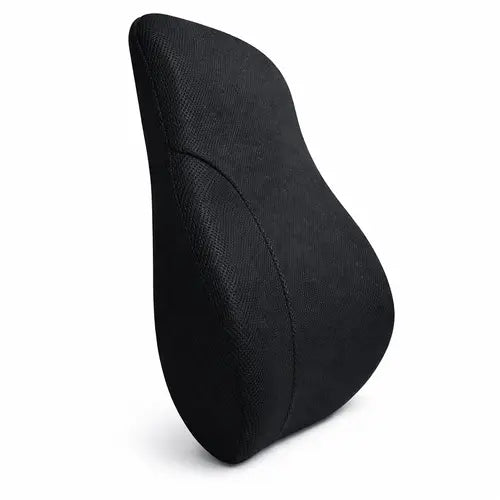
Memory foam is known for its unique ability to conform to your body. Think of it as a custom mold for your back; the dense foam softens with your body heat and pressure, contouring perfectly to the specific curve of your spine. This creates a feeling of being "held" and provides precise, evenly distributed support with no pressure points. The primary downside? Because it's so dense, memory foam can trap heat. If you tend to run warm or work in a stuffy environment, you might find it uncomfortably hot during long sitting sessions.
In contrast, a mesh backrest works more like a firm, supportive hammock. It’s stretched taut across a frame, allowing it to flex and distribute your weight without needing to mold to your exact shape. The most significant advantage of mesh is its breathability. Air flows freely through the material, which helps keep you cool and prevents the sweaty-back feeling that’s common with solid chairs. While it offers excellent general support, it doesn’t provide the same precise, "locked-in" feel that memory foam does.
Ultimately, choosing between them comes down to a simple trade-off: Do you prefer the custom, pressure-relieving hug of memory foam, or the cool, breathable flexibility of mesh? If you constantly feel chilly or crave that exact-fit sensation, memory foam is likely your best bet. If you run hot or value airflow above all else, you’ll be much happier with mesh. This choice is just as important in your vehicle, where long periods of sitting can make or break your comfort on a trip.
How to End Back Pain From Driving: A Guide for Your Car Seat
The principles of good back support don't end when you leave your office. For many of us, the daily commute is a major source of back pain, and it’s no surprise why. Most car seats, with their deep, bucket-like design, are surprisingly bad for our posture. They force our bodies into a slumped position that can turn a short drive into an uncomfortable ordeal and a long road trip into a nightmare for your lower back.
Your first line of defense is to adjust the seat you already have. Start by moving the seat forward enough that you can fully press the pedals without straining or having to lift your back off the seat. Next, resist the urge to sit bolt upright at a 90-degree angle. Instead, recline your backrest to an angle between 100 and 110 degrees. This subtle shift makes a huge difference, as it allows the backrest to take a significant amount of weight off your spine, reducing compression on your lumbar discs.
The real problem with most car seats, however, is the shape of the seat itself. The cushion often slopes down toward the back, which forces your hips to roll backward in a motion called a posterior pelvic tilt. Think of it as your pelvis tilting away from your thighs. This tilt flattens your lower back’s natural S-curve, putting immense strain on your muscles and nerves. To fix this, you need to level the playing field for your hips.
This is where a simple but incredibly effective tool comes in: the wedge cushion. This firm, ramp-shaped cushion is placed on your seat with the thicker end at the back, effectively neutralizing the seat’s downward slope. By raising your hips, the wedge cushion corrects your pelvic tilt, allowing your spine to maintain its healthy S-curve. This one change can provide immediate relief, making it an excellent car seat cushion for sciatica relief by taking direct pressure off the sciatic nerve.
Because of its simple design, a wedge cushion is a fantastic piece of portable chair support for travel, easily moved from your car to an airplane seat or a stiff hotel chair. Mastering your posture on the go is just as important as when you're at home. But what about when you don't have a chair at all?
From Bed to Couch: How to Sit Comfortably Without a Chair
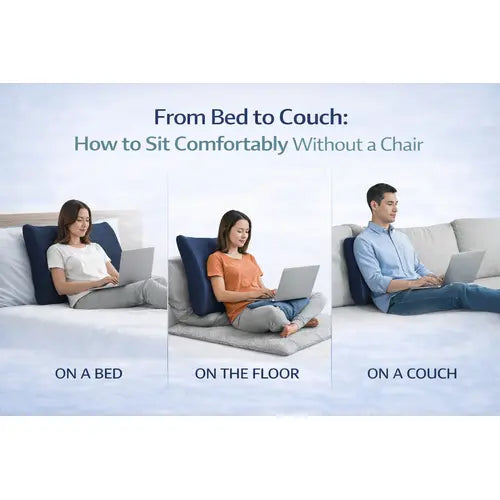
Relaxing on the couch or reading in bed often ends with a familiar, nagging ache in the neck and shoulders. We instinctively blame the flimsy pillow behind our head, but the real problem usually starts much lower. When you sit without a proper backrest, your body slumps into a "C" shape. Your lower back rounds, your shoulders hunch forward, and your head juts out to compensate. This position forces your neck muscles to work overtime just to hold up your head, leading directly to strain and pain.
You can instantly create better support using a technique called "pillow-stacking." The secret is to build a foundation, not just a pile. Start by placing your firmest pillows at the base, angled to fill the gap behind your lower back and prop up your hips. This is the most crucial step, as it helps your spine maintain its natural S-curve. Once that foundation is set, you can add softer pillows on top for your mid-back and shoulders, creating a custom backrest that supports your entire torso.
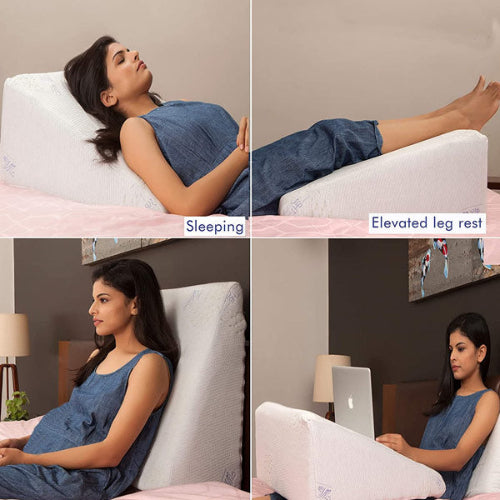
For those who frequently read or work from bed, a dedicated reading pillow can be a fantastic upgrade. As you can see in the image, these firm, structured cushions act like a portable, adjustable pillow for reading in bed. Unlike a loose stack of pillows that can shift and compress, these are specifically designed to provide a stable and consistent angle of support. They essentially create a reliable backrest where one doesn't exist, preventing the gradual slump that causes discomfort over time.
By learning to recognize the feeling of a well-supported lower back, you’ve gained the most important tool for assessing comfort anywhere. Now, how does the chair you use every single day measure up to this new standard?
Your 2-Minute Test: Is Your Current Chair Secretly Hurting You?
That chair you spend hours in every day might feel comfortable enough, but it could be the hidden source of your end-of-day aches. Just because a chair doesn't feel immediately painful doesn't mean it's providing the right support. Poor alignment is subtle, and its effects—like muscle fatigue and back strain—add up over time. The good news is that you don’t need to be an expert to spot the warning signs. You can perform a quick diagnostic check on any chair, right now.
To see if your chair is helping or hurting you, run it through this simple three-part evaluation. Sit down as you normally would for work or relaxation and check the following:
- The Gap Test: Sit up straight with your back against the backrest. Can you easily slide your flat hand into the space behind your lower back? If there’s a noticeable gap, your chair fails to support the natural curve of your spine.
- The Feet Test: With your back still against the backrest, look down at your feet. Are they resting flat on the floor with your knees at a roughly 90-degree angle? If your feet are dangling or tucked uncomfortably underneath you, the chair’s height is causing problems for your posture.
- The Armrest Test: Place your forearms on the armrests. Your shoulders should feel relaxed and down, not hunched up toward your ears. If they are, the armrests are too high; if your arms are hanging to reach them, they’re too low.
If you felt a gap behind your back during the first test, there’s an immediate fix you can try. This is one of the most effective DIY chair ergonomics improvements you can make. Grab a bath towel, roll it up, and place it horizontally in the curve of your lower back. This instantly addresses how to improve lower back support by filling that empty space. Adjust the thickness of the roll until you feel gentle, even pressure—it should feel like a supportive hand, not a hard bulge.
This simple towel trick is incredibly revealing. If it makes you feel instantly more comfortable, it’s a clear sign your chair lacks proper lumbar support. While the towel is a great stopgap, it’s not a permanent solution, especially on a chair that fails the other tests, too. Recognizing your chair's limitations is the first, most powerful step toward fixing the problem for good.
Your Action Plan for a Pain-Free Back
Before reading this, a backrest was just part of a chair. A nagging backache at the end of the day might have felt like an unavoidable cost of sitting. Now, you see things differently. You can look at any seat—in your car, at your desk, or on the train—and instantly diagnose whether it's supporting you or fighting against you. You’ve shifted from passively accepting discomfort to proactively shaping your own comfort and health.
Putting this new knowledge into practice doesn't have to be complicated or expensive. Here is a clear, prioritized action plan you can start this minute.
Your 3-Step Action Plan:
- ASSESS: Sit in your main chair and try the "Gap Test." Can you easily slide your hand into the space behind your lower back? If so, your spine's natural S-curve is unsupported.
- IMPLEMENT: Roll up a small towel or grab a couch cushion and place it in that gap. Notice the immediate feeling of gentle, even pressure. That’s the feeling of good support.
- UPGRADE: When you’re ready for a more permanent solution, you’ll know exactly what to look for. Whether choosing the right backrest pillow or a new chair, the goal is the same: find the best support for sitting all day by perfectly maintaining your spine’s natural curve.
A supportive backrest is your powerful new ally against pain, but it’s still only half the battle. Remember that even the most perfect chair is only designed to support you while you sit. The best posture is always your next posture. Now that you've mastered your seat, you're ready to embrace the final piece of the puzzle: giving your body the regular movement it needs to truly thrive.