

Type: Gloves
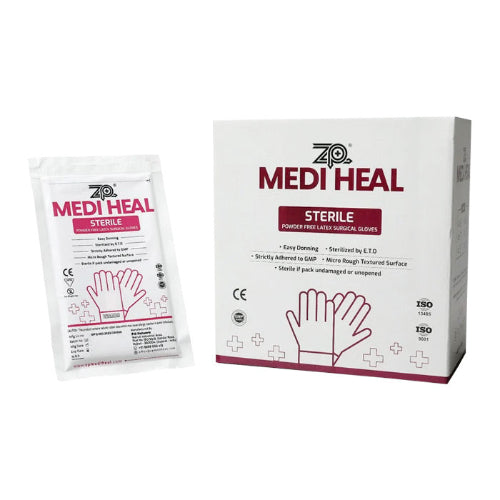
Powder Free Surgical Gloves Sterile


Type: Gloves
Sterile Long Cuff Disposable Gloves 18 Inch (Pack of 25)


Type: Gloves
Powder Free Surgical Gloves Sterile (Pack of 25)


Type: Gloves
Latex Examination Gloves Powdered (Box of 100)
Type: Gloves
Powder Free Surgical Gloves Sterile (Pack of 10)


Type: Gloves
Premium Sterile Long Cuff Disposable Gloves 16 Inch Gynaecological Powder Free Gloves (Pack of 25)

Type: Gloves
Sterile Latex Surgical Gloves (Pack of 10)


Type: Gloves
Nitrile Examination Gloves Powder Free pack of 200

Type: Gloves
Nitrile Examination Gloves


Type: Gloves
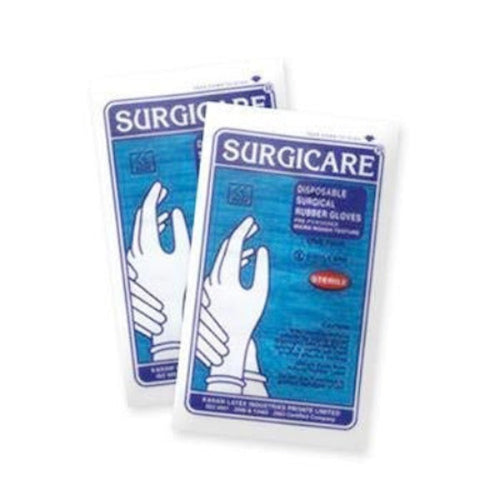
Surgicare Sterile Disposable Surgical Gloves – Pack of 20
Collection:
Surgical Gloves: Types, Uses, Safety, Benefits & Buying Guide
Surgical Gloves: Types, Uses, Safety and Buying Guide
Surgical gloves are sterile, single-use medical gloves designed to create a protective barrier during surgical procedures. Choosing surgical gloves involves intended use, sterile status, material, fit, allergy considerations and surgical procedure requirements. This guide explains surgical gloves, their main types, uses, benefits, fit considerations and purchasing points without confusing them with examination or general-purpose gloves.

Surgical Gloves vs Normal Gloves: What Is the Difference?

Surgical gloves are intended for surgical procedures, and manufacturers supply them sterile. By contrast, “normal hand protection” may mean nonsterile examination hand protection, household hand protection or industrial protective hand protection. these options serve different purposes and are not interchangeable simply because they cover the hands. The correct choice depends on the surgical procedure and the item’s labeling, not its color or appearance.
How to Verify the Correct Glove Category
The distinction is especially important when shopping online. A listing may describe hand protection as “medical,” “professional,” or “protective,” but those words alone do not establish surgical suitability. Look for a clear surgical indication and sterile labeling rather than relying on a broad item title. FDA guidance states that surgeon’s hand protection should be sterile when offered for sale to end users.
|
Glove category |
Typical role |
Important purchasing distinction |
|---|---|---|
|
Surgical gloves |
Surgical procedures requiring a sterile hand barrier |
Confirm surgical intended use and sterile labeling |
|
Examination gloves |
Examinations and nonsurgical patient care |
Do not assume an examination glove is suitable for surgery |
|
Utility or industrial gloves |
Cleaning, chemical handling, and other designated nonpatient tasks |
Match protection to the hazard; do not substitute for patient-care gloves |
CDC distinguishes these categories by their intended tasks, including surgical procedures, nonsurgical patient care, and housekeeping activities.
Sterility and material answer different questions
“Sterile” describes the item’s supplied condition; “latex,” “nitrile,” and “polyisoprene” describe its material. Neither label replaces the other. A buyer should ask two separate questions. Does the surgical procedure require sterile hand protection? Is the particular item intended for that procedure? Manufacturers can also supply examination options in sterile form, so sterility alone does not identify a surgical item.
For purchasing, treat descriptions such as “surgical medical hand protection,” “surgical hand hand protection,” and “hand hand protection for surgery” as starting points. They are not complete specifications. Request the manufacturer’s exact item name and identifier before comparing alternatives. This avoids building an order around a search phrase that different sellers may use differently.
A useful ordering rule is to name the intended use first, followed by material, size, sterile status, and pack quantity. That produces a clearer request than simply asking a supplier for “medical hand protection.”
Surgical Gloves by Material: Main Types Used in Healthcare

There is no single three-part classification that describes every item. By material, three commonly discussed disposable medical item options are latex, nitrile, and vinyl; by clinical purpose, FDA identifies examination hand protection, surgical hand protection, and hand protection for handling chemotherapy agents. For surgical selection specifically, manufacturers also offer synthetic polyisoprene and neoprene options, so a three-material list is not a complete surgical buying guide.
Keeping these classification systems separate prevents a common mistake: assuming that a familiar material automatically makes a item appropriate for every surgical task. Start with intended use, then compare the materials available within that category.
Latex surgical gloves
Natural rubber latex remains an available surgical material. Manufacturers offer standard designs, thinner microsurgical styles and options for single or double gloving. Their published specifications may describe surface finish, donning coatings, cuff design, and thickness. Compare those features at the item level rather than treating all latex hand protection as identical.
The major selection concern is natural rubber latex allergy. If the wearer or patient has a known latex allergy, choose an appropriate synthetic alternative rather than assuming that a powder-free latex item removes the concern. FDA specifically advises choosing hand protection made from other materials when the user or patient is allergic to natural rubber latex.
For procurement teams, the phrase “latex hand protection surgical” should become a precise request: powder-free, sterile latex surgical hand protection in the required sizes. Include the allergy policy in that request so the supplier understands whether latex options are acceptable at all.
Nitrile gloves
Nitrile is a synthetic material used in medical hand protection, including examination options. However, healthcare familiarity alone does not make a nitrile item suitable for surgery. Check the exact item’s intended use and sterile status; material identity is not evidence of surgical suitability.
This matters when a purchasing system places many categories under the same menu. A search result for “surgery hand protection” may sit beside examination options with similar photographs. Open the technical information and confirm the classification before adding an item to an approved surgical supply list.
Do not treat nitrile as a universal answer to chemical exposure. HSE advises buyers to match selection to the substances they handle and to consult manufacturer compatibility information. A general material description cannot establish protection against every chemical or mixture.
Vinyl gloves
Polyvinyl chloride, commonly called vinyl, is another synthetic material used in medical hand protection. FDA includes it among alternatives to natural rubber latex, but that does not mean any vinyl item is suitable for an operation. As with other materials, the item’s intended use must support the task.
Avoid using a basic latex-versus-nitrile-versus-vinyl comparison as the final decision tool for surgical purchasing. It is useful for understanding material names, but it leaves out surgical-specific options and item-level requirements.
Polyisoprene and neoprene surgical gloves
Synthetic polyisoprene and neoprene are important additional options in surgical item ranges. Manufacturers offer them in several designs, including styles for delicate work, orthopedic procedures, and double-gloving systems. Their availability shows why buyers should not reduce surgical selection to three familiar disposable materials.
Some manufacturers make synthetic surgical options without added chemical accelerators, while others include them. For example, Ansell identifies a neoprene surgical item as chemical accelerator-free. Check the individual manufacturer statement instead of assuming that every nonlatex item has the same formulation or allergy-related characteristics.
Where Surgical Gloves Are Used
Surgical hand protection belong within a broader system of surgical hand preparation, sterile technique, and appropriate protective equipment. They provide a barrier during procedures, but they do not make instruments, surrounding surfaces, or other equipment sterile. Selection therefore needs to follow the surgical procedure’s requirements rather than a general preference for wearing more protective equipment.
Operating-room procedures
For surgery, buyers should consider both the work and the wearer when selecting a item. FDA guidance recognizes specialized surgical product designs, including microsurgery and orthopedic hand protection. These designs may differ in thickness or other physical characteristics, making it important to review the actual specification rather than assuming every surgical product is equivalent.
A useful evaluation starts with realistic tasks. Ask wearers to assess instrument handling, finger movement, cuff behavior and comfort during an approved surgical trial. Record which product and size they tested so feedback can guide a repeatable purchasing decision instead of becoming a vague preference for one brand.
Oral surgery
Surgical product requirements also extend beyond hospital operating rooms. CDC recommends sterile surgeon’s hand protection for oral surgical procedures, including implant surgery, periodontal surgery, certain biopsies, and surgical extractions involving specified tissue or bone work. Its recommendations also include surgical hand antisepsis and sterile irrigating solutions.
For a dental practice, the practical implication is to separate routine examination stock from surgical stock. Do not let a shared storage area blur the distinction between hand protection used for nonsurgical care and those selected for oral surgery. Build the surgical procedure setup around the correct product before treatment begins.
Other sterile procedures
Some nonsurgical procedures also require sterile hand protection. CDC advises prioritizing sterile hand protection for surgical and other sterile procedures, but that does not mean every sterile procedure necessarily requires the same surgical product product. Use the relevant surgical protocol and product labeling to determine the choice.
For supply planning, create separate entries for surgical procedure requirements rather than using one broad “sterile hand protection” category. This makes it easier to identify appropriate substitutes during purchasing reviews without assuming that all sterile products are interchangeable.

Benefits of Correctly Selected Surgical Gloves
The central benefit is a protective barrier between hands and potentially infectious material. FDA describes medical hand protection as one part of an infection-control strategy, protecting the wearer, patient, or both from microorganisms during medical care. That benefit depends on choosing the right product and using it correctly.
Supporting sterile technique
Sterile surgical hand protection help limit contamination of the operative field from the hands of the surgical team. CDC notes that sterile surgical hand protection must meet sterility-assurance standards and are less likely than nonsterile examination hand protection to carry pathogens that could contaminate an operative wound. They support sterile technique; they do not replace it.
The practical lesson is to protect the barrier throughout use. Staff still need correct opening, donning and handling techniques. Treat those steps as part of the product’s performance in practice, not as unrelated details after purchasing.
Offering task-specific fit and handling choices
Surgical product ranges include different sizes, thicknesses, surface finishes, and donning features. HALYARD, for example, describes multiple materials and designs with options for double gloving and instrument handling. Those choices let a facility assess products against actual procedural needs instead of selecting by material alone.
During a trial, ask concrete questions: can the wearer comfortably close the hand, manipulate the intended instruments, and maintain the required grip? Collecting answers is more useful than asking only whether the product “feels good.” The goal is a documented match between product, wearer, and task.
Making limitations easier to manage
Do not treat any surgical glove as puncture-proof. FDA warns that sharp objects can puncture medical hand protection, while surgical guidance addresses additional precautions such as double gloving. Gloves remain one protective layer within a larger approach to exposure prevention.
A realistic benefit statement is therefore better than an absolute promise: correctly selected surgical gloves support barrier protection while preserving the handling characteristics needed for the surgical procedure. Claims that a glove “eliminates infection” or “prevents all needlestick injuries” go beyond what those functions establish.
Choosing the Right Surgical Gloves: Fit and Features

Fit deserves its own evaluation because an acceptable material does not guarantee an acceptable glove. HSE recommends balancing protection with dexterity and considering the task, contact duration, grip requirements, and wearer comfort. Use those factors to build a structured trial. Do not rely on a single brief fitting.
Assess size during movement
Start with the manufacturer’s sizing information, then assess the glove while performing representative hand movements. Ask wearers to identify where they feel restriction, excess material, slipping, or pressure. Compare neighboring sizes when appropriate, and record the final choice against the exact product rather than assuming a size transfers perfectly between models.
Use a simple trial checklist:
-
Finger movement: Assess opening, closing, and controlled finger movements rather than judging fit with the hand held still.
-
Fingertip position: Ask whether excess material or tension interferes with the intended task.
-
Palm and thumb comfort: Check these areas during repeated movement, not just immediately after donning.
-
Cuff behavior: Observe how the glove works with the intended gown and established technique.
-
Layered fit: If double gloving is required, test the complete combination rather than each glove separately.
Treat these observations as a framework for local evaluation, not a substitute for the manufacturer’s instructions or clinical training.
Compare thickness, texture, and donning characteristics
Manufacturers offer different surgical glove thicknesses and surface finishes, including thinner designs and textured options. Some products also use internal coatings intended to assist donning. Because these features vary by model, compare the specifications for the actual items under review.
Avoid interpreting “thicker” as automatically better or “thinner” as automatically more suitable for precision work. Instead, ask what the surgical procedure requires and whether the proposed glove meets that need. A product review should balance handling, fit, and the documented protective requirements rather than optimizing one feature in isolation.
Include different users in the evaluation
Build a trial group that reflects the people who will actually wear the gloves. Include a useful range of hand sizes and the relevant clinical roles. Ask each participant to use the same feedback form so purchasing staff can distinguish repeated problems from individual preferences.
Before approving a substitution, repeat the checks that matter most. A replacement product may have the same material description but a different shape, surface finish, or size range. Require the supplier to identify those differences rather than describing the substitute only as “equivalent.”
Surgical Gloves, Latex Allergy and Powder-Free Selection
Allergy considerations involve more than choosing between latex and nonlatex. Natural rubber latex and manufacturing chemicals raise different concerns. Base any material change on product information and clinical assessment. Do not assume that every rash associated with gloves has the same cause.
Natural rubber latex allergy
For a patient or healthcare worker with a known natural rubber latex allergy, establish a latex-safe approach. Do not rely only on a low-protein claim. CDC’s dental guidance recommends screening for latex allergy and ensuring a latex-safe environment for affected patients and personnel. Glove selection is one part of that preparation.
A useful purchasing record should identify the specific synthetic alternatives approved by the facility. This helps staff find an appropriate option without improvising immediately before a procedure. Keep that information separate from general comfort preferences so an allergy-related requirement is not mistaken for an optional product choice.
Understanding the phrase “type 4 gloves”
“What are type 4 gloves?” is an ambiguous question, not a complete product specification. In discussions of glove-related allergy, Type IV refers to delayed hypersensitivity associated with allergic contact dermatitis. It does not identify a universal surgical glove material or a fourth standard grade of protection.
Some manufacturers offer surgical gloves without added chemical accelerators to address relevant sensitization concerns. However, “nonlatex” and “accelerator-free” are separate product characteristics. Check both statements when they matter, and involve occupational health or another appropriate clinician when a wearer develops persistent symptoms.
If a supplier uses “Type 4” in another context, request the full standard or classification reference. Do not approve a glove based on an unexplained number.
Powder-free does not mean latex-free
Powder content and material are separate attributes. A powder-free product may still contain natural rubber latex, so check both labels. In the United States, FDA banned powdered surgeon’s gloves, powdered patient examination gloves, and absorbable powder for lubricating surgeon’s gloves because of the risks associated with those products.
For a purchasing specification, list “powder-free” independently from the material requirement. This avoids a shorthand description that leaves suppliers to infer what is acceptable.
Double gloving and glove changes
Double gloving means wearing two pairs of gloves, one over the other. CDC recommends it during invasive procedures such as surgery that pose an increased risk of blood exposure. Do not generalize that surgical recommendation to every examination or routine patient-care activity. CDC does not routinely recommend double gloving as part of standard or transmission-based precautions.
WHO’s surgical-site-infection guidance summarizes evidence showing fewer perforations of the innermost glove when teams use an additional layer. However, do not present better perforation outcomes as proof that the method prevents every infection or exposure. Keep the claim aligned with the outcome studied.
Evaluate the complete glove system
A double-gloving assessment should include the inner glove, outer glove, sizing combination and intended procedure. Manufacturers offer dedicated combinations and indicator options, so consult the relevant product information rather than assembling a system solely by matching colors. Fit, comfort, and barrier performance remain important selection considerations.
For an internal trial, document the combination precisely. Recording only “size seven” is not enough if the inner and outer products differ. A complete record helps teams order and reproduce the approved setup consistently.
Define glove-change expectations
Change hand protection when damage occurs, and never carry contamination between patients or from contaminated to clean tasks. CDC’s recommendations address these transitions as well as removal after patient contact. Surgical teams should follow their specific intraoperative protocols when a breach or contamination occurs.
Do not invent a universal replacement interval for every operation. Translate the facility’s approved guidance into clear team expectations, including who communicates a suspected breach and how replacement supplies are made available. The purchasing plan should support those expectations with the necessary sizes and quantities.
Safe Handling of Surgical Gloves
Good glove practice begins before opening the package and continues through removal. Follow the manufacturer’s instructions and the facility’s approved sterile technique. The following checklist supports training and preparation; it is not a replacement for supervised clinical instruction.
Before opening the package
Check the exact product, material, size, expiration date, and sterile-barrier packaging. FDA guidance addresses shelf-life evidence for barrier properties, packaging integrity, and sterility, so the outer box alone should not be the only item reviewed. If the sterile package has damage or looks uncertain, follow the product instructions before use.
A practical pre-use check includes:
-
Confirm intended use. Verify that the selected item is the approved product for the planned procedure.
-
Check material requirements. Identify any latex or formulation restrictions before opening supplies.
-
Confirm size and layering. When the team plans double gloving, keep the intended inner and outer products ready.
-
Review package condition and dating. Resolve uncertainty before placing the item into use.
-
Prepare replacements. Make the required sizes accessible through the established surgical sterile workflow.
This sequence separates product verification from the more demanding moments of surgical procedure setup.
Prepare hands and use trained donning technique
Before surgery, perform surgical hand antisepsis according to the selected product’s instructions and facility policy. CDC advises removing rings, watches, and bracelets and allowing hands and forearms to dry before donning sterile gloves when using the relevant alcohol-based surgical preparation. Gloves do not replace hand hygiene.
Use the sterile donning technique taught for the setting, including the appropriate relationship between gloves and gown cuffs. Avoid treating a brief written description as sufficient instruction for a new clinical skill. Training should include observed practice and correction of technique, not just confirmation that staff have read a checklist.
Limit contamination during use
A gloved hand can still transfer contamination between surfaces. CDC’s safe-work guidance includes limiting surfaces touched, keeping hands away from the face, and changing gloves when torn or heavily contaminated. Wearing gloves does not make unnecessary contact with equipment or surroundings harmless.
For team planning, decide how staff will access nonsterile items without compromising the surgical sterile workflow. Discuss foreseeable needs before the surgical procedure rather than relying on improvised workarounds. Clear role assignment is more useful than expecting the glove itself to solve a workflow problem.
Remove gloves without contaminating bare hands
CDC illustrates a removal method where the opposite gloved hand peels off the first glove, then bare fingers remove the second from beneath its wrist edge. The aim is to keep contaminated outer surfaces away from bare skin. Perform hand hygiene after removal and follow the facility’s complete PPE-removal sequence.
Dispose of used gloves through the appropriate waste stream for the setting and contamination involved. Do not wash, disinfect, or reuse disposable medical gloves. Removal, disposal, and hand hygiene are part of safe use, not optional steps after the surgical task is complete.
Understanding category 3 gloves and other markings
“What are category 3 gloves?” usually refers to Category III personal protective equipment under the European PPE framework. This category covers specified risks that can have very serious consequences, including hazardous substances and harmful biological agents. It is a risk classification, not a universal rating of surgical quality.
A Category III designation alone does not establish that a glove is sterile or intended for surgery. Ask which requirements the product meets and what its labeling permits. For a US purchasing decision, review the relevant medical-device status rather than treating an overseas PPE marking as a substitute for it.
Chemical-protective glove markings introduce another classification system. European guidance describes Type A, B, and C chemical-protection categories based on specified testing. Do not confuse these letters with glove materials, clinical intended uses or allergy types.
Similarly, ISO 374-4 concerns testing resistance to degradation by chemicals; the “4” identifies a part of the standard. It does not create a general “Type 4 surgical glove” category. When a description contains unexplained numbers or symbols, request the complete reference and supporting documentation.
For supplier reviews, use a simple documentation rule: every claimed classification should have a named framework, a clear scope, and a connection to the intended task. An impressive-looking symbol is not useful if nobody can explain what it demonstrates.
Available at MeddeyGo
Compare selected sterile glove options currently listed on MeddeyGo for surgical and high-exposure clinical use.
| Product Image | Product | Current Price | View |
|---|---|---|---|
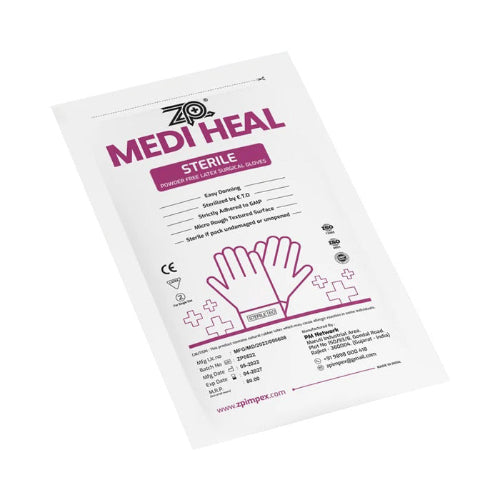 |
Powder Free Surgical Gloves Sterile (Pack of 10) | ₹379 | View product |
 |
Sterile Latex Surgical Gloves (Pack of 10) | ₹399 | View product |
 |
Sterile Long Cuff Disposable Gloves 18 Inch (Pack of 25) | ₹1,340 | View product |
Prices shown are current MeddeyGo listings at the time of preparation and may change.
What is the price of a pack of 50 surgical gloves?
There is no single price for a pack of 50 surgical gloves. A meaningful quote should identify the exact product, material, size and quantity basis. It should also state whether “50” means individual gloves or pairs. Some manufacturers package surgical products as 50 pairs per box, so compare the stated unit of supply rather than the number in the listing title.
Without a specified product and current supplier quote, a precise surgical gloves price would be misleading. Instead, request comparable quotations with the same requirements and calculate the cost per sterile pair. Keep delivery charges, case quantities, and any purchasing conditions visible in the comparison.
Compare pairs, not just boxes
Use these calculations when reviewing quotations:
-
Price per sterile pair: total box price divided by the number of pairs in that box.
-
Delivered price per pair: total delivered order cost divided by the total number of pairs received.
-
Planned glove consumption: pairs required per wearer multiplied by the number of wearers, with additional changes budgeted according to local requirements.
For example, a box containing 50 individual gloves does not contain the same quantity as a box containing 50 pairs. Likewise, do not compare a case price directly with another seller’s single-box price. Resolve the units first, then compare the numbers.
Avoid assuming that the lowest unit price produces the lowest practical cost. Ask how the proposed order fits your size requirements and expected usage. A large discount is less useful if the order includes quantities or sizes the facility does not expect to use.
Request a complete quotation
When asking about the cost of surgical gloves, give suppliers enough detail to quote the same requirement:
-
Exact manufacturer and product identifier, or a clearly defined substitution process.
-
Surgical intended use and sterile status.
-
Material and any relevant allergy-related restrictions.
-
Sizes and quantities required for each size.
-
Number of pairs per box and boxes per case.
-
Required delivery timing and delivery charges.
-
Remaining shelf life expected on receipt.
-
Availability of the approved double-gloving combination, if applicable.
A useful quotation should make omissions obvious. If the supplier has not stated whether the price is per box or case, or whether the product contains latex, request clarification before approval. Do not let an incomplete quotation become the purchasing specification by default.
Building a Reliable Gloves Purchasing and Storage Process
A strong glove purchasing process connects clinical requirements with inventory decisions. Begin with approved products and sizes, then work outward to quantities, delivery schedules, and substitute options. This keeps price negotiation from becoming a separate exercise that overlooks the people and procedures the gloves must support.
Create a Repeatable Procurement Specification
Use one comparison sheet for the main decision points. Include product identity, intended use, material, sterile status, size range, packaging quantity, relevant restrictions, and delivered price per pair. Add a field naming the documentation reviewer and noting whether the substitution requires a wearer trial.
Verify products before accepting substitutes
Ask the supplier to identify differences explicitly. Do not accept a proposed replacement merely because a supplier describes it as a “hand surgical glove” or lists it in the same catalogue category. Review the exact product against the requirements already approved by the facility.
For a manageable substitution process:
-
Identify the unavailable product and record why the team needs a replacement.
-
Compare the replacement against the original specification.
-
Flag differences requiring clinical, allergy, or handling review.
-
Complete any required trial or approval.
-
Update ordering records so the team can trace the decision later.
This is a purchasing framework, not a claim that every substitution needs the same level of review. Apply the facility’s own governance and approval requirements.
Protect stock and review usage
Follow the manufacturer’s storage instructions and labeled expiration dates. FDA’s glove guidance connects shelf life to demonstrated performance and package integrity, making date and packaging checks relevant throughout stock management. Do not assign every glove product the same assumed shelf life.
Consider rotating stock by expiration date and recording sizes that repeatedly run short or remain unused. Review unusual waste, repeated sizing complaints, and frequent unplanned substitutions. These observations can help refine future orders without turning stock management into a search for the cheapest box.
Finally, keep clinical feedback connected to purchasing. A clear route for reporting fit problems or product concerns gives buyers information that a price list cannot provide. Document the product identifier when raising a concern so the review focuses on the correct item.
Frequently Asked Questions About Surgical Gloves
What is the difference between surgical gloves and examination gloves?
Surgical gloves are intended for surgical procedures, and manufacturers supply them sterile. Examination gloves are generally used for nonsurgical patient care. Buyers should confirm the product's intended use and sterile labeling rather than choosing only by material or appearance.
Are all sterile gloves suitable for surgery?
No. Sterility alone does not identify a surgical glove. The product label should also state the surgical intended use. Manufacturers may also supply examination products in sterile form, so buyers should check both intended use and sterile status.
What materials are commonly used for surgical gloves?
Surgical glove ranges may include natural rubber latex, synthetic polyisoprene and neoprene. Nitrile and vinyl are also common medical materials, but buyers must still verify approval and labeling for the intended surgical task.
What should be considered when choosing surgical glove size?
Check the manufacturer's size information and assess the glove during realistic hand movements. Look for fingertip fit, palm comfort, cuff behavior, dexterity and any restriction or excess material.
More Surgical Gloves FAQs
What does powder-free mean in surgical gloves?
Powder-free describes the absence of glove powder; it does not mean latex-free. A powder-free glove may still contain natural rubber latex, so buyers should check both the material and powder status.
When is double gloving used?
Clinical teams may use double gloving during invasive procedures with increased blood-exposure risk. Assess the complete system, including the inner product, outer product, sizes and intended procedure.
How should surgical gloves be stored?
Follow the manufacturer's storage instructions and labeled expiration dates. Protect stock from conditions that may affect packaging or material performance, and rotate stock by expiration date.
How should surgical glove prices be compared?
Compare the same product requirements and calculate cost per sterile pair. Check whether a box contains individual gloves or pairs, and include delivery charges, case quantities, sizes and shelf-life expectations in the comparison.
Explore Gloves and Surgical Supplies at MeddeyGo
Browse healthcare supplies on MeddeyGo or contact the team for product and bulk-order assistance.
Visit MeddeyGo Contact MeddeyGo