Filter
9 products
Type: Surgical
Surgical Blades Single Use Pack of 100
Type: Instruments
Plaster Cutter Manual Surgical Instrument
Type: Surgical
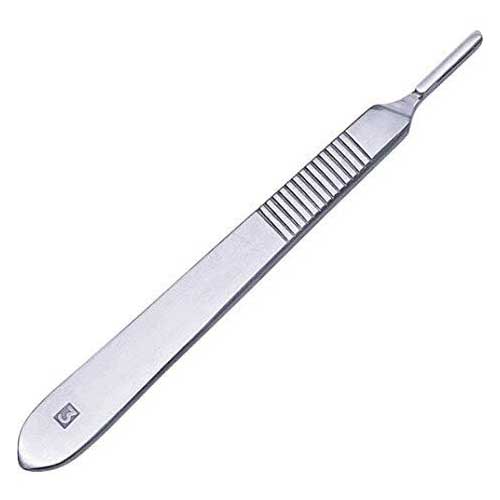
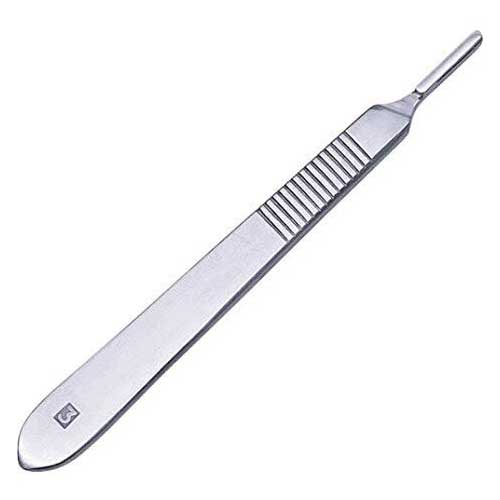
B P Scalpel Handle Surgical Instrument (Pack of 4)
Type: General Instruments
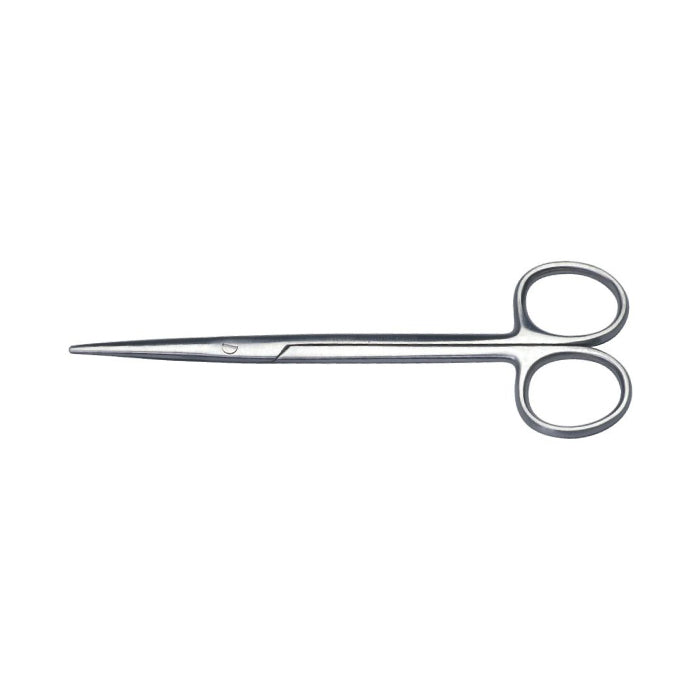
Metzenbaum Scissor Surgical Instrument
Type: MeddeyGo
Mayo Scissor Surgical Instrument
Type: General Instruments
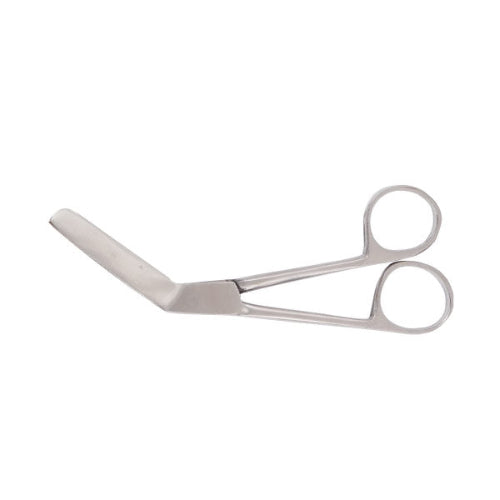
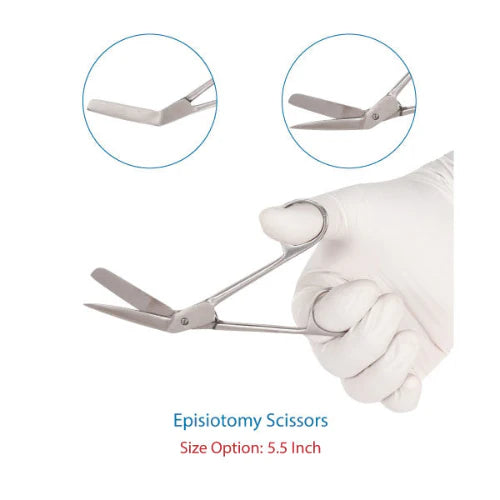
Episiotomy Scissor Surgical Instrument
Type: Instruments
Vaginal Wall Retractor Surgical Instrument
Type: Day to Day Care
B P Handle Surgical Premium Quality (Pack of 4)
Type: Instruments
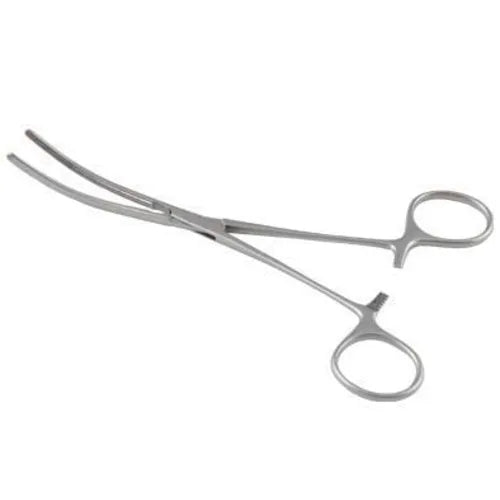
Intestinal clamp Surgical Instrument
Collection:
Blade Handle: Perfect Fit for Scalpel Blades
Introduction: Why Surgical Blade No. 11 Is Important in Medical Instrument Learning
Surgical Blade No. 11 is one of the most recognizable scalpel blade patterns in medical instrument education. Even students who are only beginning to learn about surgical instruments often come across Blade No. 11 early, because its shape is distinct and its number is widely referenced in academic charts, product catalogs, and instrument-classification material. In educational settings, Blade No. 11 is important not because of casual familiarity, but because it helps learners understand how numbered scalpel blades are differentiated by geometry, purpose classification, and handle compatibility.
Current official product descriptions identify No. 11 as an elongated triangular blade sharpened along the long sloping edge and ending in a strong pointed tip. This gives the blade a visual identity that is very different from broader rounded blade patterns in the same family. For anyone studying instrument trays, surgical supply catalogs, or sterile blade packaging systems, this distinction is valuable because blade numbers are not arbitrary. They reflect specific design profiles.
Another reason this topic matters is that many people encounter the blade through different naming patterns. Some say “surgical blade 11,” some say “11 no blade,” some say “11 blade,” and some say “blade no 11.” All of these phrases usually refer to the same numbered blade pattern. This can cause confusion in students, junior staff, and even procurement trainees who know the number but not the formal naming convention. A good educational overview helps unify those terms into one clear concept.
This article focuses only on the safe educational side of the topic: shape recognition, numbering logic, handle compatibility in catalog terms, packaging terminology, and why Blade No. 11 is considered such a distinct pattern in professional medical product literature. It does not provide practical use or handling instructions.
Medical Education
Useful for learning how numbered surgical blades are identified by shape and catalog classification.
OT & CSSD Learning
Helpful in understanding tray recognition, packaging language, and blade-handle families from a non-procedural perspective.
Procurement & Inventory
Important for distinguishing blade numbers, compatible handle families, and packaging labels during product identification.
What Is Surgical Blade No. 11?
Surgical Blade No. 11 is a numbered medical scalpel blade pattern recognized for its narrow triangular appearance and pointed tip. Current official product literature describes it as an elongated triangular blade sharpened along the hypotenuse edge with a strong pointed tip. That one description alone explains why it is visually memorable: the blade is not broad and curved like some other common scalpel patterns, but slim, angular, and sharply defined.
In practical educational terms, Blade No. 11 can be understood as a blade with three major recognition points:
- A narrow, elongated triangular profile
- A long sloping sharpened cutting edge
- A prominent pointed terminal tip
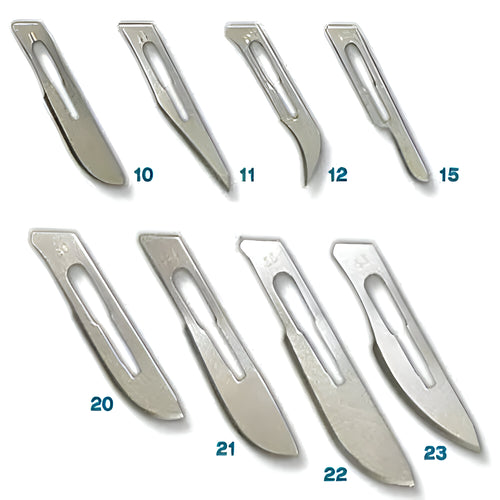
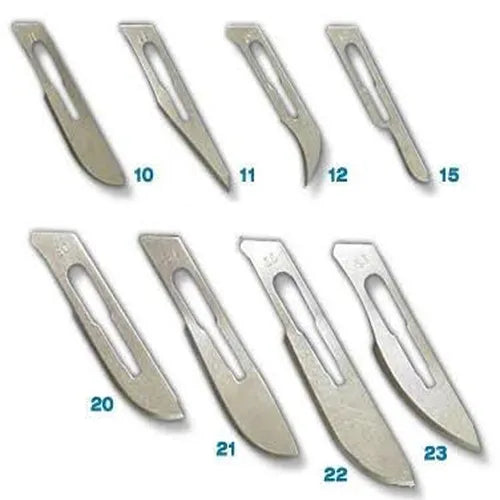
These shape features make the No. 11 pattern stand out in blade charts and product diagrams. A learner who remembers only those three points will usually be able to distinguish Blade No. 11 from broader No. 10 family patterns, hook-like No. 12 patterns, or small rounded-edge No. 15 patterns.
Simple Definition
Surgical Blade No. 11 is a pointed, elongated triangular scalpel blade pattern used in professional medical instrument systems and recognized by its narrow sharp-tip geometry.
Why Blade No. 11 Is Easy to Recognize
Some surgical blades look similar at first glance, especially to beginners. Blade No. 11 is one of the exceptions because its visual identity is unusually clear. Unlike rounded-belly blades that appear softer or wider in outline, No. 11 has a more angular and direct shape language. The pointed end is especially distinctive.
In educational settings, recognition becomes easier when the blade is not treated only as “number 11,” but as a shape family. Once the learner starts thinking in terms of geometric form, the blade number makes more sense. That is the real advantage of product-based learning: it teaches that each number corresponds to a design logic, not just a label.
Blade No. 11 is often remembered faster than many other blade numbers because the triangular outline is so direct. This makes it a useful teaching example in instrument classrooms, OT orientation sessions, and sterile-product identification training.
Triangular Outline
The body shape is narrow and angular rather than broad and rounded, which improves visual recall.
Pointed Terminal End
The sharp pointed tip is one of the strongest visual identifiers in the No. 11 pattern.
Long Sloping Edge
The long sharpened edge contributes to the blade’s elongated appearance and makes it distinct in charts.
Easy Catalog Recognition
Because the shape is so distinct, No. 11 is one of the easier numbers to recognize in commercial blade listings.
How the No. 11 Number Fits into Scalpel Classification
In surgical instrument systems, blade numbers are part of a broader classification approach that separates blades by form, fitment range, and product grouping. Blade No. 11 is not simply “a sharp blade.” It is a specific numbered member of a recognized blade family. Current official pages place it within the No. 3 blade range, which means it belongs to a compatibility group that shares common handle-family fitment.
This is an important academic point because blade numbering becomes much clearer when seen as a system:
- Blade number identifies the specific blade geometry
- Range grouping identifies the compatible handle family
- Packaging language identifies sterile or non-sterile supply context
For students and inventory trainees, this three-part way of thinking is more useful than memorizing isolated product names.
Classification Rule
Blade number tells you the blade pattern, while the blade range helps explain which handle family it belongs to in catalog terms.
Blade No. 11 and the No. 3 Handle Family
Current official compatibility pages place Blade No. 11 in the No. 3 handle range. Current product pages also specify that No. 11 blades fit Handles 3, 3L, 3 Graduated, 5B, 7, 9, and B3. This is a highly useful educational detail because many learners first understand blades not by shape alone, but by which handles they are grouped with.
From an academic and inventory perspective, this means that when a product label says “No. 11,” it is not only identifying the blade shape. It is also indirectly placing the blade into a known compatibility family. That is why current No. 3 handle pages list No. 11 among the blades that fit the No. 3 surgical scalpel handle.
This handle-family relationship is one of the most useful non-procedural facts about Blade No. 11 because it helps with:
- Catalog reading
- Tray identification
- Procurement matching
- Inventory checking
- Academic blade-range classification
| Educational Detail | What It Means | Why It Matters |
|---|---|---|
| Blade No. 11 | A specific pointed triangular blade pattern | Helps identify the shape correctly in charts and packaging |
| No. 3 Range | The handle family category that includes Blade 11 compatibility | Useful for product grouping and tray understanding |
| Handle Compatibility | Current official pages list multiple handles in the No. 3 family context | Important for catalog interpretation and inventory clarity |
| Associated Product Logic | Blade and handle are understood together in formal product systems | Helps students move from isolated blade numbers to complete instrument systems |
How Blade No. 11 Differs Visually from Other Common Blade Numbers
One of the best ways to learn Blade No. 11 safely is through non-procedural visual comparison. Blade No. 11 is not the widest blade, not the most rounded blade, and not the smallest curved blade. Instead, it is a more angular blade pattern with a narrow taper and pointed front end.
Broadly speaking, blade families can be understood visually like this:
- Some blades look rounded and fuller in the belly
- Some look more hook-shaped or curved
- Some are smaller with a compact rounded shape
- No. 11 stands out because it looks pointed, narrow, and triangular
This type of comparison is useful because it keeps the topic educational and classification-based. Instead of focusing on procedure, it helps the learner build safe visual recognition skills. That is exactly how many instrument-identification charts are meant to be used.
Not Broad-Bellied
No. 11 is visually narrower than fuller rounded blade patterns.
Not Hook-Shaped
It does not belong to the hooked or crescent-like blade appearance family.
Not Rounded-Tip Focused
Its strong pointed tip is one of the most defining visual differences.
Angular Profile
The blade is remembered best as a narrow angular triangle rather than a curved cutting form.
Why Blade 11 Appears So Often in Product Catalogs
Blade No. 11 appears frequently in current official product catalogs because it is one of the recognized standard numbered blade patterns in the No. 3 range. Product catalogs do not only exist to sell items. They also function as structured classification references. When a blade appears consistently in official listings, associated-products sections, and handle-range pages, it becomes part of the learning environment for anyone dealing with surgical instruments professionally.
Current official pages show Blade No. 11 listed among associated products in the No. 3 range and also show it connected to product resources, safe handling references, and blade-removal systems. From an educational point of view, this confirms that the blade is not just recognized by shape. It is also recognized as a stable part of a larger medical product ecosystem.
This is why Blade 11 is often remembered even by people who are still early in their surgical instrument studies.
Catalog Insight
Blade No. 11 is widely recognized because it is consistently represented in official blade ranges, handle pages, and associated-product references.
Sterile vs Non-Sterile Product Language
Another important educational point is how current official pages describe Blade No. 11 in packaging terms. Current official product pages show sterile and non-sterile references in separate sections, including carbon steel individual foil packs and stainless steel individual foil packs for sterile listings, while also listing a non-sterile non-medical-use-only reference for a separate format.
This matters because learners often assume that every blade listing is automatically the same. In reality, official product pages show that the same numbered blade pattern can appear in different packaging categories and material variants. From an academic standpoint, this teaches two useful lessons:
- Blade number identifies the shape
- Packaging description identifies supply format
- Material description identifies product variant
Understanding those distinctions helps students read product literature more accurately.
| Catalog Term | Educational Meaning | Why It Helps |
|---|---|---|
| Sterile Blade | A blade listed in sterile medical product packaging | Helps identify healthcare supply context |
| Non-Sterile Reference | A separately classified product format | Shows that identical blade geometry can appear in different packaging categories |
| Carbon Steel / Stainless Steel | Material variants shown on official pages | Useful in product-reading and classification education |
| Foil Packs / Packets | Official packaging language | Helps decode catalog structure without needing practical use details |
Blade No. 11 in Product Range Thinking
One of the most useful ways to understand Blade No. 11 is to stop thinking of it as an isolated item and instead see it as part of a product range. Current official Swann-Morton pages make this easier by clearly placing it inside the No. 3 blade range and by linking it to associated handles and related products. This structured presentation teaches an important lesson: in medical product systems, items are rarely standalone. They belong to compatibility families, packaging families, and training families.
For learners, that means Blade No. 11 can be studied through several layers:
- Shape layer: what it looks like
- Number layer: what it is called
- Range layer: where it belongs
- Compatibility layer: what handle family it matches
- Packaging layer: how it appears in product supply language
Once those five layers are understood, the blade becomes much easier to remember and classify correctly.
Shape Learning
Teaches visual recognition through geometry rather than memorization alone.
Number Learning
Connects the visual pattern to the formal blade number used in clinical product systems.
Range Learning
Shows how one blade number belongs to a broader handle and product family.
Catalog Learning
Builds skill in reading official product listings, associated-product sections, and compatibility language.
Why Safe Handling Guidance Is Mentioned on Official Pages
Current official product pages for Blade No. 11 include links to best-practice handling and product-safety resources. From a safe educational perspective, the important point is not the handling technique itself, but the fact that official manufacturers treat surgical blades as products that require dedicated safety information. This reinforces a key lesson: medical blades are professional instruments and should be understood within formal healthcare safety systems.
For students and young learners, this is an especially important point. It teaches that blade education belongs to clinical professionalism, sterile-product awareness, and manufacturer guidance—not casual experimentation or informal handling.
Safety Perspective
Blade No. 11 should be understood as a professional medical product that belongs within formal training, safety systems, and supervised healthcare environments.
Blade No. 11 in Procurement and Inventory Education
Procurement teams and inventory learners also benefit from understanding Blade No. 11 in a structured way. In supply systems, incorrect identification can create documentation errors, tray confusion, or mismatch between blade-family and handle-family records. A strong educational overview therefore helps prevent administrative confusion even before any clinical context is considered.
For procurement-level learning, the most useful facts are:
- No. 11 is a distinct blade geometry
- It belongs to the No. 3 range in official current product literature
- It appears in both sterile and separately classified non-sterile references on official pages
- It is connected to a known group of compatible handle products
- It is consistently identified across official product resources
That kind of knowledge is enough to support safe catalog literacy without moving into procedural territory.
Frequently Asked Questions
What is Surgical Blade No. 11?
Surgical Blade No. 11 is a numbered scalpel blade pattern recognized by its elongated triangular body and strong pointed tip.
Why is Blade No. 11 easy to identify?
It is easy to identify because it has a narrow angular profile, a long sloping edge, and a clearly pointed end.
What does “11 no blade” mean?
It is another common way of referring to Surgical Blade No. 11, the same standardized blade pattern.
Which handle range is Blade No. 11 associated with?
Current official compatibility pages place Blade No. 11 in the No. 3 handle range.
Is Blade No. 11 part of a larger product system?
Yes. Official pages show it as part of a broader blade range, with associated handles, product resources, and packaging references.
Why do official pages mention sterile and non-sterile formats?
Because the same blade pattern can appear in different official packaging and product-category formats.
Why is Blade No. 11 important in medical education?
It helps students learn blade-number classification, shape recognition, compatibility families, and product-catalog reading.
What is the safest way to study Blade No. 11?
The safest way is through formal educational material focused on identification, classification, official catalog reading, and supervised professional context.
Conclusion
Surgical Blade No. 11 is one of the clearest examples of how blade numbering, blade shape, and handle-family classification work together in medical product systems. Its elongated triangular form, pointed tip, official placement in the No. 3 range, and repeated appearance in current manufacturer literature make it an ideal blade pattern for safe academic study. When learned through shape recognition, compatibility logic, and product-catalog understanding, Blade No. 11 becomes much easier to identify and remember without stepping into procedural or practical handling detail.