Filter
14 products
Type: BP Monitor
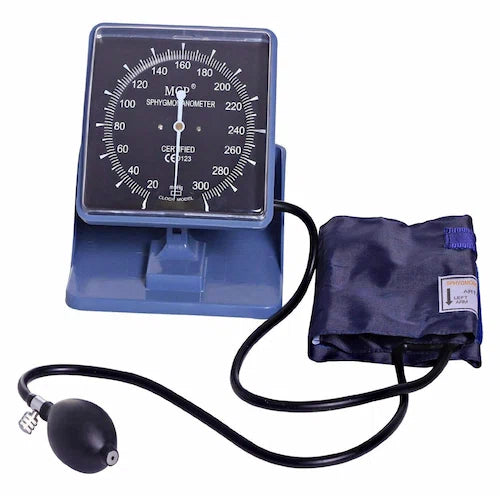
Desktop Blood Pressure Monitor Clock
Type: Sphygmomanometer
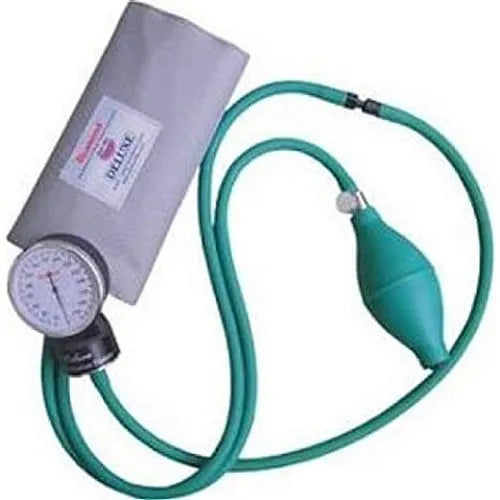
Diamond Dial Deluxe Sphygmomanometer with Field Calibration BP Apparatus
Type: Sphygmomanometer
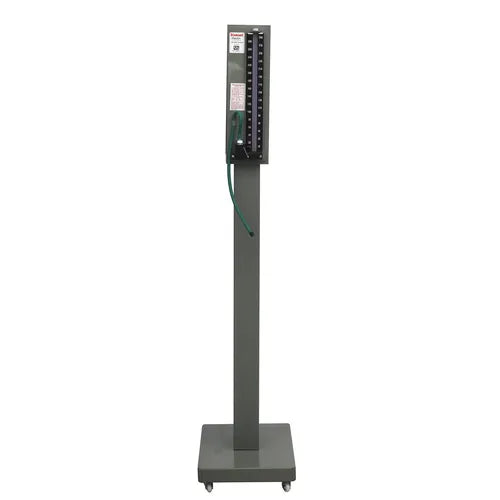
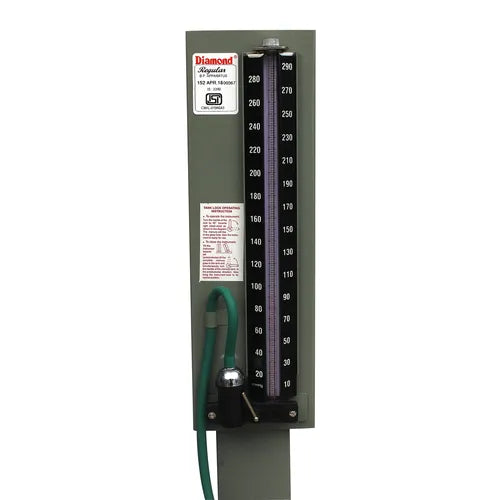
Diamond Mercurial BP Instrument Stand Model with Velcro Cuff BPMR152
Type: Home Healthcare
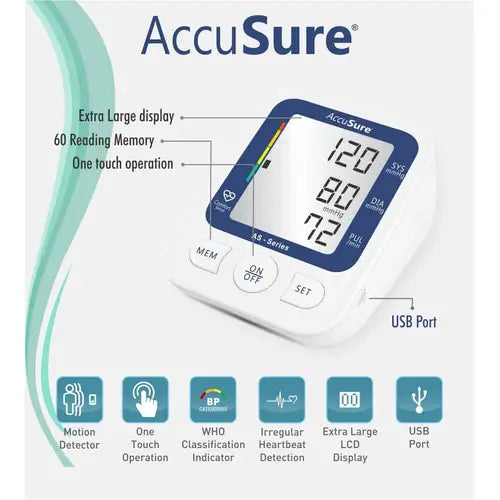
AccuSure AS Extra Large LCD and WHO Approved BP Machine
Type: Sphygmomanometer
Digital Blood Pressure Machine YE670AR
Type: Home Healthcare
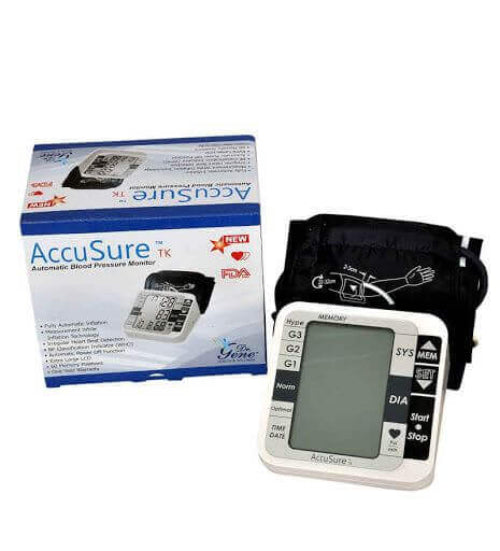
AccuSure TS Smart Inflation BP Machine
Type: Home Healthcare
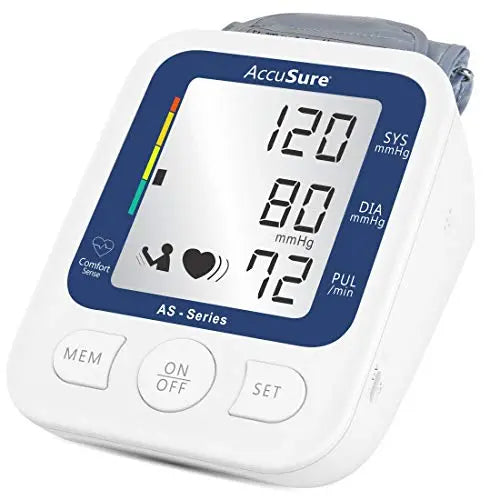
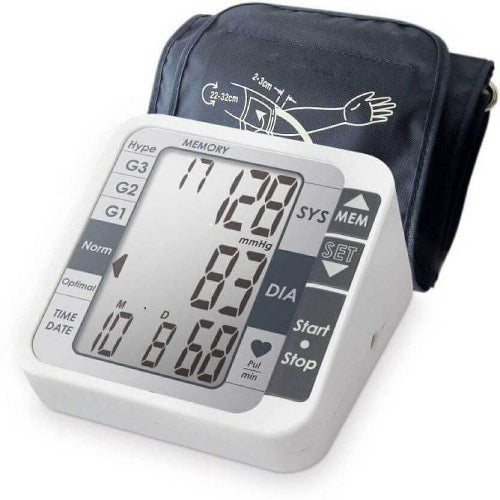
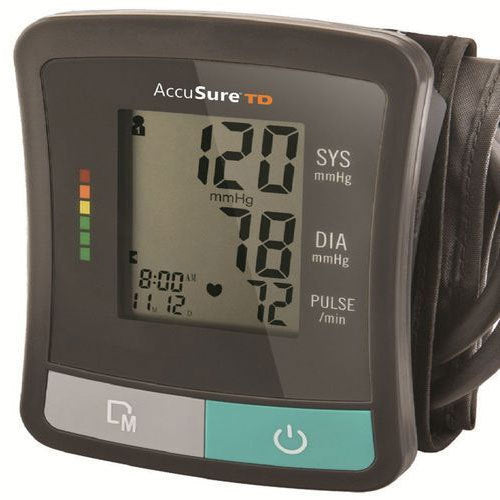
AccuSure TD Digital BP Machine
Type: Home Healthcare
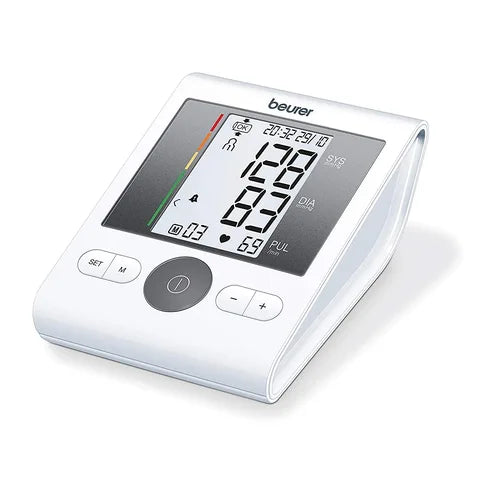
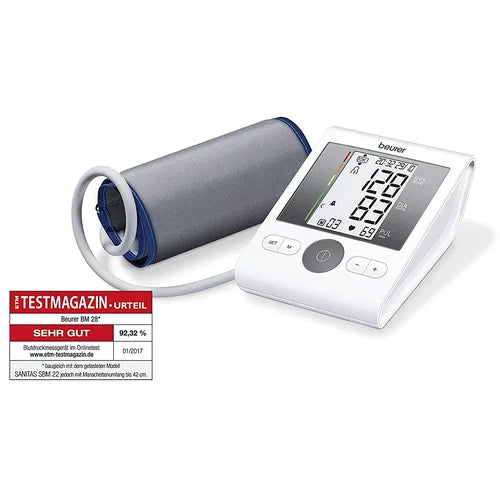
Beurer BM28 BP Machine with German Technology
Type: bp monitor
Omron HBP-9030 Blood Pressure Monitoring Machine with Printer
Type: Devices
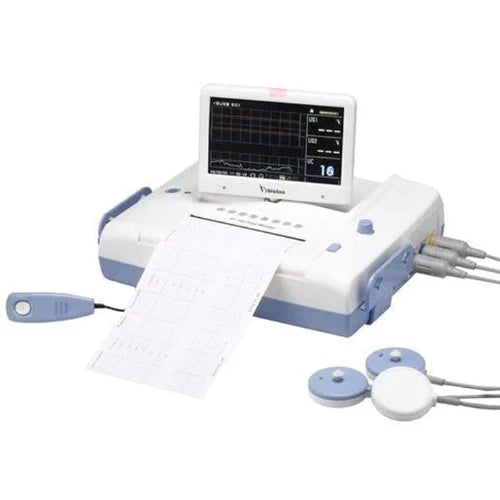
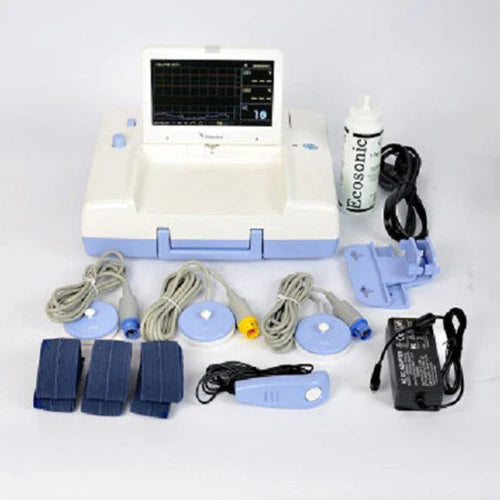
Bistos BT350 Fetal Monitor CTG Machine with 7 inch Screen LED Light Source
Type: ecg machine
Digital ECG Machine BPL | Single Channel ECG Machine
Type:
BiPAP Machine for Sleep Apnea & Respiratory Support
Type: Sphygmomanometer
BP Monitor Machine for Clinics Hospitals | Yuwell
Type: bp monitor
OMRON HEM 7530T Blood Pressure Monitor ECG Machine Measure Bp ECG Afib
Collection:
BP Machine Guide: Types, Price, Accuracy & Home Use
A complete guide to blood pressure machines, manual and digital BP apparatus, correct home measurement, BP readings, prices, safety, accuracy and choosing a suitable monitor online.
Introduction: Why a BP Machine Is Important for Home Health Monitoring
A BP machine is a medical device used to measure the pressure of blood circulating through the arteries. It is commonly known as a blood pressure machine, BP apparatus, BP monitor, BP check machine, pressure machine or sphygmomanometer.
Blood pressure monitoring is important because high blood pressure often develops without obvious symptoms. A person may feel normal while their readings remain above the range recommended by their healthcare professional. For this reason, many patients who have been diagnosed with hypertension are advised to monitor their readings at home.
A home blood pressure monitor can help users record readings between medical appointments, identify patterns and share useful information with their doctor. It may also help healthcare professionals understand how blood pressure changes during different times of day, medication schedules, stress levels or daily activities.
However, a BP machine should not be treated as a replacement for medical consultation. A home reading cannot independently diagnose every condition, explain why blood pressure is changing or determine whether medicine should be started, stopped or adjusted.
Anyone who has been prescribed medicine to manage blood pressure should not change the dose or stop treatment only because one home reading appears normal. Treatment decisions should be made with the prescribing doctor.
This MeddeyGo guide explains the main types of BP machines, how manual and digital devices differ, how to use a digital monitor correctly, what affects BP machine price, how to understand displayed readings and which machine may be suitable for home use.
Home Monitoring
Useful for tracking readings between doctor visits and maintaining a consistent blood pressure record.
Clinics & Hospitals
Manual and digital BP apparatus are used for routine assessment, triage and patient monitoring.
Senior & Chronic Care
Helpful for patients with hypertension, cardiovascular risk or long-term blood pressure management needs.
What Is the Blood Pressure Machine Name?
The medical name commonly used for a blood pressure measuring device is sphygmomanometer. In everyday language, people may call it a BP machine, BP apparatus, BP instrument, blood pressure monitor or pressure checking machine.
The term sphygmomanometer is most commonly associated with traditional manual devices that use an inflatable cuff and pressure gauge. However, modern digital monitors perform the same basic purpose through electronic sensing and automatic calculation.
Simple Definition
A BP machine or sphygmomanometer is a medical device used to measure systolic and diastolic blood pressure.
What Does a BP Machine Measure?
A BP machine generally displays two main values measured in millimetres of mercury, written as mmHg. Digital machines may also display pulse rate.
Systolic Pressure
The upper value showing arterial pressure when the heart contracts and pumps blood.
Diastolic Pressure
The lower value showing arterial pressure while the heart relaxes between beats.
Pulse Rate
Many digital monitors display the number of heartbeats recorded per minute.
Irregular Pulse Indicator
Some digital models provide an indicator when an irregular pulse pattern is detected during measurement.
A reading shown as 120/80 mmHg contains two numbers. The first number is the systolic pressure and the second is the diastolic pressure.
A single result should be interpreted in context. Stress, recent physical activity, caffeine, smoking, pain, talking, incorrect posture and cuff size may affect the result.
Who May Need a BP Machine at Home?
A home BP monitor may be useful for people who have been advised to record blood pressure regularly. It may also be recommended when a doctor wants readings from outside the clinic environment.
- People diagnosed with hypertension
- Individuals with elevated cardiovascular risk
- Patients taking prescribed blood pressure medicine
- People asked to maintain a BP diary
- Pregnant patients receiving professional monitoring guidance
- Older adults requiring regular blood pressure observation
- Patients being evaluated for white-coat hypertension
- People requiring follow-up after medication changes
Pregnant users, children, patients with certain heart rhythms and users with unusual arm sizes should choose a monitor validated for the intended population and cuff range.
Monitoring Rule
Home blood pressure monitoring supports medical care, but it does not replace diagnosis, prescribed treatment or professional review.
Main Types of BP Machines
There are two main categories of blood pressure machines: manual BP machines and digital BP machines. Each type has different operating requirements, advantages and common use settings.
Manual BP Machine
A manual BP machine generally includes an inflatable upper-arm cuff, a rubber bulb, a pressure-release valve and an aneroid or mercury-style gauge. A stethoscope is usually required to listen for blood-flow sounds during measurement.
Manual devices are commonly used by doctors, nurses, paramedics and other trained healthcare professionals. Correct measurement depends on cuff placement, inflation pressure, valve control, stethoscope positioning and the user’s ability to recognise the relevant sounds.
A manual BP apparatus does not depend on electronic calculation. When used correctly by a trained person and maintained properly, it can provide reliable measurements.
Digital BP Machine
A digital BP machine includes an inflatable cuff and an electronic display unit. Most home-use models automatically inflate and deflate the cuff after the user presses a button.
The device calculates systolic pressure, diastolic pressure and pulse rate electronically. Some models also offer memory storage, user profiles, averaging, cuff-wrap guidance, movement indicators and Bluetooth connectivity.
Digital monitors are easier for untrained home users because they do not require a stethoscope or manual valve control. However, accuracy still depends on device validation, cuff size, posture, movement and correct placement.
| Comparison | Manual BP Machine | Digital BP Machine |
|---|---|---|
| Operation | Manual cuff inflation and pressure release | Usually automatic inflation and deflation |
| User Skill | Requires training and correct listening technique | Designed for simpler home operation |
| Display | Pressure gauge | Electronic numeric display |
| Stethoscope | Usually required | Not required |
| Common Setting | Clinics, hospitals and professional use | Home, clinic and routine monitoring |
| Power Requirement | No battery required for basic aneroid models | Uses batteries, adapter or rechargeable power |
Upper-Arm, Wrist and Finger BP Monitors
Digital BP apparatus may also be categorised by where the cuff or sensor is placed. Common formats include upper-arm, wrist and finger monitors.
Upper-Arm BP Monitor
An automatic upper-arm cuff monitor is generally the preferred option for home blood pressure monitoring. The cuff wraps around the upper arm and the arm is supported at heart level during measurement.
The correct cuff size is essential. A cuff that is too small may produce a falsely high reading, while an oversized cuff may also reduce measurement accuracy.
Wrist BP Monitor
A wrist monitor is smaller and more portable. However, wrist position has a strong effect on the result. The wrist must be positioned correctly at heart level during measurement.
A wrist device may be considered when a suitable upper-arm cuff cannot be used, but it should be selected and operated carefully.
Finger BP Monitor
Finger monitors are compact, but they are generally not preferred for routine clinical-quality home blood pressure measurement because readings may be less dependable.
Best Home-Use Format
For most adults, a validated automatic upper-arm cuff monitor with the correct cuff size is the preferred home-use option.
Manual BP Machine vs Digital BP Machine
The choice between a manual and digital BP instrument depends on the user’s training, setting and purpose.
A trained healthcare professional may prefer an aneroid BP apparatus because it offers direct manual control. A home user may find an automatic digital machine more convenient and repeatable.
Manual Control
Manual devices allow trained users to control inflation and pressure release directly.
Easy Home Use
Digital monitors simplify measurement through one-touch or automatic operation.
Portable Options
Both categories include compact configurations suitable for storage and transport.
Different Accuracy Factors
Manual accuracy depends heavily on user technique; digital accuracy depends on validation, cuff fit and correct posture.
Which Machine Is Best for Blood Pressure?
The best BP machine is not simply the most expensive product or the model with the largest display. It is a device that is appropriate for the intended user, clinically validated, supplied with the correct cuff size and easy to operate correctly.
For most home users, a validated automatic upper-arm digital BP monitor is usually a practical choice. It allows one-button measurement and does not require professional auscultation skills.
For doctors, nurses and trained healthcare practitioners, a quality manual aneroid BP apparatus may remain useful because it supports professional examination and manual measurement.
- Choose a validated model.
- Select the correct cuff size.
- Prefer an upper-arm monitor for routine home use.
- Check whether the display is easy to read.
- Review memory and averaging features if multiple readings are recorded.
- Confirm battery and adapter options.
- Check warranty and service support.
- Consider the intended user population.
Which BP Machine Is Correct?
A correct BP machine should be validated for measurement accuracy and suitable for the person who will use it. The cuff should fit the user’s arm circumference, and the device should be operated according to its instructions.
A machine may function normally but still produce misleading readings if the cuff is too tight, too loose, too small or placed over thick clothing.
Users can also take their home monitor to a medical appointment and compare its readings with measurements taken by trained staff. This can help identify major differences or technique problems.
Accuracy Checklist
Validation, correct cuff size, upper-arm placement, proper sitting posture and repeated readings are more important than choosing only by brand popularity.
What Is the Best BP Machine for Home Use?
The best home BP machine is generally an automatic upper-arm monitor that has been validated, fits the user’s arm and provides consistent operation.
Useful home features may include:
- One-touch automatic measurement
- Large and readable display
- Correct cuff-wrap indicator
- Body movement indicator
- Irregular pulse indicator
- Memory for one or more users
- Average reading calculation
- Date and time recording
- Battery and adapter operation
- Bluetooth or app connectivity, if required
Additional features should not distract from the essential requirements of validation, cuff fit and correct technique.
How to Use a Digital BP Machine Correctly
A digital BP machine is simple to operate, but incorrect preparation or posture can affect the result. Users should follow the product manual and any specific instructions provided by their healthcare professional.
- Avoid exercise, smoking and caffeinated drinks shortly before measurement.
- Empty the bladder if needed.
- Sit quietly and relax before taking a reading.
- Use a chair with back support.
- Keep both feet flat on the floor.
- Do not cross the legs.
- Place the cuff on bare upper-arm skin.
- Support the arm so the cuff is near heart level.
- Keep the hand and arm relaxed.
- Do not talk or move during measurement.
- Record the result with the date and time.
- Take repeated readings according to professional guidance.
Correct Cuff Placement
The cuff should generally be placed around the bare upper arm, above the elbow bend, according to the device markings. The tube and artery guide should be positioned as described in the manual.
Do not place the cuff over thick clothing. Rolled sleeves should also not be so tight that they compress the upper arm.
Correct Sitting Position
Sit upright with the back supported. Keep both feet flat and uncrossed. Rest the arm on a table or firm surface so that the upper arm is approximately at heart level.
Talking, laughing, moving or holding the arm unsupported can change the reading.
Taking More Than One Reading
One isolated measurement may not represent the usual blood pressure. Users are often advised to take at least two readings separated by a short interval and record both results.
The exact monitoring schedule should follow the doctor’s instructions. Some patients may be asked to record morning and evening readings over several days.
Common Mistakes While Checking Blood Pressure
| Mistake | Possible Effect | Better Practice |
|---|---|---|
| Wrong cuff size | May produce an inaccurate result. | Measure arm circumference and select the specified cuff range. |
| Cuff over clothing | May interfere with pressure transmission. | Place the cuff on bare skin. |
| Unsupported arm | May alter the reading. | Rest the arm at heart level. |
| Crossed legs | May affect blood pressure measurement. | Keep feet flat and legs uncrossed. |
| Talking during measurement | May increase or disturb the result. | Remain silent and still. |
| Recent caffeine or exercise | May temporarily raise blood pressure. | Wait according to measurement guidance. |
| Taking only one reading | May not represent the usual level. | Repeat and record readings as advised. |
Understanding Blood Pressure Machine Results
A digital BP machine displays systolic pressure, diastolic pressure and usually pulse rate. The numbers should be interpreted according to professional guidance and the patient’s medical condition.
Blood pressure categories can vary slightly between guidelines and clinical settings. A healthcare professional may use home readings, clinic readings, age, pregnancy status, medical history and cardiovascular risk when making decisions.
| General Category | Systolic Reading | Diastolic Reading |
|---|---|---|
| Normal Range | Below 120 mmHg | Below 80 mmHg |
| Elevated | 120–129 mmHg | Below 80 mmHg |
| Stage 1 High Blood Pressure | 130–139 mmHg | 80–89 mmHg |
| Stage 2 High Blood Pressure | 140 mmHg or higher | 90 mmHg or higher |
| Severely Elevated Reading | Above 180 mmHg | Above 120 mmHg |
These numbers are a general educational reference and should not be used as a personalised diagnosis. Home thresholds and treatment targets may differ according to the patient and healthcare guideline being followed.
Urgent Safety Note
A very high reading accompanied by chest pain, shortness of breath, weakness, confusion, difficulty speaking, vision change or other serious symptoms requires urgent medical evaluation.
What Should You Do After a High Reading?
A single reading that is slightly above the usual level may occur because of stress, pain, movement, recent caffeine or incorrect technique.
Sit quietly, check the cuff and posture, and repeat the measurement after an appropriate short interval. Record both readings.
Contact the treating healthcare professional when readings remain consistently above the advised target or when there is a significant change from the patient’s usual pattern.
Do not take an extra medicine dose unless the doctor has provided a specific action plan.
Can a BP Machine Diagnose Hypertension?
A BP machine provides measurements, but diagnosis requires medical interpretation. Hypertension is generally assessed using repeated readings rather than one isolated result.
A doctor may review home readings, clinic measurements or ambulatory blood pressure monitoring before confirming the diagnosis.
Home BP records are useful because they may show readings in a familiar environment and help identify patterns not visible during one clinic visit.
Can Arrhythmia Affect BP Machine Accuracy?
Irregular heart rhythms may affect some automatic BP measurements because the machine estimates pressure using pulse-wave patterns. The result may vary between readings.
People with known arrhythmia or atrial fibrillation should ask their healthcare professional which monitor and measurement method are appropriate.
An irregular heartbeat symbol on a home monitor is not a complete diagnosis. Repeated alerts or unusual symptoms should be discussed with a doctor.
BP Machine Price in India
BP machine price in India depends on device type, brand, validation, cuff size, memory, display, power options, connectivity and warranty.
A basic manual BP apparatus may be priced differently from a fully automatic digital monitor. Advanced models with Bluetooth connectivity, multiple user memory and wide-range cuffs may cost more.
Current prices can change according to model updates, seller discounts, stock availability and included accessories.
| Price Factor | Why It Matters |
|---|---|
| Manual or Digital Type | The operating technology and included components differ. |
| Validation | Validated models have undergone recognised accuracy assessment. |
| Cuff Range | Wide-range or specialised cuffs may influence cost. |
| Memory | Multi-user storage and averages add convenience. |
| Connectivity | Bluetooth or app support may increase price. |
| Power Options | Adapter or rechargeable operation may affect package cost. |
| Brand and Warranty | Service support and warranty influence long-term value. |
Digital BP Machine Price
Digital BP machine price depends on whether the product is a simple one-user model or an advanced connected device.
Entry-level digital machines may offer one-touch measurement and a basic display. Mid-range models may include memory, averaging, cuff indicators and irregular pulse alerts.
Premium machines may support Bluetooth synchronisation, multiple users, advanced averaging or wide-range cuffs.
Manual BP Machine Price
A manual BP machine may be available as an aneroid gauge set with cuff and bulb. Some packages also include a stethoscope.
Price is affected by gauge quality, cuff material, calibration support, tubing quality, case and manufacturer.
Professional users should choose a durable device that can be checked or calibrated according to service recommendations.
BP Instrument Price and BP Machine Cost
Terms such as BP instrument price, BP check machine price, BP monitor price and blood pressure machine price usually refer to the same buying intent.
Buyers should compare the exact model and included cuff instead of relying only on the displayed cost. A lower-priced device may not provide long-term value if the cuff does not fit, replacement parts are unavailable or the model lacks recognised validation.
Price Comparison Rule
Choose a BP machine based on validation, cuff fit, intended user and reliable support—not only the lowest advertised price.
How to Choose a Home BP Machine
A suitable home monitor should be easy to operate correctly and provide a cuff that matches the user’s arm size.
- Choose a validated automatic upper-arm monitor.
- Measure the upper-arm circumference before selecting the cuff.
- Check whether the display is clear and readable.
- Consider one-user or multi-user memory.
- Check averaging and date-time functions.
- Review movement and cuff indicators.
- Confirm battery and adapter support.
- Check warranty and service arrangements.
- Review the exact model rather than only the brand.
- Buy from a reliable medical-equipment seller.
Features to Look for in a Digital BP Apparatus
Validated Accuracy
Choose a device that has been independently assessed for measurement accuracy.
Correct Cuff Range
The supplied cuff should fit the user’s measured upper-arm circumference.
Readable Display
Large numbers can improve ease of use for older adults and home users.
Reading Memory
Stored measurements support consistent record keeping and review.
Average Function
Some devices calculate averages from multiple recent readings.
Movement Indicator
The monitor may alert the user when movement affects the measurement.
BP Machine
A home BP monitor for an adult user should be simple to understand and operate. A large display, one-touch start button, comfortable cuff and clear error indicators may improve usability.
Memory functions are helpful when family members or caregivers need to review readings. A multi-user model may be useful when more than one person uses the same machine, but each person should have a separate user profile.
The monitor should not be selected solely because it has many advanced features. Ease of correct use is more important.
BP Machine During Pregnancy
Blood pressure monitoring may be important during pregnancy when a healthcare professional is assessing gestational hypertension, pre-eclampsia risk or another concern.
Pregnant users should choose a monitor validated for pregnancy when possible and follow the schedule provided by their maternity team.
Headache, visual disturbance, upper abdominal pain, sudden swelling or a concerning BP result during pregnancy should be discussed urgently with the treating maternity service.
Can Children Use a Digital BP Machine?
Children require an age-appropriate cuff and a monitor suitable for paediatric use. An adult cuff may not provide reliable measurement on a small arm.
Blood pressure interpretation in children differs from adult categories and depends on age, height and sex. Paediatric readings should therefore be interpreted by a qualified healthcare professional.
How Often Should You Check Blood Pressure?
The ideal schedule depends on the reason for monitoring. A doctor may recommend readings at the same times each day, often in the morning and evening, for a defined period.
Repeated checking every few minutes throughout the day without professional instruction may increase anxiety and make the record difficult to interpret.
Use a written log, app or device memory to record the date, time, systolic pressure, diastolic pressure and pulse.
How to Maintain a BP Machine
Proper storage and care support long-term operation. Keep the monitor, cuff and tubing away from excessive heat, moisture, dust and sharp objects.
- Store the machine in its case or a clean cabinet.
- Do not fold the air tube sharply.
- Keep liquids away from the electronic unit.
- Clean the cuff according to manufacturer instructions.
- Replace weak batteries when indicated.
- Inspect the cuff and tube for cracks or air leakage.
- Arrange calibration or service when applicable.
- Do not attempt unauthorised repair.
Home BP Machine vs Professional BP Apparatus
| Point | Home Digital Monitor | Professional Manual Apparatus |
|---|---|---|
| Main User | Patients, caregivers and home users | Doctors, nurses and trained professionals |
| Operation | Automatic or semi-automatic | Manual inflation and auscultation |
| Training | Basic instruction required | Professional technique required |
| Portability | Compact and convenient for home storage | Portable but requires multiple components |
| Reading Storage | Often available | Usually recorded manually |
| Best Setting | Routine home monitoring | Clinical examination and trained use |
Why Buy a BP Machine Online from MeddeyGo?
MeddeyGo offers medical equipment and home-health monitoring products for individual users, clinics, doctors, hospitals and healthcare buyers across India.
Buyers can compare manual and digital BP machines according to technology, cuff type, memory features and intended use.
Before ordering, review the exact product model, cuff size, validation information, power source, included accessories and warranty conditions.
- Manual and digital BP machine options
- Products for home and professional use
- Clear specifications for informed comparison
- Options for clinics, hospitals and individual users
- Convenient online ordering through MeddeyGo.com
- Medical-equipment support across India
Hover Quick Guide
Neeche highlighted terms par cursor le jao:
Systolic Pressure Systolic pressure upper number hota hai jo heart contraction ke waqt arterial pressure show karta hai. Diastolic Pressure Diastolic pressure lower number hota hai jo heart ke beats ke beech relax karne ke waqt pressure show karta hai. Validated Monitor Validated BP monitor woh device hota hai jiska accuracy recognised testing process ke through assess kiya gaya ho. Correct Cuff Size Cuff user ke upper-arm circumference ke according hona chahiye. Wrong cuff size inaccurate reading de sakta hai.
Frequently Asked Questions
What is a BP machine?
A BP machine is a medical device used to measure systolic and diastolic blood pressure.
What is the medical name of a blood pressure machine?
The commonly used medical name is sphygmomanometer.
Which machine is best for blood pressure?
For most home users, a validated automatic upper-arm monitor with the correct cuff size is a practical choice.
Which BP machine is correct?
A correct BP machine should be validated, appropriate for the intended user and supplied with a cuff that fits properly.
What is the best BP machine for home use?
An automatic validated upper-arm digital BP monitor is generally preferred for routine home measurement.
Is a digital BP machine accurate?
A validated digital machine can provide reliable home readings when the cuff size, placement and posture are correct.
Is a manual BP machine more accurate?
A quality manual device can be accurate when used by a trained person. Incorrect technique can still produce inaccurate results.
Can I use a wrist BP monitor?
A wrist monitor may be used in selected situations, but positioning is critical and upper-arm monitors are generally preferred.
Why does my BP machine show different readings?
Blood pressure naturally changes, and differences may also result from posture, cuff placement, movement, talking or measurement timing.
How many times should I check BP?
Follow the schedule provided by your healthcare professional. Multiple readings may be taken and recorded at consistent times.
Can I check BP immediately after exercise?
Exercise can temporarily affect the reading. Wait according to home-measurement guidance before checking.
Should the cuff be placed over clothes?
No. The cuff should normally be placed directly on bare upper-arm skin.
Why is cuff size important?
A cuff that is too small or too large can produce inaccurate blood pressure results.
Can one BP machine be used by two people?
Yes, but a multi-user memory function helps keep the records separate. Each user must also have a suitable cuff size.
Does a BP machine detect heart disease?
No. A BP machine measures blood pressure and sometimes pulse. It does not independently diagnose heart disease.
Can irregular heartbeat affect digital BP readings?
Some irregular rhythms may affect automatic measurement. Ask a healthcare professional which device and method are suitable.
What affects BP machine price?
Price depends on device type, validation, cuff range, memory, display, connectivity, brand and warranty.
Should I buy the cheapest BP machine?
No. Validation, correct cuff size, ease of use and service support are more important than choosing only by price.
Can I stop BP medicine if my home reading is normal?
No. Do not stop or change prescribed medicine without consulting the treating doctor.
When is a high BP reading an emergency?
A severely elevated reading accompanied by serious symptoms such as chest pain, breathlessness, weakness or vision change requires urgent medical care.
Conclusion
A BP machine is a useful medical device for measuring systolic and diastolic pressure at home or in a healthcare setting. It may help patients track readings, maintain records and share useful information with their doctor.
Manual BP apparatus are commonly used by trained healthcare professionals, while automatic digital upper-arm monitors are generally more convenient for home use. Regardless of type, correct cuff size, device validation and measurement technique are essential.
Whether buyers search for a blood pressure machine, digital BP apparatus, manual BP machine, BP monitor price, BP check machine price or blood pressure machine price, the correct choice should be based on intended use, cuff fit, accuracy validation, features, warranty and reliable support.
Buy a BP machine online from MeddeyGo after comparing the exact model, upper-arm cuff range, memory, power options and suitability for the intended user.