Skip to content

India’s Go to Platform for Medical Supplies Procurement

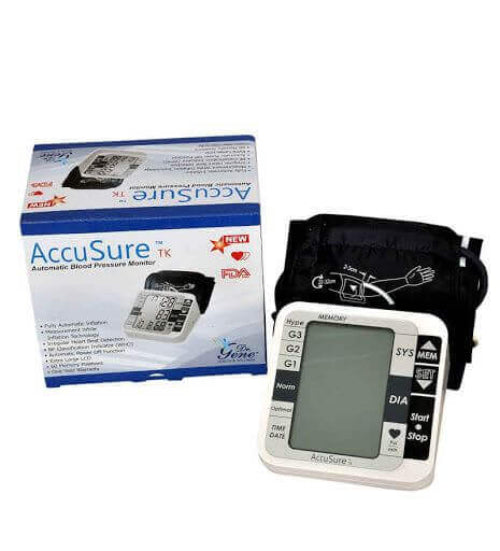
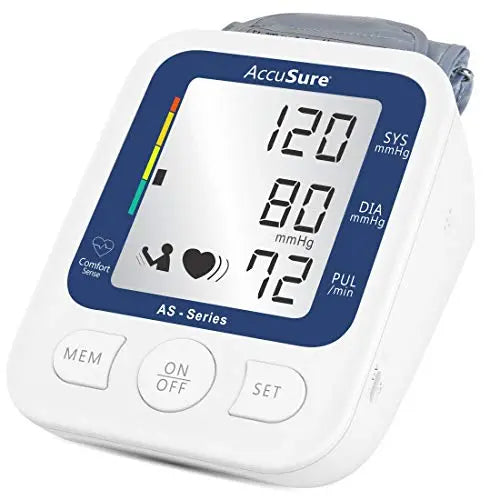
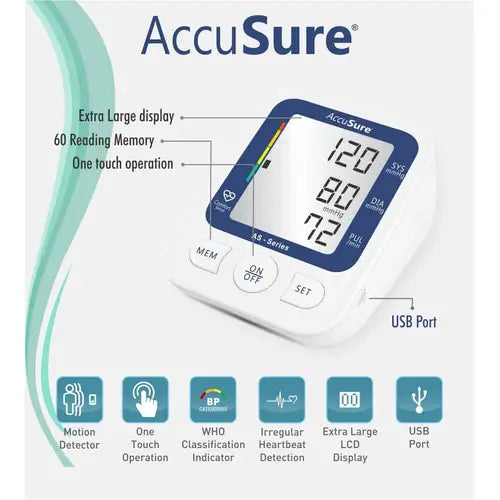
AccuSure AS Extra Large LCD and WHO Approved BP Machine

Type: Home Healthcare

AccuSure AS Extra Large LCD and WHO Approved BP Machine

Regular price Rs. 1,279
Sale price Rs. 1,279 Regular price Rs. 1,417
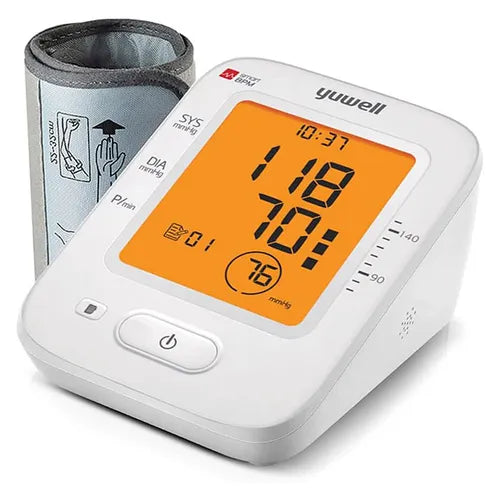
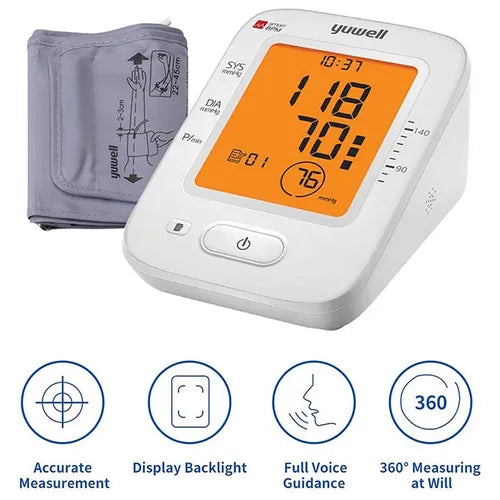
Digital BP Monitor Yuwell YE660F

Type: Sphygmomanometer

Digital BP Monitor Yuwell YE660F

Regular price Rs. 2,799
Sale price Rs. 2,799 Regular price Rs. 3,576
Accusure bp machine

Type: Home Healthcare

AccuSure TS Smart Inflation BP Machine

Regular price Rs. 1,269
Sale price Rs. 1,269 Regular price Rs. 1,693
home bp monitor

Type: Devices

Omron HEM7600T Smart Elite Tubeless BP Monitor for Home Care

Regular price Rs. 8,270
Sale price Rs. 8,270 Regular price Rs. 11,031
sphygomanometer

Type: Sphygmomanometer

Mercury-Free Manual BP Monitor with LCD Display

Regular price Rs. 2,999
Sale price Rs. 2,999 Regular price Rs. 3,500
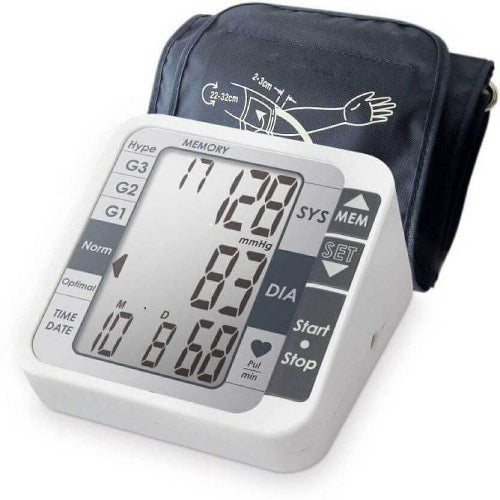
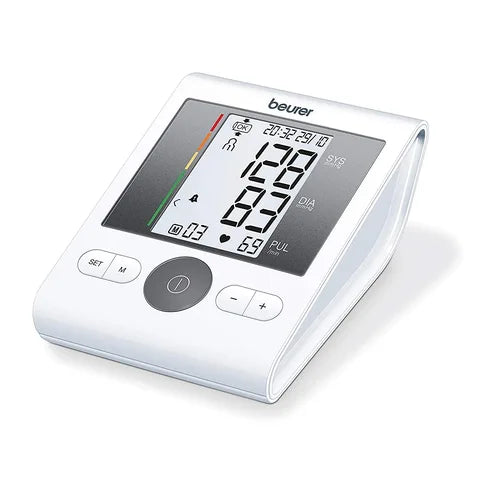
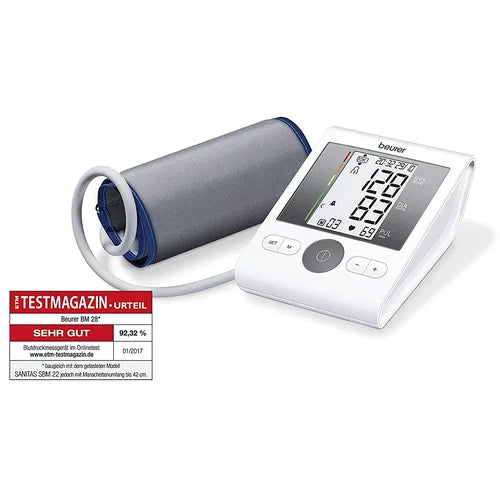
Beurer BM28 BP Machine with German Technology

Type: Home Healthcare

Beurer BM28 BP Machine with German Technology

Regular price Rs. 1,839
Sale price Rs. 1,839 Regular price Rs. 2,190
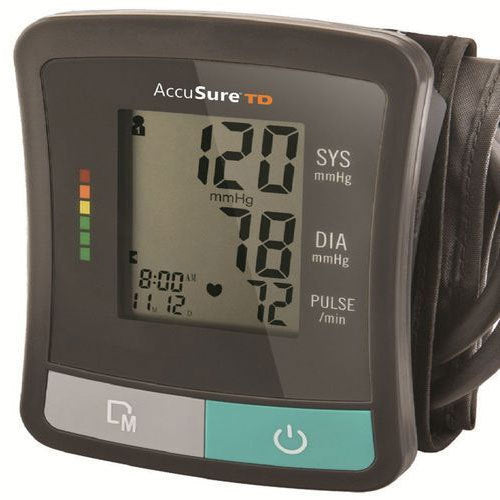
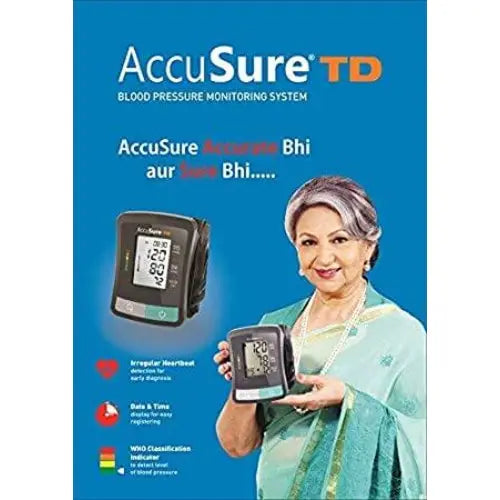
AccuSure TD Digital BP Machine

Type: Home Healthcare

AccuSure TD Digital BP Machine

Regular price Rs. 1,149
Sale price Rs. 1,149 Regular price Rs. 1,398
omron_blood_pressure

Type: bp monitor

Omron HBP-9030: BP Monitor with Printer – Ideal for Hospitals & Clinics

Regular price Rs. 119,490
Sale price Rs. 119,490 Regular price Rs. 151,800
blood pressure machine

Type: bp monitor

Omron HBP-9030 Blood Pressure Monitoring Machine with Printer

Regular price Rs. 119,430
Sale price Rs. 119,430 Regular price Rs. 151,800
bp monitor machine

Type: Sphygmomanometer

BP Monitor Machine for Clinics Hospitals | Yuwell

Regular price Rs. 124,540
Sale price Rs. 124,540 Regular price Rs. 138,000
blood pressure monitor

Type: bp monitor

OMRON HEM 7530T Blood Pressure Monitor ECG Machine Measure Bp ECG Afib

Regular price Rs. 14,499
Sale price Rs. 14,499 Regular price Rs. 17,479

Collection: How to Use a Digital BP Monitor at Home: The Complete 2026 Guide

In 2026, proactive health management starts in the living room. Learning how to check BP at home is no longer just for those with diagnosed hypertension; it is a vital skill for anyone committed to long-term cardiovascular wellness. A digital Blood Pressure (BP) monitor provides a window into your heart health, allowing you to track trends that a single, high-stress doctor’s visit might miss.

However, the accuracy of your data depends entirely on your technique. This guide will walk you through the equipment needed to use BP monitors at home, the science behind the readings, and the lifestyle factors—like weight and stress—that can sway your numbers.

Equipment Needed to Use BP Monitors at Home

To get a clinical-grade reading outside of a hospital, you need more than just the machine. Ensure you have the following "Home Heart Kit" ready:

  • The Digital Monitor: An oscillometric device (automatic) is recommended for home use over manual sphygmomanometers.
  • The Correct Cuff Size: This is the most critical piece of equipment. A cuff that is too small will give a falsely high reading, while one that is too large will give a falsely low one.
  • Power Source: Fresh AA/AAA alkaline batteries or a dedicated AC adapter to ensure the pump has enough power to reach full inflation.
  • Logging Tool: A physical diary or a synced smartphone app to record your BP readings over time.

Types of BP Monitors: Which One is Right for You?

Choosing the right device is the first step in learning how to check BP at home. In 2026, three main categories dominate the market:

Monitor Type Best For Accuracy Level
Upper Arm Digital Daily home tracking; most users. High (Gold Standard for home)
Wrist Digital Frequent travelers; users with very large arms. Moderate (Position-sensitive)
Smart Wearables Trend monitoring during exercise. Informational (Not for diagnosis)

MeddeyGo Clinical Tip:

While wrist monitors are convenient, upper arm monitors are generally more accurate because the cuff sits at the same horizontal level as your heart. In 2026, most doctors still require arm-based readings for making medication adjustments.


The 7-Step Precision Protocol: Mastering the Digital BP Monitor

In 2026, clinical studies show that nearly 25% of "high" blood pressure cases at home are actually due to user error. When you learn how to check BP at home, you aren't just pressing a button—you are conducting a mini-clinical trial on your own body. Every variable matters.

Step 1: The Pre-Test "Quiet Hour"

Your sympathetic nervous system is highly reactive. To get an accurate reading from your digital BP monitor, you must avoid stimulants. Caffeine and nicotine are vasoconstrictors; they narrow your blood vessels, forcing your heart to pump harder.

  • The Caffeine Effect: Can raise systolic pressure by up to 10 mmHg.
  • The Exercise Effect: While good for long-term health, immediate post-exercise readings reflect active recovery, not your "resting" state.

Step 2: Biological Neutrality (The Bladder & Bowel)

A full bladder is a physical stressor. Physiologically, a distended bladder triggers the "fight or flight" response, which constricts peripheral arteries. This can lead to an artificial spike of 10–15 mmHg. Before you even sit down to use your BP machine, ensure you are biologically comfortable.

Step 3: Environmental Stabilization (The 5-Minute Rule)

Do not walk to the table and immediately put on the cuff. Your blood flow needs time to normalize after movement.

The 2026 Protocol: Sit in a quiet room, away from family noise or pets. Do not check emails or social media. Stressful digital content can cause an instant "micro-spike" in blood pressure that masks your true resting heart rate.

Step 4: The Physics of Posture

Gravity is your enemy during BP readings. If your arm is hanging low, gravity adds "hydrostatic pressure" to the column of blood, making the reading appear higher.

  • Back Support: Sitting without back support can increase diastolic pressure by 6 mmHg.
  • Feet Placement: Crossing your legs at the knees can increase systolic pressure by 2 to 8 mmHg. Keep feet flat to ensure unobstructed venous return.
  • Arm Position: Your arm must be supported at the level of the right atrium (mid-chest).

Step 5: Cuff Placement Engineering

When placing the cuff of your home BP monitor, position it 2-3 cm (about two finger-widths) above the bend of your elbow. The air tube should run down the center of the inside of your arm, aligned with your middle finger.

Cuff Tension: You should be able to slide only two fingertips under the top edge of the cuff. Too tight, and the "baseline" is wrong; too loose, and the machine will over-inflate to compensate, causing pain and a "panic spike."

Step 6: The "No-Talk" Mandate

Talking, or even active listening, requires significant neurological activity that raises blood pressure. During the 60 seconds that the digital BP monitor is active, remain completely silent. Research suggests that talking can add up to 10 points to your systolic reading.

Step 7: The Rule of Three (Averaging)

The first reading is almost always the highest because of the "startle" of the cuff tightening.

Pro Tip: Take three readings, separated by 60-90 seconds. Discard the first reading and calculate the average of the second and third. This average is the number you should record in your health diary.

Can I Rely on a Digital BP Monitor for Accurate Health Decisions?

The reliability of a digital BP monitor depends on its "Validation Protocol." In 2026, look for devices that are AAMI/ESH/ISO validated.

While manual mercury monitors are the historical "gold standard," they are subject to "human hearing error." A high-quality digital monitor eliminates the need for a stethoscope and provides oscillometric accuracy, which is actually more consistent for home users than trying to hear Korotkoff sounds manually.

Does Weight Affect Blood Pressure Readings?

Weight impacts your BP readings in two distinct ways: physiological and mechanical.

  • Physiological: Extra adipose tissue (fat) increases the demand for oxygen, meaning your heart must pump a larger volume of blood, which naturally raises pressure.
  • Mechanical (Cuff Error): If you have a larger arm circumference and use a "Standard" cuff, the machine will significantly overestimate your blood pressure. This is known as "cuff hypertension." Always measure your mid-arm circumference and buy an "XL" cuff if needed to ensure your how to check BP at home process remains valid.

Decoding the Data: What Does Your BP Reading Actually Mean?

When your digital BP monitor finishes its cycle, it presents two primary numbers and a pulse rate. Understanding these is the cornerstone of knowing how to check BP at home effectively.

1. Systolic Pressure (The Top Number)

This measures the force your heart exerts on the walls of your arteries each time it beats. It is the "peak" pressure. In 2026, clinical guidelines suggest that for most adults, a systolic reading consistently above 130 mmHg indicates Stage 1 Hypertension.

2. Diastolic Pressure (The Bottom Number)

This measures the pressure in your arteries when your heart rests between beats. It is the "baseline" pressure. Even if your systolic is normal, a diastolic reading consistently above 80 mmHg is a cause for medical review.

The Mystery Solved: Why Does My BP Machine Fluctuate?

One of the most common complaints at MeddeyGo is: "I took two readings back-to-back and they were different!" This is not a fault of the digital BP monitor; it is a reflection of human biology.

Your blood pressure is as dynamic as your heart rate. It is influenced by a complex web of factors that can change in seconds:

  • The "First-Cuff" Anxiety: The first time the cuff squeezes, your body perceives it as a minor threat. This releases a tiny amount of adrenaline, often making the first reading 5-10 mmHg higher than the second.
  • Internal Rhythm (Circadian Variation): Blood pressure is naturally lower at night and higher in the morning. If you compare a 7:00 AM reading to a 7:00 PM reading, they should be different.
  • The "Averaging" Science: In 2026, medical professionals ignore single readings. We look for the mean average. If your machine shows 128/82 and then 122/78, your body is simply settling into a resting state.

The Silent Variable: Does Stress Affect Blood Pressure Readings?

Stress is the single most common cause of "spurious" (fake) hypertension readings. When you are stressed, your body enters a state of vasoconstriction—the muscles around your blood vessels tighten, making the "pipes" narrower and the pressure higher.

Types of Stress Spikes:

Acute Stress: Checking your BP immediately after an argument or a stressful work call will result in a reading that does not reflect your health, but rather your current mood.

White Coat Effect at Home: Some people develop anxiety simply by seeing the BP machine. They worry the number will be high, which causes the number to be high. If you feel your heart racing as the cuff inflates, take 5 deep breaths and wait 10 minutes before trying again.

When to Stop Monitoring and Start Consulting

While learning how to check BP at home is empowering, it is not a replacement for professional diagnosis. You should consult a doctor if:

Scenario Observation Action
Hypertensive Urgency Reading is 180/120 or higher. Wait 5 mins, re-test. If still high, call a doctor.
Hypertensive Emergency High reading + Chest pain or headache. Immediate Emergency Care.
Irregular Heartbeat Monitor shows an "IHB" or "Arrhythmia" icon. Schedule a routine check-up for an ECG.


The Invisible Error: Why Cuff Size is More Important Than the Machine

You could own the most expensive digital BP monitor in the world, but if the cuff doesn't fit, the data is useless. In 2026, clinical audits reveal that "Cuff Mis-sizing" accounts for the majority of incorrect how to check BP at home results.

The "Under-Cuffing" Penalty

If the cuff is too small for your arm, the machine must exert extra pressure to compress the artery. This results in a falsely high reading (sometimes by as much as 20 mmHg). Conversely, a cuff that is too large will provide a falsely low reading. Use the table below to find your match:

Arm Circumference Recommended Cuff Size
22 to 26 cm Small Adult
27 to 34 cm Adult Standard
35 to 44 cm Large Adult (XL)
45 to 52 cm Adult Thigh Cuff

Maintenance: Keeping Your BP Machine Clinical-Grade

A digital BP monitor is a sensitive electronic instrument. To maintain its 2026 precision standards, follow these care guidelines:

  • The Battery Factor: As batteries weaken, the internal pump may struggle to inflate the cuff consistently. This can lead to "Error" codes or sluggish readings. Pro Tip: Always use an AC adapter for home use and keep batteries only for travel.
  • Cuff Hygiene: The cuff absorbs sweat and skin oils. Wipe the inner fabric with a slightly damp cloth and mild soap. Never submerge the cuff in water, as it will damage the internal air bladder.
  • Tube Integrity: Check the rubber tubing for "spiderweb" cracks or hardening. Any air leak will cause the BP machine to give a false low reading or fail to finish the cycle.

Investment Guide: Digital BP Monitor Prices in India (2026)

Quality varies significantly in the Indian market. When purchasing from MeddeyGo, you are investing in clinically validated technology. Here is the 2026 price breakdown:

Basic Automatic

₹1,800 - ₹2,500

Best for occasional checks. Single-user memory.

Advanced Bluetooth

₹3,500 - ₹5,500

App-syncing, multi-user, and irregular heartbeat detection.

Professional / Hospital

₹7,000 - ₹12,000+

High-speed measurement, shock-proof, and AC-only heavy duty.

Your Heart Health is in Your Hands

Now that you've mastered how to check BP at home, it's time to choose a partner in your wellness journey. A high-quality digital BP monitor from MeddeyGo isn't just a purchase—it's peace of mind for you and your family.

Advanced FAQ: Expert Insights on Home BP Monitoring

1. Why does my BP reading differ significantly between my left and right arm?

In most healthy individuals, a small difference of 5–10 mmHg between arms is physiologically normal. However, if the difference is consistently higher than 15 mmHg, it could indicate an underlying vascular issue like peripheral artery disease or a blockage in the subclavian artery. In 2026, clinical guidelines recommend checking both arms during your first setup; if one arm consistently shows a higher reading, always use that higher-reading arm for all future home measurements to ensure you aren't underestimating your risk.

2. Can I use a digital BP monitor if I have an irregular heartbeat (Arrhythmia)?

Yes, but with caution. Standard digital BP monitors work by detecting regular arterial oscillations. If you have a condition like Atrial Fibrillation (AFib), the "irregularity" can confuse the machine's algorithm, leading to error codes or inaccurate numbers. Fortunately, most premium monitors available at MeddeyGo in 2026 feature "IHB" (Irregular Heartbeat) detection. If your machine consistently flags an irregular rhythm, you should consult your cardiologist for a manual reading or an ECG, as the digital average may not be fully reliable in such cases.

3. Does "talking" or "distraction" really change my BP reading that much?

Absolutely. The physiological impact of cognitive activity is often underestimated. When you speak, your brain sends signals that increase cardiac output and peripheral resistance. Clinical studies have shown that engaging in a conversation—or even active listening to a podcast—can artificially raise your systolic pressure by 10 to 12 mmHg. This is known as "cognitive-induced hypertension." For the most accurate BP readings, you must enter a state of total mental and physical silence for at least 60 seconds before and during the measurement.

4. Can the temperature of the room affect how my BP monitor performs?

Yes, environmental temperature plays a massive role in vascular behavior. In a cold room, your body undergoes "peripheral vasoconstriction"—essentially, your surface blood vessels tighten to keep your core warm. This naturally raises your blood pressure. Conversely, an overly hot room or a hot shower immediately before a test can cause "vasodilation," which might result in a falsely low reading. For consistent tracking, always check your BP in a room that is at a comfortable "ambient" temperature (around 22°C to 25°C).

5. Is it normal for the cuff to feel painfully tight during the inflation process?

A digital BP monitor must inflate to a pressure that is higher than your systolic pressure to effectively "shut off" the blood flow temporarily—this is the only way it can measure the return of blood as it deflates. While it should feel very firm (like a tight hug), it should not be excruciating. If it feels painful, you might be using a cuff that is too small for your arm, which forces the motor to over-inflate to reach the required occlusion. If the pain is severe, it can trigger a "pain response" adrenaline spike, which will ironically make the reading much higher than it actually is.