
Filter
5 products
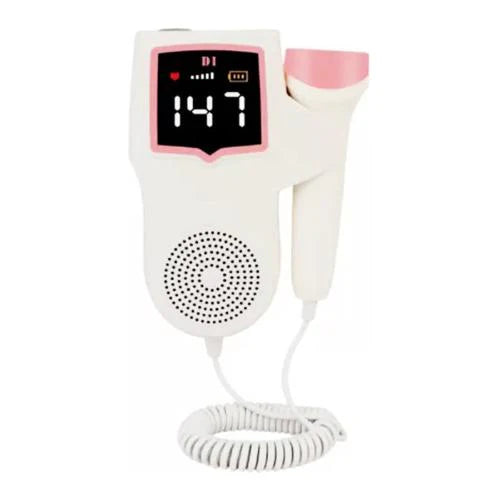
Type: Devices
Portable Fetal Doppler 2.0 MHz


Type: Devices
Vcomin Fetal Doppler 300D


Type: Devices
Vcomin Fetal Doppler 200D
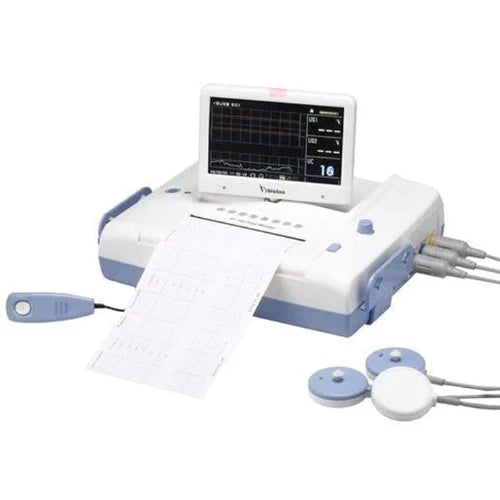
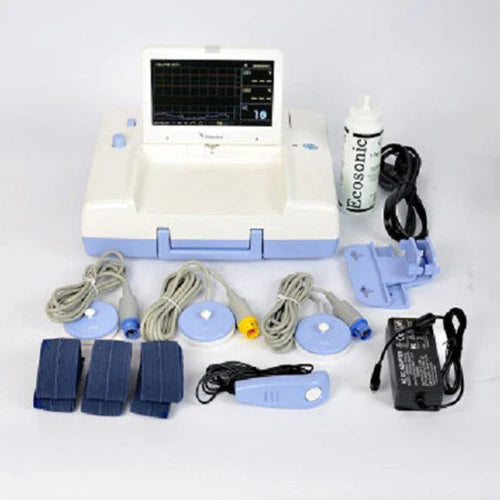
Type: Devices
Bistos BT350 Fetal Monitor CTG Machine with 7 inch Screen LED Light Source


Type: MeddeyGo
Fetal Monitor with CTG Flight 800
Collection:
Understanding What Is Fetal Doppler? Its Uses and Safety
Introduction: Why People Search for a Fetal Doppler
The term fetal doppler is often searched by people who want to understand how pregnancy monitoring works and how healthcare providers listen to a baby’s heartbeat during prenatal visits. For many families, hearing the baby’s heartbeat is a powerful and emotional moment. It can make pregnancy feel more real, strengthen bonding, and offer reassurance during antenatal check-ups. For doctors, nurses, and midwives, the fetal doppler is not just a reassuring sound device. It is a clinical tool that helps assess fetal heart activity as part of routine pregnancy care.
At the same time, confusion is very common. Many users search phrases such as fetal doppler meaning, fetal doppler use, and what is a fetal doppler because they are not sure whether the device is a diagnostic machine, a home gadget, or something only professionals should use. Some buyers also assume that if a heartbeat is heard, everything must be fine. That assumption can be risky. A fetal doppler can provide useful information in the right hands, but it does not replace professional pregnancy assessment, movement monitoring, or medical review when something feels wrong.
A fetal doppler uses Doppler ultrasoundDoppler ultrasound uses reflected sound waves to help detect movement, including moving blood. In pregnancy care, it can be used to help detect fetal heart activity. to detect fetal heart motion and convert it into an audible sound. In clinics, providers use it during prenatal visits to check that fetal heart activity can be found and recorded as part of routine maternal care. In home-use discussions, however, safety becomes more important. Professional medical organizations and public health sources warn that home fetal heartbeat devices can be misinterpreted and should not be relied on as proof that the baby is well.
This article explains fetal doppler meaning in a practical way. It covers what a fetal doppler is, when it is used, what it is used for, the difference between clinic use and home use, the main safety concerns, and common questions such as whether it is safe to use fetal doppler at home and what happens around 12 weeks of pregnancy.
Prenatal Clinics
Commonly used by trained professionals during antenatal visits to check fetal heart activity.
Pregnancy Monitoring
Helps support routine fetal heart assessment, but does not replace full pregnancy evaluation.
Home-Use Questions
Frequently searched by families, but home use needs careful safety understanding and medical guidance.
What Is a Fetal Doppler?
A fetal doppler is a handheld ultrasound-based device used to help detect fetal heart activity during pregnancy. In simple terms, it is the small monitor-like instrument a doctor, nurse, or midwife may place on the pregnant abdomen during a prenatal visit to listen for the baby’s heartbeat. It is designed to identify movement related to fetal circulation and convert that movement into a sound healthcare providers can hear and interpret.
Understanding fetal doppler meaning becomes easier when you compare it with a routine pregnancy ultrasound. A standard pregnancy ultrasound mainly creates an image. A fetal doppler, by contrast, is mainly used to detect and present heart activity as sound. It is not the same as a full scan machine, and it is not meant to replace a formal ultrasound examination when imaging, growth measurements, anatomy review, or specialist assessment is needed.
In professional care settings, fetal dopplers are widely used because they are quick, noninvasive, and familiar in routine antenatal practice. They are especially helpful during check-ups where the provider wants to confirm fetal heart activity as part of normal pregnancy care. The device is placed externally on the abdomen with gel to help sound-wave transmission, and the provider adjusts the angle and position while listening for the signal.
The most important point is that a fetal doppler is a monitoring aid, not a complete pregnancy safety guarantee. It offers one type of information at one moment in time. It does not evaluate every aspect of fetal wellbeing, and it does not replace medical review if there are symptoms such as pain, bleeding, reduced movements later in pregnancy, or any other concern.
Simple Meaning
A fetal doppler is a handheld device used to listen to fetal heart activity during pregnancy. It helps trained providers check fetal heart sounds during routine antenatal care.
Fetal Doppler Meaning in Everyday Pregnancy Care
When people ask about fetal doppler meaning, they are often asking two questions at once. First, they want to know what the device physically is. Second, they want to know what the sound means emotionally and medically. Emotionally, hearing the heartbeat often reassures families and helps them feel connected to the pregnancy. Medically, the sound means that fetal heart activity has been detected at that moment by the device under the conditions of that examination.
But meaning should not be confused with certainty. A detected heartbeat is an important finding, yet it is not the same as a full fetal wellbeing assessment. A baby may have detectable heart activity while other concerns still require medical attention. This is exactly why public guidance warns against using home dopplers as a reason to delay help when something feels wrong.
In clinic settings, fetal doppler use becomes meaningful because it is interpreted by someone trained in maternity care. A provider knows when the signal is hard to find, how maternal body habitus, fetal position, gestational age, or placental location can affect detection, and when additional examination or ultrasound review is more appropriate. In home use, that professional context is often missing, which changes the value of the information.
When to Use a Fetal Doppler
The question “When to use a fetal doppler” is best answered in two separate ways: clinical use and home-use curiosity. In clinical care, fetal dopplers are commonly used during routine prenatal visits once the pregnancy has progressed enough for the provider to reasonably expect fetal heart activity to be detected externally. The timing varies from pregnancy to pregnancy because gestational age, body build, uterine position, and fetal position all affect when the signal can be picked up.
In a clinic, the provider chooses the right time based on the pregnancy stage and the reason for monitoring. Sometimes the heartbeat can be found sooner, and sometimes it cannot be found at an early visit even when the pregnancy is normal. That is one reason providers do not treat the doppler as the only tool. If the signal is not clearly detected and there is a medical reason to investigate further, they may use ultrasound or repeat clinical review instead of relying on guesswork.
For people asking about home use, the better question is not only “when can I use it?” but also “should I rely on it?” Public guidance strongly suggests caution. Devices that detect fetal heart sounds should be used by trained healthcare providers when medically necessary, and home listening should never be treated as a substitute for professional maternity advice.
Around early pregnancy, including the time many people describe as 12 weeks, detection can still be variable. Some pregnancies may allow external fetal heart sound detection around that stage, while others may not, depending on normal individual factors. This is why failing to hear a clear heartbeat at home should not trigger panic, and hearing one should not create false reassurance if there are other symptoms or concerns.
Routine Antenatal Visits
Common setting for trained professional fetal doppler use during prenatal assessment.
Gestational Timing Matters
Heartbeat detection varies with pregnancy stage, fetal position, and body factors.
Clinic Context Helps
Providers know when to repeat, reposition, or move to ultrasound review.
Home Timing Is Different
At-home attempts can be misleading because interpretation is harder without training.
Fetal Doppler Used For: Main Clinical Purposes
The phrase fetal doppler use usually refers to the role the device plays in prenatal care. A fetal doppler is mainly used to help detect fetal heart activity during pregnancy visits. That is its most recognized purpose. But the reason it matters is broader than just hearing a sound. In routine care, the device helps support professional assessment, communication, and follow-up decision-making.
One of the main uses is routine reassurance during antenatal appointments. Once the pregnancy has reached a suitable stage, a clinician may use the doppler during check-ups to listen to the fetal heartbeat. This helps confirm fetal heart activity as part of the overall visit.
Another use is in maternal counseling and bonding. Hearing the fetal heartbeat can be emotionally meaningful and may help parents feel more connected to the pregnancy. In some settings, this is an important part of the antenatal experience, even though the medical value still depends on proper interpretation.
A fetal doppler can also support clinical documentation. Providers may record fetal heart rate findings as part of routine pregnancy notes. When combined with the rest of the exam, this contributes to more complete prenatal assessment.
In certain clinical situations, the doppler may be used to help guide whether further testing or imaging is needed. If fetal heart activity is difficult to locate, if the signal seems unclear, or if other symptoms are present, providers do not stop at the doppler alone. They may advise ultrasound, fetal surveillance, or more detailed review depending on the pregnancy stage and concern.
| Fetal Doppler Use | Main Purpose | Who Usually Uses It | Important Note |
|---|---|---|---|
| Routine prenatal check | Detect fetal heart activity during visit | Doctor, nurse, midwife | Part of overall assessment, not the whole assessment |
| Pregnancy reassurance | Support communication and bonding | Provider with patient | Emotional reassurance should not replace medical review |
| Clinical documentation | Record fetal heart findings | Healthcare professional | Useful when interpreted in clinical context |
| Follow-up decision support | Help decide whether further review is needed | Healthcare professional | Unclear findings may lead to ultrasound or further monitoring |
What Is a Fetal Doppler Used For?
The short answer is this: a fetal doppler is used to help detect and listen to fetal heart activity during pregnancy. But in actual care, that answer is only the starting point. A provider may use it to check fetal heart sounds during a prenatal visit, to support routine monitoring, to document fetal heart findings, or to help decide whether more detailed assessment is needed.
People sometimes assume the fetal doppler is used to check “whether the baby is okay.” That idea is understandable, but too broad. A detected heartbeat is reassuring in one sense, yet it does not answer every clinical question. It does not directly measure fetal growth, anatomy, placental health, amniotic fluid, or all forms of fetal distress. It gives one important piece of information, not the full picture.
That is why fetal doppler findings should always be understood as part of maternity care rather than as a stand-alone guarantee. If a pregnant person has pain, bleeding, reduced movements later in pregnancy, or other warning symptoms, the answer is not to keep rechecking the doppler at home. The answer is to seek medical care.
Is It Safe to Use Fetal Doppler at Home?
This is one of the most important questions in the whole topic. The safest and most responsible answer is: home fetal doppler use should be approached with caution and should not replace professional pregnancy care. Public health sources have specifically warned that fetal heartbeat monitoring devices used by untrained persons can lead to incorrect interpretation or unnecessary prolonged exposure. They also warn that hearing a heartbeat at home is not a reliable way to confirm that the baby is well. :contentReference[oaicite:1]{index=1}
The main risk is not usually the idea of brief supervised clinical use itself. The bigger risk is false reassurance or false alarm. A person may hear something they believe is the baby’s heartbeat and delay getting help when medical review is urgently needed. Or they may fail to find the heartbeat and become extremely anxious even though the pregnancy is normal and the device is simply hard to use at that stage. Both problems are real.
Another concern is technique. Trained professionals understand where to place the probe, how long to search, how to distinguish maternal sounds from fetal sounds, and when to stop and use other methods. Home users usually do not have that level of interpretation skill. As a result, home use can easily create confusion rather than clarity.
If someone already owns a home fetal doppler, the safest approach is to treat it as a non-diagnostic listening device at most, never as a decision-making tool. It should not be used to delay contacting a healthcare provider when there are symptoms or reduced movements later in pregnancy. When something feels wrong, medical advice should come first, not repeated home doppler checking. :contentReference[oaicite:2]{index=2}
Important Safety Warning
A home fetal doppler is not a reliable way to prove that the baby is well. If there is pain, bleeding, reduced movements later in pregnancy, or any serious concern, contact a qualified healthcare provider instead of depending on home listening.
Risk & Safety Measures
The main risk & safety measures around fetal doppler use are less about the idea of sound waves in normal clinical use and more about incorrect use, overuse, misinterpretation, and delay in seeking care. FDA guidance says these devices should only be used by trained healthcare providers when medically necessary and warns that use by untrained persons could expose the fetus to prolonged and unsafe energy levels or provide information that is interpreted incorrectly. :contentReference[oaicite:3]{index=3}
The most important safety measure is professional use. In clinics and hospitals, fetal dopplers are used by trained staff who understand the limits of the device. They do not rely on it in isolation. Instead, they combine the result with gestational age, maternal symptoms, physical exam findings, and other tests when needed.
The second safety measure is short, purposeful use. A fetal doppler is not meant for long casual listening sessions. In clinical care, the provider uses it for a specific reason, for an appropriate amount of time, and with clear interpretation goals.
The third safety measure is knowing when not to rely on it. If there are warning symptoms, a home doppler should not be used as a way to talk oneself out of seeking care. This is especially important for reduced fetal movements later in pregnancy, where NHS guidance specifically states that using a home doppler is not a reliable way to check the baby’s health. :contentReference[oaicite:4]{index=4}
The fourth safety measure is clear user education. People need to understand that not finding a heartbeat at home does not automatically mean an emergency, and hearing one does not automatically rule out an emergency. The device has limits. Good maternity care depends on recognizing those limits.
Use by Trained Staff
Professional interpretation makes the result more meaningful and safer.
Short, Focused Checks
Fetal dopplers are for purposeful monitoring, not prolonged casual listening.
No Delay in Care
Symptoms should lead to medical advice, not repeated home reassurance attempts.
Know the Limits
Heartbeat detection is only one piece of pregnancy assessment, not the whole picture.
How to Use Fetal Doppler at 12 Weeks?
The safest way to answer “How to use fetal doppler at 12 weeks?” is to say that 12 weeks can still be an early and variable stage for external heartbeat detection, and home use at that stage can easily cause confusion. Some pregnancies may allow a trained provider to detect fetal heart activity externally around that time, while in others it may be difficult because of normal factors such as fetal position, uterus position, maternal body shape, or placental location.
Because of that variability, early home checking is one of the main situations where unnecessary anxiety happens. A person may spend too long searching, may mistake maternal pulse or other internal sounds for fetal heart activity, or may worry that something is wrong even when the pregnancy is progressing normally. Public guidance supports using these devices only by trained healthcare providers when medically necessary. :contentReference[oaicite:5]{index=5}
In practical terms, if someone is around 12 weeks and wants reassurance, the best option is not repeated home searching. The better choice is to follow the planned antenatal schedule and speak to the maternity provider if there is a concern. A clinician can decide whether doppler listening is appropriate at that visit or whether ultrasound evaluation is more suitable.
So while the internet often frames this as a technique question, the better medical answer is a guidance question: at 12 weeks, do not rely on home use to judge pregnancy wellbeing. Use scheduled prenatal care and seek professional advice when needed.
12-Week Advice
Around 12 weeks, external heartbeat detection can still be inconsistent. If reassurance is needed, professional prenatal review is safer than repeated at-home searching.
Clinic Use vs Home Use: Why the Difference Matters
The same device can feel very different depending on who is using it and why. In a clinic, a fetal doppler sits inside a wider system of maternity care. The provider knows the pregnancy history, gestational age, current symptoms, and what further steps are available if the sound is unclear or unexpected. In that setting, the fetal doppler is one practical tool among many.
At home, the context is very different. The user is usually seeking reassurance, but may not know how to interpret what they hear. That difference in interpretation is exactly why professional sources are cautious about home use. A device that is useful in clinical hands can become misleading when it is treated as an at-home proof of wellbeing.
This is not because families are doing something wrong by wanting reassurance. It is because medical tools only stay safe when their limits are understood. The difference between clinic use and home use is mainly the difference between professional interpretation and self-interpretation.
| Setting | Who Uses It | Main Advantage | Main Risk |
|---|---|---|---|
| Clinic or hospital | Doctor, nurse, midwife | Professional interpretation in medical context | Still limited if used alone, but supported by further care options |
| Home | Pregnant person or family member | Emotional reassurance attempt | False reassurance, false alarm, delayed medical care |
How Healthcare Professionals Use a Fetal Doppler Responsibly
Responsible fetal doppler use in professional settings follows a few basic principles. First, the device is used for a specific clinical purpose, not random repeated listening. Second, the provider interprets the result in context. Third, unclear findings do not lead to guesswork; they lead to further review if needed.
Midwives and obstetric clinicians understand that many factors affect detection. That is why responsible use includes patience, correct technique, and knowing when the doppler result is not enough. In that sense, the real value of the fetal doppler lies as much in the clinician as in the device.
This also matters for procurement and training. Clinics should treat fetal dopplers as clinical devices that require staff familiarity, maintenance, and sensible usage protocols. They are simple-looking devices, but pregnancy monitoring should never be reduced to “just listening for a sound.”
Buying Considerations for a Fetal Doppler
If a clinic or maternity practice is choosing a fetal doppler, the most important considerations are reliability, signal quality, ease of cleaning, display clarity if present, probe quality, and overall suitability for professional antenatal use. Buying decisions should focus on medical workflow, not only on how attractive the listing looks online.
For home buyers, the more important consideration is actually whether buying one is necessary at all. Since home use can be misleading, many families are better served by relying on scheduled prenatal care and direct maternity advice rather than home doppler ownership.
If a product is still being evaluated, it should be checked for intended use labeling, cleaning guidance, power source reliability, ease of handling, and whether it is clearly positioned for professional clinical use rather than casual self-monitoring.
Frequently Asked Questions
What is a fetal doppler?
A fetal doppler is a handheld ultrasound-based device used to help detect fetal heart activity during pregnancy. Healthcare providers commonly use it during prenatal visits to listen to the baby’s heartbeat.
What is a fetal doppler used for?
It is mainly used to help detect and listen to fetal heart activity during pregnancy check-ups. It supports routine antenatal assessment, documentation, and communication, but does not replace full pregnancy evaluation.
When is a fetal doppler usually used?
It is commonly used during prenatal visits once the pregnancy has reached a stage where external heart activity may be detected. Exact timing varies from one pregnancy to another.
Is it safe to use fetal doppler at home?
Home use should be approached with caution. The main concern is not only the device itself, but also incorrect interpretation and false reassurance. It should never replace professional pregnancy care or delay seeking medical help when there are concerns.
How to use fetal doppler at 12 weeks?
At around 12 weeks, external heartbeat detection can still be variable. The safest advice is not to rely on home searching for reassurance. If reassurance is needed, speak with a healthcare provider and follow scheduled antenatal review.
Does hearing a heartbeat mean the baby is definitely well?
No. Hearing a heartbeat can be reassuring, but it does not prove that every aspect of pregnancy is normal. If there are symptoms or concerns, medical review is still important.
Can a fetal doppler replace an ultrasound scan?
No. A fetal doppler is mainly for listening to fetal heart activity. It does not replace a formal ultrasound scan, which provides imaging and much more detailed pregnancy assessment.
Why do professionals still use fetal dopplers if home use is discouraged?
Because in professional settings the result is interpreted by trained staff and used in the right clinical context. The problem with home use is mainly misinterpretation and over-reliance, not routine professional use in prenatal care.
Conclusion: Understanding Fetal Doppler the Right Way
A fetal doppler is an important and familiar tool in prenatal care when it is used by trained healthcare professionals in the right setting. It helps detect fetal heart activity, supports antenatal monitoring, and can offer reassurance during routine pregnancy visits. But understanding what is a fetal doppler also means understanding what it cannot do. It is not a full pregnancy assessment, it is not a replacement for ultrasound, and it should not be used at home as proof that everything is okay. The safest approach is to treat the fetal doppler as one useful part of professional maternity care, not as a stand-alone answer to every pregnancy concern.