
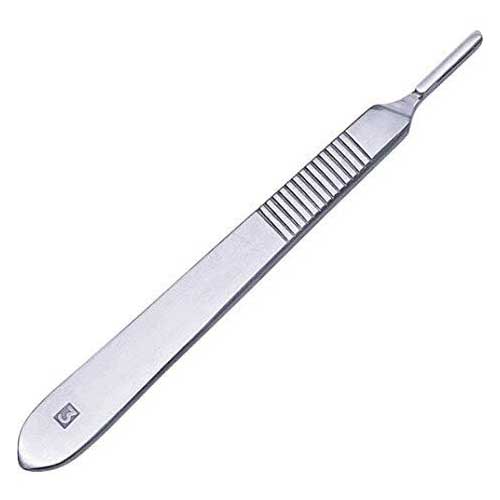
Type: Surgical
B P Scalpel Handle Surgical Instrument (Pack of 4)
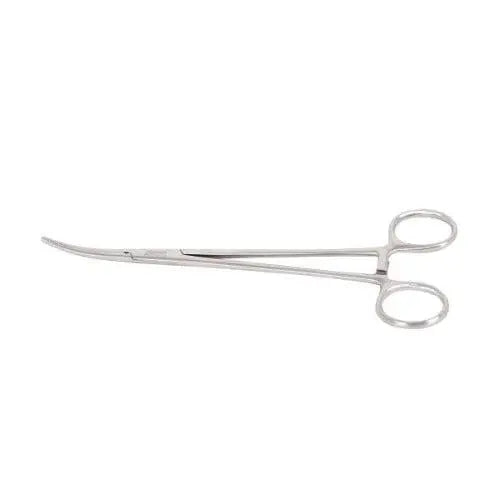
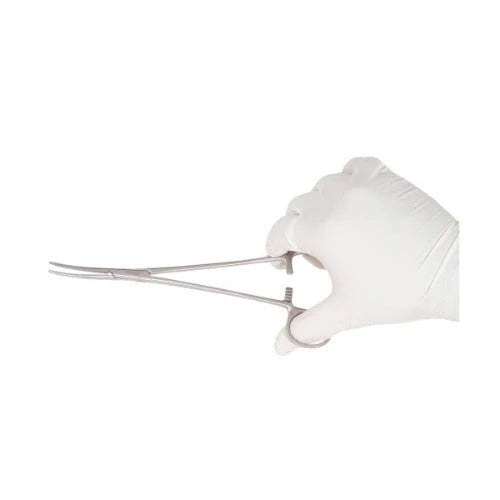
Type: Instruments
Artery Forceps Curved SS Delux Quality
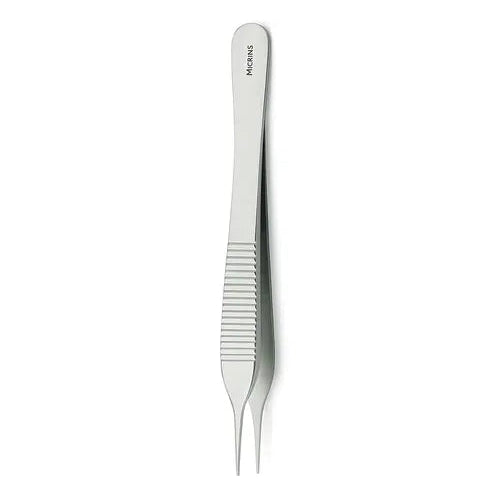
Type: Instruments
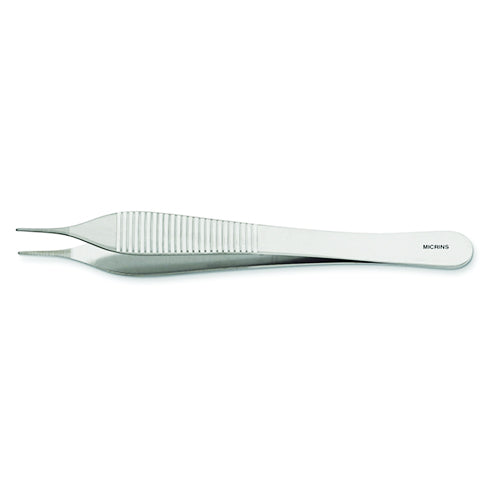
Adson Forcep Surgical Instruments
Type: Instruments
Allis Tissue Forceps Surgical Instrument
Type: Instruments
Cheatle Jar Premium Quality
Type: Instruments
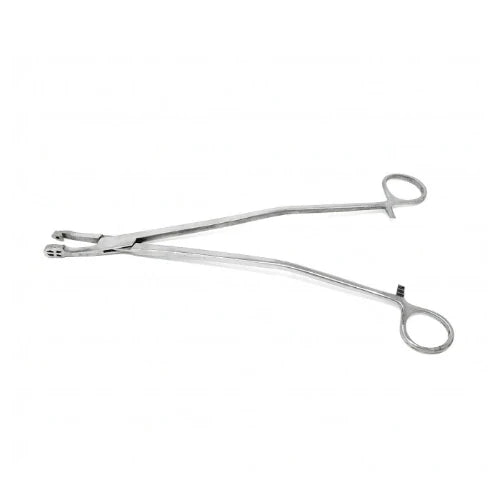
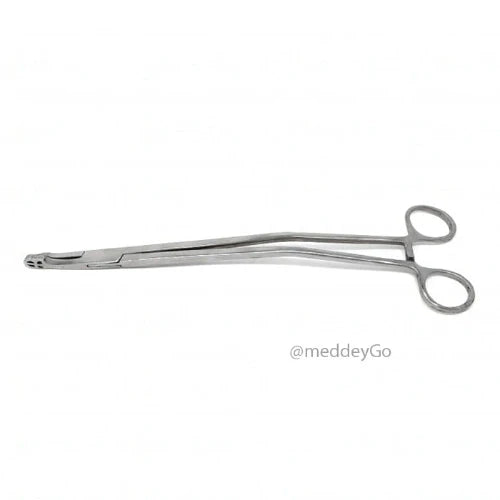
Cervical Punch Biopsy Forceps
Type: Instruments
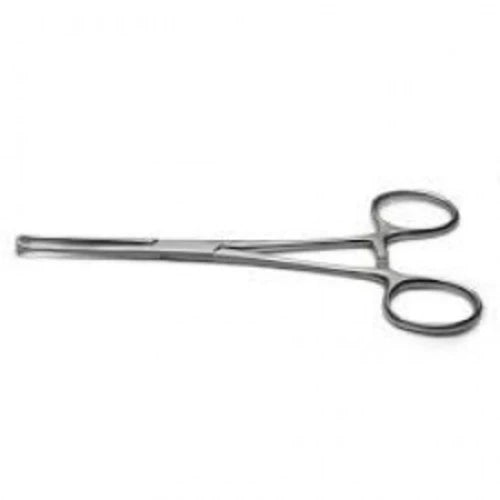
Allis Tissue Forceps Straight SS Delux Quality
Type: Instruments
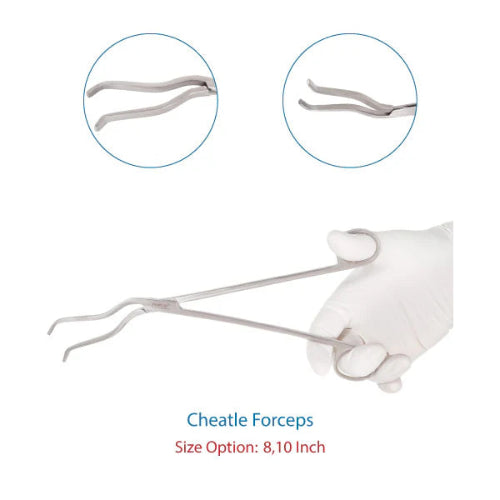
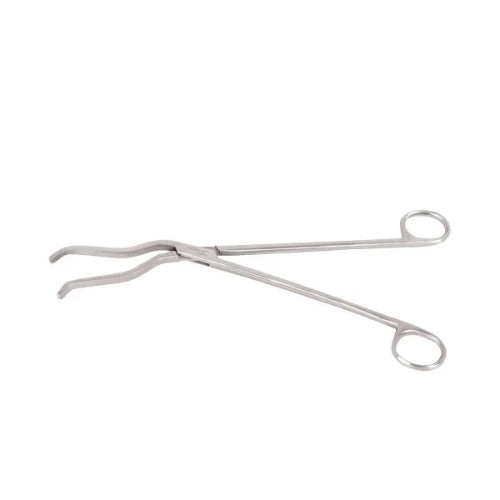
Cheatle Forceps SS Delux Quality
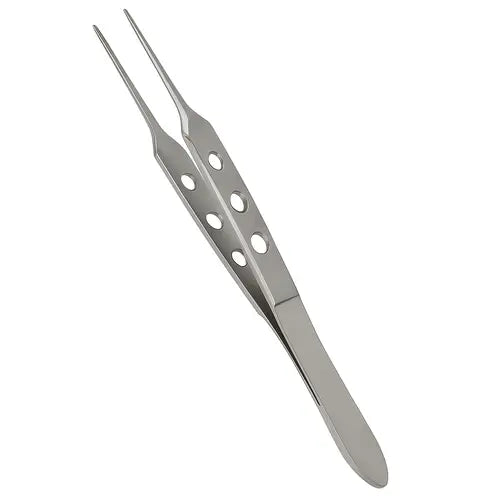
Type: Instruments
Bishop-Harmon Tissue Forceps SS
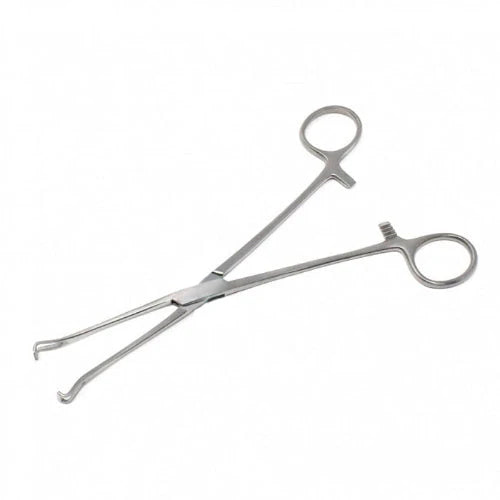
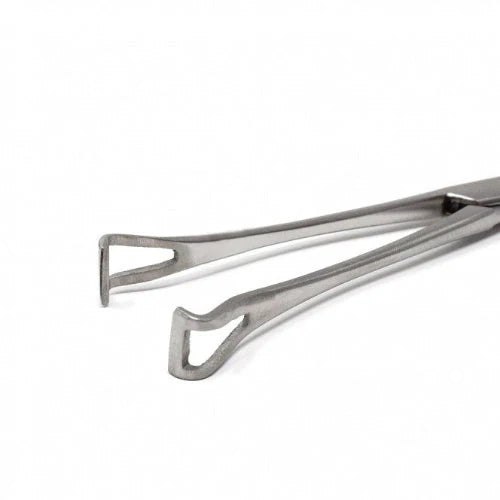
Type: Instruments
Babcock Forcep Surgical Instrument
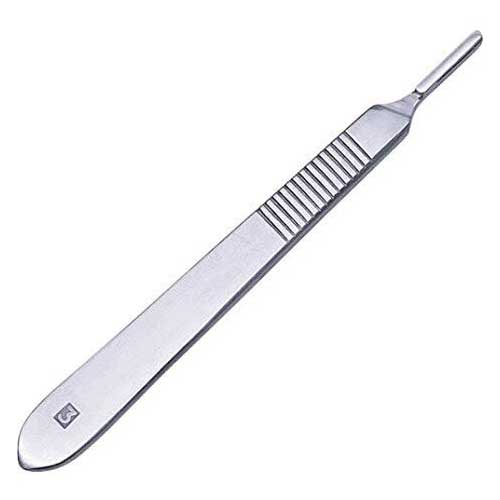
Type: Day to Day Care
B P Handle Surgical Premium Quality (Pack of 4)
Type: Instruments
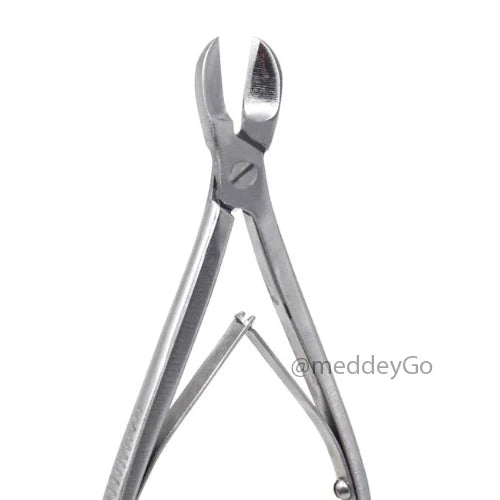
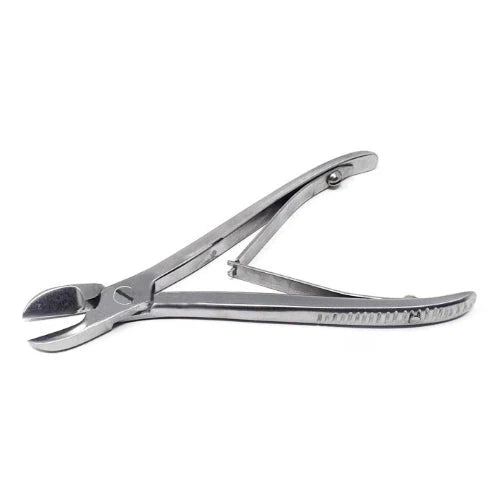
Bone Cutting Forceps Single Action
Type: Instruments
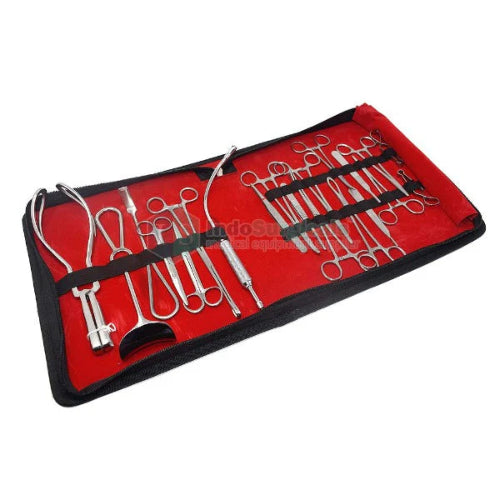
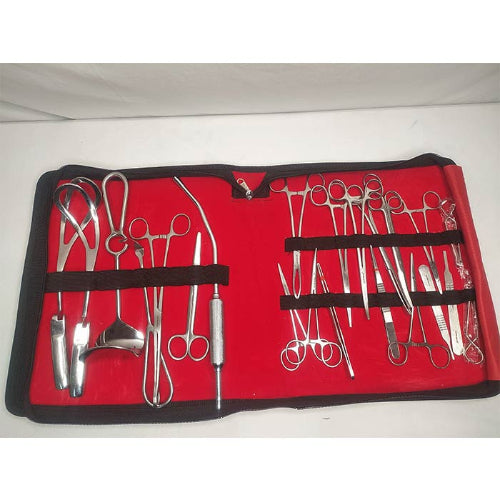
Cesarean Section Set Deluxe Quality


Type: Instrument
Dental Tooth Forceps (Child) Set of 7
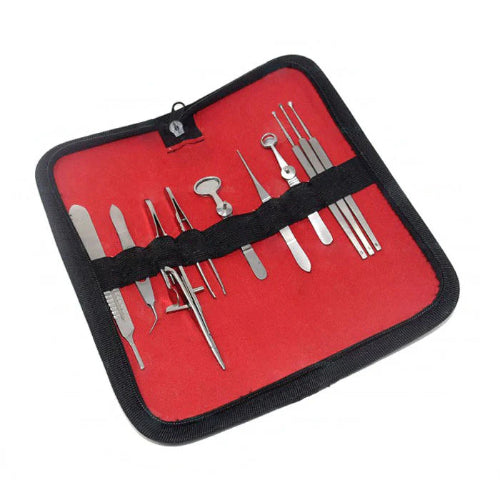
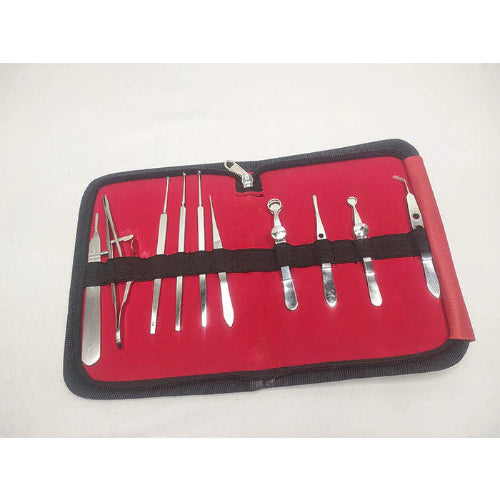
Type: Instruments
Chalazion Instruments Set of 8
Collection:
Forceps: Obstetric & Surgical
You've likely seen it in a movie: a tense delivery room, a worried doctor calls for "the forceps," and everyone holds their breath. For many, that's the only image we have of this medical instrument---one tied to drama and struggle. But that picture, shaped by Hollywood, leaves out the most important part of the story. In modern medicine, forceps use is guided by one core principle: increasing safety.
A major source of confusion is that most of us don't realize there are two completely different "families" of these tools. The first family, obstetric forceps , are the ones from the delivery room. Uniquely curved to cradle a baby's head, their purpose is to provide a gentle guiding hand when a mother is exhausted or the baby needs a little extra help. The second family, surgical forceps, are their much smaller cousins. Looking more like precise tweezers, they are essential in nearly every type of operation for holding delicate tissue or controlling bleeding.
So, what are forceps used for today? Whether in the operating room or the delivery suite, their role is not to create drama, but to solve a specific problem with skill and precision. In practice, this distinction demystifies the process and can significantly reduce anxiety, especially for expectant parents. By separating fact from fiction, we can see these instruments not as a source of fear, but as tools that help skilled professionals achieve a safer outcome.
The Two Families of Forceps: Childbirth Helpers vs. Surgical Tweezers
While the word "forceps" often brings to mind a dramatic childbirth scene, that image only tells half the story. In reality, medical forceps belong to two completely different families, each designed for a very specific job. Thinking of them as separate tools---like a wrench versus a screwdriver---is the best way to understand their roles. One family is dedicated to assisting in childbirth, while the other is a vast collection of precise instruments used in nearly every type of surgery.
This key difference in purpose means they look and act nothing alike. Their distinct designs ensure they are used safely and effectively for their intended task, and never for anything else.
- Obstetric Forceps: These are the instruments used in assisted deliveries. They are relatively large, with smooth, curved "spoons" designed to gently cradle a baby's head. Their job is not to pull, but to guide the baby through the birth canal, protecting its head along the way.
- Surgical Forceps: Think of these as highly specialized tweezers. They come in hundreds of shapes and sizes---some with tiny teeth for gripping tissue, others with flat tips for holding delicate sutures. Their purpose is to hold, clamp, or move small things with incredible precision during an operation.
Ultimately, a surgeon would no more use an obstetric forcep to handle a tiny blood vessel than they would use a delicate surgical tweezer in a delivery. Each tool is expertly crafted for its unique environment. Because the use of forceps in childbirth is often the source of the most questions, it is helpful to look closer at the specific scenarios where they might be needed.

When is an Assisted Delivery Necessary? The Three Main Scenarios
The decision to use forceps is never made lightly and is always based on ensuring the safest possible outcome for both mother and baby. While every birth is unique, an assisted delivery is typically considered in one of three main situations when labor has reached the final pushing stage.
After many hours of labor, it's completely understandable for a mother to become exhausted. Pushing requires immense energy, and if a mother's strength wanes, progress can stall. When this happens, a doctor may recommend assistance. Here, childbirth forceps provide the gentle help needed to guide the baby through the last part of the birth canal, working with the mother's own efforts when her energy is depleted.
In other situations, the focus is entirely on the baby's well-being. Throughout labor, a baby's heart rate is carefully monitored for signs of stress. If the monitoring shows that the baby is becoming too tired or is not handling labor well, it may be necessary to deliver them more quickly. Using forceps can shorten this final stage, reducing the strain on the baby and ensuring they are born safely.
Finally, the baby's position plays a huge role. Sometimes a baby's head is tilted at a slight angle---much like a key that isn't sitting quite right in a lock---which can prevent it from moving down the birth canal. In this scenario, forceps can be used to gently rotate the head into a better position. This small adjustment is often all that's needed to get labor back on track and can even help avoid a C-section.
How Forceps Guide, Not Pull: Demystifying an Assisted Delivery
Perhaps the biggest misconception about a forceps-assisted birth is that it involves forcefully pulling the baby out. The reality is far more gentle and controlled. A doctor only uses forceps when the baby's head is already very low in the birth canal and delivery is close. The goal isn't to pull, but to guide the baby through the final steps of their journey.
The design of delivery forceps is key to understanding their function. The two spoon-shaped blades are curved to fit snugly and safely around the baby's head, much like a pair of cupped hands. They are inserted one at a time and carefully positioned before being brought together. This careful application ensures the pressure is distributed evenly, protecting the baby's head while providing a secure hold.
Crucially, a doctor using forceps works in sync with the mother's body. They don't act independently. Instead, the doctor applies gentle traction only during a contraction, while the mother is actively pushing. This teamwork combines the mother's natural effort with a bit of extra guidance, making each push more effective and helping to conserve her energy when she is most exhausted.
The entire process is about achieving a controlled and safe delivery. By guiding the baby's head, forceps can prevent the potential for injury that might occur during a very prolonged or difficult final stage of labor. Because this requires space, it often brings up questions about other related procedures.
Understanding the Connection Between Forceps and an Episiotomy
To ensure there is enough room to safely apply the forceps and guide the baby, a doctor might need to perform an episiotomy. This term sounds clinical, but it simply refers to a small, precise surgical incision made in the perineum---the area of skin between the vagina and anus. This is not a routine part of a forceps birth, but rather a step taken only when necessary to create a little extra space for a safe delivery.
The primary reason for an episiotomy in this situation is to prevent a more serious, uncontrolled tear. As the baby's head emerges, the skin and muscle must stretch significantly. Sometimes, it's safer for a doctor to make a clean, small cut that can be easily stitched and heals predictably. This can help avoid a jagged, spontaneous tear that might extend further and be more difficult to repair, leading to a more complicated recovery for the mother.
Ultimately, the decision to perform an episiotomy alongside a forceps delivery is about proactive protection. By creating a bit more room, the doctor can more easily guide the baby out, reducing stress on both the baby and the mother's body. The goal is always to achieve the safest birth possible while minimizing the risk of long-term healing issues for the mother. But this also raises important questions about the overall safety of the procedure for the baby.
Are Forceps Safe? A Balanced Look at the Risks for the Baby
It's the question at the heart of any parent's mind: is this procedure safe for my baby? The thought of a metal instrument being used during childbirth can be unsettling, but it's important to look at the facts. For the vast majority of forceps-assisted births, the answer is yes, it is safe. The most common effects on the baby are minor and temporary, such as small pressure marks or slight bruising on the head or cheeks where the forceps provided their gentle guidance. These marks almost always fade completely within a few days.
While more serious complications are possible, they are very rare in modern medical practice. In the hands of a skilled and experienced doctor, the forceps are used with precision to minimize these risks. Potential, though uncommon, issues could include temporary weakness in a facial nerve (making one side of the mouth droop for a while) or a more significant bruise on the scalp. Doctors and nurses monitor for these signs carefully, and they typically resolve on their own with time.
This highlights the importance of a doctor's careful decision-making. A forceps delivery isn't chosen lightly; it's a careful weighing of pros and cons. It is recommended when the risks of not intervening---such as the effects of prolonged stress on the baby or complications from an exhausted mother---are believed to be greater than the small risks associated with the forceps themselves. The goal is always to choose the path that leads to the safest outcome for a healthy baby.
What a Forceps Delivery Means for Mom: Risks and Recovery
Just as important as the baby's safety is the mother's well-being, and a forceps delivery comes with its own set of considerations. The most significant risk for the mother is a higher chance of tearing in the perineum, the area between the vagina and anus. This happens because the forceps, while carefully placed, can slightly overstretch the tissues during delivery. Your medical team is fully prepared for this possibility and knows exactly how to manage it to ensure you heal properly.
If a tear does occur, your doctor will repair it with stitches immediately after birth, usually while the area is still numb from an epidural or local anesthetic. Because of the potential for tearing and bruising, the recovery after a forceps birth can involve more soreness than an unassisted delivery. To manage this, your care team will recommend effective comfort measures, such as using ice packs, taking warm, shallow soaks called sitz baths, and using over-the-counter pain relievers.
Ultimately, the decision to use forceps is made when it's considered the safest and most direct path to a healthy delivery, even with these potential drawbacks. A doctor weighs the risk of a more difficult recovery for the mother against the more immediate risks of a prolonged or stressful labor for the baby. But forceps are not the only tool available, which naturally leads to the question of how they compare to other interventions.
Forceps vs. Vacuum vs. C-Section: How Doctors Choose the Safest Path
When labor needs a helping hand, how does a medical team decide which path to take? Doctors have a toolkit of interventions, and they choose the specific one that's perfectly suited to the immediate challenge. The decision is never made lightly; it's based entirely on the baby's exact position, the mother's condition, and the urgency of the situation.
For an assisted vaginal delivery, the main alternative to forceps is a vacuum extraction. This involves a soft cup that attaches to the baby's head with gentle suction, allowing the doctor to guide the baby out as the mother pushes. Forceps are often preferred if the baby's head needs to be slightly rotated to fit through the birth canal, something a vacuum cannot do. On the other hand, a vacuum may be chosen if the baby is in a good position and just needs a little extra pull, as it is sometimes associated with a lower risk of tearing for the mother.
Sometimes, however, neither tool is the right answer. A Cesarean section (or C-section) is a surgical birth where the baby is delivered through an incision in the mother's abdomen. This isn't considered a "last resort" but rather the safest and most appropriate choice in certain circumstances. For example, if labor has stalled completely or the baby is showing signs of significant distress, a C-section is often the fastest and most secure way to ensure a healthy delivery for both mother and child.
Ultimately, there is no single "best" or "safest" method overall---only what is best and safest for you and your baby in that moment. It's a careful medical judgment made with one goal in mind: a healthy outcome. While these crucial decisions define the high-stakes world of childbirth, the term 'forceps' has a much broader meaning across the rest of medicine.
The Other 99%: Meet the Precision World of Surgical Forceps
While obstetric forceps are reserved for the single, vital task of childbirth, the other side of the family---surgical forceps---is used in nearly every operation imaginable. Forget the large, spoon-shaped instruments from the delivery room; most surgical forceps look and act more like highly engineered tweezers. From removing a splinter in an emergency room to performing complex heart surgery, these tools are fundamental to a surgeon's work, providing the control and delicacy that human fingers simply cannot match.
Think of these forceps as a direct extension of a surgeon's own hands, but with far greater precision. Just as a watchmaker needs fine-tipped tools to handle tiny gears, a surgeon needs specialized forceps to delicately hold a blood vessel, move tissue aside, or grasp a suture needle without causing damage. Some are designed for gently holding onto a patient's skin, while others are built to grip a slippery piece of tissue deep inside the body. Their core purpose is not to guide, but to hold, grasp, and manipulate with pinpoint accuracy.
This need for precision has led to an incredible diversity of designs. There are hundreds of types of surgical forceps, each shaped for a unique purpose. Some have tiny, interlocking teeth for a secure grip on tough tissue, while others are smooth and delicate for handling nerves or organs. Among the most common and critical are a group known as hemostatic forceps, often simply called "clamps," which have one life-saving job in particular.
The 'Clamps' That Save Lives: How Hemostatic Forceps Control Bleeding
That one critical job is stopping bleeding during a procedure. Imagine trying to fix a leaky pipe; you first need to stop the water. Hemostatic forceps work on a similar principle, acting like a precise clamp to gently but firmly pinch a blood vessel closed, temporarily halting the flow of blood. This simple action is one of the most fundamental parts of any surgery, preventing minor bleeding from becoming a major problem and giving surgeons a clear view of the area they are working on.
What makes these instruments especially effective is their locking mechanism. Typically a simple ratchet near the finger loops, this lock allows the jaws to be clamped shut and stay that way without the surgeon needing to maintain constant pressure. This simple but brilliant feature lets the surgeon apply precise pressure and then lets go, freeing up their hands to continue with the delicate work of the operation while the forceps stand guard.
Ultimately, by providing this reliable, hands-free control, hemostatic forceps are indispensable for patient safety. They keep the surgical area clear for the surgeon to see and work, while also minimizing blood loss, two factors that are crucial for a successful outcome. But while these "clamps" are built to pinch and hold fast, other forceps are designed for a different kind of touch: gently gripping and handling delicate tissues without crushing them.
Gripping vs. Handling: The Difference Between Tissue and Dressing Forceps
While some forceps are built to clamp down, others are designed with a more delicate touch in mind. When a surgeon needs to hold onto slippery body tissue to keep it steady, they reach for tissue forceps. These instruments look like tweezers but have a crucial feature at their tips: tiny, interlocking teeth. This design might sound aggressive, but it's actually the key to being gentle. The teeth provide a secure grip without the surgeon needing to squeeze hard, preventing the instrument from slipping and protecting the tissue from being crushed.
On the other hand, surgeons also need to handle sterile supplies like cotton gauze, sponges, and suture threads. Using a toothed forcep for this task would be a disaster, as it would snag and shred the material. This is the specific job of dressing forceps. Their tips are either smooth or have gentle serrations, like a file, allowing them to firmly grasp and maneuver supplies without causing any damage. The wide variety of surgical forceps types and uses shows how every movement in an operating room is carefully considered.
This distinction highlights a core principle of surgery: using the right tool for the job ensures both safety and efficiency. One protects the patient's body, while the other protects the integrity of sterile supplies. But what if the goal isn't just to hold something, but to take a tiny piece of it for testing? That requires yet another specialized design.
Getting a Closer Look: How Biopsy Forceps Help Diagnose Disease
When a doctor needs to take a small piece of tissue for testing---a procedure known as a biopsy---they use a highly specialized tool called a biopsy forcep. Unlike forceps designed purely for gripping, these have a miniature scoop or a tiny cutting jaw at the tip. This feature allows a surgeon to precisely remove a sample, often no bigger than a pinhead, from an area of concern inside the body.
These instruments are frequently used during an endoscopy, a procedure where a doctor guides a thin, flexible tube with a camera into a place like the stomach or colon. Once the camera has identified the right spot, the slender biopsy forcep is passed through the tube to collect the sample. This entire process happens without the need for a large surgical incision, making it a much less invasive way to investigate a health issue.
The ability to perform these targeted biopsies is a cornerstone of modern medical diagnosis. By sending the tiny tissue sample to a lab for analysis, doctors can identify the cause of problems, from chronic digestive issues to cancer, far earlier and more safely than was possible in the past. This advanced instrument is a world away from the tool's humble, and once-secret, origins.
From a Family Secret to a Medical Standard: The History of the Forceps
For centuries, a difficult childbirth often had a tragic outcome for both mother and child. That began to change around the year 1600 with an English family of doctors, the Chamberlens. They invented the first effective obstetric forceps, a tool that could safely guide a baby out when labor stalled. But instead of sharing their life-saving discovery, they kept it a closely guarded family secret for over 100 years. To maintain their lucrative monopoly on difficult births, they reportedly carried the instrument into delivery rooms hidden inside a locked, ornate box.
The secret finally leaked out in the 1730s, setting off a quiet revolution in medicine. Once the basic design was public, doctors across Europe could study, adapt, and improve upon the original idea. This marked a major turning point in childbirth history, starting the long journey of making assisted deliveries a safer, more accessible option. No longer was this kind of help available only to the wealthy few who could afford the Chamberlens' exclusive services.
Of course, today's forceps bear little resemblance to those early ancestors. Hundreds of years of medical research, a deeper understanding of anatomy, and advanced materials have transformed them into the highly specialized, safe instruments used in modern hospitals. This constant refinement ensures that when forceps are needed, they are far from a family secret; they are a well-understood and regulated tool designed for safety. This commitment extends to all medical equipment, as every surgical tool is made safe through rigorous processes.
How Every Surgical Tool is Made Safe: A Look at Sterilization
That commitment to safety goes far beyond just the design of a tool. Before any surgical instrument is used---from a pair of forceps to a scalpel---it must be made perfectly sterile. This is not a simple wash, but a rigorous, multi-step hospital procedure designed to eliminate any risk of infection for the patient. Every single instrument goes through this mandatory process before every single use.
After a thorough manual cleaning, the tools enter a machine called an autoclave. For a simple comparison, think of it as a highly sophisticated pressure cooker. The autoclave uses high-pressure, superheated steam to raise the temperature far beyond boiling, creating an environment where no microorganism can survive. This intense process is scientifically proven to destroy 100% of all bacteria, viruses, and other pathogens.
To ensure this perfect sterility is maintained, the instruments are immediately sealed in special pouches. These packages often include a chemical indicator strip that changes color only when the proper temperature and pressure have been reached inside the autoclave. This acts as a final visual confirmation for the surgical team that the equipment inside is absolutely safe and ready. This dedication to surgical safety is a cornerstone of modern medicine, answering one of the biggest questions about how hospitals protect patients.
Your Top Questions About Forceps, Answered
Given their dramatic portrayal in movies, it's natural to have questions. Here are answers to some of the most common ones, separating medical fact from fiction.
What are the 17 types of forceps used for? This is a popular myth, but there isn't a magic number like "17." In reality, there are hundreds of types of surgical and obstetric forceps, each designed for a specific job. Instead of being numbered, they're grouped by their function. Some act like delicate tweezers to hold tissue steady during an operation, while others are curved to safely cradle a baby's head. The type used always depends entirely on the task at hand.
Will a forceps delivery hurt? This is a primary concern for many, and the answer is reassuring. In a situation requiring forceps for delivery, the mother will already have effective pain management in place, such as an epidural. While you may feel a strong sensation of pressure as the doctor guides the baby, you should not feel sharp pain. Your medical team's priority is a safe outcome for both you and your baby, and that includes managing your comfort.
Are forceps an 'old-fashioned' tool? Absolutely not. While forceps do have a long history, the instruments used today are refined, modern tools. Think of them less like an antique and more like a specialized key for a specific lock. For certain medical situations---both in surgery and childbirth---they remain the safest and most effective option available, requiring a high level of skill and training to use properly.
From Fear to Fact: How to See Forceps as a Tool for Your Safety
The next time a TV doctor calls for "the forceps," you'll see it differently. Where there was once a single, dramatic image, you can now distinguish between two distinct families of tools. You have moved beyond the myth to understand how these instruments are designed for precision and safety, both in and out of the delivery room.
Forceps are extensions of a professional's hands, not instruments of force. Whether gently guiding a baby or holding delicate tissue during surgery, their purpose is to improve control and ensure the safest possible outcome. Understanding the pros and cons in specific situations demystifies their role and highlights the importance of expert training.
This knowledge empowers you to move from passive worry to active participation. If you're an expectant parent, try talking to your doctor with a simple question: "Can you explain the circumstances where you might recommend an assisted delivery?" This one conversation turns abstract fear into a shared plan, making you a confident advocate in your own care.
Q&A
Question: What’s the difference between obstetric forceps and surgical forceps?
Short answer: They are two distinct families with different purposes and designs. Obstetric forceps are large, spoon-shaped instruments curved to gently cradle a baby’s head and guide it through the birth canal during the final stage of labor. Surgical forceps, by contrast, are smaller, tweezer-like tools used in nearly every kind of operation to hold, grasp, move, or clamp tissue and materials with precision. Within surgical forceps there are many specialized types—like hemostatic “clamps” with locking ratchets to control bleeding, and fine-tipped tissue or dressing forceps tailored for gripping living tissue versus handling gauze or sutures.
Question: When do doctors consider using forceps in a vaginal delivery?
Short answer: Typically in the final pushing stage for one of three reasons: (1) maternal exhaustion when progress has stalled and a gentle assist can help; (2) signs the baby isn’t tolerating labor well and delivery needs to be safely expedited; or (3) a head position issue (for example, a slight tilt) where a careful rotation can realign the baby and avoid a C-section. Forceps are only used when the baby’s head is already low in the birth canal and birth is close.
Question: Do forceps “pull” the baby out? How are they actually used?
Short answer: No—the goal is guidance, not forceful pulling. The two curved blades are placed one at a time to fit like cupped hands around the baby’s head, distributing pressure evenly. The doctor applies gentle traction only during a contraction, working in sync with the mother’s pushes. This controlled assistance makes each push more effective and can prevent injuries linked to a very prolonged final stage of labor.
Question: Why might an episiotomy be done with a forceps delivery, and is it routine?
Short answer: It isn’t routine. An episiotomy—a small, precise incision in the perineum—is performed only when extra space is needed to safely apply the forceps and guide the baby. The aim is to reduce the chance of a larger, uncontrolled tear. A clean, controlled cut can be repaired immediately and tends to heal more predictably than a jagged spontaneous tear.
Question: Are forceps safe—for the baby and for the mother?
Short answer: In modern practice and skilled hands, the vast majority of forceps-assisted births are safe. For babies, the most common effects are minor, temporary marks or bruising that fade within days; rarer complications like temporary facial nerve weakness are uncommon and typically resolve. For mothers, there’s a higher chance of perineal tearing and postpartum soreness; tears are repaired right after birth, and recovery is supported with measures like ice packs, sitz baths, and over-the-counter pain relief. Doctors recommend forceps only when the benefits of timely assistance outweigh the risks of not intervening.