


Type: General Accessories
Goniometer Set for Joint Angle Measurement Tools
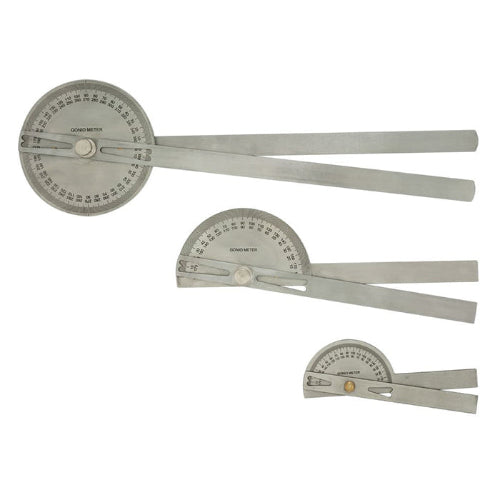
Type: General Instruments
Goniometer Set of Three

Type: Occupational
Hand Evaluation Kit (7 Pcs)

Type: MeddeyGo
Goniometer with Knee Hammer and Measuring Tape -Set of 3
Collection:
How to Choose the Right Goniometer Equipment & Kits
 What Is a Goniometer?
A goniometer is a device used to measure angles, particularly in the human body. It is essential in physical therapy, orthopedics, and other medical fields to assess joint movement and aid in diagnosis and treatment planning. By providing objective data on joint angles, goniometers facilitate more accurate assessments of a patient's range of motion. This information is crucial for developing effective treatment plans and tracking patient progress over time.
Moreover, goniometers serve as a bridge between subjective observations and quantifiable data. This transition is invaluable in clinical settings where precise measurements can influence treatment outcomes and enhance patient care. The ability to consistently monitor and record these measurements can also improve communication between healthcare providers and patients, fostering a more collaborative approach to treatment.
What Are the Types of Goniometers?

Goniometers come in various forms, each suited for specific applications. Here are some common types:
- Universal Goniometers: These are the most common and versatile, used for measuring joint angles in different parts of the body. Their simple design makes them easy to use, allowing for quick assessments in both clinical and field settings.
- Digital Goniometers: Equipped with electronic displays, these provide precise measurements and often include features for data recording. The digital interface can enhance user experience by reducing human error and facilitating seamless data integration with other healthcare software.
- Gravity Goniometers: Utilize gravity to measure angles, commonly used in rehabilitation settings. These goniometers rely on gravitational pull to determine angle changes, making them particularly useful for measuring limb positions in relation to the vertical axis.
- Inclinometers: Though slightly different, these are often used interchangeably with goniometers for certain applications, especially in spinal assessments. Inclinometers can measure the angle of inclination relative to a horizontal plane, providing essential data in postural assessments.
Factors Influencing Goniometer Selection
Selecting the right goniometer involves understanding the specific needs of your practice or facility. Consider the types of patients you serve and the conditions you commonly treat. For instance, facilities focusing on orthopedic rehabilitation might prioritize digital goniometers for their precision, while a physiotherapy clinic might lean towards universal goniometers for their versatility.
Additionally, the integration of technology into healthcare practices can influence goniometer selection. Digital goniometers that sync with electronic health records (EHR) systems can streamline documentation processes and enhance data accuracy. This integration can lead to improved patient outcomes and more efficient clinical workflows.
Key Considerations for Choosing Goniometer Equipment
Goniometer Measurement and Accuracy
Accuracy is paramount in selecting goniometer equipment. Consider the following factors:
- Precision: Digital goniometers often offer higher precision than manual ones. This precision is critical when measuring small joint movements where minute differences can significantly impact treatment decisions.
- Calibration: Ensure the equipment can be easily calibrated to maintain accuracy over time. Regular calibration checks are essential to ensure that measurements remain reliable and consistent across different devices and users.
- Ease of Use: The device should be user-friendly, with clear instructions and intuitive operation. Training sessions for staff can enhance proficiency and reduce the likelihood of measurement errors, thereby improving patient care.
What Tools Are Used in Goniometry?
In addition to goniometers, other tools can be integral to goniometry, such as:
- Protractors: Used for basic angle measurements. Although not as advanced as digital goniometers, protractors can serve as a simple, cost-effective solution for facilities with limited budgets.
- Rulers: Often included in goniometer kits for linear measurements. Rulers can be used in conjunction with goniometers to assess linear distances, such as limb length discrepancies or scar measurements.
- Measurement Apps: Some modern solutions integrate with apps for enhanced data tracking and analysis. These apps can offer features such as cloud storage for patient data, progress visualization tools, and integration with wearable technology for continuous monitoring.
 What Are the Advantages of Using a Goniometer?
Goniometers offer several benefits, including:
- Objective Measurements: They provide quantifiable data on joint angles, crucial for treatment planning. This objectivity reduces reliance on subjective assessments, leading to more accurate and consistent patient evaluations.
- Progress Tracking: Regular measurements help track patient progress over time. By documenting changes in joint movement, healthcare providers can adjust treatment plans as needed and demonstrate improvements to patients.
- Versatility: Suitable for various medical fields and applications. From sports medicine to post-operative care, goniometers can be utilized in numerous scenarios, enhancing their value as a diagnostic and monitoring tool.
Enhancing Patient Outcomes with Goniometers
The use of goniometers in patient care can lead to improved outcomes by enabling more precise treatment adjustments. For example, in physical therapy, small improvements in joint range of motion can be critical to a patient's recovery. By using goniometers to document these changes, therapists can refine their interventions and provide evidence-based care.
Furthermore, the data collected from goniometers can be used to engage patients in their treatment process. By showing patients tangible improvements in their joint mobility, healthcare providers can motivate patients to adhere to their rehabilitation programs and foster a sense of achievement.
Strategic Considerations for Procurement
Understanding Market Needs
For hospital administrators and distributors, understanding market needs is critical. This involves:
- Assessing Demand: Identify which types of goniometers are most needed in your facility or market. Conducting surveys or interviews with healthcare providers can provide insights into the specific needs and preferences within your organization.
- Technological Trends: Stay informed about the latest advancements in goniometer technology. This knowledge can help you anticipate future needs and make informed purchasing decisions that align with emerging trends in healthcare technology.
- Budget Constraints: Balance the need for quality equipment with budget limitations. Developing a comprehensive budget plan that prioritizes essential equipment while exploring cost-saving measures, such as bulk purchasing or leasing options, can optimize resource allocation.
Navigating Competitive Landscape
Medical equipment distributors must differentiate their products in a competitive market. Strategies include:
- Product Positioning: Highlight unique features and benefits of your goniometer offerings. Emphasize aspects such as durability, ease of use, and technological integration to distinguish your products from competitors.
- Regulatory Compliance: Ensure all equipment meets current healthcare standards and regulations. Staying compliant not only avoids legal issues but also builds trust with healthcare providers who rely on your equipment for patient care.
- Customer Education: Provide resources and training to help customers make informed decisions. Hosting webinars, creating instructional videos, and distributing comprehensive user manuals can empower customers to maximize the use of their goniometers.
Building Strategic Partnerships
Forming strategic partnerships can enhance your market position and expand your reach. Collaborating with healthcare institutions, professional organizations, and technology companies can provide valuable insights into market trends and customer needs. These partnerships can also open opportunities for co-development of innovative products and joint marketing efforts.
Additionally, maintaining strong relationships with your existing customer base is crucial. Regular communication, personalized support, and loyalty programs can foster long-term customer retention and generate positive word-of-mouth referrals.
Tips for Successful Implementation
Streamlining Procurement Processes
For hospital administrators, streamlining procurement can enhance efficiency:
- Vendor Evaluation: Choose suppliers with a proven track record and robust support services. Evaluating potential vendors based on their reputation, service quality, and responsiveness can ensure a reliable supply chain for your facility.
- Bulk Purchasing: Consider bulk orders to negotiate better pricing and reduce costs. Bulk purchasing can also simplify inventory management and reduce administrative burdens by consolidating orders.
- Inventory Management: Implement systems for tracking equipment use and maintenance. Utilizing inventory management software can improve oversight of equipment availability, condition, and usage patterns, leading to more effective resource allocation.
Enhancing Equipment Quality
Ensuring high-quality equipment is vital for patient care:

- Regular Maintenance: Schedule routine checks and calibrations for all goniometer equipment. Preventative maintenance can extend the lifespan of your equipment and ensure consistent performance, reducing the risk of measurement errors.
- Feedback Loops: Encourage staff to report any issues or suggestions for improvement. Establishing a feedback system can facilitate continuous improvement and prompt resolution of equipment-related challenges.
- Continuous Training: Provide ongoing education for staff on the latest techniques and equipment features. Regular training sessions can enhance staff competency, ensuring that they are equipped to use goniometers effectively and efficiently in patient care.
Implementing Change Management Strategies
Successfully integrating new goniometer equipment into your facility requires effective change management. Engage stakeholders early in the process to gather input and address concerns. Clear communication about the benefits and expected outcomes of the new equipment can foster buy-in from staff and other stakeholders.
Additionally, developing a comprehensive implementation plan with defined roles, responsibilities, and timelines can facilitate a smooth transition. Providing training and support throughout the implementation process can further enhance staff confidence and competence with the new equipment.
FAQ
What is a goniometer used for?
A goniometer is used to measure angles, specifically in assessing joint movement in the human body, playing a critical role in physical therapy and rehabilitation.
What tools are used in goniometry?
The primary tool in goniometry is the goniometer itself, but other tools include protractors, rulers for linear measurements, and measurement apps for advanced data tracking.
How accurate are digital goniometers?
Digital goniometers are generally more accurate than manual ones due to their precise electronic measurements and reduced human error.
What are the advantages of using a goniometer?
Goniometers provide objective measurements, help track patient progress over time, and are versatile tools suited for multiple medical fields and applications.
How often should goniometer equipment be calibrated?
Goniometer equipment should be calibrated regularly, but the frequency may depend on usage. Ideally, calibration checks should be conducted after a set number of uses or periodically based on manufacturer recommendations.
Conclusion
Choosing the right goniometer equipment and kits is a strategic decision that impacts patient care, operational efficiency, and financial health. By understanding the types of goniometers available, evaluating key features, and considering market dynamics, healthcare professionals can make informed choices that align with their goals. Whether you are a hospital administrator, medical equipment distributor, or healthcare technology consultant, leveraging these insights will enhance your decision-making capabilities and drive successful outcomes in the ever-evolving healthcare landscape. As you navigate the complexities of healthcare procurement, remember that the right equipment is not only an investment in technology but also in the quality of care you provide to your patients.