
Filter
1 product
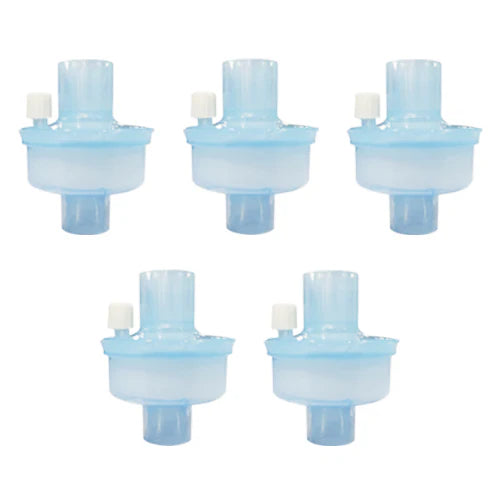
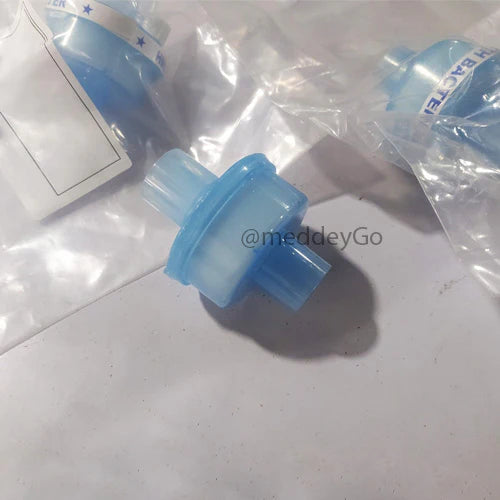
Type: Anesthesia
HME Disposable Bacterial Viral Filter
Collection:
HME Filter: Uses, Tracheostomy Role, HMEF Meaning, and Complete Guide
An HME filter is one of the most important small accessories in respiratory care because it helps replace a function that the body normally performs automatically. In everyday breathing, air enters through the nose and upper airway. During that journey, the air is naturally warmed, moistened, and partly filtered before it reaches the lungs. This natural conditioning process is extremely important because the lungs and lower airway work best when the air arriving there is not too cold, too dry, or too contaminated.
When a person has a tracheostomy or is connected to certain breathing systems, that normal upper-airway conditioning pathway is bypassed. Instead of air passing through the nose and throat, it may enter directly into the trachea. That means the body loses much of the natural warming, filtering, and humidifying benefit of the upper airway. This is the main reason HME devices are so widely used in tracheostomy care and in respiratory systems. They are not just accessories for convenience. They help make the incoming air more suitable for the airway.
Another reason the topic is searched so often is confusion around the terms themselves. Some people ask for an HME filter, others search for HME filter for tracheostomy, and others ask for an HMEF filter. These terms are related, but not always identical in meaning. HME usually refers to a heat and moisture exchanger, while HMEF generally refers to a heat and moisture exchanger that also includes filter functionality. Understanding this distinction makes product selection much easier.
HME devices are especially important in tracheostomy care because dry airways can lead to thicker secretions, discomfort, coughing, and airway irritation. In some patients, maintaining proper humidification is a daily need rather than an occasional adjustment. This is why many hospital discharge instructions and tracheostomy education documents make HME use a routine part of airway care.
This article explains what an HME filter is, what HMEF means, how these devices work, why they matter in tracheostomy and ventilator care, how they differ from heated humidification, when they are helpful, when they may be less suitable, and how hospitals and caregivers should think about them more clearly.
Tracheostomy Care
Important because breathing through a tracheostomy bypasses the natural warming and humidifying role of the nose and upper airway.
ICU & Ventilation
Relevant where humidification and filtration both matter in respiratory support and ventilator-based care.
Home Respiratory Support
Helpful for understanding why HME devices are often recommended in home tracheostomy routines and discharge care.
What Is an HME Filter?
An HME filter is a respiratory device designed to conserve some of the heat and moisture from exhaled air and return part of it to the next inhaled breath. In simple terms, it works like an artificial helper for the natural humidifying role of the upper airway.
The letters HME stand for:
- H = Heat
- M = Moisture
- E = Exchanger
This means the device is built to exchange or conserve warmth and humidity rather than simply acting as a passive empty connector. Many people think it is only a “filter,” but in fact its airway-conditioning role is just as important as any filtering role. In tracheostomy care, this is exactly why the device is so valuable. It helps reduce the harsh effect of cool dry air moving directly into the airway.
In everyday clinical language, an HME helps the patient breathe air that is closer to what the body naturally expects. This is why current tracheostomy care guidance explains that these devices help warm, filter, and moisten the air being breathed.
Simple Definition
An HME filter is a heat and moisture exchanger device that helps conserve warmth and humidity from exhaled air and make inhaled air less dry and harsh for the airway.
What Does HMEF Mean?
The term HMEF usually means Heat and Moisture Exchanger Filter. This is an important variation because it tells the buyer or clinician that the device does more than humidification support alone. It combines heat-and-moisture exchange with a filtration function.
In practical product language:
- HME = primarily focused on heat and moisture exchange
- HMEF = heat and moisture exchange plus filtration
This distinction matters most in critical care, ventilator circuits, anesthesia setups, and infection-control conscious respiratory environments. In some tracheostomy care situations, the basic HME concept is the focus. In more technical breathing system contexts, HMEF terminology becomes more important because filtration performance is part of the product identity.
Many buyers use the terms interchangeably, but understanding the difference helps avoid confusion when selecting products for home tracheostomy support versus ICU ventilation systems.
Name Rule
HME usually refers to heat and moisture exchange, while HMEF usually refers to heat and moisture exchange with added filter function.
Why HME Filters Are Needed in Tracheostomy Care
A tracheostomy changes the route that air takes into the body. Instead of moving through the nose and upper airway, inhaled air may travel directly through the tracheostomy tube. This bypass means the patient loses some of the body’s natural ability to:
- Warm the incoming air
- Moisten the incoming air
- Filter particles before they reach the lower airway
This is why an HME filter for tracheostomy is so commonly recommended. The goal is to help restore some of what the upper airway would normally do. Tracheostomy care guidance commonly explains that using an HME or similar stoma-cover system helps keep the airway moist and reduces the dryness that can worsen coughing and secretions.
Without enough humidification support, secretions can become thick and sticky. This can make them more difficult to clear and may increase discomfort or airway-care burden. Some guidance also notes that when the airway becomes too dry, a patient may cough more and may even notice minor bleeding from dryness-related irritation.
That is why HME use in tracheostomy care is often not treated as an optional extra. It is commonly part of the routine respiratory support strategy.
Airway Moisture Support
Helps reduce excessive dryness when the upper airway is bypassed.
Warmth Conservation
Supports more natural airway conditions by conserving heat from exhaled air.
Secretion Management Support
Better humidification can help keep secretions looser and easier to manage.
Routine Tracheostomy Relevance
Frequently recommended in long-term tracheostomy care routines.
How an HME Filter Works
An HME filter works by trapping some of the moisture and heat from the patient’s exhaled breath. When the patient breathes in again, some of that retained warmth and moisture is returned to the incoming air. This is why the device is called an exchanger. It does not actively produce humidity by heating water. Instead, it conserves and reuses part of what the patient already exhales.
This passive process is what makes HME devices small, simple, and practical. They do not require the same kind of powered setup as active heated humidifiers. That is one reason they are widely used in tracheostomy care and respiratory circuits.
In products that are also labelled HMEF, there is an added filtering function. This means the device is helping with humidification support while also contributing to filtration in the respiratory pathway.
Working Principle
An HME filter works passively by conserving some heat and moisture from exhaled air and returning part of it during the next inhalation.
HME Filter vs Heated Humidification
One of the most important practical comparisons is the difference between an HME filter and heated humidification. These two approaches are related, but they are not the same.
An HME is a passive humidification device. It relies on the patient’s own exhaled heat and moisture. A heated humidifier is an active humidification system. It adds warmed moisture using powered equipment.
This means:
- HME is smaller and simpler
- Heated humidification is more active and equipment-based
- HME is often suitable when secretion problems are not severe
- Heated humidification may be preferred when more active moisture support is required
Current NHS humidification guidance reflects this logic by noting that HME is commonly suitable for patients with loose or minimal secretions, while thick secretions may require additional humidification support and closer review.
| Method | How It Works | General Meaning |
|---|---|---|
| HME | Passively conserves exhaled warmth and moisture | Compact humidification support |
| HMEF | Passive humidification plus filter support | Humidification and filtration together |
| Heated Humidifier | Actively adds warmed moisture to inspired gas | More intensive humidification support |
When an HME Filter May Be Most Helpful
HME filters are especially helpful when the airway needs passive humidification support and the secretion burden is not excessive. Current tracheostomy guidance specifically points out that HME devices are typically appropriate for patients with loose or no major evidence of thick secretions.
Situations where HME use may be especially practical include:
- Routine tracheostomy breathing support
- Home tracheostomy care after discharge
- Patients with manageable or loose secretions
- Respiratory circuits where passive humidification is sufficient
- Ventilation settings where humidification plus filtration is required in one compact device
These are the situations where the product’s simplicity becomes one of its biggest strengths.
When an HME Filter May Be Less Suitable
HME devices are useful, but they are not ideal in every situation. Current humidification guidance indicates that if secretions are thick or difficult to manage, passive humidification may not be enough on its own. In those situations, the care team may need to consider more active humidification strategies, nebuliser use, or other airway support measures depending on the patient’s plan.
Situations where the HME may need reassessment include:
- Very thick secretions
- Heavy contamination of the device
- Persistent dryness despite use
- Concern that passive humidification is insufficient
- Situations where the device is becoming blocked or less effective
Guidance also commonly notes that HME devices should be changed regularly, often every 24 hours, or sooner if contaminated. This reinforces the idea that the device is part of active daily care and not something to ignore once attached.
Important Caution
HME filters may not be the best humidification option when secretions are thick, heavy, or difficult to manage, and contaminated devices should be changed promptly.
Why HMEF Filters Matter in ICU and Ventilator Settings
In ICU, OR, and ventilator settings, the discussion often shifts from basic HME use to HMEF filter functionality. This is because respiratory support systems in these settings may require both humidification support and filtration performance. In such environments, the device is not only helping preserve heat and moisture. It may also be contributing to infection-control strategy and breathing-system protection.
This is one reason HMEF products are described differently from simple tracheostomy humidification accessories. They are often discussed as part of breathing system design. That makes them especially relevant to ICU teams, anesthesia teams, and critical care procurement.
In broad product logic:
- Basic HME discussion often centers on airway humidification
- HMEF discussion often adds filtration and circuit-level concerns
- Ventilator settings may require more technical evaluation of product function
Ventilator Circuit Role
HMEF devices are often relevant where humidification and filtering both matter in a breathing circuit.
ICU Relevance
Important in settings where airway conditioning and respiratory infection-control concerns overlap.
Compact Function Combination
Some HMEF products combine more than one respiratory-support function into one device.
Critical Care Value
Small device, but significant role in respiratory system support and workflow.
HME Filter for Tracheostomy at Home
For people living with a tracheostomy at home, HME devices often become part of daily routine rather than occasional treatment. Home tracheostomy guidance commonly advises the use of an HME or stoma bib to help ensure the air being inhaled is warmer, moister, and better filtered than it would be without any airway-conditioning support.
This is especially important because home settings may not have the same controlled humidification systems available as hospital environments. An HME gives a practical, wearable, and relatively simple option that supports daily airway care without requiring a large powered humidification setup in every moment.
It also helps explain why many discharge instructions emphasize continuing HME-related care after leaving hospital. The need for humidification does not disappear just because the patient is no longer admitted.
How HME Devices Help with Secretions
One of the most practical reasons HME devices are recommended is their relationship to airway secretions. When inhaled air is too dry, secretions can become thicker and more difficult to clear. This may increase discomfort, coughing, and suctioning burden. Current NHS tracheostomy materials note that better humidification helps keep secretions thinner or looser.
In everyday care terms, that means the HME is not only about comfort. It also influences:
- Ease of secretion clearance
- Airway comfort
- Dryness-related coughing
- General daily respiratory wellbeing
This is why HME use is often linked so closely with good tracheostomy care routines.
Secretion Logic
Better humidification often helps keep airway secretions looser, which can make them easier to manage and less irritating.
How Often HME Filters Should Be Changed
An HME device does not last forever in use. Current tracheostomy humidification guidance commonly states that HME devices are replaced every 24 hours or sooner if contaminated by secretions. This is important because the device’s effectiveness depends on remaining clean enough to function properly.
The replacement logic is practical:
- Replace at regular routine intervals
- Replace sooner if visibly contaminated
- Replace sooner if performance appears reduced
- Include HME change as part of airway-care routine
This helps protect both device function and overall airway care quality.
What Makes a Good HME Filter?
A good HME filter should support airway humidification reliably, fit the intended respiratory system properly, and remain appropriate for the patient’s secretion pattern and care setting. For HMEF products, filtration performance also becomes part of what defines product quality.
In practical terms, a good HME device should offer:
- Effective passive heat and moisture exchange
- Appropriate fit for the tracheostomy or breathing circuit
- Practical routine replacement options
- Suitability for the patient’s secretion pattern
- Filter function where HMEF use is intended
This is why selection should not be random. The “best” HME is the one that matches the care setting and patient need.
How Hospitals and Caregivers Should Choose an HME or HMEF Device
Hospitals and caregivers should choose HME devices based on the airway context, secretion pattern, need for passive humidification, and whether filtration is also required. In tracheostomy care, the discussion often starts with airway comfort and humidity. In ICU or ventilator care, the discussion often expands to include circuit filtration and infection-related considerations.
Useful selection questions include:
- Is the patient breathing through a tracheostomy?
- Are secretions manageable or thick?
- Is passive humidification enough?
- Is filter function also needed?
- Will the device be used in home care, hospital care, or ventilator support?
This kind of structured thinking leads to much better product selection than treating all HME-related items as interchangeable.
Frequently Asked Questions
What is an HME filter?
An HME filter is a heat and moisture exchanger device that helps warm and humidify inspired air and may also include filtration depending on the product type.
What does HME stand for?
HME stands for Heat and Moisture Exchanger.
What does HMEF mean?
HMEF usually means Heat and Moisture Exchanger Filter, meaning the device combines humidification support with filtration.
Why is an HME filter used for tracheostomy?
Because tracheostomy bypasses the nose and upper airway, the HME helps replace some of the normal warming, humidifying, and filtering functions of breathing.
Does an HME help with secretions?
Yes. Better airway humidification can help keep secretions looser and reduce dryness-related airway discomfort.
Is HME the same as heated humidification?
No. HME is passive heat and moisture exchange, while heated humidification actively adds warmed moisture to inspired gas.
When may an HME filter be less suitable?
It may be less suitable when secretions are thick, when passive humidification is not enough, or when the device is contaminated or losing effectiveness.
How often should an HME be changed?
Current guidance commonly says every 24 hours or sooner if contaminated by secretions.
Can HMEF products be used in ICU or ventilator settings?
Yes. HMEF devices are commonly discussed in ICU, OR, and ventilation settings where humidification and filtration both matter.
Is an HME device useful at home after tracheostomy discharge?
Yes. Home tracheostomy care commonly includes HME use because airway humidification remains important outside the hospital as well.
Conclusion
An HME filter is much more than a small respiratory accessory. It helps replace natural airway conditioning when breathing bypasses the nose and upper airway, especially in tracheostomy care. Whether someone searches for hme filter, hme filter for tracheostomy, or hmef filter, the key understanding stays the same: these devices help improve airway humidity, warmth, and in some products filtration support as well. Once the difference between HME, HMEF, and active heated humidification is understood clearly, respiratory care planning becomes much easier and much more practical.