
Filter
3 products


Type:
Pediatric IV Cannulation Training Arm for Vein Practice
Type: Nursing
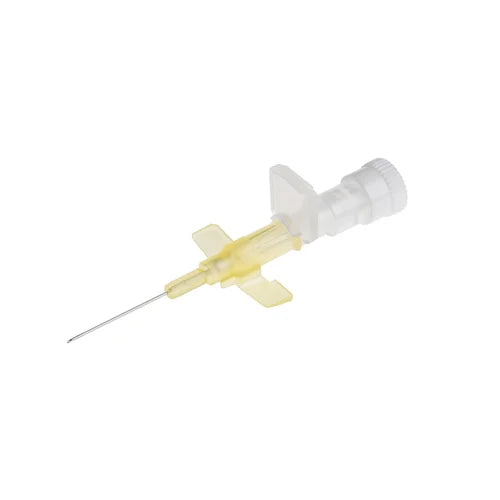
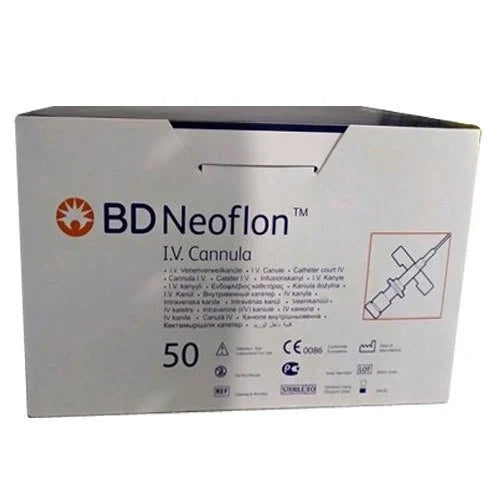
BD Neoflon I.V. Cannula (Pack Of 15)


Type: MeddeyGo
IV Training Arm for Venipuncture Practice & Medical Training
Collection:
IV Cannula Guide: Sizes, Colours, Uses, Parts & Price
IV Cannula Guide: Sizes, Colours, Uses, Parts & Price
A detailed guide to peripheral IV cannulas, gauge sizes, colour coding, common components, clinical uses, child-size considerations, safety, complications and buying factors for healthcare professionals.
Introduction: Why IV Cannulas Are Essential in Patient Care
An IV cannula is a short, flexible medical tube placed into a peripheral vein by a trained healthcare professional. It creates temporary venous access so that prescribed fluids, medicines, blood products or other compatible therapies can be administered directly into the bloodstream.
The device is also known in everyday buyer language as a cannula, peripheral IV catheter, venous cannula, intracath, intra cath, IV catheter or, in some markets, a vigo or vigo injection. Some of these words are brand-influenced or informal trade terms, but buyers commonly use them while searching for the same broad product category.
An IV cannula includes a flexible catheter positioned over an insertion needle. During professional insertion, the needle helps guide the soft catheter into the vein. The needle is then withdrawn, leaving the flexible catheter in place. This allows the healthcare team to connect compatible IV tubing, a needle-free connector, an extension set or another prescribed delivery system.
Cannulas are available in different gauges, lengths, materials and configurations. Some have an injection port, while others have a portless or closed-system design. Safety models may include a mechanism that shields the needle after withdrawal to reduce accidental needlestick exposure.
Selecting the correct IV cannula size is a clinical decision. The choice depends on vein condition, patient age, treatment type, required flow rate, therapy duration, infusion characteristics and institutional policy. A larger cannula is not automatically better. Clinicians generally aim to use the smallest suitable gauge that can safely deliver the prescribed therapy.
This MeddeyGo guide explains the purpose of a cannula, common IV cannula sizes and colours, cannula parts, 20G and 22G sizes, paediatric considerations, the difference between a cannula and catheter, insertion discomfort, complications, safety precautions, price factors and buying guidance.
Hospitals & Emergency Care
Used for short-term venous access where prescribed fluids, medicines, blood products or urgent therapy must be administered.
Clinics & Day-Care Units
Supports selected infusion, diagnostic, procedural and short-duration treatment workflows under trained supervision.
Paediatric & Neonatal Care
Smaller gauges and specialised products may be selected according to vessel size, treatment need and clinical assessment.
What Is an IV Cannula?
An IV cannula is a peripheral vascular-access device. Peripheral means that it is commonly placed in a vein of the hand, forearm or another clinically suitable peripheral site rather than advanced into a major central vein.
The flexible catheter remains within the vein after the introducer needle has been removed. This catheter provides a temporary pathway through which prescribed IV therapy can be delivered.
A standard peripheral IV cannula is generally intended for short-term therapy. Longer or more specialised access devices, such as midline catheters, PICC lines and central venous catheters, are different products chosen for different treatment durations and clinical requirements.
Simple Definition
An IV cannula is a short flexible tube inserted into a peripheral vein by a trained professional to provide temporary access for prescribed intravenous treatment.
What Is the Purpose of a Cannula?
The purpose of a cannula is to create secure and convenient access to a vein without repeatedly puncturing the patient every time compatible IV treatment is required.
Once the cannula is placed and assessed as functional, healthcare professionals may use it according to the treatment order and facility policy. Its purpose varies with the clinical situation.
- Administration of prescribed IV fluids
- Delivery of compatible intravenous medicines
- Administration of blood or blood products when clinically appropriate
- Short-term hydration and electrolyte therapy
- Selected contrast-media procedures with a compatible approved device
- Emergency venous access
- Perioperative and postoperative medicine delivery
- Selected diagnostic or treatment workflows
Not every medicine or solution is appropriate for a standard peripheral cannula. Therapy suitability depends on the formulation, concentration, pH, osmolarity, infusion duration, vein condition and institutional clinical policy.
Temporary Venous Access
Provides short-term access to a peripheral vein for prescribed clinical therapy.
Fluid Administration
Supports delivery of compatible IV fluids according to the patient’s treatment plan.
Medicine Delivery
Allows compatible intravenous medicines to enter the circulation under professional supervision.
Emergency Support
May provide important vascular access during emergency assessment and treatment.
What Are the Main IV Cannula Parts?
Understanding IV cannula parts helps clinical buyers compare products and helps healthcare teams identify important design differences. Exact parts vary according to whether the device is ported, portless, winged, closed-system or safety-engineered.
| Cannula Part | Main Function | Important Consideration |
|---|---|---|
| Flexible Catheter | The soft tube that remains inside the vein after the needle is removed. | Material, gauge, length and kink resistance vary by product. |
| Introducer Needle | Helps guide the flexible catheter through the skin and into the vein. | Removed after successful placement; must be discarded safely. |
| Catheter Hub | Connects the catheter to compatible IV accessories or connectors. | Often colour coded to indicate gauge. |
| Flashback Chamber | Provides visual indication of blood return during professional placement. | Design and visibility differ between models. |
| Injection Port | Available on some cannulas for compatible access according to clinical policy. | Not present on every design; requires correct disinfection and handling. |
| Wings | May support handling and securement. | Shape and flexibility differ between brands. |
| Protective Cap | Protects connection points before use. | Sterility must be maintained until clinical use. |
| Safety Shield | On safety models, covers or contains the needle after withdrawal. | Designed to reduce accidental needlestick exposure. |
What Is the Difference Between a Cannula and an IV?
The words cannula and IV are often used interchangeably, but they do not always mean exactly the same thing.
A cannula is the small flexible tube positioned in the vein. The term IV, meaning intravenous, may refer to the entire therapy setup. This can include the cannula, connector, extension tubing, administration set, infusion pump and prescribed fluid or medicine.
Cannula vs IV
The cannula is the flexible access device inside the vein. The IV may refer to the complete intravenous treatment line and connected therapy system.
Cannula vs Catheter: What Is the Difference?
The terms cannula and catheter overlap in clinical language. A catheter is generally a flexible tube placed into the body to deliver or remove fluid. An IV cannula is therefore also a type of short peripheral intravenous catheter.
However, catheter is a broader word. It can refer to urinary catheters, central venous catheters, PICC lines, midlines, arterial catheters and several other devices.
| Point | Peripheral IV Cannula | Catheter as a General Term |
|---|---|---|
| Meaning | Short flexible tube used for peripheral venous access | Broad category of tubes placed in the body |
| Common Position | Peripheral vein, often hand or arm | Depends on catheter type and treatment |
| Typical Purpose | Short-term IV fluids and compatible medicines | May deliver, drain, monitor or provide long-term access |
| Examples | 18G, 20G, 22G or 24G peripheral cannula | PICC, CVC, urinary catheter, arterial catheter |
What Does IV Cannula Gauge Mean?
IV cannula size is commonly expressed in gauge, written as G. The gauge system can appear confusing because a lower gauge number represents a larger external diameter, while a higher gauge number represents a smaller diameter.
For example, an 18G green cannula is larger than a 22G blue cannula. A larger internal diameter can generally support a higher flow rate, although actual flow also depends on catheter length, product design, fluid properties, pressure and connected accessories.
Cannula length is also important. Two cannulas with the same gauge may have different lengths and therefore different flow characteristics or clinical suitability.
Gauge Rule
A lower gauge number usually means a wider cannula. A higher gauge number usually means a narrower cannula.
IV Cannula Sizes and Colours
Cannula hubs are commonly colour coded so clinicians can identify the gauge more quickly. The familiar sequence includes orange or brown, grey, green, pink, blue and yellow.
Colour coding is a useful visual aid, but it should never replace checking the gauge and length printed on the sterile package. Manufacturers may offer different lengths, specialised products or market-specific configurations.
| Common Gauge | Common Hub Colour | Relative Diameter | General Clinical Consideration |
|---|---|---|---|
| 14G | Orange or Brown, depending on product | Very large | Selected high-flow emergency or rapid-infusion requirements |
| 16G | Grey | Large | Selected high-flow, perioperative or emergency requirements |
| 18G | Green | Medium-large | Fluids, selected blood administration and many adult clinical applications |
| 20G | Pink | Medium | Common adult size for compatible fluids and medicines |
| 22G | Blue | Small | Common for smaller or fragile veins, medicines and hydration |
| 24G | Yellow | Very small | Often considered for paediatric, neonatal or fragile-vein situations |
| 26G | Purple or violet on some products | Extremely small | Specialised neonatal or very small-vessel applications, product dependent |
Important Size Warning
Cannula size must be selected by a trained healthcare professional. The table is educational and should not be used by an untrained person to choose or insert a cannula.
Pink Cannula Size
The commonly recognised pink cannula size is 20G. A 20G cannula is widely used in adult clinical care because it offers a practical balance between flow capability and vessel compatibility for many patients.
A 20G pink cannula may be considered for compatible IV fluids, medicines and selected blood-product administration according to local policy and clinical assessment.
The exact flow rate is not universal. It varies according to manufacturer, catheter length, material and product configuration.
Blue Cannula Size
The commonly recognised blue cannula size is 22G. Buyers may also search for this size as intracath no 22, 22G intracath or blue IV cannula.
A 22G cannula is smaller than a 20G cannula and may be selected for patients with smaller, fragile or difficult veins. It is commonly associated with compatible medicine administration and routine hydration where the required flow is suitable.
A blue cannula may be considered in some older adults, children or patients with delicate vessels, but selection remains a professional clinical decision.
Green Cannula Size
The commonly recognised green cannula size is 18G. It has a larger diameter than 20G, 22G and 24G cannulas.
An 18G cannula may support higher flow than smaller gauges and is frequently associated with emergency care, perioperative use, fluid replacement and selected blood-product workflows.
The clinician must still consider vein size, therapy requirement and patient comfort. An 18G cannula should not be selected merely because it has a higher potential flow rate.
Yellow Cannula Size
The commonly recognised yellow cannula size is 24G. This is a small-diameter cannula commonly considered for children, neonates, adult patients or people with fragile veins.
Its smaller diameter generally means a lower flow capability than larger gauges. The healthcare professional must confirm that the selected device can safely support the prescribed therapy.
Grey and Orange Cannula Sizes
Grey commonly identifies a 16G cannula, while orange often identifies 14G on many product ranges. Some institutional charts may describe 14G as brown. These large-bore devices are generally associated with selected high-flow requirements.
Large-bore cannulas require an appropriate vessel and should be used only when the therapy need justifies the diameter.
18G Green
A larger adult cannula associated with selected higher-flow clinical requirements.
20G Pink
A commonly used adult size offering a practical balance for many routine therapies.
22G Blue
A smaller cannula often considered for delicate or smaller peripheral veins.
24G Yellow
A small gauge often considered for children, neonates or fragile veins.
What Is Intracath?
Intracath is a term commonly used by buyers in India for an intravenous cannula or catheter. The spelling intra cath is also frequently used in product searches.
In some contexts, Intracath may refer to a particular branded vascular-access product rather than every peripheral IV cannula. For online buying, users should check whether the product is a short peripheral IV catheter, a longer catheter, a central-access device or another specialised product.
The term intracath size generally refers to the gauge and length of the catheter. A search for intracath no 22 commonly indicates a requirement for a 22G blue peripheral IV cannula.
Buyer Terminology
Cannula, IV cannula, IV catheter, intracath, intra cath and vigo are often used as buyer terms, but the exact product category and specification must always be verified.
What Is Vigo Injection?
The phrase vigo injection is often used informally to describe an IV cannula with an injection port or a Venflon-style peripheral cannula. It does not usually refer to an injectable medicine.
Buyers using this phrase should verify the actual device requirement, including gauge, colour, catheter length, ported or portless design, safety feature and manufacturer.
Common Types of Cannulas
Cannulas are available in several designs. The correct category depends on treatment setting, vessel access need and institutional protocol.
Peripheral IV Cannula
A short peripheral IV cannula is commonly placed in a hand or arm vein for short-term venous access. It is the main product discussed in this guide.
Ported IV Cannula
A ported cannula includes an additional injection port. This port must be handled, disinfected and accessed according to professional infection-control policy.
Portless IV Cannula
A portless design does not have the additional injection port. It may be connected to an extension line or needle-free connector according to the clinical setup.
Safety IV Cannula
A safety cannula includes a feature intended to shield or contain the needle after withdrawal. This can help reduce occupational needlestick exposure when the product is used correctly.
Closed IV Catheter System
A closed system may include integrated extension tubing and a connector designed to reduce manipulation and blood exposure. Product design varies considerably between manufacturers.
Winged Cannula
Winged cannulas include flexible wings that may support handling and securement. The wings do not determine the gauge; the printed size and hub colour should be checked.
Long Peripheral IV Catheter
A longer peripheral catheter may be selected for deep veins or difficult vascular access, often with ultrasound guidance. It is different from a standard short cannula and should be selected by trained clinicians.
| Cannula Type | Key Design Feature | Typical Consideration |
|---|---|---|
| Ported Cannula | Additional injection port | Requires correct port disinfection and handling |
| Portless Cannula | No integrated injection port | May connect to an extension or needle-free connector |
| Safety Cannula | Needle-protection mechanism | Supports needlestick-risk reduction |
| Closed System | Integrated tubing or connector | May reduce handling and blood exposure |
| Winged Cannula | Flexible stabilising wings | May support placement and securement |
| Long Peripheral Catheter | Longer catheter body | Selected for deeper veins or difficult access |
IV Cannula Uses and Procedures
Peripheral cannulation is a clinical procedure performed by trained healthcare personnel using aseptic technique. The detailed insertion method should be taught through approved professional training, supervised competency assessment and institutional policy.
At a high level, the professional identifies a suitable vein and device, prepares the site using approved infection-prevention measures, inserts the catheter, removes the needle, confirms function, connects the required system and secures the device.
The site is then monitored during use. Staff assess for pain, redness, swelling, leakage, resistance, dressing problems and other signs that the cannula may no longer be suitable.
Professional-Use Warning
IV cannulation is an invasive medical procedure. Cannulas should be inserted, accessed, flushed, maintained and removed only by appropriately trained personnel following clinical policy.
Is a Cannula Painful?
A patient may feel a brief sharp sensation, sting or discomfort when the introducer needle passes through the skin. After the needle is removed, only the flexible catheter remains in the vein.
The cannula site should not continue to become increasingly painful. Persistent pain, burning, tenderness, redness, swelling, leakage or discomfort during infusion should be reported immediately to the healthcare team.
Repeated attempts can increase distress and discomfort, particularly in children, older adults, dehydrated patients and people with difficult venous access.
Brief Insertion Sting
A short sting or sharp sensation may occur as the needle enters the skin.
Flexible Catheter Remains
The rigid introducer needle is removed after successful placement.
Ongoing Pain Is Not Normal
Persistent or increasing discomfort should be reported promptly.
Difficult Access
Some patients may require specialist assessment or ultrasound-guided access.
IV Cannula Size for Child
There is no single IV cannula size for child that is correct for every paediatric patient. Selection depends on the child’s age, weight, vein size, vessel condition, prescribed therapy and required flow.
Smaller gauges such as 22G blue or 24G yellow are commonly considered in paediatric care. A 26G device may be available for specialised neonatal or very small-vessel use, depending on the manufacturer.
The smallest suitable cannula capable of delivering the prescribed therapy may help reduce unnecessary vessel trauma. However, emergency treatment, blood administration or rapid fluid requirements may require a different approach.
Paediatric Size Rule
Child cannula size must be selected by a trained clinician after assessing vessel size, treatment type and required flow. Age alone is not enough.
20G Cannula: Common Uses and Considerations
A 20G cannula is commonly identified by a pink hub. It is one of the most widely recognised adult peripheral IV sizes.
It may be used for many compatible routine therapies, including IV fluids and medicines. Depending on local policy, device specifications and patient condition, it may also be used for selected blood-product administration.
A 20G cannula does not have one fixed flow rate across all products. Buyers should compare catheter length, internal diameter and manufacturer-provided flow data.
22G Cannula and Intracath No 22
A 22G cannula is commonly blue and is often searched online as intracath no 22. It is narrower than a 20G pink cannula.
This size may be suitable for smaller or fragile veins and for therapies that do not require the flow capability of a larger gauge.
A 22G cannula may be selected in paediatric patients, adult patients or adults with difficult peripheral access, depending on professional assessment.
How Clinicians Choose a Cannula Size
The correct cannula is chosen by balancing treatment requirements with vessel preservation and patient safety.
- Patient age and vessel condition
- Location, depth and diameter of the vein
- Type of fluid, medicine or blood product
- Required flow rate
- Expected duration of therapy
- Emergency or routine treatment setting
- Risk of infiltration, extravasation or phlebitis
- Availability of ultrasound or specialist vascular-access support
- Manufacturer-approved indications
- Institutional vascular-access policy
Selection Principle
The smallest suitable gauge that safely supports the prescribed therapy is often preferred, subject to clinical assessment and local protocol.
IV Cannula Safety and Infection Prevention
Peripheral IV cannulas enter the vascular system, so aseptic practice is essential. Unsafe insertion, contaminated connections or poor site care may increase the risk of local or bloodstream infection.
Healthcare professionals should follow hand-hygiene, skin-preparation, sterile-equipment, non-touch, connector-disinfection, dressing and documentation requirements established by their organisation.
- Use a sterile, sealed and in-date cannula.
- Inspect packaging before opening.
- Maintain aseptic non-touch technique.
- Use appropriate skin antisepsis.
- Secure and dress the device correctly.
- Disinfect access points according to policy.
- Assess the site regularly.
- Remove the device when no longer clinically required.
- Dispose of the introducer needle in an approved sharps container.
- Follow facility infection-prevention guidance.
Common Cannula Complications
Even when insertion is successful, a peripheral IV cannula can fail or develop complications. Early recognition is important.
| Potential Problem | What It Means | Possible Warning Signs |
|---|---|---|
| Infiltration | Non-vesicant fluid enters surrounding tissue instead of the vein. | Swelling, cool skin, discomfort, slow infusion or leakage |
| Extravasation | A potentially damaging medicine leaks into surrounding tissue. | Pain, burning, swelling, skin change or infusion difficulty |
| Phlebitis | Inflammation of the vein. | Redness, warmth, tenderness or a painful vein |
| Occlusion | The catheter or connected system becomes blocked. | Resistance, alarm or inability to infuse as expected |
| Dislodgement | The catheter moves partly or completely out of the vein. | Loose dressing, leakage, exposed catheter or loss of function |
| Local Infection | Microbial infection develops around the insertion site. | Redness, pain, discharge, warmth or swelling |
| Bleeding or Haematoma | Blood collects or leaks around the puncture site. | Bruising, swelling or bleeding |
Report These Signs Immediately
Pain, burning, redness, swelling, leakage, wet dressing, bleeding, unusual resistance, fever or loss of cannula function should be reported to the healthcare team.
How Long Can an IV Cannula Stay in Place?
An IV cannula should remain in place only while clinically necessary and while the site remains suitable. Dwell-time policy may differ between healthcare organisations and patient situations.
Some facilities remove or replace peripheral cannulas based on clinical indication rather than a fixed routine interval, provided regular assessment shows no pain, redness, swelling, leakage or loss of function.
Patients should not attempt to adjust, reconnect or remove a cannula unless specifically trained and instructed within an approved care pathway.
IV Cannula Price
IV cannula price depends on gauge, catheter material, brand, safety mechanism, port configuration, blood-control technology, integrated extension tubing, sterilisation, pack quantity and institutional purchase volume.
A basic conventional peripheral cannula may cost less than a safety-engineered or closed-system catheter. However, clinical buyers should compare safety, quality, performance and infection-control needs rather than selecting only by unit price.
| Price Factor | Why It Matters |
|---|---|
| Gauge and Length | Different sizes and specialised lengths may have different prices. |
| Ported or Portless Design | Device configuration affects manufacturing and clinical workflow. |
| Safety Mechanism | Needle-protection technology may increase product cost. |
| Closed System | Integrated tubing or connectors can affect total price. |
| Catheter Material | Material characteristics differ between manufacturers. |
| Brand and Certification | Quality systems, regulatory status and manufacturer support affect value. |
| Pack Quantity | Bulk hospital packs may have a different per-unit cost. |
| Supplier Support | Availability, traceability and complaint handling matter for healthcare procurement. |
How to Buy IV Cannula Online
Healthcare buyers should check the full specification before placing an order. The colour shown in a product image is not enough to confirm suitability.
- Confirm gauge and catheter length.
- Check ported or portless configuration.
- Review safety or needle-shield features.
- Confirm sterile, single-use status.
- Check packaging integrity requirements.
- Review catheter material.
- Verify manufacturer and product reference.
- Check expiry and storage requirements.
- Confirm pack quantity and institutional requirement.
- Buy from a reliable medical-equipment supplier.
How to Choose Between Standard and Safety Cannulas
A standard cannula may have a conventional introducer needle that requires careful immediate disposal. A safety cannula includes a mechanism intended to cover or isolate the needle tip after withdrawal.
Safety-engineered devices may support occupational protection and needlestick-prevention policies. The selected design should fit staff training, clinical workflow, compatibility and procurement policy.
| Point | Standard IV Cannula | Safety IV Cannula |
|---|---|---|
| Needle Protection | Conventional needle handling and disposal | Integrated shielding or containment feature |
| Staff Training | Requires conventional technique and sharps safety | Requires product-specific safety activation training |
| Purchase Cost | Often lower per unit | May have a higher per-unit cost |
| Occupational Safety | Depends strongly on handling and disposal | Designed to reduce accidental needlestick exposure |
Common Buying Mistakes
| Buying Mistake | Possible Problem | Better Approach |
|---|---|---|
| Choosing by colour only | Length or product type may be incorrect. | Check gauge, length and reference number. |
| Buying only by lowest price | Quality, safety or support may be inadequate. | Compare total clinical value and compliance. |
| Ignoring catheter length | The device may not suit the target vessel or workflow. | Confirm gauge and length together. |
| Confusing cannula with central catheter | The wrong product category may be ordered. | Verify peripheral, midline, PICC or central access requirement. |
| Not checking sterile packaging | Damaged packs cannot be used safely. | Inspect and store products according to instructions. |
| Ignoring expiry and traceability | Stock control and patient safety may be affected. | Maintain batch, expiry and inventory records. |
Why Buy IV Cannulas from MeddeyGo?
MeddeyGo offers medical consumables and equipment for hospitals, clinics, nursing facilities, healthcare professionals and institutional buyers across India.
Buyers can compare available IV cannulas by gauge, colour, length, configuration and safety features. Product availability may differ by brand and pack size.
Before ordering, confirm the clinical requirement with the responsible healthcare team and verify the exact manufacturer specification shown on the product listing and sterile packaging.
- Multiple medical-consumable categories
- Options for hospitals, clinics and institutional buyers
- Different gauges and configurations based on availability
- Clear product specifications for comparison
- Online ordering through MeddeyGo.com
- Procurement support for healthcare requirements across India
Hover Quick Guide
Neeche highlighted terms par cursor le jao:
20G Pink 20G cannula commonly pink colour se identify hoti hai aur many routine adult IV therapies mein use ki ja sakti hai, subject to clinical assessment. 22G Blue 22G blue cannula smaller diameter ki hoti hai aur fragile ya smaller veins ke liye consider ki ja sakti hai. 24G Yellow 24G yellow cannula commonly paediatric, neonatal ya fragile-vein situations mein consider ki jaati hai. Safety Cannula Safety cannula mein needle withdrawal ke baad needle tip ko shield ya contain karne ka mechanism hota hai.
Frequently Asked Questions
What is an IV cannula?
An IV cannula is a short flexible catheter placed in a peripheral vein by a trained healthcare professional to provide temporary venous access.
What is the purpose of a cannula?
Its purpose is to provide access for compatible prescribed fluids, medicines, blood products or other intravenous therapy.
What is the difference between a cannula and an IV?
The cannula is the flexible tube inside the vein. IV may refer to the complete intravenous therapy setup.
What is a cannula vs catheter?
An IV cannula is a type of short peripheral catheter. Catheter is a broader term that includes many other medical tubes.
Is a cannula painful?
A brief sting or discomfort may occur during insertion. Persistent pain, burning, redness or swelling should be reported.
What are the main IV cannula parts?
Common parts include the flexible catheter, introducer needle, hub, flashback chamber, optional injection port, wings and safety shield.
What is the pink cannula size?
Pink commonly identifies a 20G IV cannula.
What is the blue cannula size?
Blue commonly identifies a 22G IV cannula.
What is the green cannula size?
Green commonly identifies an 18G IV cannula.
What is the yellow cannula size?
Yellow commonly identifies a 24G IV cannula.
What is a 20G cannula used for?
A 20G cannula may be selected for many compatible adult fluid and medicine therapies, depending on clinical need.
What is Intracath No. 22?
The phrase commonly refers to a 22G blue peripheral IV cannula or catheter.
What IV cannula size is used for a child?
22G or 24G may be considered, but paediatric size must be chosen according to vessel size, therapy and clinical assessment.
Can a patient insert an IV cannula at home?
No. IV cannulation is an invasive procedure that should be performed only by appropriately trained healthcare personnel.
What is a safety IV cannula?
It is a cannula with an integrated mechanism intended to protect the needle tip after withdrawal.
Can the same cannula be reused?
No. Peripheral IV cannulas are sterile single-use medical devices and must not be reused.
What signs suggest a cannula problem?
Pain, redness, swelling, leakage, burning, bleeding, wet dressing or loss of function should be reported immediately.
How long can a cannula stay in place?
It should remain only while clinically required and while regular assessment shows the site is suitable.
Does cannula colour always confirm the size?
Colour is a useful guide, but clinicians and buyers must verify the printed gauge, length and manufacturer specification.
What affects IV cannula price?
Price depends on gauge, length, material, brand, port configuration, safety mechanism, closed-system design and pack quantity.
Should hospitals buy the cheapest cannula?
No. Procurement should also consider sterility, safety, product quality, clinical suitability, traceability and supplier support.
Conclusion
An IV cannula is a short peripheral vascular-access device used by trained healthcare professionals to provide temporary access for compatible intravenous fluids, medicines and other prescribed therapies.
Cannulas are available in several gauges and colours. Common examples include 18G green, 20G pink, 22G blue and 24G yellow. However, colour alone should never be used to make a clinical or purchasing decision. Gauge, length, product design, manufacturer specification and therapy requirement must all be checked.
Whether buyers search for intracath, intra cath, vigo injection, intracath no 22, 20G cannula, IV cannula size for child or IV cannula price, the final product should be selected according to professional clinical requirements, sterile single-use status, safety design and reliable supplier support.
Explore available IV cannulas and medical consumables online at MeddeyGo.com for hospitals, clinics and institutional healthcare requirements across India.