
Filter
1 product
Type: Nursing
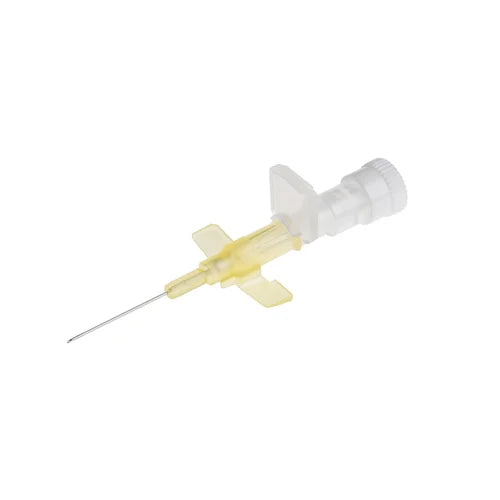
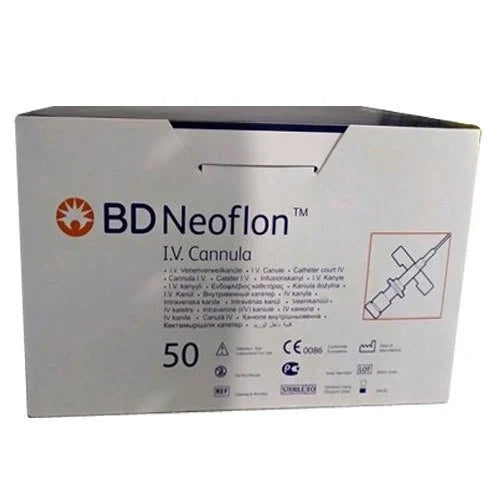
BD Neoflon I.V. Cannula (Pack Of 15)
Collection:
IV Cannula Size and Colour Guide: Gauge, Uses, Price & Safety
Introduction: Why IV Cannula Size and Colour Coding Matter
An IV cannula is a short peripheral intravenous catheter used by trained healthcare professionals to provide temporary access to a vein. Cannulas are available in different gauges and lengths because vein size, treatment type, required flow and patient condition vary widely.
To make gauge identification faster, peripheral IV cannulas commonly use colour-coded hubs. Standard adult and paediatric ranges often include 14G orange, 16G grey, 18G green, 20G pink, 22G blue and 24G yellow. Some manufacturers also offer 26G violet or purple. Colour is a quick visual guide, but the gauge and length printed on the sterile pack should always be verified.
Users search for cannula colour coding, IV cannula sizes and color and uses, cannula gauge, white cannula size, purple cannula size and adult cannula size. The important principle is that a lower gauge number indicates a wider cannula. Therefore, 18G is larger than 20G, and 20G is larger than 22G.
This Meddeygo.com guide explains cannula gauge, colour coding, common uses, adult and paediatric selection, safety, types, price, comparison and buying considerations.
Emergency & Trauma
Larger-bore cannulas may be selected when rapid fluid or blood administration is clinically required.
Routine Adult IV Therapy
20G and 22G are commonly used for many medications and hydration workflows.
Paediatric & Fragile Veins
Smaller gauges such as 22G or 24G may be considered based on vessel size and therapy.
What Is Cannula Size and Colour?
Cannula size is usually expressed in gauge, abbreviated G. The gauge relates to the external diameter of the catheter. Unlike French catheter sizing, a higher gauge number means a smaller diameter.
Colour coding is applied mainly to the cannula hub so clinicians can identify the gauge quickly. Common clinical charts use a consistent sequence for the most frequently used gauges, though exact product design and unusual sizes can vary by manufacturer.
Gauge Rule
Lower gauge number = wider cannula. Higher gauge number = narrower cannula.
IV Cannula Colour Coding Chart
| Gauge | Common Colour | Relative Size | Common Clinical Consideration |
|---|---|---|---|
| 14G | Orange | Very large | Selected emergency rapid fluid or blood replacement. |
| 16G | Grey | Large | Trauma, surgery or rapid infusion when appropriate. |
| 18G | Green | Medium-large | Fluids, blood products and many adult therapies. |
| 20G | Pink | Medium | Common adult medications, hydration and many routine uses. |
| 22G | Blue | Small | Smaller or fragile veins, medications and hydration. |
| 24G | Yellow | Very small | Paediatric, neonatal or fragile-vein use. |
| 26G | Violet / Purple on many ranges | Extremely small | Selected neonatal or very small-vein use. |
14G Orange Cannula
A 14G orange cannula is one of the largest common peripheral cannulas. Its larger internal diameter can support high flow rates, making it suitable for selected trauma or massive-volume replacement situations when a suitable vein is available.
It is not a routine choice for every patient. Larger cannulas can be more traumatic to small veins and should be used only when the clinical requirement justifies the size.
16G Grey Cannula
A 16G grey cannula is another large-bore option. It may be selected for rapid fluid administration, major surgery or severe blood loss. Vein diameter and treatment need must support its use.
18G Green Cannula
The 18G green cannula is widely recognised as a medium-large adult size. It can support relatively rapid IV hydration and is commonly used for blood transfusion and many medications when clinically appropriate.
20G Pink Cannula
The 20G pink cannula is a common adult peripheral IV size because it balances flow capability with practical insertion into many adult veins. It is frequently used for IV hydration, compatible medicines and selected blood administration.
22G Blue Cannula
The 22G blue cannula is smaller than 20G and is commonly used when veins are relatively small, fragile or difficult. It is often considered for older adults, children and routine medications where high flow is not required.
24G Yellow Cannula
A 24G yellow cannula is a small-diameter device frequently considered in paediatric or neonatal care and in adults with fragile superficial veins. Its smaller lumen provides lower flow than larger gauges.
Purple Cannula Size
On many standard ranges, a purple cannula size refers to 26G. However, colour must be checked against the exact manufacturer because some product lines use colours differently for specialised models.
White Cannula Size
White cannula size is not part of the most common 14G–24G peripheral IV colour sequence. Some needle or catheter systems may use white for a less-common gauge, but this is manufacturer-dependent. Buyers should not infer size from white colour alone and must check the printed gauge.
Which Cannula Is 22 Gauge?
A 22G peripheral IV cannula is commonly colour coded blue. It is smaller than 20G pink and larger than 24G yellow. It may be used for many medications and hydration in patients with smaller or fragile veins.
Which IV Cannula Is Used for Adults?
There is no single adult cannula size. 18G, 20G and 22G are all commonly used in adults depending on vein size and therapy. A 20G pink cannula is a frequent routine choice, while 18G may be selected for faster flow and 22G for smaller veins.
The safest principle is to select the smallest gauge and shortest length that can reliably deliver the prescribed therapy, while still considering vessel depth and dwell requirements.
Adult Cannula Size Selection
| Clinical Situation | Commonly Considered Gauge | Important Note |
|---|---|---|
| Routine IV medicines / hydration | 20G or 22G | Choice depends on vein and infusion requirement. |
| Blood products / faster fluids | 18G or 20G | Follow transfusion and facility policy. |
| Trauma / rapid replacement | 14G or 16G when appropriate | Requires a suitable large vein. |
| Fragile adult veins | 22G or 24G | Prioritise vessel preservation and required flow. |
| Imaging contrast | 18G or 20G commonly preferred for higher-rate protocols | Use device and radiology protocol requirements. |
Cannula Sizes and Uses
Cannula gauge affects potential flow because wider lumens generally allow higher flow. Length also matters: a longer cannula of the same gauge may have lower flow than a shorter one. Actual flow rate should therefore be taken from the manufacturer specification rather than a generic chart.
Treatment factors include fluid viscosity, use of pressure devices, vein quality, patient movement and the connected extension or administration set.
What Are the Three Types of Cannulas?
The word cannula can describe many vascular-access designs. A practical way to group common peripheral IV devices is into conventional ported cannulas, portless cannulas and safety cannulas.
Ported Cannula
Includes an additional injection port for compatible access according to policy.
Portless Cannula
No integrated injection port; often connected to an extension or needle-free connector.
Safety Cannula
Includes a mechanism designed to shield the needle after withdrawal.
Closed IV System
Integrates catheter, extension tubing and connector in one system on selected products.
Cannula Parts
- Flexible catheter that remains in the vein
- Introducer needle used during insertion
- Colour-coded catheter hub
- Flashback chamber
- Optional injection port
- Wings on selected designs
- Protective cap
- Needle-safety shield on safety models
Cannula Colour vs Catheter Colour Coding
Peripheral IV cannula colour coding is based on gauge, while other catheter types may use completely different colour systems. For example, urinary catheters commonly use French sizes with another colour sequence. Therefore, a blue urinary catheter connector does not mean the same size as a blue IV cannula.
Search terms such as catheter color coding and catheter sizes and colors should always be interpreted according to the catheter category.
Cannula Gauge vs French Size
| Point | IV Cannula Gauge | French Catheter Size |
|---|---|---|
| Direction | Higher number = smaller diameter | Higher number = larger diameter |
| Common Examples | 18G, 20G, 22G, 24G | 8Fr, 12Fr, 16Fr, 18Fr |
| Typical Products | Peripheral IV cannulas, needles | Urinary, feeding and drainage catheters |
| Colour System | IV gauge colour sequence | Different French colour sequence |
IV Cannula Safety
Peripheral cannulation is an invasive procedure and should be performed only by appropriately trained healthcare professionals using aseptic technique. The site should be assessed for pain, redness, swelling, leakage, occlusion, phlebitis and dislodgement.
- Use a sterile, intact and in-date device.
- Choose the appropriate gauge and length.
- Prepare skin using approved antisepsis.
- Maintain aseptic non-touch technique.
- Secure the catheter without excessive tension.
- Monitor the site regularly.
- Remove the catheter when no longer clinically required.
- Dispose of the introducer needle immediately in a sharps container.
- Never reuse a single-use cannula.
Professional Use Only
IV cannula insertion is an invasive clinical procedure. Size and site must be selected by trained personnel according to the patient's veins and prescribed therapy.
Common Cannula Complications
| Complication | Possible Signs | Action |
|---|---|---|
| Infiltration | Swelling, cool skin, slow infusion | Stop and assess according to clinical protocol. |
| Extravasation | Pain, burning, swelling with vesicant medicine | Urgent drug-specific management required. |
| Phlebitis | Redness, warmth, tenderness along vein | Assess and remove if indicated. |
| Occlusion | Resistance or inability to infuse | Do not force; assess device. |
| Dislodgement | Leakage, loose dressing, visible catheter movement | Stop use and reassess. |
| Infection | Pain, discharge, warmth or systemic symptoms | Clinical review and infection management. |
IV Cannula Price
IV cannula price depends on gauge, length, catheter material, ported or portless design, safety mechanism, integrated extension set, brand and pack quantity. A safety-engineered or closed-system catheter generally costs more than a basic conventional cannula.
| Price Factor | Why It Matters |
|---|---|
| Gauge / Length | Different clinical sizes and lengths may have different cost. |
| Safety Shield | Needlestick-protection technology adds complexity. |
| Port Design | Ported and portless constructions differ. |
| Catheter Material | FEP, PUR or other materials vary by product. |
| Closed System | Integrated extension and connector increase components. |
| Pack Quantity | Hospital bulk packs affect per-unit price. |
How to Buy Cannulas Online
- Confirm the gauge and colour.
- Check catheter length in millimetres.
- Choose ported, portless or safety design.
- Review catheter material.
- Confirm sterile single-use packaging.
- Check manufacturer and product reference.
- Verify expiry and batch traceability.
- Buy according to the clinical department's approved cannula list.
- Do not substitute gauge solely because another colour is available.
Buying IV Cannulas from Meddeygo.com
Meddeygo.com offers medical consumables for hospitals, clinics and healthcare professionals. Compare cannulas by gauge, colour, length, safety feature and configuration before ordering.
For institutional procurement, confirm compatibility with local vascular-access policy and staff training. Product colour is a useful identifier, but the printed gauge and length remain the definitive purchasing details.
Why Cannula Length Matters as Much as Gauge
Gauge describes diameter, but catheter length determines how much of the device sits inside the vein. Very short catheters can be more likely to dislodge from deep veins, while excessively long catheters may add resistance to flow.
Therefore, a purchase order that states only '20G pink cannula' may be incomplete. Hospitals should specify both gauge and length when several product variants are available.
Gauge, Flow and Clinical Need
Flow generally increases as the cannula becomes wider and shorter, but published flow rates vary between manufacturers. Pressure infusion, fluid viscosity and extension tubing also change the final delivered rate. A generic flow chart should therefore be treated as an estimate rather than a guarantee.
For routine medications, selecting an unnecessarily large cannula can cause more vessel trauma without improving treatment. For major haemorrhage, however, rapid flow can be critical, so larger-bore access may be clinically justified.
Cannula Selection for Difficult Veins
Older adults, oncology patients, dehydrated patients and people with a history of repeated IV therapy may have fragile or difficult veins. Smaller gauges can preserve vessels, but a deeper vein may need a longer catheter to remain stable. Ultrasound guidance can assist trained clinicians in locating suitable vessels.
Repeated failed attempts should trigger escalation according to the facility's difficult-access pathway rather than continuing multiple traumatic attempts with different cannula sizes.
Hospital Cannula Procurement Checklist
- List approved gauges and lengths for each department.
- Decide whether safety cannulas are mandatory.
- Review catheter material and kink resistance.
- Check flashback visibility.
- Confirm sterile barrier packaging and expiry.
- Verify colour coding and printed gauge readability.
- Assess compatibility with needle-free connectors and extension sets.
- Review needlestick-safety mechanism training.
- Maintain lot traceability for complaints and recalls.
Cannula Gauge Selection for Hydration
When considering IV cannula for matching vein size and treatment, the first step is to match the product to the actual use rather than relying only on a popular keyword or appearance. Check the manufacturer's specification, intended user, fit or size information, and any safety limitations that apply. A product that works well in one situation may be unsuitable in another because body size, duration of use, clinical condition and user technique can change the result. For home use, keep the instructions available and review the product periodically for wear, damage or reduced performance. For professional purchasing, documentation, batch traceability and consistent supply are also important.
Cannula Gauge Selection for Blood Products
A practical way to evaluate flow requirements and vessel suitability is to separate comfort features from functional requirements. Comfort can improve adherence, but it should not replace correct sizing, material quality or appropriate clinical selection. Compare dimensions and performance details in measurable terms wherever possible. If the product is being used because of persistent pain, fever, swelling, incontinence, respiratory risk or another ongoing health problem, the underlying condition may need assessment even when the product provides short-term convenience. The goal is to use IV cannula as part of sensible care rather than as a substitute for diagnosis or professional advice.
Cannula Length for Deep Veins
Buyers often compare preventing premature dislodgement mainly by price, but total value also includes durability, ease of use, replacement needs and the consequences of poor fit or poor performance. A slightly higher purchase price can be reasonable when it provides better material quality, clearer instructions or more reliable use. At the same time, expensive branding alone does not prove that a product is superior. Read the exact specification and choose the simplest option that safely meets the intended requirement. When several people will use the product, consider hygiene, cleaning and whether separate user-specific items are needed.
Safety Cannula Advantages
When considering IV cannula for needlestick risk reduction, the first step is to match the product to the actual use rather than relying only on a popular keyword or appearance. Check the manufacturer's specification, intended user, fit or size information, and any safety limitations that apply. A product that works well in one situation may be unsuitable in another because body size, duration of use, clinical condition and user technique can change the result. For home use, keep the instructions available and review the product periodically for wear, damage or reduced performance. For professional purchasing, documentation, batch traceability and consistent supply are also important.
Ported vs Portless Cannulas
A practical way to evaluate different access workflows is to separate comfort features from functional requirements. Comfort can improve adherence, but it should not replace correct sizing, material quality or appropriate clinical selection. Compare dimensions and performance details in measurable terms wherever possible. If the product is being used because of persistent pain, fever, swelling, incontinence, respiratory risk or another ongoing health problem, the underlying condition may need assessment even when the product provides short-term convenience. The goal is to use IV cannula as part of sensible care rather than as a substitute for diagnosis or professional advice.
Cannula Packaging and Sterility
Buyers often compare single-use product integrity mainly by price, but total value also includes durability, ease of use, replacement needs and the consequences of poor fit or poor performance. A slightly higher purchase price can be reasonable when it provides better material quality, clearer instructions or more reliable use. At the same time, expensive branding alone does not prove that a product is superior. Read the exact specification and choose the simplest option that safely meets the intended requirement. When several people will use the product, consider hygiene, cleaning and whether separate user-specific items are needed.
Adult Cannula Stock Mix
When considering IV cannula for departmental procurement planning, the first step is to match the product to the actual use rather than relying only on a popular keyword or appearance. Check the manufacturer's specification, intended user, fit or size information, and any safety limitations that apply. A product that works well in one situation may be unsuitable in another because body size, duration of use, clinical condition and user technique can change the result. For home use, keep the instructions available and review the product periodically for wear, damage or reduced performance. For professional purchasing, documentation, batch traceability and consistent supply are also important.
Paediatric Cannula Stock Mix
A practical way to evaluate small gauge availability is to separate comfort features from functional requirements. Comfort can improve adherence, but it should not replace correct sizing, material quality or appropriate clinical selection. Compare dimensions and performance details in measurable terms wherever possible. If the product is being used because of persistent pain, fever, swelling, incontinence, respiratory risk or another ongoing health problem, the underlying condition may need assessment even when the product provides short-term convenience. The goal is to use IV cannula as part of sensible care rather than as a substitute for diagnosis or professional advice.
Cannula Hub Colour Verification
Buyers often compare using colour only as a quick identifier mainly by price, but total value also includes durability, ease of use, replacement needs and the consequences of poor fit or poor performance. A slightly higher purchase price can be reasonable when it provides better material quality, clearer instructions or more reliable use. At the same time, expensive branding alone does not prove that a product is superior. Read the exact specification and choose the simplest option that safely meets the intended requirement. When several people will use the product, consider hygiene, cleaning and whether separate user-specific items are needed.
Cannula Material
When considering IV cannula for catheter flexibility and kink resistance, the first step is to match the product to the actual use rather than relying only on a popular keyword or appearance. Check the manufacturer's specification, intended user, fit or size information, and any safety limitations that apply. A product that works well in one situation may be unsuitable in another because body size, duration of use, clinical condition and user technique can change the result. For home use, keep the instructions available and review the product periodically for wear, damage or reduced performance. For professional purchasing, documentation, batch traceability and consistent supply are also important.
Cannula Securement
A practical way to evaluate reducing movement after insertion is to separate comfort features from functional requirements. Comfort can improve adherence, but it should not replace correct sizing, material quality or appropriate clinical selection. Compare dimensions and performance details in measurable terms wherever possible. If the product is being used because of persistent pain, fever, swelling, incontinence, respiratory risk or another ongoing health problem, the underlying condition may need assessment even when the product provides short-term convenience. The goal is to use IV cannula as part of sensible care rather than as a substitute for diagnosis or professional advice.
Cannula Site Monitoring
Buyers often compare recognising phlebitis and infiltration mainly by price, but total value also includes durability, ease of use, replacement needs and the consequences of poor fit or poor performance. A slightly higher purchase price can be reasonable when it provides better material quality, clearer instructions or more reliable use. At the same time, expensive branding alone does not prove that a product is superior. Read the exact specification and choose the simplest option that safely meets the intended requirement. When several people will use the product, consider hygiene, cleaning and whether separate user-specific items are needed.
Cannula Replacement Decisions
When considering IV cannula for clinical indication and site condition, the first step is to match the product to the actual use rather than relying only on a popular keyword or appearance. Check the manufacturer's specification, intended user, fit or size information, and any safety limitations that apply. A product that works well in one situation may be unsuitable in another because body size, duration of use, clinical condition and user technique can change the result. For home use, keep the instructions available and review the product periodically for wear, damage or reduced performance. For professional purchasing, documentation, batch traceability and consistent supply are also important.
IV Cannula Price Comparison
A practical way to evaluate total value beyond unit cost is to separate comfort features from functional requirements. Comfort can improve adherence, but it should not replace correct sizing, material quality or appropriate clinical selection. Compare dimensions and performance details in measurable terms wherever possible. If the product is being used because of persistent pain, fever, swelling, incontinence, respiratory risk or another ongoing health problem, the underlying condition may need assessment even when the product provides short-term convenience. The goal is to use IV cannula as part of sensible care rather than as a substitute for diagnosis or professional advice.
Cannula Traceability
Buyers often compare lot and expiry control mainly by price, but total value also includes durability, ease of use, replacement needs and the consequences of poor fit or poor performance. A slightly higher purchase price can be reasonable when it provides better material quality, clearer instructions or more reliable use. At the same time, expensive branding alone does not prove that a product is superior. Read the exact specification and choose the simplest option that safely meets the intended requirement. When several people will use the product, consider hygiene, cleaning and whether separate user-specific items are needed.
Hover Quick Guide
Neeche highlighted terms par cursor le jao:
20G PinkCommon adult cannula size jo many routine IV therapies mein use hoti hai. 22G BlueSmaller cannula jo fragile ya smaller veins ke liye consider ki ja sakti hai. 18G GreenMedium-large cannula jo faster fluids aur selected blood administration ke liye use ho sakti hai. Gauge RuleGauge number kam hone par cannula diameter bada hota hai.
Frequently Asked Questions
What is cannula size and color?
IV cannula size is expressed in gauge, and standard hub colours help identify common gauges.
Which IV cannula is used for adults?
18G, 20G and 22G are all commonly used in adults depending on vein size and therapy.
What are the three types of cannulas?
Common groups include ported, portless and safety peripheral IV cannulas.
Which cannula is 22 gauge?
22G is commonly colour coded blue.
What colour is 20G cannula?
20G is commonly pink.
What colour is 18G cannula?
18G is commonly green.
What colour is 24G cannula?
24G is commonly yellow.
What colour is 16G cannula?
16G is commonly grey.
What colour is 14G cannula?
14G is commonly orange.
What is purple cannula size?
26G is commonly violet or purple on many standard product ranges.
What is white cannula size?
White is not part of the most common 14G–24G sequence; verify the manufacturer specification.
Which is bigger, 18G or 20G?
18G is wider than 20G because lower gauge numbers indicate larger diameter.
Which is bigger, 22G or 24G?
22G is wider than 24G.
Which cannula is used for blood transfusion?
18G or 20G are commonly used depending on patient, urgency and transfusion policy.
Which cannula is used for children?
22G or 24G are common considerations, but selection is based on vessel and therapy.
Can colour alone identify cannula size?
Colour is a quick guide; always verify printed gauge and length.
Is cannula colour coding the same as urinary catheter colours?
No. The two device categories use different sizing systems.
What affects cannula flow rate?
Gauge, catheter length, fluid viscosity, pressure and connected tubing all affect flow.
What affects IV cannula price?
Gauge, length, material, safety design, port configuration, brand and quantity affect price.
Can IV cannulas be reused?
No. Peripheral IV cannulas are sterile single-use devices.
Conclusion
IV cannula colour coding helps clinicians identify common gauges quickly, but the printed gauge and catheter length should always be verified.
Adult cannula selection depends on vein size, therapy and required flow. A larger-bore cannula should not be chosen unless the clinical need justifies it.
Explore IV cannulas and sterile medical consumables online at Meddeygo.com according to gauge, length, configuration and safety design.