
Filter
1 product
Type: Orthopedic Supports
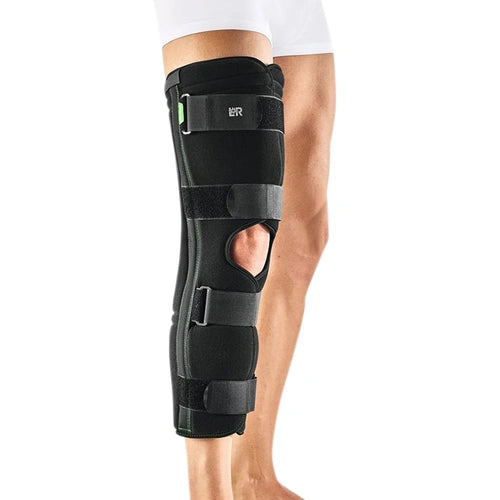
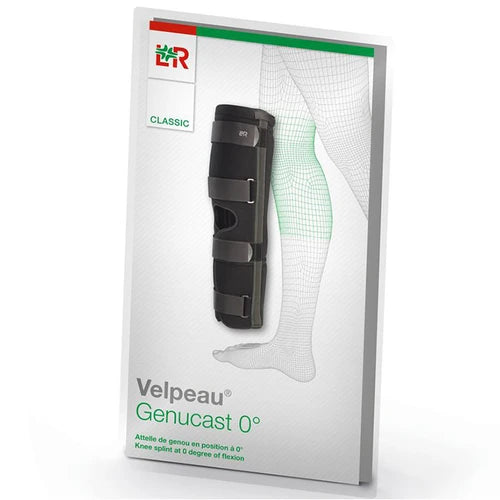
Knee Immobiliser Genucast 0 Degree from Velpeau France
Collection:
Knee Immobilizer: Uses, Types, Benefits, Sizing, and Buying Guide
Introduction: Why a Knee Immobilizer Matters in Recovery Care
A knee immobilizer is one of the most commonly used orthopedic support products for temporary stabilization of the knee joint after injury, trauma, surgery, or acute pain-related movement restriction. In modern care settings, it plays a practical role in controlling knee movement, protecting the joint from further aggravation, and keeping the leg in a more stable and functionally safer position during the early phase of healing.
The reason the product is searched so frequently is simple. Knee injuries are common. Post-operative support is common. Ligament strain, kneecap instability, extensor mechanism injuries, falls, swelling, and emergency immobilization all create situations where the patient may need a device that prevents the knee from bending too much. This is where a knee immobilizer becomes relevant. Unlike compression sleeves or general knee caps, an immobilizer is not mainly about dynamic support. It is about restricting movement to protect the injured structure for a defined period.
Search interest also rises because of brand-specific buying. Terms such as tynor knee immobilizer, knee immobilizer tynor, knee immobiliser, and tynor immobilizer appear often because many buyers want a recognizable brace brand rather than a generic listing with unclear quality. Tynor’s current product pages show multiple immobilizer lengths such as 14 inches, 19 inches, and 22 inches, and present the product as a support for injured or post-operated knees that need immobilization and secure positioning.
But choosing a knee immobilizer is not only about brand. It is also about length, fit, condition-specific usefulness, comfort, strap system, padding, compliance, and how long it should be worn. This article explains what a knee immobilizer is, how it works, when it is commonly used, why Tynor is frequently chosen, how product lengths differ, what features matter most, and how doctors, physiotherapists, clinics, hospitals, and home-care buyers should judge the right product more intelligently.
Hospitals & Emergency Care
Commonly used in early stabilization after trauma, dislocation, fracture-related care, and post-operative support.
Physiotherapy & Rehab
Useful in short-term protection phases where joint motion must be controlled before progressive rehabilitation.
Home-Care Recovery
Supports patients recovering from knee surgery, severe pain, or instability under medical guidance.
What Is a Knee Immobilizer?
A knee immobilizer is a brace designed to keep the knee in a straight or near-straight position and reduce bending movement. It usually consists of a padded wrap-around body, side splints or stabilizing supports, and multiple fastening straps that hold the brace firmly around the thigh, knee, and upper lower leg. The purpose is to limit flexion and give the joint a more stable position during the early stage of injury care or recovery.
In practical orthopedic use, a knee immobilizer is different from a simple knee cap or elastic support. A general knee cap may provide compression or mild support, but it still allows movement. A knee immobilizer is more restrictive. It is meant to control motion rather than encourage it. That is why it is commonly used after selected injuries, post-operative care, or kneecap instability events where uncontrolled bending may worsen pain or compromise healing.
Many immobilizers use anatomically contoured splintsThese are shaped support bars designed to follow the contour of the leg more naturally, helping improve stability and keeping the brace better aligned with the knee joint., padded interiors, and wide straps. Market descriptions for Tynor knee immobilizer products also highlight features like anatomically contoured splints, cushioning, and secure grip, which reflects the practical design priorities of this category.
Simple Definition
A knee immobilizer is a brace that limits knee bending and helps keep the leg stable during injury recovery, post-operative care, or acute knee support.
How Does a Knee Immobilizer Work?
A knee immobilizer works by mechanically restricting knee flexion and stabilizing the leg through its wraparound structure and side supports. When secured correctly, it reduces motion at the knee joint and helps prevent the patient from repeatedly bending the knee during walking, transfers, or rest.
This matters because certain knee problems become worse when the joint bends too much too early. For example, following some patellar instability episodes, extensor mechanism injuries, post-operative situations, or certain fracture-related conditions, the knee may need a period of protection in extension. Medical references note that knee immobilizers are commonly used after selected fractures, tears of large ligaments, extensor mechanism injuries, and unstable kneecap dislocations, but not typically for simple mild strains.
The immobilizer also helps in a second way: by reducing fear-driven movement. When the knee feels unstable or painful, patients often move awkwardly and guard the leg. A well-fitted immobilizer can improve confidence during early protected mobility, especially when used with crutches or under clinician instruction.
Restricts Bending
Helps prevent excessive knee flexion during the early stage of recovery.
Improves Stability
Supports the leg in a straighter position during walking, transfers, and rest.
Protects Healing Tissue
Useful when sudden motion might worsen post-injury or post-operative pain.
Supports Early Confidence
May reduce fear of movement in patients with acute instability or pain.
When Is a Knee Immobilizer Commonly Used?
A knee immobilizer is commonly used in specific orthopedic or acute-care situations where controlling movement matters. General medical references note that immobilizers are often used for fractures, tears of larger ligaments, extensor mechanism injuries, and selected unstable patellar dislocations rather than for simple mild knee strains.
In extensor mechanism injuries, for example, patients may be placed in a knee immobilizer until surgical repair or until the injury plan is finalized. In kneecap dislocations, if the joint remains unstable after reduction, an immobilizer may be applied to keep the knee from bending for a short period. In post-operative care, an immobilizer may be used in the immediate recovery phase to support the knee until the surgeon’s rehabilitation plan advances.
This is an important distinction: the knee immobilizer is not for every knee pain complaint. It is most useful when temporary restriction of motion is a treatment goal.
| Clinical Situation | Why Immobilizer May Be Used | General Logic |
|---|---|---|
| Post-Operative Knee Support | Protects the knee during early recovery | Limits movement while tissues stabilize |
| Patellar Instability / Dislocation | Helps keep the knee from bending excessively after instability events | Supports short-term stabilization |
| Extensor Mechanism Injury | Maintains extension until definitive treatment | Prevents worsening movement stress |
| Selected Fracture-Related Conditions | Helps keep the knee protected in acute care | Supports immobilization during initial management |
| Severe Acute Knee Pain with Instability | Used under clinical judgment for short-term protection | Helps reduce unsafe bending and movement |
When a Knee Immobilizer Is Usually Not the First Choice
It is equally important to know when a knee immobilizer may not be the ideal first choice. General medical references note that knee immobilizers are mostly used for more significant injuries such as fractures or large-ligament tears, and not usually for simple strains. Mild or moderate knee sprains may instead be managed with other forms of support, compression, and early supervised movement depending on the diagnosis.
This matters because too much unnecessary immobilization can create stiffness, delay active recovery, and reduce confidence in movement if used for the wrong reason or for too long. That is why selection should always depend on the actual diagnosis rather than on the idea that “more support is always better.”
In physiotherapy and sports recovery, controlled movement is often an important part of recovery. So an immobilizer may be helpful only in the early protection phase and then discontinued as the treatment plan progresses.
Clinical Judgment Matters
A knee immobilizer is most useful when the goal is short-term movement restriction. It is not automatically the right brace for every knee pain or strain complaint.
Tynor Knee Immobilizer: Why Buyers Search for It Specifically
The brand-specific interest in Tynor knee immobilizer comes from its visibility and familiarity in the Indian orthopedic-support market. Current official store listings show multiple lengths such as 14"/36 cm, 19"/48 cm, and 22"/56 cm, all described as scientifically designed to immobilize and support injured or post-operated knee joints while promoting a secure functional position. This clear sizing structure makes the product easier for buyers to understand and compare.
Retailer and marketplace listings commonly add feature-focused language such as anatomically contoured splints, cushioning, anti-slip comfort, removable patellar strap, easy use and removal, washable design, and lightweight construction. These are all practical buying cues because users want something secure but still manageable in daily wear.
Tynor’s popularity is also helped by widespread availability across official-style pages, retail health stores, e-commerce pages, and medical product distributors. That means buyers can compare not only sizes, but also seller trust, price, and delivery options more easily than with some lesser-known braces.
Tynor Knee Immobilizer Length Options: 14 Inch, 19 Inch, and 22 Inch
One of the most practical strengths of the Tynor knee immobilizer line is that it is sold in different brace lengths. Current official product pages show at least three standard visible lengths: 14 inches, 19 inches, and 22 inches. These correspond to approximately 36 cm, 48 cm, and 56 cm.
Why does this matter? Because immobilizer length affects coverage and stabilization. A shorter immobilizer may be more convenient in smaller patients or situations where less coverage is enough. A longer immobilizer often gives broader thigh-to-leg support and may feel more secure in larger adults or where extra stabilization is needed.
Buyers should not assume one length fits all. A brace that is too short may not give the support expected. A brace that is too long may feel cumbersome or poorly positioned depending on the user’s leg size. This is why length selection should match body size and clinical recommendation.
14 Inch Option
Often useful where a more compact immobilizer is preferred for smaller or shorter-leg fitting needs.
19 Inch Option
Represents a middle coverage option and is one of the most commonly recognized sizes in listings.
22 Inch Option
Gives broader length coverage and may suit larger adults or higher support preference.
Fit Matters
The right length should match both body size and the kind of stability being targeted.
Important Features Buyers Compare in a Knee Immobilizer
Not all knee immobilizers are equally comfortable or equally practical. The best products are not judged only by the brand name, but by the details that affect real-life use. Buyers usually compare strap design, side splints, patellar area structure, cushioning, anti-slip feel, washability, and how easy the brace is to wear independently or with caregiver support.
Seller listings for Tynor commonly emphasize anatomically contoured splints and high cushioning. These are more than marketing phrases. Splint shape affects how well the immobilizer follows the leg, while cushioning affects how long the user can tolerate the brace without discomfort. A removable or adjustable patellar strap may also help improve fit in some models.
In practical use, the best knee immobilizer usually has:
- Secure multi-strap fastening
- Stable side support or splint structure
- Comfortable inner padding
- Good alignment around the kneecap area
- Washable and durable materials
- Reasonable ease of donning and doffing
These factors matter just as much as length when the brace is worn for multiple days or during home-care recovery.
How a Knee Immobilizer Differs from Other Knee Braces
Many buyers confuse a knee immobilizer with other braces. A compression knee cap is designed mainly for support and compression. A hinged knee brace is meant to support motion in a more controlled way. A sleeve brace may help comfort and proprioception. A knee immobilizer is different because its primary role is to restrict movement and keep the knee relatively straight.
This makes the knee immobilizer particularly useful in acute or early recovery stages, but less ideal for long-term functional rehab unless specifically advised. Once a patient begins progressive rehabilitation, the need may shift from immobilization to guided motion support.
| Brace Type | Main Purpose | Movement Allowed |
|---|---|---|
| Knee Immobilizer | Protect and restrict knee motion | Very limited bending |
| Knee Cap / Sleeve | Compression and mild support | Most movement still allowed |
| Hinged Knee Brace | Stability with guided motion | Controlled motion allowed |
| Functional Knee Brace | Activity-related support | More movement than immobilizer |
How to Judge the Right Size and Fit
Fit is one of the most important parts of choosing a knee immobilizer. A brace that is too loose may shift, slip, or fail to control movement properly. A brace that is too tight may feel uncomfortable, create pressure marks, and reduce compliance. This is why the correct size and correct length both matter.
In general, the brace should sit centered over the knee joint, extend adequately above and below it, and fasten securely without excessive bunching. The straps should stabilize the leg without creating severe pressure. The user should also be able to tolerate the brace in real-life recovery situations such as sitting, getting up, or moving short distances under medical advice.
Product-specific instructions from the manufacturer should always be followed, and where needed, a clinician or physiotherapist should guide the fitting.
Fit Rule
The right knee immobilizer should feel secure and stable without slipping, pinching, or creating excessive bulk that discourages the patient from wearing it.
How Long Should a Knee Immobilizer Be Worn?
There is no one universal timeline for wearing a knee immobilizer. Duration depends on why it was prescribed. A short-term patellar instability event may require a different timeline from a post-operative knee case or a fracture-related stabilization plan. This is why the brace should never be worn indefinitely just because it feels supportive.
General medical references emphasize that knee immobilizers are used in defined indications and that early movement and physical therapy become important once medically appropriate. That means the immobilizer often has a role in the early phase, but it is not always the long-term final answer.
For clinics and physiotherapists, this highlights an important recovery principle: the knee immobilizer is most valuable when it is used at the right time and then appropriately stepped down when the treatment plan progresses.
Knee Immobilizer in Physiotherapy and Rehabilitation Planning
Physiotherapy professionals often see the knee immobilizer as a phase-specific tool rather than a permanent support. In the acute phase, it can reduce pain, protect a vulnerable joint, and help the patient move more safely with less fear. In the next phase, rehabilitation may gradually introduce range-of-motion work, strengthening, gait correction, and functional movement depending on the diagnosis.
This is important because immobilization and rehabilitation are not opposites — they are often part of a sequence. The immobilizer protects. Then guided therapy restores controlled movement. That is why a physiotherapist’s role in timing progression is so important.
Inappropriate overdependence on immobilization can create stiffness, but appropriate short-term use can protect healing. The best outcomes come from balancing both realities.
Buying Guide: How Doctors, Clinics, and Home-Care Buyers Should Choose
Choosing the right knee immobilizer begins with the condition being treated. Is the user post-operative? Is there patellar instability? Is the brace being used temporarily after trauma? Is it for clinic stock or an individual patient? Once that purpose is clear, the buyer should compare length, cushioning, side support design, strap placement, washability, and seller reliability.
For brand buyers specifically looking at Tynor knee immobilizer, it makes sense to compare:
- Length option: 14", 19", or 22"
- Padding comfort and skin tolerance
- Side splint stability
- Ease of wearing and removal
- Product authenticity and seller reliability
- Whether the brace suits the patient’s leg size and clinical requirement
For hospitals, stocking more than one length may be useful because one size does not suit every patient. For home-care buyers, the main focus should be correct fit and genuine product sourcing rather than only the lowest price.
For Doctors
Useful when short-term controlled immobilization is part of the treatment strategy.
For Physios
Helps manage the protection phase before progressing to guided mobility and rehab.
For Clinics
Worth stocking in multiple lengths for acute knee support situations.
For Home-Care Users
Most effective when fitted properly and worn exactly as medically advised.
Frequently Asked Questions
What is a knee immobilizer used for?
A knee immobilizer is used to restrict knee bending and stabilize the joint during injury recovery, post-operative support, patellar instability care, and selected fracture or tendon-related conditions.
Is a knee immobilizer the same as a knee cap?
No. A knee cap mainly gives compression and mild support, while a knee immobilizer is designed to limit movement and keep the knee more stable in extension.
When is a knee immobilizer usually not the best choice?
It is not usually the first choice for simple mild strains or every type of knee pain. It is most useful when temporary movement restriction is medically required.
What sizes does Tynor knee immobilizer come in?
Current official/store listings show lengths such as 14 inches, 19 inches, and 22 inches, which correspond to approximately 36 cm, 48 cm, and 56 cm.
Why do people buy Tynor knee immobilizer specifically?
Buyers often choose it because of brand familiarity, multiple length options, visible market availability, and feature descriptions such as anatomically contoured splints and cushioning.
How do I know if the brace length is right?
The brace should cover enough area above and below the knee to stabilize it properly without excessive slipping, bunching, or uncomfortable bulk.
Can a knee immobilizer be used after kneecap dislocation?
In selected unstable patellar dislocation situations, a knee immobilizer may be used short term as part of medical management.
How long should a knee immobilizer be worn?
Duration depends on the diagnosis and treatment plan. It should be worn for the period advised by the clinician, not just because it feels supportive.
Conclusion
The knee immobilizer remains one of the most important early-phase knee support products because it protects the joint when movement control matters most. Whether the buyer is evaluating a general knee immobiliser or specifically comparing a Tynor knee immobilizer, the right decision depends on indication, length, fit, comfort, and how the brace fits into the larger treatment plan. For doctors, physiotherapists, clinics, hospitals, and home-care users, the best results come when immobilization is used thoughtfully: strong enough to protect, but timed and fitted well enough to support recovery rather than delay it.